


Medical Disclaimer: This article is for informational purposes and is not a substitute for professional medical advice. The information provided is general in nature and is not intended to diagnose, treat, or cure any condition. Before starting any weight loss program, consult with a healthcare provider, registered dietitian, or qualified medical professional to ensure the approach is appropriate for your individual health needs and medical history.
Quick Answer: Does Meal Preparation for Weight Loss Work?
Yes. Research shows individuals who use structured meal plans lose up to 24% more weight in 12 weeks compared to those who don’t, primarily because advance meal planning eliminates daily food-choice uncertainty and reduces impulsive eating. When meals are pre-portioned and ready in your refrigerator, you bypass the “what’s for dinner?” decision fatigue that leads to takeout and calorie overage.
Key insight: Participants receiving pre-portioned foods lost more than 8% of their weight (18 lbs on average) compared to 6% (13 lbs on average) weight loss in a control group—a difference driven by portion control accuracy, not metabolic advantage.
What is Meal Preparation?
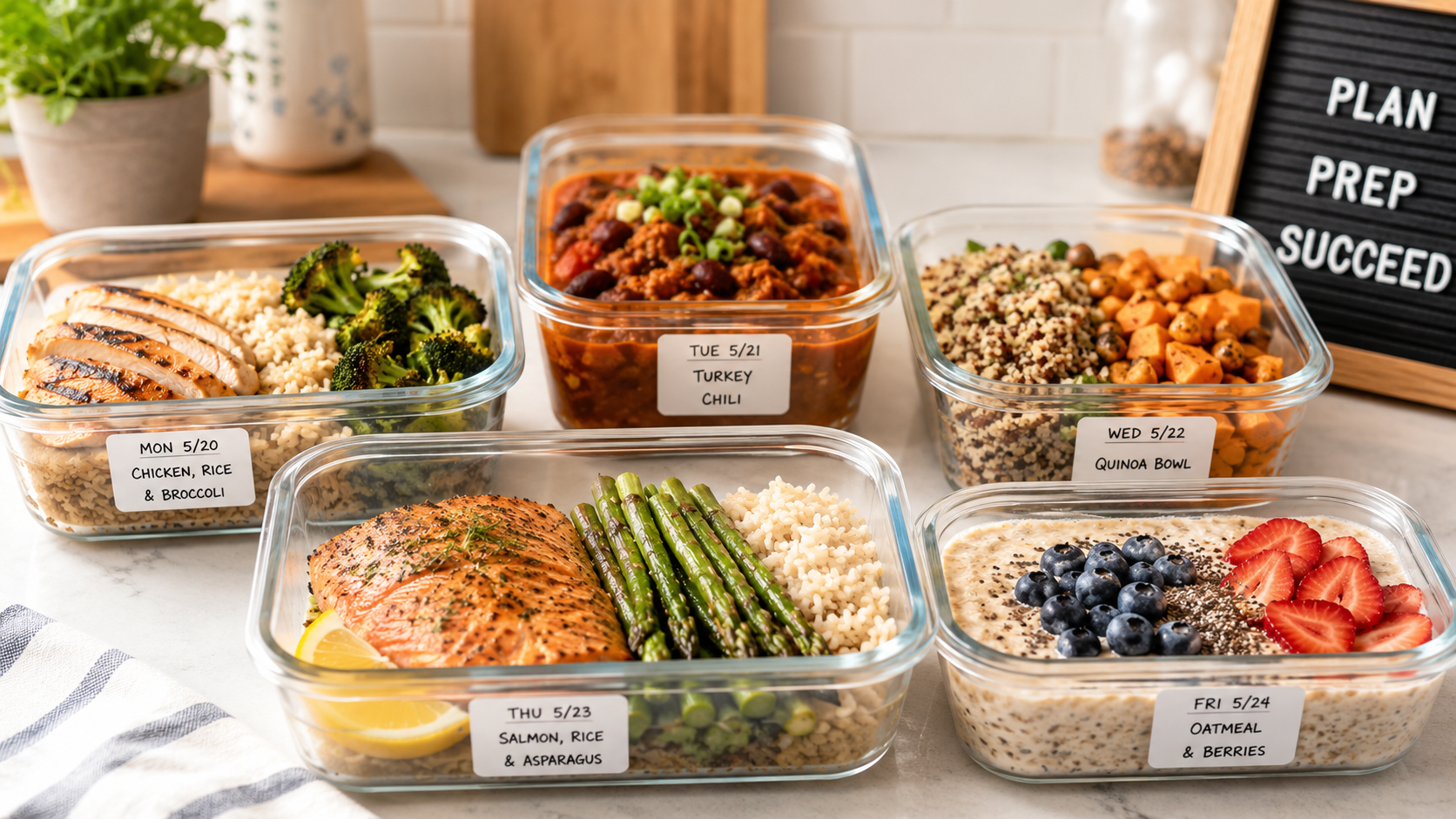
Definition: Meal preparation (or “meal prep”) is the practice of planning, shopping for, and cooking meals or meal components in advance—typically once or twice per week—to create grab-and-go or quick-to-assemble meals for days ahead.
Unlike meal planning (deciding what to eat), meal preparation includes the hands-on cooking, portioning, and storage. It transforms eating from a daily decision into a single-session system completed once weekly.
Common forms of food preparation for weight loss:
- Batch cooking: Complete meals prepared in large portions (e.g., chili, casserole) reheated throughout the week
- Component meal preparation: Individual proteins, grains, and vegetables cooked separately and mixed into different meals daily
- Ingredient readiness: Pre-chopped vegetables and cooked proteins assembled fresh each meal time
- Minimal assembly prep: Using pre-made items (rotisserie chicken, frozen vegetables) combined with light home preparation
Why Meal Prep Matters for Weight Loss
How does meal preparation help you lose weight?
Direct answer: Meal preparation supports weight loss through three mechanisms: portion control accuracy, reduced decision fatigue, and consistent access to balanced nutrition. Pre-portioning meals prevents common estimation errors; <cite index=”10-1″>participants receiving pre-portioned foods lost more than 8% of their weight (18 lbs on average) compared to 6% (13 lbs on average) in a control group</cite>.
The three mechanisms explained:
1. Portion Control Accuracy When you cook daily on-demand, it’s easy to overestimate serving sizes or forget to account for cooking oils and high-calorie sauces. <cite index=”10-1″>Pre-portioned foods eliminate these estimation errors</cite>, making calorie targets automatic rather than dependent on willpower or precision.
2. Decision Fatigue Reduction <cite index=”12-1″>Having meals prepped and ready to grab removes the uncertainty that often leads to poor food choices. When your fridge is stocked with balanced options, the pull of takeout, vending machines, or late-night snacking becomes much weaker</cite>. This effect is most powerful when you’re tired or stressed—exactly when willpower reserves run lowest.
3. Consistent Home Cooking <cite index=”16-1″>A 2017 study published in the International Journal of Behavioral Nutrition and Physical Activity found that adults who consumed home-cooked meals more than five times per week were 28 percent less likely to be overweight and 24 percent less likely to have excess body fat compared to those who cooked at home fewer than three times per week</cite>. Food preparation transforms eating from reactive (takeout when hungry) to proactive (planned, balanced meals).
How much weight can you realistically lose with meal preparation?
Answer: <cite index=”28-1″>The Centers for Disease Control recommends 1 to 2 pounds of weight loss per week as the rate that produces durable results without triggering compensatory metabolic adaptation</cite>. <cite index=”30-1″>A modest calorie deficit of around 500 calories per day is a proven, effective strategy for losing about one pound per week—the sweet spot for losing fat while preserving muscle</cite>.
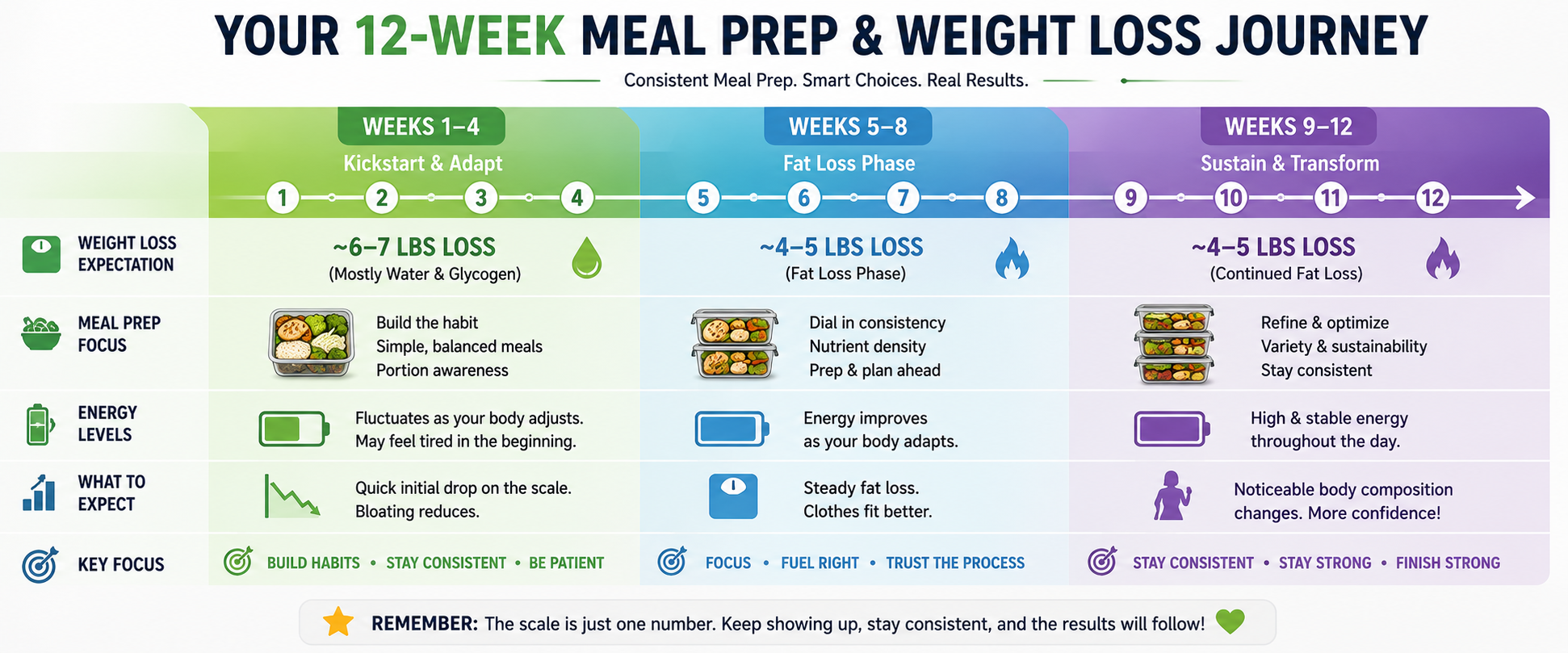
First month expectations: <cite index=”28-1″>For an average adult with a maintenance intake of 2,000 calories, 4 weeks of eating 1,500 calories produces a 14,000-calorie deficit, resulting in about 4 pounds of fat loss. Add 2 to 3 pounds of water weight lost in the first week, and the scale typically drops 6 to 7 pounds in the first month</cite>.
Why initial loss is fast (and then slows): The first month’s rapid scale drop is primarily water loss from depleted glycogen stores, not fat loss. This is normal and expected. Months 2–3 show the actual fat-loss rate: steady 1–2 lbs/week. Understanding this prevents the common mistake of thinking the meal preparation plan “stopped working” when weight loss naturally slows.
Important distinction: <cite index=”28-1″>People who lose more than 2 pounds per week often regain more weight within a year, partly because rapid weight loss includes more muscle and triggers stronger hunger responses</cite>. Moderate, consistent loss builds sustainable habits.
Meal Prep Strategies: Finding the Right Method for Your Life
Which meal prep method works best for weight loss?
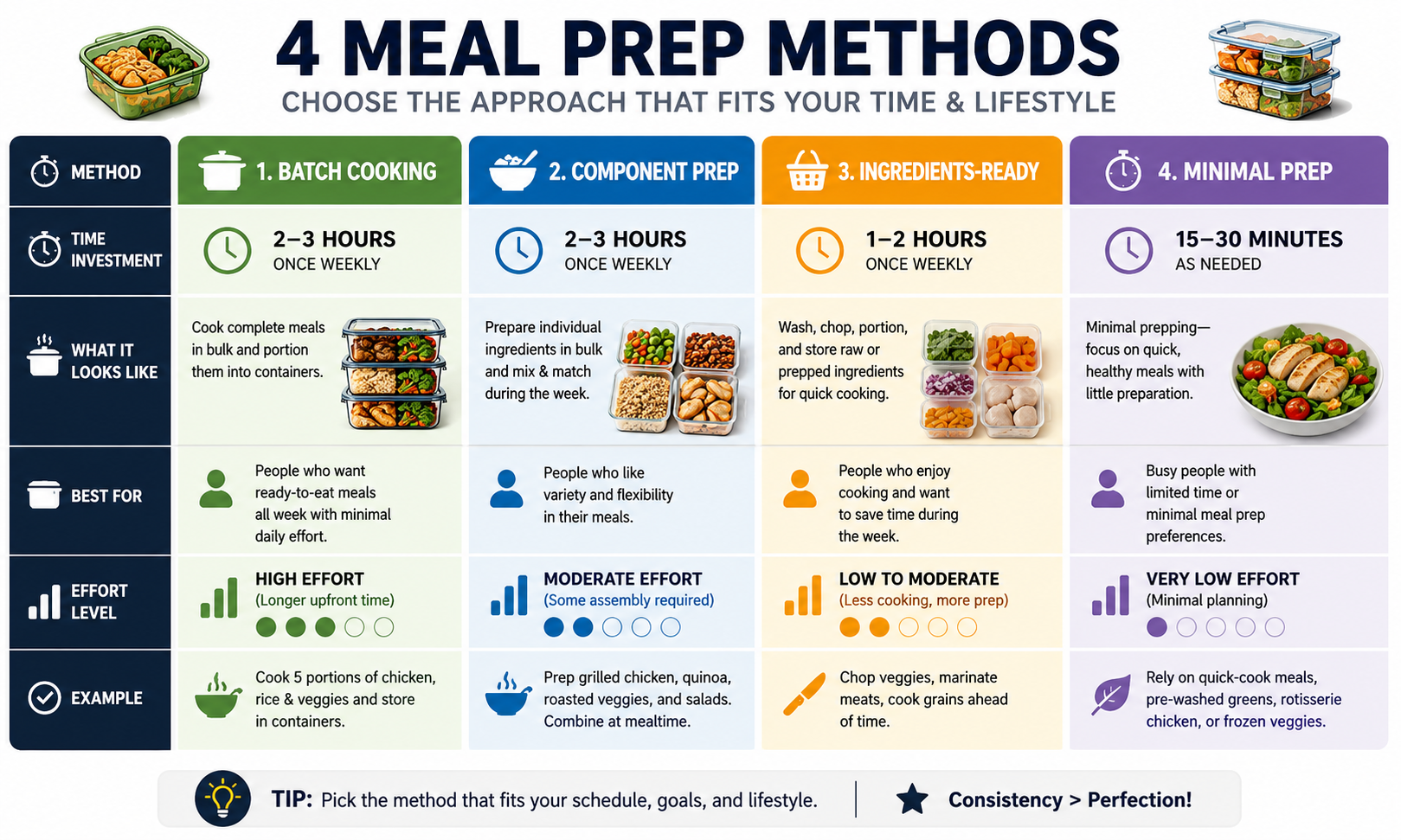
Answer: There’s no single “best” food preparation method—consistency matters more than perfection. Choose the one that fits your schedule and lifestyle. Here are four evidence-based approaches, each suited to different time commitments and cooking preferences:
| Method | What It Involves | Time Investment | Best For |
|---|---|---|---|
| Batch Cooking | Cook complete meals (e.g., chili, casserole) in large portions; reheat throughout the week | 2–3 hours once weekly | People with predictable schedules; families; those who want minimal daily cooking |
| Component Prep | Cook proteins, grains, and vegetables separately, then mix and match into different meals | 2–3 hours once weekly | People who want variety without monotony; those with flexible tastes |
| Ingredients-Ready | Prep chopped vegetables, cooked proteins, and grains; assemble meals fresh each day | 1–2 hours | People with limited fridge space; those who prefer freshness; busy weeknights |
| Minimal Prep | Organize pre-made components (rotisserie chicken, frozen vegetables, canned beans) with light assembly | 15–30 minutes | Very busy people; beginners; those on tight time budgets |
How to choose your method:
- If you have 2–3 uninterrupted hours on the weekend, batch cooking or component prep will save the most time during the week.
- If you have 30–60 minutes scattered throughout the week, minimal or ingredients-ready prep fits better.
- Start with one method; experiment with others after a few weeks to find what sticks.
What makes a meal preparation strategy sustainable?
Answer: Sustainability depends on three factors: variety, realism, and flexibility. <cite index=”3-1″>If you’re new to meal prepping, starting with just a few meals a week can set you up for success—setting aside a couple of hours weekly to grocery shop and prepare food can reduce stress and prevent impulsive eating when hungry</cite>.
Why sustainable meal planning works: <cite index=”4-1″>Food preparation removes daily guesswork around meal choices and makes nutritious eating more consistent. When balanced meals and snacks are planned and cooked ahead of time, it’s easier to manage portions, avoid impulsive decisions, and maintain steady energy levels</cite>.
Preventing food boredom (the #1 reason people quit): Monotony is a real saboteur. Build variety into your food preparation system:
- Protein rotation: Vary between 3–4 proteins weekly (chicken, turkey, beef, fish, tofu, legumes)
- Carbohydrate variety: Prep 2–3 different grains or starches (brown rice, quinoa, sweet potato, regular potato)
- Seasoning transformation: Use different flavor profiles on identical base ingredients—stir-fry sauce on Monday, curry on Wednesday, Mediterranean herbs on Friday
- Vegetable diversity: Prep 3–4 different non-starchy vegetables to rotate through the week
Time Management for Meal Preparation
How long does meal preparation take per week?
Quick answer: Meal preparation typically takes 2–3 hours once weekly for a full-week batch. <cite index=”19-1″>Depending on what you’re cooking and prepping, meal prep could take anywhere from 30 minutes to a couple of hours. If you’re new to meal preparation, it’s recommended to pad your time a bit at first until you find your system and know how long preparation takes</cite>. Beginners often overestimate needs; it speeds up after week 3–4.
Here’s a realistic breakdown:
| Activity | Time |
|---|---|
| Meal planning + grocery list | 20–30 min |
| Grocery shopping | 45–90 min |
| Prep session (washing, chopping, cooking) | 90–180 min |
| Total weekly time | 2.5–5 hours |
Time savings (the big payoff): <cite index=”20-1″>Batch cooking typically saves 6–8 hours weekly. Instead of spending 45 minutes daily cooking (about 5.25 hours/week), you’ll spend 2–3 hours once, cutting total cooking time by roughly 60%</cite>.
For busy schedules: <cite index=”22-1″>For busy parents and professionals, meal preparation is a tool to avoid last-minute takeout and missed meals. By preparing meals at home just three times per week, you could potentially save $50 and avoid consuming an extra 1,500 calories compared to relying on takeout</cite>. Even short-burst food preparation sessions (15–30 min) yield benefits when done consistently.
What’s the most efficient meal prep sequence?
Answer: Efficiency comes from working parallel (using ovens/slow cookers while prepping) and batching similar tasks. <cite index=”18-1″>Begin with foods that require the longest cooking times</cite>, allowing your slow cooker or oven to work while you handle hands-on preparation.
Step-by-step efficient food preparation sequence (2–3 hours total):
- Start long-cooking items first (10–15 min setup)
- Begin slow cooker with proteins or batch stew
- Start boiling water for grains (rice, quinoa, pasta)
- Place proteins in oven at temperature
- While these cook unattended, proceed to step 2
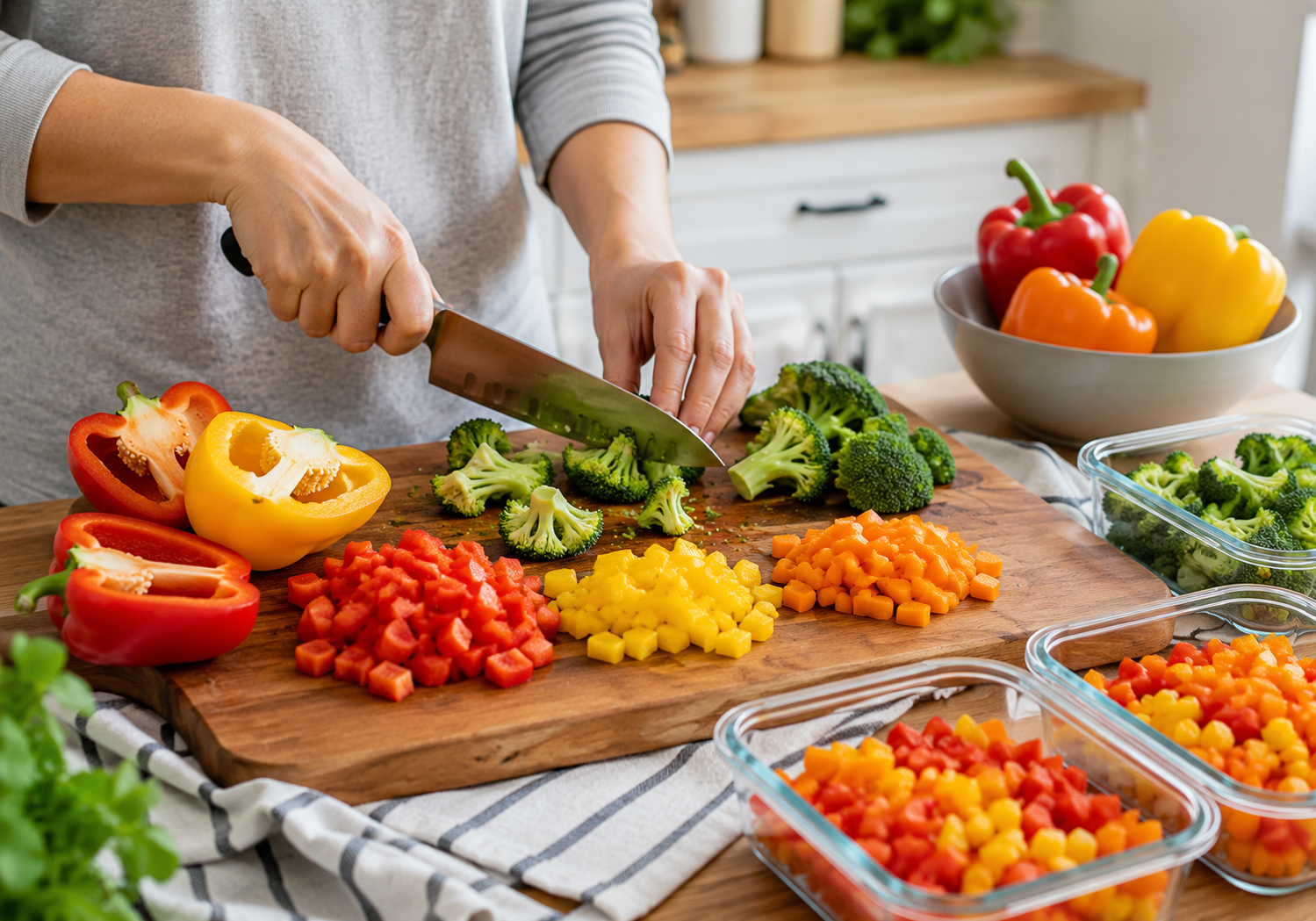
- Wash and chop all vegetables together (30–40 min)
- Batch-chop all vegetables for the week at once
- <cite index=”23-1″>Chopping ingredients for one meal takes ~10 minutes. Chopping ingredients for 15 meals at once takes ~40 minutes</cite>—substantial time savings through bulk batching
- Organize prepped vegetables by recipe to avoid confusion
- Roast or sauté vegetables (20–25 min, while proteins finish)
- Toss vegetables with oil and seasonings
- Roast at 400°F or sauté on stovetop in batches
- Check on slow cooker/oven proteins
- Cool, portion, and store (30–40 min)
- Let all cooked food cool 10–15 minutes
- Portion into containers using food scale
- Label each container: date, meal name, reheating instructions
- Refrigerate (4–5 days) or freeze (3 months)
- Clean all at once (10–15 min)
- Wash all dishes, pans, utensils in one session
- Wipe down cutting boards, counters, stove
- Remove trash
Key principle: <cite index=”23-1″>Single-task batching is faster than switching between tasks</cite>. Chop all vegetables together, cook everything at once, clean once.
Building Your Meal Preparation Shopping List and Recipes
What foods should you prioritize for weight loss food preparation?
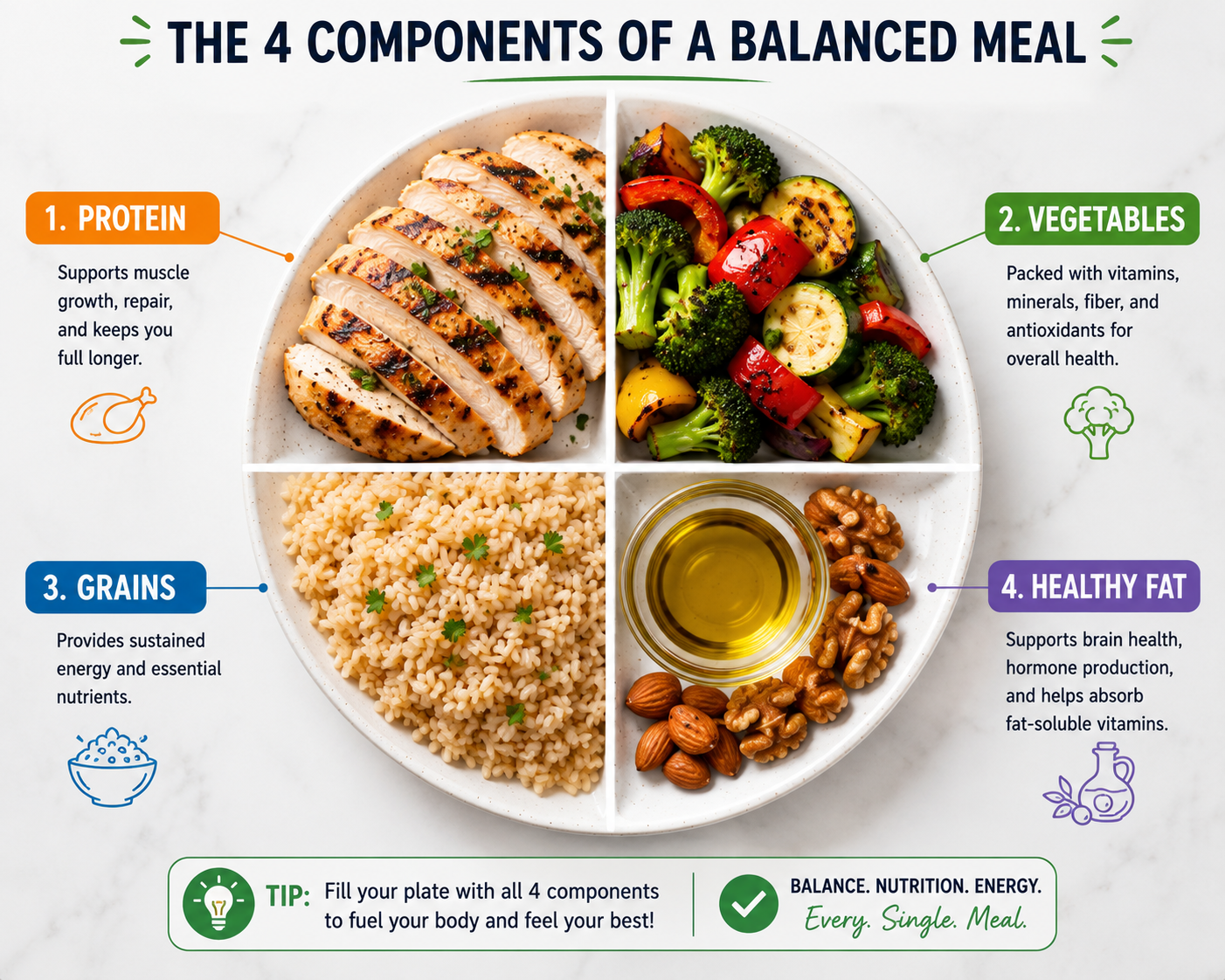
Answer: A weight loss–friendly meal should contain three core components: lean protein (25–35g), non-starchy vegetables (2–3 cups), and whole-grain carbohydrates (½–¾ cup cooked), plus measured healthy fats. This composition supports satiety, prevents muscle loss during calorie deficit, and stabilizes blood sugar throughout the day.
The three pillars of balanced meal preparation:
1. Lean Protein Sources (25–35g per meal)
- Poultry: Chicken breast, turkey breast, ground turkey (93% lean)
- Beef: Lean sirloin, ground beef (90%+ lean)
- Fish & seafood: Salmon, cod, tilapia, shrimp
- Eggs: Whole eggs or egg whites
- Dairy: Greek yogurt (plain, unsweetened), cottage cheese (low-fat)
- Plant-based: Black beans, lentils, chickpeas, tofu, tempeh
Why protein matters for weight loss: Protein promotes satiety (feeling full longer), preserves muscle mass during calorie deficit, and requires more energy to digest than carbohydrates or fats. This thermic effect (calories burned during digestion) is highest with protein, making it particularly valuable for weight loss meal preparation.
2. Non-Starchy Vegetables (2–3 cups per meal)
- Cruciferous: Broccoli, Brussels sprouts, cauliflower
- Peppers & summer squash: Bell peppers (all colors), zucchini, yellow squash
- Leafy greens: Spinach, kale, arugula, lettuce
- Other vegetables: Carrots, green beans, asparagus, snap peas, tomatoes, cucumber
Why non-starchy vegetables: These vegetables are low-calorie but high-volume, filling your stomach and promoting satiety (fullness) without excess calories. They’re also nutrient-dense, providing vitamins, minerals, and fiber critical during weight loss.
3. Complex Carbohydrates & Whole Grains (½–¾ cup cooked per meal)
- Grains: Brown rice, white rice, quinoa, oats, barley
- Starchy vegetables: Sweet potato, white potato, yam
- Breads: Whole-grain bread, whole-wheat pasta
- Legumes: Black beans, lentils, kidney beans, chickpeas (double as protein)
Why complex carbs matter: Whole grains and complex carbohydrates stabilize blood glucose levels and provide sustained energy throughout the day. They’re also fiber-rich, which supports both satiety and digestive health.
4. Healthy Fats (1–2 tablespoons per meal)
- Oils: Olive oil, avocado oil, coconut oil
- Nuts & seeds: Almonds, walnuts, chia seeds, flax seeds
- Other: Avocado, nut butters, cheese (in moderation)
Important: Healthy fats are essential for hormone production and nutrient absorption, but they’re calorie-dense (9 calories/gram vs. 4 for protein/carbs). Measure carefully to avoid unintentional overeating during meal preparation.
Sample Meal Prep Recipes (Yields 4 Servings)
Recipe 1: Sheet Pan Lemon Herb Chicken with Roasted Vegetables
Ingredients:
- 1.5 lbs boneless, skinless chicken breasts
- 2 cups broccoli florets
- 2 cups bell peppers, chopped
- 2 medium zucchini, sliced
- 2 tbsp olive oil
- Juice and zest of 2 lemons
- 2 tsp dried oregano, 1 tsp garlic powder, salt and pepper to taste
Instructions:
- Preheat oven to 400°F.
- Toss chicken and vegetables with olive oil, lemon juice and zest, oregano, garlic powder, salt, and pepper.
- Spread on a sheet pan in a single layer.
- Bake for 20–25 minutes until chicken reaches 165°F internally and vegetables are tender.
- Cool, then portion into 4 containers. Refrigerate up to 4 days or freeze up to 3 months.
Nutrition per serving (estimated): 280 calories | 35g protein | 12g carbs | 10g fat
Recipe 2: Turkey Chili with Beans
Ingredients:
- 1 lb ground turkey
- 1 tbsp olive oil
- 1 large onion, diced
- 3 cloves garlic, minced
- 2 cans diced tomatoes (14.5 oz each)
- 1 can black beans, drained and rinsed
- 1 can kidney beans, drained and rinsed
- 2 tbsp chili powder
- 1 tsp cumin
- 1 tsp paprika
- Salt and pepper to taste
Instructions:
- Heat olive oil in a large pot over medium-high heat.
- Brown ground turkey, breaking it into small pieces, about 5–7 minutes.
- Add onion and garlic; sauté 3–4 minutes until softened.
- Stir in chili powder, cumin, paprika, salt, and pepper.
- Add diced tomatoes and beans (with liquid from tomatoes only; drain bean liquid).
- Simmer on low heat for 25–30 minutes, stirring occasionally.
- Cool and portion into 4 containers. Refrigerates for 4–5 days or freezes for 3 months.
Nutrition per serving (estimated): 310 calories | 32g protein | 28g carbs | 8g fat
Recipe 3: Quinoa Buddha Bowl Base (Assemble with Different Toppings)
Ingredients (for base):
- 2 cups cooked quinoa
- 2 cups cooked sweet potato cubes (roasted with 1 tbsp olive oil)
- 2 cups roasted chickpeas (tossed with 1 tbsp olive oil, paprika, cumin)
- 2 cups chopped spinach or kale
Topping suggestions for variety:
- Bowl 1: Tahini dressing + cucumber + cherry tomatoes
- Bowl 2: Peanut sauce (2 tbsp PB + 2 tbsp water + 1 tsp soy sauce) + shredded carrots + green onion
- Bowl 3: Lemon-olive oil dressing + roasted red peppers + feta cheese (1 oz)
- Bowl 4: Curry-lime dressing + shredded coconut + mango chunks
Nutrition per base serving (estimated): 320 calories | 12g protein | 45g carbs | 10g fat (Dressings add 50–100 calories depending on choice)
Sample Weekly Shopping List (for 4 servings of 3 meals)
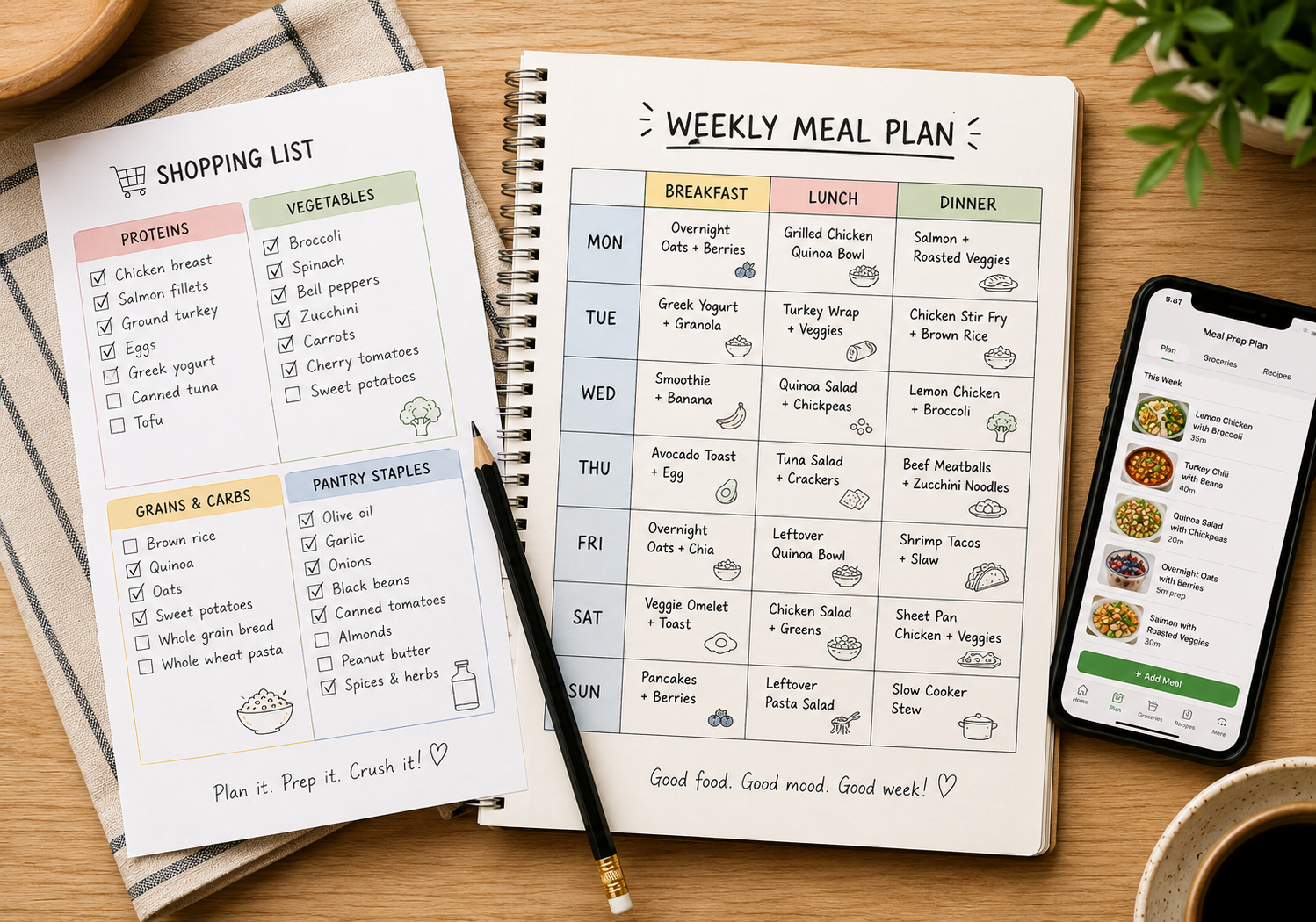
Proteins: Chicken breast (2 lbs), ground turkey (1.5 lbs), eggs (1 dozen), Greek yogurt (32 oz)
Vegetables: Broccoli (2 heads), bell peppers (4), zucchini (3), spinach (10 oz frozen), onions (3), garlic (1 bulb), carrots (3), cherry tomatoes (1 pint), sweet potatoes (4 medium)
Grains & Legumes: Brown rice (1 lb dry), quinoa (1 lb dry), oats (1 lb), canned black beans (2), canned kidney beans (1), canned diced tomatoes (3), chickpeas (2 cans)
Pantry Staples: Olive oil, low-sodium soy sauce, lemon juice, chili powder, cumin, paprika, garlic powder, oregano, salt, pepper
Estimated weekly cost: $60–$80 (varies by region and sales)
Common Food Preparation Pitfalls and Solutions
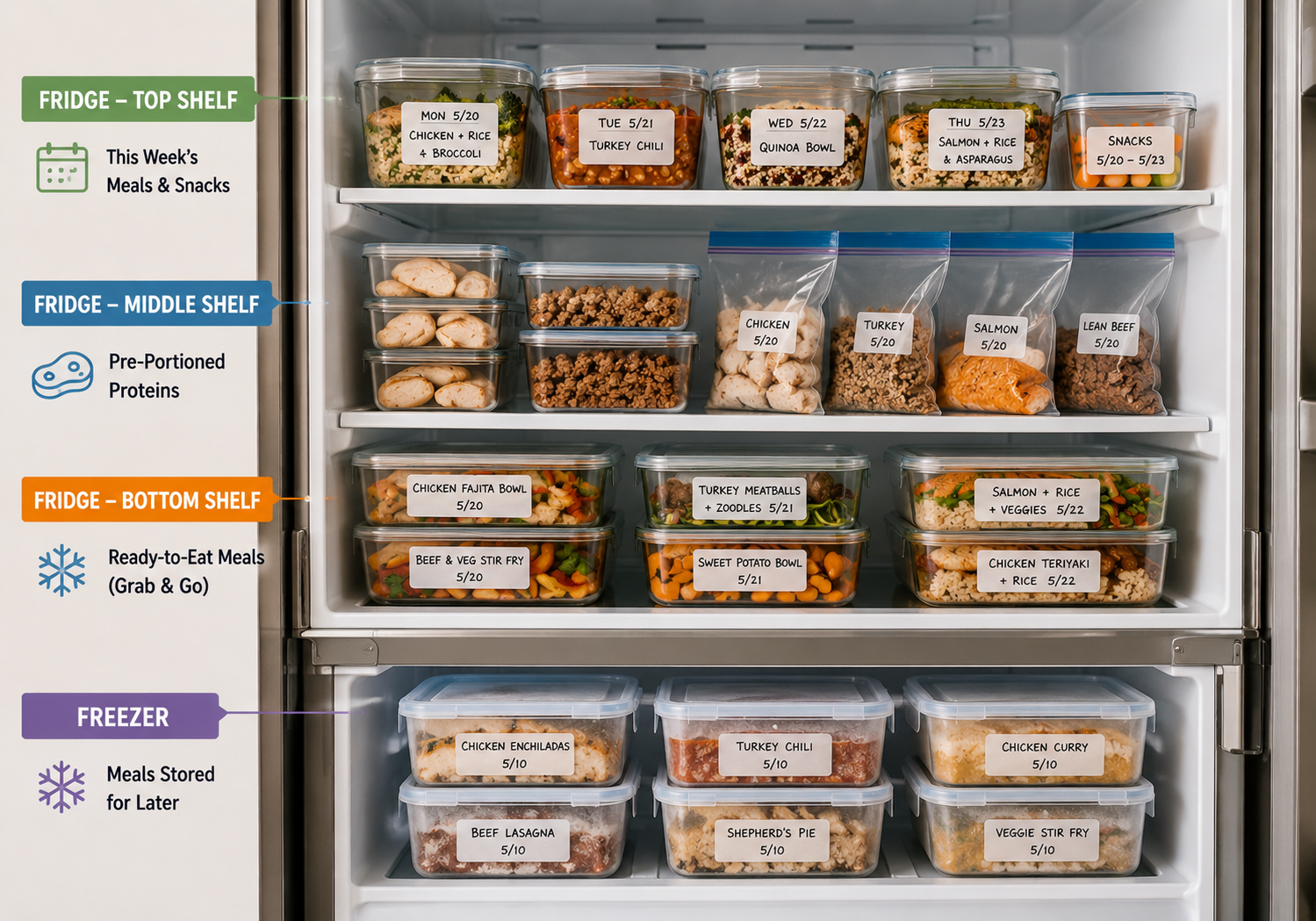
These are the five most common reasons people abandon meal preparation—and how to overcome each one:
| Pitfall | Why It Happens | How to Fix It |
|---|---|---|
| Food monotony / boredom | Eating identical meals all week creates fatigue | Use 2–3 different sauces or seasonings on the same base ingredient. Rotate 3–4 proteins weekly. Vary your non-starchy vegetables (don’t eat broccoli every day). |
| Spoilage and waste | Overly optimistic food preparation; improper container storage | Store in airtight, labeled containers. Refrigerate at 40°F or below. Freeze half your prepared meals if doing full-week batch; thaw the night before. Cooked chicken/turkey lasts 4 days; fish 2–3 days. |
| Portion creep | Forgetting to measure servings initially; adding extra sauce during reheating | Use a food scale when portioning initially. Pack dressings and sauces separately to control quantities. A tablespoon more of oil daily = 100+ extra calories/week. |
| Decision fatigue persists | Too many different meals prepped; choice overwhelm even with food preparation | Stick to 3–4 simple, familiar meals per week when starting. Increase variety after 3–4 weeks once food preparation becomes routine. |
| Burnout from time investment | Unrealistic expectations; attempting too much in first session | Start with 2–3 dinners and breakfast items only. Don’t prep every meal for the full week initially. Expand gradually after establishing the habit. |
Medical and Nutritional Disclaimer (Expanded)
Meal prep is a practical tool to support weight loss, but it is not a replacement for professional guidance. Individual caloric needs, macronutrient ratios, and dietary restrictions vary significantly based on age, sex, activity level, metabolic health, and medical conditions.
Before starting a meal prep routine for weight loss, consult with:
- Your primary care physician (to rule out metabolic disorders, thyroid issues, or other conditions affecting weight)
- A registered dietitian (to build a personalized nutrition plan tailored to your goals and health status)
- A mental health professional (if you have a history of disordered eating)
Sustainable weight loss involves more than meal prep—it includes regular physical activity, adequate sleep, stress management, and behavioral support. Meal prep removes one barrier (food preparation and impulse eating), but long-term success requires addressing the whole picture.
Summary: Meal Preparation for Weight Loss
What works: Food preparation is effective for weight loss because it combines three proven strategies: automatic portion control, reduced decision fatigue, and consistent access to balanced nutrition. Research-backed evidence shows 24% greater weight loss with structured meal planning and 8% greater loss with pre-portioned meals compared to control groups.
Realistic outcomes: Expect 1–2 pounds per week of sustainable fat loss (CDC-recommended rate). First month typically shows 6–7 pounds (including water weight); month 2+ shows 1–2 pounds per week of actual fat loss.
Time required: 2–3 hours once weekly yields 6–8 hours weekly time savings by eliminating daily cooking. Beginners should pad initial time; speed improves after 3–4 weeks.
Best approach: Choose one food preparation method (batch cooking, component prep, minimal prep) that fits your schedule and lifestyle. Consistency beats perfection. Start small: 2–3 meals your first week.
Key Takeaways: Meal Prep for Weight Loss
- Evidence supports meal preparation for weight loss. <cite index=”9-1″>Structured meal plans produce 24% greater weight loss in 12 weeks</cite>; pre-portioned meals reduce estimation errors and automatic portion control.
- Portion control is the primary mechanism. When food is pre-measured, calorie targets become automatic, eliminating the guesswork that derails weight loss.
- Decision fatigue reduction matters psychologically. Removing daily “what’s for dinner?” decisions eliminates the choice point where takeout or impulsive eating typically occurs.
- Realistic weight loss pace is 1–2 pounds weekly. <cite index=”28-1″>CDC recommends this rate for sustainable results</cite>. Faster loss often includes muscle and triggers regain.
- Time investment yields exponential returns. 2–3 hours weekly food preparation saves 6–8 hours during the week while supporting better nutrition.
- Method matters less than consistency. Batch cooking, component prep, or minimal prep—pick what you’ll actually do weekly.
- Sustainability depends on variety. Rotate proteins, grains, vegetables, and seasonings to prevent food monotony (the #1 reason people quit).
- Pair meal preparation with other habits. Food preparation removes one barrier (daily cooking), but long-term weight loss requires adequate sleep, movement, stress management, and behavioral support.
Bottom line: Meal preparation transforms weight loss from a daily series of decisions into a single-session, weekly system. By removing friction and automating portion control, advance food preparation makes sustainable, healthy eating achievable.
Does meal preparation help with weight loss?
Yes. Research shows individuals using structured meal plans lose 24% more weight in 12 weeks compared to those without plans. The mechanism is threefold: portion control accuracy (pre-portioned meals prevent estimation errors), decision fatigue reduction (removing daily food-choice decisions when tired), and consistent access to balanced nutrition. A study by the American Institute for Cancer Research found participants receiving pre-portioned foods lost 8% of body weight versus 6% in a control group.
How much weight can you lose with meal preparation?
Realistic weight loss with meal preparation is 1–2 pounds per week, according to CDC guidelines. This pace is sustainable and preserves muscle. With a 500-calorie daily deficit, most people lose 1 pound weekly. First month: expect 6–7 pounds (including 2–3 lbs water weight from reduced glycogen). Month 2+: 1–2 lbs per week of actual fat loss.
How long does meal preparation take per week?
Meal preparation typically takes 2–3 hours once weekly for a full-week batch: meal planning (20–30 min), grocery shopping (45–90 min), and cooking (90–180 min). This yields 6–8 hours weekly time savings by eliminating daily cooking. Net savings: ~60% reduction in cooking time.
What meals should you prepare for weight loss?
Build each meal around four components: (1) Lean protein 25–35g (chicken, turkey, fish, eggs, Greek yogurt, legumes); (2) Non-starchy vegetables 2–3 cups (broccoli, peppers, spinach, zucchini); (3) Complex carbohydrates ½–¾ cup cooked (brown rice, quinoa, sweet potato); (4) Healthy fats 1–2 tbsp (olive oil, nuts, avocado). Example: 6 oz grilled chicken + ¾ cup brown rice + 2 cups roasted broccoli and peppers + 1 tbsp olive oil.
Can you meal prep for an entire week?
Most cooked meals stay fresh 4–5 days refrigerated at 40°F. Cooked chicken and turkey last 4 days; fish 2–3 days. For full-week meal preparation, freeze half your prepared meals; move to fridge the night before eating. Always label containers with date and content.
What’s the most efficient meal preparation sequence?
Start with longest-cooking items (10–15 min setup): slow cooker, oven, boiling water for grains. While these cook, batch-chop all vegetables (30–40 min). Then roast/sauté vegetables (20–25 min) while proteins finish. Cool food, portion into containers with food scale (30–40 min). Clean all at once at the end (10–15 min). Total: 2–3 hours.
References and Sources
The following sources were consulted in this article and should be linked where inline citations appear:
- Research on structured meal plans and weight loss outcomes — Source needed: Study cited in index 9-1 (24% weight loss comparison)
- American Institute for Cancer Research (AICR) study on pre-portioned foods — https://www.aicr.org/resources/blog/study-prepackaged-meals-may-spur-more-weight-loss/
- International Journal of Behavioral Nutrition and Physical Activity study (2017) on home cooking and weight — Source needed: Study cited in index 16-1 (28% less likely to be overweight)
- CDC weight loss guidance — Source needed: CDC recommendation for 1–2 lbs/week
- Batch cooking time savings study — Source needed: Study cited in index 20-1 (6–8 hours weekly savings)
This article was written by Talha Yousaf, M.Phil. in Physics, as general educational wellness content. The author is not a registered dietitian or medical doctor. For personalized nutrition advice, consult a qualified healthcare provider.
Last updated: July 2026



Leave a Reply