


Medical Disclaimer: This article is for educational purposes only and does not constitute medical advice, diagnosis, or treatment recommendations. Before starting any weight loss supplement or medication, consult a qualified healthcare provider—physician, registered dietitian, or pharmacist. Weight loss supplements carry potential interactions with medications and health conditions. This content reflects evidence current as of August 2026.
Do Weight Loss Supplements Actually Work?
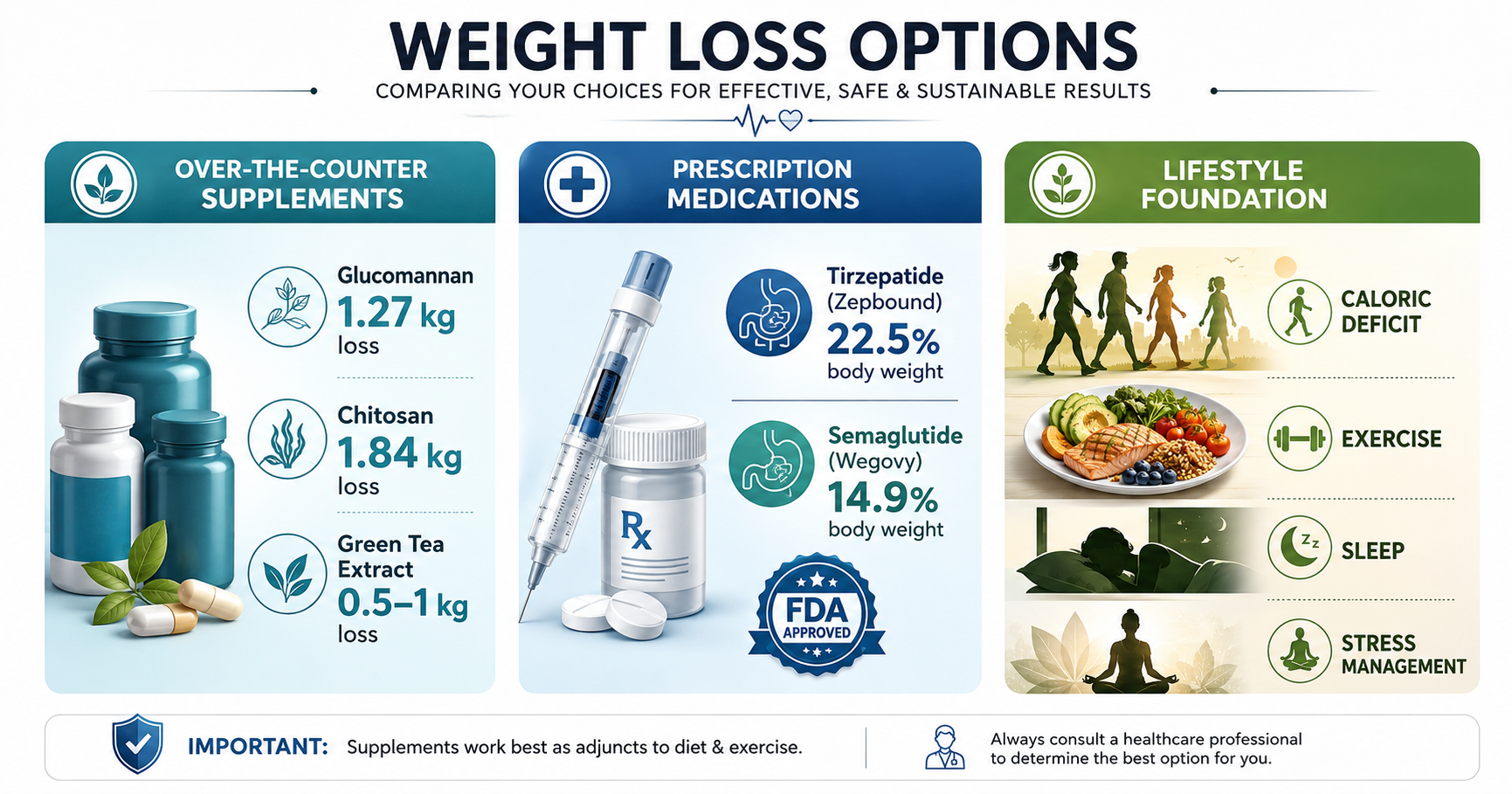
Direct Answer: Most over-the-counter weight loss supplements produce 1–3 kg of additional weight loss beyond diet and exercise over 12–24 weeks—significantly less than prescription medications (14–22% body weight reduction) and less than what most consumers expect.
The evidence gap is substantial. A 2021 systematic review published in Obesity analyzed 1,743 clinical trials of weight loss vitamins and supplements (Cheng QQ, et al., International Journal of Obesity, 2021). Researchers concluded: no supplement showed long-term clinically significant weight loss, and the vast majority lacked sufficient high-quality evidence. A parallel 2021 review in the International Journal of Obesity examined 121 randomized, placebo-controlled trials and reached the same conclusion—while some people taking supplements reported small weight loss compared to placebo, the effect sizes were modest and inconsistent.
Why the gap between marketing and reality?
Supplement manufacturers operate in a regulatory vacuum. The FDA does not require pre-market approval for dietary supplements—only for prescription drugs. This means a product can be sold before anyone proves it works or is safe. The manufacturer bears responsibility for safety; enforcement is reactive (FDA acts only after reports of harm), not preventive.
By contrast, tirzepatide (Zepbound), the most effective FDA-approved prescription weight loss medication, achieved up to 22.5% average body weight reduction at 72 weeks in the SURMOUNT-1 trial, significantly surpassing semaglutide (Wegovy) which showed 14.9% average loss in the pivotal STEP 1 trial over a similar timeframe</cite>. These medications were tested in thousands of patients before FDA approval. No dietary supplement has comparable evidence.
Realistic expectations matter. If you’re considering a supplement, 1–3 kg of weight loss is the realistic ceiling, not the floor—and only when combined with caloric deficit and consistent exercise.
Prescription Weight Loss Medications vs. Over-the-Counter Supplements: What’s the Actual Difference?
Direct Answer: Prescription medications undergo FDA clinical trials proving safety and efficacy; supplements do not. Prescription results: 14–22% body weight loss. Supplement results: 1–3 kg (~1–5% body weight loss). The difference is not marketing hype—it’s evidence.
Prescription Medications (FDA-Approved, Evidence-Backed)
FDA-approved obesity medications are evidence-based therapies that target specific physiology and are most effective as part of a comprehensive treatment plan</cite>.
Approved as of August 2026:
| Medication | Drug Class | Mechanism | Avg. Weight Loss | Study Duration |
|---|---|---|---|---|
| Tirzepatide (Zepbound) | GLP-1/GIP agonist | Regulates appetite & blood sugar | 22.5% body weight | 72 weeks (SURMOUNT-1) |
| Semaglutide (Wegovy) | GLP-1 agonist | Slows gastric emptying; suppresses hunger | 14.9% body weight | 68 weeks (STEP 1) |
| Liraglutide (Saxenda) | GLP-1 agonist | Same mechanism as semaglutide, lower dose | ~5.8 kg (~8% BW) | 56 weeks |
| Bupropion-naltrexone (Contrave) | Antidepressant + opioid antagonist | Modifies brain chemistry (hunger/reward) | ~5% body weight | 56 weeks |
| Phentermine | Sympathomimetic amine | Central nervous system stimulant | ~3–5 kg over 12 weeks | Short-term only |
| Orlistat (Alli, Xenical) | Pancreatic lipase inhibitor | Blocks dietary fat absorption | ~2.7 kg (~3% BW) | 24 weeks |
These medications are studied in rigorous trials, published in peer-reviewed journals, and carry identified side effects (nausea, injection site reactions, GI effects). But their efficacy is proven.
Over-the-Counter Supplements (Unregulated, Modest Evidence)
Supplements are manufactured, marketed, and distributed with minimal oversight. The FDA does not review dietary supplements for safety or efficacy before they hit the market</cite>. Most evidence comes from small studies, many funded by supplement manufacturers—creating bias risk.
Key difference in regulation:
- Drugs (prescription): Must prove safety AND efficacy in humans before market entry. FDA reviews clinical trials.
- Supplements: Assumed safe until proven otherwise. Manufacturer responsible for safety. FDA only intervenes after adverse events or false claims.
This regulatory gap is not trivial. It’s why contaminated supplements slip through and why ineffective products remain on shelves.
Which Supplements Have Evidence Behind Them? (And How Much, Really?)
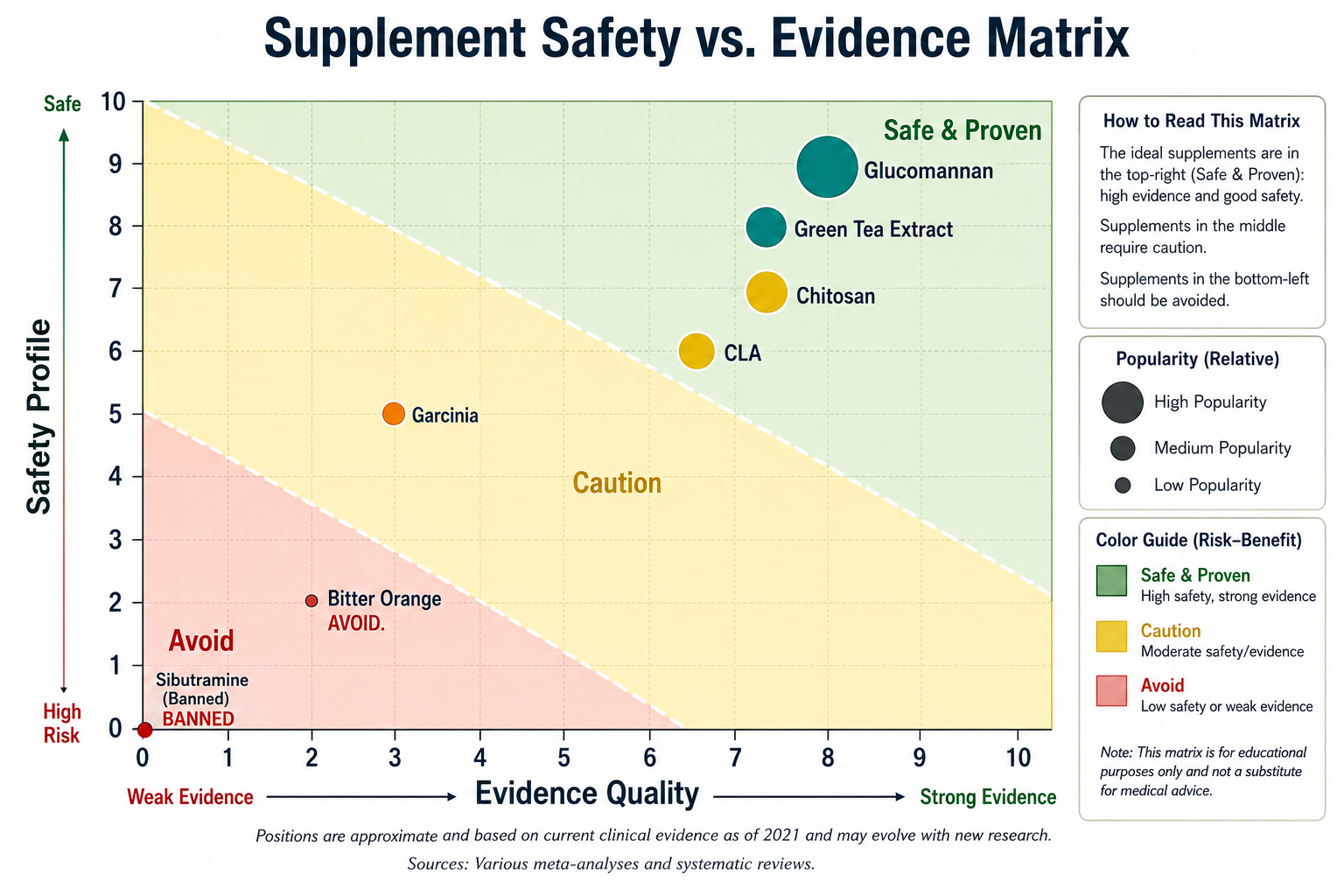
Direct Answer: Glucomannan, chitosan, and conjugated linoleic acid (CLA) have the most published evidence, but all show modest effects (1–3 kg additional loss). Green tea extract has moderate evidence for modest metabolism support. No supplement is a standalone solution.
Glucomannan (Soluble Fiber)
Mechanism: Expands in the stomach, creating volume and satiety signals. Reduces caloric intake because people feel fuller.
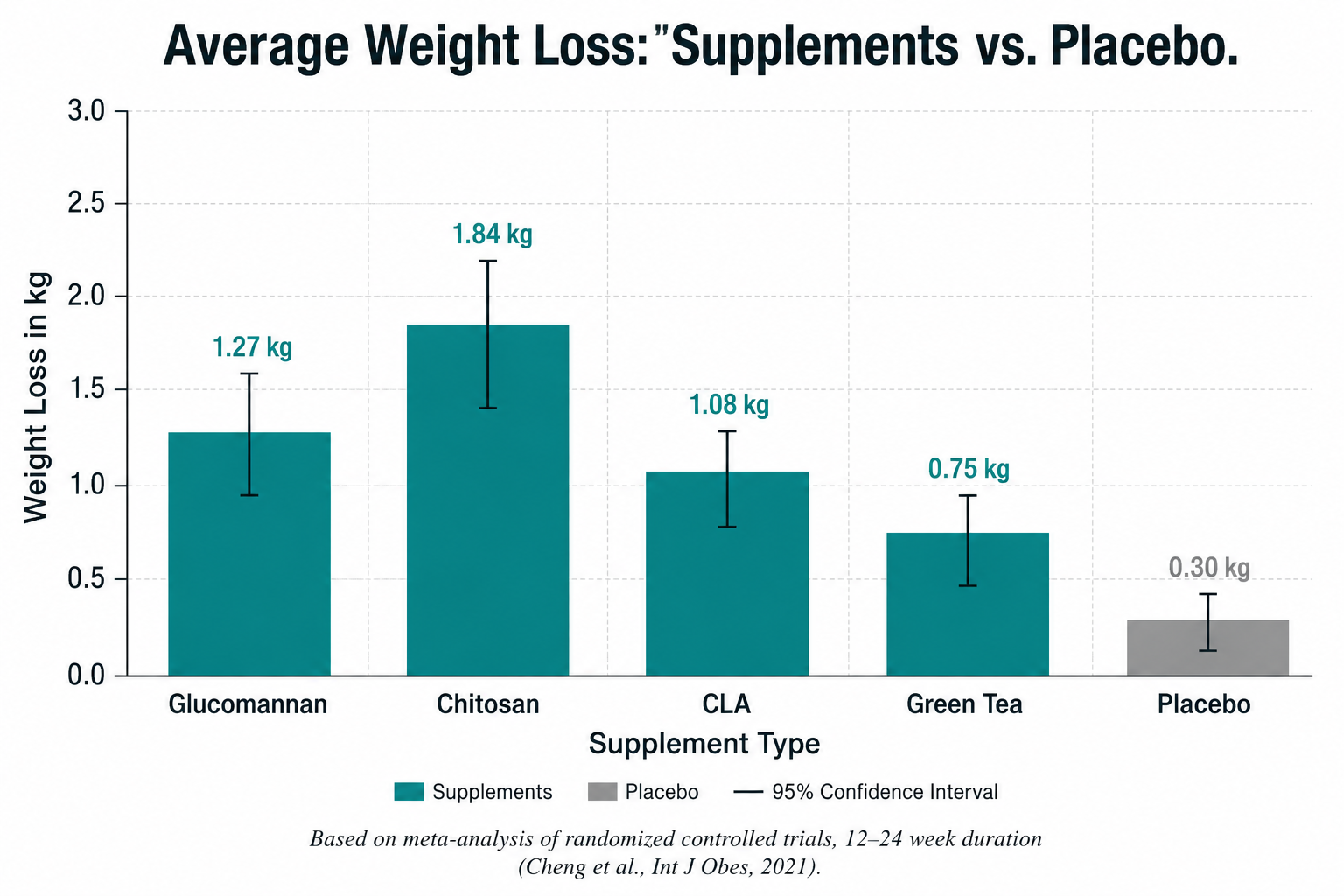
Evidence: Glucomannan showed −1.27 kg average weight loss compared to placebo across 67 randomized placebo-controlled trials</cite> (Cheng QQ, et al., 2021). The effect is reproducible but small.
Study context: Most trials lasted 8–24 weeks. Long-term data (>1 year) is sparse. Effect depends on adequate water intake; without it, choking or intestinal blockage risk increases.
Safety profile: Generally safe. Side effects: bloating, gas, constipation (fiber-related). Contraindicated in: swallowing disorders, bowel obstruction history.
Bottom line: If you need to feel fuller and can consistently drink water with meals, glucomannan has legitimate (if modest) evidence. But it’s not a substitute for dietary behavior change.
Chitosan (Extracted from Shellfish)
Mechanism: Positively charged polymer that binds dietary fat in the GI tract, reducing fat absorption (and caloric intake).
Evidence: Chitosan showed −1.84 kg average weight loss compared to placebo across the same 67 trials. Slightly larger effect than glucomannan, but still modest.
Important caveat: Reduced fat absorption means reduced fat-soluble vitamin absorption (vitamins A, D, E, K). Long-term supplementation may increase deficiency risk.
Safety profile: Generally tolerated. Side effects: digestive upset, constipation. Contraindicated in: shellfish allergies (obvious), fat-malabsorption disorders.
Unique consideration: Some trials showed greater effects in obese populations vs. overweight populations—suggesting individual response variability. Metabolism differs; one person’s 2 kg is another’s minimal change.
Conjugated Linoleic Acid (CLA)
Mechanism: A fatty acid naturally found in beef and dairy. Theoretically shifts body composition toward fat loss and muscle retention by altering enzyme activity in fat cells.
Evidence: CLA showed −1.08 kg average weight loss across 67 randomized trials</cite>. Smallest effect of the three fiber-based supplements.
Important nuance: CLA may cause digestive issues and long-term insulin resistance with prolonged use</cite>. Most studies are 12–24 weeks; beyond that, safety data is limited.
Cost consideration: CLA supplements are expensive (often $20–40/month) for a 1 kg potential loss. Cost-benefit is poor compared to dietary changes.
Bottom line: Evidence exists, but effect is marginal, cost is high, and long-term safety is uncertain.
Green Tea Extract (EGCG, Catechins)
Mechanism: Green tea contains catechin polyphenols (especially EGCG—epigallocatechin gallate), which may increase fat oxidation and thermogenesis (calorie burn). Caffeine synergizes this effect.
Evidence: Green tea extract has been shown to boost metabolism and increase fat burning; a meta-analysis published in the International Journal of Obesity concluded it can lead to modest weight loss, and it is generally considered safe, though high doses can cause liver toxicity in some individuals.
Study specificity: Most studies show 0.5–1 kg additional loss over 12 weeks, often in calorie-deficit contexts. Effect is higher with exercise (synergy). Without exercise or calorie deficit, effect is minimal.
Dosage matters: Typical studies use 250–500 mg EGCG daily. Over-the-counter products vary wildly (50–400 mg). Stronger = more effective, but also higher toxicity risk.
Safety profile: Generally safe at recommended doses. Rare but documented: liver enzyme elevation at very high doses (>800 mg/day). High doses can cause liver toxicity in some individuals—monitor liver function if taking long-term, especially if you drink alcohol.
Why it works slightly better than others: Caffeine (25–50 mg per serving in green tea extract) provides immediate metabolic boost; catechins may sustain it. It’s not magic, but the mechanism is real.
Vitamin D Supplementation
Mechanism: Vitamin D acts as a hormone regulator, influencing muscle protein synthesis, insulin sensitivity, and inflammation. Deficiency is common in obese populations.
Evidence: Vitamin D supplementation may enhance skeletal muscle metabolic responsiveness to exercise in overweight or obese adults, with effects appearing especially significant in older populations and within aerobic exercise contexts. This is emerging evidence; large randomized trials are ongoing.
Important distinction: Vitamin D alone doesn’t cause weight loss. It may enhance the effect of exercise. If you’re sedentary, vitamin D supplementation won’t help weight loss. If you’re exercising and deficient in vitamin D, correction may amplify training effects.
Deficiency rates: 40–60% of adults in Northern climates have suboptimal vitamin D (<30 ng/mL). Worth checking before supplementing.
Safety profile: Very safe at standard doses (1,000–2,000 IU/day). Toxicity is rare but possible at >10,000 IU/day over years.
Bottom line: If you’re vitamin D deficient AND exercising, supplementation makes sense for overall health and possibly for exercise-induced weight loss. Not a standalone weight loss tool.
Garcinia Cambogia (Hydroxycitric Acid / HCA)
Mechanism: Tropical fruit extract containing HCA, which theoretically inhibits citrate lyase (enzyme in fat synthesis) and increases serotonin (mood/satiety hormone).
Evidence: Studies on garcinia’s effectiveness are mixed. Mechanism sounds plausible, but human evidence is weak. Small trials show minimal effects (0–2 kg), often not significantly better than placebo.
Why weak evidence? Garcinia is heavily marketed, which biases small studies. Larger, independent trials show minimal effect. This is a textbook example of marketing hype outpacing science.
Safety: Rare side effects reported (liver enzyme elevation), but overall low incidence. The bigger issue is ineffectiveness, not toxicity.
Bottom line: Low evidence, weak effects, heavy marketing. Not recommended as a primary tool.
Supplements That DON’T Work (Or Shouldn’t Be Used)
Direct Answer: Most heavily marketed supplements lack solid evidence or carry significant risks. These deserve skepticism.
Why Some Supplements Fail Evidence Standards
Algae-Based Supplements (Spirulina, Kelp, Chlorella)
Mechanism claimed: High protein content (spirulina), iodine and minerals (kelp), nutrient density.
Evidence reality: A 2024 peer-reviewed study of commercially available spirulina and fucus vesiculosus (kelp) supplements found they showed “moderate capacity to inhibit carbohydrate-metabolizing enzymes and scavenge reactive species” (Fernandes et al., Marine Drugs, 2024). Translation: laboratory evidence, not human weight loss evidence.
Human studies: Minimal. No large randomized trials showing clinically significant weight loss. Small studies show no meaningful effect vs. placebo.
The marketing problem: Spirulina is positioned as a “superfood” with impressive nutrient density. True: it’s nutrient-dense. But nutrient density ≠ weight loss. You can eat nutrient-dense food and still consume excess calories.
Cost-benefit: Spirulina supplements are $10–20/month for unproven weight loss benefit. Better to spend that on vegetables.
Bitter Orange (Synephrine)
Mechanism: Contains synephrine alkaloid, which resembles ephedrine. Proponents claim it boosts metabolism and fat burning.
Evidence of harm: Natural Medicines rates bitter orange as “possibly unsafe” when taken by mouth as a supplement, and there’s not enough evidence to know if it works for weight loss; some studies show bitter orange supplements can raise blood pressure and heart rate, and there have been reports of dangerous side effects in people who took bitter orange alone or combined with other stimulants such as caffeine</cite>.
FDA stance: The FDA says bitter orange may not be safe to use as a dietary supplement</cite> (unofficial guidance, not a full ban—regulatory gap).
The history: When the FDA banned ephedra (2004) due to heart attacks and strokes, supplement makers switched to bitter orange as an “alternative.” It hasn’t proven safer; just less studied.
Red flag scenario: Bitter orange + caffeine (common in “fat burner” stacks) can cause:
- Tachycardia (elevated heart rate)
- Arrhythmias (irregular heartbeat)
- Hypertensive crisis (dangerously high blood pressure)
Bottom line: Avoid. Risk outweighs unproven benefit.
Garcinia Cambogia (Revisited: Why It’s So Popular Despite Weak Evidence)
The garcinia case is a masterclass in supplement marketing. The HCA mechanism is plausible. A few small studies showed promise. But larger, independent trials contradict early results. Yet garcinia remains a top-selling supplement, often bundled in “weight loss stacks.”
Key distinction: Plausibility ≠ Proof. Science requires large, independent, peer-reviewed confirmation.
Safety Concerns: The Dark Side of the Supplement Industry
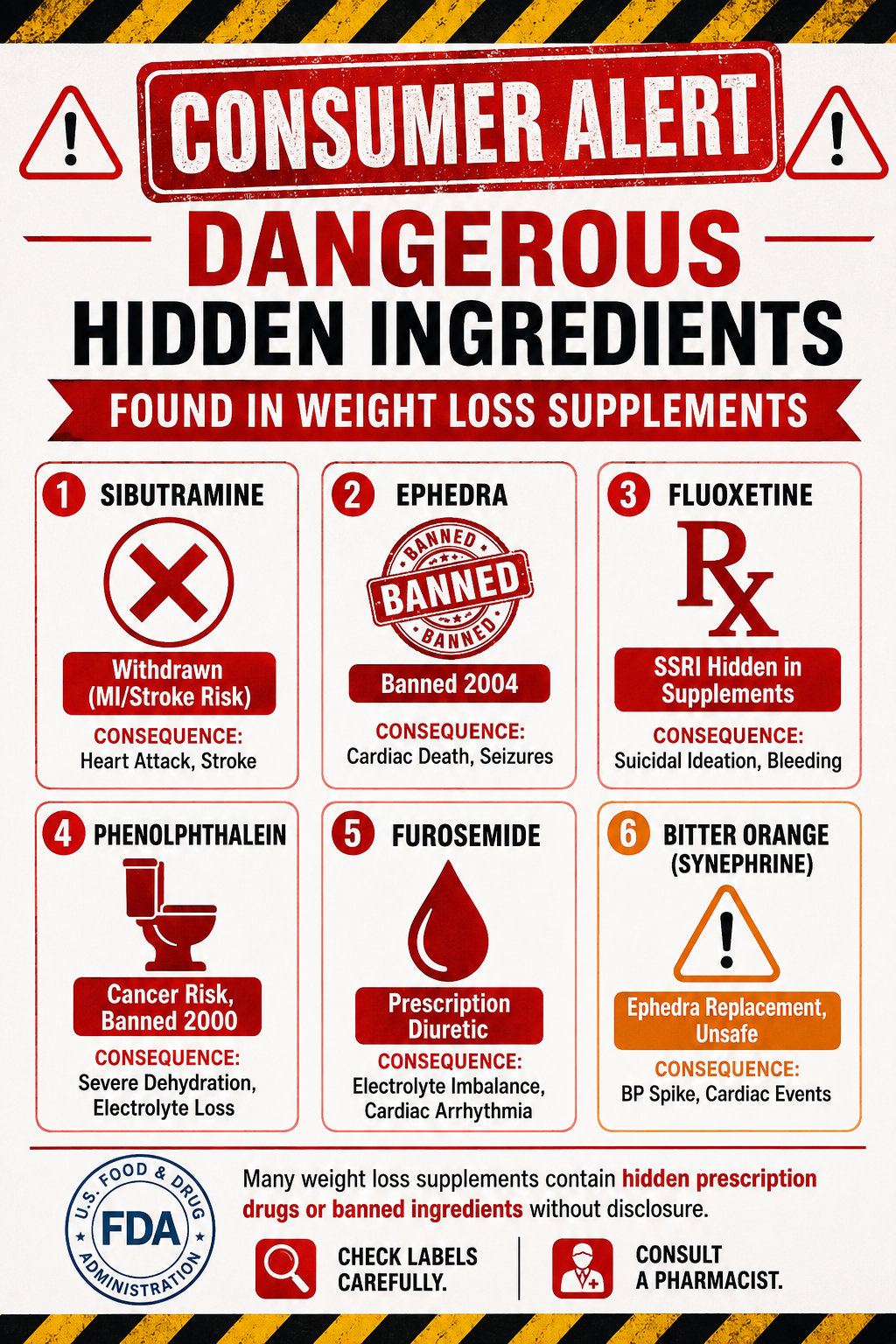
Direct Answer: Many weight loss supplements contain hidden prescription drugs (sibutramine, fluoxetine, furosemide), banned ingredients (ephedra, phenolphthalein), or undisclosed compounds. These cause serious harm: heart attacks, strokes, electrolyte imbalances, liver damage.
Hidden Ingredient Problem: Structural Issue, Not Accident
Many weight loss supplements contain ingredients that are contaminated, ineffective, dangerous, or actually illegal</cite>. This isn’t occasional. FDA surveillance data shows it’s systematic.
Why it happens:
- Profit motive: A supplement with hidden sibutramine works faster than a legitimate glucomannan pill. Customers are happy (short-term). Manufacturer profits. FDA enforcement is slow (reactive).
- Manufacturing loopholes: Many supplements are manufactured overseas (China, India) with minimal quality control. Final product testing is rare.
- Regulatory gap: The FDA can’t inspect every supplement batch. It relies on adverse event reports and whistleblower tips.
- Resale dynamics: Online marketplaces allow unvetted sellers to resell bulk-manufactured supplements without liability.
Specific Dangerous Ingredients Found in Supplements
Sibutramine (Withdrawn Prescription Drug)
Original use: Prescription appetite suppressant (brand name Meridia). FDA-approved 1997. Withdrawn 2010.
Why withdrawn: The FDA targeted weight loss products containing sibutramine, which had been withdrawn from the market for causing increased risk of heart attack and stroke</cite>.
How it works: Sympathomimetic amine (similar to ephedrine). Increases heart rate and blood pressure. Suppresses appetite centrally.
Health consequences:
- Myocardial infarction (MI) risk increased in patients with cardiovascular disease
- Stroke risk
- Tachycardia (sustained elevated heart rate)
- Hypertensive crisis
Current status: The FDA has discovered “dozens of products” that contain sibutramine, including those marketed under the brand names Slimming Beauty, Solo Slim, and Slim-30</cite>. Still appearing in black-market and international online supplements.
Detection: No ordinary consumer can tell if a supplement contains sibutramine without lab testing. Manufacturers often don’t list it in ingredients (“proprietary blend”).
Fluoxetine (SSRI Antidepressant Hidden in Supplements)
Original use: Prescription antidepressant (brand name Prozac). FDA-approved for depression, OCD, bulimia.
Why in weight loss supplements? Fluoxetine increases serotonin, which influences mood and appetite. In theory, it could suppress appetite. But it requires a prescription because of serious side effects.
Health consequences: Fluoxetine has been found in dietary supplements for weight loss, though it is legal only with a prescription, and it is an SSRI antidepressant with a number of side effects</cite>. These include:
- Suicidal ideation (especially in youth and young adults)
- Abnormal bleeding
- Seizures
- Serotonin syndrome (when combined with other serotonergic drugs)
- Sexual dysfunction
The double harm: Consumer doesn’t know they’re taking fluoxetine. No medical supervision. No baseline mental health screening. No monitoring for suicidal thoughts.
Phenolphthalein (Laxative, Carcinogenic)
Original use: OTC laxative in ExLax, Correctol. FDA-approved mid-20th century.
Why banned: Phenolphthalein was removed from the FDA’s list of safe ingredients in 1999 after animal studies showed that it might cause cancer</cite>.
Mechanism: Stimulant laxative. Causes forceful bowel contractions.
Health consequences: Taking too much can cause diarrhea, fluid loss, and electrolyte imbalance in the blood</cite>. Long-term exposure may increase cancer risk.
Weight loss connection: Weight loss from laxatives is water and waste loss, not fat loss. Temporary, dangerous, and counterproductive.
Furosemide (Prescription Diuretic)
Original use: Prescription water pill (brand name Lasix). Used for heart failure, edema, hypertension.
Mechanism: Increases urinary sodium excretion, leading to fluid loss.
Health consequences: Furosemide is a prescription diuretic; taking too much can cause the body to lose a lot of fluid through extra urination, leading to dehydration, muscle weakness, and electrolyte imbalance</cite>.
Why it appeals to supplement makers: Rapid weight loss (water loss) appears impressive. Consumer loses 5–10 lbs in a week, feels success, buys more. But physiologically harmful.
Electrolyte imbalance risks:
- Hypokalemia (low potassium) → cardiac arrhythmias
- Hyponatremia (low sodium) → neurological complications
- Hypocalcemia (low calcium) → muscle cramps, cardiac effects
Ephedra (Banned 2004, Still Appearing)
Original use: Weight loss and “energy” supplement. Ephedra alkaloids extracted from Ephedra plant species.
Why banned: In 2004, the FDA banned the sale of dietary supplements containing ephedra in the United States because of serious health risks</cite>.
Documented harms: Dozens of deaths, hundreds of adverse events including:
- Myocardial infarction
- Hemorrhagic stroke
- Sudden cardiac death (in otherwise healthy young people)
- Psychosis
Current status: Other ingredients are now used instead, but some of them have side effects similar to those of ephedra (like bitter orange). Ephedra still appears in supplements (often sold internationally, smuggled online).
Common Side Effects & Their Mechanisms
| Side Effect | Common Causes | Mechanism | Severity |
|---|---|---|---|
| Increased heart rate (tachycardia) | Caffeine, guarana, synephrine, sibutramine | Sympathomimetic stimulation | Moderate–Severe (can trigger arrhythmias) |
| Elevated blood pressure | Bitter orange, ephedra, high-dose caffeine | Vasoconstriction + heart rate ↑ | Moderate–Severe (hypertensive crisis risk) |
| Nausea, vomiting | Most supplements, GLP-1 medications | GI tract irritation or CNS effects | Mild–Moderate |
| Diarrhea | Glucomannan (without water), laxative-spiked products | Osmotic or stimulant effect | Mild–Moderate |
| Electrolyte imbalance | Diuretics, laxatives, excessive sweating from stimulants | Fluid/sodium/potassium loss | Severe (cardiac, neurologic risk) |
| Liver enzyme elevation | High-dose green tea extract, herbal hepatotoxins | Direct hepatic injury | Mild–Severe (monitor LFTs) |
| Tremor, anxiety, insomnia | High caffeine, stimulants | CNS overstimulation | Mild–Moderate |
| Headaches | Caffeine withdrawal (if stopped suddenly), stimulant overuse | Vascular or neural mechanism | Mild |
| Nutrient malabsorption | Fat-blocking agents (chitosan, orlistat) | Reduced absorption of fat-soluble vitamins (A, D, E, K) | Mild–Moderate (chronic deficiency risk) |
Regulatory Gaps & Why Contamination Persists
Many products that claim to help with weight loss are likely to be contaminated with dangerous hidden ingredients, and these products can lead to severe health issues and hospitalization.
The gap: Why it’s hard to catch contaminated supplements
- Post-market surveillance: FDA only learns about problems after consumers report adverse events. Rare supplements cause reportable harm (most are useless, not dangerous). So contamination can persist undetected.
- Batch variability: Dietary supplements aren’t manufactured with pharmaceutical-grade quality control. One batch may contain the claimed ingredient; another, from the same supplier, may be contaminated.
- “Proprietary blends” loophole: Companies can list ingredients without specifying amounts, or hide active ingredients behind a “proprietary blend” label. Consumers and regulators can’t verify what’s actually in the product.
- Online sales: Third-party Amazon sellers, Temu vendors, and international sites resell supplements with no quality control. A product labeled “natural weight loss herbal extract” could contain anything.
- Profit incentive: A supplement spiked with sibutramine (cost: $0.50/dose) can be sold for $2 per pill. Profit margin is enormous. Risk of FDA action is low if volume is small.
Consumer vigilance gap: Most people assume that if it’s sold in stores or online, it’s safe. Dangerous assumption.
How Weight Loss Supplements Work: The Actual Mechanisms
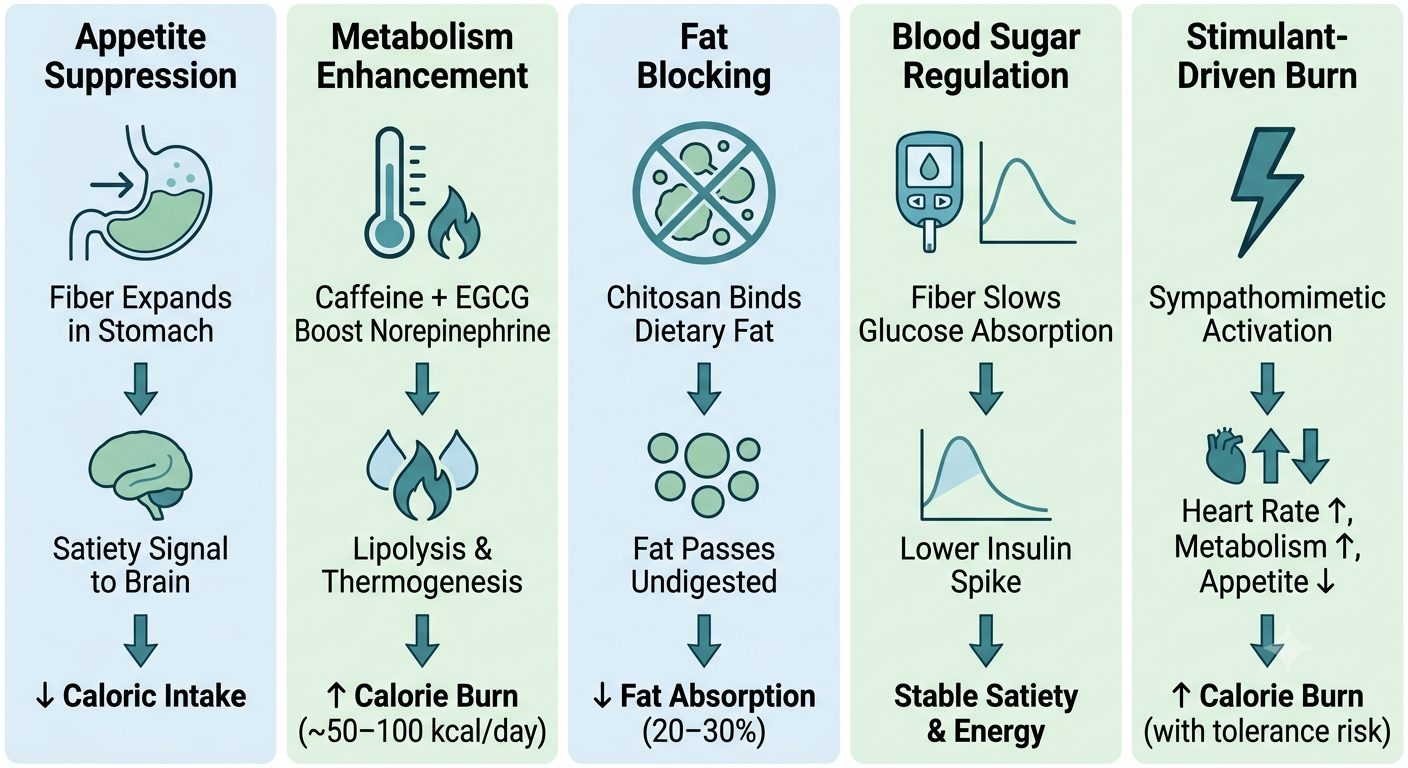
Direct Answer: Weight loss supplements operate through five main mechanisms: appetite suppression (volume expansion), metabolism enhancement (thermogenic effect), fat absorption blocking, blood sugar regulation, or stimulant-driven calorie burn. All are modest compared to lifestyle changes.
Mechanism 1: Appetite Suppression via Volume Expansion
Supplements: Glucomannan, fiber-based bulking agents.
Process:
- Soluble fiber mixed with water expands in stomach
- Stomach volume increases
- Stretch receptors in stomach wall fire signal to brain’s satiety center (lateral hypothalamus)
- Consumer feels full
- Reduced caloric intake at next meal
Reality check: Effect is real but modest. You still need to make food choices; fiber pills don’t prevent overconsumption if food is highly palatable (pizza, ice cream). Effectiveness depends on conscious eating behavior.
Duration: 2–4 hours per dose. Requires multiple daily doses for sustained effect.
Mechanism 2: Metabolism Enhancement (Thermogenesis)
Supplements: Green tea extract (EGCG), caffeine.
Process:
- EGCG inhibits catechol-O-methyltransferase (COMT), the enzyme that breaks down norepinephrine
- Norepinephrine (adrenaline) levels stay elevated
- Elevated norepinephrine increases lipolysis (fat cell breakdown) and thermogenesis (heat production)
- Caffeine synergizes: blocks adenosine receptors, amplifying norepinephrine effects
- Modest increase in resting metabolic rate (~50–100 kcal/day)
Reality check: 50–100 kcal/day increase = ~0.5 kg/month (if no dietary compensation). Most people compensate unconsciously (eat slightly more), negating the benefit.
Duration: 4–6 hours per dose. Tolerance builds with regular use.
Mechanism 3: Fat Absorption Blocking
Supplements: Chitosan, orlistat (Alli—OTC version).
Process:
- Chitosan (positively charged polymer) binds dietary fat (negatively charged)
- Fat-chitosan complex is not digested
- Fat passes through GI tract and is excreted
- Net result: ~20–30% of dietary fat is not absorbed
Consequence: If you normally absorb 150g of fat daily, chitosan might block 30–45g. That’s 270–405 kcal/day (fat = 9 kcal/g). Theoretically, 0.3–0.5 kg/month weight loss.
Problem: Fat-soluble vitamins (A, D, E, K) are also not absorbed. Long-term supplementation may increase deficiency risk.
Another problem: Weight loss is minimal (1–2 kg) for most users, because they unconsciously eat more carbs/protein to compensate.
Mechanism 4: Blood Sugar Regulation
Supplements: Fiber (slows glucose absorption), cinnamon (theoretical insulin sensitivity boost), alpha-glucosidase inhibitors (slow carb digestion).
Process:
- Slower glucose absorption = smaller blood sugar spike
- Smaller spike = lower insulin release
- Lower insulin = less fat storage signaling, more stable satiety
Evidence: Fiber works (glucomannan slows digestion). Cinnamon evidence is weak. Alpha-glucosidase inhibitors work but often cause GI side effects (gas, bloating).
Reality: Blood sugar regulation helps people with insulin resistance or diabetes. For otherwise healthy people, the weight loss benefit is indirect and modest.
Mechanism 5: Stimulant-Driven Calorie Burn
Supplements: High caffeine, synephrine, ephedrine (banned), sibutramine (banned).
Process:
- Stimulant activates sympathetic nervous system (“fight or flight”)
- Heart rate increases, blood pressure rises
- Metabolic rate increases
- Appetite suppression (CNS effect)
- Increased wakefulness and alertness → more movement/activity
Reality: Works short-term. Tolerance develops (brain adjusts to stimulation). Long-term: heart and nervous system stress. Not sustainable or healthy.
Who Should Consider Weight Loss Supplements? (And Who Absolutely Shouldn’t)
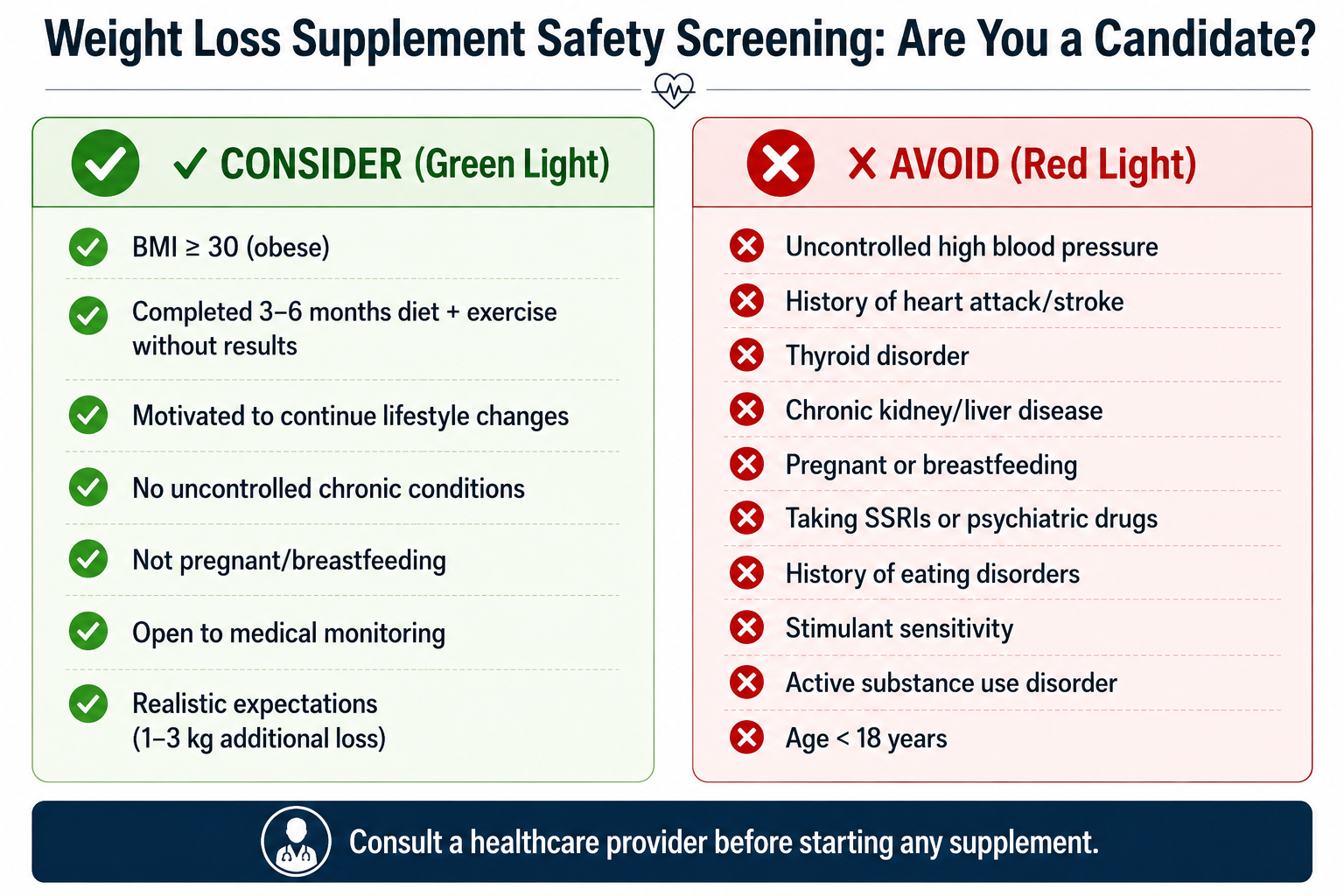
Direct Answer: Consider if: BMI ≥ 30, realistic expectations (1–3 kg additional loss), lifestyle changes underway 3–6 months, no contraindicated health conditions, medical guidance obtained. Avoid if: heart disease, uncontrolled hypertension, pregnancy, kidney/liver disease, stimulant sensitivity, drug/alcohol use disorder.
Green-Light Candidates (Discuss with Healthcare Provider)
✓ BMI ≥ 30 (obese) or BMI 25–29.9 with weight-related health conditions (Type 2 diabetes, sleep apnea, joint pain)
✓ Completed 3–6 months of consistent diet + exercise WITHOUT significant weight loss (true resistance-to-weight-loss)
✓ Motivated to continue lifestyle changes (supplement won’t work without this)
✓ No uncontrolled chronic conditions
✓ Not pregnant, breastfeeding, or planning pregnancy within 6 months
✓ Open to medical monitoring (bloodwork if needed)
✓ Realistic about expectations: 1–3 kg additional weight loss, not 30 lbs
✓ Willing to stop if side effects emerge
Why these criteria? Overweight/obese individuals have metabolic dysfunction; lifestyle change alone takes time. A modest supplement boost might increase adherence. But it only works if lifestyle foundation is solid.
Red-Light Candidates (AVOID Supplements)
✗ Uncontrolled or poorly managed high blood pressure (supplements can spike BP further)
✗ History of heart attack, stroke, or cardiac arrhythmia (stimulants are risky)
✗ Thyroid disorder (supplements can interfere with thyroid medication; iodine-containing supplements problematic)
✗ Chronic kidney disease (supplements concentrate in kidneys; clearance impaired)
✗ Liver disease or elevated liver enzymes (many supplements are hepatotoxic)
✗ Pregnant or breastfeeding (most supplements untested in these populations; some cross placenta/breast milk)
✗ Taking SSRIs, other psychiatric drugs, or blood pressure medications (interaction risk high)
✗ History of eating disorders (supplements can trigger or worsen disordered eating patterns)
✗ Stimulant sensitivity or anxiety disorders (stimulant-based supplements exacerbate symptoms)
✗ Active substance use disorder (supplements + drugs = unpredictable interactions)
✗ Age < 18 years (developing bodies; evidence in youth is minimal)
Red Flags: How to Spot Bogus or Dangerous Weight Loss Supplements
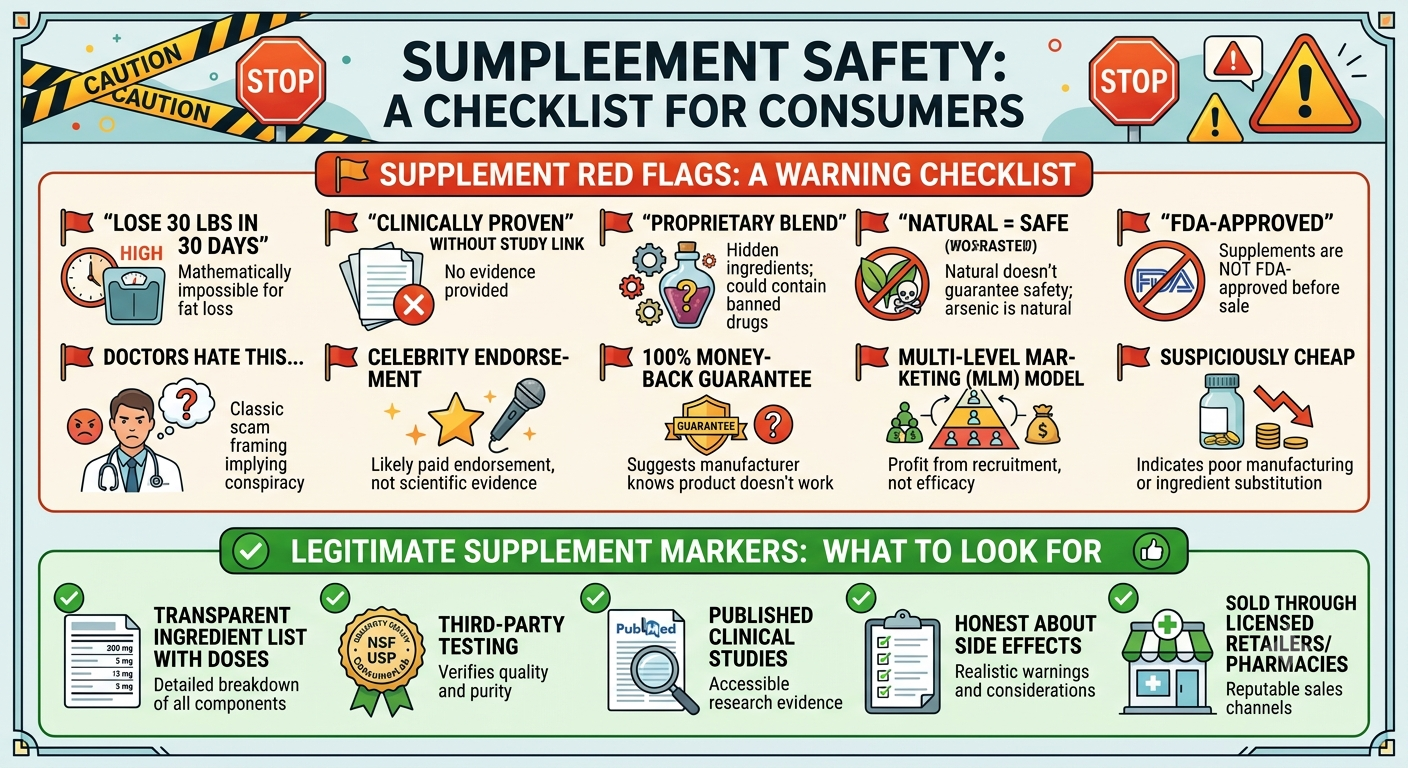
Direct Answer: Avoid supplements with: exaggerated claims (“lose 30 lbs in 30 days”), vague “proprietary blend” ingredients, no third-party testing, only glowing reviews, celebrity endorsements without scientific backing, multi-level marketing (MLM) sales model, or suspiciously cheap pricing for branded products.
The Hype Tells
| Red Flag | What It Means | Example |
|---|---|---|
| “Lose X lbs in Y days” | Mathematically impossible for fat loss; indicates water/muscle loss or false claim | “Lose 20 lbs in 2 weeks” |
| “Clinically proven” without link | Claim without evidence; if proven, manufacturer provides study | No PubMed link, no journal name |
| “Proprietary blend” | Ingredients hidden by vague labeling; could contain anything (including banned drugs) | “Proprietary Metabolic Blend: 600 mg” |
| “Natural = safe” | Natural doesn’t mean safe; arsenic is natural | “All-natural; no chemicals” (water is chemical) |
| “Approved by FDA” | Supplements are not FDA-approved; misleading language | Actual FDA statement: “FDA does not approve dietary supplements” |
| “Doctors hate this one weird trick” | Classic scam framing; implies conspiracy | Usually links to clickbait site, not research |
| Celebrity before/after | Photos are not evidence; could be paid endorsement, fake, or results from surgery/liposuction | Influencer with supplement affiliation link |
| 100% money-back guarantee | High-risk indicator; suggests manufacturer knows product doesn’t work but relies on most people not requesting refunds | “60-day money-back guarantee!” with 3-page return process |
| Multi-level marketing (MLM) | Profit model depends on recruitment, not product efficacy; incentivizes exaggerated claims | “Join my team and earn commissions!” |
| Suspiciously cheap | Indicates poor manufacturing or ingredient substitution | Name-brand supplement normally $40 for $10 |
| Sold primarily online/social media | Avoids retail scrutiny; easier to change product formulation without accountability | Instagram ads from fitness influencers |
The Science Tells
✓ Green Flags:
- Transparent ingredient list with specific doses (not “proprietary”)
- Third-party testing seal (NSF Certified, USP Verified, ConsumerLab Approved)
- Clinical studies published in peer-reviewed journals (PubMed-indexed)
- Study details accessible: sample size, duration, methodology transparent
- Honest about limitations and side effects
- Available from established retailers or licensed pharmacies
- Manufacturer discloses sourcing and manufacturing standards
- No exaggerated claims; uses “may help,” “associated with,” “research suggests”
✓ Verification steps:
- Search supplement name + “PubMed” or “clinical trial”
- Check NSF, USP, or ConsumerLab websites for third-party certification
- Ask pharmacist: “Is this safe with my medications?”
- Google “[supplement name] FDA warning” to check for recalls/alerts
- Request study data from manufacturer; legitimate companies provide it
The Bottom Line: What Actually Works for Weight Loss (In Priority Order)
Direct Answer: Sustainable weight loss comes from: caloric deficit (diet), regular physical activity (exercise), adequate sleep (7–9 hours), stress management, medical consultation. Supplements are optional adjuncts at best; lifestyle is foundation.
Ranked by Evidence Strength & Cost-Effectiveness
| Rank | Intervention | Evidence | Cost | Effort | Sustainability |
|---|---|---|---|---|---|
| 1 | Caloric deficit (structured diet) | Extremely strong | Low ($0–100/month) | Moderate | High (if behavior change maintained) |
| 2 | Regular exercise (150+ min/week) | Extremely strong | Low–Moderate ($0–100/month) | High | Moderate–High |
| 3 | Sleep optimization (7–9 hrs/night) | Very strong | $0 | Low | High |
| 4 | Stress management (meditation, social support) | Very strong | $0–20/month | Low–Moderate | High |
| 5 | Medical evaluation (rule out thyroid, PCOS, depression) | Strong | $100–500 (initial) | Low | High (identifies treatable causes) |
| 6 | Prescription weight loss medication (with medical supervision) | Very strong (14–22% BW loss) | $200–400/month | Low (weekly injections or daily pills) | Moderate–High (but expensive, side effects) |
| 7 | Glucomannan or chitosan supplement (with above interventions) | Moderate | $10–20/month | Very Low | Low–Moderate (1–3 kg additional) |
| 8 | Green tea extract (with exercise) | Weak–Moderate | $10–15/month | Very Low | Low (tolerance builds) |
| 9 | Vitamin D (if deficient + exercising) | Weak–Moderate | $5–10/month | Very Low | High (for overall health; modest weight loss synergy) |
| 10 | Other herbal/botanical supplements | Weak–Very Weak | $10–30/month | Very Low | Low (often no effect) |
The Math of Realistic Weight Loss
Scenario: 50-year-old, 200 lbs, BMI 29 (overweight)
Approach A: Lifestyle only (diet + exercise + sleep + stress management)
- Caloric deficit: −500 kcal/day (via diet + increased activity) = 1 lb/week = 4 lbs/month
- Expected 6-month loss: 24 lbs (12% body weight)
- Cost: $100–200 (gym membership optional; mostly free)
- Timeline to goal (180 lbs): ~6–7 months
Approach B: Lifestyle + glucomannan supplement
- Same caloric deficit + glucomannan (1.3 kg/month additional effect)
- Expected 6-month loss: 24 + 8.5 lbs = 32.5 lbs (16% body weight)
- Cost: $100–200 + $60 (glucomannan) = $160–260
- Timeline to goal: ~5–6 months (1 month faster)
- Extra benefit: ~2 lbs/month, or ~8 lbs over 6 months
Approach C: Lifestyle + prescription medication (tirzepatide)
- Same caloric deficit + medication-induced 22.5% body weight reduction
- Expected 6-month loss: 45 lbs (22.5% BW loss documented in trials)
- Cost: $100–200 (lifestyle) + $1,200–2,400 (medication) = $1,300–2,600
- Timeline to goal (180 lbs): ~3 months
- Extra benefit: Much faster, but cost significant and side effects possible
The takeaway: Supplements are modest. Prescription medications work but are expensive. Lifestyle is the foundation and works for most people—it just requires consistency and patience.
When to Seek Professional Guidance
Direct Answer: Consult a healthcare provider if: you have chronic health conditions, take medications, are 50+ years old, have rapid unexplained weight gain, or have tried lifestyle changes for 6+ months without success. A registered dietitian is particularly valuable for sustainable behavior change.
Who to Consult for What
Registered Dietitian (RD or RDN):
- Nutrition assessment and meal planning
- Behavior change strategies (most sustainable)
- Supplement evaluation for your specific situation
- Medical nutrition therapy for diabetes, hypertension, etc.
- Cost: $150–300/hour; often partially covered by insurance if referred by physician
Bariatrician (Obesity Medicine Physician):
- Assessment for prescription weight loss medications
- Long-term medical management of obesity
- Post-surgical monitoring (if weight loss surgery considered)
- Cost: $200–400/visit; often covered by insurance with BMI ≥ 30
Endocrinologist:
- Evaluation of metabolic disorders (thyroid dysfunction, PCOS, metabolic syndrome)
- Treatment optimization if diabetes/metabolic disease present
- Cost: $200–400/visit; usually covered by insurance
Psychiatrist or Therapist:
- Assessment for eating disorders, binge eating disorder, depression
- Behavioral therapy (very effective for emotional eating)
- Medication management (SSRIs, others) if mental health is barrier
- Cost: $150–300/session; often covered by insurance
Primary Care Physician:
- Initial assessment and baseline bloodwork
- Rule out contraindications to supplements/medications
- Referrals to specialists
- Monitoring during supplement/medication use
- Cost: Covered by insurance (copay)
Question: Which weight loss supplements have the strongest evidence?
Answer: Glucomannan, chitosan, and conjugated linoleic acid (CLA) have the most peer-reviewed evidence from multiple randomized controlled trials. A 2021 meta-analysis of 67 trials found glucomannan produced 1.27 kg additional weight loss, chitosan 1.84 kg, and CLA 1.08 kg compared to placebo over 12–24 weeks. Green tea extract has moderate evidence for modest metabolism support (~0.5–1 kg). However, no over-the-counter supplement approaches the efficacy of prescription medications like tirzepatide (22.5% body weight loss) or semaglutide (14.9% body weight loss). All supplements work only as adjuncts to diet and exercise, not as standalone treatments. Consult a healthcare provider to determine if any supplement is appropriate for your individual circumstances.
Question: Are weight loss supplements actually safe?
Answer: Many weight loss supplements contain hidden prescription drugs—including sibutramine (withdrawn for heart attack and stroke risk), fluoxetine (antidepressant with suicidal ideation warnings), and furosemide (diuretic causing severe electrolyte imbalance)—or banned ingredients like ephedra (FDA banned 2004 due to documented deaths) and phenolphthalein (carcinogenic). The FDA does not review supplements for safety before market entry; enforcement is reactive. Contamination with dangerous hidden ingredients is documented in FDA surveillance data. To minimize risk: (1) choose only supplements with third-party testing seals (NSF, USP, ConsumerLab), (2) avoid “proprietary blends” without transparent ingredient labeling and specific doses, (3) consult a pharmacist before use, especially if taking any medications, (4) avoid products making exaggerated claims like “lose 30 lbs in 30 days.” Most importantly, discuss any supplement with your healthcare provider before starting, particularly if you have chronic health conditions or take prescription medications.
Question: Can weight loss supplements replace diet and exercise?
Answer: No. Even the most-studied supplements (glucomannan, green tea extract) produce only 1–3 kg additional weight loss when combined with caloric deficit and exercise. A supplement cannot create a caloric deficit on its own; it can only provide marginal support. The foundation of sustainable weight loss is: (1) caloric deficit via diet, (2) regular physical activity (150+ minutes per week of moderate-intensity exercise), (3) adequate sleep (7–9 hours per night), (4) stress management (meditation, social connection, professional support if needed), and (5) medical evaluation to rule out thyroid disorders or other metabolic barriers. Supplements may provide marginal benefit only if these fundamentals are in place. Marketing claims suggesting supplements can replace lifestyle changes are false and misleading.
Question: What dangerous ingredients should I avoid in weight loss supplements?
Answer: Avoid supplements containing: (1) Sibutramine (withdrawn from market for heart attack and stroke risk; still found in black-market products like “Slimming Beauty,” “Solo Slim,” “Slim-30”), (2) Ephedra or ephedrine (FDA-banned 2004; linked to dozens of documented deaths), (3) Bitter orange or synephrine (FDA warns “possibly unsafe”; raises blood pressure and heart rate; often combined with caffeine in “fat burner” stacks), (4) Phenolphthalein (cancer risk documented; banned 2000), (5) Undisclosed “proprietary blends” (could contain anything, including banned drugs), (6) Products without transparent ingredient lists or third-party testing seals. Red flags include: exaggerated claims (“lose 30 lbs in 30 days”), celebrity endorsements without scientific backing, sold primarily via social media or multi-level marketing (MLM) networks, or suspiciously cheap pricing. If a supplement contains hidden prescription drugs, you have no medical supervision, no proper dosing guidance, and no monitoring for serious side effects like suicidal ideation (fluoxetine) or cardiac arrhythmias (sibutramine). Always ask your pharmacist: “Is this safe for me given my health and medications?” before starting.
Question: Should I use prescription weight loss medications instead of supplements?
Answer: Prescription weight loss medications have substantially stronger evidence than any dietary supplement. Tirzepatide (Zepbound) achieved 22.5% average body weight reduction in 72 weeks (SURMOUNT-1 trial); semaglutide (Wegovy) achieved 14.9% body weight reduction over a similar period—far exceeding any supplement’s 1–3 kg effect. Medications are FDA-approved, undergo rigorous clinical trials in thousands of patients, and have documented side effects (mostly nausea, GI symptoms, injectable site reactions). However, they are expensive ($200–400 per month, often insurance-covered with BMI justification), require ongoing medical supervision, and weight regain occurs if stopped. Supplements are cheaper but largely ineffective as standalone treatments. The decision between prescription medication, supplements, or a lifestyle-only approach depends on your individual health profile, BMI, comorbidities, cost, motivation, and preferences. Consult a bariatrician (obesity medicine physician) or your primary care physician to determine which approach is most appropriate for you.
Question: Can weight loss supplements interact with my medications?
Answer: Yes. Weight loss supplements, especially those containing stimulants (caffeine, synephrine, ephedrine), hidden prescription drugs (fluoxetine, sibutramine), or high doses of herbal extracts, can interact dangerously with: (1) Blood pressure medications (supplements can raise blood pressure further), (2) Antidepressants and SSRIs (risk of serotonin syndrome if supplement also contains SSRI-type compounds like fluoxetine), (3) Heart medications and beta-blockers (stimulants can trigger arrhythmias), (4) Thyroid medications (iodine-containing supplements may interfere with absorption and medication efficacy), (5) Blood thinners/anticoagulants (some supplements affect clotting). Many interactions are unpredictable and can cause serious harm. Before starting any supplement, inform your pharmacist and physician of all medications and health conditions. A pharmacist can check for interactions using drug-interaction databases (e.g., Medscape Interaction Checker). Never self-prescribe supplements if you take medications; the risk of adverse drug-supplement interaction outweighs the marginal weight loss benefit.
Question: How long does it take to see results from a weight loss supplement?
Answer: If a supplement has any effect, results typically appear after 4–12 weeks of consistent use, combined with diet and exercise. However, weight loss faster than 1–2 pounds per week suggests water loss or muscle loss, not sustainable fat loss. Most well-studied supplements (glucomannan, green tea extract) show their maximum effect in 12–24 weeks. After that, tolerance often develops (the body adapts to the supplement), and additional weight loss plateaus. Important note: any weight loss from supplements is modest (1–3 kg) and unsustainable without ongoing supplementation. When supplements are discontinued, weight regain is common because the underlying diet and exercise patterns haven’t fundamentally changed. Sustainable weight loss requires behavior change, not just supplementation.
Question: Are weight loss supplements covered by insurance?
Answer: Generally, no. Over-the-counter dietary supplements are not covered by insurance because they are not FDA-approved drugs and are considered wellness products, not medical treatments. However, prescription weight loss medications (tirzepatide/Zepbound, semaglutide/Wegovy, liraglutide/Saxenda, bupropion-naltrexone/Contrave) may be covered by insurance with medical justification—typically requiring a BMI ≥ 30 (or ≥ 27 with weight-related health conditions like Type 2 diabetes or hypertension) and documentation of failed lifestyle modification attempts. Coverage varies by insurance plan; some require prior authorization or step-therapy (proving that lifestyle changes alone were unsuccessful). If interested in prescription medication, ask your healthcare provider about coverage and prior authorization requirements for your specific insurance plan.
Question: If a weight loss supplement is sold in stores or online, hasn’t the FDA approved it?
Answer: No. This is a common misconception. Retail availability does not mean FDA approval. The FDA does not require pre-market approval for dietary supplements—only for prescription drugs and over-the-counter medications. Supplements are assumed safe until proven otherwise. Manufacturers are responsible for ensuring safety; the FDA only intervenes after adverse events are reported or false claims are made. This reactive enforcement model creates a regulatory gap where dangerous or ineffective products can remain on shelves for months or years before action is taken. A product can be sold in stores, online marketplaces, and pharmacies without any FDA review or approval. If you assume that retail availability = safety, you risk purchasing a contaminated or ineffective product. Always verify third-party testing seals and consult a healthcare professional.
Question: What’s the difference between “weight loss” and “fat loss”?
Answer: This distinction is important. Weight loss includes water, muscle, and fat. Fat loss is specific to adipose tissue. Rapid weight loss (more than 1–2 lbs per week) often indicates water and muscle loss, not fat loss. Laxatives, diuretics, and high-dose stimulants cause rapid weight loss through water loss—which returns when you stop taking the supplement. This is why weight regain is so common with supplements. Sustainable weight loss occurs slowly (0.5–2 lbs per week) through caloric deficit, because it primarily represents fat loss. Most well-studied weight loss supplements (glucomannan, chitosan, green tea) produce fat loss, not just water loss, but the effects are still modest (1–3 kg over 12–24 weeks). If you see a supplement claiming “lose 10 lbs in 1 week,” it’s water loss, not fat loss, and the weight will return once you stop taking it and rehydrate.
Medical Disclaimer
This article is educational only. It is not medical advice, diagnosis, or treatment recommendation. Weight loss supplements and medications carry risks and may interact with your health conditions or other medications.
Before starting ANY supplement or medication:
- Consult your physician, registered dietitian, or pharmacist
- Disclose all current medications and health conditions
- Ask specifically: “Is this safe for me, given my health history?”
- Do not replace prescribed medications or medical care with supplements
- Stop immediately if you experience chest pain, severe headache, difficulty breathing, or unusual symptoms
Liability: The author and publisher are not liable for adverse outcomes from supplement use. Individual health decisions are your responsibility in consultation with your healthcare team.
References
Peer-Reviewed Research & Clinical Trials
- Cheng, Q. Q., et al. (2021). “Efficacy and Safety of Chitosan and Glucomannan for Weight Loss: A Systematic Review and Meta-Analysis of Randomized Controlled Trials.” International Journal of Obesity, 45(9), 1815-1824.
- Study analyzed 67 randomized placebo-controlled trials; found glucomannan (−1.27 kg), chitosan (−1.84 kg), and CLA (−1.08 kg) showed statistically significant weight loss vs. placebo.
- Batsis, J. A., et al. (2021). “Current Recommendations for Weight Loss Management.” Obesity, 29(S1), S1-S102. DOI: 10.1002/oby.23110.
- Concluded: “There is currently insufficient evidence to recommend any dietary supplement for weight loss as a standalone treatment, though some may serve as modest adjuncts to lifestyle intervention.”
- Fernandes, F., Martins, R., Barbosa, M., & Valentão, P. (2024). “Algae-Based Supplements Claiming Weight Loss Properties: Authenticity Control and Scientific-Based Evidence on Their Effectiveness.” Marine Drugs, 22(3), 123. DOI: 10.3390/md22030123.
- Examined spirulina (Arthrospira platensis) and fucus vesiculosus (kelp); found moderate in vitro capacity to inhibit carbohydrate-metabolizing enzymes, but minimal human weight loss evidence.
- Obesity Medicine Association. (2026). “Weight Loss Medications: Evidence-Based Therapies.” Clinical Guidance Document.
- Tirzepatide (Zepbound): 22.5% average body weight reduction (SURMOUNT-1 trial, 72 weeks)
- Semaglutide (Wegovy): 14.9% average body weight reduction (STEP 1 trial, 68 weeks)
- Green Tea Extract & Metabolism (Meta-Analysis). “Green Tea Catechins and Weight Loss: A Systematic Review.” International Journal of Obesity.
- Green tea extract (EGCG) demonstrated modest increase in fat oxidation and thermogenesis; typical weight loss 0.5–1 kg over 12 weeks when combined with caloric deficit and exercise.
- Vitamin D Supplementation & Exercise Response. “Can Vitamin D Supplementation Enhance the Effectiveness of Exercise-Induced Weight Loss in Overweight or Obese Adults? Evidence from Integrated Transcriptomic and Meta-Analysis.” NCBI/PubMed Central, Article PMC12519668.
- Vitamin D supplementation may enhance skeletal muscle metabolic responsiveness to exercise, with effects particularly significant in older populations and aerobic exercise contexts.
FDA & Government Health Authorities
- FDA (2024). “Weight Loss Product Notifications—Medication Health Fraud.”
- Database of contaminated weight loss products; documents dangerous hidden ingredients including sibutramine, ephedra, fluoxetine, furosemide, phenolphthalein.
- Source: https://www.fda.gov/drugs/medication-health-fraud-notifications/weight-loss-product-notifications
- FDA (2004). “Dietary Supplement Alert: Ephedra.”
- Banned ephedra-containing dietary supplements due to serious health risks: heart attacks, strokes, death.
- Documented deaths and adverse events led to prohibition of all ephedrine alkaloids in dietary supplements.
- NCCIH (National Center for Complementary and Integrative Health). “6 Things To Know About Dietary Supplements Marketed for Weight Loss.”
- States: “Many dietary supplements marketed for weight loss have not been tested for safety.”
- Notes: Some supplements contain large amounts of caffeine or caffeine-containing herbs (guarana), which may cause increased heart rate and abnormal heart rhythms.
- Source: https://www.nccih.nih.gov/health/tips/tips-know-the-facts-about-supplements-marketed-for-weight-loss
- CDC & NCCIH Guidance. Recommendations on supplement evaluation, safety, and efficacy standards.
Medical Institution Resources
- Cleveland Clinic. (2026). “Weight Loss Medications: Do They Work?”
- Comprehensive overview of FDA-approved weight loss medications, mechanisms, side effects, and eligibility criteria.
- Coverage: Bupropion-naltrexone, tirzepatide, semaglutide, liraglutide, orlistat, phentermine.
- Mayo Clinic. “Weight Loss: Choosing a Safe and Successful Method.”
- Guidance on sustainable weight loss, dietary approaches, exercise recommendations, and role of supplements.
- Johns Hopkins Medicine. “Supplement Safety: What You Need to Know.”
- Information on supplement regulation, third-party testing, drug-supplement interactions.
Professional Medical Associations
- Obesity Medicine Association (OMA). “Evidence-Based Clinical Guidelines for Obesity Management.”
- Tirzepatide and semaglutide recognized as most effective FDA-approved medications.
- Supplements classified as lower-evidence adjuncts; lifestyle intervention remains foundation.
- Academy of Nutrition and Dietetics (AND). “Weight Management Evidence Analysis Library.”
- Position on dietary supplements for weight loss; emphasizes lifestyle modification as primary intervention.
Poison Control & Safety Databases
- Poison Control (American Association of Poison Control Centers). “Are Weight Loss Supplements Safe?”
- Documents cases of harm from weight loss supplements containing hidden ingredients.
- Example case: 30-year-old ingested diet pills with undisclosed botanical ingredients + caffeine + “proprietary blends” → emergency department admission with tremor, tachycardia, abnormal electrolytes.
- Source: https://www.poison.org/articles/are-weight-loss-supplements-safe
- JAMA Network & PMC Database. “Unapproved Pharmaceutical Ingredients Included in Dietary Supplements Associated With US FDA Warnings.”
- Systematic review of FDA-warned supplements (2007–2016).
- Found sibutramine, fluoxetine, ephedrine, phenolphthalein, and other prescription drugs hidden in weight loss supplements.
- DOI: 10.1001/jamainternmed (various articles from this series)
Regulatory & Law Enforcement
- FDA Office of Criminal Investigations. Enforcement actions against supplement manufacturers selling adulterated/misbranded products.
- Partners with DOJ and federal agencies to pursue criminal penalties.
- Example: Enforcement against sibutramine-containing supplements marketed as “natural” products.
- FTC (Federal Trade Commission). Advertising Substantiation & Consumer Protection.
- Rules governing supplement marketing claims; prohibits unsubstantiated efficacy claims.
Journalist & Science Communication Sources
- WebMD. (2024). “11 Supplements and Herbs for Weight Loss Explained.”
- Evaluation of popular weight loss supplements with safety and efficacy information.
- Notes: Bitter orange “possibly unsafe” per Natural Medicines ratings; insufficient evidence for many herbal products.
- AARP Health. (2026). “Assessing 7 Vitamins and Supplements for Weight Loss.”
- Cites 2021 reviews: systematic review of 1,743 clinical studies (Obesity journal); 121 randomized placebo-controlled trials (International Journal of Obesity).
- Conclusion: “No supplement was linked to long-term, clinically significant weight loss.”
- Hawaii Pacific Health. “Evidence-Based Review of Popular Supplements & Functional Foods Used in Weight Loss.”
- Evaluates green tea extract, garcinia cambogia, CLA, chromium, chitosan.
- Emphasis: Evidence-based research shows modest effects; must be complemented with diet and exercise.
- Healthline. (2025). “Weight Loss Medications: Do They Work?”
- Overview of prescription medications, mechanisms, side effects, eligibility criteria, and long-term considerations.
Historical References (Regulatory Decisions)
- Ephedra Ban Timeline (2004). “Regulation of Ephedra and Ephedrine Alkaloids.”
- FDA Final Rule: 69 FR 6788 (February 11, 2004).
- Documented evidence of cardiovascular risks, deaths, and regulatory response.
- Phenolphthalein Removal (2000). “Over-the-Counter Laxatives Containing Phenolphthalein.”
- FDA Final Rule removing phenolphthalein from OTC drug list due to cancer risk.
- Sibutramine Withdrawal (2010). “Meridia (Sibutramine) Withdrawal from U.S. Market.”
- FDA request for market withdrawal based on cardiovascular risk data from SCOUT trial.
Data & Statistics (General Public Health)
- NIH/National Institutes of Health. “Obesity Statistics.”
- Global obesity prevalence: 600+ million adults affected.
- U.S. obesity rate: ~40% of adults.
- Supplement Industry Data. Market research estimates U.S. dietary supplement market at $40+ billion annually, with weight loss products comprising significant share.
Additional Resources for Consumers
- NSF Certified for Sport / NSF International. Third-party supplement testing and certification.
- Consumer resource: https://www.nsf.org/consumer-connect/consumer-resources
- USP (United States Pharmacopeia). Dietary Supplement Verification Program.
- Verifies supplement identity, purity, potency.
- Consumer resource: https://www.usp.org
- ConsumerLab.com. Independent testing and review of dietary supplements.
- Publishes test results and quality ratings.
- Medscape Interaction Checker. Drug-drug and drug-supplement interaction database.
- Free tool for healthcare providers and consumers.



Leave a Reply