


Introduction
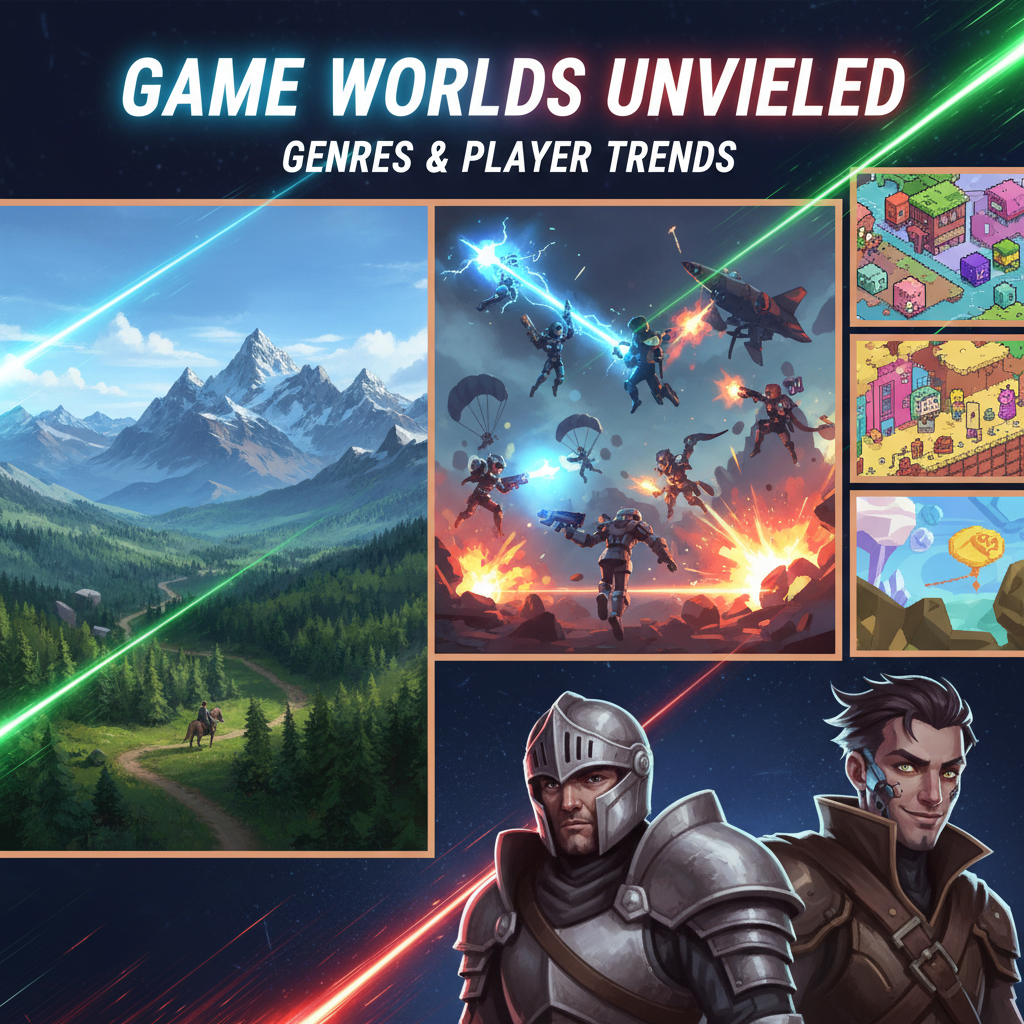
The world of video games is a dynamic and ever-shifting landscape. What captivates millions one year might be old news the next. Understanding the dominant game genres & player trends is crucial for players, developers, and industry observers alike. From the sprawling, immersive worlds that offer endless freedom to the heart-pounding final circle of a battle royale, the way we play is constantly evolving. This deep dive will explore the key movements shaping the industry today.
We will journey through the vast plains of open-world behemoths to understand their magnetic pull. We’ll drop into the chaotic arenas of battle royales to dissect their social appeal. We’ll celebrate the creative explosion of indie games that are challenging the status quo. Finally, we’ll weigh the timeless conflict between a masterfully told story and the endless fun of playing with friends. This is the ultimate guide to the current state of game genres & player trends.
Why Open-World Games Are Dominating the Landscape
Open-world games have dominated the gaming industry for more than ten years. These games, which range from the fantastical worlds of Skyrim and The Witcher 3 to the avant-garde settings of Elden Ring and Tears of the Kingdom, often top sales rankings and captivate players’ attention. However, what is it about this particular genre that is so completely captivating? The answer is found in the potent fusion of unmatched player autonomy, immersion, and the possibility of limitless exploration.
The Psychology of Immersion and Freedom
The notion of entering a different reality is what makes open-world games so alluring. The goal of these games is to create expansive, complex sandboxes where the player lives there instead of merely visiting. With its own history, ecosystems, and secrets, the environment itself takes on a life of its own. Players get a profound sense of immersion thanks to this level of detail, which gives them the impression that they are actually living in the game environment.
The agency of the player increases this immersion. In contrast to linear games that lead you along a predetermined route, open-world games just give you the map and say, “Go.” You choose which objectives to complete, where to explore, and how to engage with the people of the realm. This liberty is empowering. It makes it possible for each player to have a customized experience. You can choose to spend a hundred hours painstakingly doing every side mission or just take in the digital sunset while strolling around the countryside. Your activities have greater meaning and the world seems more real because of this autonomy.
Masterclass in World-Building: Elden Ring and Beyond
The Elden Ring by FromSoftware is the epitome of contemporary open-world design. It set the developer’s renownedly difficult battles and enigmatic narratives in the incredibly expansive and enigmatic Lands Between universe. The game doesn’t hold your hand with endless markers and checklists. Rather, it promotes natural exploration, rewarding inquisitiveness with narrative tidbits, strong bosses, and secret dungeons. Because of this “show, don’t tell” method of world-building, exploration is an exciting and ongoing aspect of the experience.
In a similar vein, Breath of the Wild’s groundbreaking freedom was built upon in Nintendo’s The Legend of Zelda: Tears of the Kingdom. Players have significantly more verticality and room to explore thanks to the addition of sky islands and a massive system of underground caverns. More significantly, it provided players access to previously unheard-of capabilities for interacting with and manipulating the game world through the introduction of the “Ultrahand” and “Fuse” abilities. In ways the developers might not have even envisioned, players could construct vehicles, create strange weaponry, and work through puzzles. Giving players the freedom to design their own solutions and, consequently, their own enjoyment is the pinnacle of player agency.
The Future of Open-World Dominance
Despite the fact that some gamers talk about “open-world fatigue,” the genre is still growing. Dominance is based on the quality of the experience within that scale, not merely on size. In addition to being large, developers are learning how to make worlds that are rich in gaming opportunities and significant material. They are developing technologies that respond to the player’s decisions, producing a dynamic, personalized, and infinitely replay able experience. The appeal of immersing oneself in these expansive virtual worlds will only intensify as technology develops, enabling increasingly intricate simulations and intricate settings, securing their position at the forefront of gaming genres and user trends.
The Unstoppable Popularity of Battle Royale Games
The idea of a “battle royale” was a specialised subgenre a few years ago, mostly limited to mods of already-existing survival games. It’s a cultural phenomena now. Popular games like Fortnite, Apex Legends, and PlayerUnknown’s Battlegrounds have amassed hundreds of millions of players and brought in billions of dollars. One of the most important gaming genres and player trends of the past ten years is the battle royale’s explosive rise. High-stakes competitiveness, social interaction, and endlessly replay able “just one more match” gameplay loops are all expertly combined to create its success.
The Ultimate Competitive Playground
Being the last person standing is the basic and widely accepted idea behind a battle royale. As the playable area gets smaller, one hundred players are forced to confront a larger map, scrounge for weapons and equipment, and engage in death-defying combat. Every choice matters in this extremely high-stakes scenario created by this straightforward set of rules. Do you land in a secluded spot to safely equip up, or in a busy, high-loot region for a risky but profitable start? Do you try to sneak your way to the last circle or do you engage every enemy you come across?
An intense adrenaline surge is produced by this continuous risk-reward analysis. Death in a battle royale is irreversible, at least for that match, in contrast to conventional multiplayer shooters with fast respawns. Because of this permadeath component, success is immensely fulfilling and surviving seems truly earned. Players return for more because every match is an unplanned tale of survival, near-misses, and valiant clutches. No two games are ever the same because each round is unpredictable, offering endless replay ability.
Social Hubs and Cultural Impact
Battle royale games are incredibly social experiences, despite the intense competition. The game changes from a solo survival task to a cooperative tactical experience when played in pairs or groups with friends. Teamwork, strategy, and communication become crucial for success. These games have developed into online gathering spots where people can interact, converse, and enjoy the excitement of winning or the amusement of losing. The longevity of the genre is greatly influenced by this social element.
Specifically, Fortnite has evolved from a game to a global social network. Tens of millions of continuous spectators attend its live events, which include world-changing narrative finales and in-game concerts by well-known singers. The game has become a mainstay of popular culture due to its colorful artwork, steady supply of cosmetics, and partnerships with well-known companies like Nike, Marvel, and Star Wars. Fortnite is more than simply a game to many younger gamers; it’s an integral element of their social networks and sense of self. By adding the ground-breaking “Ping” feature, which enables intense, nonverbal communication between teammates, Apex Legends significantly enhanced the social experience and made the game more tactical and approachable even without voice chat.
The Evolution and Future of the Battle Royale
The genre of battle royale is evolving. It keeps changing. Fortnite brought building mechanics and a more approachable, cartoonish look to the genre, while PlayerUnknown’s Battlegrounds (PUBG) pioneered the realistic, tactical version. With its focus on character-based skills and amazing mobility mechanics, Apex Legends advanced the genre. Battle royale features are now being included into well-known franchises, such as Call of Duty, which has a hugely popular Warzone mode.
There will probably be even more innovation in the genre’s future. More dynamic and interactive maps, more players, and a deeper incorporation of RPG or narrative components are all possible. The fundamental gameplay mechanic of scavenging, surviving, and battling to be the last person standing is so strong and captivating that it will continue to dominate the gaming industry for many years to come. Battle royale games’ widespread appeal is a blatant sign of a significant player trend: players want experiences that are both fiercely competitive and incredibly social.
The Golden Age: How Indie Games Are Taking Over the Market
While blockbuster AAA studios dominate headlines with massive budgets and marketing campaigns, a quieter revolution is happening in the background. We are living in a “golden age” of indie game development. Fueled by accessible development tools, digital distribution platforms, and a hunger for unique experiences, independent creators are not just participating in the market—they are actively shaping it. The rise of indie games is one of the most exciting and important game genres & player trends, injecting a vital dose of creativity, innovation, and personal passion into the industry.
Innovation Born from Constraint
The nine-figure budgets of AAA studios are not available to independent developers. They are unable to compete on the basis of sheer volume of content or graphical fidelity. They need to innovate instead. This limitation encourages innovation. Independent creators are able to experiment with unusual mechanics, tell intimate, frequently very poignant stories, and explore esoteric topics without feeling compelled to appeal to the widest audience in order to recover a significant investment.
Genre-defining and genre-bending masterpieces are the result of this freedom. The roguelike genre was given a fantastic story and character development by games like Hades. One person’s creation, Stardew Valley, appealed to everyone’s need for a contented, tranquil existence and became viral. By challenging the idea of violence in video games and letting players finish the game without killing any enemies, Undertale completely reinterpreted RPG clichés. These games are completely original experiences that could only have been produced by the creative freedom of independent production; they are not merely “smaller” versions of AAA games.
The Democratization of Game Development and Distribution
Without two essential components, the independent golden era would not have been possible: open distribution platforms and easily accessible technologies. These days, tiny creators may utilise game engines like Unity and Unreal Engine for free, giving them access to the same robust tools that big studios employ. As a result, the entry barrier for game development has significantly decreased. These days, the most valuable resources a developer can possess are a concept and a commitment to learning.
At the same time, indies now have direct access to millions of gamers worldwide thanks to digital marketplaces like Steam, the Nintendo eShop, and the PlayStation and Xbox shops. It used to be almost impossible for a small team to find a publisher and a physical retail contract. Developers may now directly create a community, manage their own marketing, and self-publish. Players can also directly finance the projects they are enthusiastic about using platforms like Kickstarter and other crowdfunding websites, giving creators even more freedom to realize their original ideas free from corporate interference.
The Impact of Indie Success on the Broader Industry
Independent games have an impact that goes well beyond their own sales numbers. Successful independent games are frequently examined by major AAA firms to spot new mechanics and trends. A surge of AAA survival games resulted from the popularity of survival games, which were first popularised by independent games like DayZ and Minecraft. Blockbuster releases now frequently feature the roguelike and roguelite elements that were refined in games like Slay the Spire and The Binding of Isaac.
The entire industry’s research and development division is comprised of independent games. The most innovative and daring concepts are tried there. When a novel idea for an independent game proves to be successful, it shows that there is a market for it, which gives bigger companies the confidence to invest in similar projects. This mutually beneficial partnership guarantees that player preferences are continuously being tested and broadened, as well as that the industry as a whole keeps changing. A key element of the current landscape of game genres and player patterns is the independent scene’s ongoing popularity and innovative output.
The Great Debate: Story-Driven Games vs. Multiplayer Games
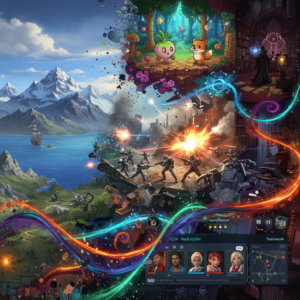
One of the most enduring conversations in the gaming community revolves around a fundamental choice: do you prefer a deep, authored, story-driven experience, or the endlessly dynamic fun of multiplayer competition? This isn’t just a matter of personal taste; it reflects two different philosophies about what a video game should be. One prioritizes narrative depth, emotional connection, and a finite, curated journey. The other champions social interaction, emergent gameplay, and near-infinite replayability. Analyzing this divide is key to understanding the full spectrum of game genres & player trends.
The Power of a Masterfully Told Story
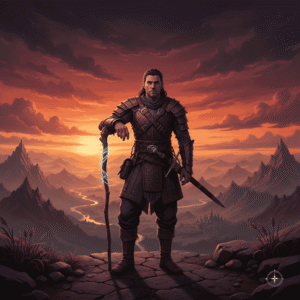
Single-player, story-driven games are the direct offspring of storytelling, which is the oldest creative form in human history. Their goal is to provide a compelling story with deep characters, complex storylines, and significant emotional resonance. Games like Red Dead Redemption 2, God of War, and The Last of Us are frequently commended for having plots and character performances that are on par with those in movies and television shows. By letting players take on the role of a character and follow their journey directly, these games provide a kind of interactive cinema.

A story-driven game’s strength is in how well-curated it is. Each component—the language, the musical score, and the level design—is painstakingly created to support the story and elicit a certain emotional reaction. As a result, gamers are left with very impactful, unforgettable moments long after the credits have rolled. For a lot of people, the quality of this limited excursion determines a game’s worth. Like reading a great book or seeing a famous movie, it’s about witnessing a finished, well-executed piece of art from start to finish. These encounters offer a sense of intellectual stimulation, emotional release, and escape that is exclusive to the single-player mode.
The Endless Appeal of Social Replayability
Multiplayer games are on the other end of the spectrum. Their main attraction is the dynamic and unpredictable interactions that occur when playing against and with other people, rather than a predetermined plot. Multiplayer games are based on social interaction, whether it’s the competitive excitement of a battle royale, the cooperative mayhem of Helldivers 2, or the tactical accuracy of Valor ant.
Here, replay ability is the main draw. A decent multiplayer game can be played for thousands of hours, but a story-driven game has a clear conclusion. The players themselves are responsible for creating the “content”. Because you are competing against various human opponents, each with their own tactics, abilities, and personalities, every match is unique. The experience is kept interesting by the ever-changing difficulty that this emergent gaming produces. Multiplayer games also function as social venues. You can meet new people, stay in touch with old ones, and experience the highs and lows of competition there. Multiplayer games are the perfect way for gamers to show their desire for gaming to be a social activity.
Can We Have the Best of Both Worlds?
The line between story-driven and multiplayer games is becoming increasingly blurred. Many games are now successfully blending elements of both to create hybrid experiences. Games like Destiny 2 and Warframe combine deep lore and ongoing narrative arcs with cooperative multiplayer missions and social hubs. Open-world games often include seamless multiplayer components, allowing friends to join each other’s worlds to explore and complete quests together.
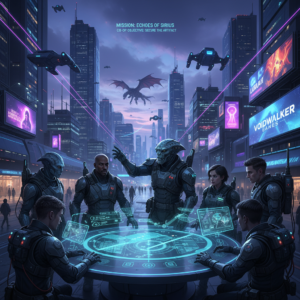
Even traditionally single-player genres are experimenting with social features. Games might include “asynchronous” multiplayer elements, where the actions of one player can leave a trace or have an impact on another player’s world without them ever meeting directly, a technique famously used in the Dark Souls series. This suggests that the future may not be a choice between one or the other, but a spectrum of experiences that cater to different player desires.
Ultimately, both story-driven and multiplayer games fulfill different needs. One offers a deep, emotional, and authored experience, while the other provides endless social and competitive fun. The continued health and popularity of both categories demonstrate a key player trend: gamers are not a monolith. They desire a wide variety of experiences, from the solitary, cinematic journey to the raucous, competitive arena. A healthy industry is one that successfully provides both.


Leave a Reply