



Introduction
The margin between gold and silver is no longer measured in seconds; it is measured in milliseconds. In the high-stakes arena of elite competition, the difference between a champion and a runner-up often comes down to who has the better data. Gone are the days when coaches relied solely on gut instinct and a stopwatch. Today, the stadium is a laboratory, and the athlete is a high-performance machine optimized by science.
We are witnessing a seismic shift in how games are played, managed, and consumed. This transformation is driven by a convergence of technology and physiology that is rewriting the rulebook on human potential. From sensors sewn into jerseys to algorithms predicting injury risk before it happens, the landscape is unrecognizable compared to a decade ago.
This guide dives deep into modern sports trends & performance analysis. We will explore the technologies redefining athletic limits—specifically wearable technology, AI analytics, and VR training—and discuss the cultural shift propelling women’s sports to the forefront of the industry. Whether you are a coach, an athlete, or a sports business professional, understanding these shifts is crucial for staying ahead of the curve.
The Evolution: From Intuition to Information
To understand where we are going, we must appreciate the rapid acceleration of sports science. Historically, performance analysis was a manual, laborious process. Scouts sat in stands with notebooks, and coaches spent sleepless nights reviewing grainy VHS tapes. The data was subjective, fragmented, and often arrived too late to impact the next game.
The modern era of sports performance analysis has democratized access to elite insights. What was once proprietary technology for billion-dollar franchises is now filtering down to college programs and even youth academies. This democratization is creating a smarter, more competitive global sports ecosystem. The core philosophy has shifted from “working harder” to “working smarter,” with data acting as the compass guiding every training session and nutritional plan.
The Quantified Athlete
The concept of the “quantified self” has taken over the locker room. Every heartbeat, every step, and every calorie burned is now a data point. This comprehensive tracking allows performance directors to build a digital twin of an athlete, simulating stress loads and recovery times to optimize peak performance schedules. This holistic approach ensures that athletes aren’t just physically ready, but physiologically primed for the specific demands of game day.
Wearable Technology in Sports: Beyond the Pedometer
When we discuss modern sports trends, wearable tech in sports is often the first topic that comes to mind. However, the industry has moved far beyond simple step counting or basic heart rate monitoring. Today’s wearables are sophisticated biometric labs that athletes wear on—and sometimes inside—their bodies.

Smart Fabrics and Biomechanics
The newest frontier in wearables is “smart clothing.” Instead of a bulky strap or a plastic pod, sensors are woven directly into the fabric of compression shirts, socks, and shorts. These electromyography (EMG) sensors measure muscle activity in real-time. By analyzing which muscles are firing and at what intensity, coaches can correct an athlete’s form instantly.
For example, a pitcher in baseball might be relying too much on their shoulder rather than driving power from their hips. Smart fabric can detect this imbalance immediately, allowing for a correction that not only improves pitch velocity but also saves the player from a career-ending rotator cuff injury.
GPS and Load Management
Global Positioning System (GPS) tracking remains a staple in field sports like soccer, football, and rugby. However, the analysis of this data has become significantly more nuanced. It isn’t just about total distance covered. Analysts now look at “metabolic power,” which calculates the energy cost of accelerating and decelerating.
Frequent, high-intensity accelerations are taxing on the hamstrings and groins. By monitoring these specific metrics, performance staff can implement “load management” strategies. If a player’s data shows a spike in high-intensity workload during Tuesday’s practice, the coaching staff might dial back their activity on Wednesday to prevent soft tissue injuries. This proactive approach is a cornerstone of modern sports performance analysis.
Sleep and Recovery Trackers
Performance doesn’t happen in the gym; it happens during recovery. Wearables like smart rings and wristbands that track sleep stages (REM, deep sleep, light sleep) and Heart Rate Variability (HRV) are now standard equipment.
HRV is particularly critical. It measures the variation in time between each heartbeat. A high HRV generally indicates that the body is recovered and ready to handle stress. A low HRV suggests the nervous system is fatigued or fighting off illness. Coaches use morning HRV readings to decide who trains hard and who needs a restoration day, customizing daily schedules based on internal biology rather than a generic calendar.
AI in Sports Analytics: The Invisible Coach
While wearables collect the data, Artificial Intelligence (AI) makes sense of it. The volume of data generated by a single professional team in one season is staggering—terabytes of video, biometric readings, and statistical logs. Human analysts cannot process this alone. This is where AI in sports analytics becomes the game-changer.

Computer Vision and Tactical Analysis
Computer vision is a subset of AI that allows computers to “see” and interpret video. In the NBA and Premier League, cameras installed in the rafters track the x, y, and z coordinates of the ball and every player 25 times per second.
AI algorithms analyze this optical tracking data to reveal patterns invisible to the naked eye. For instance, an AI model can identify that a specific basketball player shoots 15% better when receiving a pass from the left corner after two dribbles. Defensively, it can predict an opponent’s play calling based on their formation and player spacing with frightening accuracy.
This technology allows for real-time tactical adjustments. Coaches can receive alerts on their tablets during the game suggesting that the opposing team is exploiting a specific gap in the defense, allowing them to adjust strategy before the next possession.

Injury Prediction Models
Perhaps the most valuable application of AI is in injury prevention. By feeding an AI model historical data on injuries alongside variables like training load, sleep quality, travel schedules, and playing surface conditions, teams can predict injury risk.
These predictive models act as an early warning system. If the AI flags a “red zone” risk for a star player, the medical staff can intervene with massage therapy, adjusted training, or rest. This predictive capability protects the team’s most valuable assets—the players—and ensures that the best talent is available for the most important games.
Recruitment and Scouting
AI in sports analytics has also revolutionized the front office. Scouting was once a subjective art form, prone to biases. Scouts might favor a player who “looks the part” or comes from a prestigious school. AI removes these biases by focusing purely on performance output and projected growth.
Algorithms can compare a college prospect’s stats against thousands of historical player profiles to predict their transition to the professional level. This helps teams identify “sleeper” picks—undervalued players who have the statistical markers of future success but may have been overlooked by traditional scouting methods.
Virtual Reality (VR) and Cognitive Training
Physical training has physical limits. You can only run so many miles or lift so much weight before the body breaks down. Cognitive training, however, offers a virtually limitless frontier. Virtual Reality (VR) is emerging as a powerful tool in modern sports trends, allowing athletes to train their minds without stressing their bodies.

Mental Reps without Physical Stress
VR allows a quarterback to face a blitz package hundreds of times without ever getting hit. A soccer goalkeeper can practice saving penalty kicks against the world’s best strikers in a virtual environment. These “mental reps” are crucial for building pattern recognition and reaction speed.
When an athlete encounters a situation in a real game, their brain reacts faster because it has already “seen” the scenario thousands of times in VR. This bridges the gap between practice and competition, accelerating the development of young players who lack game experience.
Rehabilitation and Return-to-Play
VR is also transforming the rehabilitation process. An athlete recovering from an ACL tear often struggles with the psychological fear of reinjury. VR puts them in game-like scenarios where they must pivot and react, helping them regain confidence in their movement before they ever step back onto a chaotic field.
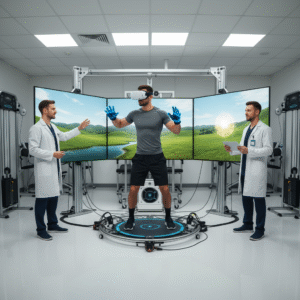
Furthermore, VR can be used to keep an injured player mentally sharp. While their body heals, they can still participate in tactical walkthroughs virtually, ensuring they don’t fall behind on the playbook or strategic changes.
The Rise of Women’s Sports: A New Era of Investment and Analysis
One of the most significant modern sports trends is the explosive growth of women’s sports. For decades, female athletes were treated as an afterthought in terms of investment and research. That narrative has flipped. We are seeing record-breaking attendance, surging viewership numbers, and a realization that women’s sports is a massive, undervalue market.

Closing the Data Gap
Historically, sports science research was conducted almost exclusively on young men. Training programs, nutritional advice, and recovery protocols were designed for male physiology and simply copy-pasted for female athletes. This was a fundamental flaw in sports performance analysis.
We are now seeing a dedicated push to close this data gap. Researchers are studying female-specific biomechanics to understand why female athletes are more prone to certain injuries, such as ACL tears, and developing training protocols to mitigate those risks. Equipment manufacturers are finally designing boots and gear specifically for the female foot and body shape, rather than just “shrinking and pinking” men’s gear.
Menstrual Cycle Tracking
A key component of performance analysis in women’s sports is the integration of menstrual cycle tracking. Hormonal fluctuations throughout the cycle can impact ligament laxity, energy metabolism, and recovery rates.
Progressive teams now tailor training loads based on the phases of the menstrual cycle. For example, during the follicular phase, athletes might be primed for higher intensity strength training, while the luteal phase might require a focus on hydration and recovery. This level of personalization validates the unique physiology of female athletes and unlocks performance gains that were previously ignored.
Commercial Growth and Fan Engagement
The rise of women’s sports is also a commercial trend. Brands are realizing that female athletes have incredibly high engagement rates on social media and a unique connection with their fanbase. The “storytelling” aspect of women’s sports often resonates deeply with audiences, driving merchandise sales and sponsorship value. This commercial success feeds back into performance, as increased revenue allows teams to invest in better facilities, travel, and medical support.
Fan Engagement: The Data-Driven Spectator
Modern sports trends aren’t just changing how the game is played; they are changing how it is watched. The modern fan is data-hungry. They don’t just want to know who scored; they want to know the launch angle of the home run, the top speed of the winger, and the probability of the catch.
The Second-Screen Experience
Broadcasters are integrating advanced analytics directly into the telecast. Next-gen stats overlay the screen, showing real-time player tracking and probability metrics. This creates a richer viewing experience that caters to a younger, tech-savvy demographic.
Fans are often engaging with a “second screen”—their phone or tablet—while watching the game. Apps provide deeper dives into the data, heat maps of player movement, and alternative camera angles. This interactivity keeps fans glued to the ecosystem of the sport even during commercials or halftime.
Fantasy Sports and Betting
The explosion of sports betting and daily fantasy sports is inextricably linked to sports performance analysis. Bettors use the same advanced metrics as General Managers to gain an edge. The democratization of data means that an average fan can access detailed stats on player efficiency, weather impacts, and injury reports.
This drives a massive demand for data providers who can package complex analytics into consumer-friendly formats. The engagement is no longer passive; the fan has a financial or competitive stake in the minutiae of the performance, making every data point relevant.
The Future of Performance Analysis
As we look toward the future, the integration of technology in sports will only deepen. We are moving toward a world of “invisible technology,” where sensors are so small and integrated that athletes forget they are wearing them.
Genomic Profiling
The next frontier may be genetic. Understanding an athlete’s genetic predisposition to fast-twitch muscle fiber composition or oxygen processing efficiency could tailor training at a DNA level. While ethical considerations remain, the potential for personalized genetic performance plans is a topic of intense research.
Augmented Reality (AR) on the Field
Imagine a future where quarterbacks wear contact lenses that overlay the play clock or defensive alignments directly into their field of view. Or a golfer who can see the undulation of the green projected onto the grass through AR glasses. While regulations will need to evolve to maintain fair play, the technology to augment reality in real-time is rapidly advancing.
Sustainability in Sports Tech
As the industry grows, so does its carbon footprint. A future trend will likely be the push for sustainable sports technology—biodegradable sensors, solar-powered stadiums, and eco-friendly manufacturing processes for high-tech gear. Performance analysis will also likely start to include carbon metrics, optimizing travel schedules not just for fatigue, but for environmental impact.

Conclusion
The landscape of modern sports is being redrawn by the convergence of data, technology, and a deeper understanding of human physiology. Modern sports trends are not fleeting fads; they are the new standard. From wearable tech in sports that monitors the micro-movements of muscles to AI in sports analytics that predicts the outcome of a play before it happens, science is elevating the spectacle of sport.
For athletes, this means longer careers and higher peaks. For coaches, it means decision-making backed by evidence rather than guesswork. And for fans, it means a deeper, more immersive connection to the games they love. The rise of women’s sports further enriches this landscape, proving that innovation benefits from inclusivity.
As we move forward, the organizations and individuals who embrace sports performance analysis will be the ones lifting the trophies. The game has changed, and the data is leading the way.
Key Takeaways
- Data is the New Currency: Success in modern sports relies on collecting, analyzing, and acting on high-quality data.
- Health is Wealth: Wearables and AI are shifting the focus from treating injuries to preventing them through predictive modeling.
- Inclusivity Drives Innovation: The growth of women’s sports is forcing a necessary evolution in sports science, leading to better protocols for all.
- Mental Edge: VR and cognitive training are unlocking the potential of the brain, the final frontier of athletic performance.
The future of sports is bright, fast, and incredibly smart. Whether you are on the field or in the stands, these trends are shaping the experience of the game for generations to come.
Detailed Breakdown of Key Technologies
To further understand the impact of these trends, let’s look closer at specific applications that are defining the current market.
The Nuance of AI in Scouting
When we discuss AI in sports analytics, it is easy to get lost in the buzzwords. However, the practical application in scouting is fascinating. Traditional scouting relies on “comparable.” A scout sees a young player and thinks, “He reminds me of Player X.” This is useful but limited by the scout’s memory.
AI can scan a database of 50,000 players across history to find statistical comparable. It might find that a young striker in the Belgian league shares the exact same acceleration patterns and shot conversion rates as a legendary striker from the 1990s. This helps clubs identify talent in markets they might otherwise ignore. It creates a global marketplace for talent where efficiency is the primary currency.
The Specifics of Load Management
“Load management” is a controversial term in media, often conflated with players simply resting. In reality, it is a complex mathematical equation. It involves “acute” vs. “chronic” workload ratios.
- Acute Load: The workload of the current week.
- Chronic Load: The average workload of the past four weeks.
Sports scientists aim to keep the ratio between acute and chronic load in a “sweet spot” (usually between 0.8 and 1.3). If the acute load spikes too high above the chronic load (e.g., a ratio of 1.5), the risk of injury skyrockets because the body isn’t conditioned for that sudden increase. Wearable tech provides the raw numbers to calculate these ratios daily.

VR and the “Yips”
The psychological phenomenon known as the “yips”—where an athlete suddenly loses the ability to perform a basic skill—has destroyed careers. VR is showing promise in treating this. By creating a low-stress virtual environment, therapists can expose the athlete to the triggering scenario and use cognitive behavioral therapy techniques to rewire the brain’s response. This intersection of psychology and technology is one of the most empathetic and impactful uses of modern sports tech.
The Business of Performance
It is important to acknowledge that sports performance analysis is also a booming business sector. Startups focusing on niche analytics—like sleep coaching for traveling teams or hydration monitoring patches—are attracting millions in venture capital.
This commercialization drives innovation but also creates a “digital divide.” Wealthier teams can afford the best proprietary tech, potentially widening the gap between large-market and small-market teams. Governing bodies in sports are now having to regulate technology to ensure a level playing field, much like they regulate equipment.
Final Thoughts on the Human Element
Despite the influx of algorithms and sensors, the human element remains irreplaceable. Data cannot measure heart, leadership, or the will to win. The best coaches in the world are those who can synthesize the cold, hard numbers with emotional intelligence.
They use the data to inform the conversation, not to dictate it. They know when to trust the AI and when to trust the look in a player’s eyes. This balance—between the artificial and the human—is the true art of modern sports performance. As technology advances, the most successful organizations will be those that use it to empower their people, not replace them.
We are living in the golden age of sports science. The trends discussed here—wearables, AI, VR, and inclusivity—are just the beginning. The next decade promises even more radical changes, and for the sports enthusiast, there has never been a more exciting time to watch, play, and analyze the beautiful game.


Leave a Reply