



Introduction
The world of sports is never static. It is a living, breathing ecosystem that evolves with culture, technology, and shifting human interests. As we settle into 2026, the landscape looks vastly different than it did just a decade ago. While traditional titans like soccer, basketball, and cricket remain dominant, a new wave of athletic pursuits is capturing the global imagination. We are witnessing a democratization of play, where barriers to entry are lowering, and the definition of “athlete” is expanding.
From the digital battlegrounds of professional sports to the community courts of pickleball, the way we compete and consume sports is undergoing a radical transformation. This year is particularly special. With major global events like the FIFA World Cup on the horizon and the Winter Olympics freshly in the rearview, the appetite for competition is at an all-time high. But beyond the mega-events, there is a fascinating undercurrent of niche sports exploding into the mainstream.
This comprehensive guide explores the trending sports worldwide in 2026. We will dive deep into the fastest-growing activities, analyze why digital sports are rivaling physical ones, unpack the social phenomenon of pickleball, and celebrate the undeniable commercial and cultural ascent of women’s sports. Whether you are an investor, an athlete, or a fan, understanding these trends is key to grasping the future of global entertainment.

The Shifting Terrain of Global Athletics in 2026
To understand what is trending, we must first look at the “why.” Several macro-trends are driving the shifts we see in 2026. First is the demand for accessibility. People want sports they can play without expensive equipment or years of specialized training. This desire for low-barrier entry is fueling the rise of social court sports.
Second is digitization. The line between physical reality and digital experience is blurring. Fans don’t just watch sports; they interact with them through second screens, fantasy leagues, and immersive VR experiences. This has paved the way for sports to sit at the same table as traditional sports.
Third is inclusivity. The sports world is finally recognizing the massive economic and cultural power of underrepresented groups. The investment in women’s sports is no longer a charity project; it is a smart business move yielding massive returns.

Fastest Growing Sports in the World (2026)
When we look at the data for trending sports worldwide, we see a move away from contact-heavy, equipment-intensive games toward agile, social, and hybrid sports. Here are the disciplines experiencing explosive growth this year.
Padel: The Court Sport Taking Over Europe and Beyond
While tennis has long held the crown for racquet sports, Padel is the challenger that refuses to be ignored. Originating in Mexico and popularized in Spain, Padel has swept across Europe and is now making significant inroads in the United States and the Middle East.
Padel is played in an enclosed court about a third of the size of a tennis court. The walls are part of the game, similar to squash, which keeps the ball in play longer and leads to exciting, fast-paced rallies.
Why it’s growing:
The learning curve for Padel is significantly gentler than tennis. Beginners can enjoy a satisfying rally in their first session. It is strictly a doubles game, making it inherently social. In 2026, we are seeing a surge in Padel club franchises opening in urban centers where space is at a premium, as you can fit multiple Padel courts in the space of one tennis court.
Teqball: The Fusion of Skills
If you walk past a park in a major city in 2026, you might see a curved table that looks like a ping-pong table bent over a barrel. This is Teqball. It combines soccer and table tennis. Players use any part of their body except their arms and hands to volley a soccer ball back and forth over the net.
Why it’s growing:
Teqball appeals to the massive global soccer fanbase. It allows players to practice touch, control, and stamina without the risk of contact injuries found in traditional soccer. It has become a viral sensation on social media due to the acrobatic nature of the plays, driving youth participation numbers through the roof.
Flag Football: Preparing for the Olympic Stage
With the inclusion of Flag Football in the upcoming Los Angeles 2028 Olympics, 2026 is a critical growth year. The NFL has invested heavily in international expansion, and Flag is their vehicle. It removes the barrier of heavy equipment and the fear of collision, making American football accessible to schools and clubs globally.
We are seeing leagues pop up in the UK, Germany, Mexico, and Japan at an unprecedented rate. It is fast, strategic, and inclusive, allowing mixed-gender teams to compete effectively.
Obstacle Course Racing (OCR)
What started as the “tough mudder” trend has evolved into a standardized sport. OCR is now recognized by international bodies, and the inclusion of obstacle elements in Modern Pentathlon has legitimized the discipline. In 2026, OCR is not just a weekend warrior activity; it is a competitive sport with sprint formats, ninja-style rigs, and professional athletes.
The appeal lies in functional fitness. It tests holistic athleticism—grip strength, endurance, agility, and speed. Gyms dedicated solely to ninja training and OCR prep are becoming as common as CrossFit boxes.
Rise of Esports as a Professional Sport
The conversation about whether esports qualifies as “real” sport is over. In 2026, the rise of esports as a professional sport is a documented economic reality. We are looking at an industry that rivals the film and music industries in global revenue.
Beyond Gaming: A Full-Fledged Industry
Esports in 2026 is not just about teenagers in basements. It is about sold-out arenas, multi-million dollar contracts, and sophisticated infrastructure. Games like League of Legends, Valorant, and Counter-Strike continue to dominate, but sports simulation games (E-Soccer, E-Basketball) are bridging the gap for traditional sports fans.
The ecosystem now supports a vast array of careers. We see specialized esports nutritionists, reflexes coaches, sports psychologists, and dedicated contract lawyers. Universities offer scholarships for esports athletes, and degree programs in Esports Management are common.
Infrastructure and Career Pathways
The “path to pro” in esports is now as defined as it is in baseball or soccer.
- Grassroots: Local LAN centers and online ranked ladders.
- Academy Teams: Semi-pro organizations often affiliated with major pro teams.
- Professional Leagues: Franchised leagues where spots cost millions of dollars.
This structured pathway gives parents and educators confidence that gaming skills can translate into legitimate career opportunities. Furthermore, the physical infrastructure is catching up. Dedicated esports arenas are being built in major cities, designed specifically for the unique needs of digital spectating—massive LED screens, high-density Wi-Fi, and broadcast studios on site.
The Viewer Experience: Changing How We Watch
Esports has revolutionized the viewing experience. Traditional sports are now copying esports broadcasts. Features like “player POV,” real-time advanced analytics overlays, and interactive chat streams originated in gaming.
In 2026, the integration of Augmented Reality (AR) allows fans at home to project the game map onto their coffee tables while watching the stream. This level of immersion keeps engagement rates significantly higher than traditional linear TV sports broadcasts.
Why Pickleball Is Becoming So Popular
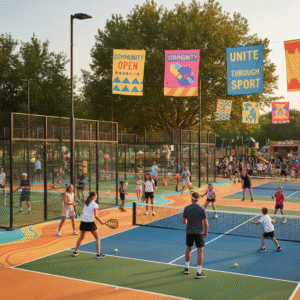
It is the sport that America cannot stop talking about, and now, the world is listening. Pickleball has been the fastest-growing sport in the US for several years running, but 2026 marks its true global breakout.

Accessibility and The Social Factor
The primary driver behind why Pickleball is becoming so popular is its remarkably low barrier to entry.
- Cost: A paddle costs less than a decent dinner, and a wiffle ball is negligible.
- Physicality: The court is small, meaning less running than tennis. The underhand serve is easier to master than the complex overhand smash of other racquet sports.
- Age Agnostic: It is one of the few sports where a 20-year-old and a 60-year-old can play a competitive match together.
This “age agnostic” quality addresses a massive gap in the sports market: activities for an aging population that still wants to compete. It fosters intergenerational connection, serving as a social glue in communities.
The Professionalization of Pickleball
While it started as a pastime for retirees, Pickleball in 2026 has a serious professional edge. Major leagues have attracted celebrity owners from the worlds of basketball and football. We now see televised tournaments with significant prize pools.
This professional layer trickles down. It creates a market for high-end gear, coaching, and clinics. Athletic brands that ignored the sport five years ago now have dedicated Pickleball lines, further legitimizing it in the eyes of the consumer.
Economic Impact on Local Communities
Municipalities love Pickleball. Converting one tennis court into four Pickleball courts quadruples the number of residents who can use the facility at once. This efficiency makes it an easy win for city planners. Furthermore, the “Eatertainment” trend—venues combining Pickleball courts with bars and restaurants—has exploded. These venues are becoming the new bowling alleys or golf ranges, driving local economies and creating jobs.
Women’s Sports Growth & Global Impact
Perhaps the most inspiring and significant trend in 2026 is the exponential trajectory of women’s sports. The narrative has shifted from “supporting women’s sports is the right thing to do” to “supporting women’s sports is a profitable thing to do.”

Breaking Viewership Records
The numbers speak for themselves. In 2026, we are seeing women’s sporting events routinely sell out stadiums that were previously thought too large. The fallout from successful World Cups and Olympic cycles has created sustained interest.
Television networks are bidding competitively for rights to the WNBA, the Women’s Super League (soccer), and women’s tennis tours. Prime-time slots are no longer reserved solely for men’s games. Data shows that when women’s sports are accessible—broadcast on main channels rather than obscure streaming services—people watch in droves.
Investment and Commercial Viability
Sponsors are flocking to female athletes. Brands realize that female athletes often have higher engagement rates on social media and are seen as more trustworthy by consumers. We are seeing:
- Dedicated Footwear: Major shoe brands releasing signature shoes for female basketball and soccer players, designed specifically for female biomechanics rather than just “shrinking and pinking” men’s shoes.
- Private Equity: Investment firms buying stakes in women’s teams, predicting massive valuation growth over the next decade.
- Media Ecosystems: New media companies dedicated exclusively to covering women’s sports are flourishing, filling the void left by traditional legacy media.
Role Models and Cultural Shifts
The visibility of powerful, professional female athletes changes cultural perceptions. In 2026, young girls worldwide have more role models than ever before. They see women being celebrated for strength, strategy, and competitiveness.
This impact goes beyond the field. Studies show that women who play sports are more likely to succeed in business leadership roles. By fostering a generation of female athletes, we are inadvertently fostering a generation of female CEOs and leaders. The global impact of this cannot be overstated—it is a driver for gender equality on a macro scale.
Technology and Fan Engagement Trends
No discussion of trending sports worldwide in 2026 is complete without touching on technology. The way we train and engage is smarter.

Wearable Tech 2.0
Athletes are no longer just tracking heart rate. They are tracking hydration levels, blood glucose, and sleep recovery in real-time. Smart fabrics embed sensors directly into uniforms, providing coaches with data on player fatigue before an injury occurs.
Virtual Reality Training
Quarterbacks use VR to read defenses without taking hits. Soccer players use it to improve cognitive reaction times. This technology has trickled down to the consumer level, where fitness apps allow users to “train like a pro” in their living rooms.
The Rise of “Micro-Betting”
With sports betting legal in more jurisdictions globally, the nature of engagement has changed. Fans can bet on micro-events—like the outcome of the next pitch or the next corner kick. While controversial, this keeps fans glued to the screen for the duration of a match, driving value for broadcasters and advertisers.
Conclusion: The Future of Play
As we navigate 2026, the world of sports is more vibrant and varied than ever. The definition of a “mainstream” sport is expanding. It is no longer just about the big three or four games. It is about Padel matches in urban centers, high-stakes esports tournaments in sold-out arenas, neighborhood Pickleball leagues, and the roaring crowds at women’s soccer matches.
These trending sports worldwide share common threads: they are community-focused, technologically integrated, and increasingly accessible. They reflect a world that values connection, health, and entertainment in equal measure.
For the aspiring athlete, the opportunities have never been broader. For the investor, the emerging markets of esports and women’s athletics offer incredible potential. And for the fan, there has never been a better time to watch. Whether you are cheering for a goal, a touchdown, or a digital victory, the passion remains the same. The game is changing, and it is changing for the better.
Key Takeaways for 2026:
- Diversify Your Interests: Don’t just watch the classics. Check out Padel or Flag Football to see where the innovation is happening.
- Watch Women’s Sports: The quality and excitement are at an all-time high, and the community is electric.
- Get Digital: Understand that esports is a legitimate cultural force with a massive economic footprint.
- Pick Up a Paddle: Join the Pickleball revolution for a fun, healthy way to connect with your community.
The ball is in your court. How will you engage with the sporting world this year?


Leave a Reply