



Introduction
In the world of competitive sports, physical prowess is often the most visible indicator of success. We marvel at the sprinter’s explosive speed, the weightlifter’s raw power, and the gymnast’s incredible flexibility. Yet, behind every gold medal, championship trophy, and record-breaking performance lies a hidden engine that drives these feats: sports psychology.
While training the body is essential, training the mind has become the defining factor that separates good athletes from true legends. It is the invisible edge that allows a tennis player to save a match point in a Grand Slam final or a quarterback to execute a perfect drive with seconds on the clock.
This comprehensive guide dives deep into the realm of sports psychology, exploring the pillars of mental toughness, the art of handling pressure, the power of visualization, and the collective psyche of winning teams. Whether you are an aspiring athlete, a dedicated coach, or a sports enthusiast, understanding these mental mechanics is key to unlocking potential.
The Foundation: Understanding Sports Psychology
Sports psychology is the study of how psychological factors influence sports, athletic performance, exercise, and physical activity. It is not merely about “fixing” problems; it is about optimization. Just as a strength coach builds muscle, a sports psychologist builds mental resilience, focus, and emotional control.
In the modern era, the stigma around mental training is vanishing. From the NBA to the Olympics, top-tier organizations are investing heavily in mental performance coaches. They understand that when physical skills are equal, the athlete with the stronger mind wins.
Why Is Sports Psychology Crucial?
- Consistency: It helps athletes perform at their peak regularly, not just occasionally.
- Recovery: It aids in bouncing back from injuries and setbacks.
- Enjoyment: It reduces burnout and keeps the passion for the sport alive.
- Life Skills: The discipline, focus, and resilience learned in sports translate to all areas of life.
Mental Toughness in Competitive Sports
If sports psychology is the engine, mental toughness is the fuel. It is a term thrown around loosely by commentators, but in clinical terms, it refers to an athlete’s ability to persevere through difficult circumstances and emerge without losing confidence.

Defining Mental Toughness
Mental toughness is often categorized into the “4 Cs” model:
- Control: Feeling that you can influence your own destiny and emotions.
- Commitment: Being deeply involved in pursuing goals despite difficulties.
- Challenge: Viewing potential threats as opportunities for growth.
- Confidence: Maintaining a high belief in one’s abilities.
Research indicates that mental toughness is not necessarily an innate trait—it can be developed. It is a psychological skill set that allows athletes to remain consistent in their determination, focus, and control under pressure.
Building Resilience: The Bounce-Back Factor
In competitive sports, failure is inevitable. You will miss the shot. You will lose the race. You will get injured. Mental toughness dictates how you respond.
Resilient athletes do not see failure as a reflection of their identity (“I am a failure”). Instead, they view it as feedback (“My technique failed in this instance”). This shift in perspective is critical. It turns a setback into a data point for improvement rather than a blow to self-esteem.
Actionable Tips for Building Mental Toughness
- Embrace Discomfort: Intentionally put yourself in difficult training situations. If you hate running in the rain, train in the rain. Callousing the mind makes competition feel easier.
- Reframing Negative Thoughts: When you think, “This is too hard,” practice stopping that thought and replacing it with, “This is hard, but I have trained for this.”
- Focus on Process, Not Outcome: Fixating on winning creates anxiety. Fixating on execution (e.g., “keep my knees high,” “follow through on the swing”) creates focus.
How Athletes Handle Pressure
Pressure is the invisible opponent on every field of play. Athletes under pressure often experience physiological changes: increased heart rate, shallow breathing, and muscle tension. These are natural survival responses, but in sports, they can lead to “choking”—a sudden and significant decline in performance.

The Physiology of Panic vs. Poise
When an athlete perceives a situation as a threat (e.g., “If I miss this, we lose”), the body’s fight-or-flight response kicks in. Blood rushes away from the extremities to the core, fine motor skills degrade, and tunnel vision sets in.
Elite athletes handle pressure by reinterpreting these signals. They view the racing heart not as fear, but as readiness. They see the big moment not as a threat, but as a challenge. This cognitive reframing changes the hormonal response from cortisol (stress) to adrenaline (energy).
Techniques for Managing High-Stakes Moments
1. The Power of Breath
Controlled breathing is the remote control for the nervous system. Techniques like “box breathing” (inhale 4 seconds, hold 4, exhale 4, hold 4) can lower heart rate and reduce cortisol levels within minutes. This returns control to the prefrontal cortex, the part of the brain responsible for decision-making.
2. Routine as an Anchor
Why do basketball players dribble the exact same way before every free throw? Why do tennis players adjust their strings obsessively? These are pre-performance routines. They provide a sense of familiarity and control in a chaotic environment. When the pressure is high, the routine tells the brain, “We’ve done this a thousand times. Just do it again.”
3. The “Reset” Button
Mistakes compound pressure. Athletes need a physical or mental trigger to “reset” after an error. This could be unstrapping a glove, taking a deep breath, or looking at a specific spot in the stadium. It signals to the brain that the previous play is over and the focus is now entirely on the next moment.
Case Studies in Pressure
Consider the calmness of a quarterback in a two-minute drill. They don’t rush. Their movements are deliberate. This is composure—the ability to act rationally when your instincts are screaming at you to panic. It is a learned behavior, honed through thousands of reps of high-pressure simulation during practice.
Visualization Techniques Used by Champions
If you can see it, you can achieve it. This cliché holds scientific weight in sports psychology. Visualization techniques, also known as mental imagery or mental rehearsal, involve creating or recreating an experience in your mind.

The Science of Visualization
Neuroscience reveals that the brain often cannot distinguish between a vividly imagined event and a real one. When an athlete visualizes performing a skill, the same neural pathways are activated as when they physically perform the action. This effectively allows for “mental reps” without the physical wear and tear.
Types of Visualization
- Outcome Visualization: imagining the end result, such as standing on the podium or seeing the ball go through the net. This builds confidence and motivation.
- Process Visualization: Imagining the specific steps required to achieve the outcome. This improves technique and strategy. This is generally more effective for performance enhancement.
How Champions Visualize
Elite athletes engage in multi-sensory visualization. They don’t just “see” the moment; they feel it.
- Visual: The color of the track, the brightness of the stadium lights.
- Auditory: The roar of the crowd, the sound of the ball hitting the racket.
- Kinesthetic: The texture of the grip, the tension in the muscles, the pounding of the heart.
- Olfactory: The smell of the grass or the chlorine in the pool.
The more vivid the imagery, the more the brain accepts it as a real experience.
A Visualization Script for Success
For athletes looking to incorporate this, try this nightly routine:
- Find a quiet, dark place and close your eyes.
- Take five deep breaths to relax your body.
- Visualize yourself entering the competition venue.
- See yourself warming up and feeling loose and confident.
- Visualize the competition starting. See yourself executing your skills perfectly.
- Crucially, visualize a mistake happening, and then visualize yourself recovering from it instantly and calmly. (This prepares the brain for adversity).
- Finish with the feeling of satisfaction after a job well done.
The Psychology Behind Winning Teams
While individual brilliance can win matches, team psychology wins championships. The psychology behind winning teams extends beyond having the best players; it requires having the best chemistry.

Cohesion: Task vs. Social
Sports psychologists distinguish between two types of cohesion:
- Task Cohesion: How well the team works together to achieve a common goal. Do they understand the plays? Do they trust each other’s competence?
- Social Cohesion: How much the team members like each other and enjoy spending time together.
Interestingly, research suggests that high task cohesion is more critical for winning than social cohesion. You don’t have to be best friends to win, but you must respect each other’s roles and abilities. However, social cohesion acts as a lubricant—it makes the long seasons and tough losses easier to endure.
The Role of Leadership
Winning teams almost universally possess strong leadership. This isn’t just the coach; it’s the peer leaders within the squad.
- Formal Leaders: Captains who are appointed.
- Informal Leaders: Players who lead by example or emotional intelligence.
Effective team psychology relies on leaders who hold teammates accountable without destroying morale. They set the “culture”—the unwritten rules of behavior (e.g., “we show up early,” “we don’t blame the refs”).
Psychological Safety
Google’s famous “Project Aristotle” found that the most important factor in high-performing teams was psychological safety. In a sports context, this means players feel safe to take risks, admit mistakes, and voice concerns without fear of being ridiculed or punished by teammates or coaches.
When psychological safety is high, a player will attempt that risky pass or take that difficult shot. When it is low, players play to avoid mistakes, which leads to hesitant, stifled performance.
Collective Efficacy
This is the team’s shared belief in its ability to succeed. It’s the “we can beat anyone” mentality. This is built through:
- Past Successes: Nothing builds belief like winning.
- Vicarious Experiences: Seeing similar teams succeed.
- Verbal Persuasion: Effective coaching and team talks.
Actionable Takeaways for Coaches and Athletes
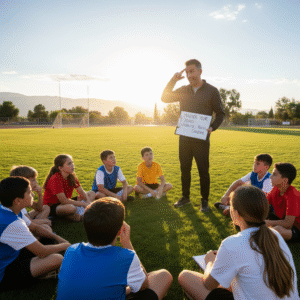
The journey to mental mastery is a marathon, not a sprint. Whether you are coaching a youth soccer team or training for a triathlon, here are practical ways to integrate sports psychology into your routine.
For Athletes
- Keep a Performance Journal: Document not just your physical stats, but your mental state. What were you thinking when you played well? What distracted you when you played poorly?
- Develop a Pre-Performance Routine: Create a 10-15 minute sequence of physical warm-ups and mental checks to use before every game.
- Practice Mindfulness: Spend 10 minutes a day practicing mindfulness meditation to improve your ability to focus on the present moment.
For Coaches
- Praise Effort, Not Talent: This cultivates a “growth mindset.” Praising talent makes athletes fear failure; praising effort encourages them to take on challenges.
- Teach Emotional Regulation: Don’t just yell “Calm down!” Teach them how to calm down (breathing, positive self-talk).
- Foster Autonomy: Give athletes choices in their training. When athletes feel they have a say, their motivation and commitment skyrocket.
The Future of Sports Psychology
As we look toward 2026 and beyond, the integration of technology and psychology is the next frontier. Biofeedback devices that measure heart rate variability (HRV) and brain waves are allowing athletes to see their stress levels in real-time and learn to control them. Virtual Reality (VR) is taking visualization to the next level, allowing quarterbacks to “play” a game against a specific defense without stepping on the field.

However, the core remains the human mind. The ability to endure, to focus, to believe, and to collaborate will always be the bedrock of athletic success.
Sports psychology is no longer a luxury for the elite; it is a necessity for anyone serious about reaching their potential. By training the mind with the same rigor as the body, athletes can unlock levels of performance they never thought possible. In the end, the distance between victory and defeat is often measured not in inches or seconds, but in neurons and thoughts.


Leave a Reply