


Introduction
Your bathroom shelf tells a story: a vitamin C serum promising brighter skin, a retinol cream that’s supposed to soften fine lines, a niacinamide serum for oil control, and maybe an exfoliating acid you picked up after seeing it all over your feed. Each product works beautifully on its own. Put them together in the wrong order, though, and you can end up with redness, stinging, or a breakout that wasn’t there yesterday.
This is exactly why layering active ingredients safely matters more than which products you buy. The skincare industry rarely teaches beginners how to combine actives correctly, so most people learn through trial, error, and irritated skin. This guide changes that. By the end, you’ll know how to layer active ingredients step by step, which combinations to avoid, which pairings actually boost results, and how to build a simple, beginner-proof routine that protects your skin barrier while still delivering visible results.
What Does “Layering Active Ingredients” Actually Mean?
“Active ingredients” are the components in a skincare product clinically shown to change your skin in some way — think retinol smoothing texture, vitamin C brightening dullness, salicylic acid clearing pores, or hyaluronic acid pulling in moisture. Everything else in the formula, like water, thickeners, or fragrance, is considered an inactive ingredient.
Layering active ingredients simply means applying more than one of these powerful ingredients in the same routine, whether that’s two serums back to back or a treatment layered underneath your moisturizer. Done correctly, layering active ingredients lets each product do its job without interfering with the others. Done carelessly, you risk cancelling out the benefits, irritating your skin, or, in the worst cases, damaging your moisture barrier.
The Golden Rule of Layering Active Ingredients: Thinnest to Thickest
If you remember nothing else from this guide, remember this: apply products from the lightest, most watery texture to the thickest, most occlusive one. This “thinnest-to-thickest” approach is the foundation of safely layering active ingredients, because it allows lightweight, water-based formulas to reach the skin first, before a heavier cream seals everything in and blocks further absorption.
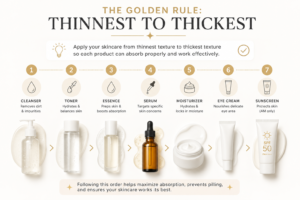
A typical order looks like this:
- Cleanser
- Toner or essence (optional)
- Water-based active serums (vitamin C, niacinamide, hyaluronic acid)
- Spot treatments or stronger actives (retinol, exfoliating acids)
- Eye cream
- Moisturizer
- Sunscreen in the morning, or a face oil at night
Give each layer roughly 30 to 60 seconds, and up to a few minutes for stronger actives like retinol, to fully absorb before adding the next product. Rushing through your routine is one of the most common reasons layering active ingredients fails to deliver results — the product sits on the surface instead of penetrating where it’s actually needed.
Know Your Actives Before You Start Layering
Before you start combining products, it helps to know what each ingredient actually does:
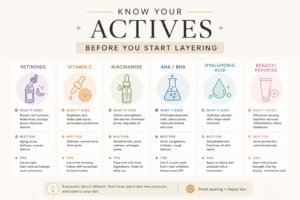
- Retinoids (retinol, retinal, tretinoin): Vitamin A derivatives that speed up cell turnover, smooth texture, and soften fine lines. Powerful, but also the most likely to cause irritation if introduced too quickly.
- Vitamin C (L-ascorbic acid and derivatives): An antioxidant that brightens skin, fades dark spots, and helps defend against environmental damage. Works best in the morning, under sunscreen.
- Niacinamide (vitamin B3): A gentle multitasker that calms inflammation, minimizes the look of pores, and supports the skin barrier. Plays well with almost everything.
- AHAs and BHAs (glycolic, lactic, salicylic acid): Chemical exfoliants that dissolve dead skin cells and unclog pores. Effective, but they lower skin pH and can be harsh when combined with other actives.
- Hyaluronic acid: A humectant that draws water into the skin. Hydrating, low-risk, and a good “buffer” ingredient for sensitive skin.
- Benzoyl peroxide: An acne-fighting ingredient that kills bacteria but can oxidize and deactivate other actives around it.
Understanding what each ingredient does, and how reactive it is, makes layering active ingredients far less of a guessing game.
Active Ingredients You Should Never Layer Together
Some combinations look harmless on paper but cause real problems on skin. These are the pairings dermatologists most often warn beginners about:
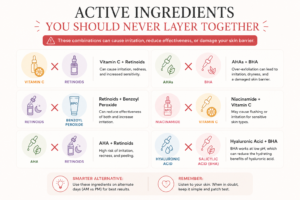
| Don’t Combine | Why It’s a Problem |
|---|---|
| Vitamin C + Retinol | Both are potent and can overwhelm the skin barrier, causing redness and peeling when used at the same time. |
| Vitamin C + Benzoyl Peroxide | Benzoyl peroxide oxidizes vitamin C, making it far less effective. |
| Vitamin C + AHA/BHA | Stacking acids on top of vitamin C creates an overly acidic environment that increases irritation risk. |
| Retinol + AHA/BHA | Both increase cell turnover; together they can strip the barrier, leading to flaking and sensitivity. |
| Retinol + Benzoyl Peroxide | Can deactivate retinol while drying out the skin excessively. |
| Niacinamide + Strong Acids | Not dangerous, but pairing niacinamide with potent exfoliants can still tip sensitive skin into irritation. |
A quick note on an old myth: you may have read that vitamin C and niacinamide can’t be used together because they “cancel each other out.” Newer research suggests that in modern, well-formulated products, this reaction is minimal, and the two can usually be layered without issue. When you’re unsure about a pairing, patch test first and watch how your specific skin responds.
The safest approach to layering active ingredients you’re uncertain about is to separate them by time of day, or alternate them on different days, rather than guessing.
Active Ingredient Pairings That Actually Work
Not every combination is risky — some actives are practically designed to work together:
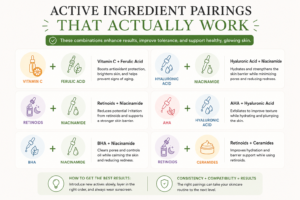
- Niacinamide + Hyaluronic Acid: Calming plus hydrating, ideal for almost any skin type.
- Retinol + Hyaluronic Acid or Peptides: The added hydration helps offset retinol’s potential dryness.
- Vitamin C + Vitamin E + Ferulic Acid: A classic antioxidant trio that boosts stability and sun-damage protection.
- Salicylic Acid + Niacinamide: A popular combination for oily or acne-prone skin, since niacinamide helps offset the drying effect of the acid.
These pairings show that layering active ingredients safely isn’t about avoiding all combinations — it’s about knowing which ones genuinely support each other.
The AM/PM Split: The Easiest Way to Layer Active Ingredients Safely
When two actives don’t play well together, the simplest fix is separating them by time of day instead of skipping one entirely.
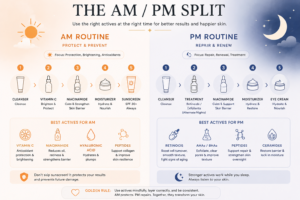
Morning: Lean on antioxidants like vitamin C, lightweight hydrators, and always finish with sunscreen. Many actives, especially retinoids and exfoliating acids, increase sun sensitivity, so daytime is about protection, not treatment.
Night: This is when your skin repairs itself, making it the right time for retinol, AHAs, or BHAs. Skip sunscreen, since there’s no UV exposure to guard against.
If you have two strong nighttime actives, such as retinol and an exfoliating acid, alternate them on different nights rather than layering them together. This single habit solves most of the conflicts beginners run into when layering active ingredients for the first time.
6 Rules Every Beginner Should Follow When Layering Active Ingredients
- Introduce one active at a time. Add a new product every two to three weeks, not all at once, so you can identify what’s causing irritation if it happens.
- Patch test first. Apply a small amount behind your ear or on your inner arm and wait 24 hours before using a new active on your face.
- Start with lower frequency. Two to three times a week is plenty when you’re new to retinol or acids; daily use can come later, once your skin adjusts.
- Respect wait times. Give each layer time to absorb — rushing reduces effectiveness and increases the odds of pilling or irritation.
- Never skip sunscreen. Active ingredients like retinoids and acids make skin more vulnerable to UV damage, so SPF isn’t optional.
- Buffer sensitive skin. Applying a thin layer of moisturizer before a strong active can soften its effect without cancelling out the benefits.
Common Mistakes Beginners Make While Layering Active Ingredients
- Using four or five new actives in the same week, instead of giving your skin time to adjust.
- Applying vitamin C and retinol in the same step “to save time.”
- Skipping the patch test because the product “seemed gentle.”
- Forgetting that morning and night routines should look different.
- Layering thick creams before lightweight serums, which blocks absorption entirely.
- Assuming more product means faster results — irritated skin actually slows progress.
A Simple, Beginner-Friendly Routine
If you’re just starting out, keep it minimal:
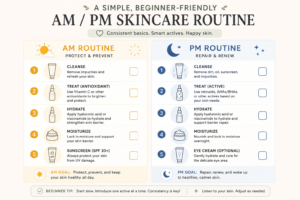
Morning: Gentle cleanser → niacinamide or vitamin C serum → moisturizer → SPF 30+
Evening (3x a week to start): Gentle cleanser → retinol or a single exfoliating acid → moisturizer
Evening (remaining nights): Gentle cleanser → hyaluronic acid → moisturizer
This structure gives your skin exposure to active ingredients without overwhelming it, and it leaves room to add new products gradually as your skin builds tolerance.
Final Thoughts
Layering active ingredients safely isn’t about memorizing complicated rules — it’s about respecting your skin’s pace. Start simple, introduce one active at a time, separate the ingredients that compete with each other, and always finish your morning routine with sunscreen. Once you understand the logic behind the order, layering active ingredients becomes second nature, and your skin gets the full benefit of every product on your shelf, without the irritation that sends so many beginners back to square one.
If you have persistent sensitivity, active acne, or a skin condition, a dermatologist can help you build a routine suited to your exact skin, rather than a general guide like this one.
Frequently Asked Questions
Can I use vitamin C and niacinamide together? Yes, in most modern formulations. The old concern that they cancel each other out came from outdated lab studies, not real-world skin results. If your skin is reactive, you can still play it safe by using vitamin C in the morning and niacinamide at night.
How long should I wait between layering active ingredients? About 30 to 60 seconds for lightweight serums, and up to a few minutes for stronger actives like retinol. The goal is to let each product absorb before adding the next layer.
Can beginners combine retinol and AHA/BHA? It’s not recommended early on. Both ingredients increase cell turnover, and layering them can overwhelm the skin barrier. Beginners should alternate retinol and acids on different nights instead.
How many active ingredients should I use in one routine? Two is plenty for beginners — for example, a hydrating active plus one treatment active. Adding more than that increases the risk of irritation before your skin has built any tolerance.
Is hyaluronic acid safe to layer with other actives? Yes. Hyaluronic acid is a hydrator rather than an exfoliant or acid in the irritating sense, so it pairs safely with almost every other active ingredient, including retinol and vitamin C.
What happens if I layer active ingredients in the wrong order? Active ingredients applied out of order may not absorb properly, reducing their effectiveness. In some cases, incorrect layering also raises the risk of redness, breakouts, or a compromised skin barrier.
Do I really need sunscreen if I’m using active ingredients? Yes, always. Retinoids and exfoliating acids increase photosensitivity, meaning unprotected skin is more vulnerable to sun damage. Sunscreen isn’t optional when actives are part of your routine.
How long should I wait before introducing a new active ingredient? Give your skin two to three weeks with one active before adding another. This makes it much easier to identify exactly what’s causing irritation if a reaction occurs.




Comments (1)
Retinoids & Facial Therapies: Transform Your Skinsays:
June 19, 2026 at 9:56 pm[…] Combination Irritants: Don’t simultaneously use multiple active ingredients like glycolic acid, vitamin C, and retinoids in the same routine. This overwhelms your skin barrier […]