



Introduction
“The secret to lasting weight loss isn’t a miracle diet — it’s understanding the biology, behavior, and tools that your body actually responds to.”
Millions of people search for a complete weight loss guide with science-based strategies and proven methods every single year — yet the global weight loss market, now valued at over $297 billion, continues to grow alongside rising obesity rates. The contradiction is obvious: more solutions exist than ever before, yet most people still struggle to lose weight and keep it off.
Why? Because the conversation has been hijacked by fad diets, misinformation, and one-size-fits-all programs that ignore the most important variable: you.
This complete weight loss guide cuts through the noise. Grounded entirely in current research and clinical evidence, it covers all seven pillars of successful, sustainable weight loss — nutrition, exercise, psychology, medical science, special populations, technology, and the biology underneath it all. Whether you want to drop 10 pounds or 100, this is the most actionable, research-backed weight loss roadmap you will find online.
(This post contains affiliate links. I may earn a small commission at no extra cost to you.”
This is legally required by FTC guidelines and Amazon’s own ToS.)
NUTRITION & DIET — Eat Smarter, Not Less
Nutrition is the cornerstone of every complete weight loss guide. The science is clear: a caloric deficit — burning more calories than you consume — is the fundamental mechanism of fat loss. But what you eat is just as important as how much you eat.
The Caloric Deficit Principle
A deficit of 500–750 calories per day produces approximately 0.5–1 kg of weight loss per week, which is the clinically recommended pace for sustainable results. Crash dieting accelerates muscle loss, crashes metabolism, and triggers powerful hormonal hunger responses that push weight back on.
Macronutrient Mastery
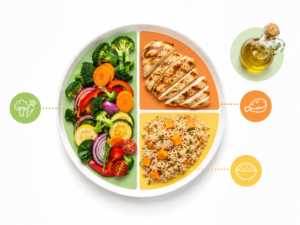
- Protein (30–35% of calories): The most important macronutrient for weight loss. Protein increases satiety, boosts the thermic effect of food (TEF), and preserves lean muscle during a deficit. Aim for 1.6–2.2g per kilogram of body weight.
- Fiber-Rich Carbohydrates: Whole grains, legumes, fruits, and vegetables regulate blood sugar, feed your gut microbiome, and keep you fuller longer. Meal sequencing research (2023, Nutrients) shows consuming protein and vegetables before carbohydrates reduces overall calorie intake and improves glycemic control.
- Healthy Fats: Essential for hormone production, brain health, and the absorption of fat-soluble vitamins. Avocados, olive oil, and nuts support satiety without spiking insulin.
Top Proven Dietary Approaches
| Diet Pattern | Best For | Key Science |
|---|---|---|
| Mediterranean Diet | Long-term adherence, heart health | Superior glycemic regulation; top-ranked by U.S. News & World Report |
| Intermittent Fasting (16:8) | Reducing total calorie intake | Lowers insulin, promotes fat oxidation |
| High-Protein Diet | Muscle preservation, appetite control | TEF boost of 20–30% vs. 5–10% for carbs |
| DASH Diet | Blood pressure + weight control | Strong cardiometabolic outcomes |
| Low-Carb / Ketogenic | Rapid initial fat loss | Greatest diastolic BP reduction in 2025 meta-analysis |
The Ultra-Processed Food Crisis
A landmark UK study found that people who ate home-cooked meals lost twice as much weight as those consuming ultra-processed foods — even when both groups were calorie-matched. UPFs disrupt gut hormones, override satiety signals, and promote addictive eating patterns. Eliminating or dramatically reducing UPFs is one of the highest-ROI nutrition changes you can make.
Pro Tip: Start with one change — replacing your daily UPF snack with a high-protein, whole-food alternative. Small shifts compound powerfully.
- Use a digital kitchen food scale to measure portions accurately
- Hit your daily target with a high-quality whey protein supplement
EXERCISE & FITNESS — Move to Multiply Results
Exercise alone rarely produces dramatic weight loss, but combined with smart nutrition, it is a metabolic game-changer. Every complete weight loss guide backed by science must include structured physical activity.
Strength Training: The Metabolic Engine
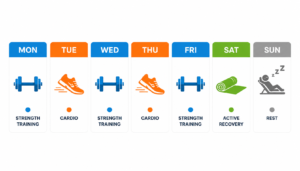
2025 research confirms that resistance training is superior to cardio alone for long-term fat loss. Muscle is metabolically active tissue — every pound of muscle you build burns an additional 6–10 calories at rest daily. Over months and years, this compounds into thousands of extra calories burned weekly.
Recommended protocol:
- 3–4 sessions per week, targeting all major muscle groups
- Progressive overload (gradually increasing weight or reps)
- Compound movements first: squats, deadlifts, rows, presses
Cardio: Still Powerful, Just Reimagined
Cardiovascular exercise burns calories directly and improves heart health, insulin sensitivity, and mental well-being. The most effective forms for fat loss:
- High-Intensity Interval Training (HIIT): 20–30 minutes, 2–3x/week. Boosts EPOC (Excess Post-Exercise Oxygen Consumption), burning calories for hours after training.
- Zone 2 (Low Steady-State) Cardio: 45–60 min walks, cycling, or swimming. Directly targets fat oxidation and builds aerobic base without cortisol spikes.
NEAT: The Overlooked Variable
Non-Exercise Activity Thermogenesis — the calories burned through everyday movement like walking, standing, and fidgeting — accounts for 15–50% of total daily calorie expenditure in active people. Sedentary individuals who increase NEAT by taking the stairs, standing at a desk, or walking after meals can increase their daily burn by 300–500 calories without ever stepping foot in a gym.
Metabolic Flexibility Through Training
Alternating between strength training and cardio builds metabolic flexibility — the body’s ability to efficiently switch between burning carbohydrates and fats. Research shows metabolically flexible individuals experience less hunger, more consistent energy, and better long-term weight maintenance.
- Start at home with an adjustable resistance bands set
- An adjustable dumbbell set for home workouts removes all gym excuses
PSYCHOLOGY & BEHAVIOR — The Mind-Body Weight Loss Connection
This is the cluster most often left out of weight loss guides, yet it is where most people actually fail. Behavioral science reveals that 80% of people who lose 10%+ of their body weight regain it within five years — not because of bad information, but because of unaddressed psychological patterns.
Emotional Eating & Trigger Identification
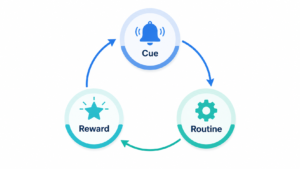
Keep a food and mood journal for two weeks. Record what you eat, when, and how you feel beforehand. Most people discover clear triggers: stress, boredom, loneliness, or social situations. Identifying triggers is the first step to breaking the cycle.
Habit Formation: The 66-Day Rule
A 2024 systematic review (Health Behaviour Habit Formation) confirmed that it takes an average of 66 days — not 21 — to solidify a new health behavior. Set realistic expectations, celebrate small wins, and recognize that early difficulty is normal, not failure.
Mindful Eating
Mindful eating — slowing down, removing distractions, chewing thoroughly, and tuning into hunger cues — is one of the most scientifically validated behavioral interventions for weight management. Studies show it reduces calorie intake by 10–15% without any food restriction.
Simple practice: Dedicate one meal per day to eating without screens. Just food, awareness, and time.
Stress & Sleep: Silent Weight Drivers
- Chronic stress elevates cortisol, which increases appetite for calorie-dense foods, promotes fat storage in the abdominal region, and impairs judgment. Research shows stressed women burn approximately 100 fewer calories per day than non-stressed counterparts.
- Sleep deprivation disrupts ghrelin (hunger hormone) and leptin (satiety hormone), increasing appetite by up to 24%. Aim for 7–9 hours of quality sleep per night as non-negotiable for any weight loss effort.
Cognitive Behavioral Therapy (CBT) for Weight Loss
CBT-based approaches help people identify and reframe distorted thoughts around food, body image, and self-worth. Combined with nutritional guidance, CBT produces significantly better long-term outcomes than diet alone.
- Track your progress using a daily habit tracker and wellness journal
HEALTH & MEDICAL — When Science Meets Medicine
No complete weight loss guide is accurate in 2026 without addressing the revolution in medical weight management.
GLP-1 Medications: A Paradigm Shift
GLP-1 receptor agonists — including semaglutide (Ozempic, Wegovy) and tirzepatide (Mounjaro, Zepbound) — are now used by approximately 12.4% of American adults, up from 5.8% just two years ago. These medications mimic natural gut hormones that regulate hunger, insulin secretion, and gastric emptying.
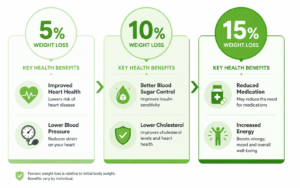
- Semaglutide produces 12–15% body weight reduction in clinical trials
- Tirzepatide (dual GIP/GLP-1 agonist) delivers up to 20–22% weight reduction
The 2025 American College of Cardiology Expert Consensus Statement now recommends these medications as first-line pharmacotherapy for patients with BMI ≥30 (or ≥27 with complications) — removing the old requirement to “try and fail” lifestyle changes first.
Important: These medications are tools, not cures. Lifestyle changes are essential for maintaining results if medication is discontinued.
Metabolic & Hormonal Health
Underlying hormonal imbalances — including hypothyroidism, polycystic ovarian syndrome (PCOS), insulin resistance, and adrenal dysfunction — can profoundly affect weight. Before assuming a lack of willpower, consult a healthcare provider for a full metabolic panel.
BMI & Waist Circumference: What Actually Matters
BMI is a population-level screening tool, not a precise individual measure. Waist circumference is increasingly recognized as the superior metabolic risk marker. A 2025 UK Biobank analysis of 315,457 adults found that exceeding WHO waist circumference thresholds was associated with 11% higher cancer risk — even in physically active individuals.
- A Bluetooth smart body composition scale tracks far more than just weight
SPECIAL POPULATIONS — Personalized Approaches That Work
A truly complete weight loss guide acknowledges that no two bodies are the same.
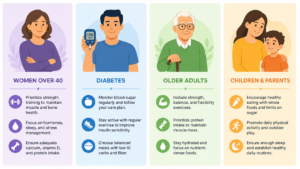
Women Over 40 & Perimenopause
Hormonal shifts during perimenopause and menopause dramatically alter fat distribution, metabolism, and appetite regulation. Women in this phase benefit most from:
- Hormone-aware nutrition (increased protein, phytoestrogens, calcium)
- Low-impact strength training and yoga/Pilates
- Targeted programs like Reverse Health, ranked as the best personalized program for women 40+ in 2026 by Fortune magazine
- Reduced refined carbohydrate intake to counteract insulin sensitivity decline
Type 2 Diabetes & Pre-Diabetes
Weight loss of just 5–10% of body weight dramatically reduces HbA1c levels, often enough to reduce or eliminate medication. The approach:
- Low glycemic index foods, meal sequencing (protein/veg before carbs)
- CGM (Continuous Glucose Monitoring) to identify personal glucose triggers
- Resistance training to improve insulin sensitivity
- Medical supervision for medication adjustments as weight drops
Older Adults (65+)
Sarcopenia (age-related muscle loss) makes weight loss more complex. Older adults should prioritize:
- High protein intake (1.8–2.2g/kg) to preserve muscle
- Resistance training as the primary exercise modality
- Functional fitness over aesthetics
- Medical monitoring given increased medication interactions
Children & Adolescents
Pediatric weight management must be family-centered and growth-aware. Restrictive diets are inappropriate. Focus on: reducing screen time, increasing activity, improving food quality, and involving the whole family in dietary changes. Never use weight-shaming language.
TECHNOLOGY & TOOLS — Your Digital Weight Loss Arsenal
Technology has transformed what’s possible in personal weight management. The global weight loss technology market is projected to reach $590 billion by 2033, growing at 7.91% CAGR, driven by AI personalization, wearables, and digital coaching.
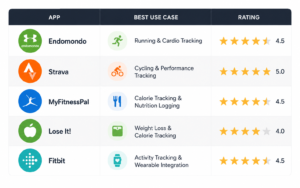
Top Apps for Weight Loss Tracking
| App | Best For | Key Feature |
|---|---|---|
| MyFitnessPal | Calorie & macro tracking | Massive food database |
| Cronometer | Micronutrient accuracy | Vitamin/mineral tracking |
| Lose It! | Beginners | Simple UI, barcode scanner |
| Noom | Behavioral coaching | Psychology-based curriculum |
| Carbon Diet Coach | Advanced macro periodization | AI-driven macro adjustments |
Wearable Devices
Modern smartwatches and fitness trackers do far more than count steps. A 2025 randomized trial showed that integrating wearables into cardiac rehab produced far greater physical activity gains than standard care. Key metrics to track:
- Resting heart rate trends (dropping = improving fitness)
- HRV (Heart Rate Variability) — the gold standard recovery metric
- Sleep staging — REM and deep sleep percentages
- NEAT estimation via step count and movement data
Apple’s watchOS 26 Workout Buddy now uses AI to provide real-time spoken feedback anchored to actual training data — a leap beyond generic motivation.
Continuous Glucose Monitoring (CGM)
A 2025 npj Digital Medicine study of 944 users found that AI-supported CGM apps improved metabolic markers and produced modest but significant weight loss across healthy users, pre-diabetics, and type 2 diabetics alike. CGM reveals exactly which foods spike your blood sugar — information no generic diet plan can provide.
AI-Powered Personalized Coaching
AI coaching platforms now analyze sleep, activity, nutrition, and biometric data to deliver hyper-personalized guidance. Studies show AI-assisted programs produce 2–4% greater weight loss at 12 months compared to standard care. Key platforms to explore include Noom, Calibrate, and telehealth-integrated programs through platforms like WeGovy Connect.
Telehealth & Digital Medicine
Remote access to registered dietitians, obesity medicine specialists, and behavioral therapists has democratized expert weight loss support. Studies confirm that telehealth-delivered weight loss interventions achieve outcomes comparable to in-person care — at a fraction of the cost and with dramatically greater convenience.
- A fitness tracker with heart rate monitor turns NEAT data into actionable insights
KNOWLEDGE & SCIENCE — Understanding Your Body’s Weight Loss Biology
Truly sustainable results require understanding why your body behaves the way it does. This is the science layer of every complete weight loss guide that most people never read — but absolutely should.
Why Most Diets Fail: The Biology of Weight Regain
Your body views rapid weight loss as a famine threat. In response, it triggers a cascade of powerful defensive adaptations:
- Leptin drops → you feel hungry all the time
- Ghrelin rises → cravings intensify
- Metabolic rate decreases → you burn fewer calories at rest
- Cortisol elevates → fat storage is prioritized, especially viscally
This is called metabolic adaptation (or adaptive thermogenesis), and it explains why approximately 80% of dieters regain weight. The solution is gradual, consistent deficit combined with regular diet breaks and high protein intake to minimize muscle loss.
The Gut Microbiome–Weight Loss Link
Your gut microbiome — the 100 trillion microorganisms living in your digestive tract — powerfully influences appetite, calorie extraction, inflammation, and fat storage. Research shows:
- Diversity of gut bacteria is lower in obese individuals
- Prebiotics and probiotics can modestly but significantly support weight loss
- Soluble fiber (beta-glucan from oats, etc.) improves blood glucose regulation and reduces appetite hormones
- Ultra-processed foods devastate microbial diversity within days
Set Point Theory & How to Override It
The body defends a “set point” — a weight range it considers normal — using hormonal and metabolic mechanisms. Lowering your set point is possible but requires:
- Sustained lifestyle change over 12–24+ months
- Building significant muscle mass (raises metabolic floor)
- Prioritizing sleep and stress management (resets hormonal balance)
- Gradual weight loss rather than rapid drops that trigger maximum defensive response
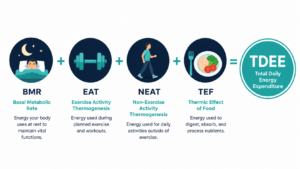
Energy Balance: Beyond “Calories In vs. Out”
While energy balance is real, it is not simple. Factors that affect the “calories out” side include:
- Thermic Effect of Food (TEF): Protein costs ~25–30% of its own calories to digest
- Exercise Activity Thermogenesis (EAT): Planned workouts
- NEAT: Non-exercise movement
- Basal Metabolic Rate (BMR): Drops with weight loss; partially recoverable through muscle building
A 2025 network meta-analysis of dietary patterns confirmed that while multiple diets produce weight loss, they differ meaningfully in cardiometabolic outcomes — confirming that food quality, not just quantity, fundamentally shapes health.
CONCLUSION: Your Science-Backed Weight Loss Journey Starts Here
This complete weight loss guide packed with science-based strategies and proven methods has covered every dimension that genuinely matters: what to eat, how to move, how to think, what medical tools exist, which technologies help, who needs personalization, and the biology that governs it all.
The key insight from all of this research is simple but profound: there is no single answer, but there are universal principles. A caloric deficit is non-negotiable. Protein is essential. Sleep and stress matter more than most people realize. Technology is a powerful ally. And medicine has evolved to offer real options for those who need additional support.
Your next step isn’t finding a perfect plan — it’s taking one deliberate action today. Log your meals. Start a 20-minute walk. Sleep 30 minutes earlier. Add protein to breakfast. Every proven method in this guide began with a single, imperfect step.
The science is clear. The strategies are proven. The only variable left is you.
FAQs — Frequently Asked Questions
Q1. What is the most effective science-based strategy for weight loss?
A: The most consistently supported strategy in research is a combination of a moderate caloric deficit (500–750 kcal/day) with high protein intake and resistance training. This trio maximizes fat loss while preserving lean muscle, which prevents metabolic slowdown. No single method works in isolation — the most effective approach combines nutrition, exercise, behavioral psychology, and sufficient sleep.
Q2. How fast can I safely lose weight according to science?
A: Clinical guidelines recommend 0.5–1 kg (1–2 lbs) per week as a safe and sustainable rate. Faster weight loss increases muscle loss, hormonal disruption, and the likelihood of weight regain. For those with a high starting BMI or using medical interventions like GLP-1 medications, supervised faster rates may be appropriate.
Q3. Does intermittent fasting really work for weight loss?
A: Yes, but primarily because it reduces total calorie intake. Multiple systematic reviews confirm that intermittent fasting (IF) — especially the 16:8 time-restricted eating method — produces weight loss comparable to continuous calorie restriction. Its main benefit is simplicity and adherence for people who find it easier to skip a meal than count calories.
Q4. Are GLP-1 medications like Ozempic safe for weight loss?
A: GLP-1 medications (semaglutide, tirzepatide) are FDA-approved for obesity treatment and have strong clinical safety records in large trials. The 2025 ACC Expert Consensus recommends them as appropriate first-line therapy for eligible patients. Side effects include nausea and GI discomfort, which typically diminish over time. They should only be used under medical supervision.
Q5. What role does sleep play in weight loss?
A: Sleep is a critical, often underestimated weight loss variable. Poor sleep (<7 hours) disrupts hunger hormones (ghrelin rises, leptin falls), increases appetite by up to 24%, elevates cortisol, and impairs the cognitive control needed for dietary adherence. Consistently getting 7–9 hours of quality sleep can materially improve weight loss outcomes.
Q6. Can I lose weight without exercising?
A: Yes — weight loss is primarily achieved through nutrition (caloric deficit). However, exercise dramatically improves the quality of weight loss (more fat vs. muscle), increases metabolic rate, improves insulin sensitivity, supports mental health, and is the #1 predictor of long-term weight maintenance. A complete weight loss guide without exercise is an incomplete strategy.
Q7. What is the best diet for long-term weight loss?
A: The Mediterranean diet consistently ranks as the best long-term dietary pattern for both weight management and overall health. It emphasizes whole grains, vegetables, fruits, legumes, healthy fats (olive oil), and lean proteins — and has strong adherence rates because it is enjoyable, flexible, and nutritionally complete.
Q8. How does stress cause weight gain?
A: Chronic stress elevates cortisol, a hormone that increases appetite for high-calorie foods, promotes visceral fat storage, disrupts sleep, and impairs the brain’s prefrontal cortex (where willpower and decision-making live). Stress management — through sleep, exercise, meditation, or therapy — is a direct weight loss intervention.
Q9. Are weight loss apps and wearables worth using?
A: Evidence increasingly says yes. A 2025 randomized trial showed wearables significantly increase physical activity versus standard care. AI-assisted platforms show 2–4% additional weight loss over 12 months. The caveat: technology works best as a tool to build awareness and accountability — not as a substitute for foundational habits.
Q10. What makes weight loss different for women over 40?
A: Perimenopause and menopause alter estrogen levels, which changes fat distribution (more abdominal accumulation), reduces insulin sensitivity, disrupts sleep, and lowers resting metabolism. Women over 40 benefit most from hormone-aware nutrition, strength training, adequate sleep, and potentially hormone panel assessment with a healthcare provider.
This article is for informational purposes only. Always consult a qualified healthcare professional before beginning any weight loss program.




Leave a Reply