


Medical Disclaimer: This article is intended for general educational and wellness purposes only and is not a substitute for professional medical advice. Macro counting is a nutritional strategy, not a medical treatment. Before beginning any new diet or significant dietary change, consult with a healthcare provider or registered dietitian, especially if you have underlying health conditions, are taking medications, or have a history of eating disorders. Individual nutritional needs vary; what works for one person may not be appropriate for another.
What Is Macro Counting (IIFYM)?
Macro counting, often called IIFYM (If It Fits Your Macros), is a flexible nutrition approach where you track your daily intake of three macronutrients—protein, carbohydrates, and fat—instead of following rigid food restrictions. The core principle is simple: <cite index=”2-1″>the IIFYM diet has absolutely no serious restrictions regarding what you can or cannot eat; it’s all about the macros</cite>. This means you can eat pasta, bread, chocolate, or any food, as long as it fits within your daily macro targets.
Unlike traditional dieting that eliminates entire food groups, macro counting prioritizes nutrition balance while allowing food freedom. <cite index=”1-1″>Counting macros for weight loss gives you tremendous flexibility in what you can eat while dieting</cite>, making it a realistic, sustainable approach for many people.
Why Are Macronutrients Important?
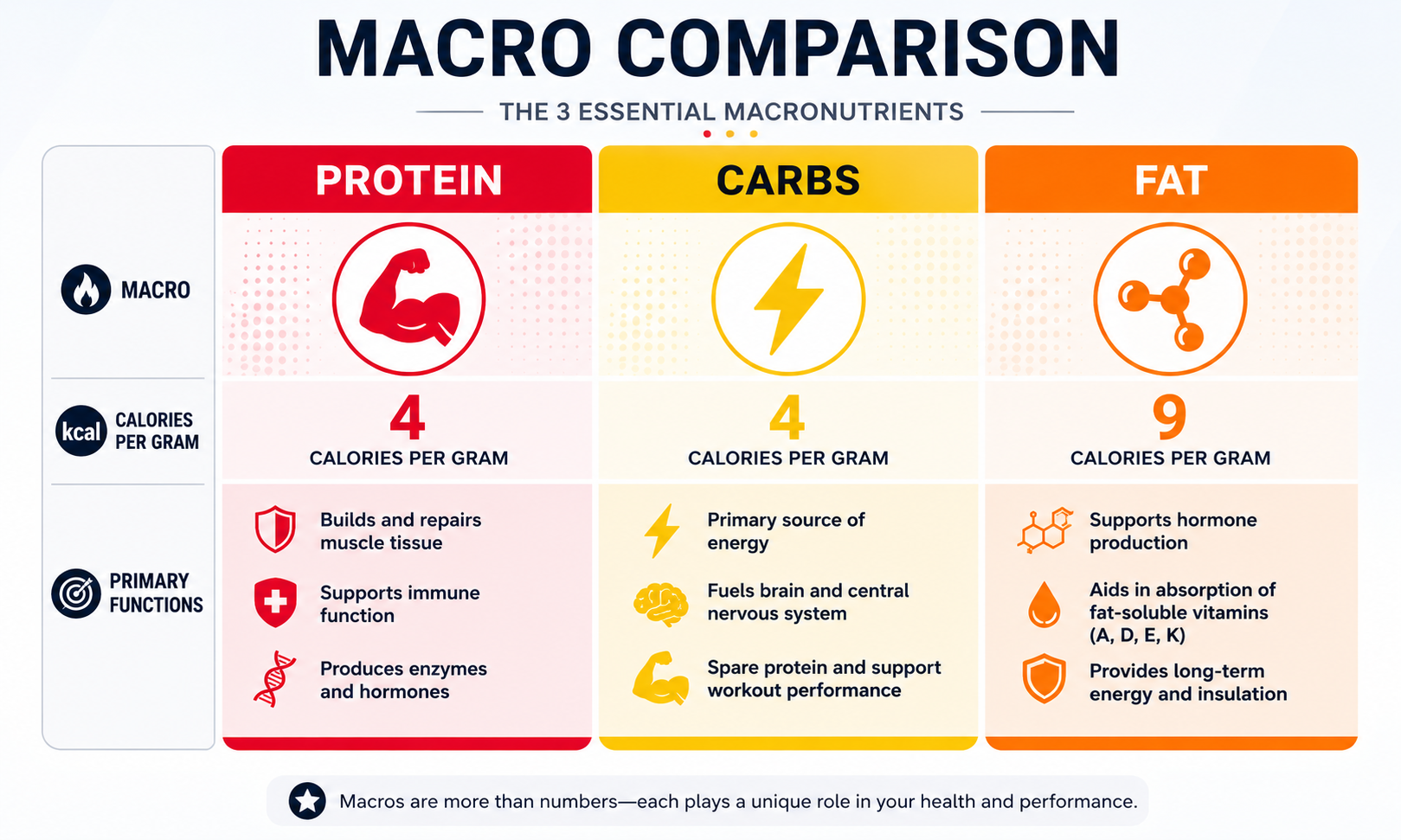
Your body requires three macronutrients in substantial amounts to function, each playing a distinct metabolic role:
| Macronutrient | Calories per Gram | Primary Functions |
|---|---|---|
| Protein | 4 calories/g | Builds and repairs muscle; preserves lean mass during weight loss; increases satiety |
| Carbohydrates | 4 calories/g | Primary energy source for daily activity and exercise; fuels brain and central nervous system |
| Fat | 9 calories/g | Supports hormone production; enables vitamin absorption; maintains cell membrane health |
<cite index=”4-1″>Each macronutrient comes with its own “energy density,” which means you can calculate the approximate number of calories you get from the various macronutrients you eat</cite>. This is why hitting your macro targets effectively means hitting your calorie target—they’re interconnected.
Understanding Your Macros: The Foundation
What Does TDEE Mean?
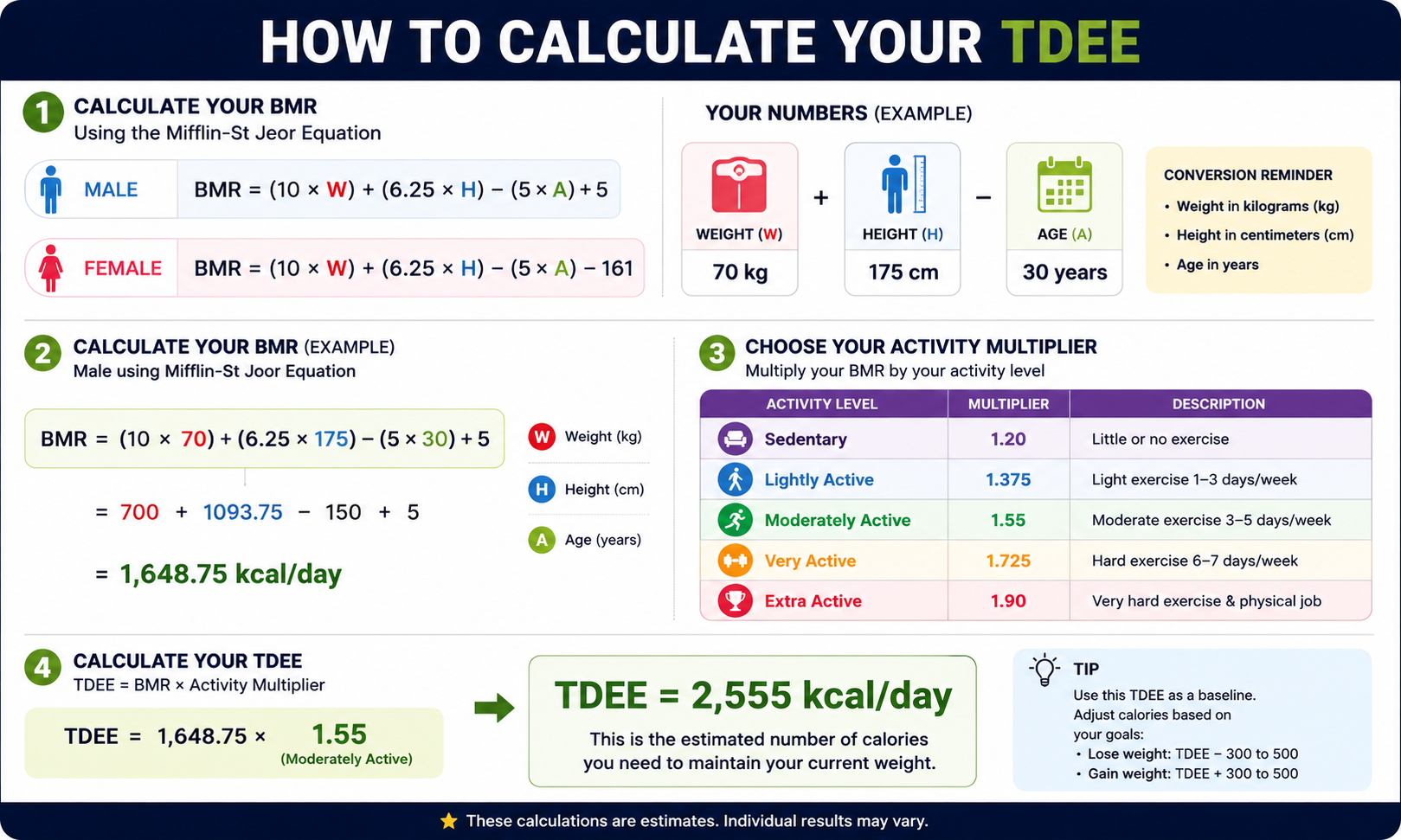
Before you can set macro targets, you must understand your Total Daily Energy Expenditure (TDEE)—the total number of calories your body burns in 24 hours through resting metabolism, digestion, and activity. <cite index=”12-1″>TDEE = Resting Metabolic Rate (RMR) + Exercise Activity (EA) + Non-Exercise Activity Thermogenesis (NEAT) + Thermic Effect of Food (TEF)</cite>.
<cite index=”12-1″>RMR typically accounts for 60–75% of TDEE, though it can be ≤50% in very active individuals</cite>. For most adults, TDEE falls between 1,800 and 3,200 calories per day, depending on body size, age, sex, and activity level.
The Three Calculation Steps
To begin macro counting for weight loss, follow these sequential steps:
- Estimate your TDEE using your Basal Metabolic Rate (BMR) and activity level
- Set a caloric deficit by reducing your TDEE by 10–20%
- Distribute those calories across protein, fat, and carbohydrate targets
How to Calculate Your Macros for Weight Loss
Step 1: Calculate Your Basal Metabolic Rate (BMR)
Your BMR is the calories your body burns at rest. The most accurate formula is the Mifflin-St Jeor equation:
For Men:
BMR = (10 × weight in kg) + (6.25 × height in cm) − (5 × age) + 5
For Women:
BMR = (10 × weight in kg) + (6.25 × height in cm) − (5 × age) − 161
Example: A 30-year-old male, 180 cm tall, weighing 80 kg:
BMR = (10 × 80) + (6.25 × 180) − (5 × 30) + 5 = 800 + 1,125 − 150 + 5 = 1,780 calories/day
Step 2: Multiply BMR by Your Activity Factor
Your activity factor accounts for exercise and daily movement:
| Activity Level | Multiplier | Description |
|---|---|---|
| Sedentary | 1.2 | Little to no exercise; desk-based work |
| Lightly Active | 1.375 | Light exercise 1–2 days per week |
| Moderately Active | 1.55 | Moderate exercise 3–5 days per week |
| Very Active | 1.725 | Vigorous exercise 6–7 days per week |
Example (continued):
1,780 × 1.55 (moderately active) = 2,754 calories/day TDEE
Step 3: Apply Your Caloric Deficit
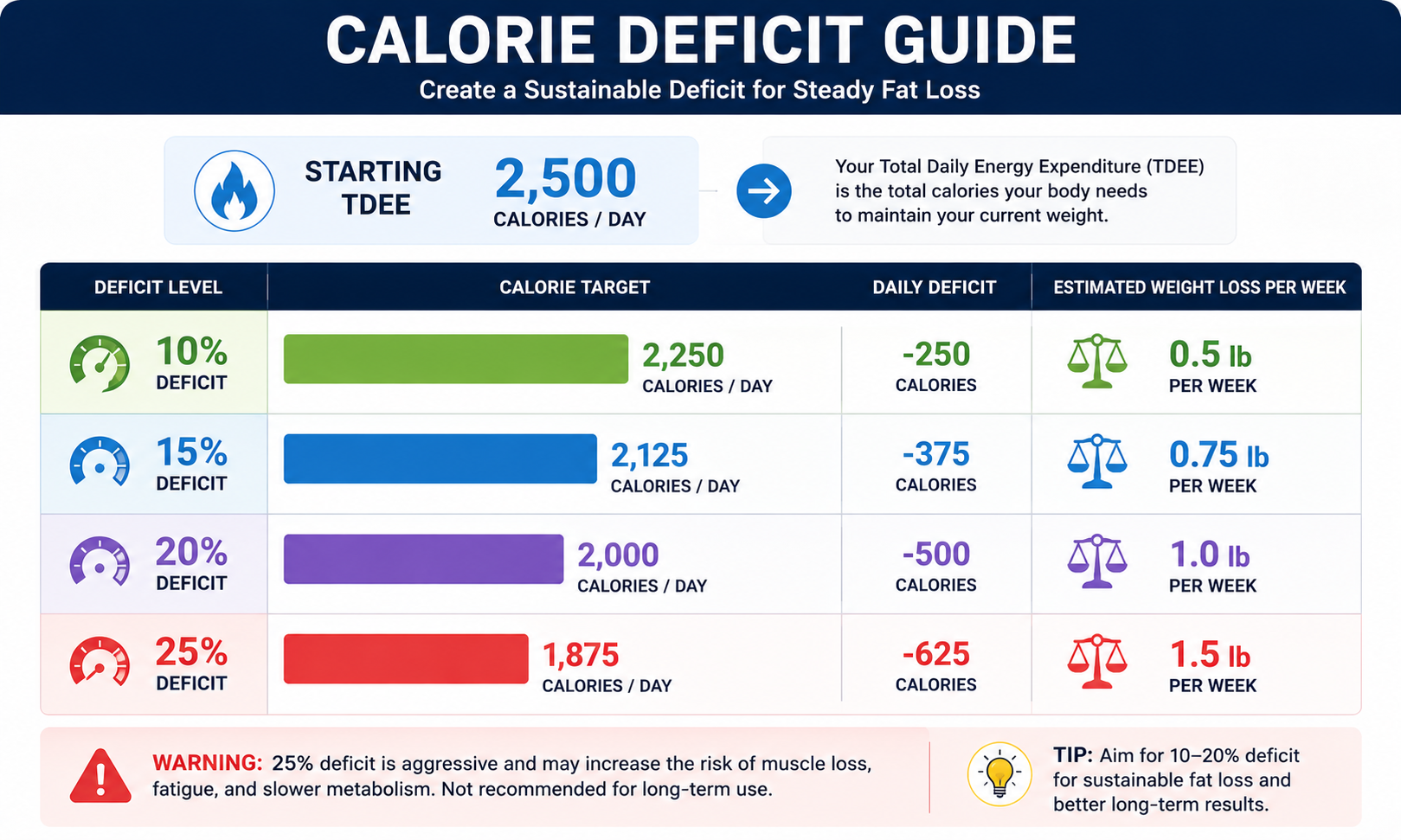
For sustainable weight loss, <cite index=”9-1″>a deficit of 15 to 20 percent below your TDEE strips fat while keeping the deficit livable; drop too low and you lose muscle, your energy tanks, and adherence falls apart within a few weeks</cite>.
<cite index=”8-1″>A 10–25% deficit is typically applied—subtract 10–25% from your TDEE to shed fat while maintaining lean muscle</cite>. This produces roughly 0.5 to 1.5 pounds of fat loss per week.
Example (continued):
2,754 × 0.85 (15% deficit) = 2,340 calories/day target for weight loss
Step 4: Distribute Your Calories Across Macros
Once you have your caloric target, allocate it to the three macros. <cite index=”9-1″>Divide the remaining calories into protein at 0.8 to 1 gram per pound of body weight, fat at about 25 percent of total calories, and carbohydrates filling whatever calories are left</cite>.
Protein First (Muscle Preservation)
Protein is critical during weight loss because it:
- Preserves lean muscle mass in a caloric deficit
- Increases satiety, reducing overall hunger
- Has the highest thermic effect (your body burns more calories digesting it)
Target: 0.7–1.0 grams per pound of ideal body weight (or 1.6–2.2 grams per kilogram)
Example: For an 80 kg person: 80 × 2.0 = 160 grams protein/day
Calories from protein: 160 g × 4 cal/g = 640 calories
Fat (Hormonal Health)
Fat supports hormone production and vitamin absorption. Never drop fat too low (minimum 15–20% of total calories).
Target: 20–30% of total calories (or 0.25–0.4 grams per pound of body weight)
Example: 2,340 × 0.25 = 585 calories from fat = 65 grams fat/day
Carbohydrates (Energy & Flexibility)
Whatever calories remain after protein and fat are allocated to carbs. This flexible approach allows you to adjust based on your preference and activity level.
Example:
- Total target: 2,340 calories
- Protein: 640 calories
- Fat: 585 calories
- Carbs: 2,340 − 640 − 585 = 1,115 calories = 279 grams carbs/day
Final Macro Target Summary
- Protein: 160g (640 cal)
- Fat: 65g (585 cal)
- Carbs: 279g (1,115 cal)
- Total: 2,340 calories
The Flexible Dieting Approach: What Sets IIFYM Apart
Food Freedom Without Guilt
The most appealing aspect of macro counting is that <cite index=”2-1″>diet plans tend to deliver better results when they are flexible enough to help a lot of people; a diet that eliminates specific foods or only allows certain foods tends to be less effective over time</cite>.
With IIFYM, you’re not forbidden from eating pizza, ice cream, chocolate, or other traditionally “forbidden” foods. If they fit your macros, they fit your diet. This flexibility often leads to better long-term adherence than restrictive eating plans.
80/20 Principle
While food freedom is central to IIFYM, sustainability requires nutritional quality. A commonly recommended guideline is to source at least 80% of daily calories from whole, minimally processed, nutrient-dense foods (lean proteins, vegetables, fruits, whole grains, legumes). The remaining 20% can come from more flexible choices.
This balance ensures you’re meeting your micronutrient needs (vitamins, minerals, fiber) while still enjoying the flexibility to include foods you love.
Quality Over Perfection
Successful macro counters aim to hit their targets within a reasonable margin (typically ±5–10%) rather than obsessing over exact numbers. <cite index=”12-1″>Aim to hit your macro targets within 10% consistently, rather than perfectly every day</cite>.
Macro Tracking Methods: Tools & Strategies
Digital Tracking Apps
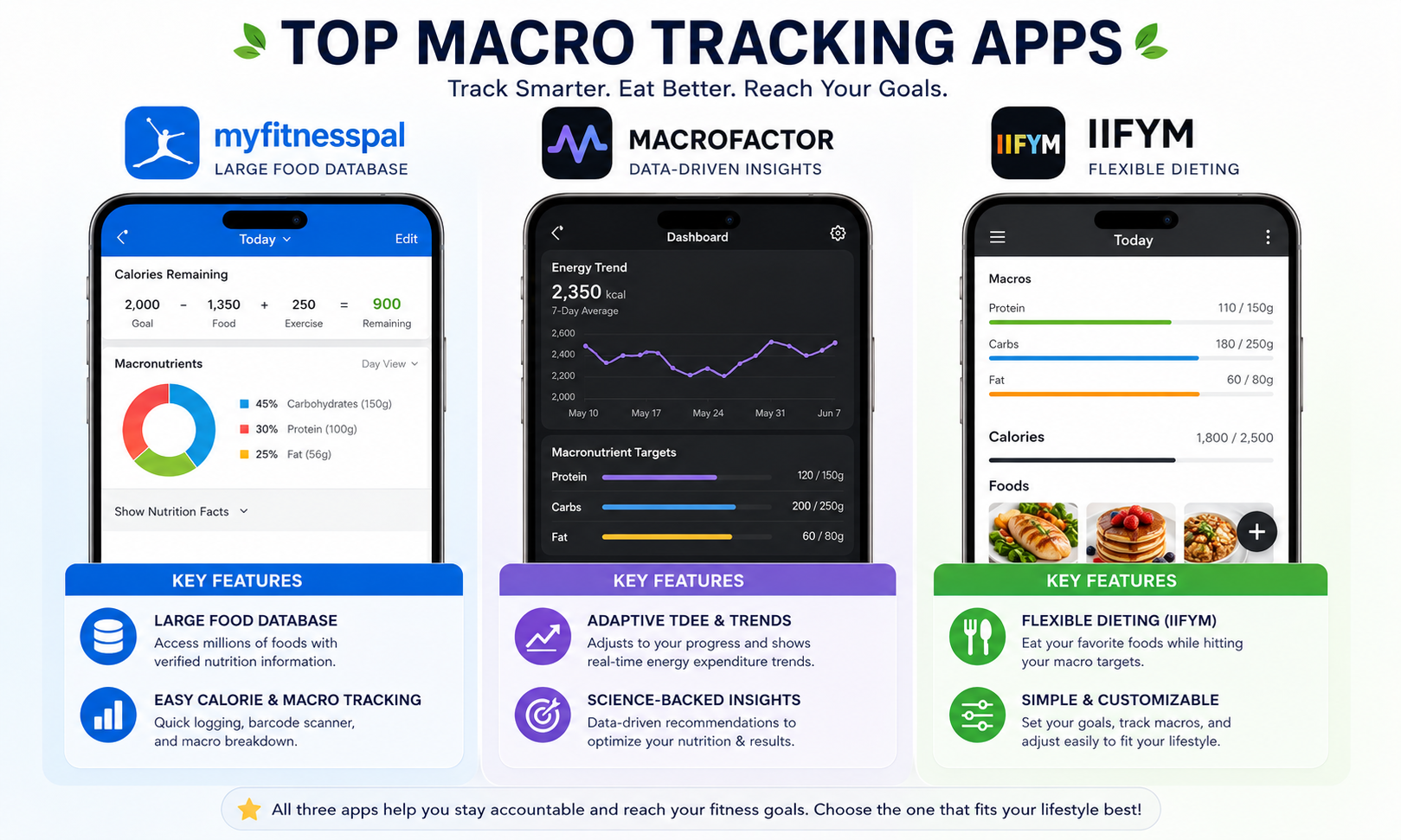
The most practical way to count macros is using a mobile app or web-based tracker. <cite index=”16-1″>Studies show mobile macro tracking apps can significantly improve weight loss results over time</cite>.
Popular macro tracking apps include:
- MyFitnessPal – Largest food database; barcode scanning; free and premium tiers
- MacroFactor – AI-powered adaptive tracking; trending analytics; subscription-based
- Cronometer – Micronutrient focus; detailed nutrient reports
- IIFYM App – Purpose-built for flexible dieting; personalized macro guidance
- Noom – Color-coded food system; behavioral support; subscription-based
How to Use a Tracking App
- Enter your personal details (age, weight, height, activity level)
- Set your fitness goal (weight loss, maintenance, muscle gain)
- App calculates personalized daily macro targets
- Log foods by searching the database or scanning barcodes
- Monitor your progress throughout the day
- Adjust future meals to stay on target
Pro Tip: Weigh your food using a kitchen scale for accuracy. Eyeballing portions leads to underestimation and inconsistent results.
Manual Tracking (Spreadsheet Method)
If you prefer not using an app, you can track macros using a spreadsheet:
- Create columns for: Date, Food, Serving Size, Protein (g), Carbs (g), Fat (g), Calories
- Use nutrition labels or a website like USDA FoodData Central to find macro values
- Sum your totals at day’s end
- Compare against your targets
This method takes more time but offers complete control and is useful if you have an unusual food database need.
Food Labeling & Database Resources
- Nutrition Labels – All packaged foods in most countries list macros per serving
- USDA FoodData Central – Comprehensive database of over 400,000 foods
- Restaurant Websites – Major chains publish full nutrition information
- App Databases – MyFitnessPal and similar apps have 10+ million foods pre-loaded
Macro Counting for Different Goals
Weight Loss (Caloric Deficit)
For fat loss, create a 10–20% deficit below your TDEE:
- Protein: Keep high (0.8–1.0 g/lb) to preserve muscle
- Fat: Minimum 20–25% of calories to maintain hormone function
- Carbs: Fill the remaining calories; adjust based on activity and preference
Expected Result: <cite index=”9-1″>That pace generally produces about 1 to 1.5 pounds of fat loss per week for most people, which is sustainable and repeatable</cite>.
Body Decomposition (Simultaneous Fat Loss & Muscle Gain)
You can lose fat and build muscle at the same time, especially if you’re new to strength training:
- Stay at maintenance calories (TDEE) or a small deficit (5–10%)
- Keep protein very high (0.8–1.0 g/lb)
- Prioritize progressive resistance training
- Monitor body composition (not just scale weight)
Weight Maintenance
If you’ve reached your goal weight, match your calorie intake to your TDEE:
- Protein remains moderately high to maintain muscle
- Fat and carbs adjusted to your preference
- Adjust every 2–4 weeks if scale weight drifts
Common Mistakes & How to Avoid Them
1. Not Tracking Consistently
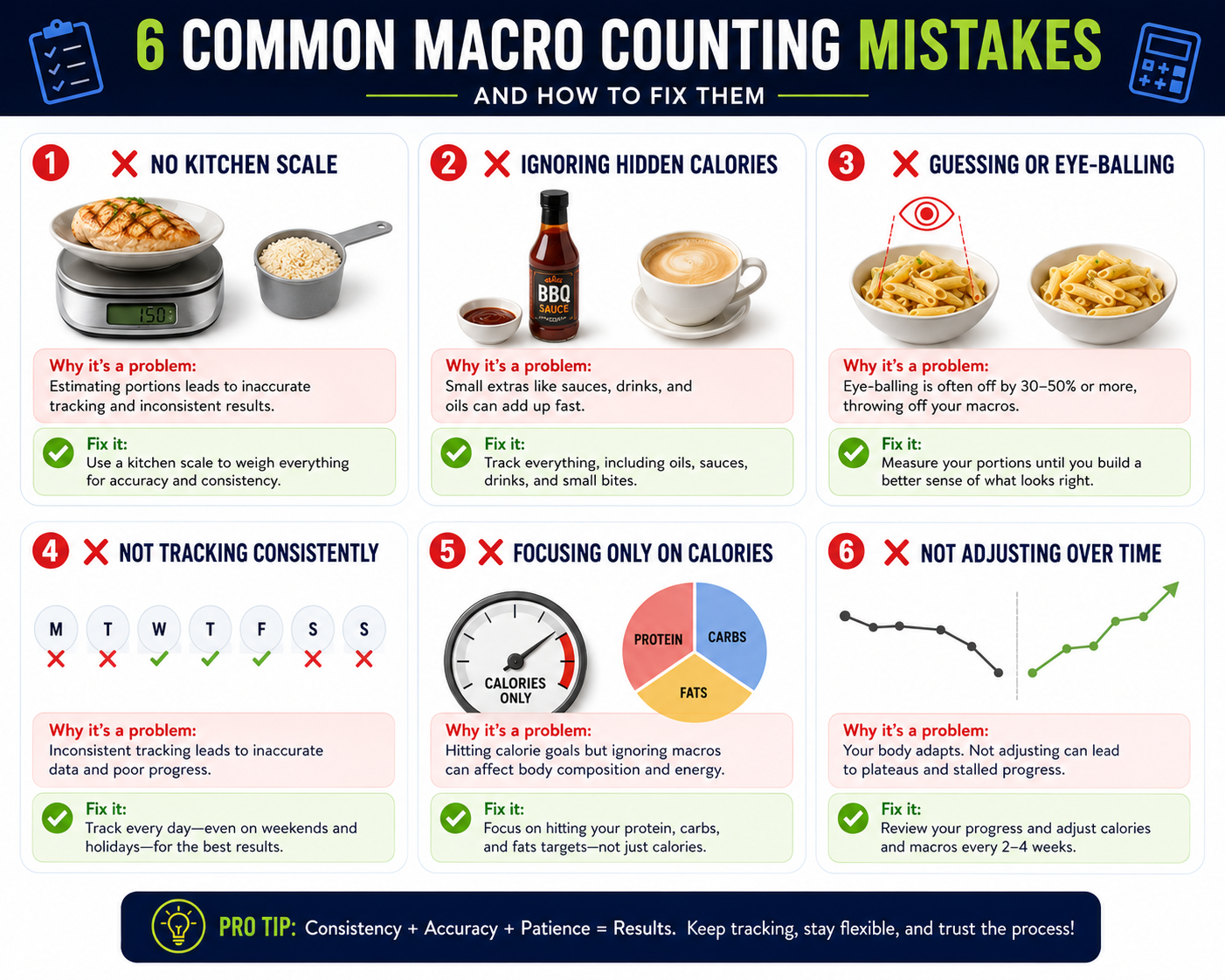
Mistake: Logging some meals but skipping others.
Solution: Commit to logging every food and drink for at least 4 weeks to build the habit and see reliable results.
2. Underestimating Portion Sizes
Mistake: Eyeballing portions leads to underreporting calories.
Solution: Use a kitchen scale to weigh solid foods and measure liquids. Most people underestimate by 20–40%.
3. Too Aggressive Deficit
Mistake: Creating a 30%+ caloric deficit leads to muscle loss, fatigue, and abandonment.
Solution: Stick to 15–20% deficits. Slower progress is sustainable progress.
4. Ignoring Micronutrients
Mistake: Hitting macros without ensuring vitamin and mineral intake.
Solution: Use the 80/20 rule and include fruits, vegetables, and whole foods for micronutrient density.
5. Not Adjusting as You Progress
Mistake: Using the same macro targets after losing 10+ pounds, even though your TDEE has changed.
Solution: Recalculate your TDEE and macros every 4–6 weeks, especially if you’ve lost significant weight.
6. Neglecting Strength Training
Mistake: Expecting macro counting alone to preserve muscle during weight loss.
Solution: Pair macro counting with progressive resistance training 3–5 days per week.
Is Macro Counting Right for You?
Who Benefits Most from IIFYM
Macro counting works best if you:
- Prefer food flexibility over restrictive diets
- Enjoy tracking and numbers
- Have time to log meals consistently
- Want sustainable, long-term results over quick fixes
- Are willing to invest in a kitchen scale and tracking app
Who Might Struggle
IIFYM may be challenging if you:
- Have a history of disordered eating or obsessive relationships with food (consult a healthcare provider first)
- Prefer simplicity over detailed tracking
- Lack consistent internet access for app use
- Find counting stressful or triggering
In these cases, simpler approaches like portion control or intuitive eating might be more sustainable.
Key Takeaways
- Macro counting is a flexible approach that focuses on protein, carbohydrate, and fat targets rather than restricting entire food groups.
- Calculate your TDEE first: Use the Mifflin-St Jeor formula to estimate Basal Metabolic Rate, multiply by your activity factor, then apply a 10–20% deficit for weight loss.
- Prioritize protein: Aim for 0.7–1.0 grams per pound of body weight to preserve muscle during caloric deficit.
- Use a tracking app to simplify logging and stay consistent; manual tracking is possible but less convenient.
- Follow the 80/20 principle: Source 80% of calories from whole foods and allow 20% flexibility, ensuring both nutrition and sustainability.
- Adjust every 4–6 weeks as your body weight and needs change; static macro targets become less accurate over time.
- Combine with resistance training for optimal results; macros support fat loss, but exercise preserves and builds muscle.
- Consistency beats perfection: Hitting macros within ±10% is sufficient; obsessive precision often leads to burnout.
References & Further Reading
- Ghelani, N., Hubbard, K., & Rudolph, J. (2020). A systematic review of mobile weight loss applications and their features. Mobile Health Applications for Fitness and Wellness, 15(3), 321–335.
- Islam, M. S., Tebeje, T. G., Garmonsway, A. R., et al. (2020). Mobile app-based dietary tracking for weight management: A systematic review and meta-analysis. Nutrients, 13(9), 3007.
- Mifflin, M. D., St Jeor, S. T., Hill, L. A., Scott, B. J., Daugherty, S. A., & Koh, Y. O. (1990). A new predictive equation for resting energy expenditure in healthy individuals. American Journal of Clinical Nutrition, 51(2), 241–247.
- Academy of Nutrition and Dietetics. (2021). Nutrition Care Manual: Evidence Analysis Library. Retrieved from Evidence Analysis Library.



Leave a Reply