


Author Note: This content is based on peer-reviewed research and clinical guidelines from institutions including NIH, Mayo Clinic, and the National Academy of Medicine. Always consult a healthcare provider before starting any new diet.
Medical Disclaimer: This article is for informational purposes only and does not constitute medical advice, diagnosis, or treatment recommendations. Individuals with kidney disease, diabetes, or other health conditions should consult a healthcare provider before adopting a high-protein diet.
Does a High-Protein Diet Really Help You Lose Weight?
Yes—but it’s not magic. A high-protein diet can support weight loss by increasing satiety (fullness), boosting your body’s calorie-burning process, and helping you maintain muscle mass as you lose fat. The key is pairing it with a calorie deficit and sustainable eating habits.
Research shows that people following high protein diet for weight loss slightly more weight than those on standard-protein diets. In one 6-month randomized trial, individuals on a high-protein diet lost 7.0 kg ± 3.7 kg compared to 5.1 ± 3.6 kg in the standard-protein group—and importantly, they preserved more lean muscle mass during weight loss.
However, protein alone won’t guarantee results. Weight loss still requires consuming fewer calories than you burn. Protein simply makes that deficit easier to maintain.
How Does Protein Support Weight Loss? (The Science)
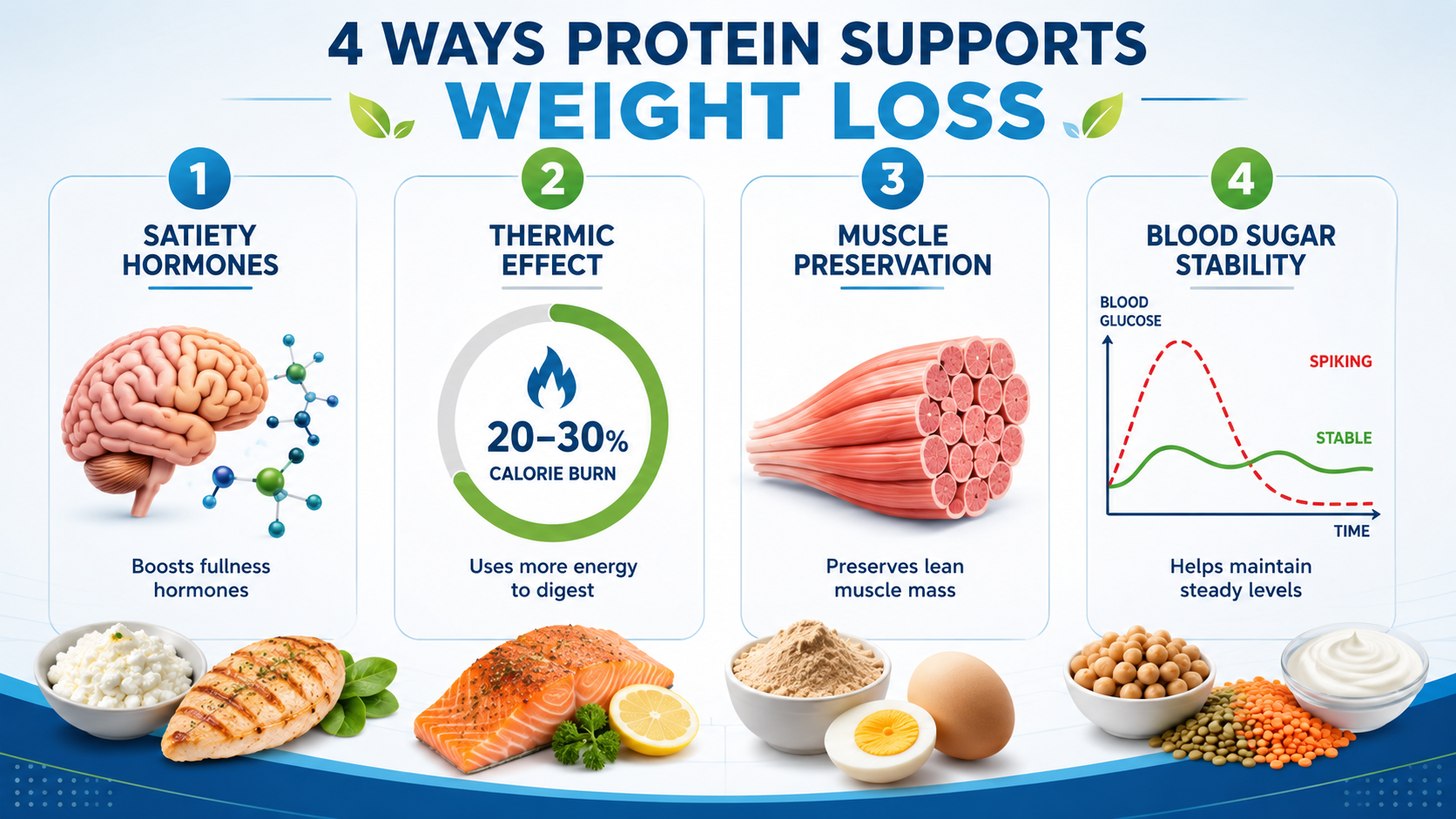
1. Increased Satiety (You Feel Fuller Longer)
Protein is the most satiating macronutrient. It works by:
- Triggering satiety hormones: Protein stimulates the release of hormones like GLP-1, GIP, and PYY—all of which signal fullness to your brain.
- Reducing hunger hormones: It lowers ghrelin, sometimes called the “hunger hormone,” which reduces appetite.
- Slowing digestion: Protein takes longer to digest than carbs, keeping you satisfied between meals.
Studies show that high protein diet for weight loss diets where 30–35% of calories come from protein significantly increase feelings of fullness compared to diets with just 18% protein.
2. Higher Thermic Effect of Food (TEF)
Your body burns calories just digesting food—and protein has the highest thermic cost of all macronutrients.
- Protein burns 20–30% of its own calories during digestion
- Carbs burn ~5–10%
- Fat burns ~0–3%
This means if you eat 100 calories of protein, your body uses 20–30 of those calories just breaking it down. Over time, this contributes meaningfully to total energy expenditure.
3. Preserves Lean Muscle During Weight Loss
When you diet, your body risks losing both fat and muscle. Adequate protein intake protects muscle mass.
One study compared low-protein intake (1.0 g/kg/day) to high-protein intake (2.3 g/kg/day) during a caloric deficit:
- Low-protein group lost ~1.6 kg of muscle mass
- High-protein group lost only ~0.3 kg of muscle mass
Preserving muscle matters because muscle tissue burns more calories at rest, supporting long-term weight maintenance.
4. Stabilizes Blood Sugar & Reduces Cravings
Protein has a low glycemic impact, meaning it doesn’t spike blood glucose the way refined carbs do. Stable blood sugar means fewer energy crashes, fewer cravings, and better appetite control throughout the day.
What Is Optimal Protein Intake for Weight Loss?
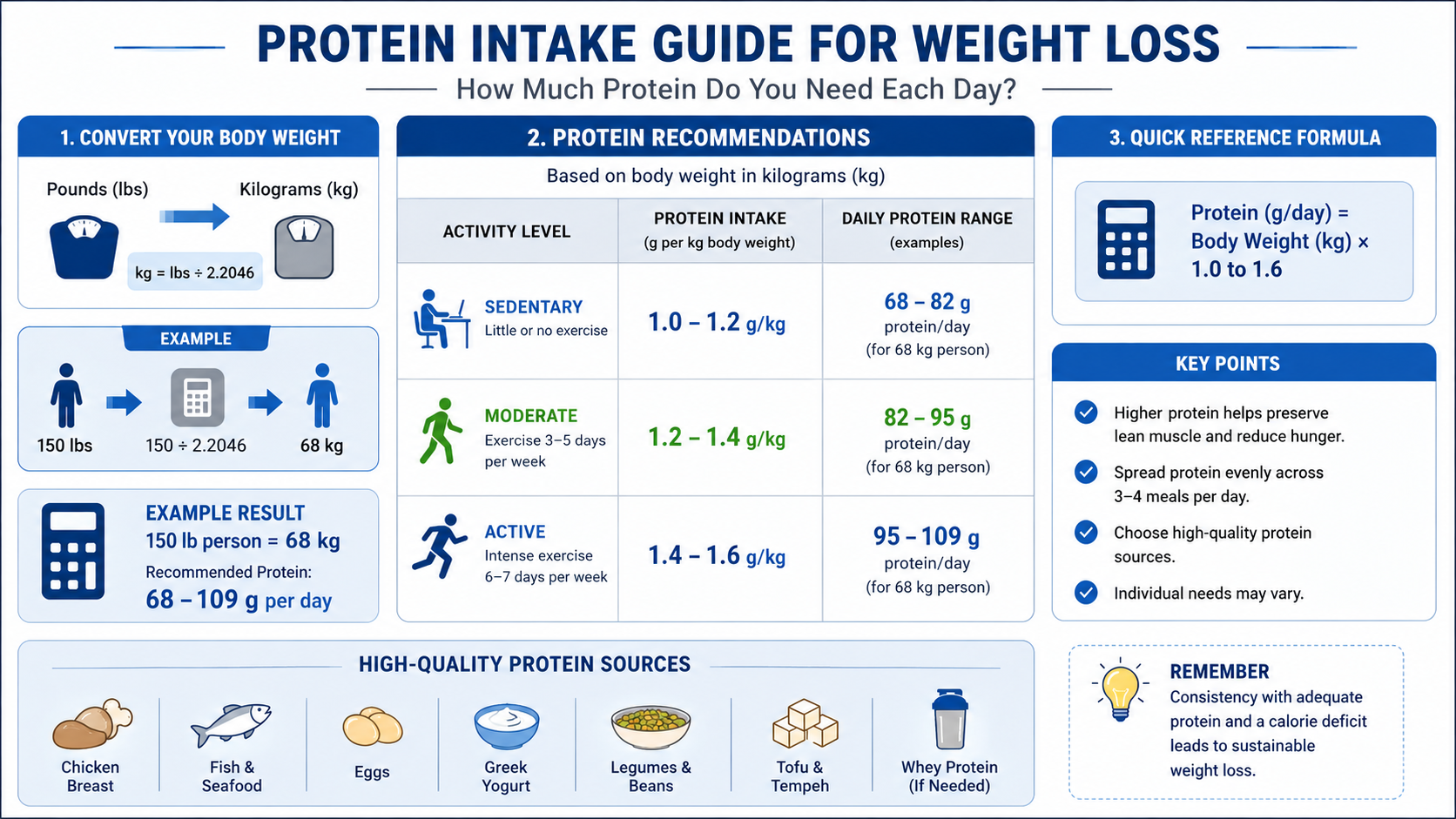
There’s no one-size-fits-all answer—optimal protein depends on your body weight, activity level, and metabolism. However, research provides clear guidelines:
General Protein Targets for Weight Loss
| Situation | Protein Range |
|---|---|
| Sedentary adult, weight loss goal | 1.0–1.2 g/kg body weight/day |
| Active adult (2–4x exercise/week), weight loss goal | 1.2–1.6 g/kg body weight/day |
| Highly active/strength training, weight loss goal | 1.6–2.2 g/kg body weight/day |
Note: 1 kg = 2.2 pounds
How to Calculate Your Personal Target
Step 1: Convert your body weight to kilograms
- Example: 150 lbs ÷ 2.2 = 68 kg
Step 2: Multiply by your protein target
- For moderate activity + weight loss: 68 kg × 1.4 = 95 grams/day
Step 3: Spread intake across meals
- Aim for 20–30 grams of protein per meal
- Your body utilizes protein more efficiently when distributed throughout the day
A Practical Rule of Thumb
If you’re unsure, aim for 0.7–1.0 grams of protein per pound of body weight per day. For a 150-pound person, that’s 105–150 grams daily.
Consult a healthcare provider before significantly increasing protein intake, especially if you have existing kidney disease or diabetes.
Best High-Protein Foods for Weight Loss
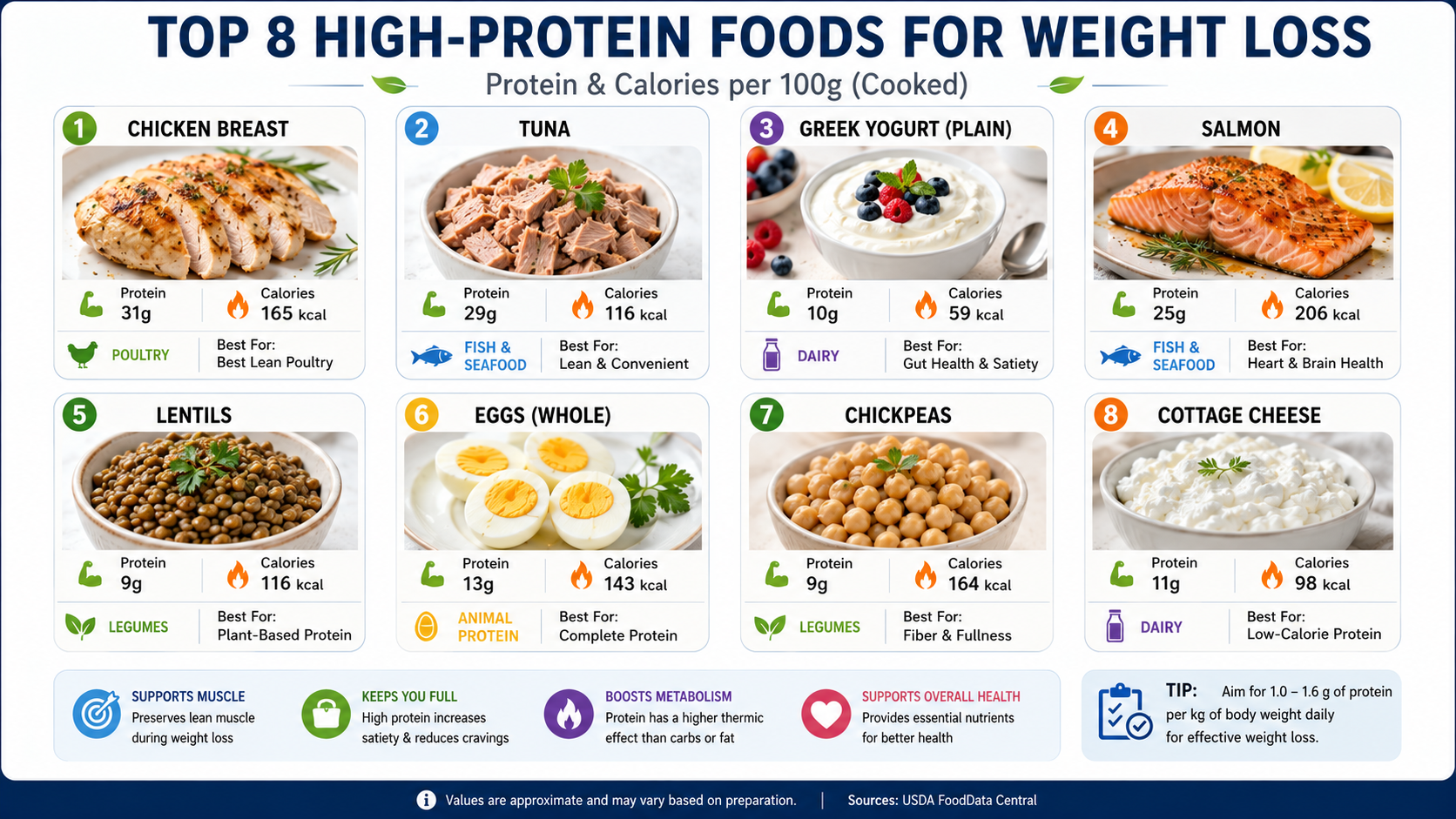
Effective weight loss requires choosing protein sources that are:
- High in protein per serving
- Low in calories relative to protein content
- Nutrient-dense
- Sustainable for your lifestyle
Lean Meat & Poultry
| Protein Source | Serving Size | Protein | Calories | Notes |
|---|---|---|---|---|
| Chicken breast (skinless) | 100g | 31g | 165 kcal | Leanest poultry option |
| Turkey breast (skinless) | 100g | 29g | 135 kcal | Versatile, affordable |
| Lean ground beef (93% lean) | 100g | 22g | 180 kcal | Choose 90%+ lean |
| Lean pork tenderloin | 100g | 27g | 143 kcal | Often overlooked source |
| Bison | 100g | 24g | 109 kcal | Leaner than beef |
How to use: Grilled chicken breast in salads, ground turkey in chili, lean beef in stir-fries, pork in grain bowls.
Fish & Seafood
| Protein Source | Serving Size | Protein | Calories | Notes |
|---|---|---|---|---|
| Salmon (wild) | 100g | 25g | 208 kcal | Rich in omega-3s |
| Cod | 100g | 18g | 82 kcal | Very lean option |
| Tuna (canned in water) | 100g | 26g | 92 kcal | Convenient, shelf-stable |
| Halibut | 100g | 21g | 111 kcal | Mild flavor, versatile |
| Tilapia | 100g | 26g | 128 kcal | Budget-friendly |
How to use: Baked salmon with vegetables, tuna salad wraps, grilled fish tacos, cod over brown rice.
Eggs & Low-Fat Dairy
| Protein Source | Serving Size | Protein | Calories | Notes |
|---|---|---|---|---|
| Whole eggs | 1 large | 6g | 72 kcal | Complete amino acid profile |
| Egg whites | 3 whites | 11g | 51 kcal | Protein-only option |
| Greek yogurt (plain, nonfat) | 150g (5 oz) | 15–20g | 60–100 kcal | Higher protein than regular yogurt |
| Cottage cheese (lowfat) | 100g | 11g | 72 kcal | Casein protein (slow-digesting) |
| Cheddar cheese (reduced-fat) | 30g (1 oz) | 7g | 80 kcal | Use as topping, not main protein |
How to use: Scrambled egg breakfasts, Greek yogurt parfaits, cottage cheese bowls, cheese on salads.
Plant-Based & Legumes
| Protein Source | Serving Size | Protein | Calories | Notes |
|---|---|---|---|---|
| Lentils (cooked) | 100g | 9g | 116 kcal | High in fiber |
| Black beans (cooked) | 100g | 9g | 132 kcal | Complete amino acids + grains |
| Chickpeas (cooked) | 100g | 15g | 164 kcal | Versatile legume |
| Tofu (firm) | 100g | 15g | 144 kcal | Neutral flavor, absorbs seasonings |
| Tempeh | 100g | 19g | 192 kcal | Higher protein than tofu |
| Hemp seeds | 30g (3 tbsp) | 10g | 161 kcal | Complete protein source |
How to use: Lentil soups, bean-based chili, roasted chickpeas, stir-fried tofu, tempeh marinades.
Important note: Plant-based proteins often contain carbohydrates and fiber (a positive). Pair with whole grains to ensure all essential amino acids.
Sample High-Protein Meal Ideas
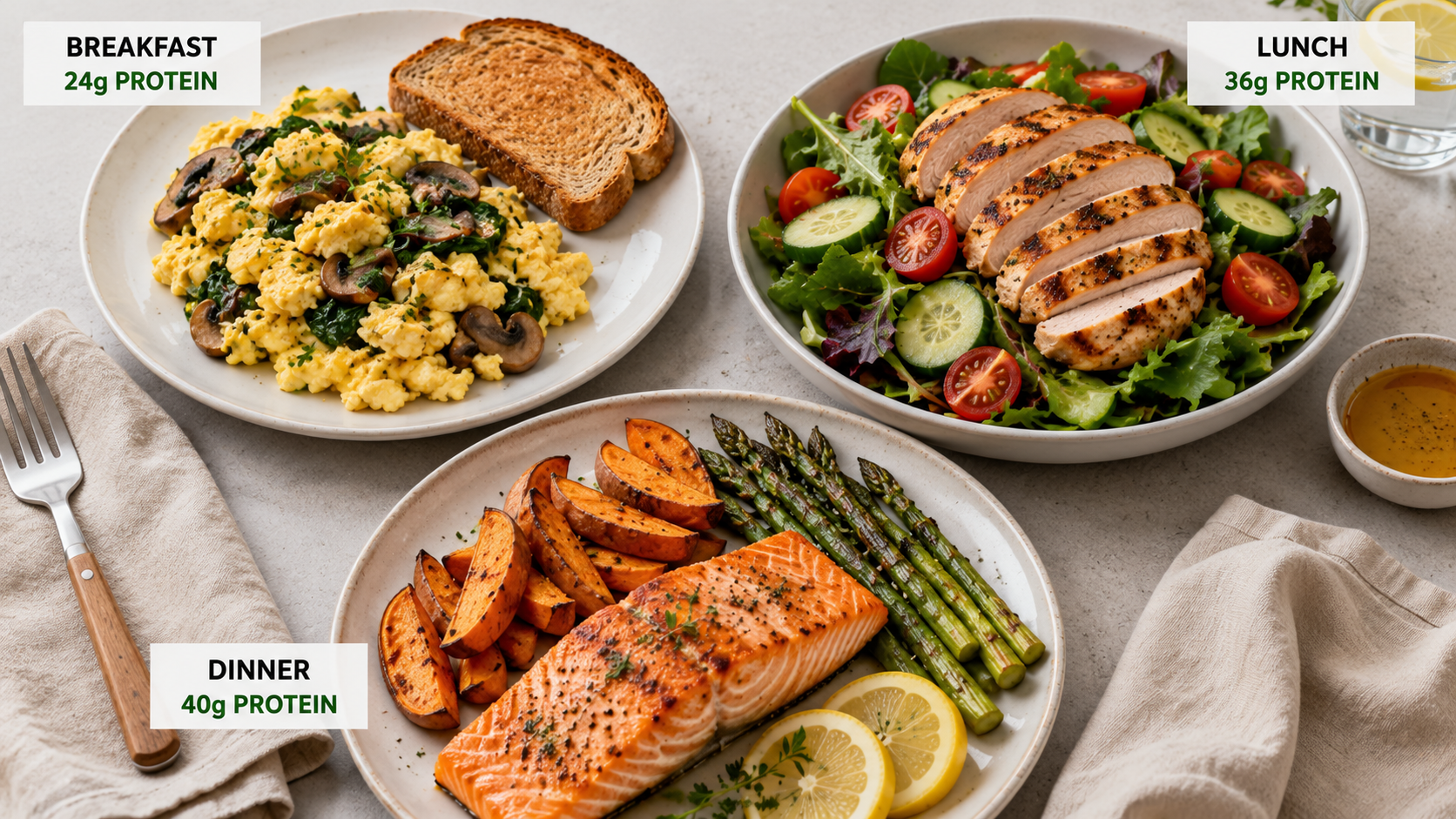
Breakfast (~30g protein)
- Veggie Egg Scramble
- 3 whole eggs + 2 egg whites (17g protein)
- Spinach, mushrooms, tomatoes
- 1 slice whole-grain toast
- Total: ~22g protein, ~350 kcal
- Greek Yogurt Protein Bowl
- 1 cup nonfat Greek yogurt (20g protein)
- ½ cup blueberries
- 1 tbsp ground flax
- Small handful almonds
- Total: ~25g protein, ~280 kcal
- Cottage Cheese & Fruit
- 1 cup lowfat cottage cheese (28g protein)
- ½ cup pineapple
- Sprinkle of cinnamon
- Total: ~28g protein, ~220 kcal
Lunch (~35-40g protein)
- Grilled Chicken Salad
- 150g grilled chicken breast (46g protein)
- Mixed greens, cucumber, cherry tomatoes
- 2 tbsp olive oil vinaigrette
- Total: ~48g protein, ~380 kcal
- Tuna Wrap
- 1 can tuna in water, drained (26g protein)
- Whole-wheat tortilla
- Greek yogurt-based dressing
- Lettuce, tomato
- Total: ~32g protein, ~280 kcal
- Lentil & Quinoa Bowl
- ½ cup cooked lentils (9g protein)
- ½ cup cooked quinoa (4g protein)
- Roasted vegetables (broccoli, bell pepper)
- Tahini dressing
- Total: ~18g protein, ~340 kcal
Dinner (~40g protein)
- Baked Salmon & Sweet Potato
- 150g salmon fillet (37g protein)
- 1 medium sweet potato
- Roasted asparagus
- Lemon seasoning
- Total: ~40g protein, ~480 kcal
- Lean Ground Turkey Chili
- 150g ground turkey (33g protein)
- Black beans (9g protein)
- Tomatoes, peppers, spices
- Top with Greek yogurt (2g protein)
- Total: ~44g protein, ~420 kcal
- Tofu Stir-Fry
- 200g firm tofu (30g protein)
- Broccoli, snap peas, carrots
- Brown rice (3g protein)
- Ginger-soy sauce
- Total: ~36g protein, ~450 kcal
Snacks (~10-15g protein)
- Greek yogurt + berries (15g)
- Hard-boiled egg + hummus (12g)
- String cheese + almonds (10g)
- Cottage cheese + pineapple (15g)
- Turkey jerky (10-12g)
- Protein smoothie with whey + banana (25g)
Is a High-Protein Diet Safe? Important Considerations
Who Should Use Caution or Consult a Doctor
High-protein diets are generally safe for healthy adults in the short to medium term. However, the following groups should consult a healthcare provider before increasing protein intake significantly:
- People with kidney disease — Excess protein may stress already-compromised kidneys
- People with diabetes — Protein intake can affect medication and blood sugar control
- Individuals taking diuretics — May interact with protein metabolism
- Those with a history of gout — High protein (particularly from red meat and certain seafood) may trigger flares
Potential Long-Term Concerns (Requires Monitoring)
Research is still ongoing, but some concerns include:
- Kidney Function — While healthy kidneys typically adapt, very high protein intakes (>3 g/kg/day for extended periods) warrant monitoring via blood work.
- Bone Health — Some studies suggest that very high protein intake, particularly from animal sources without adequate calcium and vitamin D, may affect bone density. Mitigate by ensuring adequate minerals.
- Nutrient Gaps — Focusing too heavily on protein at the expense of vegetables, whole grains, and fruits can reduce fiber and micronutrient intake. This can cause constipation, nutrient deficiencies, and energy crashes.
- Sustainability — High-protein diets work best as part of a balanced, sustainable eating pattern. Extreme protein restriction, especially very restrictive versions, often fail long-term due to monotony.
- Excess Calories — Protein still contains 4 calories per gram. Overeating protein-heavy foods can contribute to weight gain if total calorie intake exceeds your needs.
How to Minimize Risk
- Drink adequate water (high protein intake increases kidney workload)
- Combine protein with vegetables, whole grains, and legumes for fiber and micronutrients
- Aim for a balanced macronutrient split (not 50%+ protein)
- Include plant-based protein sources alongside animal proteins
- Get regular blood work if you have underlying health conditions
- Avoid extremely high intakes (stick to 2–2.2 g/kg, not 3+ g/kg long-term)
High-Protein Diet vs. Low-Carb Diets: What’s the Difference?
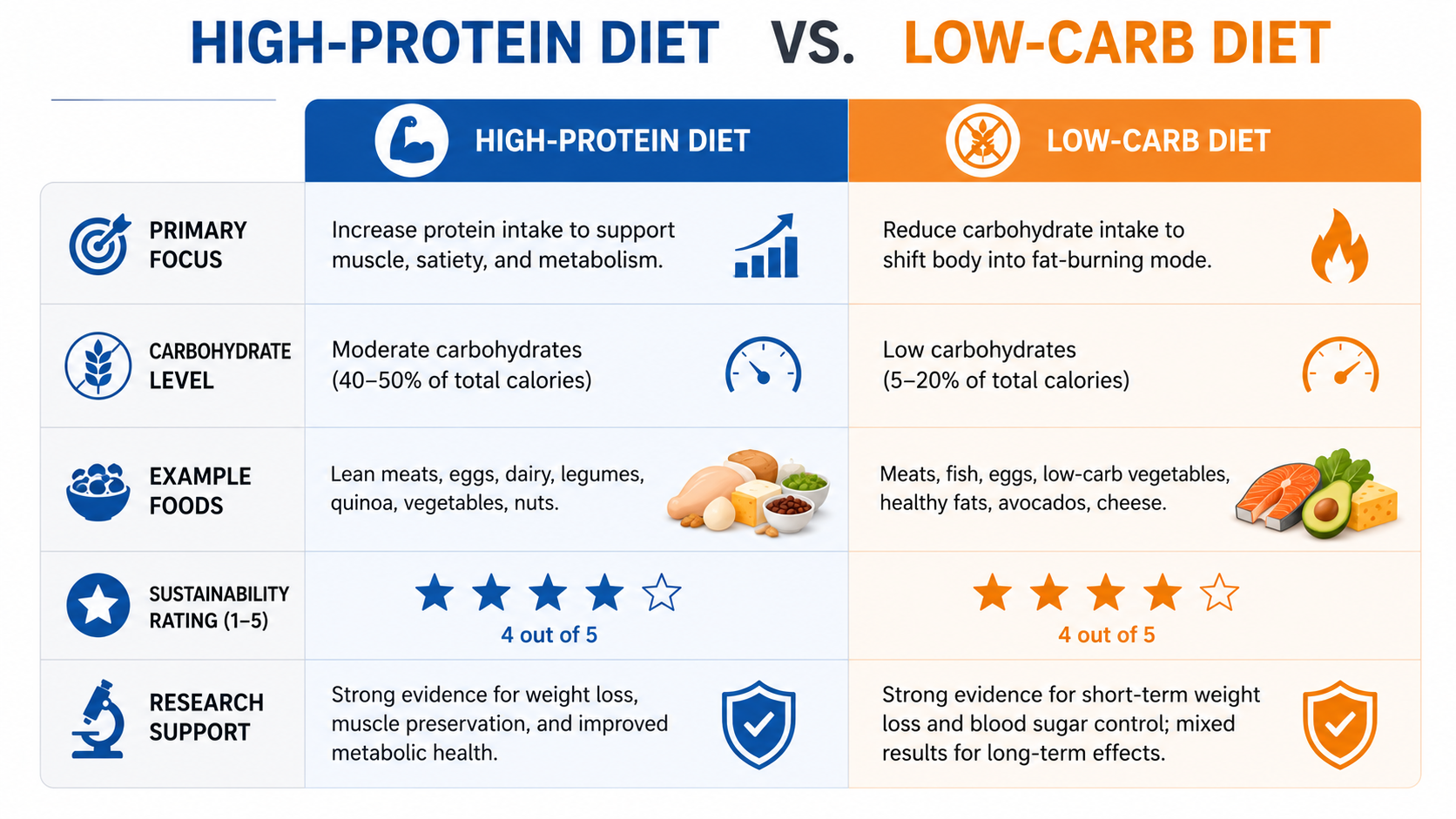
Many people confuse “high-protein” with “low-carb.” They’re related but distinct:
| Aspect | High-Protein Diet | Low-Carb Diet |
|---|---|---|
| Focus | Prioritize protein (25–35% of calories) | Minimize carbs (<50g or <20% of calories) |
| Carbs | Moderate (still include whole grains, fruits) | Very restricted |
| Examples | High-protein chicken + rice + broccoli | Meat, eggs, cheese, minimal grains/fruit |
| Sustainability | Often easier long-term | Can feel restrictive |
| Research | Strong evidence for weight loss + satiety | Strong short-term results, mixed long-term |
Bottom line: A high-protein diet doesn’t require cutting carbs dramatically. You can eat a high-protein diet and still enjoy fruit, oats, and whole grains.
Key Takeaways
- Protein supports weight loss through three mechanisms: increased satiety, higher calorie burn during digestion, and preservation of lean muscle.
- Optimal intake for weight loss is 1.2–1.6 g/kg of body weight daily (roughly 0.7–1.0 g per pound). Calculate your personal target and spread protein across meals.
- Best protein sources are lean: chicken, turkey, fish, eggs, Greek yogurt, cottage cheese, legumes, and plant-based options like tofu.
- High-protein diets work best as part of a calorie deficit combined with regular physical activity and sustainable eating habits. Protein is a tool, not a magic solution.
- Consult your doctor before starting, especially if you have kidney disease, diabetes, or take medications.
- Balance protein with vegetables, whole grains, and healthy fats to ensure adequate micronutrients and fiber.
- Weight loss sustainability matters more than short-term results. Choose a high-protein approach you can maintain long-term.
How much protein should I eat if I weigh 180 pounds?
Convert to kilograms: 180 ÷ 2.2 = 82 kg. For weight loss, aim for 82–130 grams of protein daily (1.0–1.6 g/kg). If you exercise regularly, target the higher end.
Will a high-protein diet damage my kidneys?
For people with healthy kidneys, high-protein diets are generally safe. The concern arises in people with existing kidney disease. If you’re healthy, stay hydrated and aim for 1.2–2.0 g/kg rather than extreme amounts. Consult your doctor if you have any kidney concerns.
Can I lose weight on a high-protein diet without exercise?
Yes—weight loss requires a calorie deficit, which protein helps achieve through increased satiety. However, adding resistance training helps preserve muscle mass and improves body composition during weight loss. Aim for at least 3–4 days of physical activity weekly.
Is protein from meat better than plant-based protein for weight loss?
Both work. Animal proteins (meat, fish, eggs, dairy) are more protein-dense and complete (contain all essential amino acids). Plant-based proteins (legumes, tofu, hemp) offer fiber and micronutrients. Combining both provides the best outcome. No food is “better”—consistency matters most.
How do I know if I’m eating enough protein?
Track for a few days using an app like MyFitnessPal to assess intake. If you feel fuller between meals and are losing fat while maintaining energy levels, your protein is likely adequate. If you feel constantly hungry or fatigued, you may need more.
Can I build muscle on a high-protein, low-calorie diet?
Building new muscle requires a calorie surplus plus resistance training. However, a high-protein, calorie-restricted diet preserves existing muscle during fat loss—a process called “body decomposition.” If your goal is muscle gain, you’ll need more calories plus progressive resistance training.
This article was reviewed for accuracy against guidelines from Mayo Clinic, NIH/PubMed, the National Academy of Medicine, and peer-reviewed nutrition journals. Always consult a healthcare provider before making significant dietary changes.
REFERENCES & SOURCES
Clinical Research & Peer-Reviewed Studies
Pesta, D. H., & Samuel, V. T. (2014). A high-protein diet for reducing body fat: Mechanisms and possible caveats. Nutrition & Metabolism, 11(53). https://www.ncbi.nlm.nih.gov/pmc/articles/PMC4258944/
Wycherley, T. P., et al. (2016). Effect of a high-protein diet versus standard-protein diet on weight loss and biomarkers of metabolic syndrome: A randomized clinical trial. Nutrition & Dietetics, 73(1). https://pmc.ncbi.nlm.nih.gov/articles/PMC5644969/
Government & Medical Authority Guidelines
National Academy of Medicine. (n.d.). Protein recommendations. Dietary Reference Intakes. Retrieved from official NAM guidelines.
National Institutes of Health (NIH). (n.d.). High-protein diet for weight loss. PubMed Central. https://www.ncbi.nlm.nih.gov/
Major Medical Institutions
Mayo Clinic. (2024). High-protein diets: Are they safe? Healthy Lifestyle: Nutrition and Healthy Eating. https://www.mayoclinic.org/healthy-lifestyle/nutrition-and-healthy-eating/expert-answers/high-protein-diets/faq-20058207
WebMD. (2024). High-protein diet for weight loss, foods with protein. Retrieved from https://www.webmd.com/diet/high-protein-diet-weight-loss
Nutrition & Health Science References
Examine.com. (n.d.). Optimal protein intake guide & calculator. Retrieved from https://examine.com/guides/protein-intake/
Healthline. (2024). Protein intake—how much protein should you eat per day? Retrieved from https://www.healthline.com/nutrition/how-much-protein-per-day
University of Kansas Medical Center. (2024). Protein may help boost weight loss and improve overall health. Retrieved from https://www.kumc.edu/about/news/news-archive/protein-benefits.html
Specialized Health & Fitness Resources
GoodRx. (2024). 10 high-protein foods for weight loss, and their benefits. Retrieved from https://www.goodrx.com/well-being/diet-nutrition/high-protein-foods-for-weight-loss
Better Living. (2024). 20 best sources of lean protein, ranked by protein per serving. Retrieved from https://onbetterliving.com/best-sources-of-lean-protein/
Diet Doctor. (2024). The best high protein foods for weight loss. Retrieved from https://www.dietdoctor.com/high-protein/foods
Hers. (2024). Protein calculator for weight loss. Retrieved from https://www.forhers.com/tools/protein-calculator
WeightWatchers. (2024). How much protein should I eat to lose weight? Retrieved from https://www.weightwatchers.com/us/blog/food/how-much-protein-to-lose-weight
Medical News Today. (2024). 38 high-protein foods. Medically Reviewed by Christine Mikstas, RD, LD. Retrieved from https://www.medicalnewstoday.com/articles/321522
Nutrition & Fitness Education
NASM (National Academy of Sports Medicine). (2024). How much protein do you need to eat per day to lose weight? Blog. Retrieved from https://blog.nasm.org/nutrition/how-much-protein-should-you-eat-per-day-for-weight-loss
Harvard Gazette. (2025). The truth about high-protein diets—forget influencers, nutritionist says. Retrieved from https://news.harvard.edu/gazette/story/2025/11/looking-to-build-muscle-lose-weight-need-more-protein-right-probably-not/
UnityPoint Health. (2024). How much protein do you need daily? Ideal protein intake for muscle growth, weight loss, and managing chronic conditions. Retrieved from https://www.unitypoint.org/news-and-articles/how-much-protein-do-you-need-daily-ideal-protein-intake-for-muscle-growth-weight-loss-and-managing-chronic-conditions
Clinical Trials
University of Melbourne. (2015). A high protein diet and weight maintenance: Long-term weight loss following rapid weight loss [Clinical Trial NCT00625235]. ClinicalTrials.gov. https://clinicaltrials.gov/study/NCT00625235
Additional Resources
Abbott Newsroom. (n.d.). Protein and weight loss: Why it matters. Retrieved from https://www.abbott.com/en-us/corpnewsroom/nutrition-health-and-wellness/why-protein-is-a-key-nutrient-in-your-weight-loss-journey
Liv Hospital. (2024). Best foods for protein and weight loss: 25 simple, top. Retrieved from https://int.livhospital.com/best-foods-for-protein-and-weight-loss/
Calculator.net. (n.d.). Protein calculator. Retrieved from https://www.calculator.net/protein-calculator.html



Leave a Reply