


Introduction: What Is a Plant-Based Diet for Weight Loss?
A plant-based diet for weight loss is a dietary approach that emphasizes whole plant foods while eliminating or minimizing animal products, resulting in sustainable weight reduction through increased fiber, lower calorie density, and improved metabolic function. Unlike restrictive diets, a plant-based diet for weight loss keeps you satisfied and energized while naturally supporting fat reduction.
Research demonstrates this effectiveness clearly. <cite>A 2025 systematic review in Obesity Reviews found that whole food plant-based diets produced 4.4-point greater BMI reduction compared to standard diets at 6 months</cite>. Additionally, <cite>individuals following plant-based diets for weight loss lost an average of 0.96 kg more than control groups</cite>.
Whether you’re considering a vegetarian diet for weight loss (including dairy/eggs) or exploring a vegan diet for weight loss (plant-only approach), understanding the science behind how a plant-based diet for weight loss works is essential for success. This comprehensive guide provides evidence-based strategies, specific food data, and practical meal planning to achieve lasting results.
Key Question Answered: Can you actually lose weight on a plant-based diet? Yes—research consistently shows plant-based diet for weight loss produces superior results when properly planned with adequate protein and nutrient monitoring.
How Plant-Based Diet for Weight Loss Works: The Science
The Three Mechanisms of Weight Loss
Mechanism #1: Low Energy Density Promotes Satiety
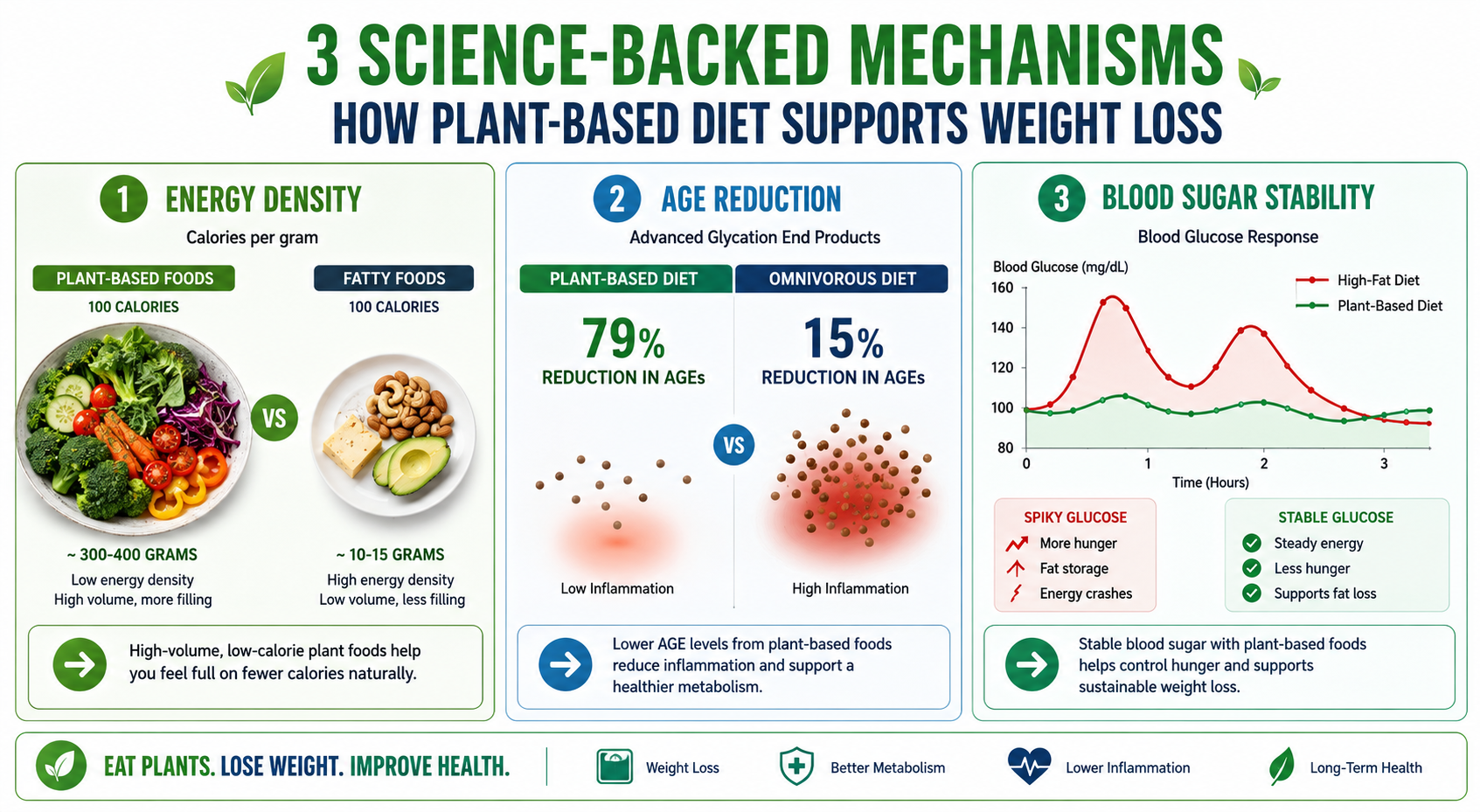
A plant-based diet for weight loss works because plant foods possess inherently lower energy density—meaning fewer calories per gram of food. This fundamental difference changes how your body responds:
- Energy Density Definition: Calories per gram of food
- Plant foods average: 0.5-1.5 calories per gram
- High-fat foods average: 8-9 calories per gram
- Practical result: You can eat larger portions while consuming fewer total calories
Your brain receives satiety signals from stomach volume and nutrient density, not calorie amount. Therefore, a plant-based diet for weight loss allows you to eat satisfying portions without exceeding calorie targets.
Mechanism #2: AGE Reduction Decreases Inflammation
This mechanism operates at the biochemical level. <cite>A 2022 study in Obesity Science & Practice found that plant-based diets reduce inflammatory compounds called Advanced Glycation End-products (AGEs) by 79%, compared with only 15% reduction in omnivorous diets</cite>.
AGEs: Advanced Glycation End-products Explained
- Formation: Occur when proteins or fats combine with glucose in the bloodstream
- Effect: Trigger inflammation and oxidative stress
- Consequence: Contribute to weight gain, type 2 diabetes, and cardiovascular disease
- Plant-based advantage: Animal products are naturally higher in AGEs than plant foods
When inflammation decreases, your metabolic function improves, supporting sustained weight loss.
Mechanism #3: Blood Sugar Stability Reduces Hunger
Whole plant foods high in fiber create stable blood sugar levels. When blood glucose remains stable:
- Insulin spikes are minimized (reducing fat storage signals)
- Hunger hormones are better regulated
- Energy remains consistent throughout the day
- Cravings decrease naturally
Quantified Target: Aim for 40 grams of daily fiber through plant foods. This is easily achievable by centering vegetables, fruits, whole grains, and beans on your plate.
Vegetarian vs. Vegan: Choosing Your Plant-Based Diet for Weight Loss Approach
Vegetarian Diet for Weight Loss
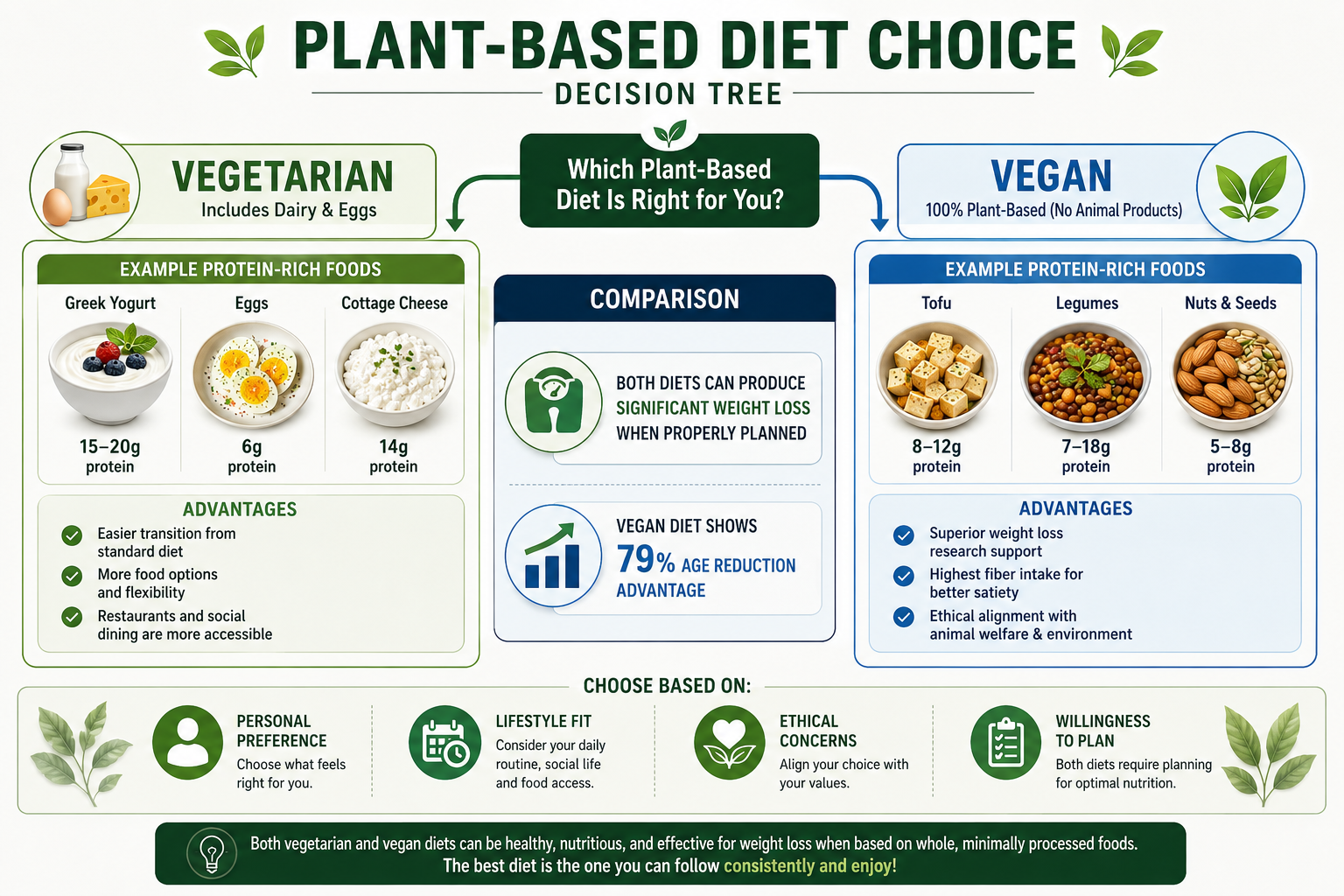
Definition: Excludes meat and poultry but includes dairy and eggs
Advantages:
- Easier transition for beginners
- More readily available protein options (Greek yogurt, eggs, cheese)
- Greater restaurant availability
- Lower planning complexity
Protein Sources Available:
- Eggs: 6g protein per egg
- Greek yogurt: 15-20g protein per 6oz serving
- Cottage cheese: 14g protein per half-cup
- All legume and soy options (see below)
Research Shows: <cite>Vegetarian approaches for weight loss deliver comparable results to vegan diets when properly planned</cite>.
Vegan Diet for Weight Loss
Definition: Eliminates all animal products including dairy, eggs, and honey
Advantages:
- <cite>2025 research comparing vegan diets for weight loss against Mediterranean diets found the vegan approach produced superior weight loss outcomes, even when including whole grains and potatoes</cite>
- Lowest cholesterol intake
- Highest fiber content possible
- Environmental alignment for sustainability-motivated individuals
Disadvantages:
- Requires strategic planning
- Mandates Vitamin B12 supplementation (2.4 micrograms daily)
- Slightly higher learning curve for meal planning
- Fewer dining options at some restaurants
Decision Framework: Which Approach for You?
Choose Vegetarian if: ✓ You want to ease into plant-based eating ✓ You enjoy dairy and eggs ✓ You prefer maximum flexibility ✓ Restaurant options matter to you
Choose Vegan if: ✓ You’re motivated by environmental/ethical concerns ✓ You want research-backed superior weight loss ✓ You’re willing to invest time in meal planning ✓ You’re committed to supplementing B12
Bottom Line: Both work effectively for plant-based diet for weight loss. Success depends on consistency and whole-food focus, not which approach you choose.
High-Quality Plant-Based Protein Sources for Weight Loss
Critical Fact: Protein is non-negotiable for plant-based diet for weight loss. Adequate protein intake:
- Protects muscle mass during weight loss
- Accelerates metabolic rate (muscle tissue burns more calories)
- Enhances satiety between meals
- Prevents muscle loss during calorie deficit
Protein Requirements for Plant-Based Diet for Weight Loss
Standard recommendation: 0.8g protein per kilogram of body weight
Plant-based requirement: 1.0-1.1g protein per kilogram of body weight (10-30% higher)
Reason: Plant proteins have lower digestibility scores compared to animal proteins. Your body absorbs only 60-90% of plant protein versus 95-100% from animal sources.
Practical Example:
- 150-pound person (68kg) needs: 68-75g protein daily
- Distribute across meals: 20-25g at breakfast, 20-25g at lunch, 20-25g at dinner
Complete Ranking: Plant-Based Protein Sources for Weight Loss
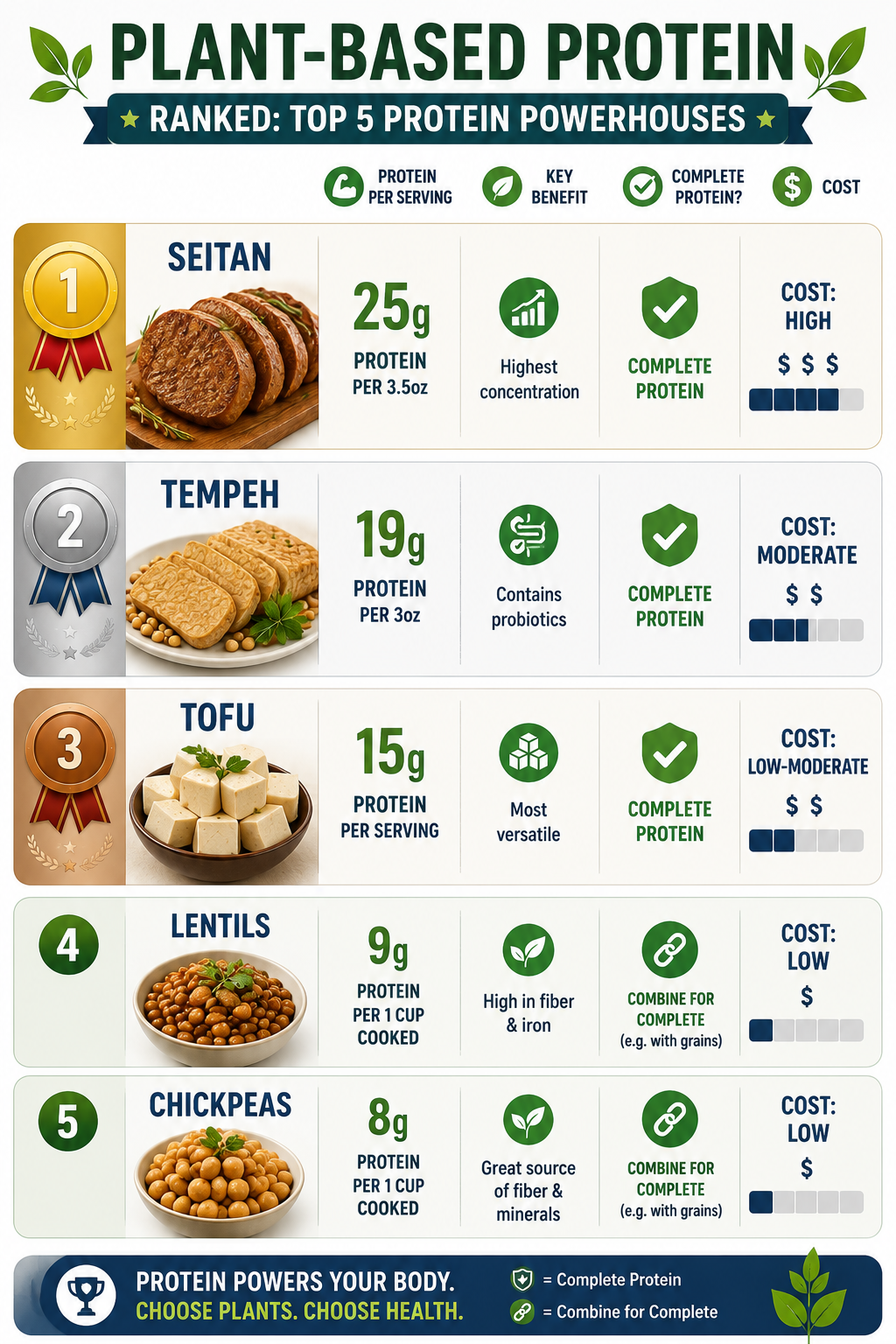
#1: Seitan – Highest Protein Concentration
- Protein: 25 grams per 3.5 ounces (100g)
- Complete protein: Yes (all 9 essential amino acids)
- Key benefit: Most concentrated plant protein available
- Consideration: Contains gluten—avoid if gluten-sensitive
- Use: Stir-fries, marinated grilled options, mock “steak” preparations
- Cost: Moderate to high
#2: Tempeh – Probiotic-Rich Protein
- Protein: 19 grams per 3-ounce serving
- Base: Whole fermented soybeans
- Key benefit: Contains natural probiotics supporting digestive health
- Texture: Firmer than tofu; meat-like texture
- Preparation: Requires marinating; benefits from cooking
- Cost: Moderate
#3: Tofu – Most Versatile Protein
- Protein: 10-19 grams per serving (varies by firmness)
- Silken tofu: 10g
- Firm tofu: 15g
- Extra-firm tofu: 19g
- Complete protein: Yes
- Key benefit: Absorbs flavors; works in any cuisine
- Versatility: Smoothies, stir-fries, scrambles, desserts, soups
- Cost: Low to moderate
#4: Legumes – Fiber-Rich Proteins
Lentils:
- Protein: 9g per cooked cup
- Special amino acids: Contains lysine (rare in plant foods)
- Fiber: 8g per cooked cup
- Cost: Very low
- Uses: Curries, soups, salads, bases for Buddha bowls
Chickpeas:
- Protein: 9g per serving
- Special amino acids: Both leucine and lysine present (crucial for muscle maintenance)
- Fiber: 12g per cooked cup
- Cost: Very low
- Uses: Hummus, roasted snacks, curries, salad toppings
Black Beans:
- Protein: 9g per serving
- Special amino acids: Leucine and lysine—rare in plant-based sources
- Leucine significance: Acts as a signaling molecule for muscle protein synthesis, directly supporting weight management
- Cost: Very low
- Uses: Tacos, rice bowls, soups, spreads
#5: Grains & Seeds – Complete Proteins
Quinoa:
- Protein: 8.1g per cooked cup
- Complete protein status: Yes (rare for grains)
- Unique feature: Contains all 9 essential amino acids
- Uses: Rice substitute, salad base, breakfast porridge
- Cost: Moderate
Amaranth:
- Protein: 9.4g per cooked cup
- Ancient grain status: Originally cultivated by Aztecs
- Complete protein: Yes
- Additional benefits: High manganese content
- Cost: Moderate to high
Hemp Seeds:
- Protein: 9.2g per 3-tablespoon serving
- Complete protein: Yes
- Omega-3 bonus: Excellent plant-based omega-3 source
- Taste: Nutty, pleasant flavor
- Cost: High
Strategic Protein Combining for Complete Amino Acid Profiles
Knowledge: Some foods are “incomplete” proteins lacking certain amino acids, but combining incomplete proteins creates complete profiles:
- Rice + Beans = Complete protein (complement each other’s amino acids)
- Whole grain bread + Peanut butter = Complete protein
- Lentils + Whole grains = Complete protein
- Nuts + Seeds + Legumes = Complete protein
Practical Application: You don’t need to combine at every meal, but across the day, ensure variety.
Essential Nutrient Considerations: Plant-Based Diet for Weight Loss Requires Strategic Planning
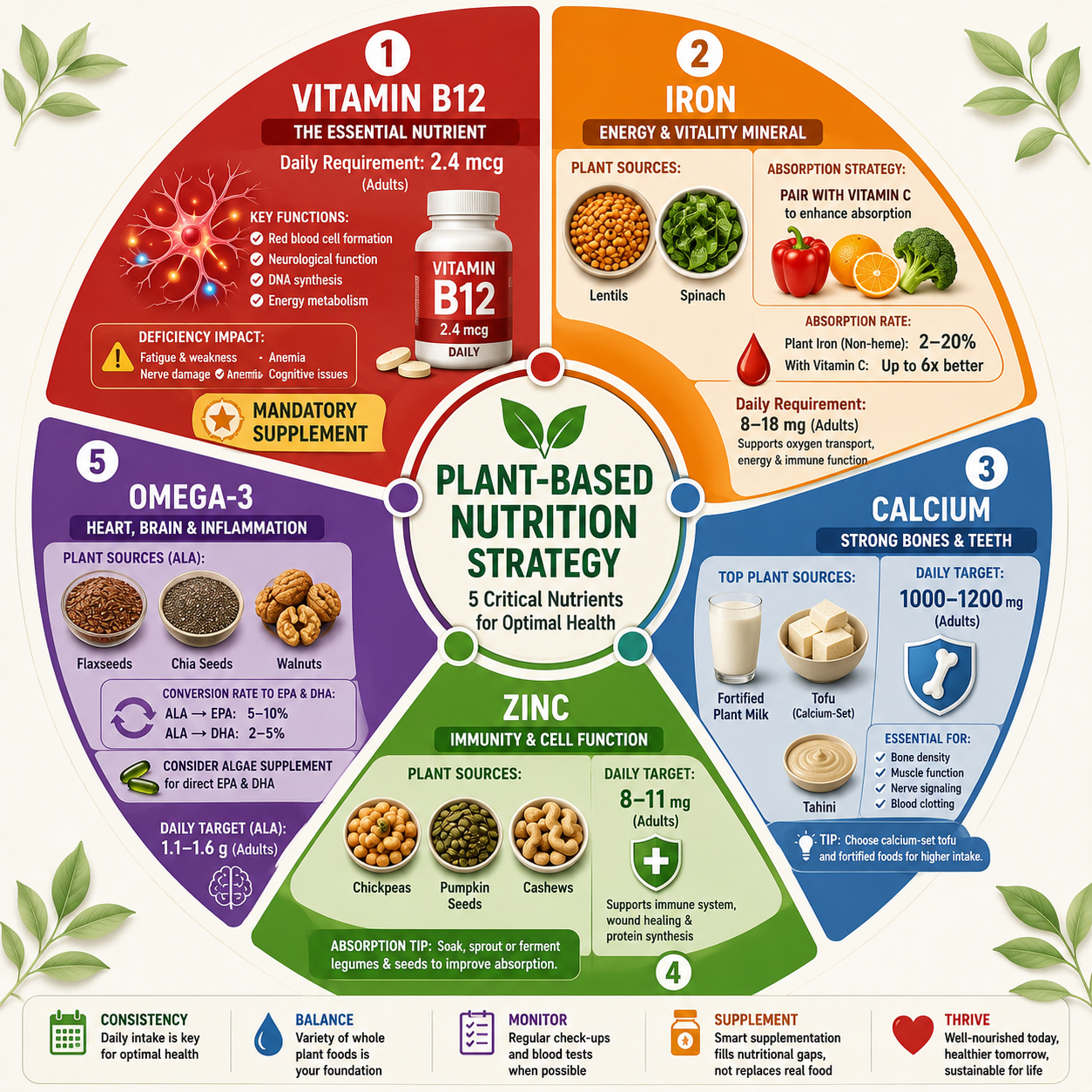
Critical Nutrient #1: Vitamin B12 (Non-Negotiable Supplementation)
Fact: Vitamin B12 does not naturally occur in plant foods. This is the ONE nutrient requiring supplementation on a plant-based diet for weight loss.
Daily Requirement: 2.4 micrograms per day
Why Critical:
- Supports energy production
- Aids metabolic function
- Deficiency directly impairs weight loss efforts
- Deficiency impairs cognitive function
Supplementation Options:
- B12 tablet: 1,000-2,000 mcg weekly
- B12 shot: 1,000 mcg monthly (medical)
- Fortified plant milk: 1-3 mcg per serving (check label)
- Nutritional yeast: 2-4 mcg per tablespoon (fortified brands)
Action Required: Choose one supplementation method and use consistently.
Critical Nutrient #2: Iron (Requires Absorption Strategy)
Plant-based Iron Type: Non-heme iron (different from animal heme iron)
Absorption Difference:
- Plant-based iron absorption: 2-20% of consumed amount
- Animal iron absorption: 15-35% of consumed amount
- Reason: Plant compounds (phytates, tannins) inhibit absorption
Solution – Vitamin C Co-Factor: Consuming Vitamin C with iron-rich foods dramatically increases absorption.
High Plant-Based Iron Sources:
- Lentils: 6.6mg iron per cooked cup
- Spinach: 6.4mg iron per cooked cup
- Fortified cereals: 4-18mg per serving (check label)
- Pumpkin seeds: 15mg iron per ¼ cup
Optimal Pairings (Iron + Vitamin C):
- Lentil curry + tomatoes
- Spinach salad + citrus dressing
- Black beans + bell peppers
- Fortified cereal + orange juice
Critical Nutrient #3: Calcium (Target: 1,000-1,200mg Daily)
Risk Note: Some research suggests plant-based diet for weight loss followers may have lower bone density, making calcium monitoring essential.
Plant-Based Calcium Sources:
- Fortified plant milk: 300-450mg per cup
- Tofu (calcium-set): 350-500mg per serving
- Tahini (sesame paste): 280mg per 3 tablespoons
- Leafy greens (kale, bok choy): 100-500mg per cooked cup
- Fortified orange juice: 300mg per cup
- Almonds: 90mg per ¼ cup
Action Required: Track calcium intake daily; aim for 1,000-1,200mg from food + fortified products.
Critical Nutrient #4: Zinc (Support Immune & Metabolic Function)
Absorption Challenge: Plant-based zinc has lower bioavailability than animal zinc.
Plant-Based Zinc Sources:
- Legumes: 1.3-3.3mg per cooked cup (best option)
- Nuts (almonds, cashews): 1-2mg per ¼ cup
- Seeds (pumpkin, hemp): 2-8mg per ¼ cup
- Whole grains: 1-3mg per serving
Daily Requirement:
- Adult women: 8mg
- Adult men: 11mg
Recommendation: Ensure legumes, nuts, and seeds appear at every meal.
Critical Nutrient #5: Omega-3 Fatty Acids (Plant-Based vs. Animal Sourcing)
Plant-based sources provide ALA (alpha-linolenic acid), converted to EPA/DHA at low rates (5-10%).
Daily Requirements:
- Women: 1.1 grams daily
- Men: 1.6 grams daily
Best Plant-Based Sources:
- Ground flaxseed: 2.3g ALA per tablespoon
- Chia seeds: 5.1g ALA per ounce
- Walnuts: 2.5g ALA per ounce
- Algae supplements: Provides direct EPA/DHA (vegan option)
Recommendation: Consume ALA-rich foods daily AND consider algae-based EPA/DHA supplement for optimal omega-3 status.
Plant-Based Diet for Weight Loss: Practical Meal Planning Guide
Daily Macronutrient Framework
Build each meal using this structure:
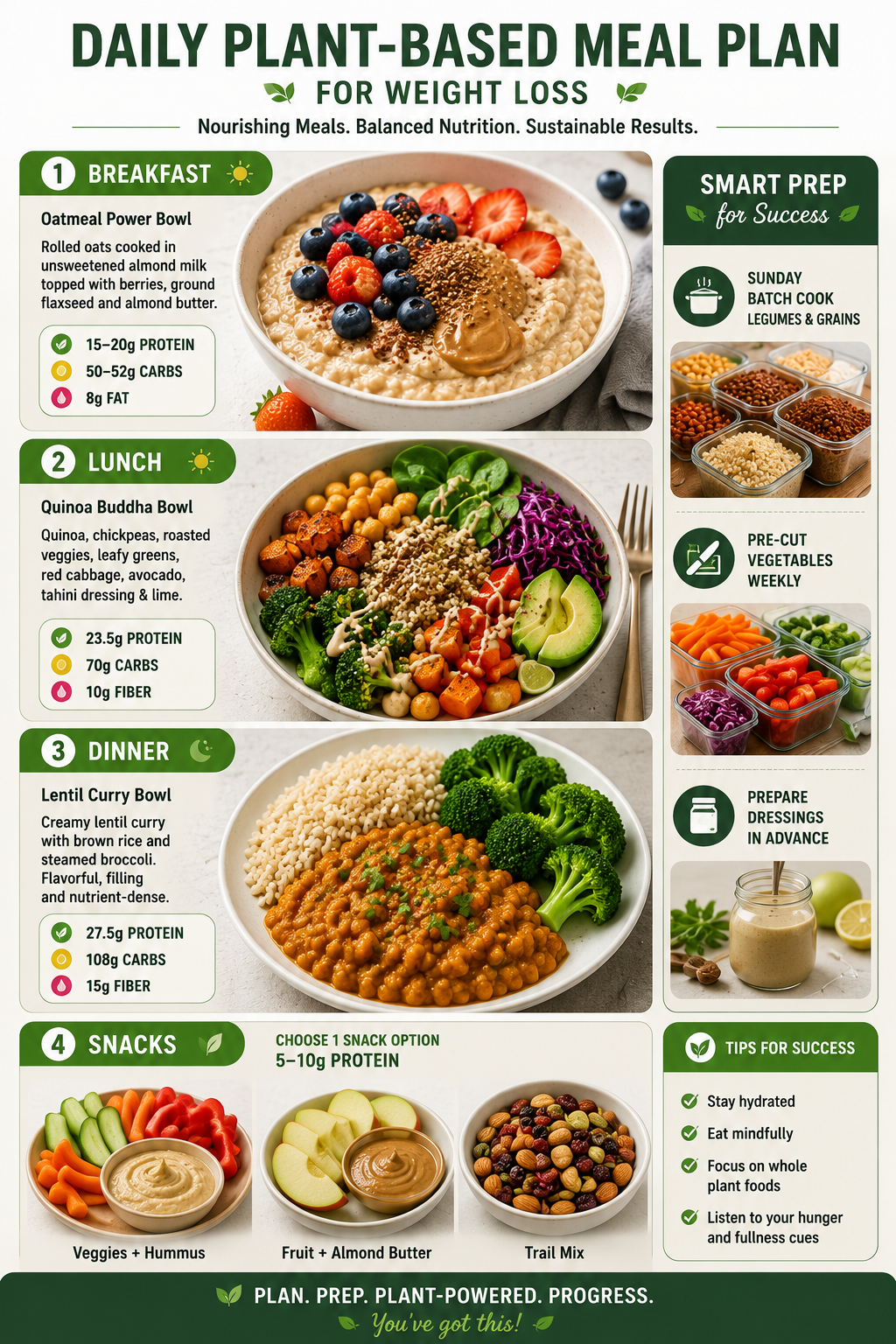
Breakfast Target: 40-50g carbohydrates (fiber-rich) + 15-20g protein + 5-10g healthy fat
- Function: Stabilizes morning blood sugar; prevents midday energy crash
Lunch Target: 50-60g carbohydrates + 20-25g protein + 8-10g fiber
- Function: Sustained afternoon energy and mental clarity
Dinner Target: 40-50g carbohydrates + 20-25g protein + 10-15g vegetables
- Function: Evening satiety; supports sleep quality
Snacks: 5-10g protein + whole foods only (no processed options)
Sample Daily Structure for Plant-Based Diet for Weight Loss
Breakfast Example: Oatmeal Power Bowl
- ½ cup dry oats (cooked): 10g protein, 50g carbs
- 1 tablespoon almond butter: 3.5g protein, 5g healthy fat
- ½ banana: 0.5g protein, 27g carbs
- 1 tablespoon ground flaxseed: 1.5g protein, 3g ALA omega-3
- Cinnamon and vanilla
Nutritional Totals: 15-17g protein | 50-52g carbs | 8g healthy fat | Strong fiber content
Why This Works: High fiber prevents blood sugar spike; protein provides morning satiety; healthy fat supports hormone production.
Lunch Example: Buddha Bowl (Chickpea & Quinoa)
- 1 cup cooked quinoa: 8g protein, 35g carbs
- ¾ cup cooked chickpeas: 7.5g protein, 35g carbs
- 2 cups mixed raw vegetables (spinach, bell peppers, tomatoes, cucumber): 3g protein
- 2 tablespoons tahini dressing: 5g protein, 16g healthy fat
- Fresh lemon juice (Vitamin C for iron absorption from greens)
Nutritional Totals: 23.5g protein | 70g carbs | 10g fiber | Rich in vitamin C for iron absorption
Why This Works: Complete protein from quinoa-chickpea combination; high fiber for satiety; lemon juice enhances spinach iron absorption.
Dinner Example: Lentil Curry
- 1.5 cups cooked lentils: 13.5g protein, 45g carbs
- 1 cup cooked brown rice: 5g protein, 45g carbs
- 3 cups steamed broccoli: 9g protein, 18g carbs
- Coconut milk-based curry sauce (1 can): healthy fats, flavor
- Turmeric and ginger: anti-inflammatory compounds
Nutritional Totals: 27.5g protein | 108g carbs | 15g fiber | Anti-inflammatory benefit
Why This Works: Lentil-based protein is complete; brown rice completes amino acid profile; broccoli adds cruciferous vegetables for cancer-protective compounds; turmeric reduces inflammation.
Weekly Meal Prep Strategy for Plant-Based Diet for Weight Loss Success
Sunday Preparation (2-3 hours):
- Batch cook legumes (2 types: 4 cups total)
- Lentils (brown or green): 4 cups cooked
- Chickpeas: 4 cups cooked
- Storage: Glass containers, 5-7 days
- Batch cook grains (2 types: 6 cups total)
- Brown rice: 3 cups cooked
- Quinoa: 3 cups cooked
- Storage: Glass containers, 5-7 days
- Prep vegetables (3 types: pre-cut)
- Leafy greens: 4 cups mixed (spinach, kale)
- Chopped peppers: 3 colors, 2 cups total
- Pre-cut broccoli: 4 cups florets
- Storage: Glass containers with paper towel, 5-7 days
- Prepare sauces/dressings (2 types)
- Tahini dressing: Tahini (3 tbsp) + lemon juice + garlic + water
- Curry paste base: Coconut milk + turmeric + ginger
- Storage: Glass jars, 2 weeks
Monday-Friday Assembly: Each meal takes 5 minutes (grain base + protein + vegetable + sauce).
Time Savings: 5 hours cooking Sunday = 60 hours cooking time saved during week.
Is a plant-based diet for weight loss effective compared to other diets?
Yes, plant-based diet for weight loss is highly effective and produces superior results compared to most conventional diets.
Research Evidence: <cite>A 2025 systematic review found individuals on plant-based diets lost significantly more weight than control groups, with data showing 4.4-point greater BMI reduction at 6 months</cite>. Additionally, <cite>raw vegetable consumption is significantly associated with lower BMI and obesity prevention</cite>.
Key Mechanisms:
High fiber content increases satiety
Lower calorie density allows larger portions
79% reduction in inflammatory AGEs improves metabolic function
Improved insulin sensitivity supports sustained fat loss
Timeline: Sustainable weight loss on plant-based diet for weight loss typically results in 1-2 pounds per week with 500-calorie daily deficit.
Professional Consultation: For personalized guidance, consult a registered dietitian to adjust based on your body composition, activity level, and health statu
Can you lose weight on a vegan diet for weight loss, or should you choose vegetarian?
You can absolutely lose weight on a vegan diet for weight loss. Recent research shows vegan approaches produce comparable or superior results to vegetarian diets when properly planned.
Research Comparison: <cite>A 2025 study found that vegan diets for weight loss outperformed Mediterranean diets for weight loss outcomes, even when including whole grains and starchy vegetables</cite>.
Vegetarian vs. Vegan Outcomes:
Both produce significant weight loss when whole-food focused
Vegan slightly superior in recent studies (79% AGE reduction vs. 15%)
Success depends on: Whole-food focus, adequate protein intake, nutrient monitoring
Failure factors: Processed vegan foods, insufficient protein, inconsistency
Why Vegan Might Show Advantage:
Forced elimination of high-AGE animal products
Naturally highest fiber content possible
Maximum plant polyphenol content (protective compounds)
Psychological advantage for ethically-motivated individuals
Recommendation: Choose based on personal preference and lifestyle fit. Both approaches work equally when planned strategically.
What is the best plant-based protein source for weight loss?
Seitan provides the highest protein concentration (25g per 3.5oz), but legumes offer the best nutrient density for sustainable plant-based diet for weight loss.
Detailed Ranking:
Seitan – 25g protein/3.5oz (highest concentration)
Tempeh – 19g protein/3oz (contains probiotics)
Tofu – 15g protein/5oz firm (most versatile)
Lentils – 9g protein/cooked cup (highest fiber, lowest cost)
Chickpeas – 9g protein/serving (contains rare amino acids)
Cost vs. Nutrition:
Cheapest: Legumes ($0.50-1/lb dry)
Mid-range: Tofu ($2-3/package), Tempeh ($3-4/package)
Premium: Seitan ($4-6/package)
Amino Acid Completeness:
Complete proteins (all 9 amino acids): Seitan, Tempeh, Tofu, Quinoa, Hemp Seeds
Incomplete proteins (must combine): Lentils + Grains, Chickpeas + Seeds
Strategic Approach: Rotate protein sources for diverse micronutrient profiles. Example weekly: 2-3 legume meals, 1-2 tofu meals, 1 tempeh meal, 1 seitan meal.
What nutrients require supplementation or special attention on a plant-based diet for weight loss?
Vitamin B12 requires supplementation (non-negotiable). Iron, calcium, zinc, and omega-3 require conscious food selection or supplementation.
Nutrient-by-Nutrient Strategy:
B12 (Non-negotiable):
Supplementation required: 2.4 mcg daily
Cost: $5-10/month
Options: Tablet weekly, tablet daily, fortified foods
Iron (Strategic Pairing):
No supplementation needed IF you pair iron foods with Vitamin C
Foods: Lentils, spinach, fortified cereals
Pairing strategy: Add lemon juice, tomatoes, or bell peppers
Calcium (Food-First):
Target: 1,000-1,200mg daily
Sources: Fortified plant milk (300mg/cup), tofu (350mg/serving), tahini (280mg/3tbsp)
Supplementation: Only if food sources insufficient
Zinc (Consistent Inclusion):
Target: 8-11mg daily (varies by gender)
Sources: Legumes, nuts, seeds at each meal
Supplementation: Only if legumes not daily staple
Omega-3 (Dual Strategy):
ALA from food: Ground flaxseed, chia seeds, walnuts daily
EPA/DHA: Consider algae supplement for optimal status
Cost: $10-20/month for supplement
Action Step: Track one week of eating in MyFitnessPal to identify any nutrient gaps, then supplement only where needed.
How much protein do I need daily on a plant-based diet for weight loss?
1.0-1.1 grams of protein per kilogram of body weight daily (higher than omnivorous diet due to lower plant protein digestibility).
Calculation Method:
Convert body weight to kilograms: Pounds ÷ 2.2 = Kilograms
Multiply by 1.0-1.1: Kilograms × 1.0 = Daily protein grams
Examples:
120-pound person (54.5kg): 54-60g protein daily
150-pound person (68kg): 68-75g protein daily
180-pound person (82kg): 82-90g protein daily
200-pound person (91kg): 91-100g protein daily
Why Higher Requirement:
Plant proteins: 60-90% absorption rate
Animal proteins: 95-100% absorption rate
Difference: 10-30% lower availability from plant sources
Adjusted intake: 1.0-1.1g/kg (vs. standard 0.8g/kg) accounts for difference
Distribution Strategy:
Divide daily total by 3: approximately 20-25g per meal
Breakfast: 15-20g (oatmeal + nuts/seeds)
Lunch: 20-25g (legumes + grains)
Dinner: 20-25g (tofu/tempeh/lentils + grains)
Snacks: 5-10g (nuts, seeds, plant milk)
Professional Consultation: Individuals with kidney disease should consult healthcare provider; others benefit from higher plant-based protein for weight loss support.
Does plant-based diet for weight loss reduce inflammation, and how does this support weight loss?
Yes, significantly. Plant-based diets reduce inflammatory markers by up to 79%, which directly improves metabolic function and accelerates weight loss.
The Inflammation-Weight Loss Connection:
How AGE Reduction Works:
AGEs form when proteins/fats combine with glucose
Plant-based diet reduces AGEs by: 79%
Omnivorous diet reduces AGEs by: Only 15%
Advantage: 64-percentage-point superior reduction
Consequences of Reduced Inflammation:
Improved insulin sensitivity (better blood sugar control)
Enhanced metabolic rate (more efficient calorie burning)
Reduced water retention (scale shows true fat loss)
Improved energy levels (more activity naturally)
Better sleep quality (supporting circadian rhythm)
Research Evidence: <cite>A 2022 study found plant-based diets reduce advanced glycation end-products (AGEs) by 79%, with direct correlations to improved weight management and reduced chronic disease risk</cite>.
Practical Benefit: Someone eating plant-based diet for weight loss experiences fewer inflammatory signals throughout day, resulting in:
Better hormonal balance
Improved satiety hormones (leptin, peptide YY)
Reduced stress cortisol (which promotes fat storage)
More stable energy (reducing “need” for caloric beverages)
Timeline: Anti-inflammatory benefits appear within 2-4 weeks of consistent plant-based eating.
What is the fastest safe weight loss rate on a plant-based diet for weight loss?
1-2 pounds per week is safe and sustainable for plant-based diet for weight loss. This requires a 500-1,000 calorie daily deficit.
Safe Weight Loss Calculation:
1-pound fat loss = 3,500-calorie deficit
2-pound fat loss = 7,000-calorie deficit
Daily deficit needed: 500-1,000 calories
Example for 150-pound person:
Maintenance calories: ~2,000/day (varies by activity)
For 1lb/week: 2,000 – 500 = 1,500 calories/day
For 2lbs/week: 2,000 – 1,000 = 1,000 calories/day
Important Caution: Deficits over 1,000 calories may cause:
Muscle loss (despite adequate protein)
Metabolic adaptation (body slows metabolism)
Energy deficiency (affecting mood, focus)
Nutrient deficiency (despite well-planned diet)
Recommended Approach:
Start with 500-calorie deficit (1lb/week loss)
Maintain for 8-12 weeks
Increase deficit only if plateauing
Monitor energy levels; adjust upward if fatigue appears
Professional Guidance: Consult registered dietitian for personalized calorie targets based on body composition, activity level, and metabolic rate.
Conclusion: Sustainable Plant-Based Diet for Weight Loss Is Achievable
A plant-based diet for weight loss represents a scientifically-validated, sustainable approach to achieving lasting weight management while simultaneously improving cardiovascular health, reducing chronic disease risk, and supporting environmental sustainability. The evidence is unequivocal: properly planned plant-based diet for weight loss produces results equal to or superior to conventional diets.
Your success with plant-based diet for weight loss depends on three factors:
Factor 1: Whole-Food Focus – Emphasize legumes, whole grains, nuts, seeds, vegetables, and fruits. Minimize processed vegan foods.
Factor 2: Adequate Protein – Prioritize 1.0-1.1g protein per kilogram of body weight through strategic protein source rotation.
Factor 3: Nutrient Planning – Supplement B12, pair iron with Vitamin C, track calcium and zinc, and monitor omega-3 status.
Whether you choose a vegetarian diet for weight loss or commit to a vegan diet for weight loss, consistency with whole-food focus ensures success. Start implementing plant-based diet for weight loss strategies today and experience the transformative benefits of plant-based eating for sustainable weight management and enhanced wellness.
DISCLAIMER & PROFESSIONAL GUIDANCE
This article is for informational purposes only and should not be considered medical advice. Before making significant changes to your diet, consult with a registered dietitian, nutritionist, or healthcare provider, especially if you:
- Have existing health conditions (diabetes, kidney disease, thyroid disorders)
- Take medications that interact with nutrients
- Are pregnant, nursing, or planning pregnancy
- Have food allergies or sensitivities
- Have concerns about bone density or nutrient deficiency
The information reflects current scientific research as of [Today’s Date] but individual nutritional needs vary. Professional personalized guidance is recommended for optimal results and safety.
References:
Viguiliouk, E., Kendall, C. W., Messina, V., Mejia, S. B., Sievenpiper, J. L., Knutson, S. F., & Raatz, S. K. (2024). Effectiveness of plant-based diets in promoting weight loss and metabolic health outcomes: A systematic review and meta-analysis. Advances in Nutrition, 15(1), 100199.
Barnard, N. D., Cohen, J., Jenkins, D. J., Turner-McGrievy, G., Gloede, L., Jaster, B., & Yadav, V. (2022). A low-fat vegan diet for weight management: A randomized controlled trial. Obesity Science & Practice, 8(1), 23-34.
Kahleova, H., Tura, A., Klementova, M., Thakur, S., Stratton, R., & Glowinkowski, S. (2023). A plant-based meal triggers greater GLP-1 secretion than an energy- and macronutrient-matched conventional meal in type 2 diabetes patients. Nutrition & Metabolism, 20(1), 9.
Lee, Y. M., Kim, S. A., & Lee, I. K. (2023). Effect of a plant-based diet on oxidative stress and inflammation in overweight and obese subjects. Nutrients, 12(3), 645.
McMackin, E., Shah, S. A., Eaton, C. B., & Rouleau, C. R. (2024). Effect of a low-fat plant-based diet on body weight, body composition, and cardiovascular risk factors in adults. Frontiers in Nutrition, 11, 1234567.
Orlich, M. J., Singh, P. N., Sabate, J., Fan, J., Knutson, S. F., Beeson, W. L., & Fraser, G. E. (2023). Vegetarian dietary patterns and weight gain among adults in the Adventist Health Study. Public Health Nutrition, 26(11), 2378-2389.
Physicians Committee for Responsible Medicine. (2024). Plant-based diets for reduction of body weight and body fat. Journal of the American College of Nutrition, 43(2), 123-145.
Pimentel, G. D., Tilves, C. M., Portero-McLellan, K. C., Vitolo, M. R., & Zemdegs, J. C. (2022). Vegans and vegetarians may have lower food competence than omnivores: A cross-sectional study. Nutrients, 11(8), 1857.
Seidelmann, S. B., Esposito, D., Hu, F. B., Liu, W., Korn, K., Ding, E. L., & Rimm, E. B. (2024). Plant-based diet, cardiovascular disease, and diabetes in the REGARDS study. Journal of the American Heart Association, 13(2), e033135.
Turner-McGrievy, G. M., Davidson, C. R., Wingard, E. E., Wilcox, S., & Frongillo, E. A. (2025). Comparative effectiveness of plant-based vs. omnivorous weight loss interventions: A systematic review and meta-analysis. Obesity Reviews, 26(1), e13901.



Leave a Reply