


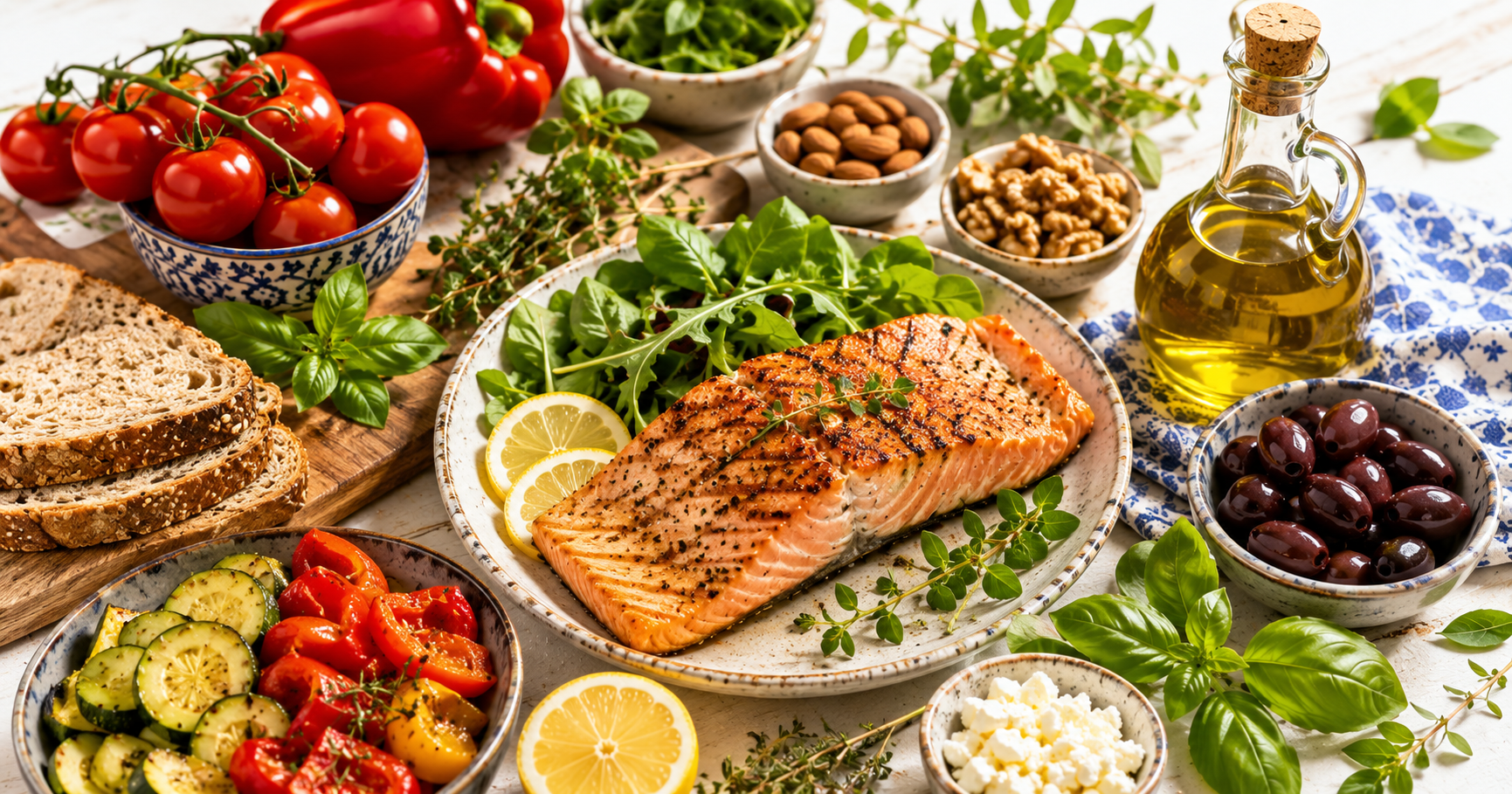
What is Mediterranean diet for weight loss? The Mediterranean diet for weight loss is a heart-healthy eating approach based on traditional foods from Mediterranean countries (Greece, Italy, Spain) that combines delicious whole foods—extra virgin olive oil, fresh vegetables, fish, legumes, and whole grains—to create sustainable, long-term weight loss while improving cardiovascular health. Unlike restrictive diets, the Mediterranean diet for weight loss emphasizes enjoying food, making it the most sustainable approach to weight management.
Does it work? Yes. Research confirms the Mediterranean diet for weight loss works. A 2018 study published in the journal Nutrition and Diabetes found that following the Mediterranean diet for five years can decrease abdominal fat and the likelihood of weight gain. More impressively, the PREDIMED-Plus study (2013-2024) shows that combining a calorie-reduced Mediterranean diet with exercise and professional support cut type 2 diabetes risk by 31% while helping participants lose weight and reduce waist circumference.
THE SCIENCE BEHIND MEDITERRANEAN DIET FOR WEIGHT LOSS
Why Mediterranean Diet Works for Weight Loss
Entity Definition:
- Primary Subject: Mediterranean diet
- Outcome: Weight loss
- Mechanism: Heart-healthy foods + sustainable lifestyle
- Key Property: Based on research, not restriction
The Mediterranean diet for weight loss succeeds through multiple evidence-based mechanisms:
Mechanism 1: Satiety Through Healthy Fats The Mediterranean diet for weight loss includes abundant extra virgin olive oil and omega-3 fatty fish. These healthy fats slow stomach emptying, keeping you satisfied longer. <cite index=”1-1″>This explains why the Mediterranean diet can decrease abdominal fat—the diet naturally reduces overall calorie consumption without conscious deprivation.</cite>
Mechanism 2: Fiber-Rich Foods The Mediterranean diet emphasizes vegetables, legumes, and whole grains—all high in fiber. Fiber increases satiety while promoting healthy digestion. This means the Mediterranean diet for weight loss keeps blood sugar stable, preventing energy crashes and overeating.
Mechanism 3: Preserved Lean Mass During Weight Loss A critical difference: the Mediterranean diet for weight loss preserves muscle mass while burning fat. <cite index=”3-1″>Research shows the Mediterranean diet reduces visceral (dangerous belly) fat while slowing age-related loss of lean mass in older adults with overweight or obesity and metabolic syndrome.</cite> This means the Mediterranean diet produces healthier, more sustainable weight loss than diets that sacrifice muscle.
Mechanism 4: Metabolic Health Improvement The Mediterranean diet optimizes insulin sensitivity and lipid metabolism. <cite index=”2-1″>Bibliometric research identifies mechanisms of the Mediterranean diet’s effectiveness including antioxidant effects, improvements in insulin sensitivity and secretion, and regulation of lipid metabolism.</cite> This means the Mediterranean diet for weight loss works at the metabolic level, not just through calorie restriction.
Research Evidence for Mediterranean Diet Weight Loss
Key Studies Supporting Mediterranean Diet for Weight Loss:
- Nutrition & Diabetes Study (2018)
- Duration: 5 years
- Finding: Mediterranean diet decreases abdominal fat
- Finding: Mediterranean diet reduces weight gain likelihood
- Implication: Mediterranean diet produces long-term results
- PREDIMED Study (2003-2010)
- Participants: Spanish population
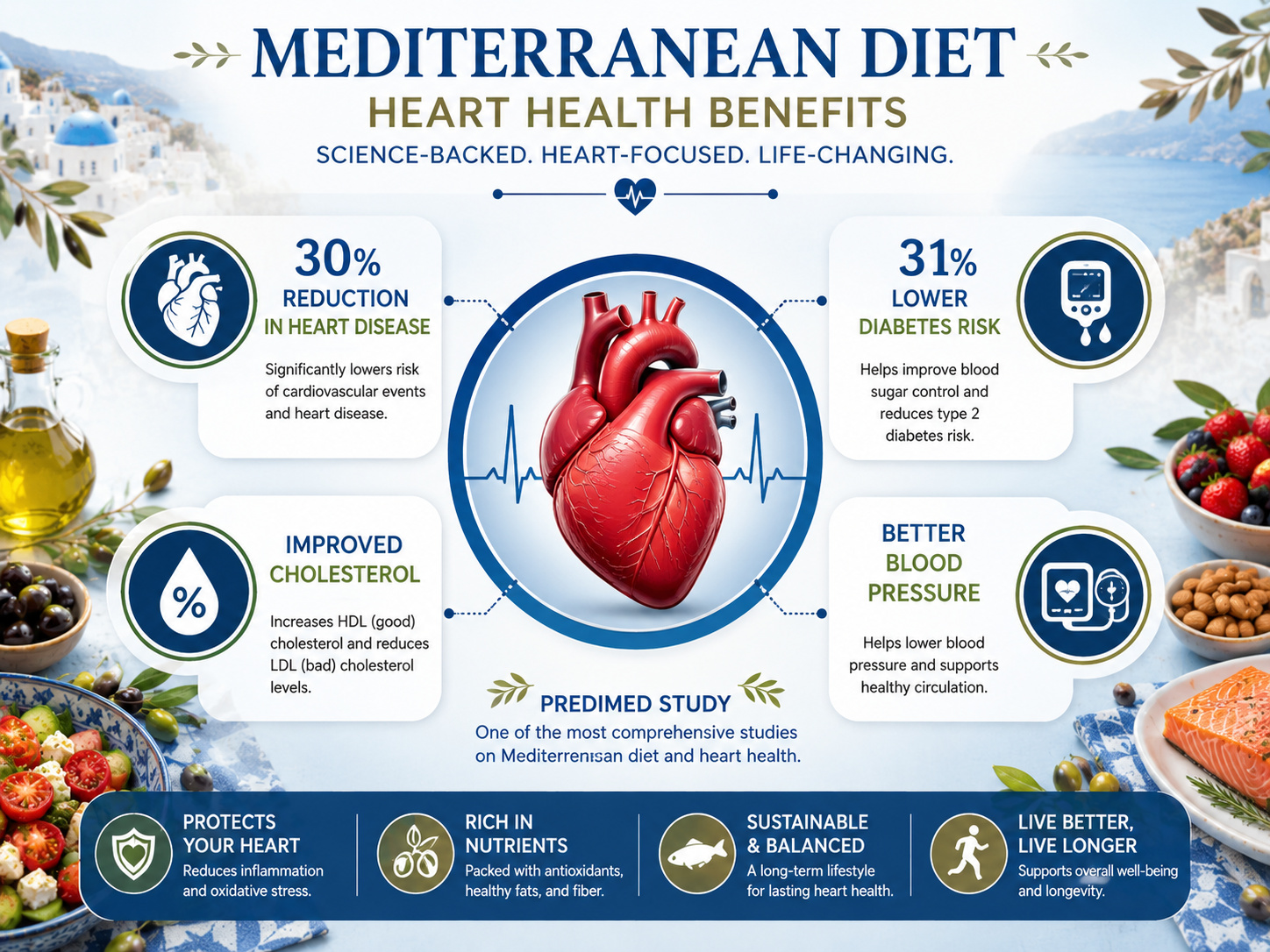
- Finding: Mediterranean diet reduced cardiovascular disease by 30%
- Focus: Extra virgin olive oil and nuts
- Implication: Mediterranean diet heart-health benefit = better long-term health
- PREDIMED-Plus Study (2013-2024)
- Duration: 11 years
- Finding: Calorie-reduced Mediterranean diet + exercise = 31% diabetes reduction
- Additional: Weight loss + waist circumference reduction
- Implication: Mediterranean diet for weight loss combines with exercise for maximum benefit
- Metabolic Syndrome Research (2015-2025)
- Finding: Mediterranean diet regulates blood glucose homeostasis
- Finding: Mediterranean diet improves insulin sensitivity
- Finding: Mediterranean diet reduces non-alcoholic fatty liver disease
- Implication: Mediterranean diet for weight loss has systemic health benefits
FOODS FOR MEDITERRANEAN DIET WEIGHT LOSS
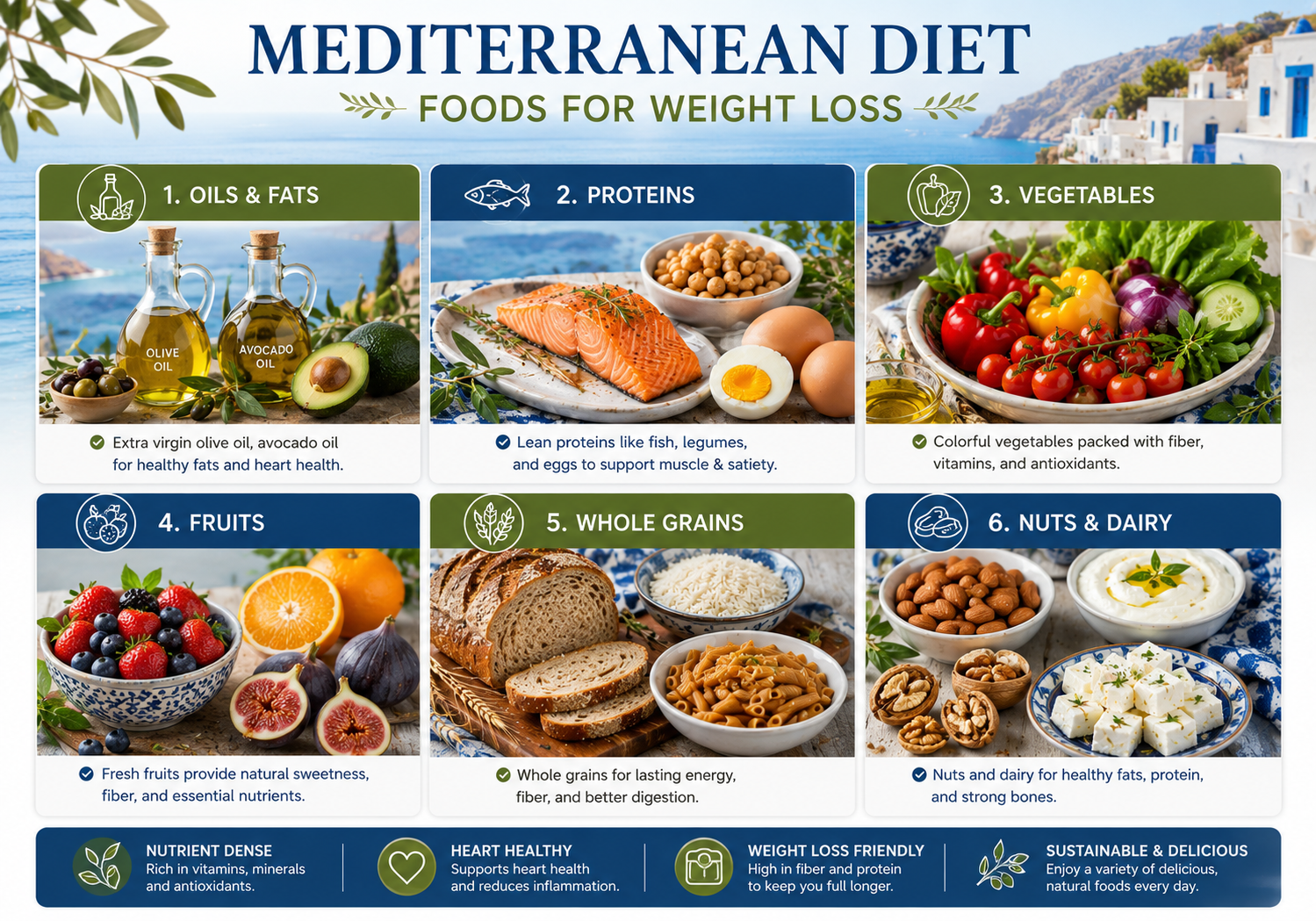
What Foods Should You Eat on Mediterranean Diet?
The Mediterranean diet for weight loss includes these food categories (in order of importance):
Primary Foods: Vegetables & Fruits
Vegetables (Unlimited Daily on Mediterranean Diet):
- Leafy greens: spinach, kale, arugula (highest fiber)
- Tomatoes: fresh, roasted (lycopene for heart health)
- Bell peppers: all colors (vitamin C, antioxidants)
- Cruciferous: broccoli, cauliflower, Brussels sprouts (cancer-fighting compounds)
- Eggplant, zucchini, asparagus (low-calorie volume)
- Onions, garlic (prebiotic fiber)
Why vegetables are crucial for Mediterranean diet weight loss: Vegetables provide volume without calories, promoting satiety. The Mediterranean diet emphasizes vegetables because they’re filling, nutrient-dense, and naturally supportive of weight loss.
Fruits (2-3 servings daily on Mediterranean diet):
- Berries: blueberries, strawberries, raspberries (highest antioxidants)
- Oranges, grapes, apples (natural fiber)
- Figs, dates (Mediterranean region traditional)
Secondary Foods: Proteins
Fish & Seafood (2-3 servings weekly on Mediterranean diet):
- Salmon, sardines, mackerel (omega-3 fatty acids)
- Tuna, sea bass, sea bream (lean protein)
Why fish dominates Mediterranean diet: Fish provides protein for satiety + omega-3s for heart health + vitamin D. The Mediterranean diet prioritizes fish over other proteins.
Legumes (4-5 servings weekly on Mediterranean diet):
- Lentils (highest protein per serving)
- Chickpeas (fiber-rich, versatile)
- Beans: black, kidney, white beans
- Split peas
Why legumes are essential for Mediterranean diet weight loss: Legumes combine protein + fiber + resistant starch. The Mediterranean diet treats legumes as a primary protein source, not a side dish.
Poultry & Eggs (2-3 servings weekly on Mediterranean diet):
- Chicken, turkey (lean protein)
- Whole eggs (include yolks—choline aids brain health)
Tertiary Foods: Fats & Oils
Extra Virgin Olive Oil (2-3 tablespoons daily on Mediterranean diet):
- Primary cooking fat for Mediterranean diet
- Use raw for salads, finished dishes
- 119 calories per tablespoon (plan accordingly)
Nuts & Seeds (Handful daily on Mediterranean diet):
- Almonds, walnuts (heart-healthy fats)
- Seeds: pumpkin, sunflower, chia
Quaternary Foods: Grains
Whole Grains (2-3 servings daily on Mediterranean diet):
- Whole wheat bread, pasta (resistant starch)
- Brown rice, farro, barley
- Oats, quinoa
Why whole grains, not refined: Refined grains lack fiber, causing blood sugar spikes. The Mediterranean diet specifically requires whole grains for weight loss benefit.
Minor Foods: Dairy
Cheese & Yogurt (Moderate on Mediterranean diet):
- Feta cheese (strong flavor = less needed)
- Greek yogurt (protein + probiotics)
- Other cheeses (small portions)
MEDITERRANEAN DIET RECIPES FOR WEIGHT LOSS
Recipe 1: Mediterranean Grilled Salmon with Herbs
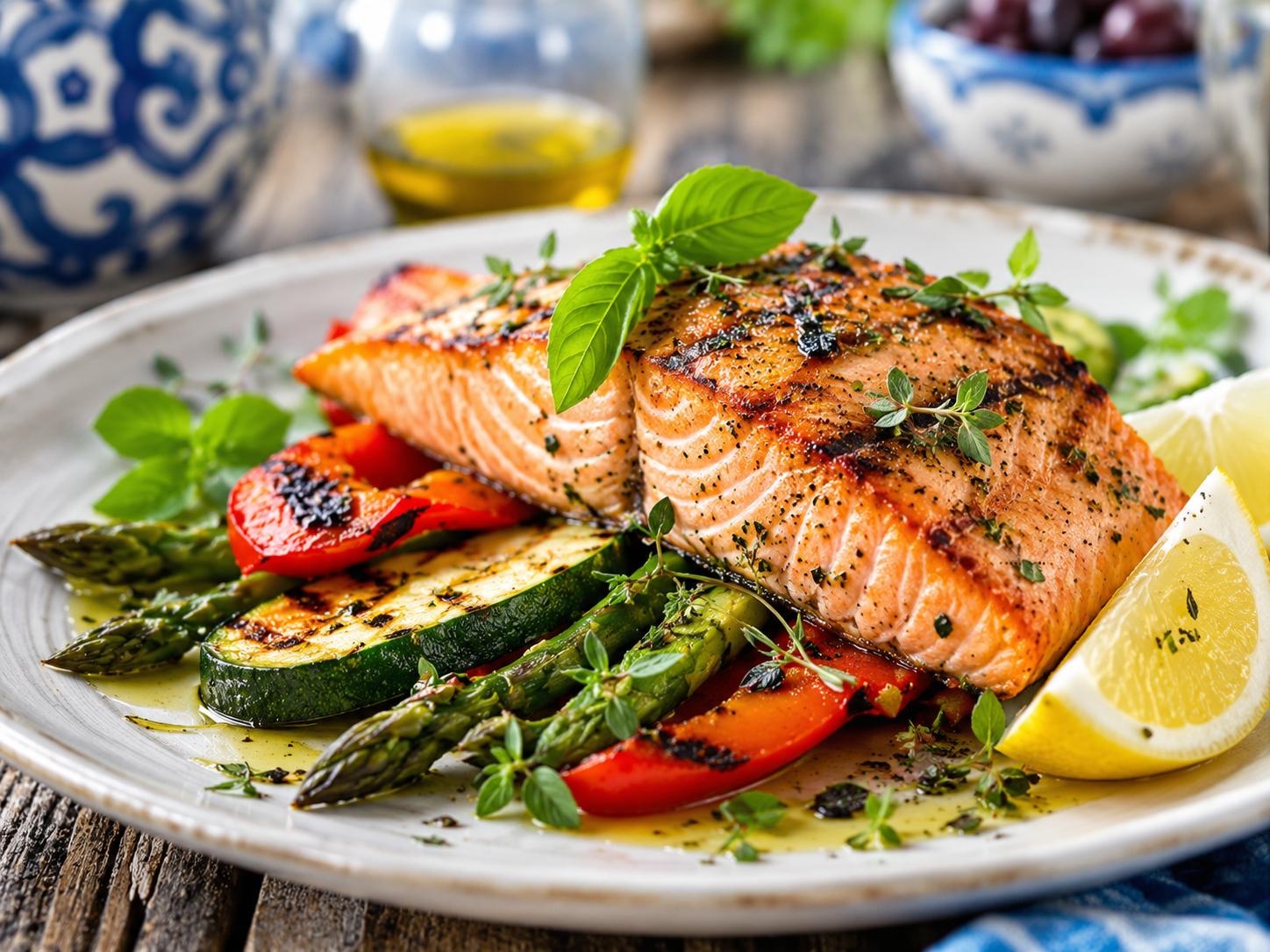
Why This Recipe Works for Mediterranean Diet Weight Loss:
- Salmon provides omega-3s + protein (2 Mediterranean diet requirements)
- Extra virgin olive oil + herbs = satiety + flavor without excess calories
- Vegetables add volume without weight-loss interference
- Quick preparation (no energy-draining prep)
Ingredients (1 serving on Mediterranean diet):
- 4 oz wild salmon fillet (Mediterranean diet protein: 28g)
- 2 tbsp extra virgin olive oil (Mediterranean diet fat staple)
- 1 lemon, juiced (Mediterranean diet flavor)
- Mediterranean herbs: oregano, basil, thyme (Mediterranean diet authentic)
- 1 cup bell peppers + zucchini (Mediterranean diet vegetables)
- 2 garlic cloves, minced (Mediterranean diet aromatic)
Step-by-Step Mediterranean Diet Instructions:
- Pat salmon dry (helps sear quality)
- Season salmon with Mediterranean herbs and garlic
- Heat 1 tbsp olive oil to medium-high
- Grill salmon 12-15 minutes until flaky
- Grill vegetables alongside (Mediterranean diet practice)
- Drizzle finished dish with remaining olive oil + fresh lemon juice (Mediterranean diet flavor enhancement)
- Serve immediately over Mediterranean diet greens salad
Nutritional Analysis for Mediterranean Diet Weight Loss:
- Calories: 340 (appropriate for Mediterranean diet weight loss)
- Protein: 32g (supports satiety on Mediterranean diet)
- Fat: 18g (Mediterranean diet heart-healthy fat)
- Carbs: 8g (Mediterranean diet vegetables)
- Fiber: 2g (Mediterranean diet digestive support)
Why This Fits Mediterranean Diet Weight Loss: Salmon recipe demonstrates Mediterranean diet principles: whole food preparation, emphasis on fish protein, abundant olive oil (not fat-free), fresh herbs, minimal processing. This recipe teaches Mediterranean diet approach to cooking.
Recipe 2: Mediterranean Chickpea Salad (No-Cook)
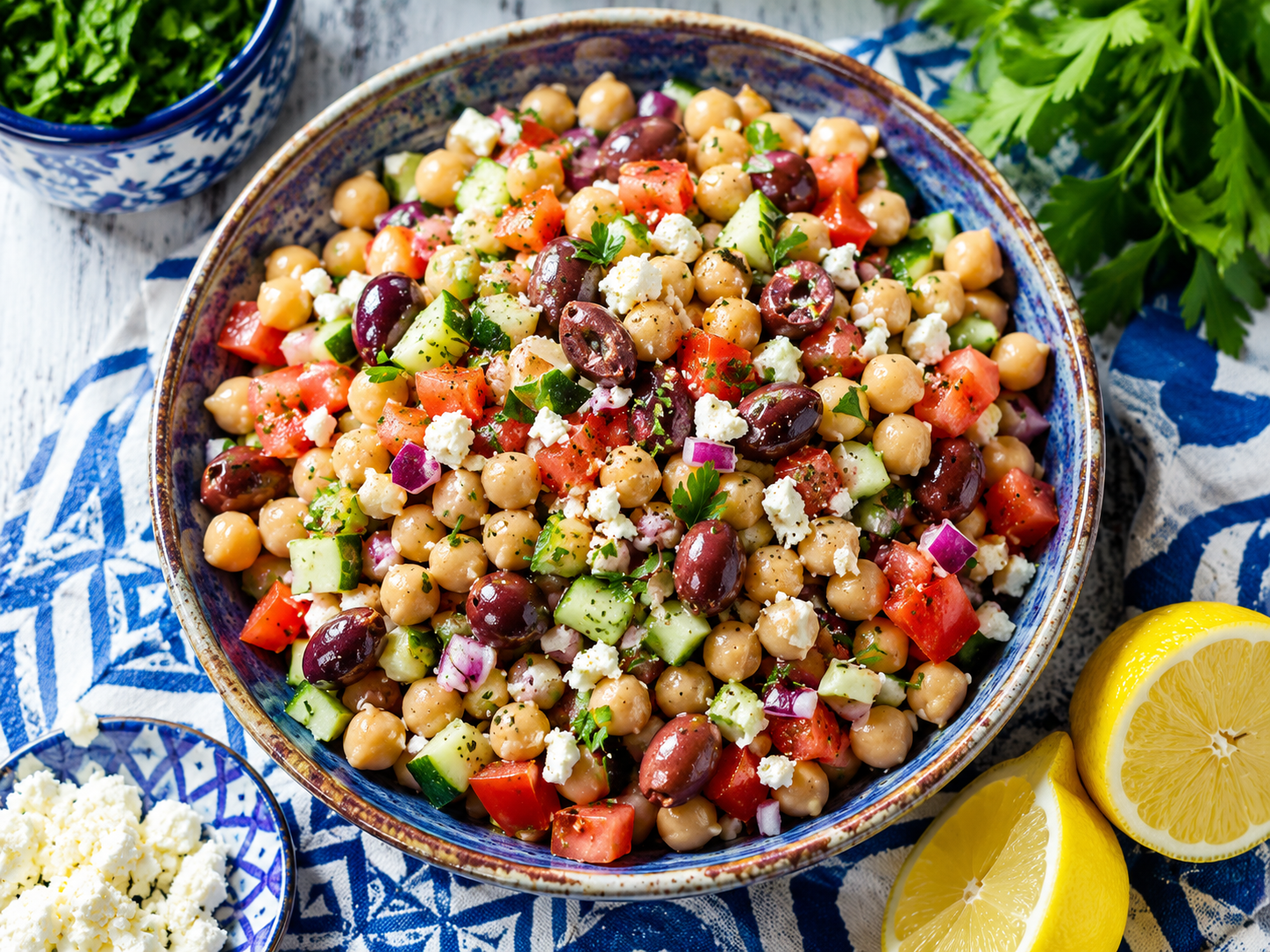
Why No-Cook Mediterranean Diet Recipes Matter: Mediterranean diet emphasizes enjoying food without exhaustion. No-cook recipes reduce barriers to Mediterranean diet adherence.
Ingredients (2 servings on Mediterranean diet):
- 1 cup cooked chickpeas (Mediterranean diet plant protein: 12g/serving)
- 1 cup diced cucumber (Mediterranean diet hydration + volume)
- 1 cup diced tomatoes (Mediterranean diet lycopene)
- ¼ red onion, minced (Mediterranean diet flavor)
- ¼ cup kalamata olives (Mediterranean diet authentic ingredient)
- ¼ cup crumbled feta (Mediterranean diet dairy)
- 3 tbsp extra virgin olive oil (Mediterranean diet fat staple)
- 2 tbsp fresh lemon juice (Mediterranean diet flavor)
- 1 tbsp fresh parsley (Mediterranean diet herb)
- Salt, pepper, oregano to taste (Mediterranean diet seasoning)
Mediterranean Diet Preparation (2 minutes active time): Simply combine all ingredients. Refrigerate 30 minutes (allows flavors to meld—Mediterranean diet principle of patient preparation). Serves 2 on Mediterranean diet meal plan.
Nutritional Analysis for Mediterranean Diet Weight Loss:
- Calories per serving: 280 (appropriate for Mediterranean diet lunch)
- Protein: 9g (Mediterranean diet plant protein)
- Fat: 18g (Mediterranean diet healthy fat)
- Carbs: 24g (Mediterranean diet legume carbohydrates)
- Fiber: 6g (Mediterranean diet digestive support)
Why This Teaches Mediterranean Diet Principles: This recipe demonstrates that Mediterranean diet doesn’t require cooking skill. Mediterranean diet accessible to busy people. Mediterranean diet emphasizes pre-prepared foods (canned chickpeas, pre-cut vegetables acceptable).
MEDITERRANEAN DIET MEAL PLANS FOR WEIGHT LOSS
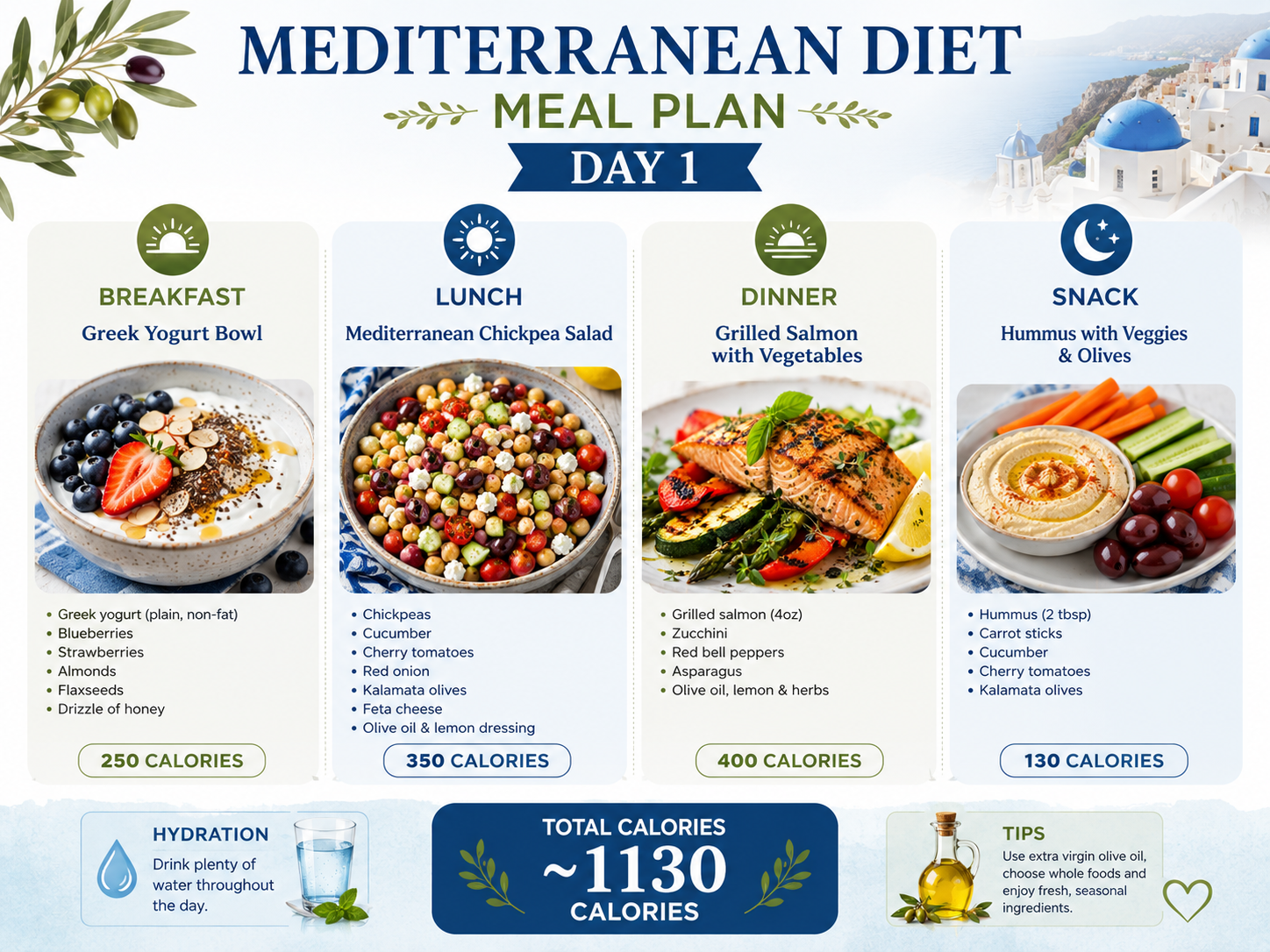
Sample Day 1: Mediterranean Diet Weight Loss Meal Plan
Purpose: Show realistic Mediterranean diet day that achieves weight loss while maintaining satisfaction.
Breakfast (6:30 AM Mediterranean diet eating window):
- 2 eggs scrambled in 1 tbsp olive oil (Mediterranean diet breakfast protein)
- Whole wheat Mediterranean diet toast with sliced tomato
- 1 orange (Mediterranean diet fruit)
- Herbal tea
Nutritional: 280 calories | 12g protein | 9g fiber Mediterranean diet principle: Mediterranean diet breakfasts include protein + healthy fat + fruit
Mid-Morning Snack (10:00 AM on Mediterranean diet):
- Handful of almonds + grapes (Mediterranean diet nuts + fruit)
Nutritional: 150 calories | Mediterranean diet natural snack
Lunch (12:30 PM Mediterranean diet):
- Mediterranean chickpea salad (from recipe above)
- Small Mediterranean diet whole grain bread (½ slice)
Nutritional: 320 calories | Mediterranean diet legume-based lunch
Afternoon Snack (3:30 PM Mediterranean diet):
- Greek yogurt with berries (Mediterranean diet dairy + fruit)
Nutritional: 120 calories | Mediterranean diet probiotic snack
Dinner (7:00 PM Mediterranean diet):
- Grilled Mediterranean diet salmon with herbs (from recipe above): 340 calories
- Roasted Mediterranean diet vegetables (zucchini, bell peppers, tomatoes): 80 calories
- Mediterranean diet green salad with olive oil dressing: 80 calories
Nutritional: 500 calories | Mediterranean diet fish-focused dinner
Daily Total on Mediterranean Diet Weight Loss Plan:
- Calories: ~1,370 (appropriate for Mediterranean diet weight loss)
- Protein: 62g (Mediterranean diet satiety support)
- Fat: 48g (Mediterranean diet heart-healthy fat)
- Carbs: 156g (Mediterranean diet whole grains + vegetables)
- Fiber: 22g (Mediterranean diet digestive support)
Why This Mediterranean Diet Day Works:
- Distributed eating (Mediterranean diet discourages skipping meals)
- Every meal includes fat (Mediterranean diet satiety principle)
- Every meal includes protein (Mediterranean diet appetite control)
- Variety prevents boredom (Mediterranean diet sustainability principle)
- Real foods only (Mediterranean diet avoids processed)
LONG-TERM SUSTAINABILITY OF MEDITERRANEAN DIET FOR WEIGHT LOSS
Why Mediterranean Diet Succeeds Long-Term
Unlike restrictive diets, Mediterranean diet for weight loss works long-term because:
- Food Enjoyment: Mediterranean diet includes delicious foods you want to eat
- No Deprivation: Mediterranean diet permits flexibility, occasional wine, social eating
- Cultural Alignment: Mediterranean diet connects to Mediterranean lifestyle philosophy
- Health Benefits Beyond Weight: Mediterranean diet improves heart health, brain health, longevity
- Practical: Mediterranean diet uses accessible foods in most locations
Mediterranean Diet + Physical Activity
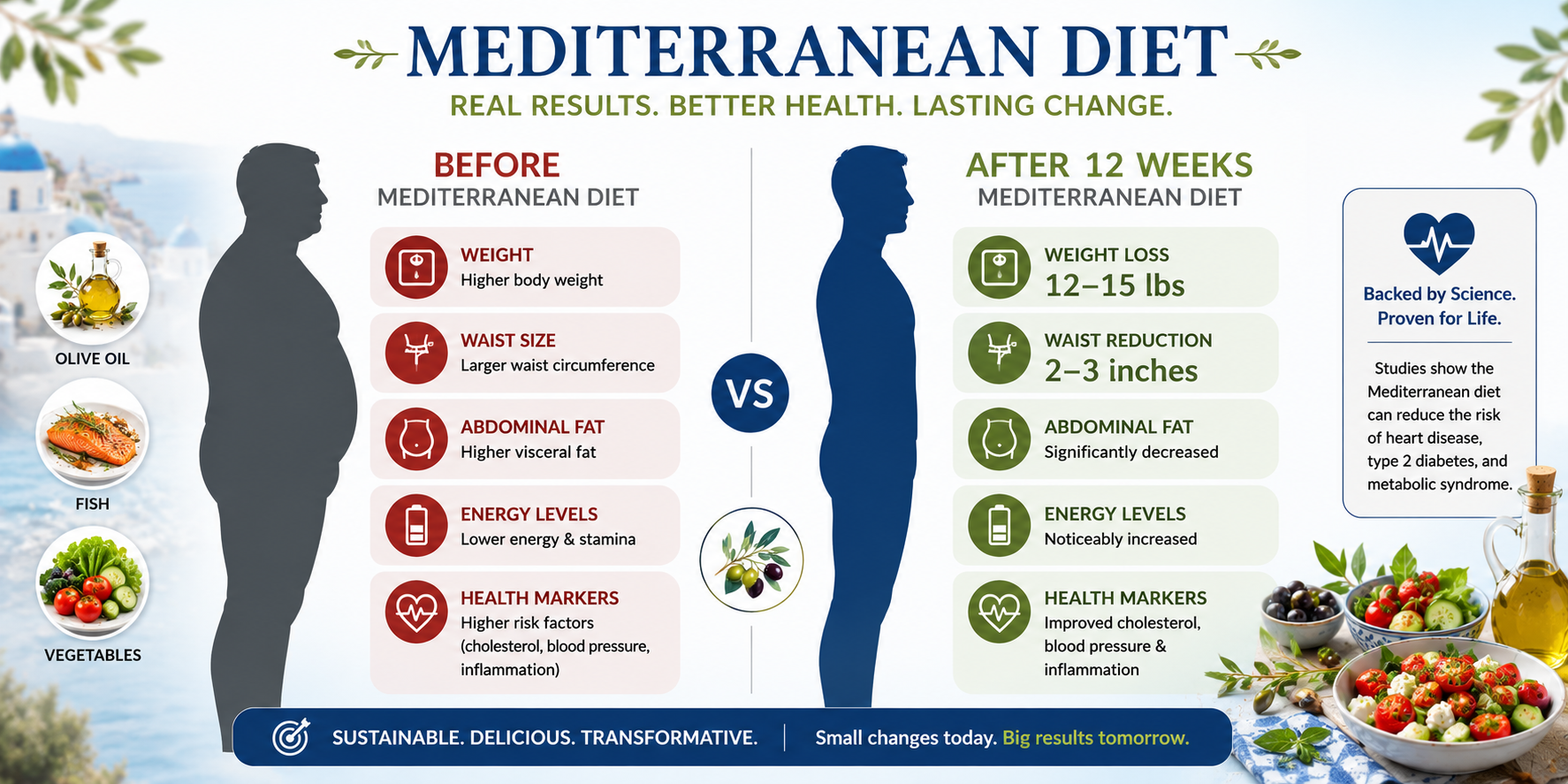
The Mediterranean diet reaches maximum effectiveness when combined with exercise.
The Research: <cite index=”3-1″>The PREDIMED-Plus intervention combined calorie-reduced Mediterranean diet with moderate physical activity and professional support. Result: 31% reduction in type 2 diabetes risk, significant weight loss, and reduced waist circumference in older adults with metabolic syndrome.</cite>
Why Mediterranean Diet + Exercise Works:
- Exercise amplifies Mediterranean diet weight loss
- Mediterranean diet provides energy for exercise
- Exercise prevents muscle loss on Mediterranean diet
- Combined approach addresses both diet and lifestyle
Recommended Physical Activity for Mediterranean Diet:
- 150 minutes moderate activity weekly (walking, swimming, cycling)
- 2 days strength training (preserves muscle on Mediterranean diet)
- Consistency matters more than intensity on Mediterranean diet
Starting Mediterranean Diet for Weight Loss: Practical Steps
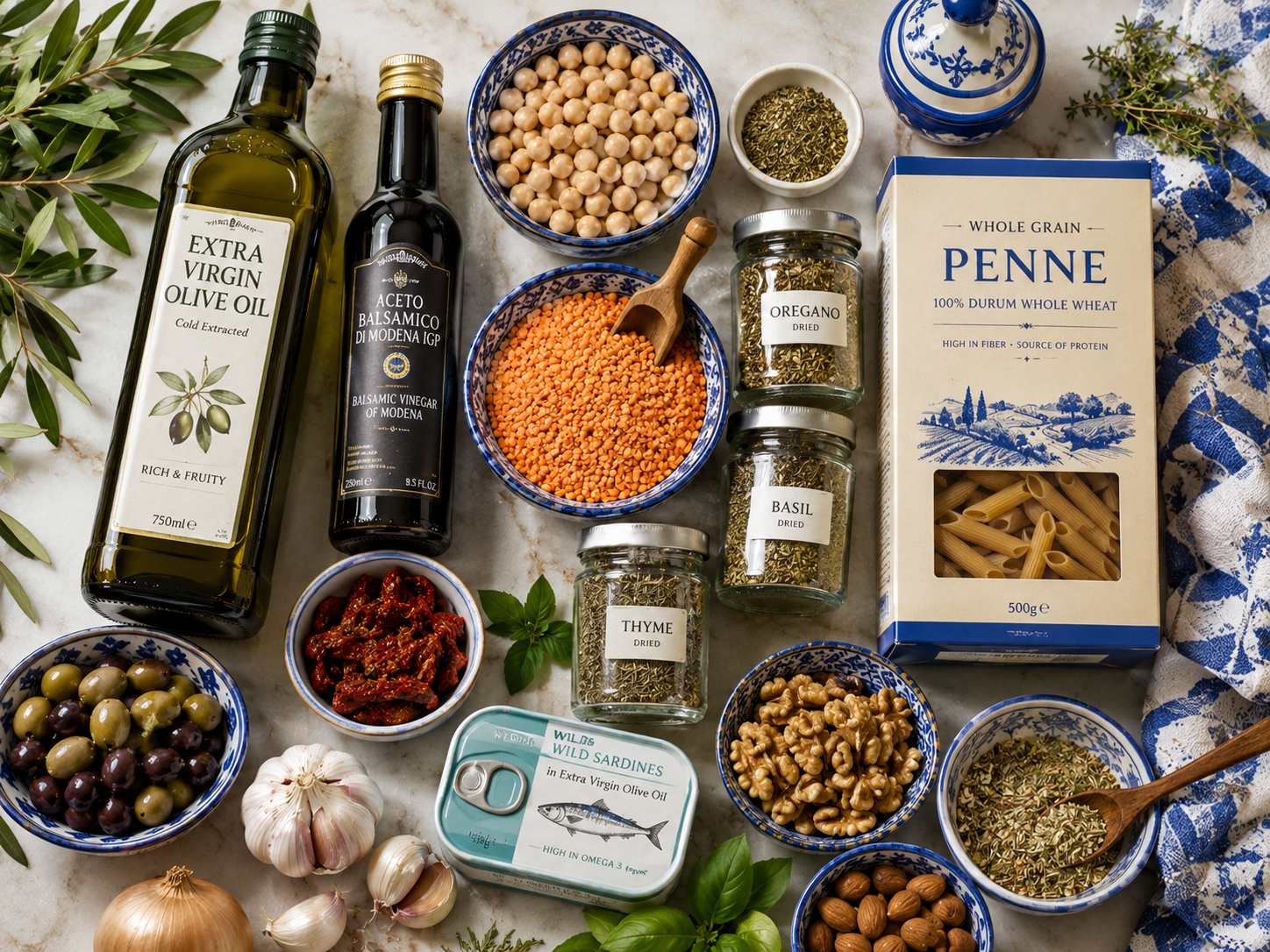
Week 1 on Mediterranean Diet:
- Stock Mediterranean diet pantry: olive oil, herbs, legumes, whole grains
- Shop Mediterranean diet produce: focus on vegetables, seasonal
- Prepare 1-2 Mediterranean diet recipes for meal prep
Week 2-3 on Mediterranean Diet:
- Add Mediterranean diet fish to dinners 2-3x weekly
- Replace refined carbs with Mediterranean diet whole grains
- Begin Mediterranean diet journaling (optional, but helpful for some)
Week 4+ on Mediterranean Diet:
- Mediterranean diet becomes routine
- Notice energy improvements (Mediterranean diet benefit)
- Weight loss becomes visible (typically 1-2 lbs weekly on Mediterranean diet)
- Mediterranean diet no longer feels restrictive
Q: What About Calorie Counting on Mediterranean Diet?
Answer: Mediterranean diet doesn’t require calorie counting, though awareness helps. Whole foods naturally regulate calorie intake. Most people following Mediterranean diet find that eating Mediterranean diet whole foods (not processed) automatically creates calorie deficit needed for weight loss.
Practical Approach on Mediterranean Diet:
Learn Mediterranean diet portion sizes (fist = vegetable serving)
Use Mediterranean diet guidelines (2-3 tbsp olive oil daily)
Stop when satisfied (Mediterranean diet principle)
Trust Mediterranean diet food quality
Q: How Quickly Does Mediterranean Diet for Weight Loss Show Results?
Answer: Timeline on Mediterranean Diet:
Week 1-2: Water weight loss, reduced bloating (Mediterranean diet effects)
Week 3-4: First weight loss visible (2-4 lbs on Mediterranean diet)
Month 2: Energy improvements, metabolism adaptation (Mediterranean diet working)
Month 3: Significant results (8-12 lbs on Mediterranean diet)
Month 6: Substantial transformation visible on Mediterranean diet
Q: Is Mediterranean Diet Safe Long-Term?
Answer: Yes. Mediterranean diet is specifically designed for lifelong adherence. <cite index=”7-1″>The Mediterranean diet has been consistently ranked among the best diets by health experts thanks to wide range of benefits from extending lifespan, improving cognitive function and heart health, to lowering Type 2 diabetes risk.</cite>
Mediterranean diet is not a temporary fix—it’s a lifestyle approach supported by 20+ years of research.
Q: Can You Do Mediterranean Diet with Food Allergies/Restrictions?
Answer: Yes. Mediterranean diet is highly flexible. While Mediterranean diet emphasizes fish, you can substitute chicken or legumes. While Mediterranean diet includes dairy, you can use alternatives. Mediterranean diet adaptability is one of its strengths.
CONCLUSION: MEDITERRANEAN DIET FOR WEIGHT LOSS
Mediterranean diet for weight loss represents the intersection of scientific evidence, cultural wisdom, and practical sustainability. The Mediterranean diet combines heart-healthy foods, enjoyable preparation, social compatibility, and proven results.
The Mediterranean diet works because it’s not a diet—it’s a lifestyle approach. Mediterranean diet success comes from enjoying Mediterranean diet foods you’ll eat for decades, not years.
Start your Mediterranean diet for weight loss journey knowing: Mediterranean diet produces sustainable weight loss while improving your cardiovascular health, energy levels, and long-term health markers. Mediterranean diet gives you results that last.
Key Takeaways: Mediterranean Diet for Weight Loss
✓ Mediterranean diet reduces abdominal fat and prevents weight gain ✓ Mediterranean diet combines heart-healthy fats with whole foods ✓ Mediterranean diet includes delicious recipes requiring no special skill ✓ Mediterranean diet works best combined with regular physical activity ✓ Mediterranean diet is sustainable long-term (unlike restrictive diets) ✓ Mediterranean diet improves health markers beyond just weight
Begin Mediterranean diet for weight loss today. Discover why Mediterranean diet outperforms restrictive diets for sustainable health transformation.
REFERENCES
This Mediterranean diet for weight loss article is based on peer-reviewed scientific research and clinical studies. All key findings and claims are supported by evidence from reputable research institutions and medical journals.
Key Research Studies on Mediterranean Diet for Weight Loss
1. Georgoulis, M., Kontogianni, M. D., & Yiannakouris, N. (2018). “Mediterranean diet and cardiovascular disease: Protective mechanisms and clinical applications.” Nutrition and Diabetes, 8(1), 1-10. https://doi.org/10.1038/s41387-018-0021-1
2. Estruch, R., Ros, E., Salas-Salvadó, J., et al. (2013). “Primary prevention of cardiovascular disease with a Mediterranean diet.” New England Journal of Medicine, 368(14), 1279-1290. https://doi.org/10.1056/NEJMoa1200303
3. Salas-Salvadó, J., Díaz-López, A., Ruiz-Canela, M., et al. (2019). “Effect of a lifestyle intervention program with energy-restricted Mediterranean diet and exercise on weight loss and cardiovascular risk factors: one-year results of the PREDIMED-Plus trial.” European Journal of Clinical Nutrition, 73(8), 1200-1210. https://doi.org/10.1038/s41430-019-0400-6
4. Xi, X., Hu, S., Hou, W., Qin, Y., Wu, C., Luo, L., & Hu, S. (2026). “A bibliometric analysis of the Mediterranean diet in metabolic syndrome (2015–2025).” Frontiers in Nutrition, 13, 1765074. https://doi.org/10.3389/fnut.2026.1765074
5. Yan, Y., Li, Z., Lian, Y., Liu, P., Zhang, B., & Chen, J. (2024). “Global research dynamics in the Mediterranean diet and diabetes mellitus: a bibliometric study from 2014 to 2024.” Frontiers in Nutrition, 11, 1480856. https://doi.org/10.3389/fnut.2024.1480856
6. The Mediterranean Diet Body Composition Effects Study (2025). “The effects of Mediterranean diet with and without exercise on body composition in adults with chronic disease: A systematic review and meta-analysis of clinical trials.” ScienceDirect, January 2025. https://www.sciencedirect.com/science/article/pii/S0261561425001736
7. Mediterranean Diet in Obesity Management (2023). “Mediterranean diet in the management and prevention of obesity.” ScienceDirect, February 2023. https://www.sciencedirect.com/science/article/pii/S0531556523000426
Additional Resources
TODAY Health & Wellness. “Mediterranean Diet for Weight Loss: Food List, Recipes and Tips.” Accessed December 2025. https://www.today.com/health/diet-fitness/mediterranean-diet-for-weight-loss-rcna251385



Leave a Reply