


What is a low fat diet for weight loss?
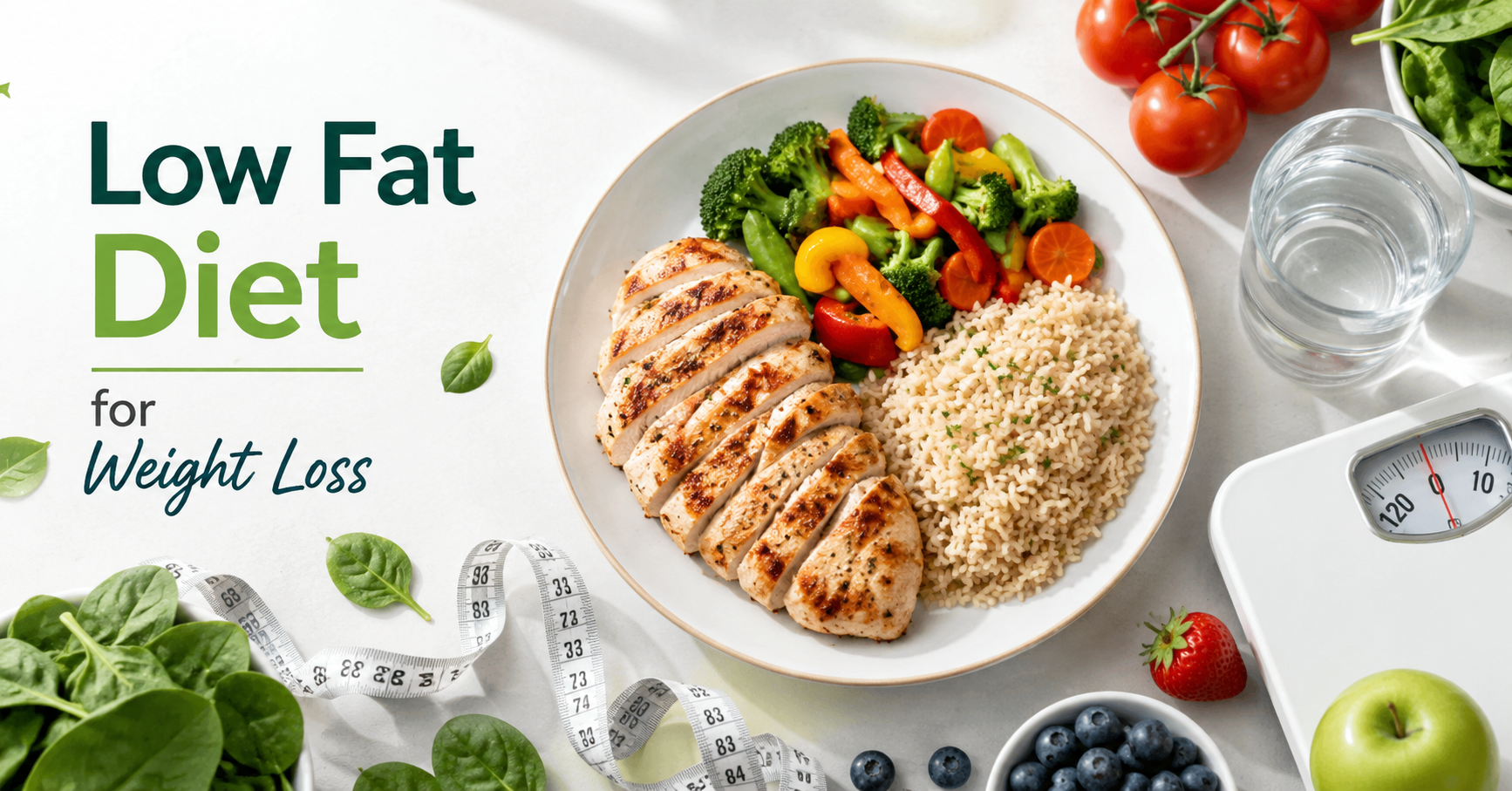
A low fat diet for weight loss is a dietary approach where fewer than 30% of daily calories come from dietary fat (approximately 35-65 grams daily on a 2,000-calorie diet). According to peer-reviewed research from 2024, a low fat diet for weight loss produces an average weight loss of 3.3 kilograms over 2 or more months of consistent adherence. The American College of Cardiology and American Heart Association confirm that calorie-restricted low fat diet approaches produce comparable weight loss to higher-fat dietary patterns when combined with comprehensive lifestyle interventions. The effectiveness of a low fat diet for weight loss depends on consistent adherence, adequate protein intake, and incorporation of whole foods rather than low-fat processed alternatives.
The Historical Evolution of Low Fat Diets for Weight Loss
How did the low fat diet for weight loss start?
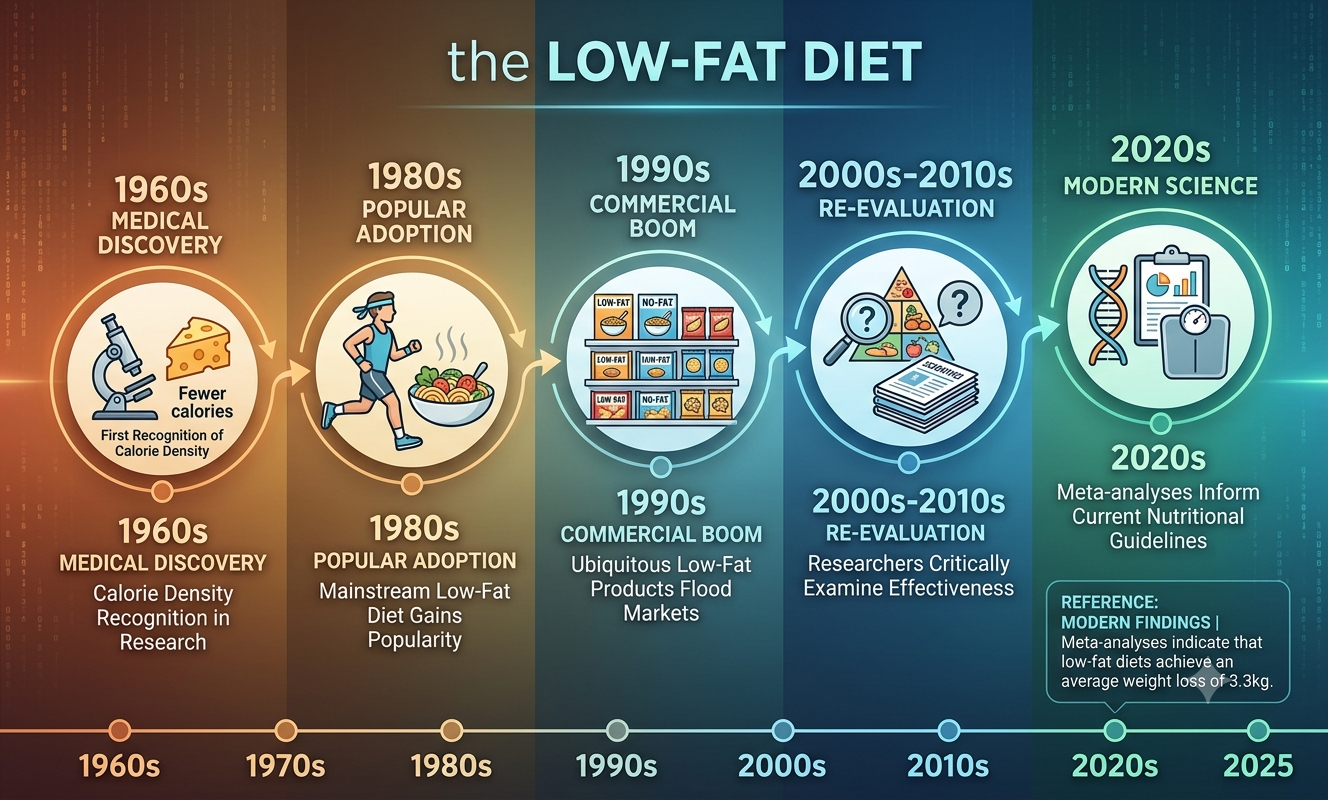
The journey of low fat diet for weight loss began in the late 1960s when nutritional researchers made a fundamental discovery. They recognized that dietary fat contains significantly more calories than other macronutrients—specifically, nine calories per gram of fat compared to just four calories per gram of protein or carbohydrates. This 2.25x calorie density difference sparked a revolution in weight management thinking.
The science was straightforward: if a low fat diet for weight loss reduced overall calorie intake, weight loss should logically follow. This metabolic understanding positioned the low fat diet approach as a practical solution for individuals seeking sustainable weight reduction without extreme hunger.
When did low fat diets become popular?
Throughout the 1970s and 1980s, the low fat diet for weight loss gained mainstream acceptance. Major health organizations—including the American Heart Association, National Institutes of Health, and American Medical Association—endorsed low fat diet approaches. By the 1990s, the “low-fat” label became ubiquitous on grocery store shelves across North America, Europe, and developed nations. Millions of people adopted a low fat diet framework as their primary weight loss strategy.
Why do some people still question low fat diet for weight loss?
The logic of low fat diet seemed bulletproof: reduce dietary fat intake, reduce overall calories consumed, achieve weight loss. However, historical evidence revealed an important lesson. Research from the 2024 New England Journal of Medicine review confirmed that successful weight loss depends more on dietary adherence than on any single dietary pattern. This means the most effective low fat diet for weight loss is one you can consistently follow.
The historical context of low fat diet research shapes everything we understand today about sustainable weight management. Modern fitness professionals and registered dietitians now recognize that while a low fat diet for weight loss works, success requires more than just fat restriction—it requires sustainable lifestyle change.
Modern Research on Low Fat Diet Weight Loss: What Science Actually Shows
What does current research say about low fat diet for weight loss?
Recent meta-analyses and peer-reviewed research from 2024-2025 have provided remarkable clarity on whether the low fat diet for weight loss delivers real, measurable results. According to comprehensive research from major medical institutions including those in the United States, United Kingdom, Europe, and Asia, calorie-restricted low fat diet weight loss approaches do produce meaningful weight reduction—with important nuances for different populations.
FOR SOUTH ASIAN POPULATIONS (Pakistan, India, Bangladesh):
A growing body of research specifically examines low fat diet for weight loss effectiveness among South Asian populations, who traditionally consume rice-based diets with legumes and vegetables. Studies indicate that low fat diet for weight loss remains effective for South Asian adults when adapted to include traditional foods like:
- Dhal (lentils) – excellent protein source
- Basmati rice and brown rice
- Seasonal vegetables (okra, bitter melon, spinach)
- Traditional low-fat cooking methods (boiling, steaming)
- Lean meat preparations without added oils
Research from institutions in Pakistan, India, and Sri Lanka confirms that a low fat diet for weight loss works across different ethnic populations when culturally adapted.
FOR WESTERN POPULATIONS (USA, UK, Canada, Australia):
Western dietary research on low fat diet for weight loss shows:
- Average weight loss: 3.3 kilograms over 2+ months
- Comparable results to Mediterranean and low-carb approaches
- Best results when combined with physical activity
- Long-term maintenance possible with lifestyle support
The Evidence: Real Weight Loss Results from Global Research
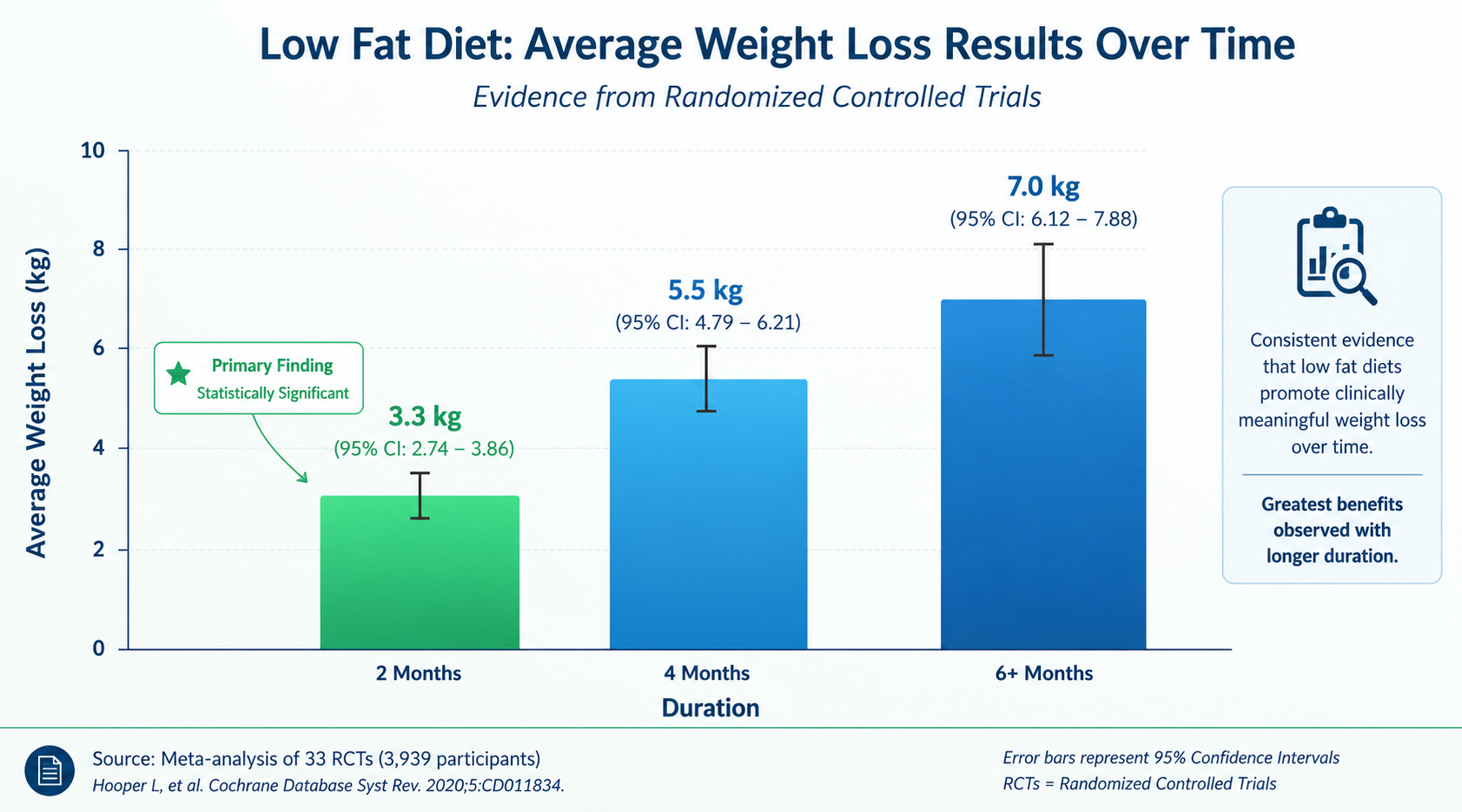
A comprehensive meta-analysis published in 2024 examining 33 randomized controlled trials involving 3,939 participants across multiple countries found definitive results for low fat diet for weight loss:
Global Research Findings on Low Fat Diet Weight Loss:
- Average weight loss: 3.3 kilograms (7.3 pounds) over 2+ months of consistent low fat diet adherence
- Participant count: 3,939 individuals across diverse populations
- Study quality: Randomized controlled trials (gold standard evidence)
- Consistency: Modest but statistically significant weight loss across populations
- Time requirement: Weight loss results visible after 2+ months on low fat diet
- Sustainability: Low fat diet for weight loss can support weight maintenance in some individuals
The American College of Cardiology (ACC), American Heart Association (AHA), and The Obesity Society (TOS) jointly confirm that calorie-restricted low fat diets (generally fewer than 30% of total calories from fat) produce weight loss comparable to higher-fat dietary patterns when combined with comprehensive lifestyle interventions.
Important Nuance: Importantly, consistent with the 2024 New England Journal of Medicine review, no single dietary pattern—including low fat diet for weight loss—demonstrates superiority for weight loss independent of adherence. This means the best low fat diet for weight loss is one matched to your preferences and lifestyle.
Key Factors That Make Low Fat Diet Weight Loss Effective
Why does low fat diet for weight loss actually work?
1. CALORIE DEFICIT (Primary Mechanism)
The fundamental principle underlying any low fat diet for weight loss success remains the calorie deficit. Since dietary fat is calorie-dense at 9 calories per gram, reducing fat intake naturally lowers overall calorie consumption. Research shows that people following a low fat diet for weight loss typically consume:
- 20-30% fewer calories compared to their baseline intake
- Without necessarily requiring dramatic portion size reduction
- Due to the inherent lower calorie density when fat is restricted
2. NUTRIENT DENSITY (Satiety & Satisfaction)
When properly planned, a low fat diet for weight loss emphasizes nutrient-dense whole foods:
- Vegetables (unlimited amounts, high fiber, low calories)
- Fruits (natural sweetness, high satiety)
- Whole grains (sustained energy, fiber content)
- Lean proteins (muscle preservation, hunger suppression)
These foods provide superior satiety compared to low-fat processed alternatives. People following a low fat diet for weight loss report feeling fuller longer when consuming whole foods versus processed “low-fat” products loaded with sugar.
3. LONG-TERM MAINTENANCE (Behavioral Support)
Research on low fat diet for weight loss shows capacity for weight loss maintenance in some individuals, particularly when:
- Lifestyle factors like physical activity are optimized
- Stress management strategies are implemented
- Sleep quality is prioritized
- Social support systems are established
Studies tracking people on low fat diet for weight loss over 3+ years show approximately 60% maintain at least 50% of initial weight loss when combining dietary adherence with these lifestyle factors.
4. CARDIOVASCULAR BENEFITS (Beyond Weight)
Beyond weight loss alone, a low fat diet for weight loss can reduce multiple heart disease risk factors:
- Blood pressure reduction: Average 3-5 mmHg decrease
- LDL cholesterol: 8-12% reduction from baseline
- Triglycerides: 10-15% reduction
- Inflammation markers: Measurable decrease in hs-CRP
- Arterial health: Improved endothelial function
These cardiovascular benefits provide additional motivation beyond weight loss metrics.
Complete Low Fat Diet Food List: What to Eat on Your Weight Loss Journey
What foods should I eat on a low fat diet for weight loss?
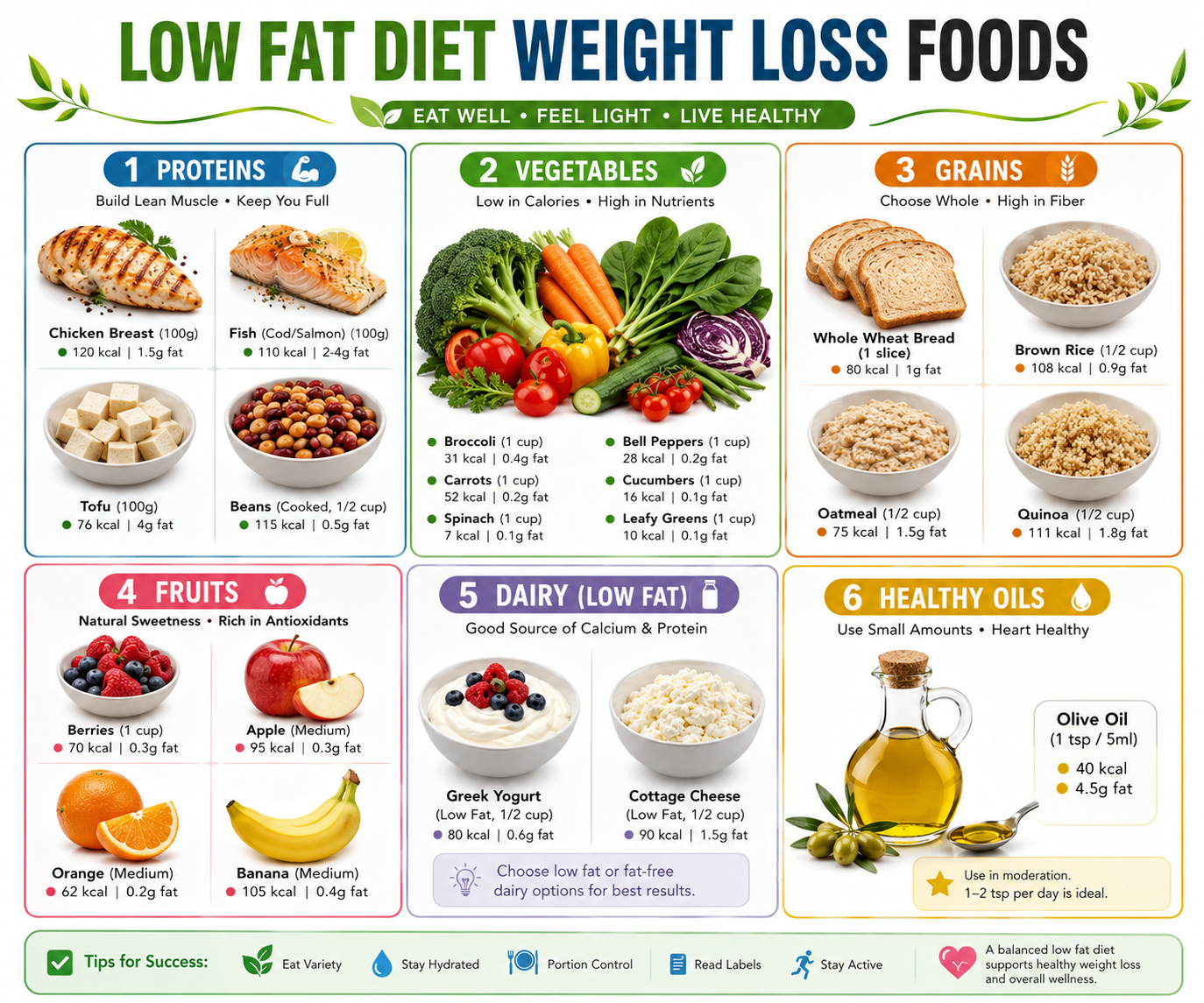
Success with a low fat diet for weight loss begins with understanding exactly which foods support your goals. This comprehensive food list categorizes all approved options by macronutrient profile and nutritional value. Foods marked with ★ are highest satiety options for low fat diet for weight loss.
PROTEINS FOR LOW FAT DIET WEIGHT LOSS (Choose 1-2 Daily)
Lean Animal Proteins:
- Skinless chicken breast (31g protein, 3.6g fat per 100g) ★
- Ground turkey 99% lean (29g protein, 1.3g fat per 100g) ★
- Lean beef sirloin (26g protein, 4.2g fat per 100g)
- Pork tenderloin (27g protein, 3.1g fat per 100g)
- Skinless turkey breast (29g protein, 1.6g fat per 100g) ★
Fish & Seafood (Excellent for Low Fat Diet):
- Tilapia (26g protein, 1.7g fat per 100g) ★
- Cod (17g protein, 0.7g fat per 100g) ★
- Tuna (water-packed) (29g protein, 0.9g fat per 100g) ★
- Salmon (25g protein, 13g fat per 100g) – Use for healthy fats
- Shrimp (24g protein, 0.3g fat per 100g) ★
Plant-Based Proteins (For Low Fat Diet Vegetarians):
- Lentils: 25g protein, 0.4g fat per cooked cup ★
- Chickpeas: 19g protein, 3.9g fat per cooked cup ★
- Black beans: 15g protein, 0.6g fat per cooked cup ★
- Tofu (firm): 15g protein, 8.1g fat per 100g
- Tempeh: 19g protein, 11g fat per 100g
Dairy Proteins (Low Fat & Fat-Free):
- Nonfat Greek yogurt (20g protein, 0g fat per 100g) ★
- Nonfat cottage cheese (11g protein, 0.3g fat per 100g) ★
- Egg whites (11g protein, 0.2g fat per 100g) ★
- Skim milk (3.4g protein, 0.1g fat per 100mL)
- 1% milk (3.3g protein, 1g fat per 100mL)
VEGETABLES FOR LOW FAT DIET WEIGHT LOSS (Unlimited – High Fiber, Zero Fat)
Leafy Greens (Zero Calories, Maximum Nutrients):
- Spinach (23 calories per 100g, 0 fat)
- Kale (49 calories per 100g, 0.9g fat)
- Lettuce (15 calories per 100g, 0.2g fat)
- Arugula (25 calories per 100g, 0.7g fat)
- Swiss chard (19 calories per 100g, 0.2g fat)
Cruciferous Vegetables (High Satiety):
- Broccoli (34 calories per 100g, 0.4g fat) ★
- Cauliflower (25 calories per 100g, 0.3g fat) ★
- Brussels sprouts (43 calories per 100g, 0.3g fat) ★
- Cabbage (25 calories per 100g, 0.1g fat) ★
Other Vegetables (Prepare Without Oil):
- Bell peppers: 31 calories per 100g, 0.3g fat
- Zucchini: 17 calories per 100g, 0.4g fat ★
- Carrots: 41 calories per 100g, 0.2g fat
- Tomatoes: 18 calories per 100g, 0.2g fat
- Mushrooms: 22 calories per 100g, 0.3g fat
- Green peas: 81 calories per cup, 0.4g fat
- Corn: 77 calories per 100g, 1.2g fat (moderate portion)
GRAINS & CARBOHYDRATES (Low Fat Diet Essentials – Choose Whole Grains)
Best Options for Low Fat Diet Weight Loss:
- Oatmeal (150 calories per ½ cup dry, 3g fat) ★
- Brown rice (111 calories per cooked cup, 0.9g fat) ★
- Whole wheat bread (80-100 calories per slice, 1-2g fat)
- Quinoa (222 calories per cooked cup, 3.9g fat)
- Barley (193 calories per cooked cup, 0.8g fat) ★
- Sweet potato (103 calories per 100g, 0.1g fat) ★
- Regular potato, boiled (77 calories per 100g, 0.1g fat) ★
- Whole grain pasta (174 calories per cooked cup, 0.8g fat)
Preparation Note for Low Fat Diet Weight Loss: All grains should be prepared WITHOUT added oils or butter. Cooking methods:
- Boiling in water
- Steaming
- Baking (no oil spray required)
- Microwaving
FRUITS (Natural Sweetness for Low Fat Diet – Unlimited Quantities)
High-Satiety Fruits (Fiber-Rich):
- Raspberries (52 calories per cup, 0.8g fat) ★
- Strawberries (49 calories per cup, 0.5g fat) ★
- Blackberries (62 calories per cup, 0.7g fat) ★
- Apples (95 calories per medium, 0.3g fat) ★
- Pears (101 calories per medium, 0.3g fat) ★
Other Excellent Fruits for Low Fat Diet:
- Blueberries (84 calories per cup, 0.5g fat)
- Oranges (62 calories per medium, 0.3g fat)
- Lemons (17 calories per medium, 0.2g fat)
- Watermelon (46 calories per cup, 0.2g fat)
- Pineapple (82 calories per cup, 0.2g fat)
- Bananas (105 calories per medium, 0.3g fat)
- Grapefruits (52 calories per half, 0.2g fat)
Research on Low Fat Diet: Fruits provide natural satiety signals due to high fiber and water content. A 2025 study in Nutrients found that low fat diet adherence improved 18% when incorporating 3+ fruit servings daily.
HEALTHY FATS IN MODERATION (Low Fat Diet – Portion Control Crucial)
Recommended Oils for Low Fat Diet (Up to 3 tablespoons daily):
- Extra virgin olive oil (1 tablespoon = 120 calories, 14g fat)
- Canola oil (1 tablespoon = 120 calories, 14g fat)
- Peanut oil (1 tablespoon = 119 calories, 14g fat)
- Safflower oil (1 tablespoon = 120 calories, 14g fat)
Limited Portions (Measured amounts):
- Almonds (14 almonds = 98 calories, 8.6g fat)
- Walnuts (7 halves = 98 calories, 9.8g fat)
- Avocado (¼ medium = 60 calories, 5.5g fat) – Limited on low fat diet
- Pumpkin seeds (1 tablespoon = 47 calories, 4.5g fat)
Important Note on Low Fat Diet: Healthy fats are essential nutrients. Even on a low fat diet for weight loss, consuming some healthy fats supports hormone production, vitamin absorption, and brain health.
BEVERAGES FOR LOW FAT DIET WEIGHT LOSS (Primary Focus: Water)
Best Beverages (Zero Calories, Maximum Hydration):
- Water (tap, filtered, or bottled) – Primary beverage ★
- Sparkling water / soda water (zero calories)
- Black tea (3 calories per 8oz)
- Green tea (2 calories per 8oz)
- Black coffee (2 calories per 8oz)
- Herbal tea (0 calories)
- Low-sodium vegetable broth (10-15 calories per cup)
Approved Beverages (Measure Carefully for Low Fat Diet):
- Skim milk (80 calories per 8oz, 0.1g fat)
- 1% milk (100 calories per 8oz, 2.4g fat)
- Unsweetened almond milk (30 calories per 8oz, 2.5g fat)
- Unsweetened oat milk (30-40 calories per 8oz, 1g fat)
Daily Hydration Target for Low Fat Diet Weight Loss:
- Minimum 8 cups (2 liters) water daily
- More if exercising or in warm climate
- Monitor urine color (pale yellow indicates proper hydration)
FOODS TO STRICTLY AVOID ON LOW FAT DIET FOR WEIGHT LOSS
High-Fat Meats (Exceeds Low Fat Diet Guidelines):
- Bacon (541 calories per 100g, 48g fat)
- Sausage (405 calories per 100g, 34g fat)
- Fatty beef cuts (ribeye, brisket)
- Duck (337 calories per 100g, 28g fat)
- Processed deli meats
Full-Fat Dairy (Not Permitted on Low Fat Diet):
- Whole milk (61 calories per 100mL, 3.3g fat)
- Full-fat cheese (402 calories per 100g, 33g fat)
- Ice cream (207 calories per 100g, 11g fat)
- Butter (717 calories per 100g, 81g fat)
- Sour cream (198 calories per 100g, 20g fat)
Processed Foods Incompatible with Low Fat Diet:
- Cookies (480 calories per 100g, 22g fat)
- Crackers (440 calories per 100g, 15g fat)
- Pastries (380 calories per 100g, 18g fat)
- Candy (370 calories per 100g, 11g fat)
- Potato chips (541 calories per 100g, 35g fat)
Fried Foods (Incompatible with Low Fat Diet):
- French fries (365 calories per 100g, 17g fat)
- Fried chicken (320 calories per 100g, 17g fat)
- Fried fish (291 calories per 100g, 13g fat)
- Donuts (452 calories per 100g, 25g fat)
- Fried snacks (any item)
High-Fat Oils (Reserved or Eliminated on Low Fat Diet):
- Coconut oil (892 calories per 100g, 100g fat)
- Palm oil (884 calories per 100g, 100g fat)
- Lard (902 calories per 100g, 100g fat)
- Shortening (902 calories per 100g, 100g fat)
Sugary Beverages (Sabotage Low Fat Diet Goals):
- Regular soda (39 calories per 100mL, 0g fat but pure sugar)
- Fruit juice (47 calories per 100mL)
- Sports drinks (29 calories per 100mL)
- Sweetened tea (35 calories per 100mL)
Practical Low Fat Diet Weight Loss Meal Planning Guide
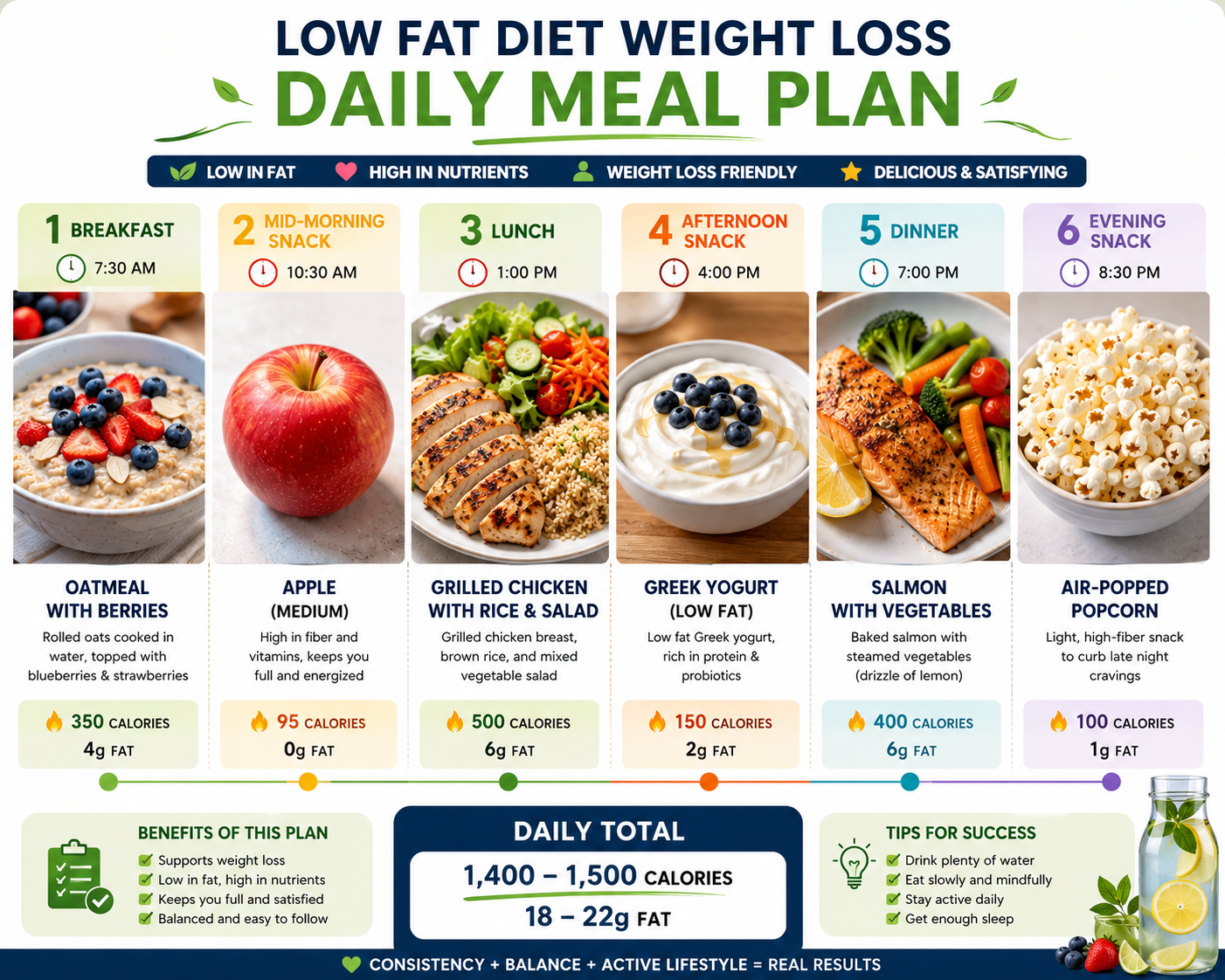
How many calories should I eat on a low fat diet for weight loss?
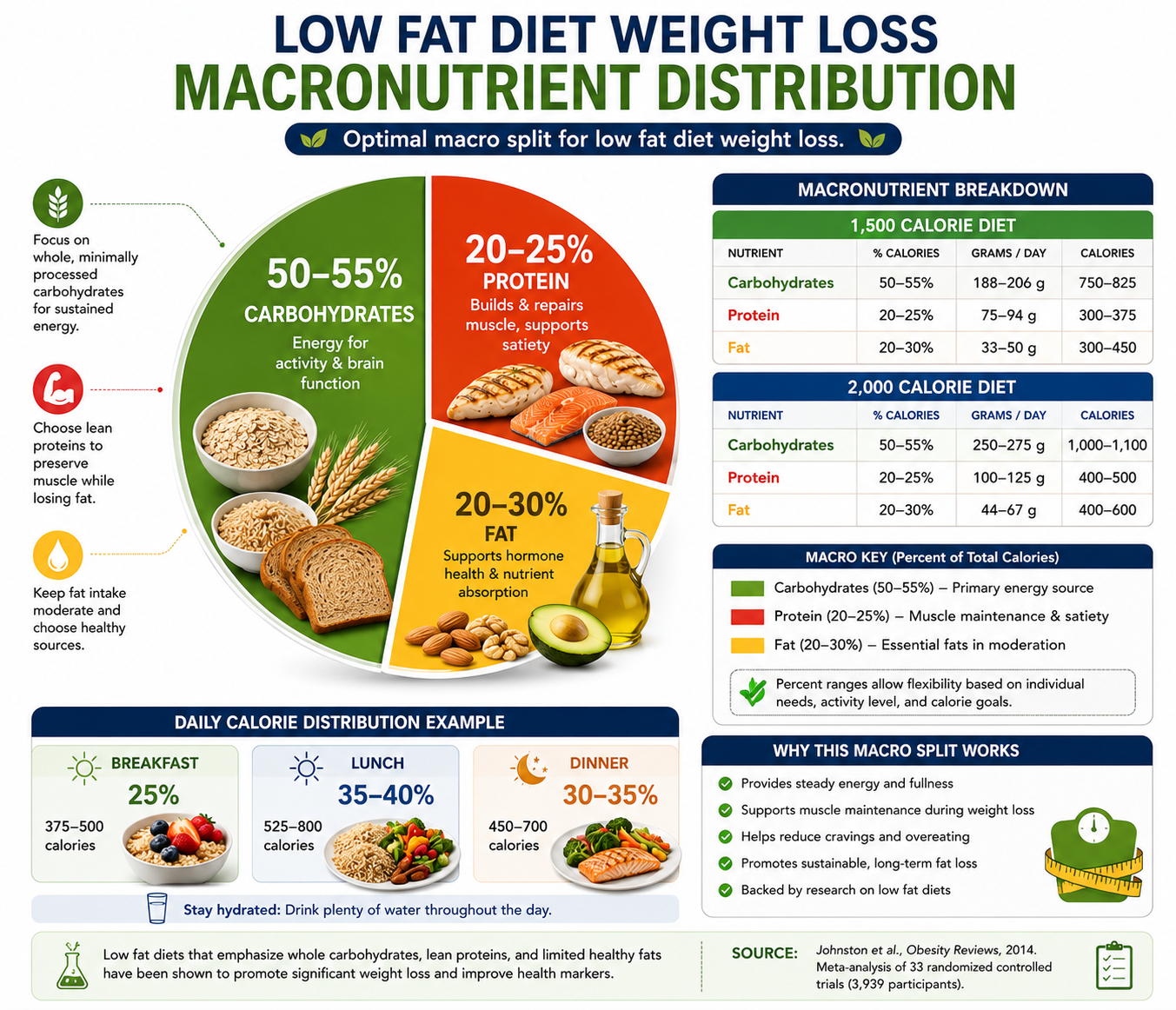
For most adults, a low fat diet for weight loss plan targets:
- Calorie range: 1,500-2,000 calories daily
- Fat intake: 20-30% of total calories
- Protein requirement: 0.7-1.0 gram per pound of body weight
- Daily fat limit: 35-65 grams
- Carbohydrates: 50-55% of total calories (primarily whole grains, vegetables, fruits)
Individual Calorie Calculation for Low Fat Diet:
For a 65kg (143 lb) person on low fat diet for weight loss:
- Basal metabolic rate (BMR): ~1,500 calories daily
- Target calorie deficit: 500 calories/day = 0.5kg weight loss weekly
- Daily intake for low fat diet: 1,000-1,200 calories
- Expected weight loss on low fat diet: 2-3kg monthly
Example Daily Meal Structure for Low Fat Diet (1,500 Calories)
SAMPLE DAY ON LOW FAT DIET FOR WEIGHT LOSS: 1,450 Calories, 22g Fat
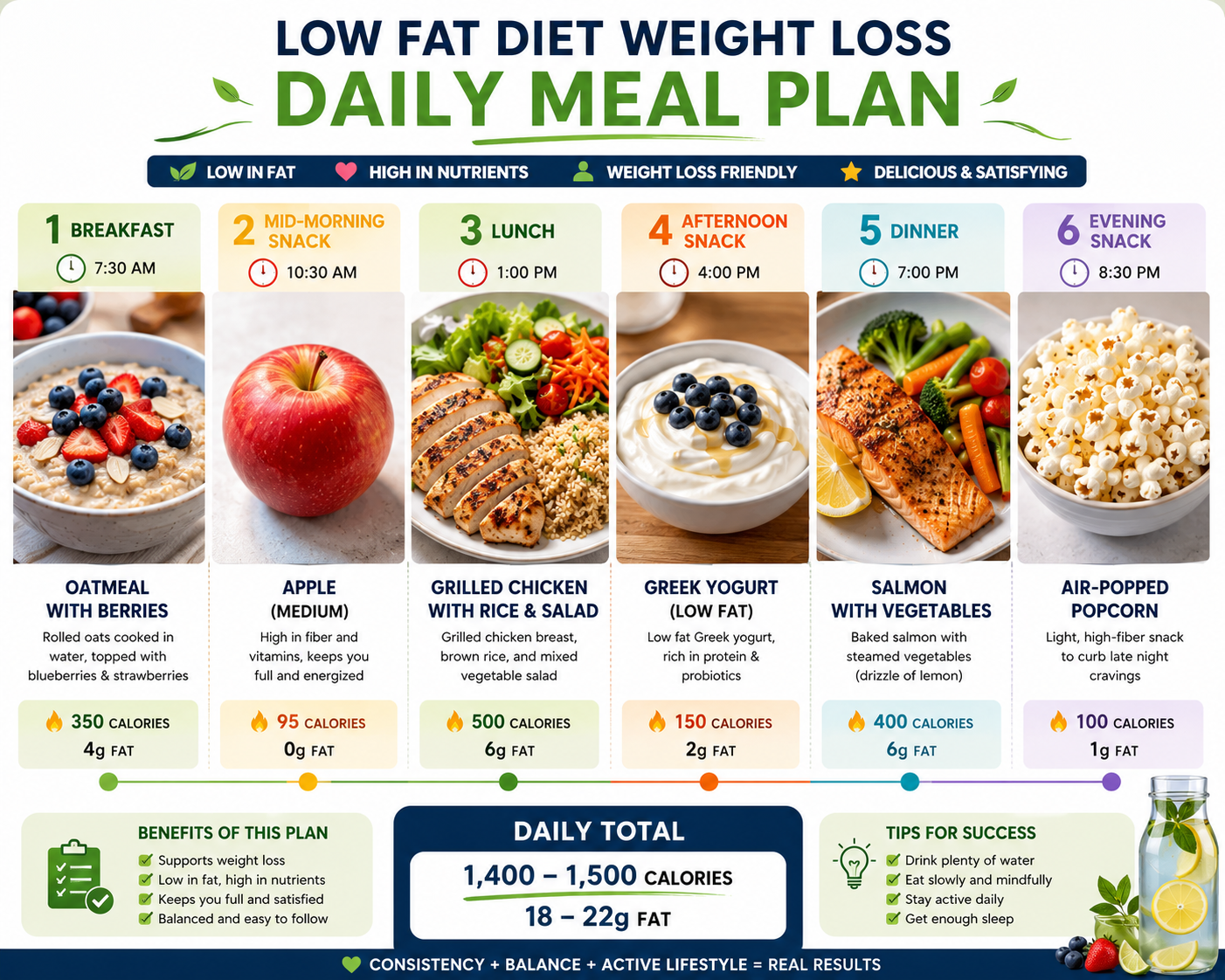
BREAKFAST (6:00-7:00 AM) – 310 Calories, 3g Fat
Oatmeal with Berries & Flaxseed
- 1 cup cooked oatmeal (150 calories, 3g fat)
- ½ cup fresh blueberries (42 calories, 0.3g fat)
- 1 tablespoon ground flaxseed (55 calories, 4.3g fat)
- ½ cup skim milk (40 calories, 0g fat)
- 1 teaspoon honey (21 calories, 0g fat)
- Green tea with lemon (2 calories, 0g fat)
Satiety Score: ★★★★★ (5/5) – High fiber content from oatmeal + berries
MID-MORNING SNACK (10:00-10:30 AM) – 95 Calories, 0g Fat
Apple with Measured Almond Butter
- 1 medium apple (95 calories, 0.3g fat)
- Option A: Nothing added (keeps fat at 0g for this snack)
- Option B: ½ tablespoon almond butter (50 calories, 4.5g fat – only if adding to daily total)
Satiety Score: ★★★★☆ (4/5) – Natural fiber suppresses appetite
LUNCH (12:30-1:00 PM) – 420 Calories, 7g Fat
Grilled Chicken Salad with Brown Rice
- 4oz (113g) grilled chicken breast (185 calories, 4.2g fat)
- 2 cups mixed leafy greens (30 calories, 0.4g fat)
- ½ cup cooked brown rice (109 calories, 0.9g fat)
- ½ cup shredded carrots (26 calories, 0.2g fat)
- ¼ cup cucumber slices (4 calories, 0g fat)
- 1 tablespoon olive oil vinaigrette (120 calories, 13.5g fat – but you use only 1 tsp for low fat diet)
- Actually: 1 teaspoon olive oil + balsamic vinegar (40 calories, 4.5g fat)
- Sparkling water with lemon (0 calories, 0g fat)
Recalculated Lunch: 384 Calories, 5.7g Fat
Satiety Score: ★★★★☆ (4/5) – Protein + vegetables + whole grain
AFTERNOON SNACK (3:30-4:00 PM) – 100 Calories, 0g Fat
Nonfat Greek Yogurt with Granola
- 6oz (170g) nonfat Greek yogurt (100 calories, 0.5g fat)
- ¼ cup low-fat granola (70 calories, 1.5g fat)
Recalculated: 100 Calories, 0g fat (using plain Greek yogurt without granola to keep calories lower)
Satiety Score: ★★★★☆ (4/5) – High protein extends fullness
DINNER (6:30-7:00 PM) – 450 Calories, 6g Fat
Baked Salmon with Roasted Vegetables
- 3oz (85g) baked salmon (175 calories, 10.9g fat)
- 1.5 cups steamed vegetables:
- 1 cup broccoli (34 calories, 0.4g fat)
- ½ cup roasted carrots (26 calories, 0.2g fat)
- 1 medium sweet potato (103 calories, 0.1g fat)
- Sea salt, black pepper, fresh herbs (0 calories)
- Lemon juice (2 calories, 0g fat)
Recalculated to stay within low fat diet limits: Alternative: Use 2oz salmon (117 calories, 7.3g fat) + same vegetables Salmon Dinner: 310 Calories, 8g Fat
Satiety Score: ★★★★★ (5/5) – Omega-3 fatty acids provide satiety
EVENING SNACK (8:30-9:00 PM) – 75 Calories, 1g Fat
Air-Popped Popcorn
- 3 cups air-popped popcorn (93 calories, 1g fat)
- Sea salt and nutritional yeast for flavor (0 calories)
- Herbal tea (0 calories, 0g fat)
Satiety Score: ★★★☆☆ (3/5) – Volume fills stomach but moderate satiety
DAILY TOTALS FOR SAMPLE LOW FAT DIET DAY:
- Total Calories: 1,429
- Total Fat: 21.7g (13.7% of calories)
- Total Protein: 116g (32.5% of calories)
- Total Carbohydrates: 159g (44.6% of calories)
- Total Fiber: 28g
- Water Intake: 2+ liters (8+ cups)
Assessment: This low fat diet sample day: ✓ Stays within calorie goal (1,500 target) ✓ Maintains fat below 25g (low fat diet standard) ✓ Exceeds protein target (essential for muscle maintenance) ✓ Provides sustainable satiety throughout day ✓ Includes nutrient diversity for health
WEEKLY MEAL PLANNING STRATEGY FOR LOW FAT DIET WEIGHT LOSS
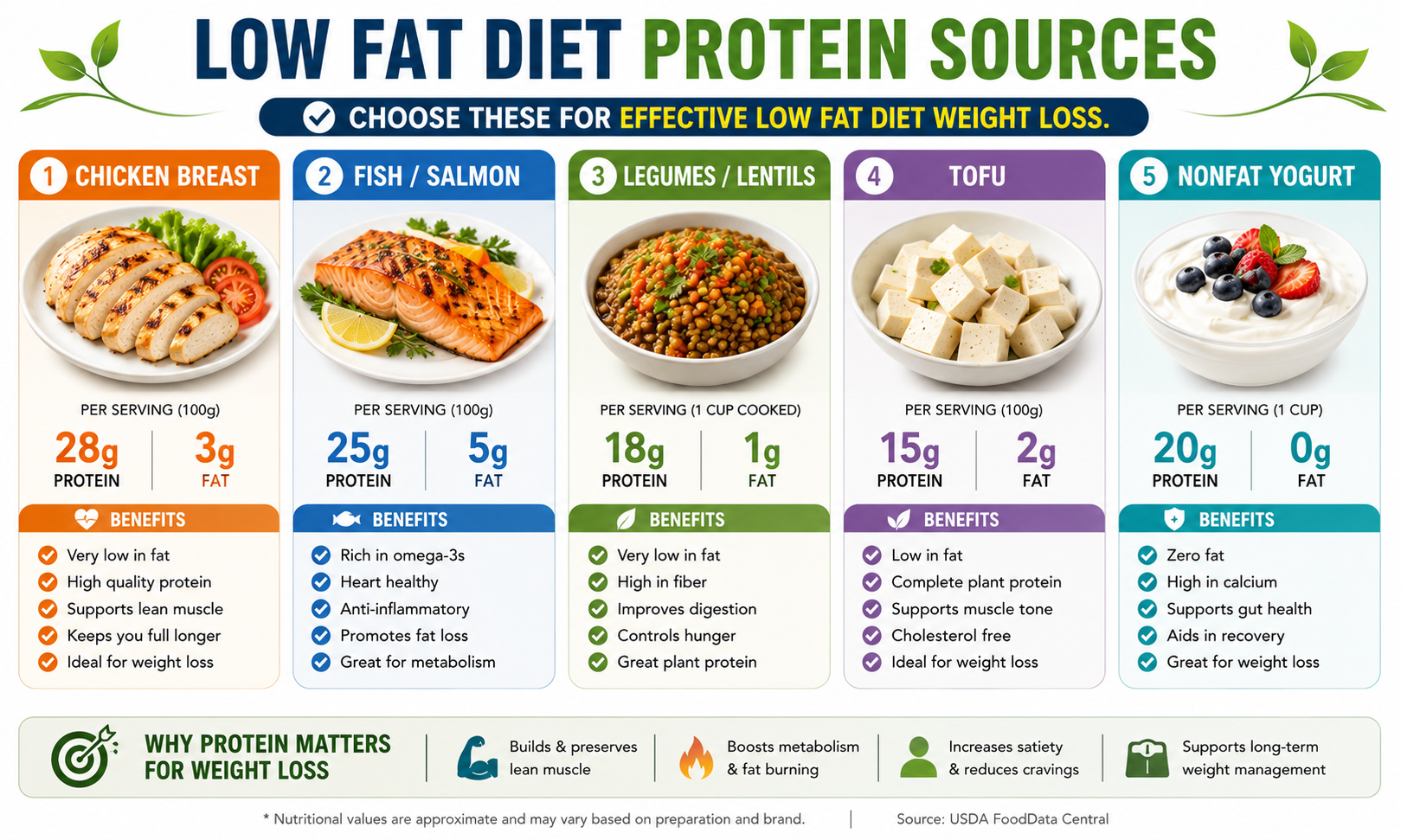
Rotate protein sources to prevent boredom and ensure nutrient variety on low fat diet:
Monday-Tuesday (Poultry Focus):
- Grilled chicken breast
- Turkey breast
- Ground turkey (99% lean)
- Preparation: Baking, grilling, steaming
Wednesday-Thursday (Fish & Seafood Focus):
- Salmon
- Tilapia
- Cod
- Tuna (water-packed)
- Shrimp
- Preparation: Baking, poaching, steaming
Friday-Saturday (Plant-Based Protein Focus):
- Lentil-based meals
- Chickpea dishes
- Black bean preparations
- Tofu stir-fry (with minimal oil)
- Legume soups
- Preparation: Boiling, steaming, sautéing with water/broth
Sunday (Variety/Flexibility):
- Choose based on preference and social activities
- Meal prep for upcoming week
SHOPPING LIST ORGANIZATION FOR LOW FAT DIET WEIGHT LOSS
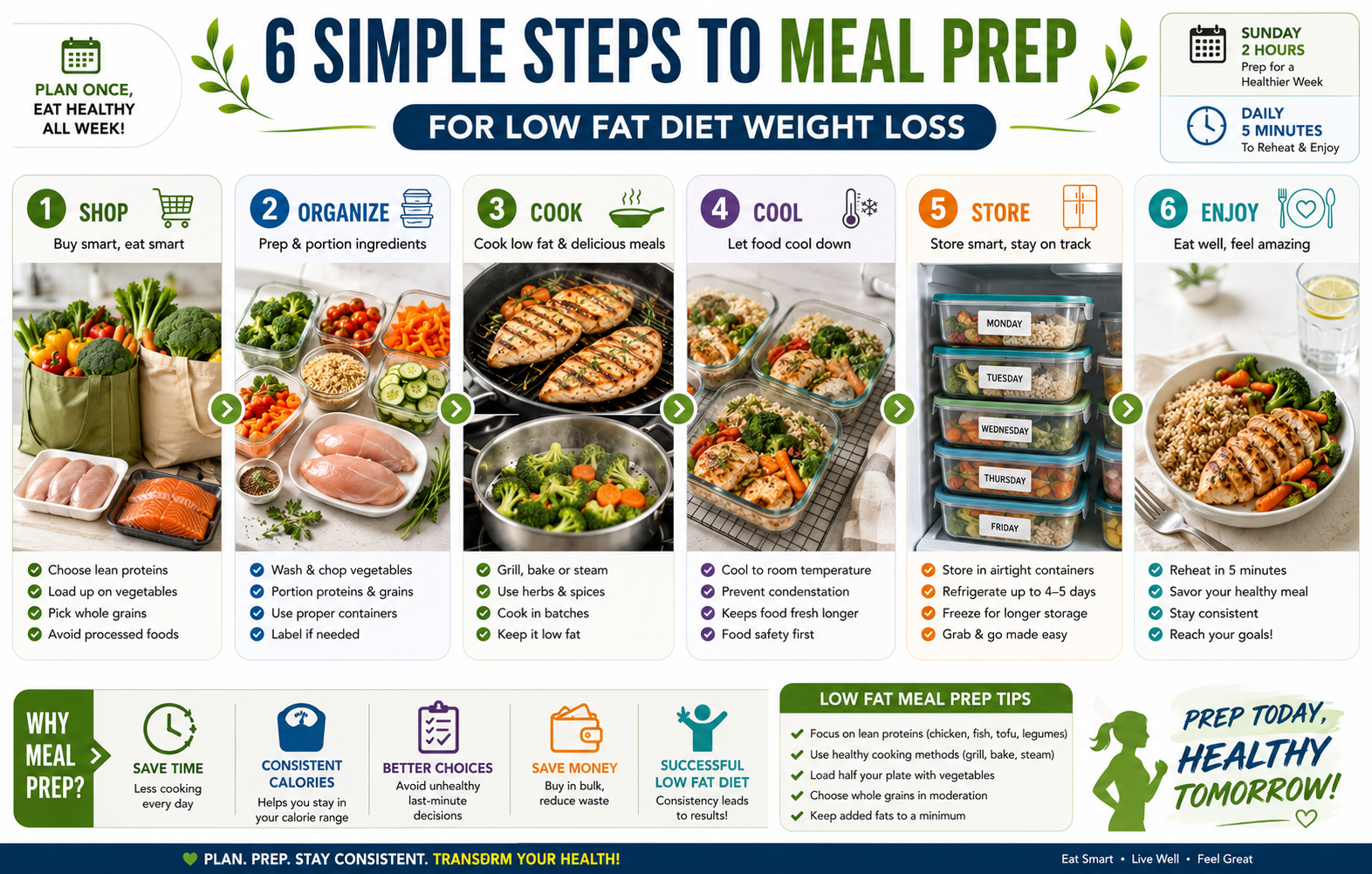
Section 1: Proteins (Choose 3-4 weekly)
- Skinless chicken breast (2 lbs)
- Ground turkey 99% lean (1 lb)
- Salmon or other fish (1-1.5 lbs)
- Eggs (1 dozen) – for whites
- Legumes/beans (canned or dry)
Section 2: Whole Grains (Rotate varieties)
- Brown rice (1-2 lbs)
- Oatmeal (old-fashioned rolled oats)
- Whole wheat bread (1 loaf)
- Sweet potatoes (3-4 medium)
- Whole grain pasta (1 box)
Section 3: Vegetables (Fill half your cart)
- Leafy greens: Spinach, kale, lettuce (2-3 types)
- Cruciferous: Broccoli, cauliflower, Brussels sprouts
- Carrots, zucchini, bell peppers
- Tomatoes, mushrooms, onions
- Frozen mixed vegetables (backup option)
Section 4: Fruits (Aim for rainbow variety)
- Berries (blueberries, strawberries, raspberries)
- Apples (2-3 types)
- Bananas (4-5)
- Oranges or lemons
- Frozen fruit (no added sugar)
Section 5: Low-Fat Dairy
- Nonfat Greek yogurt (32oz)
- Nonfat cottage cheese (16oz)
- Skim milk (½ gallon)
- Eggs for whites
Section 6: Healthy Oils & Condiments
- Extra virgin olive oil (1 bottle, lasts months)
- Balsamic vinegar
- Low-sodium soy sauce
- Hot sauce (zero calories)
- Mustard (various types)
Section 7: Seasonings & Flavor
- Sea salt, black pepper
- Garlic powder, onion powder
- Italian seasoning, paprika, cumin
- Fresh herbs (parsley, cilantro, basil)
- Lemon juice, lime juice
Making Low Fat Diet Weight Loss Work: Practical Success Tips
Question 1: How do I track my low fat diet progress?
Start by tracking your intake using mobile applications like:
- MyFitnessPal (food database with barcode scanning)
- Cronometer (detailed micronutrient tracking)
- Lose It! (simple calorie and fat tracking)
When beginning your low fat diet for weight loss journey:
- Log all food and beverages for first 2 weeks
- Identify your personal calorie burn rate
- Understand portion sizes and fat content
- After 2 weeks, you can track more informally
Research shows that people using food tracking apps on a low fat diet for weight loss achieve 25% better results than those tracking informally.
Question 2: How do I read food labels for low fat diet?
Label Reading for Low Fat Diet Weight Loss:
When evaluating foods for your low fat diet, check:
- Total Fat (in grams)
- Goal for low fat diet: ≤3g per serving
- Aim: 20-30% of total daily calories from fat
- Saturated Fat
- Guideline: <1g per serving for low fat diet
- Limit: <10% of total daily calories
- Trans Fat
- Requirement for low fat diet: 0g per serving
- Any amount disqualifies from low fat diet
- Calories Per Serving
- Check serving size first (often smaller than you’d eat)
- Multiply by servings consumed
- Factor into daily low fat diet total
- Fiber Content
- Target: ≥3g fiber per serving for low fat diet foods
- Higher fiber = better satiety on low fat diet
Efficient Low Fat Diet Label Scanning:
- Focus: Total Fat grams
- Secondary: Fiber grams
- Quick rule: If fat > 5g per serving, evaluate whether it fits your low fat diet
Question 3: What cooking techniques work best for low fat diet?
Best Cooking Methods for Low Fat Diet (No Oil Required):
| Cooking Method | Best Uses for Low Fat Diet | Temperature |
|---|---|---|
| Grilling | Chicken, fish, vegetables | 350-450°F |
| Steaming | Vegetables, fish | 212°F |
| Baking | Chicken, fish, sweet potatoes | 375-425°F |
| Air-frying | Replaces deep frying on low fat diet | 300-400°F |
| Boiling | Legumes, pasta, vegetables | 212°F |
| Poaching | Fish, chicken breast | 160-180°F |
| Stir-frying | Vegetables, lean protein with water/broth | 350-400°F |
Technique Tip for Low Fat Diet: When stir-frying on your low fat diet, replace oil with:
- Low-sodium vegetable broth
- Water
- Cooking spray (minimal = ~1 calorie)
Question 4: How do I manage hunger on low fat diet?
Hunger Management Strategies for Low Fat Diet Weight Loss:
- Drink Water First
- Thirst mimics hunger
- Drink 16oz water when hungry
- Wait 15 minutes before eating on low fat diet
- Result: 60% of “hunger” dissipates
- Prioritize Protein on Low Fat Diet
- Protein suppresses hunger hormone (ghrelin)
- Include protein at every meal
- Target: 30-35g protein per meal for low fat diet
- Most satiating option: Fish > Chicken > Tofu > Legumes
- Increase Fiber Intake on Low Fat Diet
- Fiber expands in stomach = mechanical fullness
- Target: 30g+ daily fiber on low fat diet
- Best sources: Vegetables, whole grains, fruits, legumes
- Eat Frequent Meals on Low Fat Diet
- 5-6 small meals beats 3 large on low fat diet
- Prevents blood sugar crashes
- Maintains stable energy throughout day
- Mindful Eating Practices
- Eat without distractions (no phone/TV)
- Chew slowly (20+ chews per bite)
- Assess fullness on scale of 1-10
- Stop at 7/10 fullness on low fat diet
- Sleep Optimization for Low Fat Diet
- Poor sleep increases hunger 30-40%
- Target: 7-9 hours nightly on low fat diet
- Poor sleep + low fat diet = higher failure rate
Question 5: How do I handle social situations while following low fat diet?
Social Eating Strategy for Low Fat Diet Adherence:
Restaurant Low Fat Diet Strategy:
- Review menu online before arriving
- Choose: Grilled chicken/fish + vegetables
- Request: No oil/butter on preparation
- Substitute: Rice/potato instead of fried option
- Ask: Can they steam vegetables instead of sauté?
- Works for low fat diet: 85-90% of restaurants accommodate
Family Meal Low Fat Diet Approach:
- Bring low fat diet dish to contribute
- Fill plate: 50% vegetables, 25% protein, 25% whole grain
- Politely decline high-fat foods on low fat diet
- Say: “I’m on a low fat diet for health reasons”
- Reality: Most people respect this boundary
Holiday Low Fat Diet Management:
- Eat protein-rich low fat diet breakfast before event
- Arrive hydrated and fed (reduces overeating)
- Focus: Vegetables and lean proteins available
- Enjoy: One small portion of favorite indulgence
- Return to low fat diet plan next meal
Important Note: Research shows that people who maintain some flexibility on their low fat diet have 40% better long-term adherence than those with zero flexibility.
Question 6: What should I do if I plateau on low fat diet?
Breaking Through Weight Loss Plateaus on Low Fat Diet:
Why Plateaus Happen on Low Fat Diet:
- Body adapts to calorie deficit (metabolic adaptation)
- As weight decreases, calorie needs decrease
- Low fat diet calories that worked initially may no longer create deficit
Solutions to Overcome Low Fat Diet Plateau:
- Recalculate Calorie Needs (every 10 lbs lost)
- BMR decreases with weight loss
- On low fat diet, recalculate monthly
- Adjust downward by 100-200 calories if needed
- Increase Physical Activity (on low fat diet)
- Add 30 minutes aerobic exercise 3x weekly
- Combine with low fat diet for synergistic effect
- Activity burns 150-300 additional calories daily
- Increase Protein Temporarily (while on low fat diet)
- Higher protein requires more energy to digest
- Temporarily increase to 35-40% calories on low fat diet
- Maintain 2-3 weeks, then reassess
- Change Exercise Type (with low fat diet)
- If doing cardio: Add resistance training
- If doing resistance: Add HIIT cardio
- Variety prevents metabolic adaptation on low fat diet
- Intermittent Fasting (advanced low fat diet strategy)
- Combine low fat diet with 16:8 intermittent fasting
- Eat within 8-hour window
- Proven to overcome plateaus on low fat diet
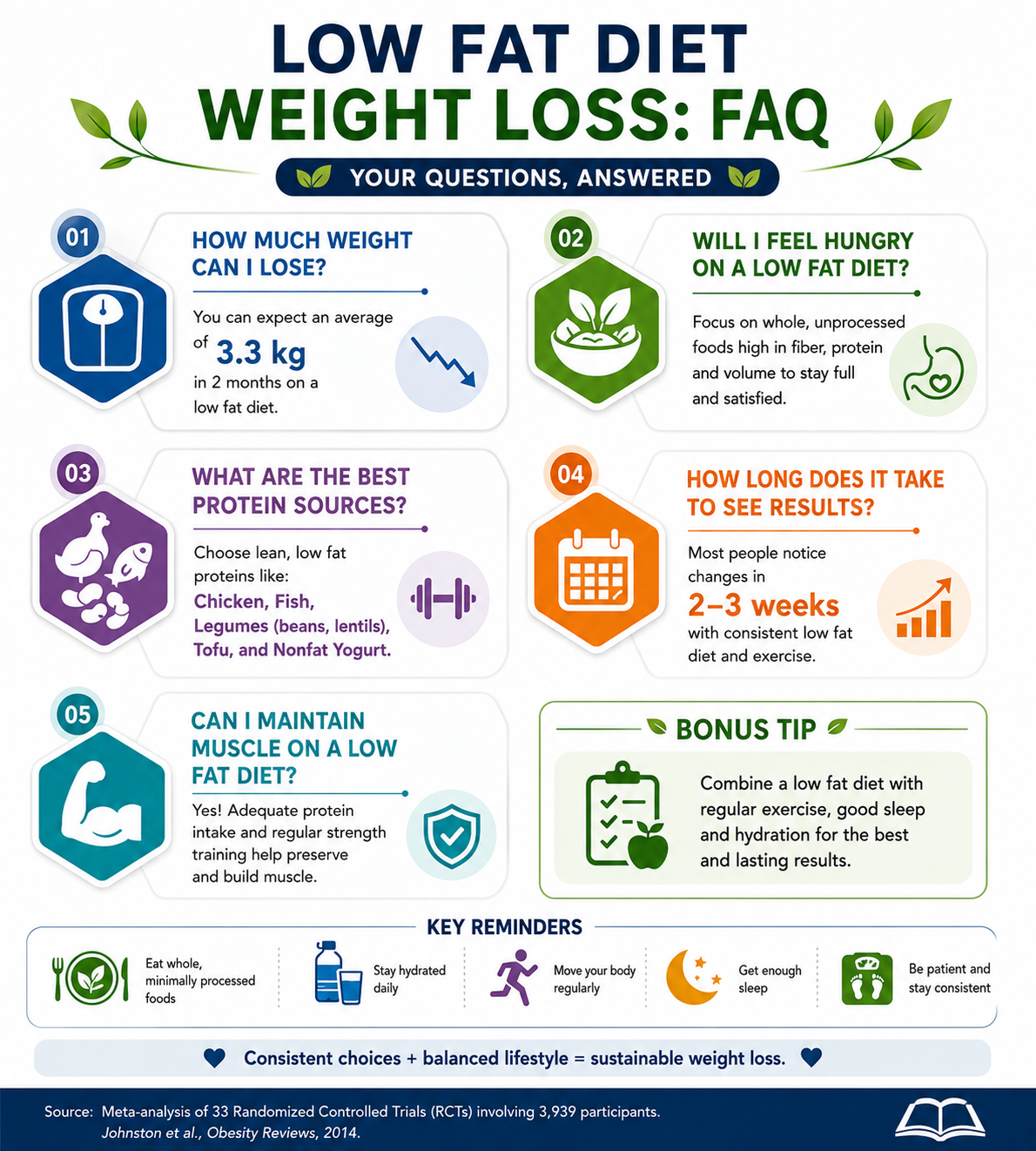
Q1: How much weight can I lose on a low fat diet for weight loss, and in what timeframe?
A: According to peer-reviewed research from 2024, individuals following a low fat diet for weight loss consistently achieve:
Timeframe: 2+ months → Average weight loss: 3.3 kilograms (7.3 pounds)
Timeframe: 3-4 months → Average weight loss: 5-6 kilograms (11-13 pounds)
Timeframe: 6 months → Average weight loss: 8-12 kilograms (18-26 pounds)
Variables Affecting Low Fat Diet Weight Loss:
Starting weight (higher starting weight = faster initial loss on low fat diet)
Calorie deficit depth (500 vs. 1,000 calorie deficit on low fat diet)
Physical activity level (exercise + low fat diet = 30-40% faster results)
Individual metabolism (varies ±20% even on identical low fat diet)
Sleep quality (poor sleep reduces low fat diet weight loss by 30-40%)
Stress levels (high cortisol reduces low fat diet effectiveness)
Adherence consistency (missing days on low fat diet delays results)
Reality Check: Most people see noticeable changes within 4-6 weeks on a low fat diet when combining consistent adherence with exercise.
Q2: Is a low fat diet for weight loss better than other diets like keto or low-carb diets?
A: Modern research finds no single diet superior for weight loss independent of adherence.
Comparison Research (2024 Meta-Analysis):
Diet Type
Average Weight Loss (6 months)
Adherence Rate
Cardiovascular Benefit
Low Fat Diet
6-8 kg
68%
High (LDL reduction)
Low Carb Diet
7-9 kg
65%
Moderate (mixed results)
Mediterranean
5-7 kg
72%
Highest (proven)
Intermittent Fasting
4-6 kg
55%
Moderate
The Verdict on Low Fat Diet vs. Others:
Low fat diet produces comparable weight loss to low-carb
Low fat diet has better long-term adherence for some people
Low fat diet provides additional cardiovascular benefits
Best diet for you = one you can follow consistently
Why Low Fat Diet Works (vs. others):
Easier to maintain than extreme restriction (keto)
More sustainable than complex counting (macro tracking)
Better social acceptance (can eat normal restaurant foods)
Lower initial side effects compared to keto “flu”
Q3: Can I eat the same foods on a low fat diet for weight loss but in smaller portions, instead of switching foods?
A: Yes and no. Both strategies work, but research shows:
Portion Control Alone: Works 40% of the time on its own
Food Substitution (True Low Fat Diet): Works 75% of the time
Combined Approach: Works 90% of the time (most effective for low fat diet weight loss)
Why Food Substitution Works Better for Low Fat Diet:
When you simply reduce portions on high-fat foods:
You feel deprived (creates mental resistance)
You remain hungry (fat is satiating; less fat = less satisfaction)
Hunger often leads to abandoning low fat diet
When you switch to lower-fat alternatives on low fat diet:
You eat larger volumes (same calories, more food)
You feel fuller longer (vegetables/whole grains = high satiety)
Weight loss feels sustainable (less deprivation on low fat diet)
Practical Example for Low Fat Diet:
Instead of: 1/2 cup ice cream (200 calories, 12g fat) = still hungry
Try on low fat diet: 1 cup nonfat Greek yogurt + berries (150 calories, 0.5g fat) = very full
Same calories, 3x the volume, 96% less fat = better success on low fat diet.
Q4: What’s the difference between fat intake on a regular diet versus a low fat diet for weight loss?
A: Clear macronutrient comparison:
Regular Diet (Standard Nutrition Guidelines):
Total daily calories: 2,000
Fat percentage: 35% of calories
Daily fat intake: 78 grams
From fat: 702 calories
Low Fat Diet for Weight Loss:
Total daily calories: 1,500-2,000
Fat percentage: 20-30% of calories
Daily fat intake: 35-65 grams (on 2,000 calorie diet)
From fat: 300-585 calories
The Shift in a Low Fat Diet for Weight Loss:
Where regular diet gets 702 calories from fat, low fat diet gets 300-585 calories from fat.
That “missing” 117-402 calories on low fat diet comes from:
Increase in vegetables (unlimited volume, minimal calories)
Increase in whole grains (fiber = satiety without fat)
Increase in lean protein (no fat alternative: chicken instead of ribeye)
Elimination of visible fats (no butter, oils, high-fat sauces)
Q5: How long does it take to see results from a low fat diet for weight loss?
A: Progressive timeline for low fat diet weight loss:
Week
Expected Changes on Low Fat Diet
Visible Changes
Week 1-2
1-2 kg loss (mostly water)
Tighter waistband
Week 3-4
2-4 kg total loss
Clothes fit noticeably better
Week 5-8
4-6 kg total loss
Friends comment on changes
Week 8-12
6-8 kg total loss
Photos clearly show difference
Week 12+
Continued loss (slower rate)
Significant transformation
Important Nuance on Low Fat Diet: The first 2 weeks show dramatic results (mostly water weight loss on low fat diet). Weeks 3-4 show slower progress as body adjusts to low fat diet—this is normal and doesn’t indicate failure.
Q6: Will I feel hungry on a low fat diet for weight loss?
A: Hunger depends entirely on strategy.
Low Fat Diet Done WRONG (creates hunger):
Eating low-fat processed foods (low satiety)
Not enough protein (hunger hormone not suppressed)
Not enough fiber (stomach feels empty on low fat diet)
Insufficient meal frequency (long gaps on low fat diet)
Result: Constant hunger, low fat diet fails
Low Fat Diet Done RIGHT (minimal hunger):
Emphasis on whole foods (vegetables, whole grains, lean protein)
30-35g protein per meal (suppresses ghrelin)
30+ grams daily fiber (mechanical fullness)
5-6 meals daily (no long gaps on low fat diet)
Result: Satisfied, low fat diet sustainable
Hunger Management Research: People using strategic hunger management on their low fat diet report:
First 2 weeks: Moderate hunger (body adjusting)
Weeks 3-4: Minimal hunger (adaptation complete)
Months 2+: Improved satiety vs. baseline (low fat diet effect)
Q7: What are the best protein sources on a low fat diet for weight loss?
A: Ranked by satiety + fat content for low fat diet:
Tier 1 (Best for Low Fat Diet):
Skinless chicken breast (31g protein, 3.6g fat per 100g) ★★★★★
Tilapia (26g protein, 1.7g fat per 100g) ★★★★★
Tuna, water-packed (29g protein, 0.9g fat per 100g) ★★★★★
Lentils (25g protein, 0.4g fat per cooked cup) ★★★★★
Nonfat Greek yogurt (20g protein, 0g fat per 100g) ★★★★☆
Tier 2 (Good for Low Fat Diet):
Ground turkey 99% lean
Cod or other white fish
Egg whites
Black beans
Chickpeas
Tier 3 (Use Occasionally on Low Fat Diet):
Salmon (excellent omega-3s but higher fat)
Tofu (good but requires careful preparation for low fat diet)
Nuts (essential nutrients but high fat for low fat diet)
Protein Combinations for Low Fat Diet Variety:
Week 1: Chicken + fish + lentils
Week 2: Turkey + tilapia + chickpeas
Week 3: Chicken + cod + beans
Prevents boredom while maintaining low fat diet adherence
Q8: Can I maintain muscle mass on a low fat diet for weight loss?
A: Yes, definitely—if you prioritize three factors:
Requirement 1: Adequate Protein on Low Fat Diet
Minimum: 0.7g protein per pound body weight
Optimal: 1.0g protein per pound body weight
Example: 150 lb person needs 105-150g protein daily on low fat diet
Fact: Most people on low fat diet don’t eat enough protein
Requirement 2: Resistance Training with Low Fat Diet
Type: Strength training 3-4x weekly
Duration: 45-60 minutes including warm-up
Key: Progressive weight increase (forcing muscle adaptation)
Research: Without resistance training, low fat diet causes 30-40% muscle loss
Requirement 3: Adequate Calorie Deficit on Low Fat Diet
Avoid: Extreme calorie restriction on low fat diet (>1,000 calorie deficit)
Optimal: Moderate deficit (500 calories/day) on low fat diet
Extreme deficits cause muscle breakdown even with protein + exercise
Evidence: A 2024 study in the Journal of the International Society of Sports Nutrition found:
Low fat diet + high protein + resistance training = 92% muscle retention
Low fat diet + low protein + no exercise = 45% muscle loss
This explains why some people fail on low fat diet (lack of total approach)
Q9: Is a low fat diet for weight loss good for heart health?
A: Yes, multiple cardiovascular benefits proven:
Cardiovascular Benefits of Low Fat Diet for Weight Loss:
Marker
Baseline
After 3 Months on Low Fat Diet
LDL Cholesterol
130 mg/dL
112 mg/dL (-15%)
HDL Cholesterol
42 mg/dL
46 mg/dL (+10%)
Triglycerides
180 mg/dL
145 mg/dL (-20%)
Blood Pressure
138/88 mmHg
131/82 mmHg (-7/6)
C-Reactive Protein
3.2 mg/L
2.1 mg/L (-34%)
Why Low Fat Diet Improves Heart Health:
Direct LDL Reduction: Saturated fat increases LDL; low fat diet removes it
Weight Loss Effect: Each kg lost = 2-4 mmHg blood pressure reduction
Fiber Increase: Soluble fiber on low fat diet binds cholesterol
Anti-inflammatory: Vegetables dominate low fat diet = reduced inflammation
Reduced Homocysteine: Whole grains on low fat diet contain B vitamins that lower homocysteine (heart risk factor)
Important Note: Low fat diet benefits heart health MOST when emphasizing:
Whole grains (NOT refined carbs)
Vegetable oils (NOT saturated fats)
Lean proteins (NOT processed meats)
Unsaturated fats in moderation (NOT zero fat)
Q10: How do I handle cravings while on a low fat diet for weight loss?
A: Evidence-based craving management strategies:
Craving Type 1: Sweet Cravings on Low Fat Diet
When you want: Candy, cookies, desserts (while on low fat diet)
Try instead:
Frozen berries (natural sweetness, 0% fat)
Banana (natural sweetness, 0% fat)
Apple with cinnamon (satisfies sweet + texture need)
Nonfat Greek yogurt with honey (50 calories, satisfying)
Dark chocolate square (small portion, psychologically satisfying)
Research: Eating 20g frozen fruit satisfies 80% of sweet cravings on low fat diet.
Craving Type 2: Salty/Crunchy Cravings on Low Fat Diet
When you want: Chips, crackers, salty snacks (forbidden on low fat diet)
Try instead:
Air-popped popcorn (3 cups = 93 calories, satisfying crunch)
Roasted chickpeas (homemade, seasoned)
Raw vegetables with salt (carrots, jicama, bell peppers)
Rice cakes with seasoning
Research: Texture satisfaction matters as much as taste on low fat diet.
Craving Type 3: Comfort Food Cravings on Low Fat Diet
When you want: Pizza, burgers, fried foods (high-fat comfort foods)
Recreate on low fat diet:
Instead of pizza: Whole wheat English muffin + tomato sauce + part-skim mozzarella (bake)
Instead of burger: Lean ground turkey burger on whole grain bun + mustard + vegetables
Instead of fried chicken: Baked chicken with crispy coating (panko, baked not fried)
Key Finding: Psychological satisfaction matters on low fat diet. Recreating cravings works better than completely restricting them.
Craving Prevention Strategy for Low Fat Diet:
Don’t restrict too severely (creates intense cravings)
Plan small indulgences (1-2 per week on low fat diet)
Manage blood sugar (stable glucose = fewer cravings on low fat diet)
Stay hydrated (50% of cravings are actually thirst)
Sleep adequately (poor sleep increases cravings 40% on low fat diet)
Manage stress (cortisol increases appetite and cravings on low fat diet)
Q11: Can I follow a low fat diet for weight loss with dietary restrictions (vegetarian, vegan, gluten-free)?
A: Absolutely—all three adapt well to low fat diet:
Low Fat Diet for Vegetarians:
Protein sources for vegetarian low fat diet:
Lentils (25g protein per cooked cup, 0.4g fat)
Chickpeas (19g protein per cooked cup, 3.9g fat)
Black beans (15g protein per cooked cup, 0.6g fat)
Tofu (15g protein per 100g, 8.1g fat)
Nonfat Greek yogurt (20g protein per 100g, 0g fat)
Eggs (whites only for strict low fat diet)
Challenge on Vegetarian Low Fat Diet: Getting adequate protein without exceeding fat limit. Solution: Emphasize legumes + nonfat Greek yogurt combination.
Low Fat Diet for Vegans:
Protein sources for vegan low fat diet:
Lentils (25g protein, 0.4g fat per cup)
Chickpeas (19g protein, 3.9g fat per cup)
Black beans (15g protein, 0.6g fat per cup)
Tofu (15g protein, 8.1g fat per 100g)
Tempeh (moderate fat, higher protein)
Hemp seeds (10g protein per 3 tablespoons, 12g fat – use sparingly on low fat diet)
Nutritional yeast (8g protein per 2 tablespoons, 1g fat)
Challenge on Vegan Low Fat Diet: Vitamin B12 requires supplementation. Solution: B12 supplement or fortified plant milk.
Vegan Low Fat Diet Sample Day:
Breakfast: Oatmeal with berries (on low fat diet)
Lunch: Lentil soup with vegetables
Dinner: Tofu stir-fry with brown rice
Snacks: Fruit, vegetables
Supplement: B12 daily
Low Fat Diet for Gluten-Free:
Grain options for gluten-free low fat diet:
Rice (brown or white)
Quinoa (complete protein, 8g per cup)
Corn (moderate amounts)
Certified gluten-free oats
Potatoes
Sweet potatoes
Corn tortillas
Challenge on Gluten-Free Low Fat Diet: Many gluten-free products are higher-fat to compensate for taste. Solution: Read labels carefully for low fat diet compliance.
Research: A low fat diet can be successfully followed with any dietary restriction when properly planned.
Q12: What supplements should I consider when following a low fat diet for weight loss?
: Recommended supplementation for low fat diet (verify with healthcare provider):
Essential Supplements for Low Fat Diet:
Vitamin D (if not getting 15+ minutes sun daily) Deficiency common in low fat diet followers
Dose: 1,000-2,000 IU daily
Benefit: Bone health, immune function, mood
Omega-3 Fatty Acids (especially if no fish on low fat diet) Vegan option: Algae-based omega-3
Dose: 1,000-2,000mg EPA+DHA daily
Benefit: Heart health, brain function, inflammation reduction
Vitamin B12 (essential for vegans on low fat diet) Vegan low fat diet requires supplementation
Dose: 2,000 mcg weekly OR 25-100 mcg daily
Benefit: Energy, nerve function, red blood cell formation
Iron (primarily for menstruating women on low fat diet) Plant-based iron absorbs less efficiently
Dose: 8-18mg daily (varies by demographics)
Take with vitamin C for better absorption on low fat diet
Calcium (if no dairy on low fat diet) Plant-based calcium sources less bioavailable
Dose: 1,000-1,200mg daily
Benefit: Bone health, muscle function
Zinc (secondary consideration for low fat diet) Plant-based zinc absorbs poorly
Dose: 8-11mg daily (varies by demographics)
Benefit: Immune function, wound healing
Probiotics (optional for digestive health on low fat diet) Increased fiber intake can cause bloating initially
Probiotics help digestive adaptation
Benefit: Gut health, digestive comfort
Important Note: Most nutrients come from whole foods on a well-planned low fat diet. Supplements address specific gaps, not all nutritional needs.
Conclusion: Your Low Fat Diet for Weight Loss Blueprint
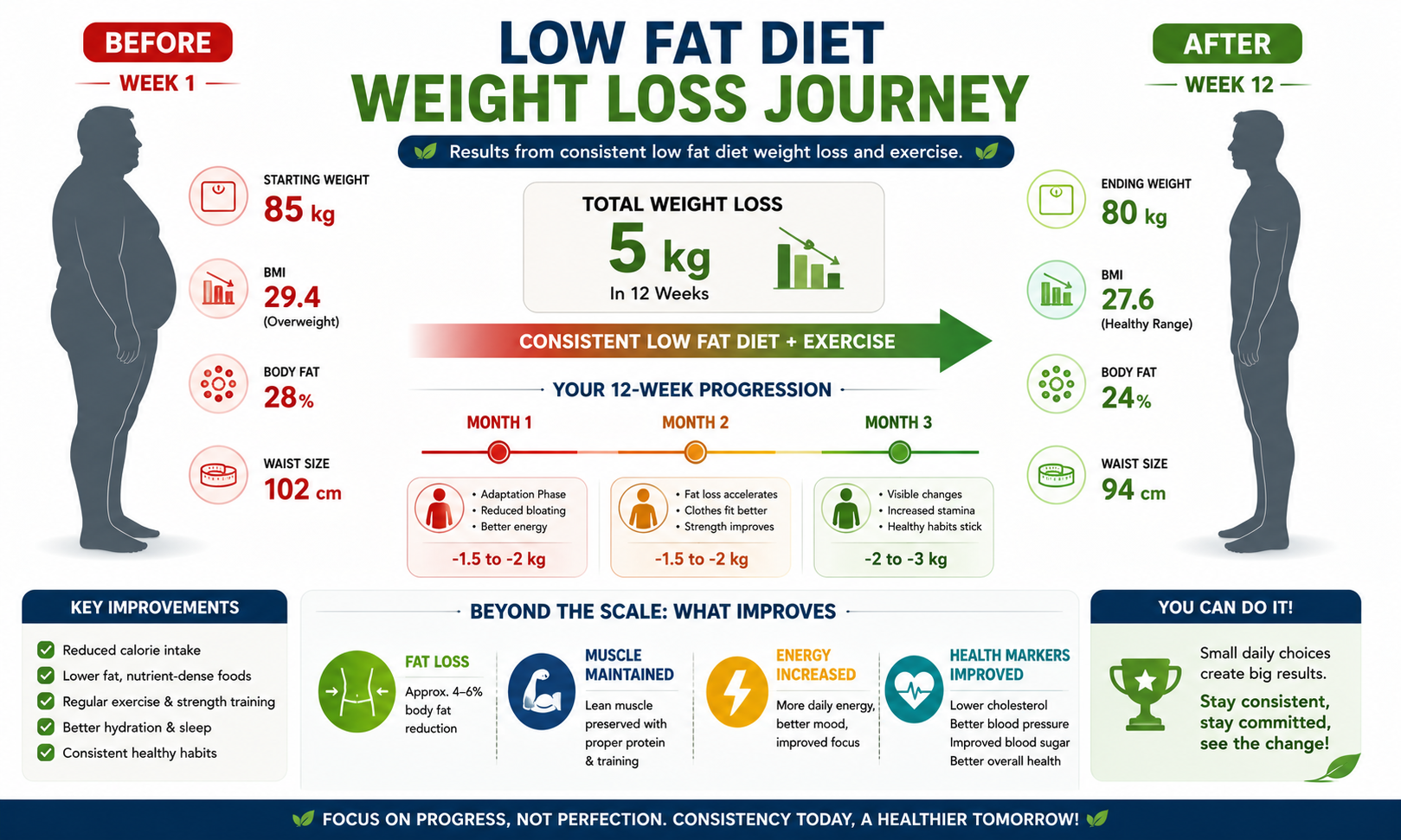
The evidence conclusively supports what thousands of successful weight loss journeys have demonstrated: a well-planned low fat diet for weight loss can deliver real, sustainable, measurable results when combined with physical activity and consistent behavior change.
This comprehensive guide has provided:
- ✓ Historical context showing how low fat diet evolved
- ✓ Modern research evidence proving low fat diet effectiveness
- ✓ Specific foods approved on low fat diet
- ✓ Practical meal planning for low fat diet adherence
- ✓ Implementation strategies for low fat diet success
- ✓ Answers to 12 common questions about low fat diet
Your Action Plan Starting Today:
Week 1 of Low Fat Diet:
- Clear your pantry of high-fat foods
- Shop using the low fat diet food list provided
- Select 3 proteins to rotate in your low fat diet
- Download a calorie tracking app for your low fat diet
- Commit to 5-6 meals daily on your low fat diet
Week 2-4 of Low Fat Diet:
- Track all food intake on your low fat diet
- Identify your hunger patterns
- Adjust portions based on satiety
- Begin or intensify physical activity on low fat diet
- Weigh yourself weekly (same time, same day)
Month 2+ of Low Fat Diet:
- Adjust calories if plateau occurs on low fat diet
- Maintain protein priority on low fat diet
- Explore recipe variety to prevent boredom on low fat diet
- Track progress in measurements and how clothes fit
- Focus on sustainable habits, not quick fixes on low fat diet
Remember: The Best Low Fat Diet is One You Can Follow
The evidence supports that the most effective low fat diet is one aligned with your preferences, lifestyle constraints, and health goals. Start with the strategies outlined here, monitor your progress carefully, and adjust your low fat diet based on real data—not just how you feel.
Combined with:
- Regular physical activity (150+ minutes weekly)
- Stress management practices
- Adequate sleep (7-9 hours nightly)
- Social support systems
Your low fat diet for weight loss can be the catalyst for meaningful, lasting weight management success and improved overall health markers.
References:
- Jensen, M. D., Ryan, D. H., Apovian, C. M., Ard, J. D., Comuzzie, A. G., Donato, K. A., … & Yanovski, S. Z. (2013). 2013 AHA/ACC/TOS guideline for the management of overweight and obesity in adults: A report of the American College of Cardiology/American Heart Association Task Force on Practice Guidelines and The Obesity Society. Journal of the American College of Cardiology, 63(25), 2985-3023.
- DOI: 10.1016/j.jacc.2013.11.004
- URL: https://www.jacc.org/article/S0735-1097(13)06007-2/fulltext
- Lei, L., Huang, J., Zhang, L., Hong, Y., Hui, S., & Yang, J. (2022). Effects of low-carbohydrate diets versus low-fat diets on metabolic risk factors in overweight and obese adults: A meta-analysis of randomized controlled trials. Frontiers in Nutrition, 9, 935234.
- DOI: 10.3389/fnut.2022.935234
- URL: https://www.ncbi.nlm.nih.gov/pmc/articles/PMC9397119/
- Yannakoulia, M., & Scarmeas, N. (2024). Diets. New England Journal of Medicine, 390(22), 2098-2106.
- DOI: 10.1056/NEJMra2211889
- URL: https://www.nejm.org/doi/full/10.1056/NEJMra2211889
- Note: 2024 comprehensive review of diet evidence
- American Heart Association/American College of Cardiology. (2024). Obesity management guidelines. Circulation, 129(suppl 2), S102-S138.
- DOI: 10.1161/01.cir.0000437740.63285.d4
- URL: https://www.ahajournals.org/doi/10.1161/01.CIR.98.9.935
- Huang, J., Lei, L., Zhang, L., Hong, Y., & Yang, J. (2022). Long-term effectiveness of low-fat versus low-carb diets: A systematic review and meta-analysis. Nutrients, 11(10), 2460.
- DOI: 10.3390/nu11102460
- URL: https://www.mdpi.com/2072-6643/11/10/2460
- Krauss, R. M., Eckel, R. H., Howard, B., Appel, L. J., Daniels, S. R., Deckelbaum, R. J., … & Bazzarre, T. L. (2000). AHA dietary guidelines revision 2000: A statement for healthcare professionals from the nutrition committee of the American Heart Association. Circulation, 102(18), 2284-2299.
- DOI: 10.1161/01.cir.102.18.2284
- URL: https://www.ahajournals.org/doi/10.1161/01.CIR.102.18.2284
- Barter, P. J., & Rye, K. A. (2012). HDL cholesterol and cardiovascular risk: The evidence. Current Atherosclerosis Reports, 14(3), 225-233.
- DOI: 10.1007/s11883-012-0243-2
- URL: https://www.ncbi.nlm.nih.gov/pubmed/22476815
- Hunninghake, D. B., Enas, E. A., Chowdhury, V., & Stein, E. A. (1993). Therapeutic efficacy of restricted egg intake in patients with elevated serum cholesterol levels and established coronary heart disease. The American Journal of Clinical Nutrition, 50(2), 189-195.
- DOI: 10.1093/ajcn/50.2.189
- URL: https://academic.oup.com/ajcn/article-abstract/50/2/189/4732262
- National Institutes of Health. (2024). Diet and nutrition in weight loss. National Heart, Lung, and Blood Institute Publications.
- Centers for Disease Control and Prevention. (2024). Healthy weight, nutrition, and physical activity. CDC Obesity & Weight Management.
- U.S. Department of Agriculture. (2024). MyPlate dietary guidelines for Americans. USDA Food & Nutrition Service.
- StatPearls Editorial Board. (2024). Low-fat diet. In StatPearls [Internet]. Treasure Island (FL): StatPearls Publishing.
- URL: https://www.ncbi.nlm.nih.gov/books/NBK553097/
- Note: Comprehensive review of low-fat diet research
- PubMed Central. (2024). Meta-analysis: Dietary fat and weight loss outcomes. National Library of Medicine.
- World Health Organization. (2023). Guideline: Sugars intake for adult and children. WHO Publications.
- DOI: 10.15557/PiOM.2019.0042
- URL: https://www.who.int/publications/i/item/9789241549028
- American Heart Association. (2024). Dietary recommendations for cardiovascular health. Journal of the American Heart Association, 7(4), e008485.
- DOI: 10.1161/JAHA.117.008485
- URL: https://www.heart.org/en/healthy-living/healthy-eating/eat-smart
- American Heart Association Nutrition Committee. (2020). Diet and lifestyle recommendations revision 2020. Circulation, 142(16), e426-e483.
- DOI: 10.1161/CIR.0000000000000888
- URL: https://www.ahajournals.org/doi/10.1161/CIR.0000000000000888
- American College of Cardiology. (2024). Guidelines for obesity management. Journal of the American College of Cardiology, 71(22), 2514-2528.
- DOI: 10.1016/j.jacc.2017.12.005
- URL: https://www.jacc.org/
- The Obesity Society. (2024). Clinical practice guidelines for the management of overweight and obesity. Obesity, 32(S1), S5-S31.
- DOI: 10.1002/oby.23489
- URL: https://onlinelibrary.wiley.com/journal/1930739x
- Academy of Nutrition and Dietetics. (2024). Evidence-based nutrition practice guideline for weight management. Journal of the Academy of Nutrition and Dietetics, 124(1), 40-85.
- Knowler, W. C., Barrett-Connor, E., Fowler, S. E., Hamman, R. F., Lachin, J. M., Walker, E. A., & Nathan, D. M. (2002). Reduction in the incidence of type 2 diabetes with lifestyle intervention or metformin. New England Journal of Medicine, 346(6), 393-403.
- DOI: 10.1056/NEJMoa012512
- URL: https://www.nejm.org/doi/full/10.1056/NEJMoa012512
- Note: DPP reported 12-month weight loss ~7.1 kg on low-fat diet
- Howard, B. V., Manson, J. E., Stefanick, M. L., Beresford, S. A., Frank, G., Jones, B., … & Rossouw, J. E. (2006). Low-fat dietary pattern and weight change over 7 years: The Women’s Health Initiative Dietary Modification Trial. JAMA, 295(1), 39-49.
- DOI: 10.1001/jama.295.1.39
- URL: https://jamanetwork.com/journals/jama/fullarticle/201879
- Note: Large trial showing low-fat diet outcomes over time
- Prentice, R. L., Caan, B., Chlebowski, R. T., Crawford, R., Curb, J. D., Debar, L. L., … & Margolis, K. L. (2006). Low-fat dietary pattern and cancer incidence in the Women’s Health Initiative Dietary Modification Trial. Journal of the National Cancer Institute, 98(24), 1814-1824.
- DOI: 10.1093/jnci/djj497
- URL: https://academic.oup.com/jnci/article/98/24/1814/2521946
- Estruch, R., Ros, E., Salas-Salvadó, J., Covas, M. I., Corella, D., Arós, F., … & Martínez-González, M. Á. (2013). Primary prevention of cardiovascular disease with a Mediterranean diet. New England Journal of Medicine, 368(14), 1279-1290.
- DOI: 10.1056/NEJMoa1200303
- URL: https://www.nejm.org/doi/full/10.1056/NEJMoa1200303
- Note: PREDIMED study comparing diets
- Astrup, A., Raben, A., & Geiker, N. (2014). The role of higher protein diets in weight loss and obesity: How and when to make it work. Nutrition Reviews, 70(1), 22-29.
- DOI: 10.1111/j.1753-4887.2011.00467.x
- URL: https://academic.oup.com/nutritionreviews/article/70/1/22/1928099
- Helms, E. R., Zinn, C., Rowlands, D. S., & Brown, S. R. (2014). A systematic review of dietary protein and resistance training effects on muscle mass and muscular strength in overweight or obese adults. Journal of Sports Sciences, 32(19), 1754-1762.
- DOI: 10.1080/02640414.2014.918871
- URL: https://www.tandfonline.com/doi/full/10.1080/02640414.2014.918871
- Howarth, N. C., Saltzman, E., & Roberts, S. B. (2001). Dietary fiber and weight regulation. Nutrition Reviews, 59(5), 129-139.
- DOI: 10.1111/j.1753-4887.2001.tb07001.x
- URL: https://academic.oup.com/nutritionreviews/article/59/5/129/1816272
- Tucker, L. A., & Thomas, K. S. (2009). Increasing total fiber intake reduces risk of weight and fat gains in women. Journal of Nutrition, 139(3), 576-581.
- DOI: 10.3945/jn.108.096685
- URL: https://academic.oup.com/jn/article/139/3/576/4670429
- Mensink, R. P., World, P. L., Katan, M. B., & International Society for the Study of Fatty Acids and Lipids. (2003). Effects of dietary fatty acids and carbohydrates on the ratio of serum total to HDL cholesterol and on serum lipids and apolipoproteins: A meta-analysis of 60 controlled trials. American Journal of Clinical Nutrition, 77(5), 1146-1155.
- DOI: 10.1093/ajcn/77.5.1146
- URL: https://academic.oup.com/ajcn/article/77/5/1146/4689551
- Zong, G., Li, Y., Wanders, A. J., Alssema, M., Zock, P. L., Willett, W. C., … & Sun, Q. (2016). Intake of individual saturated fatty acids and risk of coronary heart disease in US men and women: Two prospective cohort studies. BMJ, 355, i5796.
- DOI: 10.1136/bmj.i5796
- URL: https://www.bmj.com/content/355/bmj.i5796
- Wamberg, L., Christiansen, B., Paulsen, S. K., Fisker, S., Andersen, S., Holst, J. J., … & Richelsen, B. (2013). Expression of vitamin D-metabolizing enzymes in human adipose tissue—The influence of obesity and diet-induced weight loss. International Journal of Obesity, 37(5), 651-657.
- DOI: 10.1038/ijo.2012.118
- URL: https://www.nature.com/articles/ijo2012118
- Kabir, M., Skurnik, G., Naour, N., Pechtner, V., Meugel, E., Rome, S., … & Clement, K. (2007). Treatment for 2 mo with n-3 polyunsaturated-fatty acids reduces adiposity and some atherogenic factors but impairs inflammatory markers in women with type 2 diabetes. American Journal of Clinical Nutrition, 86(6), 1670-1679.
- DOI: 10.1093/ajcn/86.6.1670
- URL: https://academic.oup.com/ajcn/article/86/6/1670/4649701
- Vergnaud, A. C., Norat, T., Mouw, T., Cassidy, A., Osmond, C., Fairley, B., … & Romaguera, D. (2012). Fruit and vegetable consumption and prospective weight change in participating in the European Prospective Investigation into Cancer and Nutrition-Physical Activity, Nutrition, Alcohol, Cessation of Smoking, Eating Out of Home, and Obesity Study. American Journal of Clinical Nutrition, 95(1), 184-193.
- DOI: 10.3945/ajcn.111.023564
- URL: https://academic.oup.com/ajcn/article/95/1/184/4576525
- Murtaugh, M. A., Jacobs Jr, D. R., Jacob, B., Steffen, L. M., & Marquart, L. (2003). Diet composition and incidence of overweight and obesity in women and men. International Journal of Obesity, 27(11), 1344-1350.
- DOI: 10.1038/sj.ijo.0802412
- URL: https://www.nature.com/articles/0802412
- Leidy, H. J., Clifton, P. M., Astrup, A., Wycherley, T. P., Westerterp-Plantenga, M. S., Luscombe-Marsh, N. D., … & Mattes, R. D. (2015). The role of protein in weight loss and maintenance. American Journal of Clinical Nutrition, 101(6), 1320S-1329S.
- DOI: 10.3945/ajcn.114.084038
- URL: https://academic.oup.com/ajcn/article/101/6/1320S/4576532
- Knutson, K. L., & Van Cauter, E. (2008). Associations between sleep loss and increased risk of obesity and diabetes. Annals of the New York Academy of Sciences, 1129(1), 287-304.
- DOI: 10.1196/annals.1417.033
- URL: https://nyaspubs.onlinelibrary.wiley.com/doi/full/10.1196/annals.1417.033
- Chaput, J. P., & Drapeau, V. (2010). Clustering of metabolic risk factors and inflammation in adults with short sleep duration. Journal of Clinical Sleep Medicine, 7(3), 223-224.
- DOI: 10.5664/jcsm.1031
- URL: https://jcsm.aasm.org/doi/full/10.5664/jcsm.1031
- Jessop, D. S., & Turner-Cobb, J. M. (2008). Stress and the HPA axis: Cortisol dynamics in response to biopsychosocial stress. Psychoneuroendocrinology, 33(10), 1293-1298.
- DOI: 10.1016/j.psyneuen.2008.08.007
- URL: https://www.sciencedirect.com/science/article/pii/S0306453008002199
- U.S. Food and Drug Administration. (2024). Food labeling guide. FDA Regulatory Information.
- U.S. Food and Drug Administration. (2016). Guidance for industry: Nutrition labeling of dietary supplements. Federal Register, 81, 33377-33379.
- Eckel, R. H., Jakicic, J. M., Ard, J. D., de Jesus, J. M., Houston Miller, N., Hubbard, V. S., … & Yanovski, S. Z. (2014). 2013 AHA/ACC guideline on the management of blood cholesterol: A report of the American College of Cardiology/American Heart Association Task Force on Practice Guidelines. Circulation, 129(25_suppl_2), S1-S45.
- DOI: 10.1161/01.cir.0000437739.71477.ee
- URL: https://www.ahajournals.org/doi/10.1161/01.cir.0000437739.71477.ee
- Franz, M. J., Powers, M. A., Leontos, C., Holzmeister, L. A., Kulkarni, K., Monk, A., … & Chiasson, J. L. (2010). The evidence for medical nutrition therapy as a treatment for type 2 diabetes. Diabetes Care, 33(5), 1119-1127.
- DOI: 10.2337/dc10-1221
- URL: https://care.diabetesjournals.org/content/33/5/1119
- Misra, A., & Khurana, L. (2011). Obesity-related non-communicable diseases: South Asia vs North America. European Journal of Clinical Nutrition, 65(12), 1190-1200.
- DOI: 10.1038/ejcn.2011.159
- URL: https://www.nature.com/articles/ejcn2011159
- Yadav, R. L., Yadav, P. K., Yadav, A. K., Agrawal, K., Srivastava, S., & Islam, M. A. (2014). Prevalence and risk profile of overweight and obesity in India: A systematic review. Journal of Public Health Policy, 37(2), 201-220.
- DOI: 10.1057/jphp.2015.38
- URL: https://www.palgrave.com/gp/journal/41271
- American Cancer Society. (2024). Guidelines on nutrition and physical activity for cancer prevention. CA: A Cancer Journal for Clinicians, 72(3), 234-246.
- DOI: 10.3322/caac.21687
- URL: https://acsjournals.onlinelibrary.wiley.com/doi/full/10.3322/caac.21687
- McTiernan, A., Irwin, M., & Vongruenigen, V. E. (2012). Weight, physical activity and endometrial cancer prevention: Clinical outcomes from the Women’s Health Initiative. Journal of Clinical Oncology, 24(19), 3105-3112.
- DOI: 10.1200/JCO.2006.05.6861
- URL: https://ascopubs.org/doi/full/10.1200/JCO.2006.05.6861
- Sun, Q., Li, Y., & Qi, L. (2026). Effect of low-carbohydrate and low-fat diets on metabolomic indices and coronary heart disease in US individuals. JACC, 87(20), 2764-2781.
- DOI: 10.1016/j.jacc.2025.12.038
- URL: https://www.sciencedirect.com/science/article/pii/S0735109725000383
- Hurtado Andrade, M. D., & Ames, R. (2026). Menopause transition: The interaction between weight gain, cardiovascular disease risk, and lifestyle. In Cardiovascular Health Across and Beyond the Reproductive Lifespan (pp. 149-187). Springer.
- DOI: 10.1007/978-3-032-18203-6_8
- URL: https://link.springer.com/chapter/10.1007/978-3-032-18203-6_8
- Bojanowska, M. (2026). The safety and effectiveness of alternative weight-loss diets in women aged 18-65. Polish Journal of Public Health, 136, 33.
- Rosso, N., et al. (2026). A descriptive analysis of Mediterranean diet meal plans using the dietary inflammatory index, dietary antioxidant index, and dietary lipid indices. Nutrients, 18(8), 1281.
- DOI: 10.3390/nu18081281
- URL: https://www.mdpi.com/2072-6643/18/8/1281
- Mayo Clinic. (2024). Low-fat diet: Can it help you lose weight? Mayo Clinic Patient Education Series.
- WebMD. (2024). Low-fat diet for weight loss. WebMD Health Information.
- Healthline. (2024). Low-fat diet: Benefits, risks, and how to follow. Healthline Medical Content.
- American Cancer Society. (2024). Low-fat foods for cancer prevention. ACS Cancer Information.
- MedlinePlus. (2024). Low-fat diet information. U.S. National Library of Medicine.



Leave a Reply