


What is a low carb diet for weight loss?
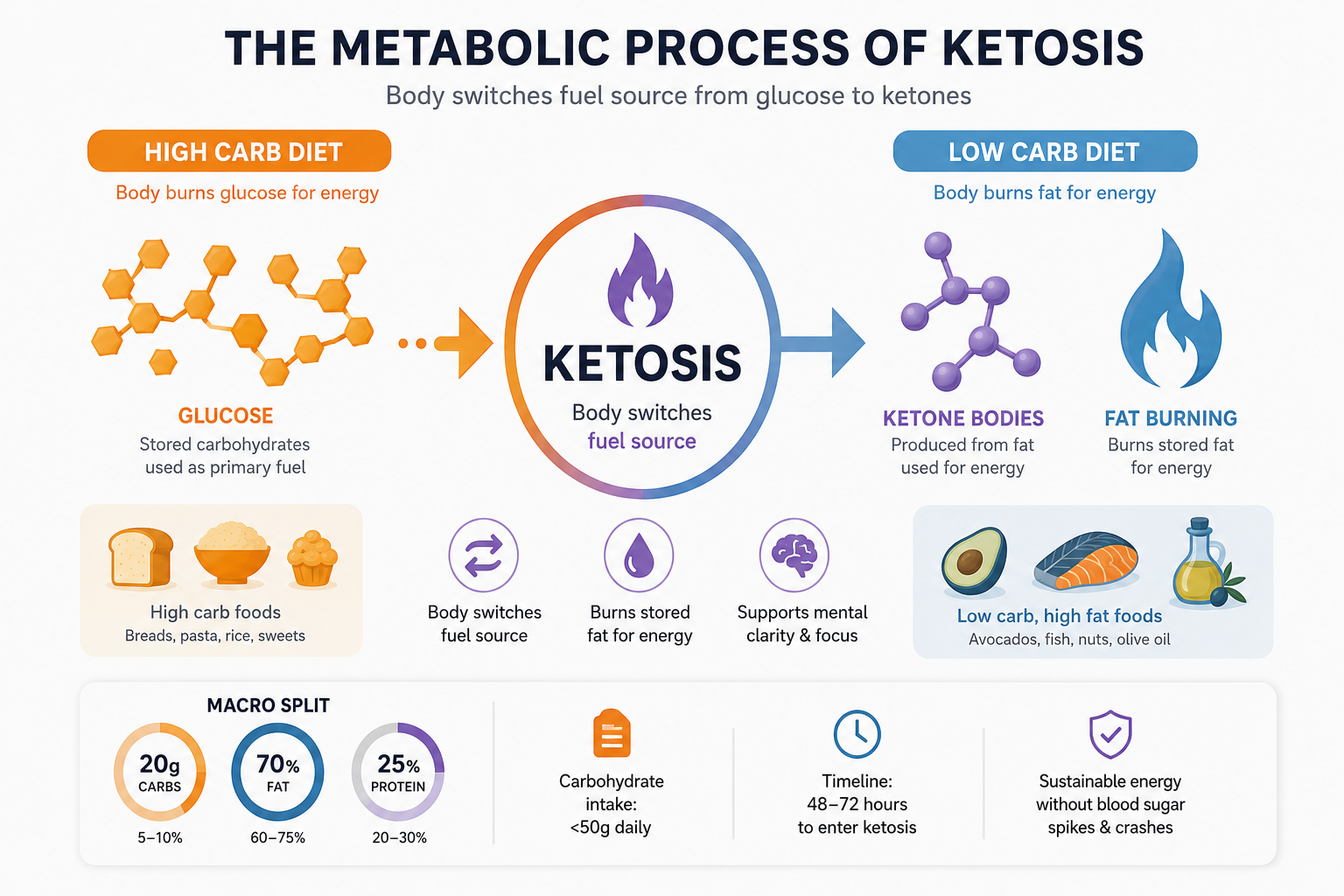
A low carb diet is an eating plan that restricts daily carbohydrate intake to 20-130 grams, shifting your body’s metabolism from burning carbohydrates to burning stored fat for energy—a metabolic state called ketosis. Research shows that low carb diets produce 2.6-2.7 kg more weight loss than traditional low-fat diets within the first 3-4 months, with additional benefits for blood sugar control and cardiovascular risk markers.
Quick Stats:
- Weight Loss Rate: 5-7 kg in 8 weeks for obese individuals
- Metabolic Shift: Ketosis begins after 2-3 days of carb restriction
- Sustained Results: 7.5-7.9 kg average reduction for obese participants after 7+ months
- Best For: Type 2 diabetes management, insulin resistance, and rapid initial weight loss
The Science Behind Low Carb Diet for Weight Loss
Understanding how a low carb diet triggers weight loss is fundamental to your success. When you reduce carbohydrate intake dramatically, your body experiences a metabolic transformation that affects multiple systems simultaneously.
Your body primarily relies on glucose—converted from carbohydrates—for energy. When carb intake drops below 50 grams daily, your liver depletes stored glycogen within 24-48 hours. This triggers a process where the body mobilizes fat stores, converting them into ketone bodies for fuel. This metabolic state, known as ketosis, is what makes low carb diets so effective for rapid weight loss.
The mechanism works through several pathways: First, increased protein consumption (a key component of low carb diets) elevates satiety hormones like peptide YY and glucagon-like peptide 1, naturally reducing appetite. Second, fat and protein require more energy to digest than carbohydrates—a phenomenon called the thermic effect of food—boosting your metabolic rate by 10-15%. Third, reduced insulin levels decrease hunger signals and improve metabolic flexibility, allowing your body to access stored fat more efficiently.
Clinical evidence supports this approach. A 2022 CSIRO study tracking 511 adults showed that overweight participants lost an average of 4.5 kg (5.7% of body weight) over 218 days following a low carb protocol. Obese participants achieved even greater results, losing 7.9 kg (7.5% of body weight). These weren’t temporary water-weight losses—participants maintained significantly reduced HbA1c levels, indicating improved long-term glucose control.
Key Science Points:
- Carb restriction induces ketosis within 48-72 hours
- Low carb dieters experience 30% greater satiety than low-fat dieters
- Protein thermic effect burns an additional 100-150 calories daily
- Insulin levels drop by 50%, reducing fat storage signals
Which Carbs to Avoid on a Low Carb Diet
Success on a low carb diet depends entirely on identifying and eliminating high-carb foods. This section provides the exact foods undermining your weight loss goals and explains why they spike blood sugar and halt fat burning.
Primary Carbs to Avoid
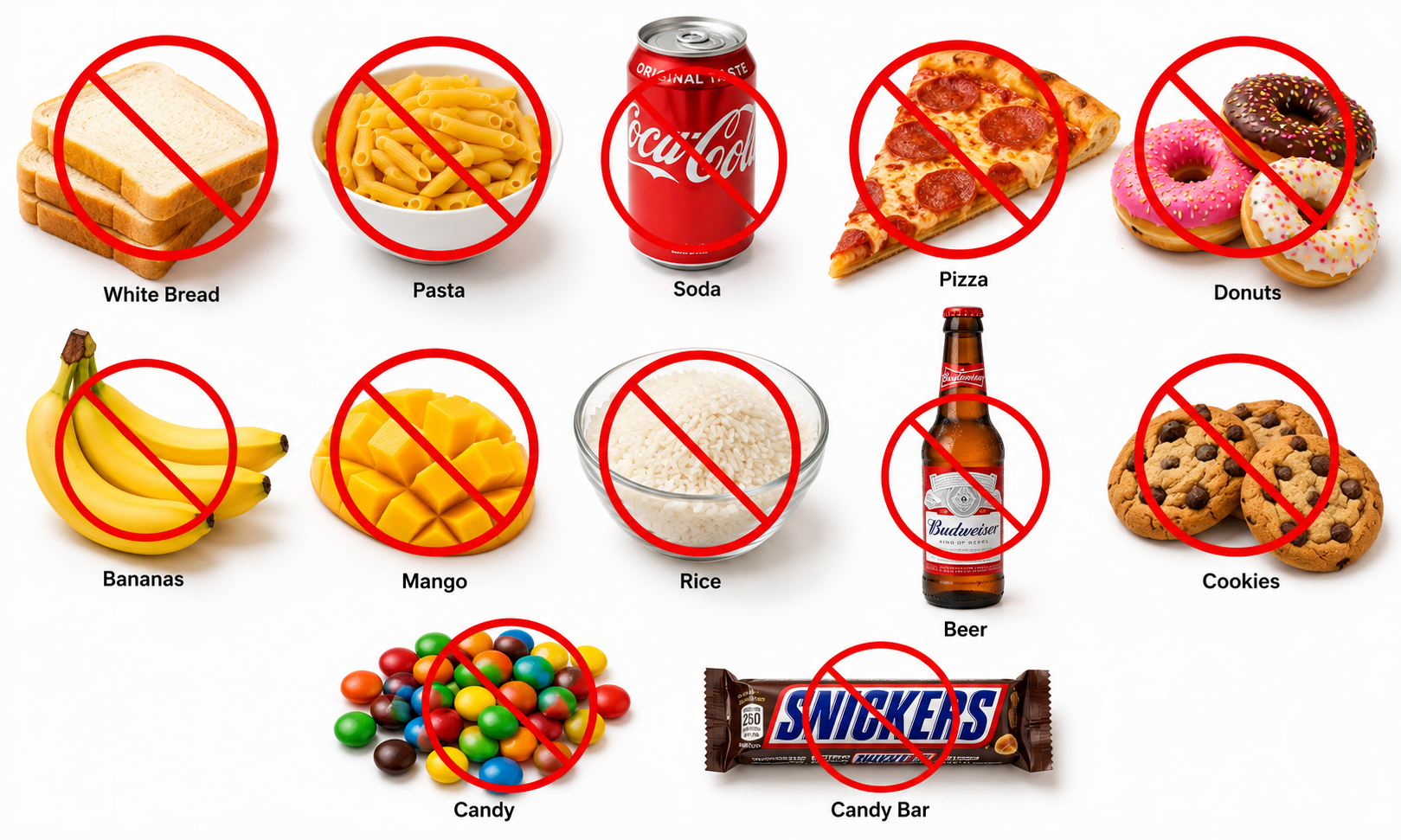
1. Refined Grains (50-60g carbs per serving)
- White bread, pasta, rice, and refined cereal contain 40-50g net carbs per serving
- These rapidly spike blood glucose, triggering insulin surges that halt fat burning
- Whole grain versions offer only marginally better carb profiles
- Substitute: Cauliflower rice, zucchini noodles, or low-carb bread (<3g net carbs per slice)
2. Sugar & Sweetened Foods (10-47g carbs per serving)
- One 12-oz soda contains 39g carbs—entirely from sugar
- Flavored yogurt (247g) packs 47g carbs, equivalent to dessert
- Candy, cookies, cake, and brownies immediately spike blood sugar
- Substitute: Stevia, monk fruit, or erythritol-sweetened alternatives
3. Starchy Vegetables (15-25g carbs per serving)
- Potatoes (26g per 100g), corn (17g per 100g), and peas (21g per cup)
- Even “healthy” sweet potatoes contain 20g carbs per 100g
- Substitute: Above-ground vegetables—broccoli, cauliflower, spinach, kale, bell peppers (<5g per serving)
4. Fruits—Especially Tropical Varieties (15-30g carbs per serving)
- Bananas (27g per fruit), mangoes (35g per fruit), grapes (17g per cup)
- Even berries contain 7-12g per cup—only acceptable in small portions
- Dried fruits are extremely concentrated (66g carbs per cup of raisins)
- Substitute: Avocados (3g carbs), berries in moderation, or non-starchy vegetables
5. Beans & Legumes (20-41g carbs per cup)
- Black beans (41g), chickpeas (35g), lentils (40g) per cooked cup
- While fiber-rich, the net carb impact interferes with ketosis
- Substitute: Low-carb vegetables for volume and nutrients
6. Beverages to Eliminate
- Beer: 12g carbs per 12-oz can
- Sugary soft drinks: 39g carbs per can
- Fruit juice: 26g carbs per 8-oz glass
- Sweetened coffee/tea drinks: 15-35g carbs per serving
- Substitute: Water, black coffee, herbal tea, or zero-calorie carbonated beverages
7. Hidden Culprits
- Ketchup (4g carbs per tablespoon due to added sugar)
- Barbecue sauce (8-10g per 2 tablespoons)
- Many “diet” products (they replace fat with sugar)
- Gluten-free baked goods (often higher carb than regular versions)
Practical Low Carb Diet Meal Examples

Breakfast (3-8g Net Carbs)
Spinach & Cheese Omelet
- 3 large eggs (1.8g carbs)
- 2 cups fresh spinach (1.4g carbs)
- ½ cup shredded cheddar cheese (0.4g carbs)
- 1 tbsp butter (0g carbs)
- Salt, pepper, optional hot sauce
Prep: Heat butter in skillet over medium-high. Add spinach, sauté until wilted. Whisk eggs with salt/pepper, pour over spinach. Add cheese when nearly set. Fold and serve.
Smoked Salmon & Avocado Plate
- 4 oz smoked salmon (0g carbs)
- ½ avocado, sliced (1.5g carbs)
- 2 tbsp cream cheese (0.8g carbs)
- Cucumber slices (1g per cup)
- Olive oil drizzle (0g carbs)
Assemble components on plate. This meal provides omega-3s, satisfying fats, and complete satiety for 5+ hours.
Lunch (5-12g Net Carbs)
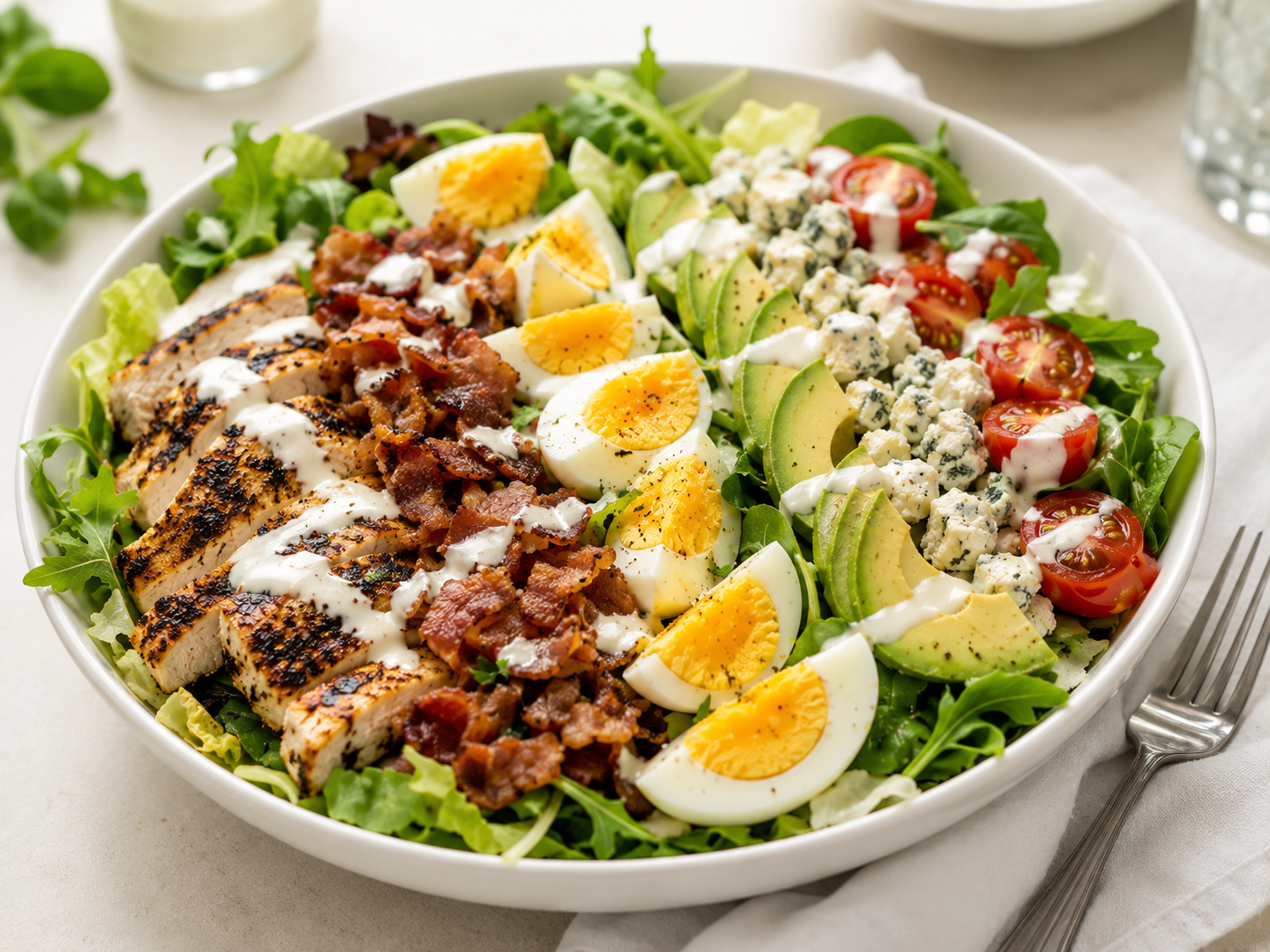
Cobb Salad with Blackened Chicken
- 6 oz blackened chicken breast (0g carbs)
- 2 cups mixed greens (2g carbs)
- 2 tbsp blue cheese crumbles (0.5g carbs)
- ¼ avocado (0.75g carbs)
- 2 strips bacon, crumbled (0.5g carbs)
- 1 hard-boiled egg, chopped (0.6g carbs)
- 2 tbsp ranch dressing (1g carbs)
- Cherry tomatoes, 5 pieces (2.5g carbs)
Total: ~8g net carbs. This meal delivers complete proteins, healthy fats, and nutrients supporting sustained fat loss.
Bunless Cheeseburger Plate
- 6 oz grass-fed ground beef (0g carbs)
- 2 slices cheddar cheese (0.4g carbs)
- 2 tbsp mayo (0.2g carbs)
- Lettuce wrap (0.5g carbs)
- Pickle spears (1g carbs)
- Side of coleslaw with mayo dressing (3g carbs)
Total: ~5g net carbs. High protein content ensures stable blood sugar and prolonged satiety.
Dinner (4-10g Net Carbs)
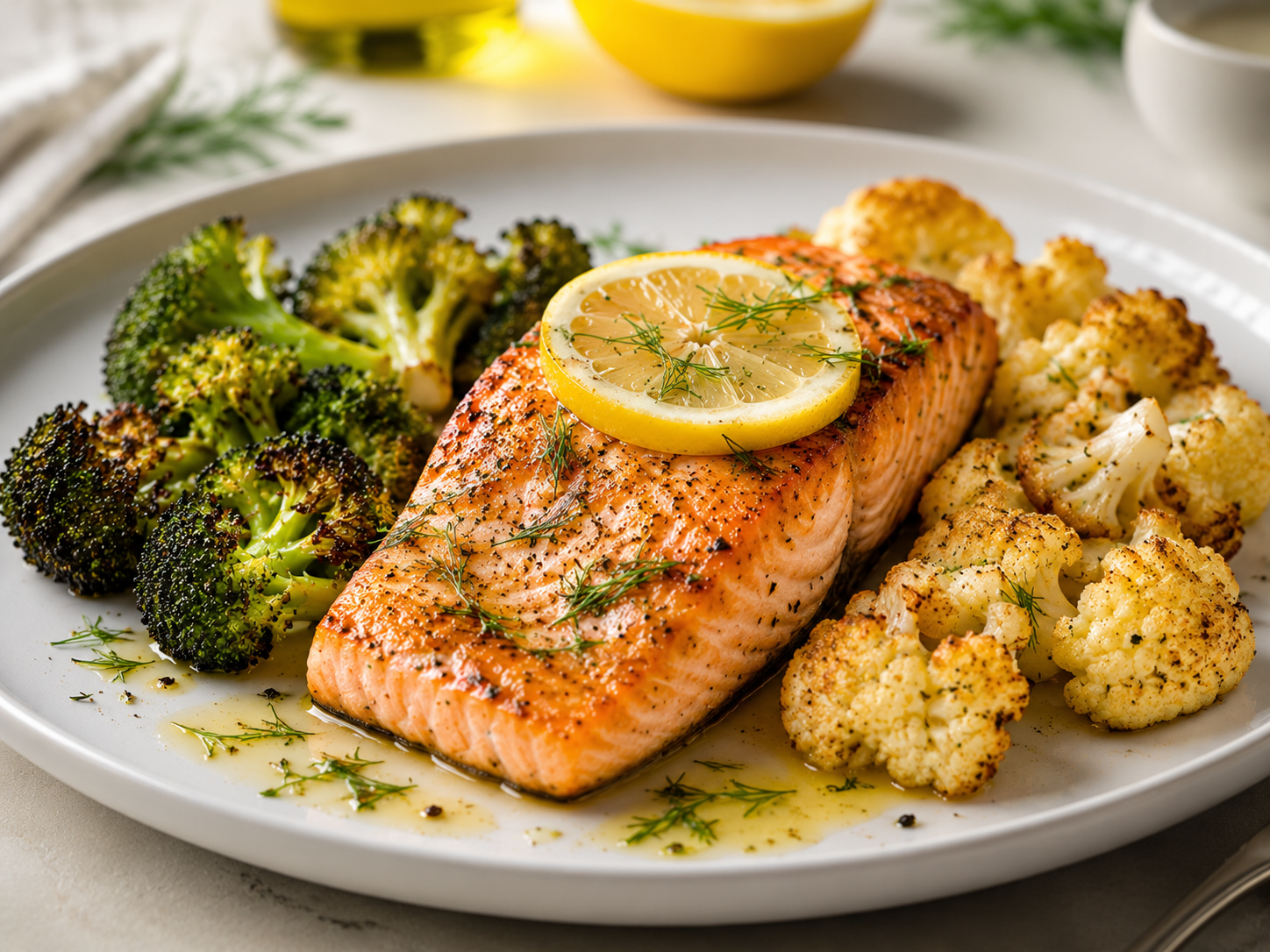
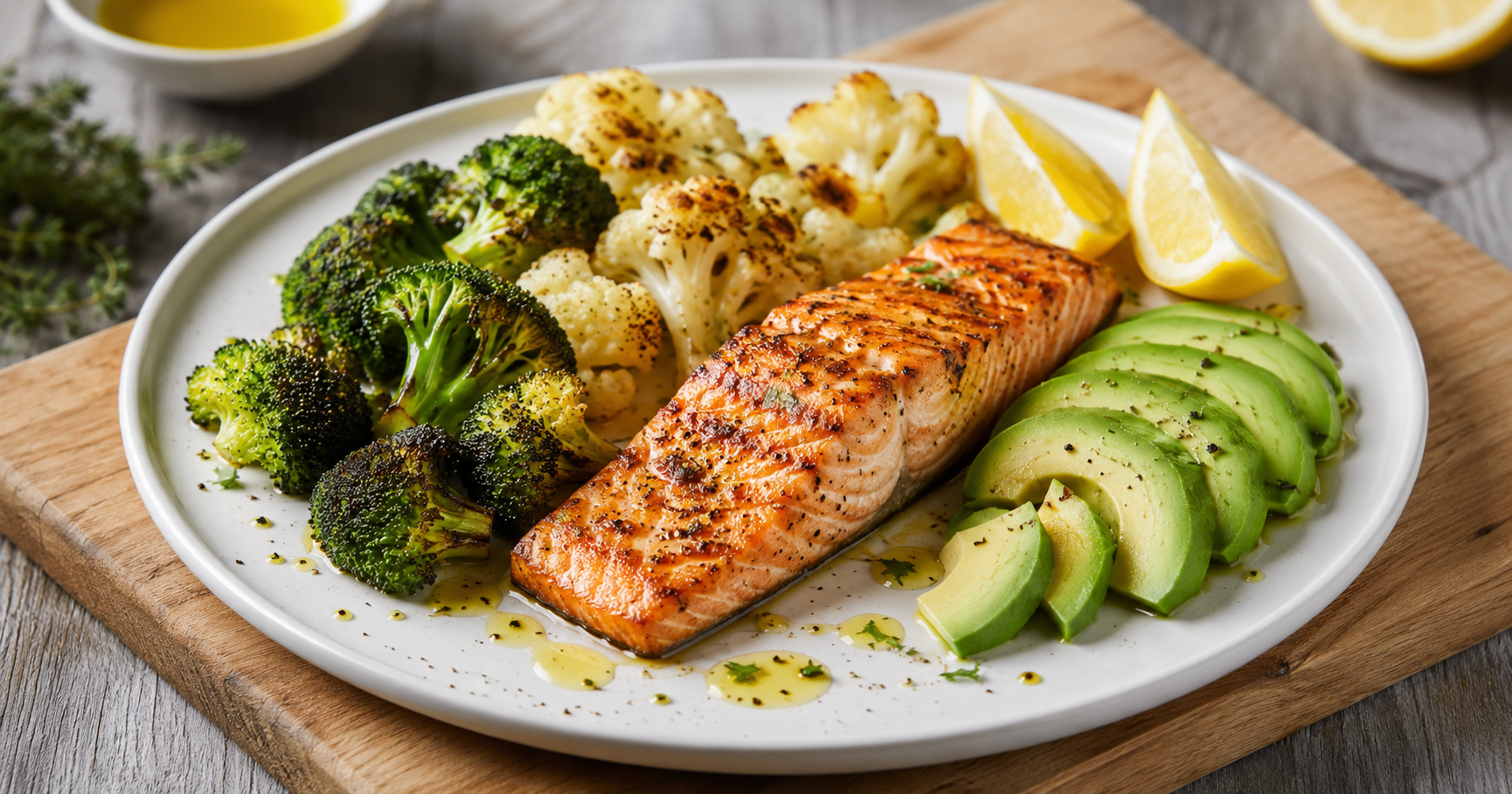
Lemon Butter Salmon with Roasted Vegetables
- 6 oz wild-caught salmon (0g carbs)
- 2 tbsp butter with fresh lemon juice (0.5g carbs)
- 1 cup broccoli florets (6g carbs)
- ½ cup cauliflower (2.5g carbs)
- 1 tbsp olive oil for roasting (0g carbs)
- Garlic, salt, pepper
Roast vegetables at 400°F for 15 minutes. Pan-sear salmon 4 minutes per side. Drizzle with lemon butter.
Zucchini Noodle Bolognese
- 2 cups spiralized zucchini (4g carbs)
- 4 oz grass-fed ground beef (0g carbs)
- ½ cup tomato sauce, sugar-free (3g carbs)
- ¼ cup heavy cream (1g carbs)
- 2 tbsp parmesan cheese (0.2g carbs)
- Garlic, Italian seasoning
Brown beef with garlic. Add tomato sauce and cream. Toss with zucchini noodles. This pasta alternative delivers the comfort-food experience with minimal carb impact.
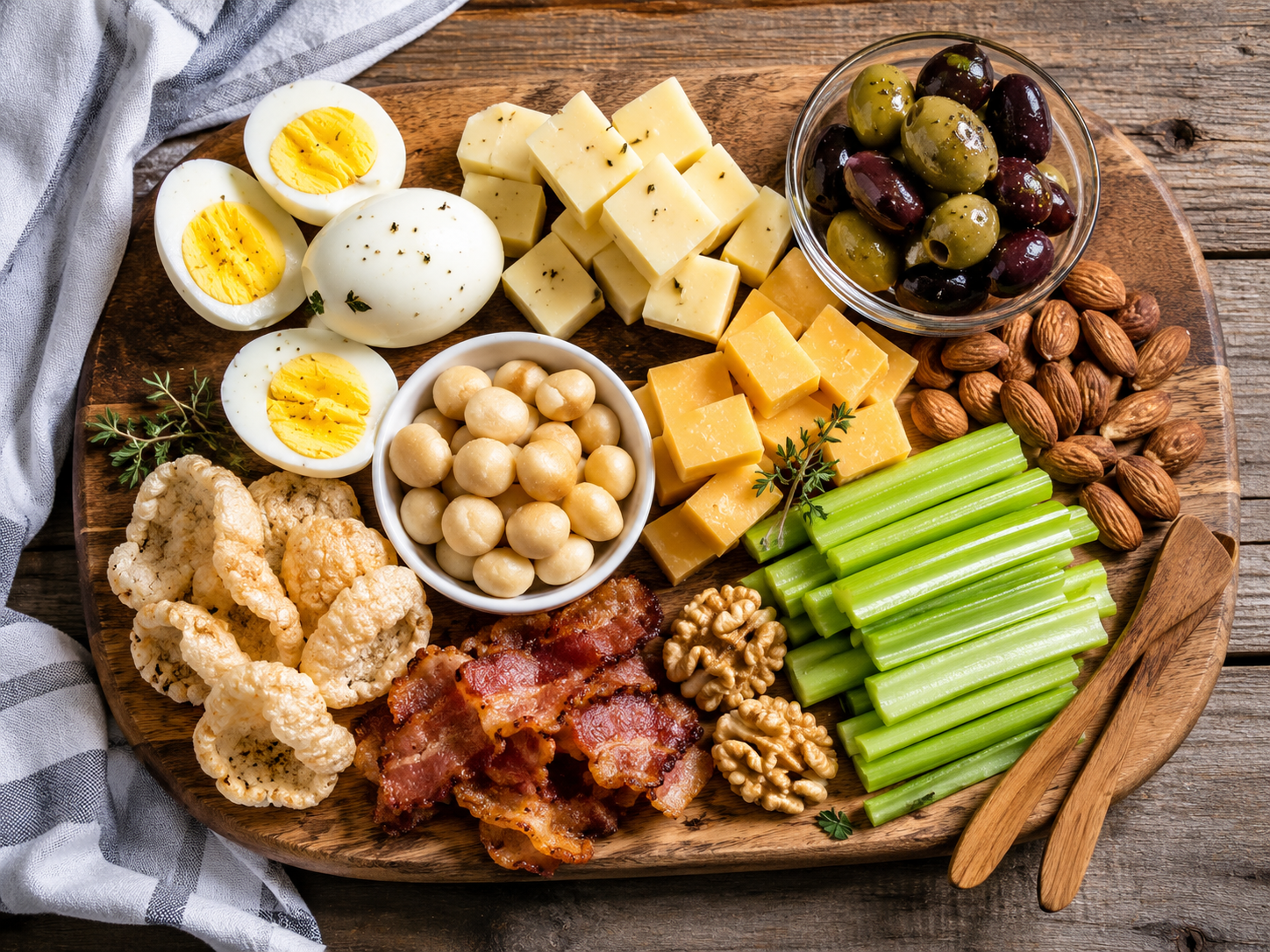
Snacks (0-5g Net Carbs)
- Hard-boiled eggs with salt
- String cheese or cheese cubes
- Olives (5 pieces = 1.5g carbs)
- Almonds, 1 oz (3g carbs)
- Macadamia nuts, 1 oz (3.5g carbs)
- Pork rinds (0g carbs)
- Celery with almond butter (2g carbs per serving)
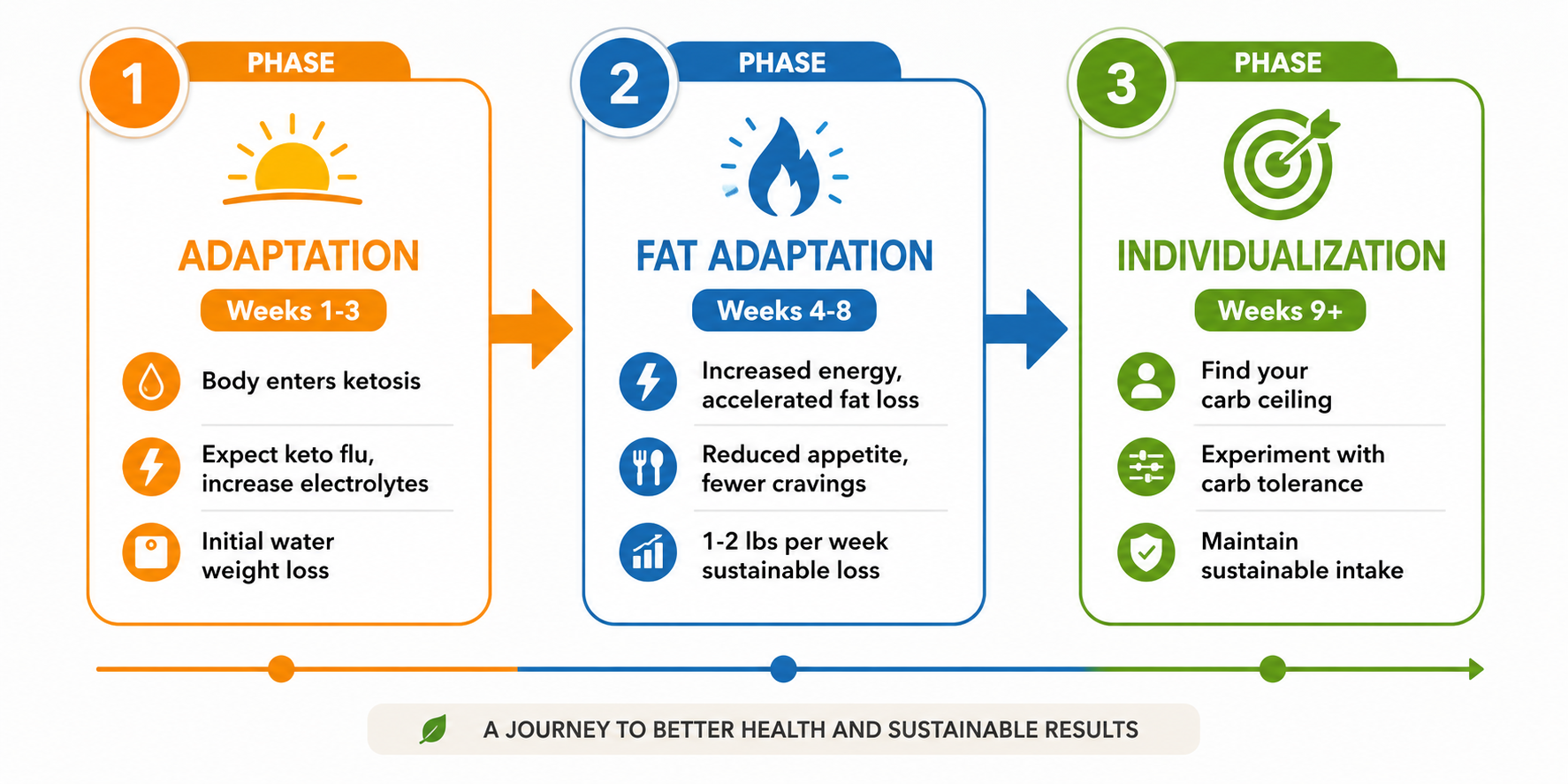
Sustainable Approach to Low Carb Dieting
The difference between temporary weight loss and permanent transformation lies in sustainability. Here’s how to build a low carb lifestyle you can maintain beyond the initial 8-12 weeks.
Phase 1: Adaptation (Weeks 1-3)
Your body requires a transition period. Expect the “keto flu”—fatigue, headaches, irritability—lasting 3-7 days. Combat this by:
- Increasing salt intake (sodium excretes with water loss)
- Consuming adequate electrolytes: potassium, magnesium, calcium
- Staying hydrated (drink ½ your body weight in ounces daily)
- Eating until satisfied—don’t restrict calories during adaptation
Phase 2: Fat Adaptation (Weeks 4-8)
Once ketosis establishes, your body becomes “fat-adapted,” efficiently burning stored fat for energy. During this phase:
- Hunger naturally decreases as ghrelin (hunger hormone) normalizes
- Energy levels improve dramatically
- Carb cravings diminish
- Weight loss accelerates—expect 1-2 lbs per week
Action: Use this window to establish sustainable meal patterns. Identify 5-6 favorite low-carb meals you genuinely enjoy. Meal prep on Sundays to eliminate decision fatigue.
Phase 3: Individualization (Weeks 9+)
Everyone’s carb tolerance differs. Some individuals maintain ketosis at 50g carbs daily; others require <20g. Determine your personal carb threshold through experimentation:
- After 8 weeks, gradually increase carbs by 5g daily
- Track weight and appetite changes
- Identify your “carb ceiling”—the highest intake maintaining weight loss
Sustainability Strategies
1. Food Variety Within Boundaries Rotating proteins and vegetables prevents boredom. Stock your kitchen with:
- Proteins: Grass-fed beef, wild salmon, pastured eggs, organic chicken, pork, lamb
- Vegetables: Spinach, kale, broccoli, cauliflower, zucchini, bell peppers, asparagus, mushrooms
- Healthy Fats: Avocado oil, olive oil, coconut oil, butter, ghee, macadamia nuts
- Seasonings: Garlic, herbs, lemon juice (transform identical base ingredients)
2. Social Flexibility Without Derailment Restaurant meals and social events need not sabotage progress:
- Strategy: Order protein + non-starchy vegetables, request sauce on the side
- At parties: Focus on cheese, cured meats, vegetable platters
- One meal disruption rarely causes weight regain if you resume low-carb eating immediately
3. Metric Beyond the Scale Weight fluctuates daily due to water retention, hormones, and digestion. Track:
- Weekly average weight (weigh daily, record averages)
- Clothing fit and photos every 4 weeks
- Strength improvements and workout performance
- Energy levels and sleep quality
- Blood markers: fasting glucose, insulin levels, lipid panels
Regional Considerations & Variations:
USA: Low-carb products are widely available (Atkins bread, Lily chocolate). Focus on whole foods to avoid ultra-processed alternatives. Cost varies significantly by region; Midwest typically offers better beef prices.
UK & Australia: Reduce reliance on low-carb specialty products due to cost. Emphasize eggs, local vegetables, and grass-fed meats. Both regions offer excellent seafood—leverage this advantage.
Canada: Winter months require planning to maintain vegetable variety. Focus on storage vegetables (cauliflower, broccoli, Brussels sprouts) and frozen options (same nutritional value as fresh).
Sustainable Weight Loss Results: What to Expect
Months 1-3: Expect 1-2 lbs weekly. Initial losses include water weight (1-4 lbs within first week). This isn’t permanent, but provides psychological momentum.
Months 3-6: Weight loss moderates to 0.5-1 lb weekly as your body adapts. This is genuine fat loss and indicates sustainable progress.
Months 6+: Weight loss plateaus are normal. This doesn’t signal failure—your body is finding a new equilibrium. Increase activity or consider a brief caloric deficit to breakthrough.
Long-term Maintenance: Most participants maintain 70-80% of weight loss achieved during the initial 6 months. Success depends on continuing reduced carbohydrate intake (even if less strict than initial protocol).
Question 1: How much weight can I lose on a low carb diet in 8 weeks?
Answer: Most individuals lose 5-7 kg (11-15 lbs) in 8 weeks on a low carb diet when following a consistent carbohydrate restriction protocol. For obese participants in clinical studies, average weight loss reached 7.9 kg (17.4 lbs) after 7+ months.
Here’s what to expect:
Weeks 1-2: 1-4 lbs (primarily water weight from glycogen depletion—normal and expected)
Weeks 2-8: 1-2 lbs per week of genuine fat loss
Months 2-3+: Weight loss may moderate to 0.5-1 lb weekly as your body adapts
The rate varies significantly based on:
Starting weight (higher initial body weight = faster initial loss)
Metabolism and insulin sensitivity
Adherence to carb limits
Activity level and exercise
Age and hormonal factors
Key Point: Initial rapid weight loss (water weight) provides psychological momentum, but sustainable fat loss averages 1-2 lbs per week during the first 3 months.
Question 2: What carbohydrates should I avoid on a low carb diet?
Answer: Successfully losing weight on a low carb diet requires eliminating these high-carb foods:
Refined Grains (40-50g carbs per serving)
White bread, pasta, rice, refined cereals
Substitute: Cauliflower rice, zucchini noodles, low-carb bread
Sugary Foods & Drinks (10-47g carbs per serving)
Soda (39g per 12-oz can), flavored yogurt (47g per cup), candy, cookies
Substitute: Stevia, monk fruit, erythritol sweeteners
Starchy Vegetables (15-25g carbs per serving)
Potatoes (26g per 100g), corn (17g per ear), peas (21g per cup)
Substitute: Broccoli, cauliflower, spinach, kale (<5g per serving)
Tropical Fruits (15-30g carbs per serving)
Bananas (27g each), mangoes (35g each), grapes (17g per cup)
Substitute: Avocados (3g), berries in moderation
Legumes (20-41g carbs per cooked cup)
Black beans (41g), lentils (40g), chickpeas (35g)
Substitute: Non-starchy vegetables for volume
High-Carb Beverages
Beer (12g per can), juice (26g per glass), sugary soft drinks (39g per can)
Substitute: Water, black coffee, herbal tea, zero-calorie beverages
Focus Instead On:
Proteins: Eggs, fish, grass-fed beef, poultry
Non-starchy vegetables: Spinach, broccoli, cauliflower, zucchini
Healthy fats: Avocados, olive oil, butter, nuts
Question 3: Is a low carb diet safe for long-term use?
Answer: Yes, low carb diets are safe and effective for 6+ months and beyond, supported by multiple clinical trials including a 2022 CSIRO study tracking 511 adults. Safety considerations for long-term adherence:
Essential Precautions:
Micronutrient Adequacy – Include diverse non-starchy vegetables to obtain iron, B vitamins, potassium, magnesium, and calcium
Electrolyte Balance – Particularly during weeks 1-4, ensure adequate sodium, potassium, and magnesium to prevent keto flu symptoms
Fiber Intake – Vegetables provide the 25-30g daily fiber recommended for digestive health
Medical Monitoring – Get baseline and periodic blood work to monitor lipid panels, glucose, and kidney function
Special Populations Requiring Medical Oversight:
Individuals with Type 2 Diabetes (medication may require adjustment as blood sugar improves)
Those with kidney disease (higher protein intake needs monitoring)
People with severe cardiovascular disease
Pregnant or nursing women
Long-Term Reality: Most individuals successfully transition to a maintenance approach at higher carb tolerance levels (50-100g daily) after initial weight loss without weight regain, provided they maintain reduced carbohydrate intake compared to pre-diet consumption.
Question 4: How quickly does the body enter ketosis?
Answer: The body typically enters ketosis within 48-72 hours of restricting carbohydrate intake to below 50 grams daily.
Timeline:
Hours 0-24: Liver glycogen begins depleting as carb intake drops
Hours 24-48: Liver glycogen depletes further; fat mobilization accelerates
Hours 48-72: Ketone body production increases; ketosis established
Days 4-7: Fat-adapted state begins improving with reduced appetite and stable energy
Individual Variation Factors:
Starting glycogen stores (larger individuals take slightly longer)
Insulin sensitivity and baseline glucose levels
Activity level (exercise depletes glycogen faster)
Carb intake precision (some individuals need <30g for strict ketosis)
How to Verify Ketosis:
Blood Ketone Meters (most accurate: >0.5 mmol/L indicates nutritional ketosis)
Urine Ketone Strips (affordable, less precise)
Breath Meters (measure acetone levels)
Behavioral Indicators (reduced hunger, steady weight loss, improved clarity)
Most Reliable: Consistent adherence to <50g daily carbs combined with 1-2 lbs weekly weight loss indicates ketosis, regardless of testing method.
Question 5: What is the ‘keto flu’ and how long does it last?
Answer: The ‘keto flu’ is a temporary adaptation phase lasting 3-7 days characterized by:
Fatigue and lethargy
Headaches
Irritability and difficulty concentrating
Muscle soreness
Brief appetite suppression
Why It Happens: These symptoms occur as your body transitions from burning carbohydrates to burning fat for energy, simultaneously excreting excess water and sodium.
How to Minimize It:
Increase Salt Intake – Add ½ teaspoon salt to meals or consume sodium-rich foods (bone broth, olives, pickles)
Supplement Electrolytes – Potassium (spinach, avocado), magnesium (almonds, dark chocolate), calcium (cheese, dairy)
Stay Hydrated – Drink 50% of your body weight in ounces of water daily
Eat Until Satisfied – Don’t restrict calories during adaptation; adequate food intake supports the transition
Reduce Activity – Light walking only; avoid intense workouts until symptoms resolve
Important: Symptoms resolve completely as your body becomes fat-adapted (7-14 days total). If symptoms persist beyond 2 weeks, consider increasing carbs slightly (75-100g) or consulting a healthcare provider.
Question 6: Can I eat fruit on a low carb diet?
Answer: Fruit consumption depends entirely on your daily carbohydrate tolerance level:
Fruits to AVOID (Too High in Carbs):
Bananas: 27g carbs per fruit
Mango: 35g carbs per fruit
Pineapple: 22g carbs per cup
Grapes: 17g carbs per cup
Dried fruit: 66g carbs per cup (raisins)
Lower-Carb Fruit Options (Can Include in Moderation):
Berries: 7-12g carbs per cup (if under 100g daily total carbs)
Avocados: 3g carbs per half
Olives: 1.5g carbs per 5 pieces
Practical Recommendation: For most people following strict low carb diets (under 50g daily carbs), it’s best to avoid fruit entirely and obtain nutrients from non-starchy vegetables instead. Vegetables provide fiber, vitamins, and minerals without the concentrated sugar of fruit.
Question 7: Why am I not losing weight on a low carb diet?
Answer: Weight loss stalls affect 30-40% of low carb dieters. Investigate these common causes:
1. Hidden Carbs
Verify every nutrition label for carbs in sauces, condiments, packaged foods
Items seeming “healthy” often contain hidden sugars
2. Insufficient Caloric Deficit
Even on low carb, total calories matter
Eat until satisfied but not stuffed
Track intake for 1-2 weeks if unsure
3. Carb Creep
Even 5-10g daily overage accumulates to ketosis disruption
Recount carbs in all foods carefully
4. Hormonal Factors
Menstrual cycle: Water retention fluctuates; track weekly averages
Stress: Elevated cortisol increases appetite and water retention
Thyroid dysfunction: Get TSH levels checked
5. Underlying Medical Conditions
PCOS, insulin resistance, thyroid disease
Food intolerances causing inflammation
Medication side effects (some medications inhibit weight loss)
6. Insufficient Hydration
Dehydration causes water retention masking fat loss
Drink adequate water daily
7. Overtraining Without Adequate Nutrition
Excessive exercise without sufficient calories impairs weight loss
Balance training with adequate protein intake
Action Steps:
Track carbs for 1 week (verify actual intake)
Calculate approximate calories (ensuring adequate intake)
Increase water intake to 100+ oz daily
Get thyroid panel if stalled longer than 3-4 weeks
Consider consulting healthcare provider for underlying conditions
Question 8: What should my daily macronutrient breakdown be on a low carb diet?
Answer: Typical low carb macronutrient percentages:
Standard Low Carb Macro Breakdown:
Carbohydrates: 5-10% (20-50g daily)
Protein: 25-35% (0.7-1.0g per lb of body weight)
Fat: 55-70% (emphasis on healthy unsaturated fats)
Practical Example (2000 calorie daily diet):
Carbs: 100-200 calories = 25-50g
Protein: 500-700 calories = 125-175g
Fat: 1100-1400 calories = 122-155g
Adjustments Based on Activity Level:
Sedentary Individuals:
Can succeed with lower protein (25% = 125g for 2000 cal diet)
Higher fat compensates for satiety
Active/Exercise Focused:
Benefit from higher protein (30-40% = 150-200g for 2000 cal diet)
Preserves muscle mass during weight loss
Supports recovery and workout performance
Flexible Approach:
Start with 30% protein (seems optimal for satiety + muscle preservation)
Monitor hunger and energy
Adjust upward if fatigued; downward if experiencing nausea
Individual Variation: There’s no universally perfect ratio; experiment within these ranges to find what maximizes satiety and energy for your body.
Question 9: How do I know if I’m in ketosis?
Answer: Four methods to confirm ketosis, ranging from most to least accurate:
1. Blood Ketone Testing (Most Accurate)
Finger-prick meters measure blood β-hydroxybutyrate
Nutritional ketosis: >0.5 mmol/L
Therapeutic ketosis: 1.0-3.0 mmol/L
Most reliable for confirming actual ketosis
2. Urine Ketone Strips (Affordable, Less Precise)
Turn color in presence of ketones (acetoacetate)
Becomes less accurate as body adapts (fewer ketones in urine)
Good for initial confirmation but unreliable long-term
3. Breath Testing (Moderate Accuracy)
Measures acetone levels from ketone metabolism
Devices like Ketonix provide instant reading
Cost: $100+ upfront
4. Behavioral Indicators (Not Perfectly Reliable but Indicative)
Reduced appetite and hunger
Increased mental clarity and focus (after week 1 keto flu)
Improved energy levels
Steady weight loss (1-2 lbs weekly)
Fruity-smelling breath
Best Practical Approach: If you’re eating <50g carbs daily and losing 1-2 lbs per week, you’re almost certainly in ketosis regardless of testing method. Testing provides peace of mind but isn’t essential for success.
Question 10: Is a low carb diet better than a low-fat diet for weight loss?
Answer: Yes, low carb diets produce significantly greater short-term weight loss than low-fat diets:
Clinical Evidence:
Low carb diets: 2.6-2.7 kg more weight loss than low-fat within 3-4 months
Meta-analysis of 25 randomized controlled trials confirms superiority at 3-4 months
At 6-8 months: Low carb maintains advantage (2.64 kg more loss)
At 10+ months: Weight loss advantage diminishes; both diets show similar results
Beyond Weight Loss – Metabolic Advantages:
Blood Pressure: Greater reduction on low carb diets
Triglycerides: Significant improvement on low carb
HDL Cholesterol: Greater increase on low carb
Blood Sugar Control: HbA1c reduction of 0.3-0.4% on low carb
Insulin Levels: 50% reduction indicating improved metabolic health
Why Low Carb Wins Short-Term:
Water weight loss from glycogen depletion creates initial momentum
Reduced appetite from higher protein/fat intake decreases overall calories
Metabolic rate boost from increased protein thermic effect
Improved satiety means fewer cravings and easier adherence
Why Long-Term Results Equalize: Any diet maintaining caloric deficit produces weight loss long-term; adherence becomes the limiting factor.
Bottom Line: The ‘best’ diet is the one you can sustain long-term. Low carb diets excel at rapid initial results, reduced hunger, and improved metabolic markers. If you struggle with constant hunger on low-fat diets, low carb likely suits you better.
Conclusion: Your Low Carb Weight Loss Action Plan
A low carb diet for weight loss works through scientifically validated metabolic mechanisms: shifting from carbohydrate-burning to fat-burning metabolism, reducing hunger hormones, and improving insulin sensitivity. Your success depends on three elements:
- Eliminate high-carb foods that interrupt ketosis (refined grains, sugar, starchy vegetables, most fruits)
- Build meals around protein, vegetables, and healthy fats using the provided examples
- Develop a sustainable approach that progresses from adaptation through fat adaptation to long-term individualization
Weight loss results—5-7 kg in 8 weeks for most individuals—provide the motivation to continue. The additional benefits include improved blood sugar control, reduced cardiovascular risk markers, and increased energy.
Start today:
- Clear high-carb foods from your pantry
- Plan your first 3 days using the meal examples provided
- Expect the keto flu (temporary), knowing it indicates metabolic adaptation
- Track both weight and non-scale victories (energy, clarity, clothing fit)
- Establish your sustainable carb ceiling after 8 weeks
Your low carb diet for weight loss journey begins with a single meal. Make it count.
This article contains information based on peer-reviewed research from Mayo Clinic, CSIRO, NIH, and clinical trials. Always consult healthcare providers before starting new dietary regimens, especially if you have existing health conditions.
References
Brinkworth, G. D., Wycherley, T. P., Taylor, P. J., & Thompson, C. H. (2022). A health care professional delivered low carbohydrate diet program reduces body weight, haemoglobin A1c, diabetes medication use and cardiovascular risk markers—A single-arm intervention analysis. Nutrients, 14(20), 4406.
Harcombe, Z., Skeaff, C. M., & Paslakis, G. (2023). Effectiveness of low‐carbohydrate diets for long‐term weight loss in obese individuals: A meta‐analysis of randomized controlled trials. Obesity Reviews, 24(9), e13664.
Morris, E., Scragg, J., Stevens, R., Albury, C., Aveyard, P., & Jebb, S. A. (2025). A randomised controlled trial of a low-carbohydrate digitally-supported weight loss programme for type 2 diabetes. NPJ Digital Medicine, 8(1), 28.
Mayo Foundation for Medical Education and Research. (2024). Low-carb diet: Can it help you lose weight? Mayo Clinic Health Information. Retrieved from https://www.mayoclinic.org/healthy-lifestyle/weight-loss/in-depth/low-carb-diet/
American Diabetes Association. (2024). Eating for diabetes management. American Diabetes Association. Retrieved from https://diabetes.org/food-nutrition/eating-for-diabetes-management
Keatley, G. (2024). 14 foods to avoid (or limit) on a low carb diet. Healthline. Retrieved from https://www.healthline.com/nutrition/14-foods-to-avoid-on-low-carb
Eenfeldt, A. (2024). Low-carb foods: A complete guide to the best and worst. Diet Doctor. Retrieved from https://www.dietdoctor.com/low-carb/foods
Liu, X., Liu, Y., Li, C., et al. (2023). A comparative study evaluating the effectiveness between ketogenic and low-carbohydrate diets on glycemic and weight control in patients with type 2 diabetes mellitus: A systematic review and meta-analysis. Journal of Diabetes Research, 2023, 8875998.
Sakr, H. F., et al. (2023). Low-carbohydrate ketogenic diet for improvement of glycemic control: Mechanism of action of ketosis and beneficial effects. Current Diabetes Review, 19(2), e0522051122.
Ilayan, A., et al. (2024). Micronutrient inadequacy differs by intake of fat amount and class among adults that consume a restricted carbohydrate diet: National health and nutrition examination survey, 2007-2018. Journal of the Academy of Nutrition and Dietetics, 124(6), 750-761.
U.S. Department of Agriculture Food and Nutrition Information Center. (2024). Carbohydrate food list. USDA National Agricultural Library. Retrieved from https://www.nal.usda.gov/programs/fnic



Leave a Reply