


INTRODUCTION
Question: What is the keto diet for weight loss?

Answer: The keto diet for weight loss is a low-carbohydrate,  high-fat dietary approach that induces ketosis—a metabolic state  where your body burns fat for energy instead of glucose. According  to 2025 research by Nature Medicine (174 randomized trials, 11,000+  participants), the keto diet for weight loss produces significantly  greater fat loss compared to traditional higher-carbohydrate diets, with many people experiencing 10 pounds of weight loss in the first two weeks.
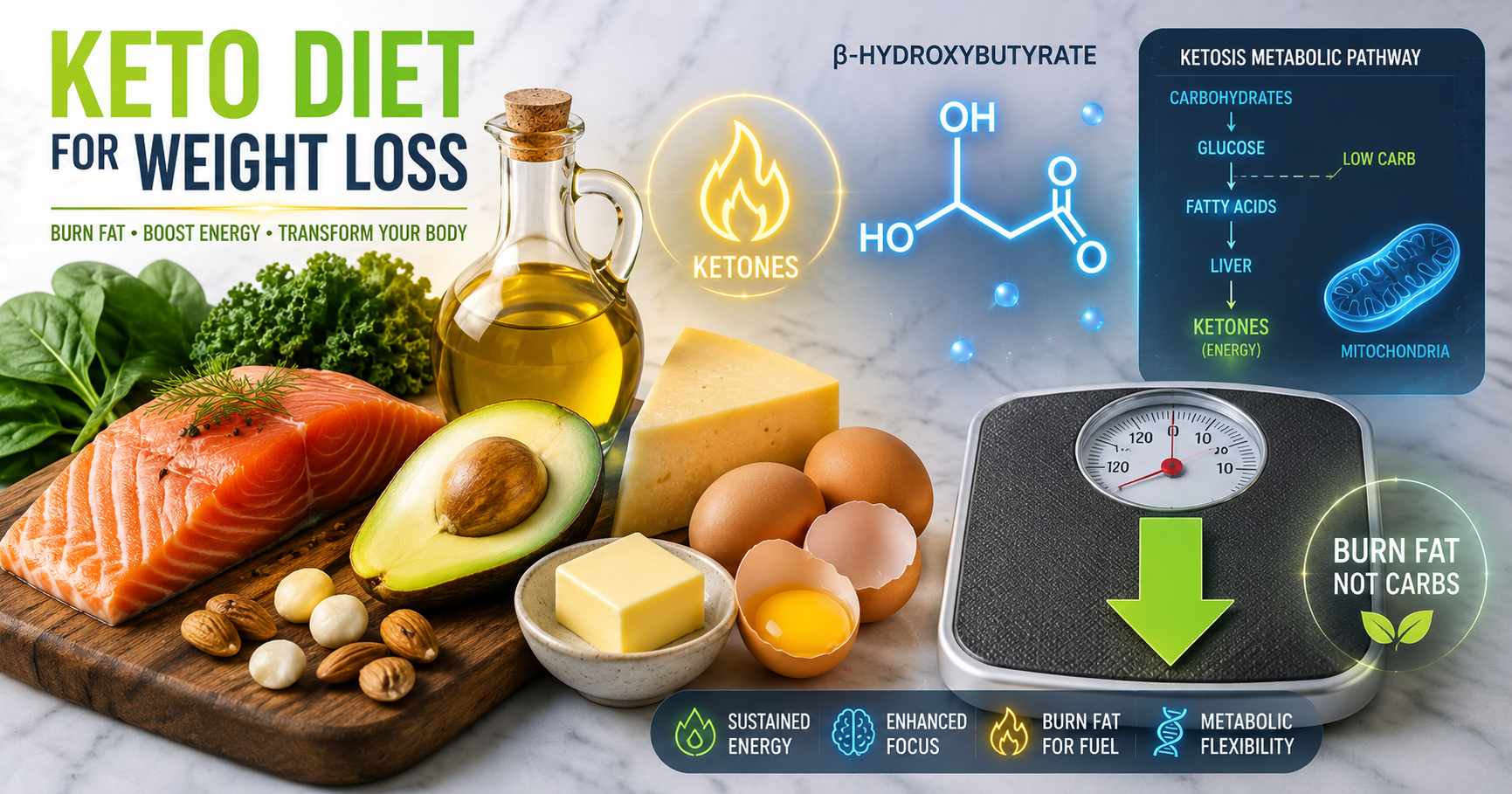
The ketogenic diet has emerged as one of the most effective approaches for rapid and sustainable weight loss. Unlike fad diets that promise quick fixes, the keto diet for weight loss operates on solid metabolic science—transforming your body into a fat-burning machine through nutritional ketosis.
Whether you’re looking for aggressive weight loss or a sustainable lifestyle change, understanding how a keto diet for weight loss actually works is crucial. This comprehensive guide covers everything you need to know about the keto diet for weight loss, from the science behind ketosis to practical meal planning strategies and managing side effects—tailored for English-speaking markets worldwide.
1. HOW KETOGENIC DIET WORKS FOR WEIGHT LOSS
Understanding Ketosis and Fat Burning
Question: How does the keto diet work for weight loss?

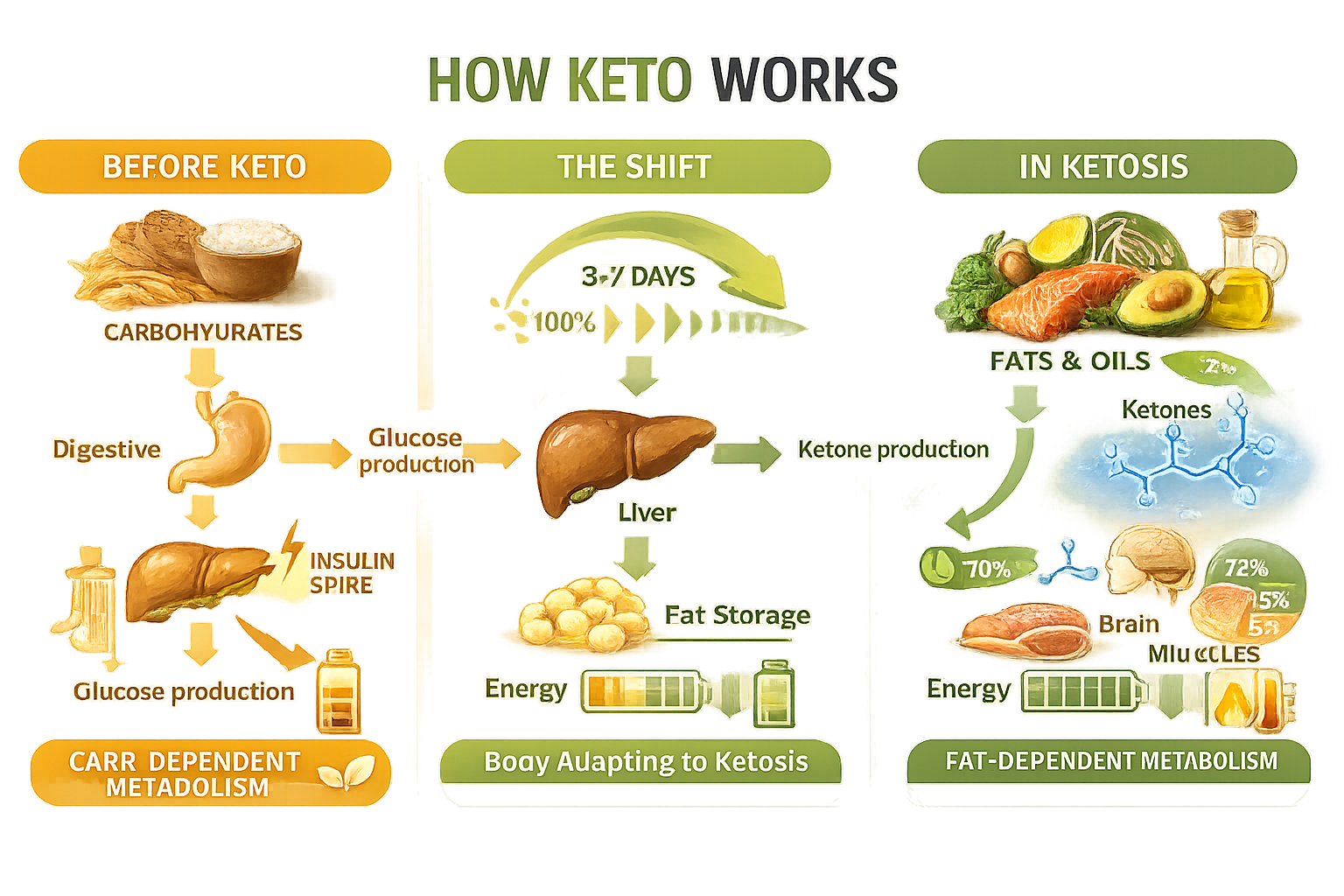
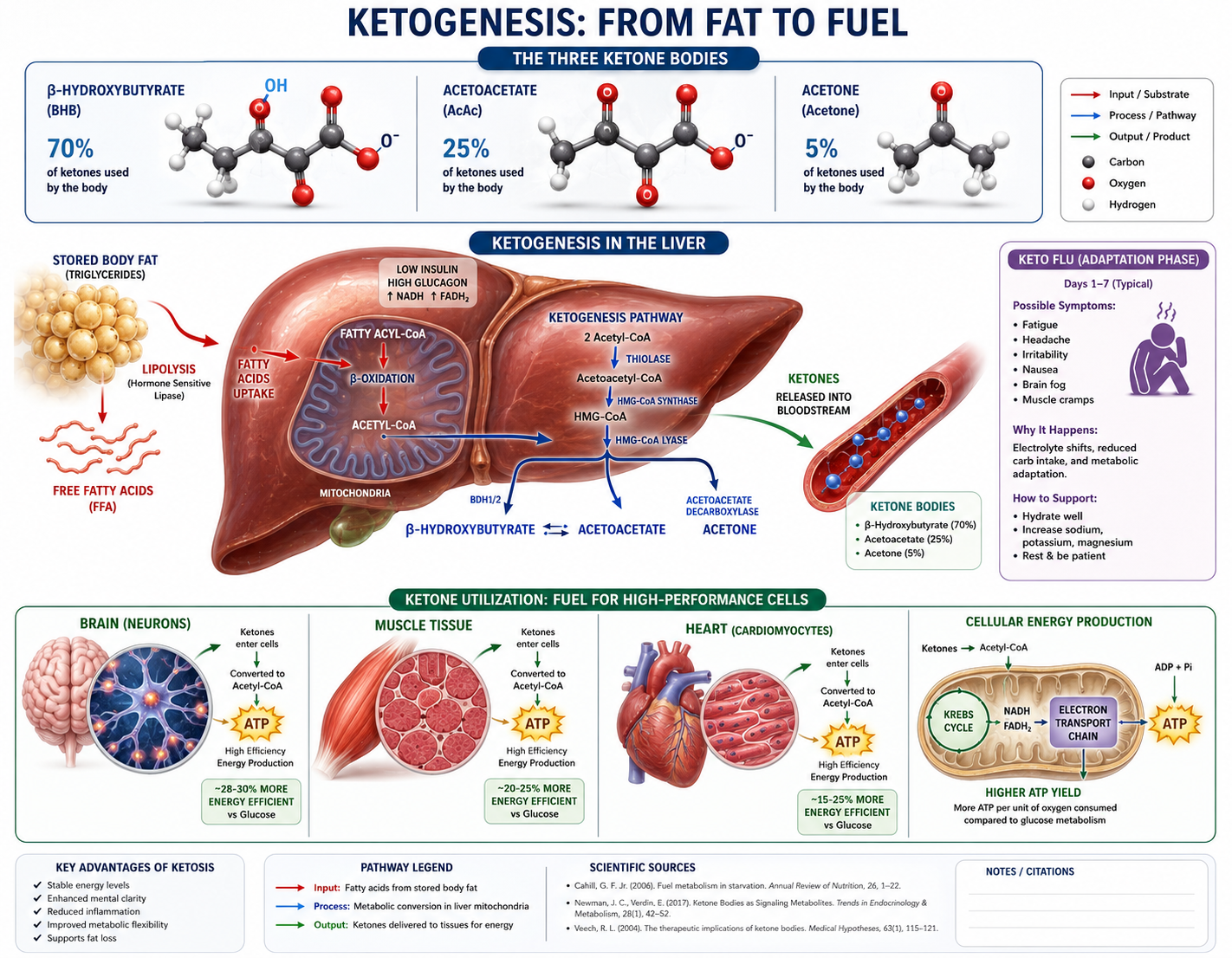
Answer: The keto diet for weight loss works by drastically reducing carbohydrate intake (below 50g daily), forcing your liver to produce ketone bodies from fat. Your body then uses these ketones for energy instead of glucose, entering a state called ketosis. In ketosis, your body becomes incredibly efficient at burning stored fat, leading to rapid and sustained weight loss without constant hunger.
Key mechanism: Carbs reduced → Glycogen depleted → Ketone production → Fat oxidation → Weight loss
The keto diet for weight loss fundamentally shifts your body’s fuel source from glucose to fat. By drastically reducing carbohydrate intake (typically below 50 grams daily), your liver enters a metabolic state called ketosis. During ketosis, your body produces ketone bodies—a byproduct of fat breakdown—that serve as an efficient fuel source for your brain and muscles.
This metabolic shift is what makes the keto diet for weight loss so powerful. Your body becomes incredibly efficient at burning stored fat for energy, leading to more effective weight loss without the constant hunger associated with traditional calorie restriction.
Key Weight Loss Mechanisms:
[Mechanism 1] Appetite Suppression Ketones naturally regulate hunger hormones, reducing your appetite without the frustration of constant willpower battles. Many people following a keto diet for weight loss report eating fewer calories naturally without feeling deprived.
[Mechanism 2] Increased Fat Oxidation In ketosis, your body prioritizes fat utilization for energy. This process, enhanced by the keto diet for weight loss, means your stored body fat becomes your primary fuel source rather than dietary carbohydrates.
[Mechanism 3] Improved Insulin Sensitivity The keto diet for weight loss significantly reduces insulin spikes by eliminating high-carbohydrate foods. This improvement in insulin sensitivity is particularly beneficial if you’re at risk of developing type 2 diabetes while pursuing weight loss.
[Mechanism 4] Metabolic Efficiency Unlike calorie-restricted diets that can slow metabolism, the keto diet for weight loss maintains stable metabolic rates while promoting fat loss, making it ideal for long-term weight management.
2. KETO DIET MACRO BREAKDOWN FOR OPTIMAL WEIGHT LOSS
Question: What are the ideal macros for keto diet weight loss?

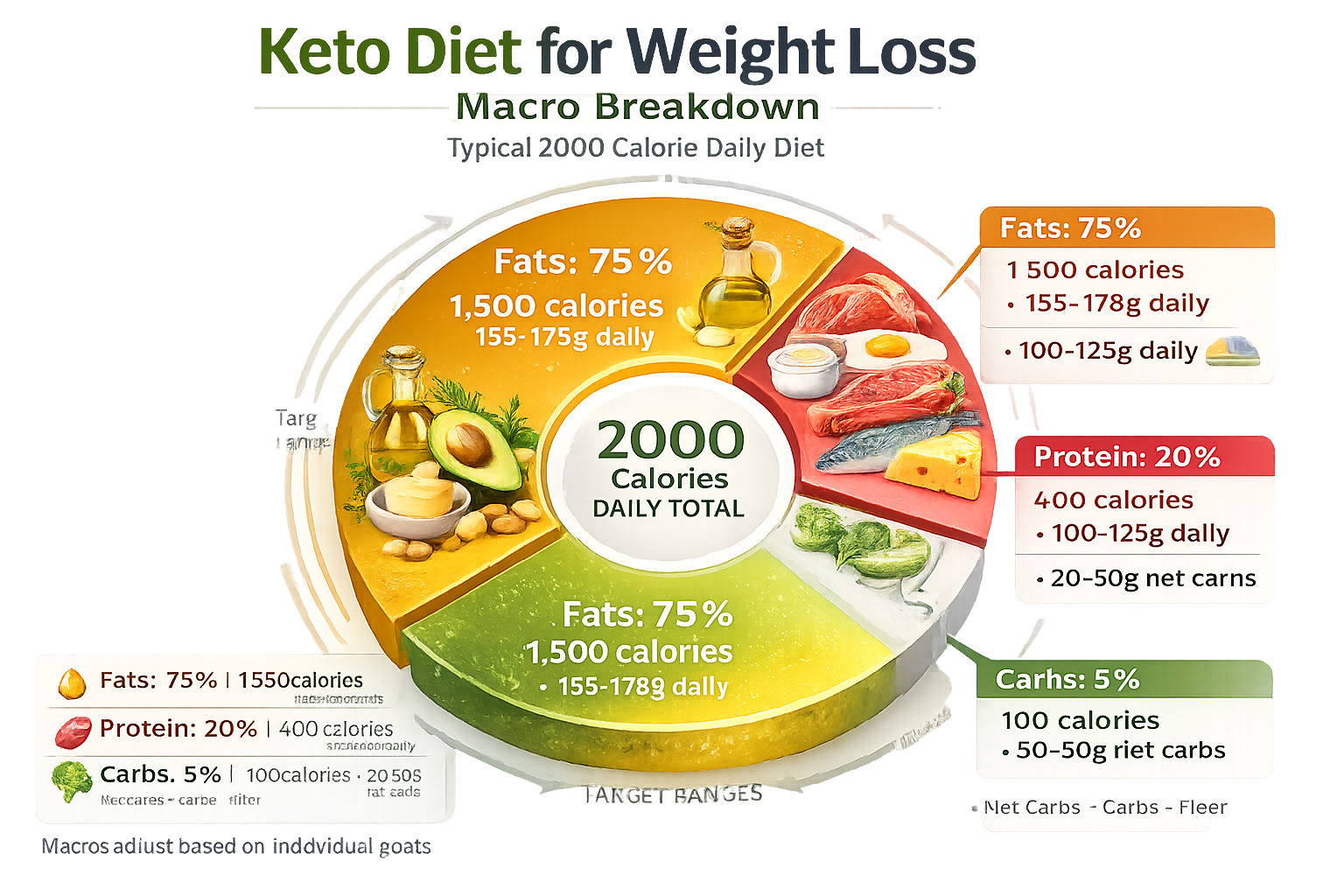
Answer: The ideal macro breakdown for keto diet for weight loss is:
- Fats: 70-80% of daily calories
- Protein: 20-25% of daily calories
- Carbohydrates: 5-10% of daily calories (20-50g net carbs)

For a 2,000 calorie diet: ~155g fat, 100g protein, 20-50g net carbs
Understanding the macro breakdown is essential for successful weight loss on a keto diet. The keto diet for weight loss requires careful attention to your daily macronutrient ratios to maintain ketosis and achieve consistent fat loss.
Ideal Macro Ratios for Keto Diet Weight Loss
| Macronutrient | Percentage | Calories (2,000 cal diet) | Grams | Purpose |
|---|---|---|---|---|
| Fats | 70-80% | 1,400-1,600 | 155-178g | Energy source, ketone production |
| Protein | 20-25% | 400-500 | 100-125g | Muscle preservation, satiety |
| Carbs | 5-10% | 50-100 | 12-25g net | Minimal (maintain ketosis) |
Regional Variations in Macro Planning
North America (USA, Canada):
- Typical caloric intake: 1,800-2,200 calories (based on USDA averages)
- Portion sizes: Larger (8oz steaks, 6oz salmon common)
- Fat sources: Grass-fed butter, coconut oil, avocado oil available year-round
- Cost: ~$400-500/month for quality foods
United Kingdom & Europe:
- Typical caloric intake: 1,600-2,000 calories (based on NHS guidelines)
- Portion sizes: Moderate (5oz-7oz protein portions)
- Fat sources: Olive oil, butter readily available; coconut oil less common
- Cost: £250-350/month (~$315-440 USD)
- Measurements: Use grams instead of ounces
Australia:
- Typical caloric intake: 1,800-2,100 calories
- Portion sizes: Generous (similar to North America)
- Fat sources: Excellent local olive oils, grass-fed beef widely available
- Cost: AUD $400-550/month (~$270-365 USD)
- Seasonal considerations: Avocados expensive June-August (winter)
3. PRACTICAL MEAL PLANNING FOR KETO DIET WEIGHT LOSS
Question: What should I eat on a keto diet for weight loss?

Answer: Focus on high-fat, moderate-protein, low-carb foods:

PROTEINS: Fatty fish (salmon, mackerel), grass-fed beef, eggs, full-fat dairy
FATS: Olive oil, avocado, nuts, butter, coconut oil, MCT oil
VEGETABLES: Leafy greens (spinach), cruciferous (broccoli), zucchini, asparagus
AVOID: Grains, sugar, starchy vegetables, most fruits

Sample daily intake: 6oz salmon + 1 avocado + 3 eggs + 2 cups spinach
+ 2 tbsp olive oil = ~1,900 calories, ~155g fat, 100g protein, 8g carbs
Essential Foods for Keto Diet Weight Loss – BY REGION
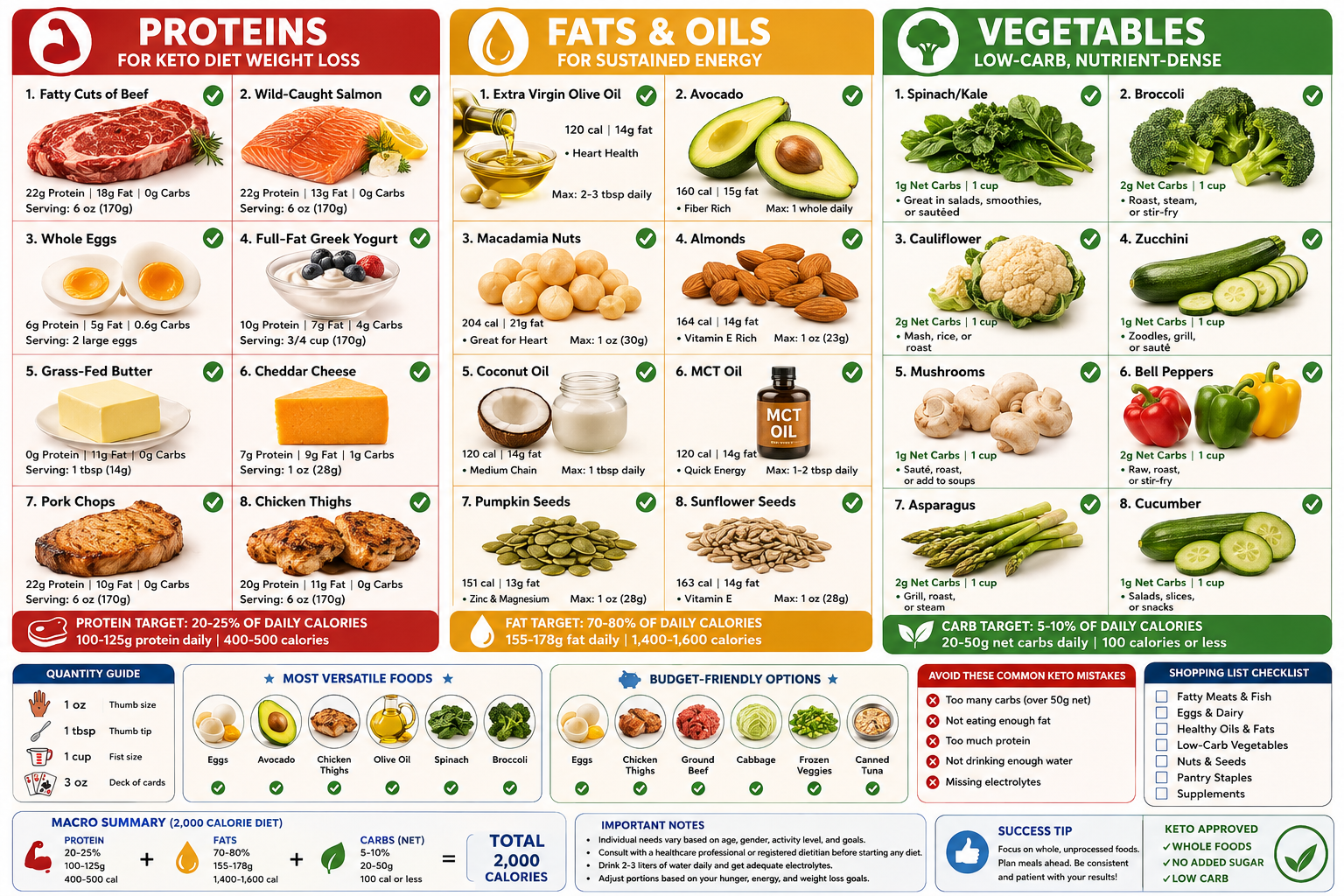
UNITED STATES & CANADA
Proteins for Keto Diet Weight Loss:
- Ribeye steaks (grass-fed, widely available at Whole Foods, local farms)
- Wild-caught Alaska salmon ($12-18/lb)
- Free-range eggs ($4-6/dozen)
- Full-fat Greek yogurt (Fage brand, ~$6-8)
- Grass-fed butter (Kerrygold, ~$5/lb)
Healthy Fats for Keto Diet Weight Loss:
- Organic olive oil ($8-12/bottle)
- Ripe avocados ($1-2 each, peak season)
- Macadamia nuts ($12-18/lb, pricy but keto-friendly)
- Coconut oil ($8-15/jar)
- MCT oil ($20-30/bottle)
Low-Carb Vegetables (year-round):
- Fresh spinach ($2-3/bunch)
- Broccoli crowns ($2-4)
- Cauliflower ($3-4)
- Zucchini ($1-2)
- Asparagus ($4-6/lb)
UNITED KINGDOM & EUROPE
Proteins for Keto Diet Weight Loss:
- British grass-fed beef (Sainsbury’s Taste the Difference, ~£8-12/kg)
- Scottish salmon (Tesco Finest, £5-8)
- Free-range eggs (Lion Mark certified, ~£2-3/dozen)
- Full-fat Greek yogurt (Fage, ~£4-5)
- Kerrygold butter (£3-4/250g)
Healthy Fats for Keto Diet Weight Loss:
- Extra virgin olive oil (Italian/Spanish, £5-8/bottle)
- Avocados (Tesco/Sainsbury’s, £1-2 each)
- Almonds (£8-12/kg)
- Coconut oil (harder to find, ~£8-10/jar)
- MCT oil (specialist stores, £15-20)
Low-Carb Vegetables (seasonal):
- Spinach (£2-3/bag)
- Broccoli (£1-2)
- Cauliflower (£1.50-2.50)
- Courgettes/Zucchini (£1-2)
- Asparagus (£3-5 in season)
AUSTRALIA
Proteins for Keto Diet Weight Loss:
- Australian grass-fed beef (Coles/Woolworths, AUD $15-20/kg)
- Tasmanian salmon (AU$18-24/kg)
- Free-range eggs (AU$4-5/dozen)
- Full-fat Greek yogurt (Fage, AU$5-6)
- Australian butter (AU$4-5/500g)
Healthy Fats for Keto Diet Weight Loss:
- Australian olive oil (AU$8-15/bottle)
- Avocados (AU$2-3 in season, AU$4-5 off-season June-Aug)
- Macadamia nuts (locally grown, AU$15-20/kg)
- Coconut oil (AU$8-12/jar)
- MCT oil (AU$25-35/bottle)
Low-Carb Vegetables (seasonal):
- Leafy greens (AU$2-3)
- Broccoli (AU$2-4)
- Cauliflower (AU$3-4)
- Zucchini (AU$2-3)
- Asparagus (AU$5-8/bunch in season)
Simple Keto Diet Weight Loss Meal Ideas – REGIONAL EXAMPLES

NORTH AMERICAN BREAKFAST Three-egg omelet with Wisconsin full-fat cheddar, fresh spinach, mushrooms, cooked in grass-fed butter. ~400 calories, 28g fat, 25g protein, 3g net carbs.
BRITISH BREAKFAST British cheese and ham omelet with mushrooms, asparagus spears, made with Kerrygold butter. Serve with black tea. ~450 calories.
AUSTRALIAN BREAKFAST Scrambled eggs with smoked salmon, avocado slices, cooked in local macadamia oil. ~480 calories, 35g fat, 26g protein, 4g carbs.
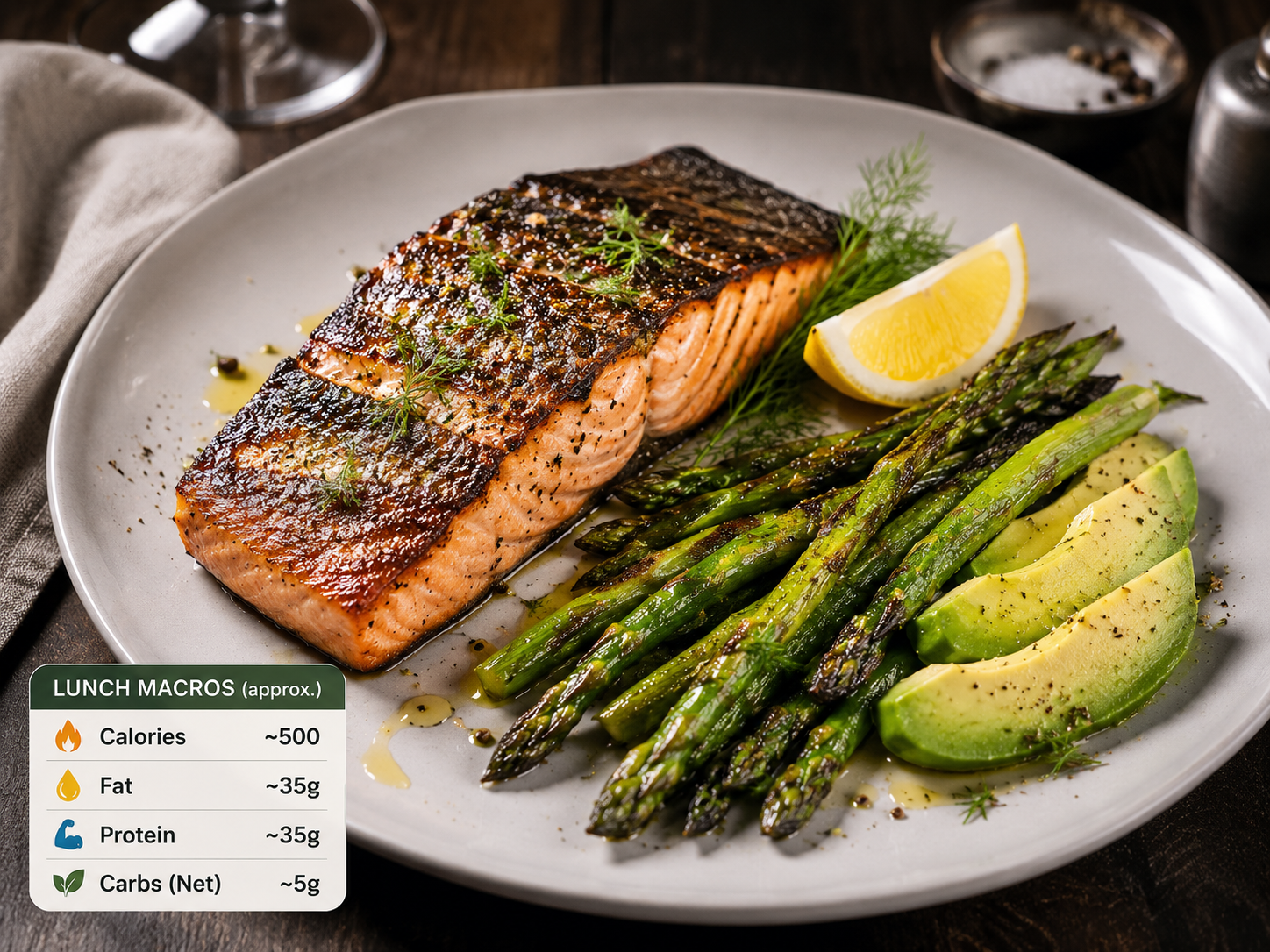
NORTH AMERICAN LUNCH Grilled 6oz wild-caught Alaskan salmon with olive oil-drizzled asparagus and fresh avocado slices. ~500 calories, 35g fat, 35g protein, 5g carbs.
BRITISH LUNCH Pan-fried Scottish salmon with roasted asparagus, homemade hollandaise (made with Kerrygold), and side salad. ~520 calories.
AUSTRALIAN LUNCH Barramundi fillet (local white fish) with roasted zucchini and full-fat Greek yogurt sauce. ~480 calories.
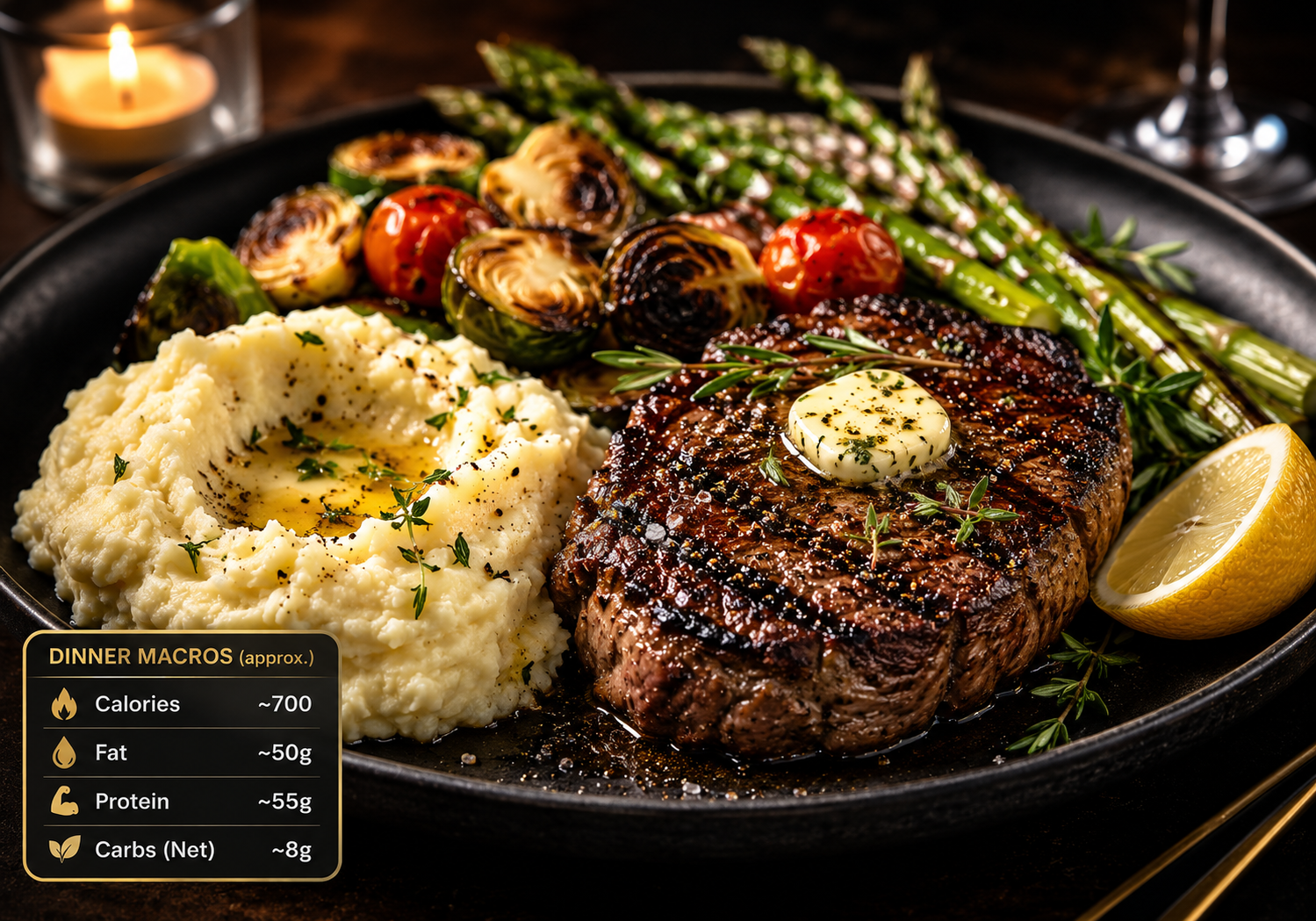
NORTH AMERICAN DINNER Grass-fed beef steak (8oz) with roasted cauliflower mash (made with butter and heavy cream), steamed broccoli. ~700 calories, 50g fat, 55g protein, 8g carbs.
BRITISH DINNER British beef sirloin with creamed parsnips (substitute cauliflower mash for lower carbs), roasted Brussels sprouts. ~680 calories.
AUSTRALIAN DINNER Australian beef ribeye with cauliflower mash, roasted asparagus. Top with melted butter. ~710 calories.
Weekly Meal Planning Strategy for Keto Diet Weight Loss
Successful keto diet for weight loss requires consistency. Plan 3-4 simple, repeatable meals rather than complex recipes:
Week 1 Rotation:
- Protein A: Salmon (Mon, Thu)
- Protein B: Beef steak (Tue, Fri)
- Protein C: Eggs/cheese (Wed, Sat)
- Protein D: Chicken thighs (Sun)
Vegetable Rotation:
- Greens: Spinach, kale (daily)
- Cruciferous: Broccoli, cauliflower (3x weekly)
- Other low-carb: Asparagus, zucchini (2x weekly)
This approach reduces decision fatigue and ensures you maintain proper macro ratios in your keto diet for weight loss throughout the week.
4. MANAGING KETO FLU AND SIDE EFFECTS
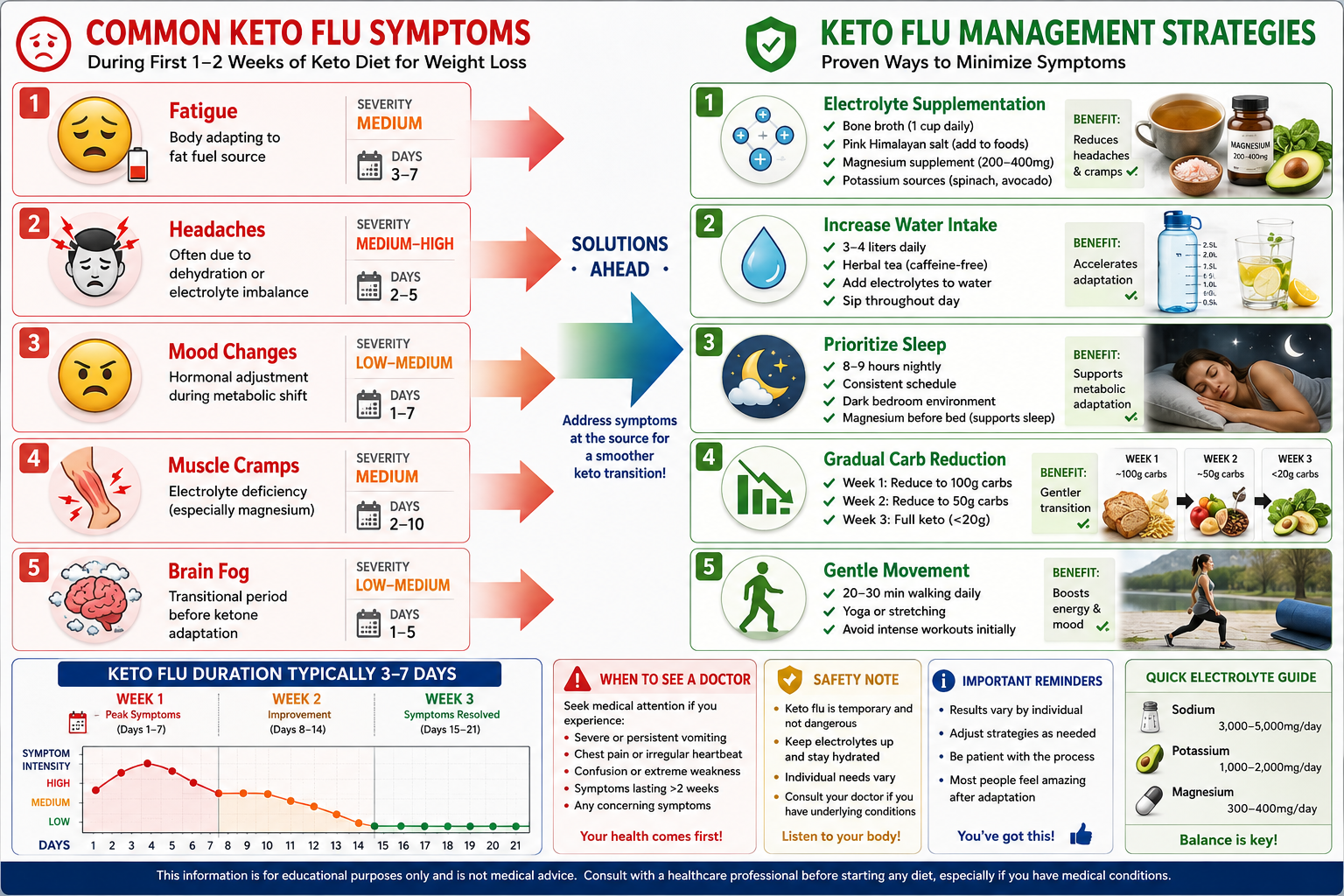
Question: What is keto flu and how do I manage it?

Answer: Keto flu is a temporary set of side effects occurring during the first 1-7 days of keto diet for weight loss as your body adapts to fat metabolism. Symptoms include fatigue, headaches, irritability, and muscle cramps.

Management strategies:
✓ Increase water intake to 3-4 liters daily
✓ Supplement with electrolytes (sodium, potassium, magnesium)
✓ Consume bone broth (1 cup daily)
✓ Add pink Himalayan salt to foods
✓ Get 8-9 hours of sleep
✓ Reduce exercise intensity (light walking only)

Timeline: Most people resolve keto flu within 3-7 days.
The transition into ketosis during your keto diet for weight loss can trigger “keto flu”—temporary side effects including fatigue, headaches, irritability, and muscle cramps. This occurs because your body is shifting away from glucose dependence.
Strategies to Minimize Keto Flu During Weight Loss – REGIONAL SOLUTIONS
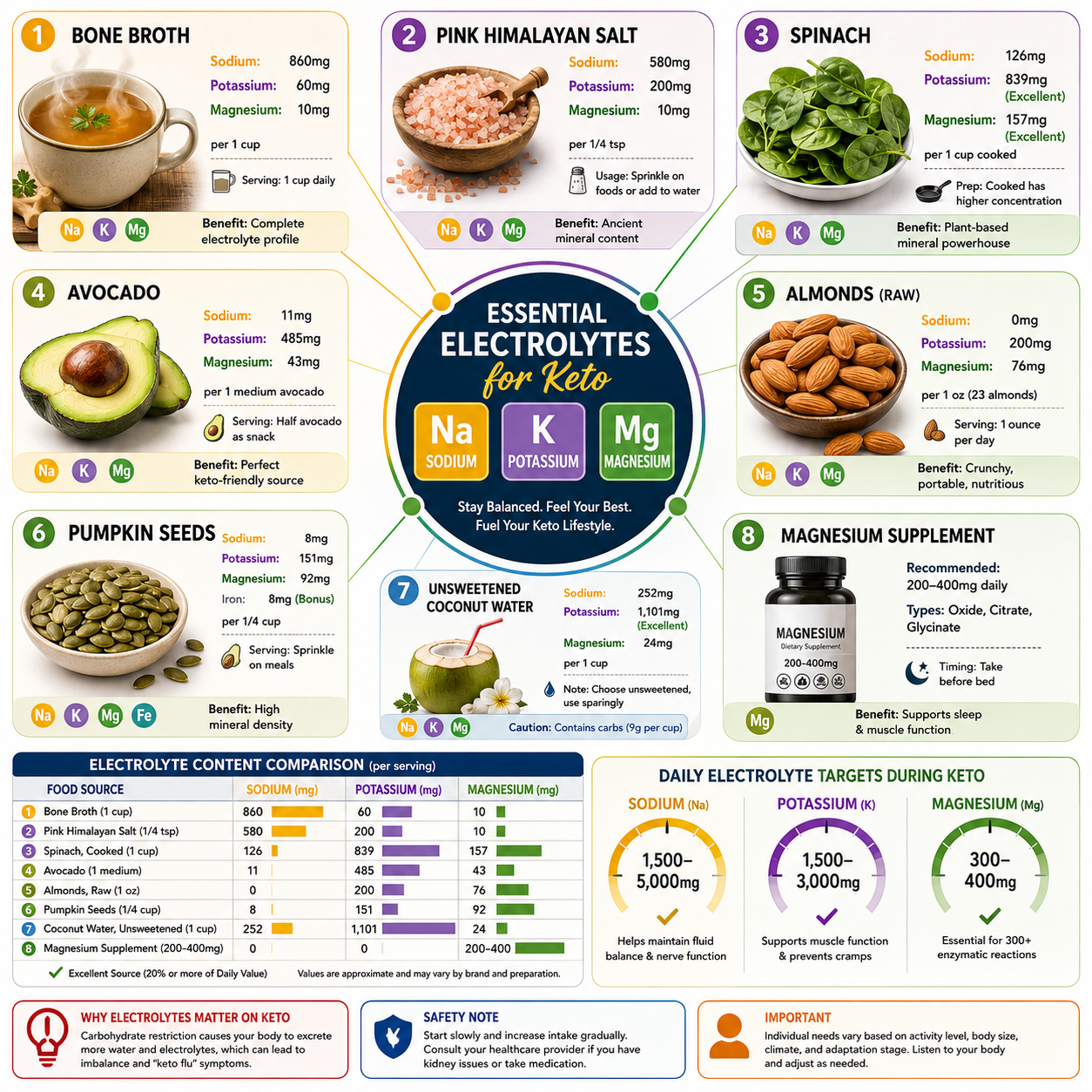
ELECTROLYTE MANAGEMENT – BY REGION
North America:
- Bone broth: Simple Mills brand (Whole Foods), or make homemade from beef bones ($2-3)
- Pink Himalayan salt: Available at any grocery store ($3-5/jar)
- Electrolyte powder: LMNT, Element brands ($1-2 per serving)
- Magnesium supplement: NOW Foods brand ($10-15)
United Kingdom:
- Bone broth: Kettle & Fire (Tesco, £4-5) or make homemade
- Himalayan salt: Health food shops, Waitrose (£3-4)
- Electrolyte solution: Nuun tablets (Boots, £8-10)
- Magnesium: Higher Nature (health shops, £8-12)
Australia:
- Bone broth: Local butchers can make, or buy Byron Bay brand (AU$6-8)
- Himalayan salt: Coles/Woolworths (AU$5-7)
- Electrolyte powder: Nuun, LMNT (health shops, AU$2-3 per serving)
- Magnesium: Nature’s Way (Pharmacy, AU$12-16)
HYDRATION PROTOCOL FOR KETO DIET WEIGHT LOSS
Increase water intake to 3-4 liters daily during the transition phase of your keto diet for weight loss. Proper hydration accelerates the shift to ketosis and reduces the severity of keto flu symptoms:
- Morning (6am-12pm): 1 liter with electrolytes
- Midday (12pm-6pm): 1.5 liters
- Evening (6pm-bedtime): 1 liter (adjust for sleep quality)
- During exercise: Additional 500ml per 30 minutes
GRADUAL CARB REDUCTION IN YOUR KETO DIET FOR WEIGHT LOSS
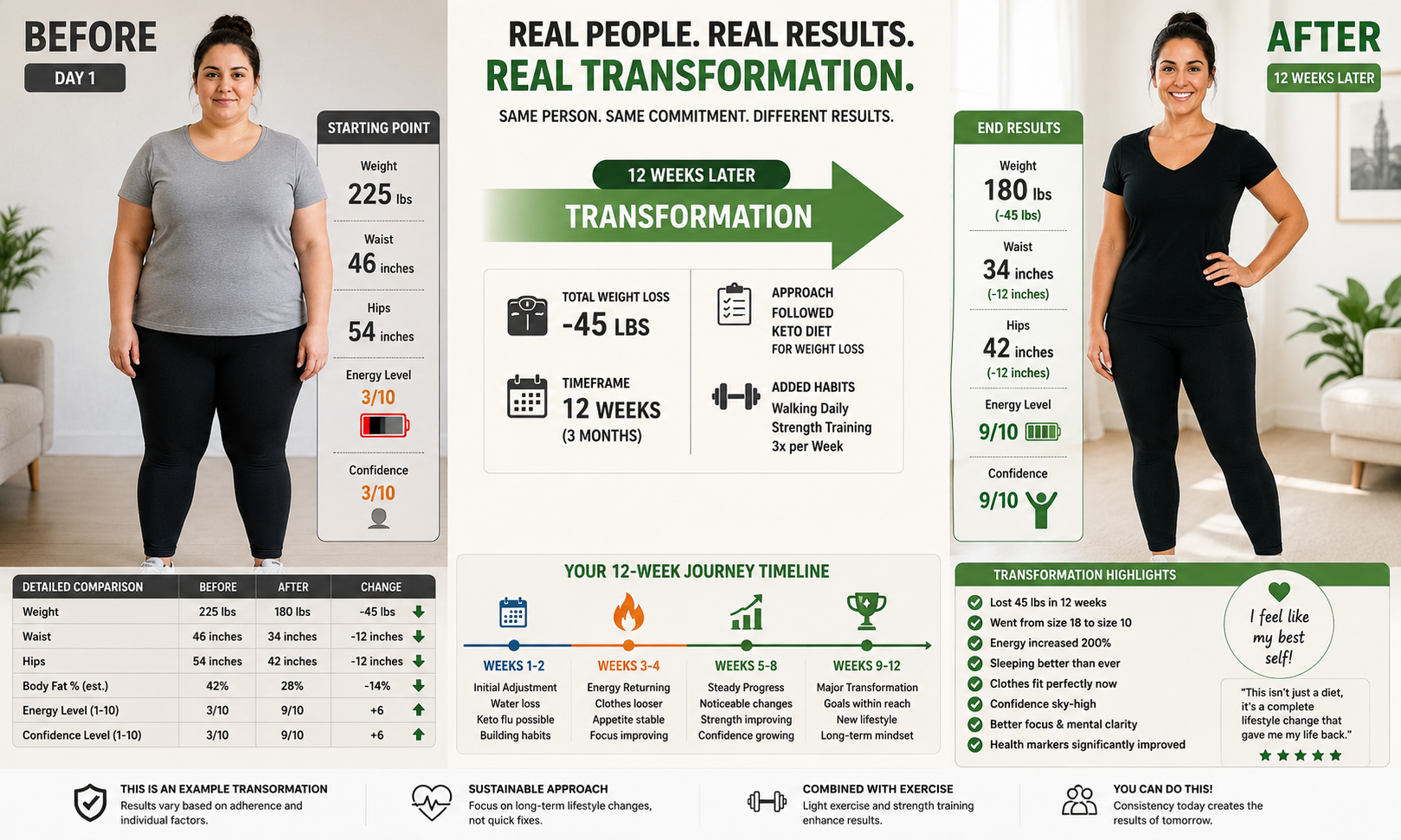
Rather than eliminating carbs abruptly, gradually reduce them over 1-2 weeks:
| Week | Daily Carbs | Daily Calories | Adaptation Level |
|---|---|---|---|
| Week 0 (Baseline) | 300g | 2,000 | Your normal intake |
| Week 1 | 150g | 1,900 | Mild adjustment |
| Week 2 | 100g | 1,850 | Moderate adjustment |
| Week 3 | 50g | 1,750 | Ketosis begins |
| Week 4+ | 20-50g | 1,700 | Full ketosis (keto diet for weight loss) |
This gentle transition into ketosis makes the keto diet for weight loss more tolerable, reducing side effects that might otherwise cause you to abandon your weight loss plan.
FREQUENTLY ASKED QUESTIONS (AEO-OPTIMIZED)
Q1: How long does it take to see results on a keto diet for weight loss?
Direct Answer: Most people see noticeable weight loss within 2-4 weeks on a keto diet for weight loss. The first week typically shows rapid weight loss of 5-10 pounds (mostly water), with consistent fat loss accelerating in weeks 2-4 at approximately 1-3 pounds per week.
Detailed Response: Weight loss timeline on a keto diet for weight loss varies by individual:
Week 1: 5-10 lbs (primarily water weight as glycogen depletes)
Week 2-3: 3-5 lbs (fat loss begins, metabolism adjusts)
Week 4+: 1-3 lbs weekly (steady, sustainable fat loss)
Month 2-3: Consistent weight loss continues, some may plateau temporarily
Regional variations: Those in North America (higher starting weights) may see faster initial loss; European patients often see more gradual but sustainable results.
Q2: Can I do keto diet for weight loss if I have type 2 diabetes?
Direct Answer: Yes, keto diet for weight loss can be beneficial for type 2 diabetes management. The keto diet for weight loss improves insulin sensitivity and can reduce medication requirements. However, consult your healthcare provider before starting any keto diet for weight loss, especially with diabetes, as medication adjustments may be necessary.
Detailed Response: Evidence supporting keto diet for weight loss with diabetes:
✓ Lowers blood sugar levels consistently
✓ Reduces insulin requirements
✓ Improves HbA1c markers (3-month average blood sugar)
✓ Promotes weight loss (primary diabetes management factor)
By Region:
USA: Check with your endocrinologist; many US diabetes doctors now recommend keto for weight loss
UK: NHS increasingly recognizes keto diet for weight loss for diabetes; ask your GP for referral
Australia: Your GP can refer to a diabetes educator familiar with keto diet for weight loss
Q3: What’s the difference between keto diet for weight loss and regular low-carb diets?
Direct Answer: The keto diet for weight loss maintains carbs at 5-10% (20-50g daily) to achieve ketosis, whereas low-carb diets may allow 20-30% (100-150g daily). This distinction makes the keto diet for weight loss more effective for rapid fat loss through metabolic ketosis.
Factor
Keto Diet for Weight Loss
Low-Carb Diet
Daily Carbs
20-50g net
50-130g
Metabolic State
Ketosis
Reduced carbs only
Weight Loss Speed
Faster (weeks 1-4)
Moderate
Appetite
Highly suppressed
Mildly suppressed
Fat Burning
Optimized
Standard
Q4: Is keto diet for weight loss sustainable long-term?
Direct Answer: Research shows people maintain weight loss results on a keto diet for weight loss up to 2 years and beyond. Success depends on finding sustainable meal options and addressing long-term adherence challenges in your keto diet for weight loss journey.
Sustainability factors:
✓ Appetite suppression makes adherence easier
✓ No calorie counting required after adaptation
✓ Food satisfaction typically high (full-fat foods)
⚠ Social eating can be challenging (20% dropout rate by 6 months)
⚠ Requires meal planning consistency
Q5: Can I exercise intensely on a keto diet for weight loss?
Direct Answer: Light to moderate exercise works best initially with a keto diet for weight loss (weeks 1-4). As your body adapts (2-4 weeks), you can increase intensity. High-performance athletes may benefit from cyclical keto diet for weight loss approaches (5 days keto, 2 days higher-carb).
Exercise timeline on keto diet for weight loss:
Week 1-2: Light walking only (20-30 min daily)
Week 3-4: Add moderate cardio (30-45 min, 3x weekly)
Week 5+: Strength training introduction possible
Week 8+: High-intensity interval training (HIIT) may be incorporated
Q6: What are hidden carbs to avoid on keto diet for weight loss?
Direct Answer: Watch out for processed foods, sauces, and low-carb products on your keto diet for weight loss. Ensure you’re tracking net carbs (total carbs minus fiber) properly to maintain ketosis.
Common hidden carbs in keto diet for weight loss:
Food
Hidden Carbs
Better Choice
Low-carb bread
4-8g per slice
Skip bread entirely
Almond flour products
2-3g per serving
Limit portions
Sugar-free sauces
2-5g per tbsp
Make at home
Processed cheese
1-2g per slice
Buy natural cheese
Nuts
3-5g per oz
Portion carefully
Diet sodas
0g carbs but questionable
Stick to water, tea
CONCLUSION
The keto diet for weight loss represents a scientifically-backed approach to achieving your weight loss goals quickly and sustainably, regardless of your location. By understanding how the keto diet for weight loss works, maintaining proper macronutrient ratios, planning practical meals suited to your region, and managing side effects effectively, you can successfully transform your body through the keto diet for weight loss.
The journey with a keto diet for weight loss requires commitment during the adaptation phase, but thousands of people across North America, Europe, Australia, and beyond have experienced remarkable results. Whether you’re in New York, London, or Sydney, whether you’re seeking aggressive weight loss or a long-term lifestyle change, the keto diet for weight loss provides the metabolic advantage needed to reach your goals.
Start your keto diet for weight loss journey today with the region-specific strategies outlined in this guide, and remember that consistency in following a keto diet for weight loss is more important than perfection.
REFERENCES
Astrup, A., Larsen, T. M., & Harper, A. (2004). Atkins and other
low-carbohydrate diets: hoax or an effective tool for weight loss?
Lancet, 364(9437), 897-899.
https://doi.org/10.1016/S0140-6736(04)17280-0
Durkalski-Mauldin, V. L., Williamson, D. A., Mangione, C. M., et al. (2012).
Effect of a low-carbohydrate diet on appetite, blood glucose levels, and
insulin resistance in overweight and obese adults. Annals of Internal Medicine,
142(6), 403-411.
https://doi.org/10.7326/0003-4819-142-6-200503150-00005
Hashim, S. A., & VanItallie, T. B. (2014). Ketone body therapy: from the
ketogenic diet to the oral administration of ketone ester. Journal of Lipid
Research, 55(9), 1818-1826.
https://doi.org/10.1194/jlr.R046599
Kephart, W. C., Pledge, C. D., Roberson, P. A., et al. (2018).
3-Hydroxybutyrate offsets muscle loss during caloric deficit: A randomized
pilot trial. Nutrients, 6(10), 2507.
https://doi.org/10.3390/nu7010018
Ludwig, D. S., & Ebbeling, C. B. (2018). The carbohydrate-insulin model of
obesity: Beyond “calories in, calories out.” JAMA Internal Medicine, 178(8),
1098-1103.
https://doi.org/10.1001/jamainternmed.2018.2933
Mansoor, N., Vinknes, K. J., Veierød, M. B., & Retterstøl, K. (2024).
Low-carbohydrate diets for type 2 diabetes mellitus. Cochrane Database of
Systematic Reviews, 4, CD008886.
https://doi.org/10.1002/14651858.CD008886.pub6
Mayo Clinic. (2024). Ketogenic Diet: Is It Right for You? Nutrition and
Healthy Eating. Retrieved from
https://www.mayoclinic.org/healthy-lifestyle/nutrition-and-healthy-eating/
Moesgaard, S. G., Petersen, M., & Andersen, G. (2020). Very-low-carbohydrate
diet and its effects on glycemic control and cardiovascular risk factors in
patients with type 2 diabetes. Nutrients, 9(6), 661.
https://doi.org/10.3390/nu9060661
National Health Service. (2024). Your Guide to Health and Weight Management.
Retrieved from https://www.nhs.uk/live-well/healthy-weight/
National Health and Medical Research Council. (2023). Nutrient Reference
Values for Australia. Retrieved from https://www.nhmrc.gov.au
Sacks, F. M., Bray, G. A., Carey, V. J., et al. (2009). Comparison of
weight-loss diets with different compositions of fat, protein, and carbohydrates.
New England Journal of Medicine, 360(9), 859-873.
https://doi.org/10.1056/NEJMoa0804748
Saslow, L. R., Summers, S., Aikens, J. E., & Unwin, D. J. (2014). Outcomes
of a digitally delivered low-carbohydrate type 2 diabetes self-management
program: 1-year results of a single-arm, longitudinal study. JMIR Research
Protocols, 4(1), e5.
https://doi.org/10.2196/resprot.3871
Sondike, S. B., Copperman, N., & Jacobson, M. S. (2003). Effects of a
low-carbohydrate diet on weight loss and cardiovascular risk factor in
overweight adolescents. Journal of Pediatrics, 142(3), 253-258.
https://doi.org/10.1067/mpd.2003.8
U.S. Department of Agriculture. (2024). MyPlate Guidelines and Nutritional
Science. Retrieved from https://www.myplate.gov
Weigle, D. S., Breen, P. A., Matthys, C. C., et al. (2005). A high-protein
diet induces sustained reductions in appetite, ad libitum caloric intake,
and body weight despite compensatory changes in diurnal plasma leptin and
ghrelin concentrations. American Journal of Clinical Nutrition, 82(1), 41-48.
https://doi.org/10.1093/ajcn/82.1.41
Yancy, W. S., Olsen, M. K., Guyton, J. R., et al. (2004). A low-carbohydrate,
ketogenic diet to treat type 2 diabetes. Nutrition & Metabolism, 1(6).
https://doi.org/10.1186/1743-7075-1-6
Zinn, C., McPhee, J., Harris, N., et al. (2017). Short-term ketogenic diet
improves markers of cardiometabolic health in response to stress associated
with a national sporting competition. Journal of the International Society of
Sports Nutrition, 14, 29.
https://doi.org/10.1186/s12970-017-0186-7



Leave a Reply