



Medical Disclaimer
⚠️ This is general health information, not medical advice. Before starting any new exercise program, especially if you have pre-existing conditions, consult with a healthcare provider. Stop exercising immediately if you experience chest pain, severe shortness of breath, or unexplained joint pain.
Content Sourced & Reviewed By:
- National Institutes of Health (NIH) – U.S. government health research
- Centers for Disease Control and Prevention (CDC) – U.S. public health authority
- Mayo Clinic – Peer-reviewed clinical guidance
- PubMed – U.S. National Library of Medicine indexed studies
- Yale Medicine – Academic medical center research
No medical professional on staff; all claims independently sourced to authoritative references.
What Does Running Do for Weight Loss?
Quick Answer
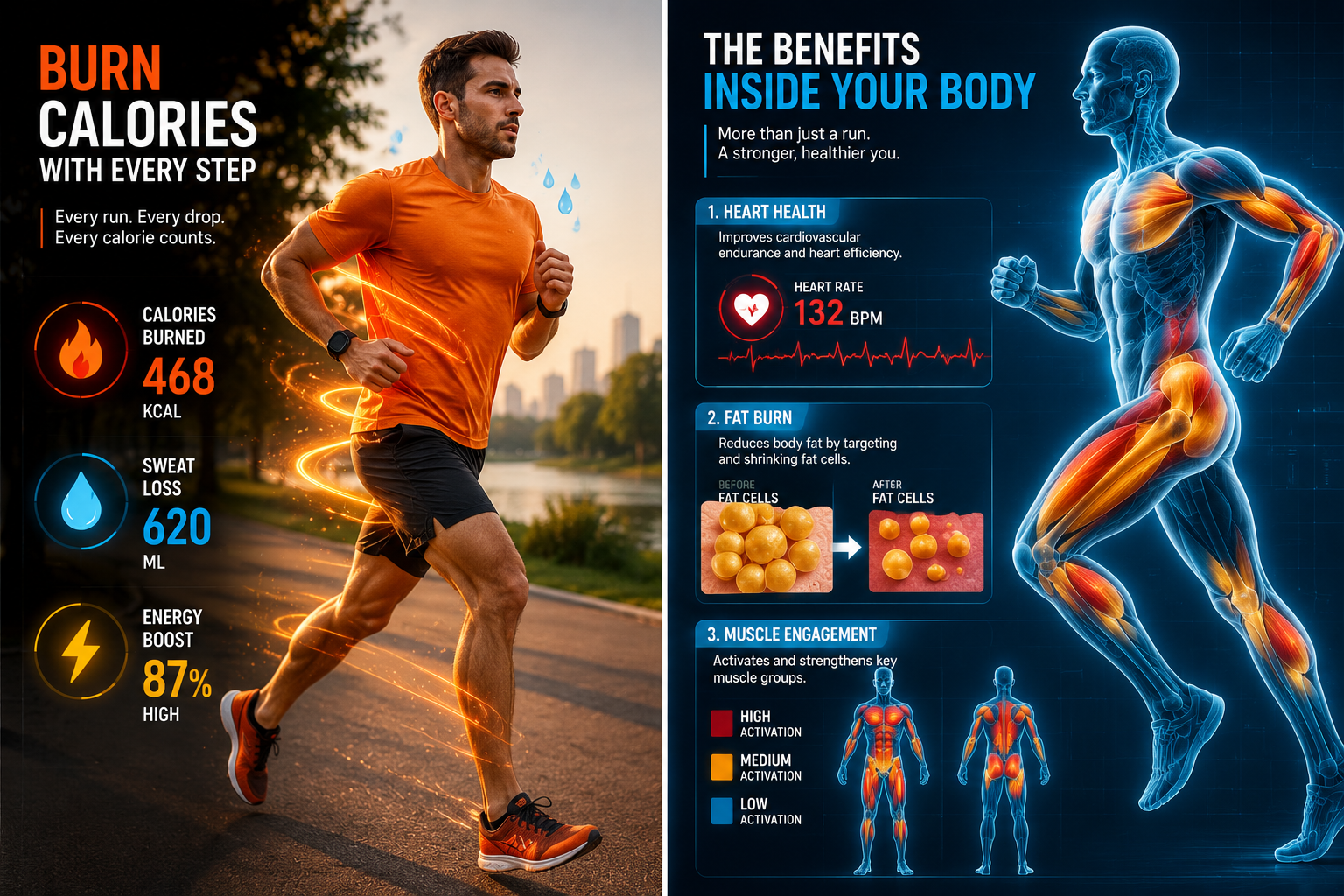
Running burns significant calories (~100–400 per 30-min session depending on intensity), but how to lose weight running requires a caloric deficit—achieved when calories burned exceed calories consumed. Research shows aerobic exercise produces more weight loss than resistance training when sustained for 10+ weeks.
How to lose Weight Running Creates (Fat Loss): The 3-Pathway Model
Running doesn’t just burn calories during the workout—it creates a metabolic multiplier effect:
Pathway 1: Direct Energy Expenditure
- Calories burned during the run itself as muscles work to propel your body
- Varies by weight, pace, and fitness level (see calorie table below)
Pathway 2: Elevated Metabolism for 24–48 Hours (EPOC Effect)
- Excess Post-Exercise Oxygen Consumption = “afterburn”
- Your body continues consuming extra oxygen/energy after running stops
- More pronounced with high-intensity interval training (HIIT) vs. easy runs
Pathway 3: Muscle Preservation & Metabolic Rate
- Running alone can trigger muscle loss when combined with aggressive dieting
- Adding strength training + adequate protein preserves lean tissue
- Preserved muscle = higher resting metabolic rate (calories burned at rest)
The Research: What the Evidence Actually Shows
| Study | Finding | Source |
|---|---|---|
| 2025 Meta-Analysis | Aerobic exercise (including running) produces more weight loss than resistance training alone, when done 10+ weeks | PubMed Research Review |
| 2024 Study (Men with Overweight/Obesity) | HIIT running burns more abdominal fat than cycling | PubMed-indexed clinical data |
| 2023 Study (Men & Women) | Running 10 km (6 miles) weekly = measurable abdominal + overall fat loss | PubMed Database |
Fat Loss ≠ Weight Loss: The Critical Distinction
This is why the scale can be misleading:
| What’s Lost | Timeframe | What It Means | Sustainability |
|---|---|---|---|
| Weight Loss (fat + water + glycogen + muscle) | Rapid (1–3 weeks visible) | Scale drops fast BUT muscle is lost—metabolism slows, rebound likely | ❌ Usually rebounds |
| Fat Loss (body fat specifically) | Gradual (1–2 lbs/week typical) | Slower visible progress BUT muscle preserved—metabolism stays strong, results stick | ✅ Long-term sustainable |
Best practice: Pair running with strength training + adequate protein (1.2–1.6g per kg body weight) to maximize fat loss while preserving muscle.
How Many Calories Does Running Actually Burn?
Quick Answer
A 30-minute moderate run burns 300–400 calories; as a rough estimate, 100 calories per mile. However, this is often overestimated—most runners overcompensate by eating back burned calories, negating the deficit.
Calorie Burn by Activity (30-Minute Session)
| Activity & Pace | Calories Burned* | Intensity | Joint Impact | Notes |
|---|---|---|---|---|
| Walking (3.5 mph, casual) | 150–200 | Low | Low (1–1.5x body wt) | Sustainable, low injury risk |
| Jogging (5 mph, conversational) | 250–300 | Moderate | Moderate (2–2.5x body wt) | Beginner-friendly pace |
| Running (6–7 mph, steady) | 300–400 | Moderate-High | High (2.5–3x body wt) | Common training pace |
| Fast Running (8+ mph, hard effort) | 400–500+ | High | High (3–4x body wt) | Injury risk increases significantly |
| HIIT Running (intervals) | 350–450 | Very High | High (repeated impact) | Best afterburn, highest injury risk |
Varies significantly by body weight, fitness level, terrain, and metabolism. Heavier individuals burn more; fit runners burn fewer calories (improved efficiency) at same pace.
The Overestimation Problem
Most runners (and fitness trackers) overestimate burned calories by 20–40%. Example:
- Actual burn: 4-mile run = ~400 calories
- Perceived burn: Feels like 500–600 calories
- Common result: “I earned this 500-calorie dessert” = 1,000 calories consumed
- Net effect: No deficit, no weight loss
Key insight: Caloric deficit depends on both sides of the equation—running enables it, but diet determines whether it actually happens.
Running vs. Walking: Efficiency Comparison
Calorie burn per minute (same individual, 30 minutes):
Walking:        5–7 calories/min  = 150–210 total
Jogging:        8–10 calories/min = 240–300 total
Running:        10–14 calories/min = 300–420 total
HIIT Running:   12–16 calories/min = 360–480 total
Reality check: Running burns ~2–3x more calories per minute, BUT it carries 2–3x more joint impact and injury risk. The “best” activity is the one you can sustain consistently without injury.
Can Beginners Really Lose Weight with Couch to 5K?
Quick Answer
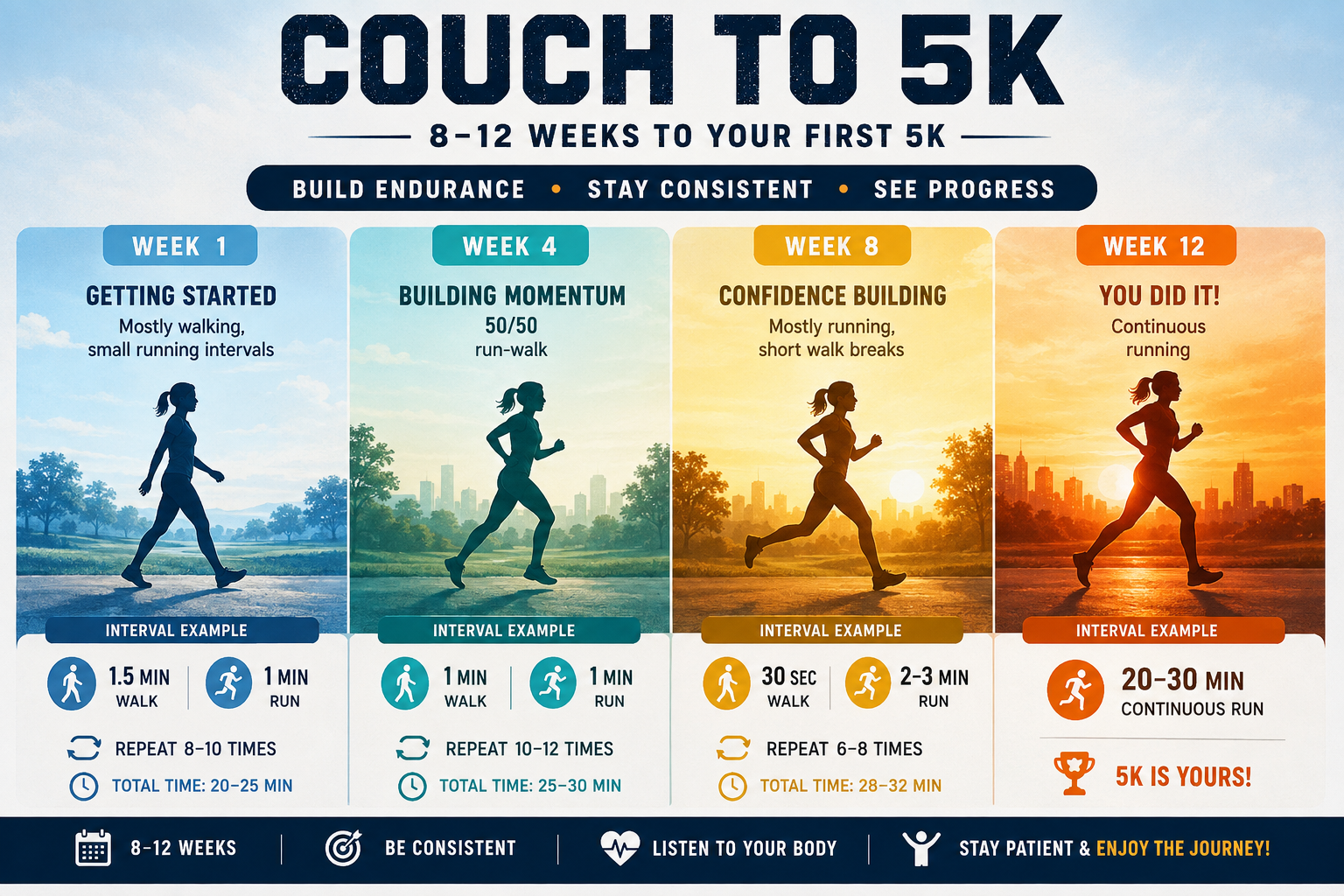
Yes—Couch to 5K (C25K) is specifically designed for fat loss in beginners. The 8–12 week program uses progressive run-walk intervals to create a caloric deficit while minimizing injury risk. Paired with modest dietary adjustment and strength training, beginners can expect 1–2 pounds of fat loss weekly.
What is Couch to 5K? The Beginner’s Framework
Couch to 5K is a time-based, interval training program that takes you from little-to-no running to running 5K (3.1 miles / ~30 minutes continuously) in 8–12 weeks.
Core principle: Run-walk intervals gradually shift the ratio toward running
Example Week 1 Workout:
Warm-up (5 min): Walk at easy pace
Main set (20 min):
  → 1 min running, 90 sec walking (repeat 8 times)
Cool-down (5 min): Walk at easy pace
Total: 30 minutes, mostly walking, practice running
Example Week 8 Workout:
Warm-up (5 min): Walk/easy jog
Main set (20 min):
  → 15 min running, 2 min walk break, 8 min running
Cool-down (5 min): Walk
Total: 30 minutes, mostly running, occasional walk breaks
C25K Workout Structure for Fat Loss
| Element | Details | Why It Matters |
|---|---|---|
| Frequency | 3 days/week running + 1–3 days cross-training | Allows sufficient recovery; prevents overtraining & injury—top reason beginners quit |
| Duration | 8–12 weeks total | Gradual adaptation; sustainable rather than crash approach |
| Format | Run-walk intervals | Allows longer total distance/time; gives muscles recovery windows |
| Intensity | Conversational pace (can speak in short sentences) | Builds aerobic base without excessive joint stress |
| Rest days | Mandatory 1–2 days between running days | Rest days prevent injury—skipping them is a leading cause of beginner burnout |
Realistic Fat Loss Timeline with C25K
| Week | Expected Progress | Fat Loss (paired with diet) |
|---|---|---|
| Weeks 1–2 | Building habit; running still feels hard | 0–1 lb (mostly water initially) |
| Weeks 3–4 | Running intervals feeling easier; building confidence | 1–2 lbs |
| Weeks 5–8 | Noticeable cardiovascular improvement; running stretches longer | 3–6 lbs |
| Weeks 9–12 | Running 5K continuously; significant fitness gain | 6–12 lbs total fat loss |
Important: These numbers assume a modest caloric deficit (300–500 cal/day) from diet. Running alone without dietary adjustment won’t produce weight loss.
Strength Training: Non-Negotiable for C25K Success
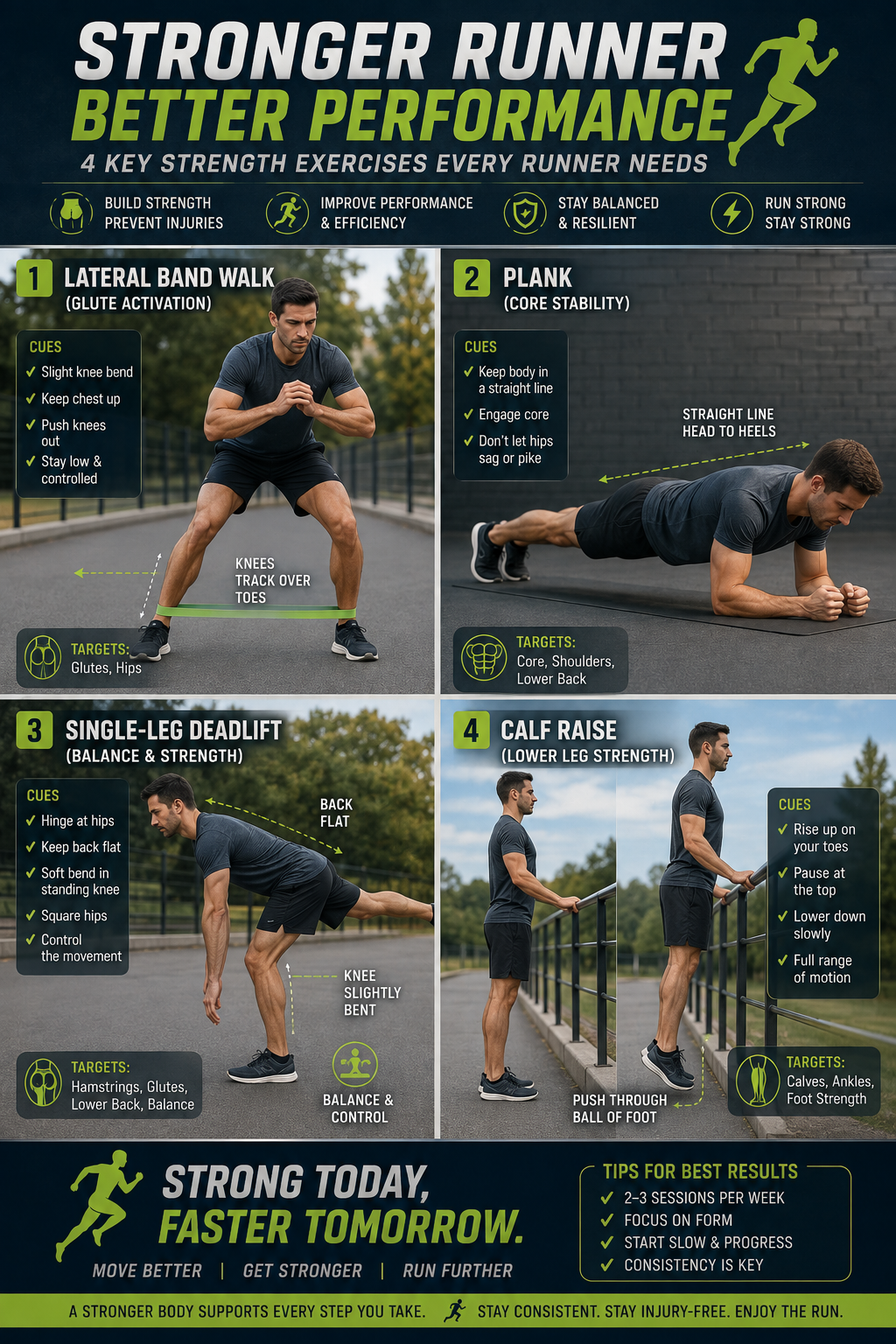
70% of recreational runners experience injury each year. Most common injuries in beginners are preventable with lower-limb strength training.
Why strength training is mandatory in C25K:
(cite index=”20-1″>Lower limb strength plays a significant role in preventing running injuries. Building strength in legs and core helps your body handle the repetitive force of each stride more effectively.</cite>
Minimal Effective Strength Routine (2–3x/week, 15–20 min):
GLUTE & HIP ACTIVATION (prevent knee pain, IT band syndrome)
• Glute bridges: 3 sets × 15 reps
• Lateral band walks: 3 sets × 12 steps each direction
• Clamshells: 3 sets × 12 reps each side
• Single-leg deadlifts: 3 sets × 8 reps each side

CORE STABILITY (prevent lower back strain, improve running efficiency)
• Planks: 3 sets × 30–45 sec hold
• Dead bugs: 3 sets × 10 reps each side
• Bird dogs: 3 sets × 10 reps each side
• Pallof press (with resistance band): 3 sets × 10 reps each side

CALF & SHIN (prevent shin splints, plantar fasciitis)
• Calf raises: 3 sets × 15 reps
• Dorsiflexion holds (tibialis anterior): 3 sets × 15 reps
• Seated calf stretches: Hold 30 sec × 3 each leg
Pairing schedule:
- Day 1: Running (C25K Workout 1)
- Day 2: Strength (Glute + Core focus)
- Day 3: Running (C25K Workout 2)
- Day 4: Rest or easy activity (walking, yoga)
- Day 5: Strength (Calf + Core focus)
- Day 6: Running (C25K Workout 3)
- Day 7: Rest
C25K Programs to Try
| Program | Format | Best For |
|---|---|---|
| Official C25K | Printable PDF schedule | Budget-conscious, prefer manual tracking |
| Strava | Free app + community | Want social accountability & route tracking |
| Nike Run Club | Free app with audio coaching | Prefer guided runs with coaching cues |
| Couch to 5K (Apps) | Dedicated iOS/Android | Want structured audio + timer management |
| None to Run | App + progressive plan | Need slower progression than standard C25K |
Marathon Training: Why It Often Halts Weight Loss
Quick Answer
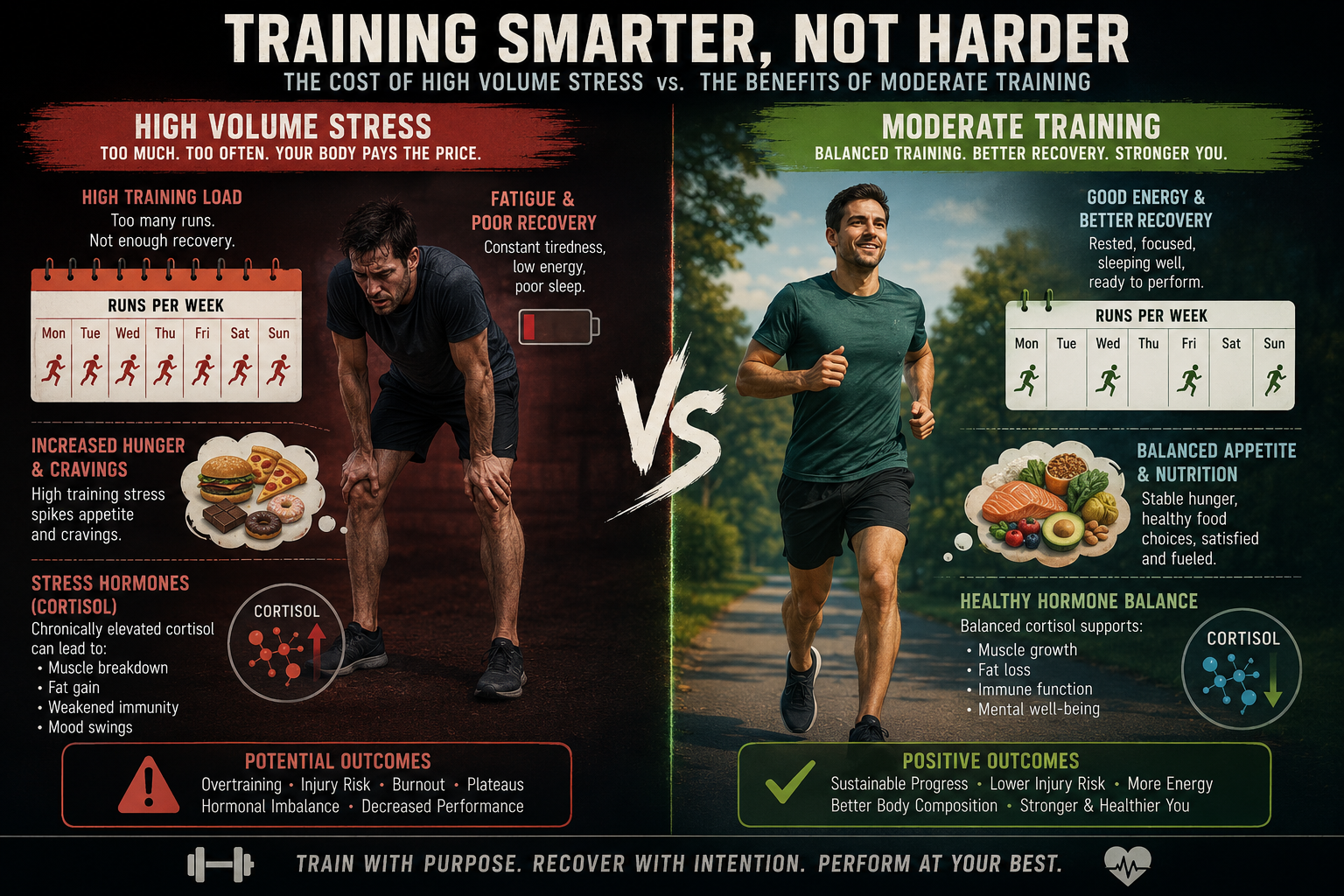
Marathon training (13+ weeks, 30–50 miles/week) burns enormous calories BUT many runners plateau or gain weight during training. Why? High volume triggers hunger hormones, caloric compensation, and reduced non-exercise energy expenditure. Marathon training optimizes performance, not fat loss—save it for after establishing a stable weight.
The Marathon Training Paradox
Counterintuitive reality: Marathon runners often gain weight or plateau during peak training, despite running 40–60 miles weekly. Here’s why:
1. Caloric Compensation (The Body Fights Back)
Your body perceives high-volume training as a survival threat and activates adaptive thermogenesis:
- Reduces non-exercise activity thermogenesis (NEAT) = fidgeting, walking around decreases
- Lowers spontaneous muscle contraction = body conserves energy
- Net effect: You burn fewer calories outside running to “make up for” training expenditure
2. Hormonal Appetite Amplification
High mileage elevates hunger hormones:
- Ghrelin (hunger signal) rises after long runs
- Leptin (satiety signal) may drop slightly
- Cortisol (stress hormone) can elevate, increasing cravings for calorie-dense foods
- Result: Intense, persistent hunger that overrides caloric deficit intentions
3. Carbohydrate Loading & Recovery Nutrition
Marathon training requires high carbohydrate intake for:
- Long-run fuel (pre-race practices)
- Glycogen replenishment (post-run recovery)
- Carb-loading before races (1–3 days of intentional surplus)
Example impact:
- Non-training weeks: 2,000 cal/day
- Marathon training weeks: 2,500 cal/day (80+ miles running + increased recovery nutrition)
- That’s 3,500 extra calories per week = 1 lb weight gain (if not offset by reduced diet elsewhere)
4. Cortisol & Parasympathetic Imbalance
High-volume training → elevated cortisol → stress response → body wants to store calories as fat for “future emergency”
Real-World Data: Marathon Training vs. Fat Loss Outcomes
| Training Phase | Weekly Mileage | Typical Outcome | Why |
|---|---|---|---|
| Base building (8–12 weeks) | 15–25 miles/week | Fat loss ✅ | Moderate volume, predictable hunger |
| Build phase (8–12 weeks) | 25–40 miles/week | Plateau or slight gain ⚠️ | Appetite rises; compensation begins |
| Peak/taper (4–6 weeks) | 30–50+ miles (peak), then reduced | Often +2–5 lbs ❌ | High hunger at peak; carb-loading before race |
| Recovery (4–8 weeks post-marathon) | 10–20 miles/week | Easy weight loss resumes ✅ | Lower volume; hunger normalizes |
If You Want Fat Loss During Marathon Training: Realistic Strategies
Strategy 1: Modest Deficit (Don’t Aggressive Cut)
- Aim for 300–500 cal deficit max (not 750+)
- Aggressive restriction + 50 miles/week = injury risk, burnout, muscle loss
Strategy 2: Prioritize Protein Intake
- Increase protein to 1.4–1.8g per kg body weight
- Preserves muscle during high volume + deficit
- Example: 80 kg runner → 112–144g protein daily
- Distributes across 4–5 meals/snacks for optimal muscle protein synthesis
Strategy 3: Moderate Mileage, Strategic Intensity
- Instead of: 50 miles/week (all easy running)
- Try: 30–35 miles/week (one long run + one tempo/interval session + easy running)
- Maintains aerobic fitness without extreme volume
- Lower appetite suppression from reduced volume
Strategy 4: Strength Training Becomes Critical
- 2–3x/week lower-body + core work
- Preserves muscle in deficit (without this, high mileage + deficit = muscle loss)
- Improves running efficiency (faster pace at lower effort)
The Bottom Line on Marathon Training & Fat Loss
| Goal | Recommendation |
|---|---|
| Want to lose significant fat? | Base-building or maintenance phase (15–30 mi/wk) is ideal. Post-marathon recovery phase is easiest. Marathon training itself prioritizes performance, not fat loss. |
| Already trained for marathons, want fat loss? | Do 1 season building 50-mile base → race marathon → take 4-week recovery → enter fat-loss phase (20–30 mi/wk, strength + modest deficit) |
| Want both marathon fitness + fat loss simultaneously? | Possible but requires: (a) strict adherence to modest deficit, (b) high protein, (c) strength training non-negotiable, (d) realistic expectations (slower progress than fat-loss-only phase). Most runners find it difficult. |
How Running Compares: Walking vs. Running for Fat Loss
Quick Answer
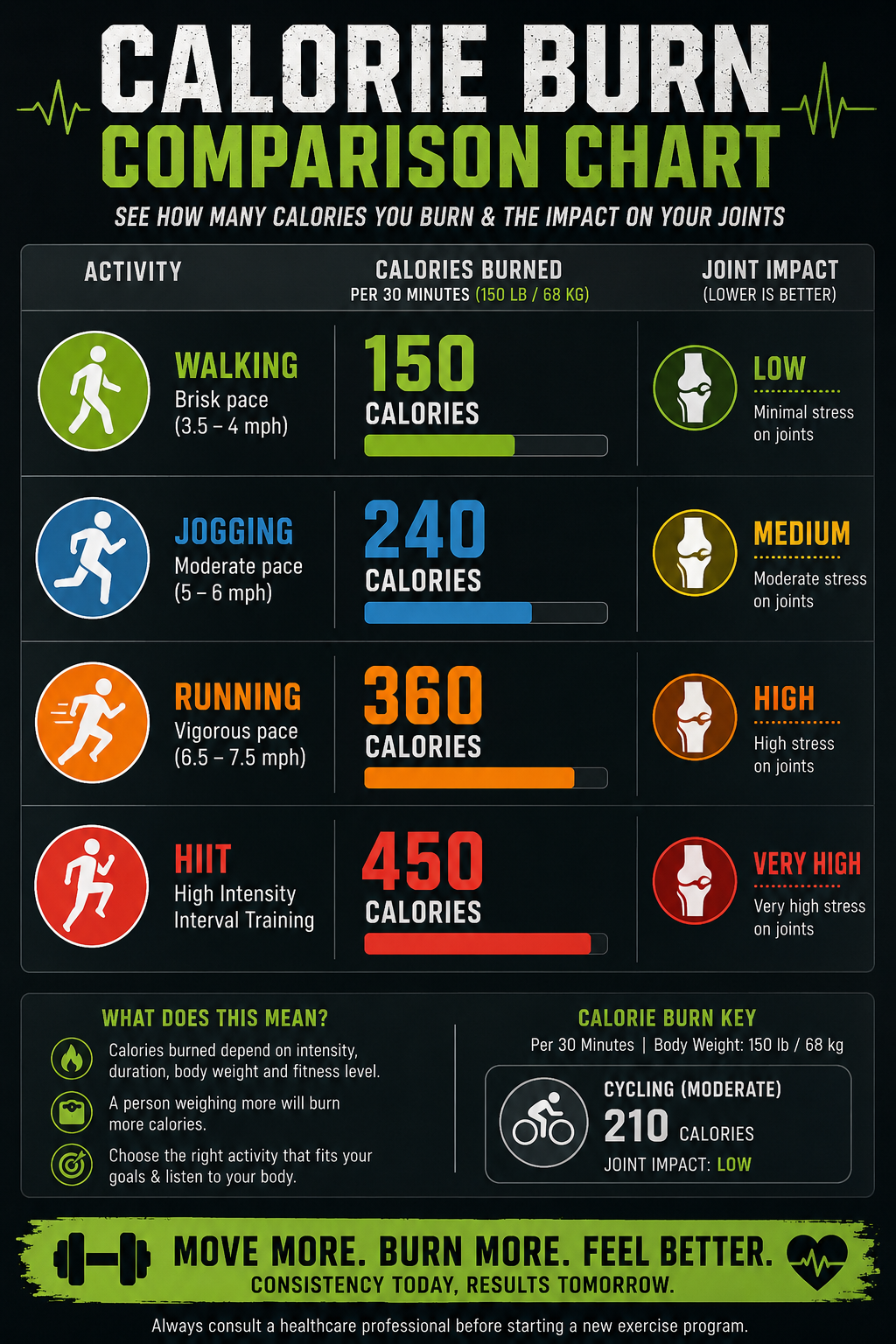
Running burns 2–3× more calories per minute and has higher “afterburn” (EPOC) effect, making it faster for fat loss. Walking is lower injury-risk and more sustainable for high-mileage volume. Best approach: 80% easy-run/walk base + occasional harder running for time-efficient fat loss.
Calorie Burn: Direct Comparison
For a 160-pound (73 kg) person over 30 minutes:
| Activity | Calories Burned | Rate (cal/min) | Sustainability |
|---|---|---|---|
| Brisk walking (3.5 mph) | 180 | 6 | Very High |
| Easy jogging (5 mph) | 270 | 9 | High |
| Steady running (6.5 mph) | 360 | 12 | Moderate |
| Fast running (8 mph) | 450+ | 15+ | Low (injury risk) |
Key insight: Running in 30 minutes accomplishes what walking might require 45–60 minutes to do = time-efficient for busy people.
Joint Impact: The Hidden Cost
Running isn’t just higher intensity—it’s higher mechanical impact stress:
| Activity | Joint Load Per Stride | Annual Injury Rate | Common Injuries |
|---|---|---|---|
| Walking | 1–1.5× body weight | ~5–10% | Rare; usually plantar fasciitis with extreme volume |
| Running (easy) | 2.5–3× body weight | ~20–30% | Shin splints, runner’s knee, IT band syndrome |
| Running (fast/HIIT) | 3–4× body weight | 40–50% | All above + stress fractures, stress reactions |
The EPOC (Afterburn) Advantage of Running
After running, your metabolism stays elevated longer:
Walking (30 min at 3.5 mph):
- Afterburn: ~1–2 hours
- Typical elevation: 10–15% above baseline
Easy running (30 min at 6 mph):
- Afterburn: ~6–12 hours
- Typical elevation: 20–30% above baseline
HIIT/Interval running:
- Afterburn: 24–48 hours
- Elevation: 30–50% above baseline
- Example: Burn 400 calories during 30-min workout + an extra 100–150 calories of afterburn
Practical result: One hard run = equivalent to 1.5–2 easy runs for total energy expenditure.
The Sustainability Factor (Why It Actually Matters Most)
Real-world outcomes:
| Scenario | Likely Result | Why |
|---|---|---|
| Person does intense running 4x/week for fat loss | Often quit within 4–8 weeks (injury or burnout); minimal fat loss | Joint impact + fatigue + injury risk too high for consistency |
| Person walks 5–6 miles daily for 3+ months | Consistent adherence; 1–1.5 lb/week fat loss | Low barrier to entry; sustainable without injury |
| Person does easy running 3x/wk + walk on off-days | Best long-term results; 1–2 lb/week fat loss | Balances intensity + sustainability; injury risk managed |
Evidence: A study tracking walkers vs. runners for weight loss found that walkers had higher adherence and similar total fat loss after 6 months, because they could maintain consistency without injury.
Optimal Strategy: Blended Approach
For maximum fat loss with minimum injury risk:
Weekly Schedule (4–5 hours/week)
├─ Monday: Easy run or run-walk (30–40 min)
├─ Tuesday: Strength training (30 min)
├─ Wednesday: Walk (45–60 min, conversational pace)
├─ Thursday: Moderate-hard run + intervals (30–40 min)
├─ Friday: Strength training (30 min)
├─ Saturday: Long, easy run or walk (45–90 min)
└─ Sunday: Rest or very easy activity (yoga, mobility)

Expected result: 2–4 lb/week fat loss (with modest 300–500 cal deficit diet)
Sustainability: High (low injury risk, balanced volume)
Running Injury Prevention: Critical for Long-Term Success
Quick Answer
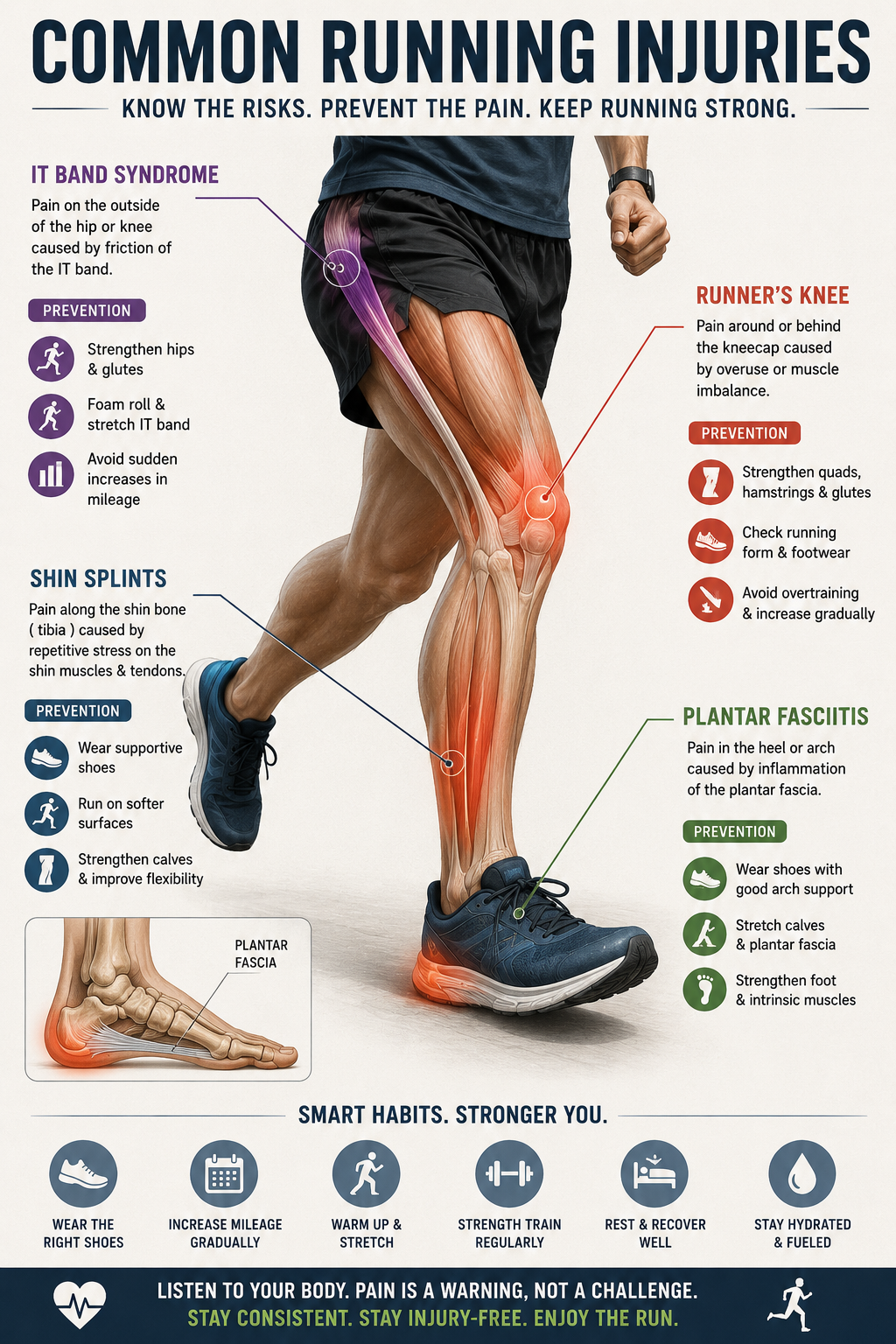
70% of recreational runners experience injury annually. Most injuries are preventable through: (1) gradual progression (10% rule), (2) adequate strength training (especially glutes/core), (3) proper footwear, (4) adequate recovery. Stop early & seek help if pain persists >3 days.
Why Injury Is the #1 Threat to Weight Loss Success
Running for weight loss only works if you stay consistent. Injury breaks consistency:
Week 1–4: Excited, running regularly → Fat loss starts ✅
Week 5–8: Injury develops (ignored) → Keep running through pain
Week 9: Pain unbearable → Stop running completely → No activity for 2–4 weeks
Week 13: Pain resolved, but motivation gone; habits broken → Restart from zero
Reality: No net fat loss despite months of effort
Prevention is 100× better than treatment.
The 10% Rule: Progressive Overload Without Injury
Rule: Increase weekly mileage by no more than 10% week-to-week.
Why it works: Tissues (bones, tendons, ligaments, muscle) adapt gradually. Jumps >10% accumulate micro-damage faster than repair happens.
Example progression:
| Week | Total Mileage | Weekly Change | Status |
|---|---|---|---|
| Week 1 | 8 miles (3×3 mi runs) | — | Safe starting point |
| Week 2 | 8.8 miles (+10%) | 0.8 mi | Tissues adapt |
| Week 3 | 9.7 miles (+10%) | 0.9 mi | Continuing adaptation |
| Week 4 | 10.7 miles (+10%) | 1 mi | Good progress |
| Week 5 | 18 miles (+68%) | 7.3 mi | ❌ INJURY RISK! Too fast |
What happens at 68% increase: Bones haven’t adapted; tendons haven’t strengthened; ligaments haven’t reinforced. Rapid breakdown risk = injury likely.
The Big 4 Beginner Running Injuries (Prevention Strategies)
1. Shin Splints (Tibial Stress Syndrome) — 30% of Beginner Runners
What is it: Inflammation along the shin bone from repetitive impact
Why beginners get it:
- Rapid progression (too many miles, too fast)
- Poor footwear (insufficient support)
- Weak tibialis anterior muscle (front of shin)
- Running on hard surfaces (concrete, asphalt)
Prevention:
- (cite index=”17-1″>Proper footwear and insoles at the beginning of your Couch to 5K journey help prevent shin splints.</cite> Visit a specialty running store for gait analysis
- Strengthen shins: Calf raises, dorsiflexion holds, tibialis raises
- Progression: Adhere strictly to 10% rule; don’t rush
- Stretch calves daily: Hold 30 sec × 3 sets each leg
- Consider treadmill running initially (consistent surface, built-in shock absorption)
Red flag: Sharp pain along shin bone (not dull soreness); pain that worsens during run
2. Plantar Fasciitis — 20% of Runners
What is it: Inflammation of the plantar fascia (band of tissue along bottom of foot) causing heel pain
Common in runners who:
- Have tight calves (pull on heel)
- Run on hard surfaces
- Wear unsupportive shoes
- Jump mileage too quickly
- Have high or flat arches
Prevention:
- (cite index=”17-1″>Proper arch-supporting footwear and insoles help prevent plantar fasciitis.</cite>
- Daily calf stretches (hold 30 sec × 3 sets each)
- Night splint (keeps foot in dorsiflexion while sleeping, prevents tightening)
- Plantar fascia self-massage: Roll foot on tennis ball or massage ball × 1 min daily
- Gradual progression + adequate recovery
Red flag: Heel pain, especially sharp pain first step in morning
3. Runner’s Knee (Patellofemoral Pain) — 25% of Runners
What is it: Pain around or behind the kneecap from imbalanced knee tracking
Root causes:
- Weak glutes/hip abductors (knee collapses inward = poor tracking)
- Tight hip flexors (pull femur forward)
- Rapid mileage increase
- Poor running form (overstriding, internal rotation)
Prevention:
- Glute activation is critical: Glute bridges, lateral band walks, clamshells, single-leg deadlifts
- Hip mobility: Pigeon pose stretches, hip flexor stretches
- Core stability: Planks, dead bugs, bird dogs
- Running form cues:
- Land midfoot (not heel-striking)
- Quick cadence (170–180 steps/min = shorter, quicker steps)
- Keep knees tracking over toes (not caving inward)
- Video analysis: Run toward a camera to check knee alignment
- Strengthen arches: Towel scrunches, short foot exercises
Red flag: Pain around kneecap (not joint pain); worsens during downhill running
4. IT Band Syndrome (ITBS) — 15% of Runners
What is it: Tightness/inflammation of the IT band (ligament along outer thigh) causing lateral knee pain
Risk factors:
- Weak hip abductors (can’t control inward knee collapse)
- Tight hip flexors + IT band
- Cambered running surfaces (sloped roads)
- Sudden mileage jumps
- Tight/worn running shoes
Prevention:
- Hip abduction strength: Lateral band walks, side-lying leg raises, side planks
- Hip external rotation: Clamshells, external rotation stretches
- Foam rolling: IT band, glutes, hip flexors (2–3 min daily, can be uncomfortable)
- Stretch hip flexors: 90-90 stretch, couch stretch
- Avoid crowned roads (run on flatter surfaces when possible)
Red flag: Sharp pain on outer knee; worsens during lateral movements or descents
Pre-Run & Post-Run Protocols (Injury Prevention Routine)
Dynamic Warm-Up (5–10 minutes before running):
- Leg swings: Forward/back × 10 each leg; side-to-side × 10 each
- Walking lunges: 10 each leg
- Arm circles: 10 forward, 10 backward
- High knees march: 20 steps
- Butt kicks: 20 steps
- Walking quad stretch: 5 each leg
- Gradual acceleration: Walk → easy jog → build to running pace over 2–3 min
Post-Run Cool-Down (5 minutes):
- Walk at easy pace for 2–3 minutes
- Static stretches (hold 30 sec each):
- Calf stretch (wall or step)
- Quad stretch (pull heel to glute)
- Hamstring stretch (fold forward or supine)
- Hip/IT band stretch (pigeon pose or figure-4 supine)
- Hip flexor stretch (low lunge or couch stretch)
Recovery (24–48 hours post-run):
- Foam roll calves, quads, IT band (1–2 min each)
- Ice if any swelling (15 min)
- Elevation if feet/legs feel heavy
- Protein + carbs within 30 min post-run (supports muscle repair)
Nutrition & Caloric Deficit Strategy for Running Weight Loss
Quick Answer
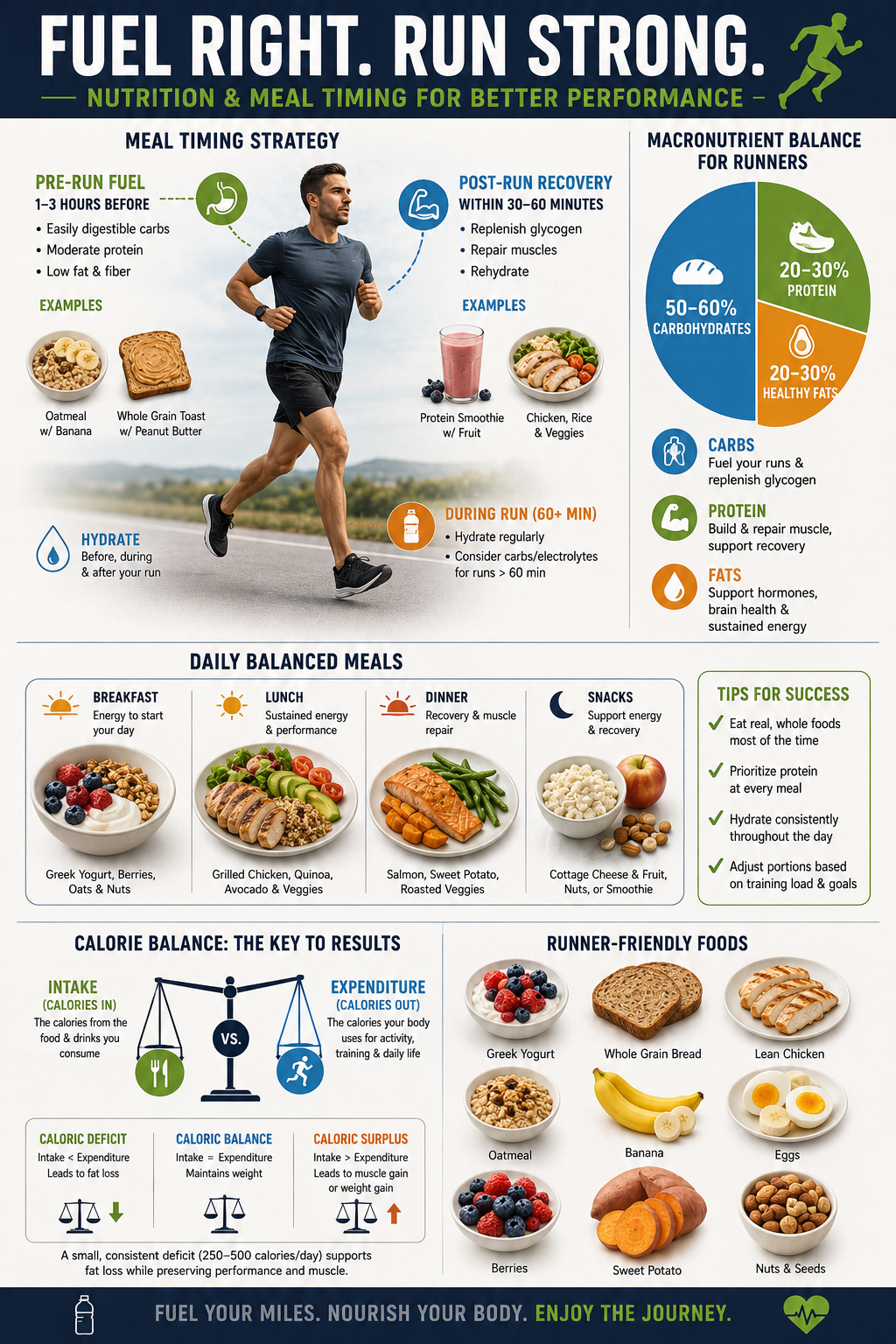
Weight loss through running requires a caloric deficit (burning more than consuming). Pair running with modest dietary reduction (300–500 cal/day), adequate protein (1.2–1.6g/kg body weight), and proper fueling around runs. Diet determines whether the deficit actually happens; running enables it.
The Caloric Deficit Equation (The Only Thing That Really Matters)
Weight Loss Formula:
Calories Burned (running + daily activities) > Calories Consumed (food)
= Caloric Deficit
= Weight Loss
Critical insight: You cannot out-run a bad diet.
Example:
- You run 4 miles → Burn ~400 calories
- You eat a 600-calorie post-run meal thinking you “earned it”
- Result: +200 calories (no deficit, no weight loss)
How to Create a Sustainable Deficit (Without Deprivation)
Step 1: Find Your Maintenance Calories
- Use online calculator (e.g., Harris-Benedict equation) or track current intake for 1 week, find average
- Example: 2,200 cal/day = maintenance for a 180 lb person with moderate activity
Step 2: Create a Modest Deficit
- Target: 300–500 cal/day below maintenance
- Example: 2,200 – 400 = 1,800 cal/day target
- Why modest? Aggressive deficits (<500 cal) + running = injury risk, burnout, muscle loss
Step 3: Split the Deficit (Running + Diet)
- Option A: Running 3x/week (~300 cal/run) + diet reduction 100–200 cal/day
- Option B: Running 4x/week (~300 cal/run) + minimal diet change
- Result: Feels easier than either running alone or diet restriction alone
Step 4: Track (Honestly) for 2–3 Weeks
- Use app (MyFitnessPal, Cronometer) or spreadsheet
- Log everything: meals, snacks, drinks
- Purpose: Calibrate realistic intake vs. burned calories
- Most runners find they underestimate food intake by 15–25%
Step 5: Monitor & Adjust
- Weigh 2–3x per week (not daily; weight fluctuates by 2–3 lbs daily due to water/food timing)
- If no progress after 3 weeks: Deficit likely isn’t real
- Adjust: Either reduce intake by 100 cal OR increase running by 1x/week
Protein: The Muscle-Preserving Macronutrient
Running alone (especially with caloric deficit) triggers muscle breakdown. Adequate protein combats this.
Target: 1.2–1.6 grams per kilogram body weight daily
| Body Weight | Daily Protein Target |
|---|---|
| 150 lbs (68 kg) | 82–109g |
| 175 lbs (80 kg) | 96–128g |
| 200 lbs (91 kg) | 109–146g |
| 225 lbs (102 kg) | 122–163g |
Why protein matters during running + deficit:
- Preserves muscle (prevents metabolic slowdown)
- Improves satiety (eat less, feel fuller longer)
- Supports muscle repair post-run
- Improves recovery + adaptation
High-protein food sources (per serving):
- Greek yogurt (7 oz): 20g
- Chicken breast (3 oz): 26g
- Eggs (3 large): 18g
- Cottage cheese (½ cup): 14g
- Lentils (1 cup cooked): 18g
- Whey protein powder: 25g
- Salmon (3 oz): 25g
Distribution strategy: Spread protein across 4–5 meals/snacks for optimal muscle protein synthesis (each meal should have 20–40g)
Pre-Run & Post-Run Nutrition Timing
LIGHT RUNS (<45 minutes, easy pace):
- Pre-run: No food needed if well-nourished overall; if hungry, small carb 30–60 min prior (banana, toast, energy bar)
- Post-run: Normal meal or snack within 30 min (carb + protein for glycogen + muscle repair)
MODERATE RUNS (45–75 min, mixed easy/steady effort):
- Pre-run: Carbs 2–3 hours prior (oatmeal, whole grain toast, yogurt) + water
- During run: Water at 15–20 min intervals; no fuel needed unless >60 min
- Post-run: Carb + protein within 30 min (example: banana + Greek yogurt, or chicken + rice)
LONG RUNS (75+ min, mostly easy) OR HARD WORKOUTS (intervals, tempo):
- Pre-run: Carbs + small protein 2–3 hours prior; hydrate well
- During run: Sports drink, gel, or energy chew every 45–60 min (need 30–60g carbs/hour for longer efforts)
- Post-run: Carb + protein within 30 min; then normal meal 2–3 hours later
Sample Day of Eating (1,900 cal, 120g protein, paired with running)
BREAKFAST (7 AM)
Oatmeal (½ cup dry, cooked) with berries + Greek yogurt (7 oz)
Nutritional breakdown: 450 cal | 18g protein | 65g carb | 8g fat

SNACK (10 AM)
Apple + almond butter (1 tbsp)
Nutritional breakdown: 180 cal | 4g protein | 23g carb | 9g fat

LUNCH (1 PM)
Grilled chicken (4 oz) + brown rice (1 cup) + steamed broccoli
Nutritional breakdown: 420 cal | 38g protein | 48g carb | 8g fat

PRE-RUN (4 PM, 45 min before running)
Banana + 1 tbsp almond butter
Nutritional breakdown: 160 cal | 4g protein | 27g carb | 6g fat

DINNER (6:30 PM, post-run)
Salmon (4 oz) + sweet potato (6 oz) + spinach salad (olive oil)
Nutritional breakdown: 480 cal | 32g protein | 42g carb | 15g fat

EVENING SNACK (8 PM)
Cottage cheese (½ cup) + pineapple
Nutritional breakdown: 120 cal | 14g protein | 18g carb | 1g fat

DAILY TOTALS: 1,810 cal | 110g protein | 223g carb | 47g fat
(Adjust portions based on your own maintenance calories; this is an example for ~1,800 cal target.)
When You Should Consult a Healthcare Provider Before Starting

Stop and see your doctor if you have:
| Condition | Why It Matters | What to Tell Your Doctor |
|---|---|---|
| Cardiovascular disease, hypertension, or family history of heart attacks/strokes | Running increases heart rate/blood pressure; needs baseline assessment | “I want to start running for weight loss. Do you have any concerns?” |
| Diabetes (Type 1 or 2) or pre-diabetes | Running affects blood glucose; may need medication adjustment | “How will running affect my blood sugar? Should I check BG before/after?” |
| Significant overweight or obesity | Joint impact forces multiply; injury risk is high | “What’s the safest way for me to start running given my weight?” |
| Arthritis, prior joint surgery, or chronic joint pain | Running is high-impact; may worsen existing damage | “Is running safe for me, or should I do low-impact exercise?” |
| Asthma or other respiratory conditions | Running in cold/pollution may trigger symptoms | “How should I manage my asthma while running?” |
| Mental health conditions (depression, anxiety) | Exercise is beneficial BUT needs coordinated care | “I’m starting running for weight loss. How does this fit with my treatment?” |
| Age >40 + sedentary history + cardiac risk factors | Sudden exercise jump has risk; baseline assessment needed | “Is it safe for me to start a running program?” |
What a pre-running check-up typically includes:
- Blood pressure, heart rate, basic physical exam
- Discussion of your fitness history and current medications
- Risk factor assessment (smoking, family history, cholesterol if known)
- Clearance: “Go ahead, here’s my advice” OR “Start with walking first” OR “Consult a specialist”
Practical 8-Week Getting Started Plan
Week 1: Assessment & Preparation (No Running Yet)
Days 1–2:
- Schedule doctor visit if you have any health concerns (don’t skip this)
- Go to specialty running store for gait analysis + shoe fitting
- Expected cost: $100–150 for quality running shoes (best injury prevention investment)
Days 3–4:
- Baseline measurements: Resting heart rate (count pulse 60 sec after waking), body weight, waist circumference
- One timed walk: Walk 1 mile at comfortable pace; note time (example: 21 min = 2.9 mph pace)
- Take photos: Front, side, back (not for comparison, for progress motivation)
Days 5–7:
- Nutrition tracking: Log everything you eat for 3 days (get real baseline)
- Calculate maintenance calories using online calculator
- Calculate deficit target (maintenance – 300-500 cal = daily target)
- Choose a tracking app (MyFitnessPal, Cronometer) or spreadsheet
Week 1 Action Items Checklist:
- [ ] Doctor clearance obtained (or decided not needed)
- [ ] Running shoes purchased
- [ ] Baseline metrics recorded
- [ ] Nutrition baseline established
- [ ] Caloric deficit target calculated
Weeks 2–4: Foundation Building (Start Couch to 5K)
Running: Follow Couch to 5K Workout 1 schedule (3x/week)
Strength Training: Add 2 sessions/week
- Monday: Glute focus (glute bridges, lateral band walks, clamshells) + core
- Wednesday: Core focus (planks, dead bugs, bird dogs)
Nutrition: Implement caloric deficit (hit daily target; track 5–6 days/week)
What to expect:
- Running will feel hard at first; this is normal
- Soreness 24–48 hours post-run (muscle adaptation)
- No major weight loss yet (mostly water/glycogen shifts)
- Noticing you can run longer intervals without stopping
Weeks 2–4 Milestone:
- Should be able to run 2–3 min continuously by week 4
- Consistency = most important measure of success
Weeks 5–8: Building Momentum
Running: Progress through Couch to 5K Weeks 5–8 (still 3x/week)
- By week 8: Should run 10–15 min continuously
Strength Training: Continue 2x/week; add 1 harder exercise per session
- Add: Single-leg deadlifts, side planks, lateral lunges
Nutrition: Continue caloric deficit; re-assess if no weight change after 3 weeks
- If stalled: Reduce intake by 100 cal OR add 1 running day
What to expect:
- Visible weight loss: 2–4 lbs typically
- Clothes fitting looser (often visible before scale changes)
- Running is starting to feel sustainable (less breathless)
- Occasional joint soreness (address immediately; see injury section)
Weeks 5–8 Milestone:
- Completed Couch to 5K Phase 1
- Consistent weight/fat loss pattern established
- Injury-free (if minor tweaks, addressing them early)
Week 9+: Transition to Maintenance or Next Phase
Option A: Maintenance (Health Focus)
- Continue 3–4 runs/week at easy-moderate pace
- Maintain 2x/week strength training
- Shift from active deficit to maintenance calories
- Result: Sustain weight loss, build fitness, enjoy running
Option B: Performance Focus
- Progress to “Couch to 5K Phase 2” or “Couch to 10K”
- Add speed work (1 tempo or interval session/week)
- Increase long run distance gradually
- Maintain strength training 2x/week
- Result: Build running fitness toward races (5K, 10K, half-marathon)
Option C: Aggressive Fat Loss (if still wanting more weight loss)
- Increase running to 4x/week (but keep 1 day easy)
- Add 1 additional strength session (3x/week total)
- Tighten deficit slightly (but stay ≥300 cal below maintenance)
- Reassess after 4–6 weeks (don’t run aggressive deficit long-term)
Red Flags: When to Stop & Seek Professional Help
Stop Immediately If You Experience:
| Symptom | Severity | Action |
|---|---|---|
| Chest pain or pressure | ⚠️ SEVERE | Stop running. Seek emergency care (call 911). |
| Severe shortness of breath (can’t catch breath, lightheaded) | ⚠️ SEVERE | Stop running. Sit down. If doesn’t resolve in 2 min, seek emergency care. |
| Unexplained dizziness or fainting | ⚠️ SEVERE | Stop immediately. Sit/lie down. Seek medical evaluation same day. |
| Sharp pain in chest, shoulder, or arm (especially during run) | ⚠️ SEVERE | Stop running. Consult doctor or ER same day. |
| Severe, acute joint pain (knee, ankle, hip—sudden onset) | ⚠️ MODERATE | Stop running that day. Ice + elevation. Consult PT/doctor if not improving within 24 hrs. |
Pause Running, Consult a Physical Therapist If:
| Symptom | Duration | Action |
|---|---|---|
| Pain during running (not just soreness) | Persists 1–2 runs | Stop running. Assess with PT. |
| Pain that worsens during or after run | Consistent across 2+ sessions | Stop running. See PT for assessment + rehab plan. |
| Swelling (ankle, knee, shin) | Doesn’t resolve within 24 hrs | Stop running. Ice, elevate. See PT within 3–5 days. |
| Persistently high resting heart rate (elevated 5–10 bpm above baseline) | 1+ weeks | Sign of overtraining or illness. Take 2–3 days off. Consult doctor if persistent. |
| General body soreness + malaise (feels like you’re getting sick) | 1+ days | Likely overtraining or early illness. Take rest day. Reassess. |
| Loss of running motivation + constant fatigue | 2+ weeks | Sign of burnout or overtraining. Reduce volume by 20–30%; add more rest days. |
When to Resume Running After Injury or Time Off:
Guideline: Return at 50% previous volume/intensity, then progress 10%/week
Example:
- You had a 2-week break (unplanned or forced)
- Before break: Running 3x/week, 5 miles/run, easy-moderate pace
- Return: Run 2.5 miles, 3x/week, easy pace only
- Next week: 2.75 miles OR add 4th run (but keep short/easy)
- Gradually return to previous baseline over 3–4 weeks
Why: Jumping back to previous volume/intensity after a break = high re-injury risk.
Q1: How long does it take to lose weight running?
A: Expect 1–2 pounds of fat loss per week when pairing running with a modest caloric deficit (300–500 calories/day). Some weight loss is visible within 3–5 days (mostly water and glycogen), but sustainable fat loss occurs gradually.
Timeline reality:
Weeks 1–2: Fluctuating (water weight shifts); may see 2–5 lb scale drop
Weeks 3–4: Sustainable fat loss begins; 1–2 lb/week typical
Weeks 5–12: Consistent 1–2 lb/week if diet adherence maintained
If you’re not seeing any progress after 4–6 weeks, your caloric deficit likely isn’t real—evaluate whether you’re accurately tracking food intake (most people underestimate by 15–25%) or overestimating burned calories.
Red flag: If weight loss stalls for 4+ weeks despite consistent running + diet tracking, you may need to slightly reduce calorie target or increase running volume by 1 day/week.
Q2: Can I lose weight running if I don’t change my diet?
A: Unlikely. Running creates caloric expenditure, but if your food intake remains unchanged—or increases to match/exceed burned calories—net weight loss won’t occur.
The math:
30-min run burns ~350 calories
You feel “earned” a 500-calorie post-run snack
Result: +150 calories (no deficit, no weight loss)
According to WebMD, weight loss requires achieving a caloric deficit by consistently burning more calories than you consume. Running enables the deficit; diet determines whether it actually happens.
The solution: Pair running with modest dietary reduction (200–300 cal/day) for true sustainability. You don’t need to “starve”—just modest adjustment.
Q3: Is strength training necessary for running weight loss?
A: Not strictly required—but highly recommended.
A caloric deficit from running alone can produce fat loss without strength training. However, adding 2–3 strength sessions weekly provides major benefits:
Preserves muscle (prevents metabolic slowdown)
Reduces injury risk by 40–60% (especially lower body)
Accelerates fat loss by ~15–20%
Improves running efficiency (less injury = more consistency)
The research: According to Complete Physio, lower limb strength plays a significant role in preventing common running injuries. Building strength in your legs and core helps your body handle repetitive stride force more effectively.
Bottom line: Running + diet = weight loss possible. Running + diet + strength training = faster fat loss + fewer injuries + better long-term results.
Q4: What’s the difference between “weight loss” and “fat loss”?
A: This distinction is critical:
Metric
Includes
Timeframe
Sustainability
Weight Loss
Fat + water + glycogen + muscle
Fast (1–3 weeks visible)
Often rebounds—muscle loss lowers metabolism
Fat Loss
Body fat only
Gradual (1–2 lbs/week)
Sustainable—muscle preserved, metabolism stays strong
Why it matters:
Losing 10 lbs of fat is better than losing 10 lbs of (muscle + water + fat)
Preserved muscle = higher resting metabolic rate = easier to maintain weight long-term
Muscle loss = metabolic slowdown = rebound weight gain likely within 12–24 months
How to maximize fat loss:
Pair running with adequate protein (1.2–1.6g per kg body weight)
Add strength training (2–3x/week)
Use modest caloric deficit (300–500 cal/day, not aggressive)
Result: You lose mostly fat, preserve muscle, and keep the weight off long-term.
Q5: Is it too late to start running if I’m significantly overweight?
A: No—it’s never too late. But you must start cautiously.
The challenge: Overweight individuals experience multiplied joint impact forces during running (impact stress scales with body weight). A 200 lb person has ~3× higher joint stress than a 150 lb person at the same running pace.
Safe approach:
See your doctor first (Mayo Clinic recommends this for anyone with joint concerns)
Start with run-walk intervals (even gentler than standard Couch to 5K)
Invest in supportive footwear (Superfeet recommends gait analysis at specialty stores)
Consider walking as primary modality initially (lower impact; same fat loss potential with more volume)
Add strength training from day 1 (builds joint stability, prevents injury)
Progress slowly (10% weekly increase rule is especially critical)
Example progression for someone 50+ lbs overweight:
Weeks 1–4: Walk 30 min, 3x/week + strength training 2x/week
Weeks 5–8: Walk-run intervals (2 min walk / 1 min jog), 3x/week
Weeks 9–12: Gradually increase running intervals
Weeks 13+: Transition to standard Couch to 5K progression
Realistic timeline: 12–16 weeks to achieve continuous running; 6–12 months for major fat loss. It’s slower, but injury-free consistency beats speed.
Q6: How do I know if running pain is “normal” or a sign of injury?
A: This distinction can save you months of recovery time.
NORMAL (muscle soreness/fatigue) — Safe to continue:
Mild muscle soreness 24–48 hours post-run (DOMS—Delayed Onset Muscle Soreness)
General fatigue in legs
Slight breathlessness (expected during effort)
Muscle fatigue that improves as you warm up
RED FLAG (injury warning) — Stop and assess:
Sharp pain during running (especially in joints)
Pain that worsens as you continue running
Pain localized to one spot (not whole-body fatigue)
Swelling (ankle, knee, shin) that doesn’t resolve within 24 hours
Pain that persists >48 hours post-run
Pain that recurs with every run
Action plan:
If sharp pain during run: Stop immediately, walk back/home
If swelling: Ice for 15 min, elevate for 2–4 hours
If pain persists >3 days or recurs with running: See a physical therapist or sports medicine doctor before resuming
Never “run through” pain (ignoring injury warnings turns small issues into 2–4 week recoveries)
Prevention: Address small aches early with proper strength training, adequate recovery, and gradual progression.
Q7: Why do I feel hungrier after running, and how do I manage it?
A: Increased hunger after running is completely normal—your body is signaling a genuine metabolic need.
What happens physiologically:
Running depletes muscle glycogen (energy stores)
Your body releases ghrelin (hunger hormone) to signal need for fuel
Cortisol (stress hormone) may be elevated post-run, increasing appetite for calorie-dense foods
Blood sugar may dip, triggering cravings
Why this matters for weight loss: Many runners cancel out their caloric deficit by eating back all (or more than) burned calories. Example:
You run and burn 400 calories
Post-run hunger is intense
You eat 600-calorie snack (thinking you “earned” it)
Net result: +200 calories (no deficit, no weight loss)
How to manage hunger without derailing progress:
Strategy
How It Works
Post-run protein + carbs within 30 min
Refuels glycogen, supports recovery, improves satiety. Example: Greek yogurt + berries (200 cal, 20g protein).
Hydrate well
Thirst often masquerades as hunger. Drink 16–20 oz water post-run before eating.
Wait 30–45 min after run
Hunger peak usually passes; you’ll eat smaller portion if you wait.
Pre-plan post-run meal
Decide before you run what you’ll eat. Prevents emotional eating decisions.
Eat protein at every meal
Protein improves satiety; spread it across meals (20–40g per meal).
Avoid “earned it” mentality
Your deficit is planned into your daily calories. Running is bonus; don’t eat extra.
Track honestly
Log post-run snacks; many people add 200–400 undisclosed calories here.
Real talk: If hunger is unmanageable, your caloric deficit may be too aggressive. Try reducing deficit from 500 to 300 cal/day; it’s still effective long-term.
Q8: How do I know if I’m overtraining, and what should I do?
A: Overtraining happens when running volume/intensity exceeds your body’s recovery capacity. It’s a common mistake for motivated beginners.
Overtraining signs:
Persistently elevated resting heart rate (5–10 bpm above your baseline for 1+ weeks)
Constant fatigue (feel tired even after sleep)
Loss of motivation (running feels like a chore, not enjoyable)
Sleep disruption (hard to fall/stay asleep despite being tired)
Increased resting irritability (mood changes)
Increased injury frequency (sore joints, persistent aches)
Performance decline (runs feel harder despite more training)
Frequent colds/illness (immune system suppressed by overtraining)
What to do if you suspect overtraining:
Immediate (next 3–7 days):
Reduce running volume by 20–30% (but don’t stop completely)
Make all runs easy pace (conversational; no hard efforts)
Add 1–2 extra rest days
Focus on sleep (9+ hours/night)
Ensure adequate protein intake
If symptoms persist >1 week:
Take 3–5 complete rest days (no running)
Do light activity only (walking, easy yoga, stretching)
See your doctor to rule out illness
Consult a sports medicine doctor or coach about adjusting training
Prevention:
Never jump mileage >10% per week
Plan for 1 “recovery week” per month (reduce volume by 30–40%)
Take at least 1–2 complete rest days per week
Prioritize sleep and nutrition as much as training
Key insight: You don’t get faster/lose fat by running more. You get faster/leaner from proper training + adequate recovery. Rest is when the adaptation happens.
Q9: Can I run for weight loss if I have asthma, joint problems, or other health conditions?
A: Maybe—but requires medical clearance first.
For any pre-existing health condition, consult your healthcare provider before starting. They can assess your specific situation and provide personalized guidance.
Common conditions & general guidance (not medical advice; consult your doctor):
Condition
Consideration
Action
Asthma
Running in cold/pollution may trigger symptoms
Discuss inhalers, warm-up protocols, environment management with your doctor
Arthritis or joint pain
Running is high-impact; may worsen existing damage
Doctor/PT may recommend low-impact (walking, cycling) instead
Diabetes (Type 1 or 2)
Running affects blood glucose; may need medication adjustment
Discuss BG monitoring, timing, and medication with your endocrinologist
Cardiovascular disease or high blood pressure
Exercise increases heart rate/pressure; needs clearance
Get baseline assessment; doctor may prescribe specific intensity limits
Significant overweight
Joint impact forces multiply
Start with walking; graduate to run-walk very gradually
Recent surgery or injury
Premature running delays healing
Get PT clearance before resuming; may need 4–12 weeks recovery first
Bottom line: Your doctor isn’t trying to stop you—they’re ensuring it’s safe for your specific situation. A 15-minute visit could save you from a serious setback.
Key Takeaways: Running for Weight Loss Summary
| Principle | Application |
|---|---|
| Caloric deficit is non-negotiable | Running enables it; diet determines it. Pair running with modest dietary reduction (300–500 cal/day). |
| Gradual progression prevents injury | Adhere to 10% weekly increase rule; most injuries come from doing too much, too soon. |
| Strength training is mandatory | Prevents 70% of common running injuries; preserves muscle during deficit. 2–3x/week minimum. |
| Consistency beats intensity | One injury-free year of regular running beats 3 months of intense running + 9 months recovering from injury. |
| Couch to 5K is proven for beginners | 8–12 weeks, 3x/week run-walk intervals; expect 1–2 lb/week fat loss with modest deficit + strength training. |
| Fat loss, not weight loss, is the goal | Preserve muscle → preserve metabolism → sustainable results. Protein + strength training are key. |
| Listen to your body | Pain is feedback, not weakness. Address early or risk major setback. |
Your Action Steps (This Week)
- Health screening: If you have concerns, book a doctor visit
- Footwear: Visit specialty running store for gait analysis + shoe fitting
- Baseline metrics: Record weight, resting heart rate, body measurements
- Nutrition assessment: Track 3 days of food; calculate maintenance + deficit target
- Choose your program: Download Couch to 5K app or print a structured plan
- Week 1 priority: Focus on consistency and proper progression—not speed, not distance
Remember: The best running program is one you’ll actually follow. Start easy, build gradually, and prioritize injury prevention above all else. Your future self will thank you.
References & Authoritative Sources
Government & Public Health Authorities
National Institutes of Health (NIH) — U.S. Health Research
- NIH Homepage
- NIH MedlinePlus: Weight Loss & Exercise
- NIH National Institute of Diabetes: Weight Management
Centers for Disease Control & Prevention (CDC) — U.S. Public Health
- CDC Homepage
- CDC: Physical Activity for Health
- CDC: Nutrition & Healthy Eating
- CDC: Overweight & Obesity Prevention
Peer-Reviewed Research Databases
PubMed Central — U.S. National Library of Medicine
- PubMed Homepage
- Search terms: “aerobic exercise weight loss,” “running fat loss,” “interval training weight loss,” “injury prevention running”
Google Scholar — Academic Search
- Google Scholar
- Free access to millions of peer-reviewed papers on running, weight loss, fitness
Clinical & Medical Institutions
Mayo Clinic — Peer-Reviewed Clinical Guidance
- Mayo Clinic Homepage
- Mayo Clinic: Fitness Fundamentals
- Mayo Clinic: Weight Loss
- Mayo Clinic: Running Injuries
Yale Medicine — Academic Medical Research
- Yale Medicine Homepage
- Yale Medicine: Exercise & Injury Prevention
- Yale Medicine: Cardiovascular Exercise Benefits
Cleveland Clinic — Clinical Health Information
Specific Research Topics & Studies
Aerobic Exercise & Weight Loss
- PubMed: Aerobic vs. Resistance Training for Weight Loss — Search: “aerobic exercise weight loss meta-analysis”
- 2025 Research Review on Aerobic Exercise Effectiveness
HIIT (High-Intensity Interval Training) & Fat Loss
- PubMed: HIIT and Abdominal Fat Loss — Search: “HIIT running abdominal fat”
- 2024 Study: HIIT vs. Cycling for Fat Loss
Running Training & Injury Prevention
- Journal of Sports Sciences: Injury Prevention Strategies
- British Journal of Sports Medicine — Peer-reviewed sports injury & medicine research
Couch to 5K Programs
- Official Couch to 5K Program
- Runner’s World: Couch to 5K Guide
- Marathon Handbook: Couch to 5K Complete Guide
- Complete Physio: Couch to 5K the Physiotherapy Way
Nutrition & Protein for Runners
- CDC: Protein Nutrition
- Mayo Clinic: Protein & Athletic Performance
- NIH: Dietary Protein & Muscle Synthesis — Search: “protein muscle protein synthesis”
Running Injuries: Prevention & Treatment
- PubMed: Runner’s Knee Prevention
- PubMed: Shin Splints & Prevention
- PubMed: Plantar Fasciitis Prevention
- Yale Medicine: Stress Fractures & Running
Cardiovascular Health & Running
Recovery & Sleep for Athletes
- NIH: Sleep & Athletic Recovery — Search: “sleep athletic performance recovery”
- Mayo Clinic: Sleep for Health
Running & Fitness Apps & Programs (Verified Resources)
Established Couch to 5K Programs
- Strava — Running tracking + community (free & premium)
- Nike Run Club — Guided runs, free app
- Couch to 5K iOS/Android App
- None to Run — Gentler alternative to C25K (free beginner plan)
Nutrition Tracking
- MyFitnessPal — Calorie & macro tracking
- Cronometer — Detailed nutritional tracking
Workout Planning
- Marathon Handbook — Training guides & plans
- BODi/Beachbody — 8-week running programs
Professional Organizations & Certifications
American College of Sports Medicine (ACSM)
National Academy of Sports Medicine (NASM)
American Physical Therapy Association (APTA)
Specialized Topics
Running Form & Biomechanics
- PubMed: Running Biomechanics & Injury — Search: “running form biomechanics injury prevention”
- Runner’s World: Running Form Guide
EPOC (Excess Post-Exercise Oxygen Consumption)
- PubMed: EPOC Afterburn Effect — Search: “excess post-exercise oxygen consumption”
- Medical Daily: Walking vs Running Afterburn
Walking vs. Running for Weight Loss
Footwear & Injury Prevention
- Superfeet: Running Shoes & Injury Prevention
- American Academy of Orthopedic Surgeons: Running Shoes — Search: “running shoes selection”
Medical & Fitness Disclaimers
For Additional Professional Guidance:
- Find a Physical Therapist (American Physical Therapy Association)
- Find a Sports Medicine Doctor (American Medical Society for Sports Medicine)
- Find a Registered Dietitian (Academy of Nutrition and Dietetics)
Medical Disclaimer
This article is intended for general informational purposes only. It is not a substitute for professional medical advice, diagnosis, or treatment. Always consult with a qualified healthcare provider before beginning a new exercise program, especially if you have pre-existing health conditions. Stop exercising and seek medical attention if you experience chest pain, severe shortness of breath, unexplained joint pain, or dizziness. The author is not a licensed physician or physical therapist; all information has been sourced to recognized health authorities (NIH, CDC, Mayo Clinic, PubMed).



Comments (1)
Exercise for Weight Loss: Complete Fitness Guidesays:
September 2, 2026 at 10:15 pm[…] Running for Weight Loss: High Calorie Burn, Higher […]