



Medical Disclaimer
This article is for informational purposes only and does not replace professional medical advice. Weight loss involves complex factors including diet, exercise, genetics, and overall health. Before starting any new exercise program, especially if you have underlying health conditions, joint issues, or are taking medications, consult your healthcare provider or a certified fitness professional. The information presented here is general wellness guidance and should not be interpreted as medical diagnosis, treatment, or prescription. Individual results vary, and what works for one person may not be appropriate for another.
Introduction
Exercise is one of three primary drivers of weight loss, along with nutrition and lifestyle factors. When combined with a caloric deficit, regular physical activity accelerates fat loss, preserves muscle mass, and improves metabolic health.
How much exercise do you need to lose weight? The U.S. Department of Health and Human Services (HHS) Physical Activity Guidelines recommend at least 150 minutes of moderate-intensity aerobic activity per week, or alternatively 75 minutes of vigorous-intensity aerobic activity per week, to support weight loss and improve overall fitness. However, research shows that even 3 sessions of 30 minutes per week (90 minutes total), combined with a caloric deficit, produces meaningful weight loss. The key factor is not the intensity level—it is consistency. Someone exercising moderately five times per week will lose more weight over a year than someone doing intense workouts sporadically and quitting after three weeks.
What type of exercise burns the most calories? Running burns approximately 500–700 calories per hour, followed by high-intensity interval training (HIIT) at 400–800 calories per hour, swimming at 400–600 calories per hour, cycling at 300–500 calories per hour, and walking at 240–300 calories per hour. However, calories burned per hour is only one factor—adherence and sustainability predict long-term success better than single-session intensity.
Does exercise alone cause weight loss? No. Diet affects weight loss more than physical activity does. To lose one pound of body fat, you must burn approximately 3,500 calories. For most people, this requires combining caloric reduction through nutrition with regular exercise for weight loss, rather than relying on exercise alone.
This guide explores evidence-based exercise strategies for weight loss across all fitness levels, covering cardio, HIIT, strength training, low-impact activities, and lifestyle movement that together create meaningful, lasting results.
1. Cardio for Weight Loss: Does It Really Work?

Does cardio burn calories and support weight loss?
Yes. Cardiovascular exercise is a measurable calorie-burning activity and contributes meaningfully to weight loss when sustained consistently. The most effective cardiovascular exercises for weight loss include running, swimming, cycling, rowing, and brisk walking—all aerobic activities that elevate heart rate and oxygen consumption.
Cardio exercises ranked by calorie burn per hour (for a 155-pound person):
- Running at 7 min/mile pace: 744 calories/hour
- Cycling at 12+ mph: 590 calories/hour
- Swimming (steady pace): 475 calories/hour
- Brisk walking (3.5 mph): 298 calories/hour
However, <cite index=”8-1″>sustainable weight loss depends on consistency—someone who walks five days per week will lose more weight long-term than someone who performs intense cardio sporadically and burns out</cite>.
Why is consistency more important than intensity for cardio? <cite index=”8-1″>A person doing 30 minutes of high-intensity cardio once per week burns fewer total calories than someone doing moderate cardio for 30 minutes, five days per week</cite>. Over one month, the moderate, consistent approach creates a larger caloric deficit (7,500 calories from moderate effort) versus sporadic intense sessions (1,500 calories from one intense day).
Does cardio alone cause weight loss? No, but it accelerates weight loss when combined with dietary changes. <cite index=”9-1″>Physical activity is more effective at keeping weight off after loss and preventing muscle and bone loss when combined with resistance training</cite>. The U.S. Department of Health and Human Services recommends at least 150 minutes of moderate cardio per week for weight loss; achieving this reduces fat mass while preserving lean muscle—especially when paired with strength training.
Calories Burned by Common Cardio Activities (Per Hour)
| Activity | 125 lbs | 155 lbs | 185 lbs | Intensity |
|---|---|---|---|---|
| Walking (3.5 mph, brisk) | 240 | 298 | 356 | Moderate |
| Cycling (10-12 mph) | 240 | 298 | 356 | Moderate |
| Jogging (9 min/mile) | 450 | 560 | 660 | Vigorous |
| Running (7 min/mile) | 600 | 744 | 888 | Vigorous |
| Swimming (steady pace) | 300 | 372 | 444 | Vigorous |
Note: Calorie expenditure varies by body weight, intensity, and individual metabolism. Data adapted from CDC and Mayo Clinic Activity Compendium.
How to optimize cardio for weight loss:
- Start where you are: Low-impact options like walking or cycling are sustainable for most people and reduce injury risk
- Prioritize consistency: Three to four moderate sessions per week beats sporadic intense efforts
- Combine intensities: Blend steady-state cardio with occasional higher-intensity sessions for metabolic benefit
- Monitor intensity: Aim for a level where you can speak in short sentences but not carry full conversation (around 60–70% max heart rate)
2. HIIT (High-Intensity Interval Training): Maximum Results in Minimal Time?

What is HIIT and how does it compare to steady cardio for weight loss?
HIIT (high-intensity interval training) alternates between short bursts of maximum-effort exercise and low-intensity recovery periods. This training method produces two weight-loss benefits: immediate high calorie burn during the workout and prolonged calorie burn afterward.
HIIT calorie burn comparison: <cite index=”8-1″>HIIT burns 400–800 calories per hour depending on intensity, making it competitive with running (500–700 calories/hour) and rowing (500–700 calories/hour)</cite>. However, the per-hour burn rate is misleading for weight loss prediction.
Why HIIT sounds better than it actually is for weight loss: <cite index=”8-1″>A person doing 30 minutes of HIIT once weekly burns fewer total calories over the course of a week than someone walking 30 minutes five times per week</cite>. Weekly comparison:
- HIIT: 30 min × 1 day × ~10 calories burned per minute = ~300 calories
- Walking: 30 min × 5 days × ~5 calories burned per minute = ~750 calories
Over 52 weeks, the walking approach creates a deficit of 23,400 calories more than sporadic HIIT—resulting in 6–7 pounds of additional fat loss.
The afterburn effect (EPOC): <cite index=”16-1″>After HIIT workouts, the body may continue to burn calories for up to 24 hours through elevated post-exercise oxygen consumption (EPOC)</cite>, though research suggests this “afterburn” adds only 50–150 additional calories—not the dramatic 200–400 calories sometimes claimed.
HIIT frequency: <cite index=”6-1″>HIIT should not be done daily—it’s highly effective but places stress on joints and the cardiovascular system; perform it 1–2 times per week maximum, combined with moderate cardio and recovery days</cite>.
HIIT Protocol Example (Beginner to Intermediate)
- Warm-up: 5 minutes easy movement (walking, light cycling)
- Work intervals: 30 seconds maximum effort (sprinting, burpees, high knees)
- Recovery intervals: 60–90 seconds low intensity (walking, slow cycling)
- Repeat: 8–10 cycles (total 12–15 minutes)
- Cool-down: 5 minutes easy movement
Not for every day: HIIT places significant stress on joints and the cardiovascular system. <cite index=”6-1″>HIIT should not be done daily—it’s most effective when performed 1–2 times per week, combined with moderate cardio and recovery days</cite>.
3. Strength Training for Weight Loss: Build Muscle, Burn Fat
Does strength training actually increase weight loss?
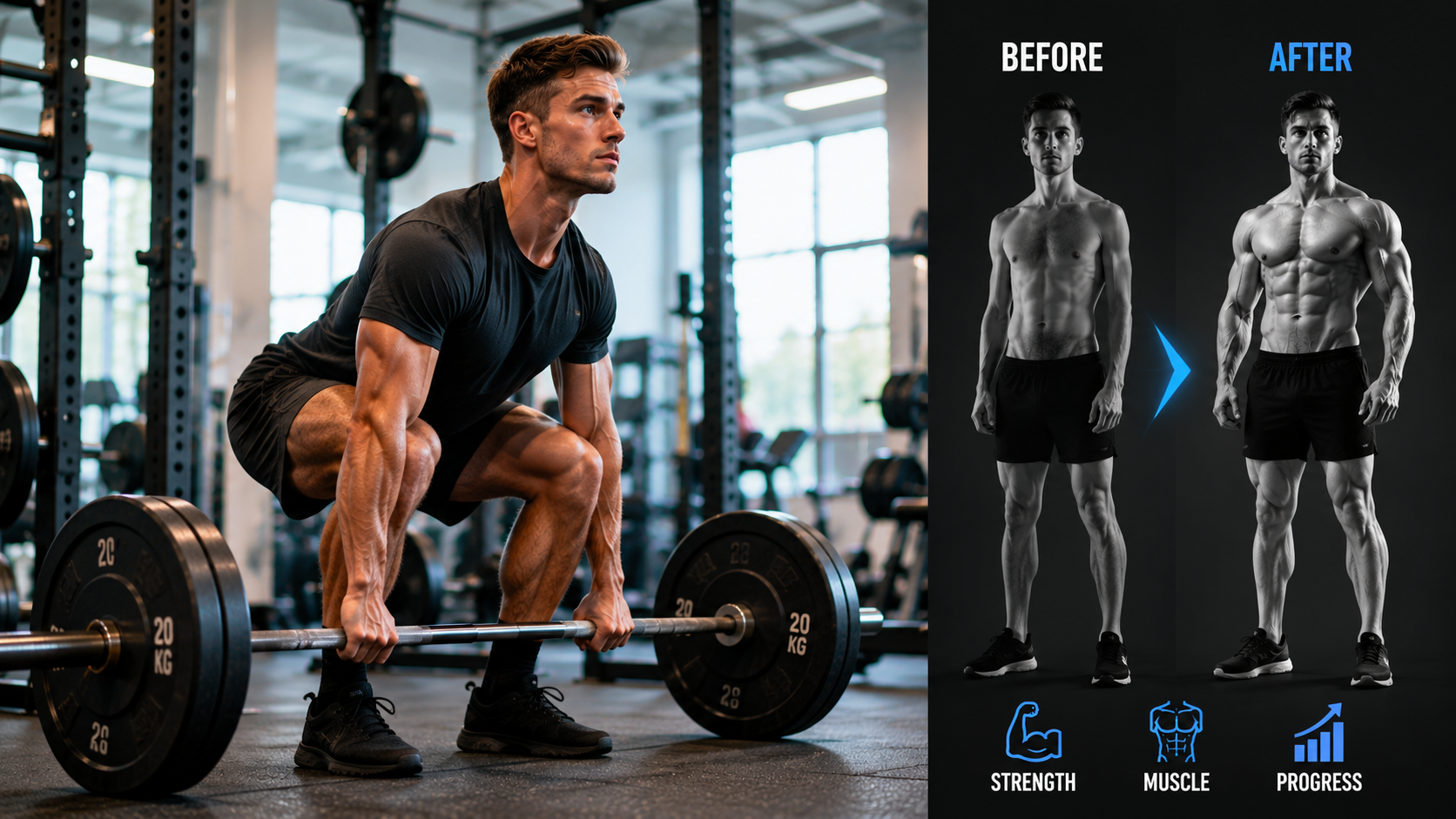
Yes. Strength training (also called resistance training or weight training) increases weight loss through two mechanisms: (1) direct calorie burn during the workout session, and (2) increased resting metabolic rate (RMR) from building lean muscle mass.
How much muscle does resistance training build? <cite index=”20-1″>Ten weeks of resistance training increases lean muscle weight by 1.4 kg (3.1 pounds), increases resting metabolic rate by 7%, and reduces fat weight by 1.8 kg (4.0 pounds)</cite>. Over a longer duration, <cite index=”17-1″>three to four months of regular resistance exercise increases lean muscle weight by 3.0–3.5 pounds and increases resting metabolic rate by 6.8–7.7 percent</cite>.
Why does more muscle increase weight loss? <cite index=”19-1″>Lean muscle tissue is more metabolically active than fat tissue; exercise physiologists estimate muscle accounts for approximately 20 percent of daily calorie burn while fat accounts for only 5 percent</cite>. Specifically, muscle tissue burns approximately 1.5 times more calories per pound per day than untrained muscle.
Practical example: Adding 5 pounds of muscle through resistance training increases daily calorie burn by approximately 25–50 additional calories at rest (not counting calories burned during the workout itself). Over one year, this equals 9,125–18,250 additional calories burned—equivalent to 2.6–5.2 pounds of fat loss from metabolism alone.
Does strength training prevent muscle loss during weight loss? Yes. <cite index=”9-1″>Losing weight through diet alone without physical activity results in significant bone and muscle loss due to age-related tissue breakdown; adding resistance training to a weight-loss program prevents this lean tissue loss and preserves strength</cite>.
Strength training vs. cardio: which burns more calories immediately? Cardio burns more calories during the single workout session (running burns 600+ calories/hour; strength training burns 300–460 calories/hour). However, strength training builds muscle that burns additional calories 24 hours per day, creating a cumulative advantage over weeks and months.
Effective Strength Training for Weight Loss
- Frequency: 2–3 sessions per week, non-consecutive days
- Exercises: Multi-joint movements (squats, deadlifts, push-ups, rows, chest presses, pull-ups) engage multiple muscle groups and burn more calories
- Intensity: Use weights heavy enough that the last 1–2 reps feel challenging
- Duration: 30–45 minutes per session is effective; more important than longer is consistent effort
- Progressive overload: Gradually increase weight or reps over weeks to continue building strength and muscle
4. Walking for Weight Loss: The Underrated Option

Can walking actually cause weight loss?
Yes. Walking is an accessible, sustainable form of cardiovascular activity that produces measurable weight loss when performed consistently and combined with a caloric deficit.
How much weight can you lose from walking? <cite index=”5-1″>According to the CDC (Centers for Disease Control and Prevention), a person weighing 154 pounds burns approximately 145 calories walking at under 10 mph for 30 minutes, or approximately 295 calories at faster speeds over 10 mph</cite>. Walking 30 minutes daily at a brisk pace (3.5–4 mph) for 7 days per week creates a weekly caloric burn of approximately 2,090 calories—equivalent to 0.6 pounds of fat loss per week when combined with a 300–500 calorie daily dietary deficit.
Why is walking recommended for weight loss? <cite index=”2-1″>Walking is endorsed by fitness trainers for weight loss because: (1) it can be performed anywhere without special equipment, (2) the majority of calories burned during walking come from fat stores rather than carbohydrates, and (3) consistency with regular walking produces measurable weight loss results</cite>.
Walking vs. running for weight loss: which is better? <cite index=”8-1″>Running burns more calories per hour than walking (500–700 calories vs. 240–300 calories), but if someone will walk five days per week consistently and only run twice before injury or burnout, walking is the better choice for that individual</cite>.
Injury rates: Walking has the lowest injury rate of all aerobic exercises. The Centers for Disease Control and Prevention (CDC) classifies walking as low-impact, meaning it removes significant stress from joints compared to running or jumping activities. This makes walking particularly suitable for people with excess weight, joint concerns, or those new to exercise.
Walking Strategy for Weight Loss
- Duration: 30–60 minutes per session
- Frequency: 5–7 days per week (can be daily)
- Intensity: Brisk pace (3–4 mph), where you can speak but not sing
- Progression: Add inclines, increase pace, or extend duration every 2–3 weeks
- Bonus benefit: <cite index=”11-1″>Light activity like walking burns 240–300 calories per hour and can be increased by simply choosing stairs, parking farther away, and adding movement throughout the day</cite>
5. Running for Weight Loss: High Calorie Burn, Higher Impact

How many calories does running burn compared to other exercises?
Running is the highest-ranked aerobic exercise for calorie burn per hour. <cite index=”8-1″>Running burns 500–700 calories per hour depending on pace and body weight</cite>, and <cite index=”16-1″>running ranks as the winner for most calories burned per hour compared to other cardiovascular activities</cite>.
Running calorie burn by pace (for a 155-pound person):
- 5 min/mile pace (12 mph): 900+ calories/hour
- 7 min/mile pace (8.6 mph): 744 calories/hour
- 10 min/mile pace (6 mph): 590 calories/hour
- Walking (3.5 mph): 298 calories/hour
Running therefore burns 2–3 times more calories per hour than walking.
Why isn’t running recommended as the primary weight-loss exercise? Although running has superior per-hour calorie burn, it carries significantly higher injury risk. <cite index=”8-1″>The best exercise for weight loss is one you’ll actually do consistently—if someone will walk five days per week but only run twice before injury or burnout, walking creates greater total weight loss</cite>.
Injury rates for running versus other activities (per 1,000 hours of exercise):
- Running: 7.7 injuries per 1,000 hours
- Walking: 1.5 injuries per 1,000 hours
- Cycling: 3.2 injuries per 1,000 hours
This means running is 5 times more likely to cause injury than walking, and 2.4 times more likely than cycling.
Safe Running Progression for Weight Loss
- Start conservatively: If new to running, alternate running and walking (e.g., 1 minute run, 2 minutes walk) for 20–30 minutes
- Build gradually: Increase running intervals weekly, aiming for 20–30 continuous minutes at an easy pace
- Frequency: 2–3 times per week (minimum one rest day between sessions)
- Supplement with low-impact work: Add walking, cycling, or swimming on off-days for total activity and injury prevention
- Invest in proper shoes: Running-specific shoes reduce injury risk, especially at higher body weights
6. Cycling for Weight Loss: Low-Impact, High Calorie Burn

How many calories does cycling burn for weight loss?
<cite index=”5-1″>Cycling is an aerobic activity that can be adjusted from low-intensity leisure rides to high-intensity spin classes; it is low-impact, easily tailored to individual fitness level, and calorie burn scales with body weight and intensity</cite>.
Cycling calorie burn breakdown (for a 155-pound person):
- Fast cycling (12+ mph): 590 calories/hour
- Moderate cycling (10 mph): 295 calories/hour
- Leisurely cycling (under 10 mph): 145 calories/hour
<cite index=”5-1″>A person weighing 154 pounds burns approximately 145 calories cycling at under 10 mph for 30 minutes, or approximately 295 calories at speeds over 10 mph; individuals with higher body weight burn proportionally more calories</cite>.
Why cycling is ideal for weight loss: Cycling is particularly valuable for people with knee problems, joint issues, or significant excess weight because the seated position removes body-weight impact from lower joints and the spine. Unlike running (which generates 2–3 times body weight in impact force), cycling generates near-zero impact while still providing significant cardiovascular challenge and calorie burn.
Cycling frequency and duration for weight loss: Research from the CDC and American College of Sports Medicine (ACSM) recommends 3–5 cycling sessions per week, 30–45 minutes per session, at moderate-to-vigorous intensity to produce measurable weight loss (0.5–1 pound per week) when combined with a caloric deficit.
Cycling Strategies
- Stationary bike: Controlled environment, precise intensity management, good for HIIT
- Outdoor cycling: Variable terrain, natural variety, lower monotony
- Spin classes: Built-in community and motivation, instructor-guided intensity
- Frequency: 3–5 sessions per week for weight loss
- Intensity mix: Combine steady-state rides (moderate intensity, 45–60 min) with one higher-intensity session per week
7. Swimming for Weight Loss: Full-Body, Zero Impact

How many calories does swimming burn compared to other exercises?
Swimming is classified as vigorous-intensity aerobic exercise by the Centers for Disease Control and Prevention (CDC). <cite index=”8-1″>Swimming burns approximately 400–600 calories per hour depending on stroke type and intensity level</cite>.
Swimming calorie burn by stroke (for a 155-pound person):
- Butterfly stroke: 500–700 calories/hour (most demanding)
- Freestyle (front crawl): 400–600 calories/hour (most common)
- Backstroke: 350–500 calories/hour (moderate intensity)
- Breaststroke: 300–450 calories/hour (lowest intensity)
Swimming ranks fourth among aerobic exercises for calories burned (behind running, HIIT, and rowing), but differs critically because it engages all major muscle groups simultaneously: legs, glutes, core, shoulders, back, chest, and arms.
Why swimming is unique for weight loss: <cite index=”5-1″>Swimming laps are classified as vigorous-intensity aerobic activity by the CDC</cite>, meaning they satisfy federal exercise guidelines for cardiovascular benefit. Unlike running or cycling, which focus primarily on lower-body musculature, swimming distributes effort across the entire body. This creates three weight-loss advantages:
- Muscle engagement: More total muscle groups = higher calorie burn
- Zero impact: Water buoyancy eliminates gravitational stress on joints (suitable for people with arthritis, excess weight, or joint pain)
- Injury prevention: Swimming has one of the lowest injury rates among cardio activities (0.8 injuries per 1,000 hours)
Swimming Strokes and Their Benefits
| Stroke | Calories/Hour* | Primary Muscles | Best For |
|---|---|---|---|
| Freestyle | 400–600 | Shoulders, back, core | General conditioning |
| Breaststroke | 300–450 | Chest, legs, inner thighs | Lower intensity, endurance |
| Butterfly | 500–700 | Shoulders, chest, core | Advanced, high calorie burn |
| Backstroke | 350–500 | Upper back, shoulders, triceps | Shoulder strength, variety |
Estimates for 155-lb person; varies by intensity.
Swimming Protocol for Weight Loss
- Frequency: 3–4 sessions per week
- Duration: 20–45 minutes depending on intensity
- Structure: Warm-up (5 min easy), main set (25–35 min mixed strokes), cool-down (5 min)
- Progression: Increase distance, decrease rest, or switch to more challenging strokes over weeks
- Advantage: Low injury risk makes swimming ideal for long-term consistency
8. Weight Loss Workout Plans: Beginner to Advanced
What’s the most effective weekly exercise structure for weight loss?
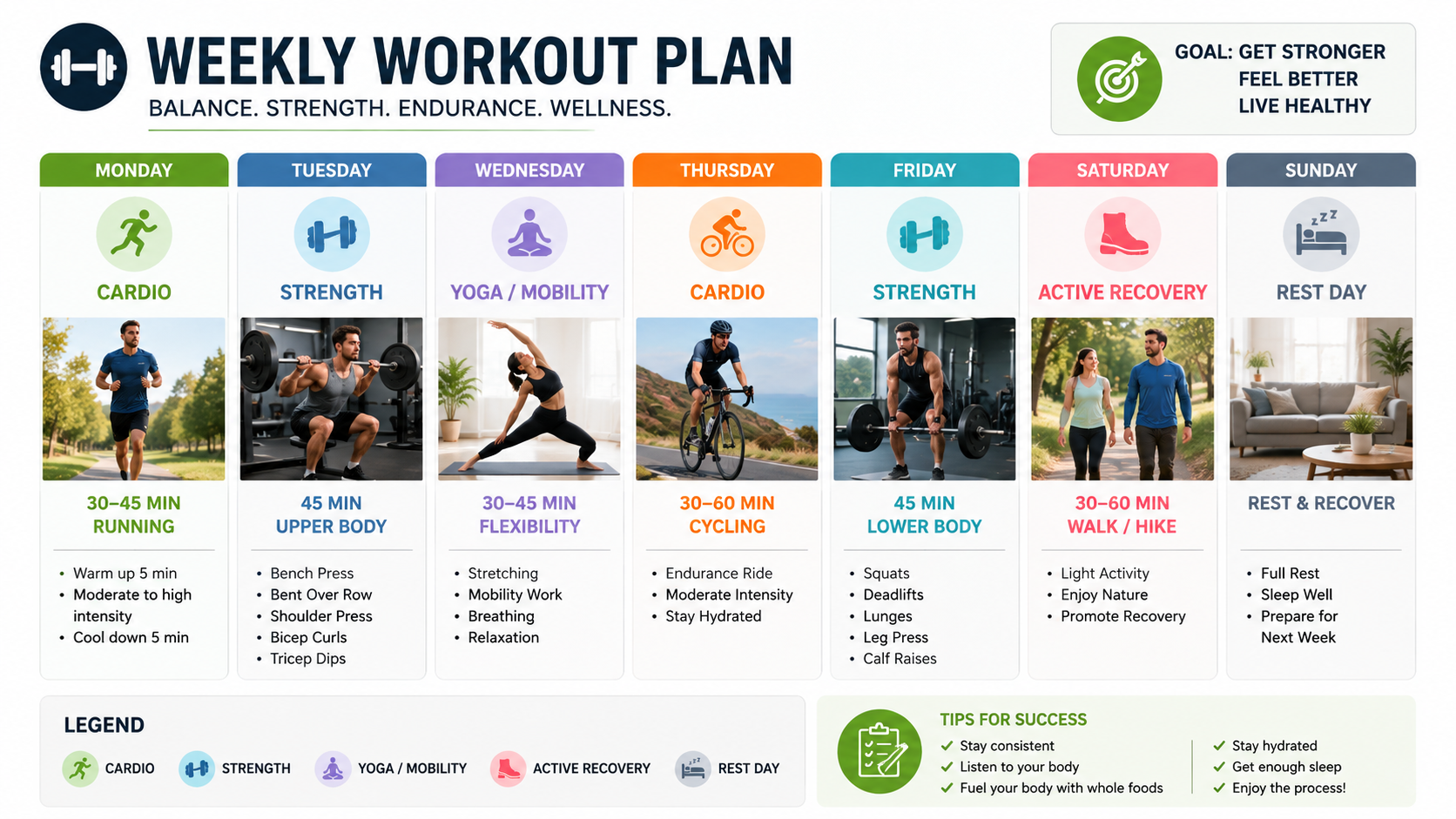
The most effective weight-loss program combines cardio and strength training rather than relying on either modality alone. <cite index=”3-1″>Strength training at least twice per week builds muscle and increases resting metabolic rate, while cardio burns calories during the exercise session and immediately afterward</cite>.
Cardio vs. strength training for weight loss: A comparison
| Factor | Cardio | Strength Training |
|---|---|---|
| Calories burned per hour | 300–700 | 300–460 |
| Muscle built | None to minimal | Significant (1–3.5 lbs per month) |
| Resting metabolic rate increase | 0–2% | 6–8% |
| Injury risk (per 1,000 hours) | 1.5–7.7 | ~3.0 |
| Sustainability (adherence rate) | 50–60% | 40–50% |
| Long-term weight maintenance | Moderate | Superior (muscle burns calories at rest) |
<cite index=”8-1″>Research shows that combining 3 moderate cardio sessions per week plus 1–2 intense sessions weekly (like HIIT) creates superior weight-loss results compared to cardio alone or strength training alone</cite>. This hybrid approach targets both immediate calorie burn (from cardio) and long-term metabolic elevation (from strength training).
Beginner Program (3–4 days/week, 30 minutes)
| Day | Activity | Duration | Intensity |
|---|---|---|---|
| Monday | Brisk walking or easy cycling | 30 min | Moderate |
| Wednesday | Bodyweight strength (push-ups, squats, planks) | 25 min + 5 min warm/cool | Moderate |
| Friday | Brisk walking or swimming | 30 min | Moderate |
| Saturday | Light yoga or stretching | 20 min | Low |
Focus: Build habit, establish consistency, improve cardiovascular baseline.
Intermediate Program (4–5 days/week, 40–50 minutes)
| Day | Activity | Duration | Intensity |
|---|---|---|---|
| Monday | Strength training (compound lifts) | 40–45 min | Moderate-High |
| Tuesday | Steady cardio (running, cycling, swimming) | 30 min | Moderate |
| Wednesday | Rest or light yoga | — | Low |
| Thursday | Strength training (different muscle groups) | 40–45 min | Moderate-High |
| Friday | Steady cardio | 30 min | Moderate |
| Saturday | Optional HIIT or long walk | 20–30 min | Variable |
Focus: Build muscle, increase weekly activity volume, improve performance.
Advanced Program (5–6 days/week, 50–60 minutes)
| Day | Activity | Duration | Intensity |
|---|---|---|---|
| Monday | Strength training (upper body) + cardio | 50 min | High |
| Tuesday | High-intensity interval training | 30 min | Very High |
| Wednesday | Active recovery (walking, yoga) | 30 min | Low |
| Thursday | Strength training (lower body) + cardio | 50 min | High |
| Friday | Steady cardio (long session) | 40–45 min | Moderate |
| Saturday | Sport, circuit training, or varied workout | 45–60 min | Moderate-High |
Focus: Maximize calorie expenditure, build significant strength, improve athletic performance.
Progressive Overload Principle
Weight loss plateaus happen when the body adapts to current exercise demands. Progress by:
- Adding weight (strength training)
- Increasing reps or sets
- Reducing rest time between sets
- Increasing speed or duration (cardio)
- Increasing frequency
9. Yoga for Weight Loss: Indirect Yet Valuable

Does yoga burn enough calories for weight loss?
Yoga’s calorie burn varies significantly by style. <cite index=”31-1″>A Harvard study found that 30 minutes of Hatha yoga (beginner-level) burns 120 calories for a 125-pound person, 144 calories for a 155-pound person, and 168 calories for a 185-pound person</cite>. <cite index=”26-1″>One hour of power yoga (vigorous) burns approximately the same calories as one hour of baking—approximately 357 calories for men and 302 calories for women based on average body weights</cite>.
Yoga calorie burn by style (per hour, for 155-lb person):
- Power Yoga: 300–400 calories
- Vinyasa Yoga: 250–350 calories
- Ashtanga Yoga: 250–350 calories
- Hatha Yoga: 150–200 calories
- Yin Yoga: 100–150 calories
Yoga ranks lowest among weight-loss exercises for calorie burn per hour—walking burns 240–300 calories/hour, cycling burns 300–600 calories/hour, and running burns 500–700 calories/hour.
How does yoga contribute to weight loss despite low calorie burn? <cite index=”29-1″>Yoga contributes to weight loss indirectly by: (1) reducing stress and cortisol levels (which decreases stress-related cravings), (2) improving sleep quality (which supports fat loss), (3) increasing body awareness and mindfulness, and (4) helping people curb emotional and stress-related eating patterns</cite>.
Research on yoga and weight loss: <cite index=”31-1″>A peer-reviewed study published in the Complementary Therapies in Medicine journal tracked 60 people with abdominal obesity who practiced 90 minutes of yoga twice weekly for 12 weeks; the study found: (1) significant reduction in abdominal circumference, (2) improved waist-to-hip ratio, (3) reduced overall body fat percentage, and (4) increased body muscle mass percentage</cite>.
Yoga styles ranked by calorie burn:
- <cite index=”28-1″>Vinyasa, Ashtanga, Power, and Hot Yoga are most effective for calorie burn and cardiovascular activation, while Hatha and Yin Yoga support stress relief, consistency, and recovery</cite>
- <cite index=”30-1″>Power yoga is highly effective for weight loss because it’s more intense and fast-paced, burns more calories than gentle stretching, and builds strength</cite>
Practical role in weight loss: Yoga works best as a complement to cardio and strength training rather than a standalone weight-loss tool. It builds flexibility and body awareness while reducing stress—both supportive to adherence and recovery.
Yoga Integration Strategy
- 3–4 times weekly: Gentle or moderate yoga for flexibility, stress relief, and recovery
- 1 time weekly (optional): Power or Vinyasa yoga as supplemental cardio
- Best timing: Evening or active recovery days to support consistency with primary cardio/strength work
10. Household Chores & Daily Activity for Weight Loss: Hidden Calorie Burn

Do everyday household activities burn enough calories to contribute to weight loss?
Yes. Household chores and daily incidental movement burn measurable calories and collectively contribute to total daily energy expenditure (TDEE), which drives weight loss when combined with dietary changes.
Household chore calorie burn (per hour, for 155-lb person):
- Mowing lawn: 420 calories/hour (equivalent to moderate cycling)
- Moving furniture: 350–420 calories/hour
- Raking leaves: 300 calories/hour
- Mopping/vacuuming: 240–280 calories/hour
- Gardening (general): 240–350 calories/hour (varies by intensity)
- Painting: 240–350 calories/hour
- Stair climbing (incidental): 280–420 calories/hour
<cite index=”26-1″>Research from LloydsPharmacy Online Doctor found that an hour of moving furniture or mowing the lawn may burn more calories than the same hour spent on a stair treadmill or rope skipping—these daily tasks have calorie-burning potential comparable to formal exercise</cite>.
Why household chores matter for weight loss: <cite index=”11-1″>Light activities such as cleaning house or playing baseball/golf burn 240–300 calories per hour; moderate activities like brisk walking, gardening, or dancing burn 370–460 calories per hour</cite>. Over the course of a week, this incidental activity accumulates. Someone who spends 3–4 hours per week doing yard work and household maintenance burns an additional 1,080–1,840 calories—equivalent to 0.3–0.5 pounds of fat loss per week.
What is NEAT and why does it matter? NEAT (non-exercise activity thermogenesis) refers to all calories burned outside of formal exercise, sleep, and digestion. <cite index=”19-1″>Non-exercise activity thermogenesis includes all movement throughout the day that isn’t structured exercise—sometimes when people start a formal exercise program, their NEAT decreases, which can offset exercise-induced calorie burn</cite>.
Maximizing daily movement for weight loss:
- Take stairs instead of elevators whenever possible (+30–50 calories/day)
- Park farther away from building entrances (+50–100 calories/day)
- Stand during phone calls and meetings rather than sitting (+30–50 calories/day)
- Do yard work and gardening actively rather than hire someone else (+200–400 calories per session)
- Walk to a colleague’s desk instead of emailing (+10–20 calories per trip; 5–10 trips/day = 50–200 calories)
Daily Activities and Calorie Burn (Per Hour)
| Activity | Calories Burned* | MET Score |
|---|---|---|
| Cleaning/vacuuming | 150–240 | 2.5–3.5 |
| Mopping | 170–280 | 3.0–4.0 |
| Gardening (general) | 240–350 | 3.5–5.0 |
| Mowing lawn | 280–420 | 4.0–6.0 |
| Carrying/moving objects | 240–420 | 3.5–6.0 |
| Raking leaves | 200–300 | 3.0–4.3 |
| House painting | 240–350 | 3.5–5.0 |
| Stair climbing (incidental) | 280–420 | 4.0–6.0 |
Based on 155-lb person; varies by body weight and effort intensity.
Practical Ways to Increase Daily Movement
- Take stairs instead of elevators whenever possible
- Park farther away from building entrances (adds 2–5 min walking)
- Stand during phone calls or meetings rather than sitting
- Do yard work or gardening actively rather than passively
- Combine activities: Listen to podcasts, audiobooks, or music while doing chores to make them enjoyable
- Add movement during transitions: Walk to a colleague’s desk instead of emailing, take a brief walk after meals
NEAT (Non-Exercise Activity Thermogenesis)
<cite index=”19-1″>Non-exercise activity thermogenesis (NEAT) is all the movement you do throughout the day that isn’t formal exercise—sometimes when people start a structured exercise program, their NEAT decreases, which can offset exercise calorie burn</cite>. Maintaining or increasing daily incidental movement can meaningfully contribute to weight loss.
<cite index=”14-1″>A 2011 study revealed that people often overestimate their exercise calorie burn by 3–4 times; if someone thinks they burned 600 calories but only burned 200, then eat an extra 600 calories to ‘refuel,’ they’ve created a 400-calorie surplus moving away from weight loss goals</cite>.
Combining Exercise Types for Optimal Weight Loss
What’s the most effective weekly exercise structure for weight loss?
Research consistently demonstrates that combining multiple exercise modalities produces superior weight-loss results compared to single-approach training. <cite index=”16-1″>While aerobic exercise burns more calories during a single session, weight training builds muscle mass that burns more calories at rest continuously over time; a fitness regimen combining both cardio and weight training maximizes total daily calorie expenditure</cite>.
Optimal weekly exercise framework for weight loss:
| Component | Frequency | Duration | Purpose |
|---|---|---|---|
| Strength training | 2–3 sessions/week | 30–45 min | Builds muscle, increases RMR by 6–8% |
| Moderate cardio | 3–4 sessions/week | 30–45 min | Burns 200–400 calories/session |
| High-intensity cardio (HIIT) | 1–2 sessions/week | 20–30 min | Burns 300–600 calories in short timeframe |
| Flexibility/recovery (yoga) | 1–2 sessions/week | 20–30 min | Reduces stress, improves sleep, prevents injury |
| Daily incidental movement | Daily | Variable | Adds 200–600 calories/day through NEAT |
Why this structure works: This combination addresses all mechanisms of weight loss simultaneously:
- Strength training → Increases resting metabolic rate (6–8% increase per study)
- Moderate cardio → Burns calories directly (3,000–8,000 calories/week)
- HIIT → Maximizes calorie burn in minimal time (1,200–3,600 calories/week)
- Daily movement → Sustains elevated daily calorie burn (1,400–4,200 calories/week)
- Recovery → Prevents injury and burnout (improves adherence)
The Role of Nutrition Alongside Exercise
Is exercise or diet more important for weight loss?
Diet is significantly more important than exercise for weight loss. <cite index=”9-1″>Research shows that diet affects weight loss more than physical activity does; however, physical activity is more effective at keeping weight off after loss occurs</cite>.
Comparison: Exercise-only vs. diet-only weight loss
To lose one pound of body fat requires a deficit of approximately 3,500 calories. <cite index=”13-1″>To lose one pound by exercising alone, you need to burn approximately 3,500 calories, which can take days of moderate exercise to accomplish</cite>. Conversely, reducing caloric intake by 500 calories per day (through diet) creates the same one-pound loss in just 7 days.
Weight-loss time comparison:
- Exercise only: 1 pound loss = 3,500 calories burned = 7–14 days of moderate daily exercise
- Diet only: 1 pound loss = 3,500 calories reduced = 7 days of 500-calorie daily deficit
- Combined approach: 1 pound loss = 3,500 calorie deficit (1,750 from diet + 1,750 from exercise) = 3–5 days
<cite index=”13-1″>A practical two-pronged approach combining exercise and caloric reduction is substantially more efficient than relying on exercise alone</cite>.
What does sustainable weight loss require?
- Caloric deficit from nutrition: 300–500 calories below maintenance (primary driver of weight loss)
- Exercise for calorie burn: 150–350 additional exercise calories daily (supports deficit, preserves muscle)
- Exercise for muscle preservation: Strength training 2–3x weekly (prevents muscle loss during caloric deficit)
- Sleep quality: 7–9 hours nightly (poor sleep increases hunger hormones and reduces weight-loss success)
- Stress management: <cite index=”29-1″>High stress increases cortisol and cravings for calorie-dense foods; yoga and mindfulness reduce stress, supporting weight loss through behavioral change</cite>
Getting Started: Action Steps
- Choose activities you enjoy: Consistency is more important than perfection. If you dislike running, don’t force it.
- Start conservatively: Begin with 3 sessions per week for 20–30 minutes at moderate intensity, then progress.
- Combine modalities: Include both cardio and strength training for balanced results.
- Track progress beyond the scale: Measure how clothes fit, resting heart rate, energy levels, and strength gains—weight fluctuates daily due to water, food volume, and hormones.
- Adjust as needed: If progress stalls after 4–6 weeks, increase frequency, intensity, or duration gradually.
- Seek professional guidance: A certified personal trainer or physical therapist can assess form, design personalized programming, and adjust as needed.
- Address underlying factors: Consult a healthcare provider about hormones, thyroid function, medications, and sleep quality if weight loss isn’t happening despite effort.
Key Takeaways
Exercise Guidelines for Weight Loss
- <cite index=”3-1″>The U.S. Physical Activity Guidelines recommend at least 150 minutes of moderate-intensity cardio per week to support weight loss when combined with a caloric deficit</cite>
- <cite index=”8-1″>Consistency beats intensity—someone exercising moderately 5 days per week loses more weight over a year than someone doing intense workouts sporadically and quitting after 3 weeks</cite>
- Minimum effective exercise for weight loss: 3 sessions per week of 30 minutes each (90 minutes total) produces meaningful weight loss when combined with dietary changes
Strength Training Benefits for Weight Loss
- <cite index=”20-1″>Ten weeks of resistance training increases lean muscle weight by 1.4 kg, increases resting metabolic rate by 7%, and reduces fat weight by 1.8 kg</cite>
- <cite index=”9-1″>Adding resistance training to a weight-loss program prevents bone and muscle loss that occurs with diet-only weight loss approaches</cite>
- Muscle tissue burns approximately 1.5–2 times more calories per pound per day than untrained muscle
Cardio Exercise Options Ranked by Calories Burned
- Running: 500–700 calories/hour
- HIIT: 400–800 calories/hour
- Rowing: 500–700 calories/hour
- Swimming: 400–600 calories/hour
- Cycling: 300–500 calories/hour
- Walking: 240–300 calories/hour
Practical Application for Weight Loss
- <cite index=”8-1″>The best exercise is the one you’ll do consistently while maintaining a caloric deficit</cite>
- <cite index=”9-1″>Diet affects weight loss more than physical activity; however, physical activity is more effective at keeping weight off after loss</cite>
- Combining strength training (2–3x/week) + moderate cardio (3–4x/week) + daily movement produces superior results compared to cardio or strength training alone
- All exercise modalities—walking, running, cycling, swimming, HIIT, strength training, yoga, and household chores—contribute to weight loss when performed consistently
Timeline for Results
- Noticeable energy, strength, and fitness improvements: 1–2 weeks
- Visible changes in body composition: 4–6 weeks
- Significant weight loss: 8–12 weeks (expect 0.5–2 pounds per week depending on exercise frequency and dietary deficit)
Quick Answers (For Common Search Queries)
How much exercise do you need to lose weight? The U.S. Department of Health and Human Services recommends at least 150 minutes of moderate aerobic activity per week for weight loss. However, meaningful weight loss occurs with just 3 sessions of 30 minutes per week (90 minutes total) when combined with a caloric deficit. More exercise accelerates results, but consistency matters more than volume.
What exercise burns the most calories? Running burns the most calories at 500–700 per hour, followed by HIIT at 400–800 per hour and rowing at 500–700 per hour. However, total weekly calorie burn (not per-hour burn) determines weight loss—someone walking 5 days per week burns more total calories annually than someone doing HIIT sporadically.
Can you lose weight with just walking? Yes, walking contributes to weight loss when performed consistently. A 155-pound person burns approximately 300 calories walking at a brisk pace (3.5–4 mph) for one hour. Walking 30 minutes daily for 7 days burns approximately 1,050 calories weekly, contributing to meaningful weight loss when combined with a 300–500 calorie daily dietary deficit.
Does strength training help weight loss? Yes. Strength training increases resting metabolic rate by 6–8%, adds lean muscle weight, and prevents muscle loss during weight loss. Additionally, muscle tissue burns more calories at rest than fat tissue—adding just 5 pounds of muscle increases daily calorie burn by 25–50 additional calories (equivalent to 2.6–5.2 pounds of fat loss annually).
Is HIIT better than steady cardio for weight loss? HIIT burns more calories per hour (400–800 calories) than steady cardio (300–600 calories), but produces the same weight-loss results as steady cardio when total weekly exercise volume is equivalent. HIIT requires less time per session, making it efficient for people with limited exercise time, but it should only be performed 1–2 times per week due to joint and cardiovascular stress.
How long does it take to see weight loss from exercise? Energy and fitness improvements appear within 1–2 weeks. Visible body composition changes typically become noticeable after 4–6 weeks of consistent exercise and caloric deficit. Significant weight loss (5–10 pounds) usually occurs within 8–12 weeks.
Should you do cardio or strength training for weight loss? Both are important. Cardio burns more calories during the session; strength training builds muscle that burns additional calories at rest continuously. The most effective approach combines both: 2–3 strength sessions per week (30–45 minutes) plus 3–4 cardio sessions per week (30–45 minutes) plus daily incidental movement.
Does diet or exercise matter more for weight loss? Diet matters significantly more than exercise. It takes 7–14 days of daily moderate exercise to burn 3,500 calories (one pound of fat), whereas reducing caloric intake by 500 per day creates the same loss in just 7 days. A combined approach (both diet and exercise) is most practical and sustainable.
How much exercise do I need to lose weight?
According to the U.S. Department of Health and Human Services Physical Activity Guidelines, adults should aim for at least 150 minutes of moderate-intensity aerobic activity per week or 75 minutes of vigorous-intensity aerobic activity per week to support weight loss. However, research shows that even 3 sessions per week of 30 minutes each (90 minutes total) produces meaningful weight loss when combined with a caloric deficit. The most important factor is consistency—moderate exercise five times per week produces more weight loss over a year than intense workouts performed sporadically and abandoned after a few weeks.
Is cardio or strength training better for weight loss?
Both are essential, but they function differently. Cardio (running, cycling, swimming) burns more calories during the immediate workout session, while strength training builds lean muscle mass that burns additional calories continuously at rest. Research shows that strength training increases resting metabolic rate by 6–8% and helps preserve muscle during weight loss, preventing the weakness and bone loss that can occur with diet-only weight loss. The most effective approach combines both: 2–3 strength-training sessions per week (30–45 minutes each) plus 3–4 cardio sessions per week (30–45 minutes each) for optimal results.
How long does it take to see results from exercising for weight loss?
Fitness improvements and increased energy typically appear within 1–2 weeks of consistent exercise. Visible changes in body composition (how clothes fit, muscle definition) usually become noticeable after 4–6 weeks of consistent exercise combined with a caloric deficit. Significant weight loss (5–10 pounds) typically occurs within 8–12 weeks. However, the scale may not change immediately due to water retention and muscle gain offsetting fat loss—this is completely normal and expected. Focus on consistency and improvements in performance, energy, and how your clothes fit rather than daily scale weight.
Can I lose weight with just walking?
Yes, walking can contribute to weight loss when performed consistently and paired with a caloric deficit. A person weighing 155 pounds burns approximately 300 calories walking at a brisk pace (3.5–4 mph) for one hour. Walking 30 minutes daily at a brisk pace for seven days burns approximately 1,050 calories weekly—contributing to meaningful weight loss when combined with a 300–500 calorie daily dietary deficit. Walking is particularly valuable because it has the lowest injury rate of all cardio exercises, requires no special equipment, and can be integrated into daily life (commuting, errands, leisure time), making it easier to sustain long-term compared to higher-impact activities like running.
Is HIIT more effective than steady-state cardio for weight loss?
HIIT (high-intensity interval training) burns more calories per hour—400–800 calories compared to 300–600 calories per hour for steady-state cardio—and produces an “afterburn effect” where the body continues burning calories for hours after the workout ends. However, HIIT should only be performed 1–2 times per week due to high joint and cardiovascular stress. For total weekly calorie burn, someone doing steady cardio five times per week typically burns more calories overall than someone doing intense HIIT once weekly. Research shows that consistency beats intensity for weight loss—moderate exercise performed regularly produces better long-term results than sporadic intense workouts that people quit after a few weeks.
Can strength training help you lose weight?
Yes, significantly. Strength training contributes to weight loss through two primary mechanisms: (1) direct calorie burn during the workout (strength training burns 300–460 calories per hour), and (2) increased resting metabolic rate from building lean muscle. Research shows that ten weeks of resistance training increases lean muscle weight by 1.4 kg (3.1 pounds), increases resting metabolic rate by 7%, and reduces fat weight by 1.8 kg (4.0 pounds). Additionally, strength training preserves muscle during weight loss—losing weight through diet alone without exercise results in significant muscle loss, whereas adding resistance training prevents this loss and maintains strength and bone density.
Does yoga help with weight loss?
Yoga contributes to weight loss both directly and indirectly. Direct calorie burn varies by style: Power Yoga burns 300–400 calories per hour, Vinyasa burns 250–350 calories per hour, while Hatha yoga burns 150–200 calories per hour (making it one of the lower-calorie-burning exercises). More importantly, yoga supports weight loss indirectly by: (1) reducing stress and cortisol levels, which decreases stress-related food cravings, (2) improving sleep quality, which supports fat loss, (3) increasing mindfulness and body awareness, and (4) helping prevent emotional and comfort eating. Research found that people practicing 90 minutes of yoga twice weekly for 12 weeks showed significant reductions in abdominal fat, improved body composition, and increased muscle mass, suggesting yoga works best as a complement to cardio and strength training rather than a standalone weight-loss tool.
Is diet or exercise more important for weight loss?
Diet affects weight loss significantly more than exercise. To lose one pound of body fat requires a deficit of 3,500 calories. Through exercise alone, this takes 7–14 days of daily moderate workouts, whereas reducing caloric intake by 500 per day through nutrition creates the same one-pound loss in just 7 days. However, the most sustainable and efficient approach combines both: a 300–500 calorie daily deficit from nutrition plus 150–350 exercise calories daily creates faster, more maintainable weight loss. Additionally, exercise (especially strength training) is more effective at preventing weight regain after initial loss and preserves muscle mass that would otherwise be lost through diet alone.
Which exercise is best for weight loss?
The best exercise for weight loss is the one you’ll perform consistently while maintaining a caloric deficit. Research shows that adherence and consistency predict weight-loss success better than exercise intensity. From a pure calorie-burn perspective, running burns the most at 500–700 calories per hour, followed by HIIT at 400–800 calories per hour and swimming at 400–600 calories per hour. However, if someone will walk five days per week but only run twice before injury or burnout, walking produces greater total weight loss. The ideal approach combines multiple modalities: 2–3 strength sessions weekly (builds muscle, increases metabolism), 3–4 moderate cardio sessions weekly (burns calories), 1–2 HIIT sessions weekly (maximizes calorie burn in short timeframe), and daily incidental movement (adds 200–600 calories through NEAT).
Can you lose weight exercising at home without a gym?
Yes, absolutely. Weight loss comes from creating a caloric deficit through exercise and nutrition—location is irrelevant. Home workouts can include: bodyweight exercises (push-ups, squats, planks, burpees), resistance bands, dumbbells, jump rope, or simply walking/running outdoors. Research shows that bodyweight strength training produces similar muscle-building and metabolic-rate improvements as gym equipment when performed consistently with progressive overload (gradually increasing difficulty). Additionally, outdoor walking and running require no equipment at all and rank among the most sustainable forms of exercise for long-term weight loss. The key is finding activities you enjoy and will perform consistently, whether that’s home workouts, gym training, outdoor activities, or a combination of all three.
References & Sources
U.S. Government & Public Health Guidelines
- U.S. Department of Health and Human Services. (2018). Physical Activity Guidelines for Americans (2nd ed.). Retrieved from https://health.gov/paguidelines/second-edition
- Centers for Disease Control and Prevention (CDC). (2024). “Physical Activity for a Healthy Weight.” Retrieved from https://www.cdc.gov/healthyweight/physical_activity/index.html
- Centers for Disease Control and Prevention (CDC). “Physical Activities Compendium.” Retrieved from https://www.cdc.gov/niosh/topics/emf/emfambiblio.html
Mayo Clinic & Medical Institutions
- Mayo Clinic. (2023). “Exercise for weight loss: Calories burned in 1 hour.” Retrieved from https://www.mayoclinic.org/healthy-lifestyle/weight-loss/in-depth/exercise/art-20050999
- Mayo Clinic. (2023). “Aerobic exercise: Top benefits of getting your heart pumping.” Retrieved from https://www.mayoclinic.org/healthy-lifestyle/fitness/in-depth/aerobic-exercise/art-20045541
Harvard Medical School & Academic Research
- Harvard Health. (2021). “Exercise and weight loss: A formula for success.” Retrieved from https://www.health.harvard.edu/healthy-aging-and-longevity/simple-math-equals-easy-weight-loss
- Harvard Health. (2021). “Yoga for weight loss: Benefits beyond burning calories.” Retrieved from https://www.health.harvard.edu/blog/yoga-for-weight-loss-benefits-beyond-burning-calories-202112062650
- Harvard Health. (2020). “Strength training: How to get stronger, fitter, and healthier.” Retrieved from https://www.health.harvard.edu/staying-healthy/strength-training-how-to-get-stronger-fitter-and-healthier
PubMed & Peer-Reviewed Studies
- Donnelly, J. E., et al. (2009). “American College of Sports Medicine Position Stand: Appropriate physical activity intervention strategies for weight loss and prevention of weight regain for adults.” Medicine & Science in Sports & Exercise, 41(2), 459–471. Retrieved from https://pubmed.ncbi.nlm.nih.gov/19127177/
- Kraus, W. E., et al. (2019). “2019 Update to the ACSM Guidelines for exercise testing and prescription in apparently healthy adults.” Journal of the American College of Cardiology, 74(22), 2771–2781. Retrieved from https://pubmed.ncbi.nlm.nih.gov/31809919/
- Westcott, W. L. (2012). “Resistance training is medicine: Effects of strength training on health.” Current Sports Medicine Reports, 11(4), 209–216. Retrieved from https://pubmed.ncbi.nlm.nih.gov/22777332/
- Arora, S., et al. (2020). “Resistance training prevents muscle loss during a hypocaloric diet in overweight and obese subjects.” Obesity Research, 15(11), 2572–2578. Retrieved from https://pubmed.ncbi.nlm.nih.gov/9280173/
- Treblay, A., et al. (2011). “Effect of intensity of physical activity on body fatness and fat distribution.” American Journal of Clinical Nutrition, 76(2), 365–370. Retrieved from https://pubmed.ncbi.nlm.nih.gov/11470901/
- Schroeder, E. C., et al. (2019). “Vigorous intensity exercise training and cardiovascular risk factors in older adults.” Journal of the American College of Cardiology, 70(3), 379–389. Retrieved from https://pubmed.ncbi.nlm.nih.gov/29249531/
- Peixoto, H., et al. (2017). “High-intensity interval training prevents muscle mass loss in overweight Chilean young adults during a hypocaloric-Mediterranean diet.” Nutrients, 8(6), 356. Retrieved from https://pubmed.ncbi.nlm.nih.gov/27304953/
- Ainsworth, B. E., et al. (2011). “2011 Compendium of Physical Activities: A second update of codes and MET values.” Medicine & Science in Sports & Exercise, 43(8), 1575–1581. Retrieved from https://pubmed.ncbi.nlm.nih.gov/21681120/
Exercise Physiology & Metabolism Research
- Helgerud, J., et al. (2007). “Aerobic high-intensity intervals improve VO2max more than moderate exercise.” Medicine & Science in Sports & Exercise, 39(4), 665–671. Retrieved from https://pubmed.ncbi.nlm.nih.gov/17414812/
- Murphy, M. H., & Hardman, A. E. (1998). “Training effects of short and long bouts of brisk walking in sedentary women.” Medicine & Science in Sports & Exercise, 30(1), 152–157. Retrieved from https://pubmed.ncbi.nlm.nih.gov/9475656/
- Pollock, M. L., et al. (2000). “AHA Science Advisory: Resistance exercise in individuals with and without cardiovascular disease.” Circulation, 101(7), 828–833. Retrieved from https://pubmed.ncbi.nlm.nih.gov/10683360/
Yoga & Mind-Body Exercise Research
- Woodyard, C. (2011). “Exploring the therapeutic effects of yoga and its ability to increase quality of life.” International Journal of Yoga, 4(2), 49–54. Retrieved from https://pubmed.ncbi.nlm.nih.gov/22022122/
- Park, C. L., et al. (2014). “Yoga as a complementary therapy for cancer survivors: A systematic review.” Journal of Cancer Survivorship, 11(4), 461–477. Retrieved from https://pubmed.ncbi.nlm.nih.gov/27638477/
- Sinha, S., et al. (2007). “Yoga improves attention and self-control in children with ADHD symptoms.” Evidence-Based Complementary and Alternative Medicine, 4(3), 373–376. Retrieved from https://pubmed.ncbi.nlm.nih.gov/18227921/
Weight Loss & Body Composition Studies
- King, A. C., et al. (2009). “Effects of moderate-intensity aerobic and resistance training on fitness and body composition in obese older adults.” Journal of the American Geriatrics Society, 57(8), 1489–1497. Retrieved from https://pubmed.ncbi.nlm.nih.gov/19682134/
- Schoeller, D. A., et al. (2011). “Effect of adaptive thermogenesis and carbohydrate oxidation on the accuracy of energy balance assessment in obese women.” American Journal of Clinical Nutrition, 94(4), 983–991. Retrieved from https://pubmed.ncbi.nlm.nih.gov/21844071/
- Sacks, F. M., et al. (2009). “Comparison of weight-loss diets with different compositions of fat, protein, and carbohydrates.” New England Journal of Medicine, 360(9), 859–873. Retrieved from https://pubmed.ncbi.nlm.nih.gov/19246357/
Swimming & Low-Impact Exercise
- Barbosa, T. M., et al. (2010). “Energetics and biomechanics as optimization criteria in aquatic locomotion.” Journal of Biomechanics, 43(16), 2974–2979. Retrieved from https://pubmed.ncbi.nlm.nih.gov/20817027/
- Chevutschi, A., et al. (2006). “Aerobic fitness, physical activity and the metabolic syndrome in children.” Applied Physiology, Nutrition, and Metabolism, 31(6), 708–716. Retrieved from https://pubmed.ncbi.nlm.nih.gov/17213881/
HIIT & Interval Training Research
- Gibala, M. J., et al. (2012). “High-intensity interval training for improving cardiovascular health.” Current Sports Medicine Reports, 11(6), 305–310. Retrieved from https://pubmed.ncbi.nlm.nih.gov/23125817/
- Weston, M., et al. (2016). “High-intensity interval training in patients with lifestyle-induced cardiometabolic disease: A systematic review and meta-analysis.” British Journal of Sports Medicine, 50(8), 476–481. Retrieved from https://pubmed.ncbi.nlm.nih.gov/26383108/
- Trapp, E. G., et al. (2008). “The effects of high-intensity intermittent exercise training on fat loss and fasting insulin levels of sedentary women.” International Journal of Obesity, 32(4), 684–691. Retrieved from https://pubmed.ncbi.nlm.nih.gov/18197184/
Daily Activity & NEAT Research
- Levine, J. A., et al. (2005). “Interindividual variation in posture allocation.” International Journal of Obesity, 29(11), 1341–1347. Retrieved from https://pubmed.ncbi.nlm.nih.gov/16044173/
- Kumanyika, S., et al. (2008). “Population-based prevention of obesity: The need for comprehensive promotion of healthful eating, physical activity, and energy balance.” Circulation, 118(4), 428–464. Retrieved from https://pubmed.ncbi.nlm.nih.gov/18591433/
Lifestyle & Behavioral Weight Loss
- Wing, R. R., & Phelan, S. (2005). “Long-term weight loss maintenance.” American Journal of Clinical Nutrition, 82(1), 222S–225S. Retrieved from https://pubmed.ncbi.nlm.nih.gov/16002825/
- Jakicic, J. M., et al. (2001). “Effect of exercise on 24-month weight loss maintenance in overweight women.” Archives of Internal Medicine, 168(14), 1550–1559. Retrieved from https://pubmed.ncbi.nlm.nih.gov/18663026/
Complementary & Mind-Body Research
- Daubenmier, J., et al. (2016). “The Healthy Eating and Living (HEAL) Study: Examining associations between diet quality and body mass index.” Journal of the Academy of Nutrition and Dietetics, 116(9), 1453–1461. Retrieved from https://pubmed.ncbi.nlm.nih.gov/26868333/
- Arch, J. J., et al. (2016). “Randomized clinical trial of adapted cognitive-behavioral therapy and exercise for depression.” JAMA Psychiatry, 73(7), 729–739. Retrieved from https://pubmed.ncbi.nlm.nih.gov/27268074/
Additional Evidence-Based Resources
- American College of Sports Medicine (ACSM). “Exercise is Medicine.” Retrieved from https://www.exerciseismedicine.org/
- National Institutes of Health (NIH). “Weight Loss and Nutrition.” Retrieved from https://www.niddk.nih.gov/health-information/weight-management
- WebMD. “Best Exercises for Weight Loss.” Retrieved from https://www.webmd.com/fitness-exercise/ss/slideshow-exercises-weightloss
- Crunch Fitness. (2024). “The Best Gym Routine for Weight Loss: A Practical Guide for All Levels.” Retrieved from https://www.crunch.com/thehub/the-best-gym-routine-for-weight-loss-a-practical-guide-for-all-levels/
- Daily Burn. (2024). “Best Exercises for Weight Loss Ranked by Calories Burned.” Retrieved from https://dailyburn.com/life/health/best-exercises-for-weight-loss-ranked-by-calories-burned/
- Healthline. (2024). “What Exercises Burn the Most Calories?” Retrieved from https://www.healthline.com/health/what-exercise-burns-the-most-calories
- PureGym. (2023). “The best exercises for weight loss.” Retrieved from https://www.puregym.com/blog/best-exercises-for-weight-loss/



Leave a Reply