



By Talha Yousaf, WorldlyInfo.com | Last updated: October 25, 2026
Written for general wellness education. Claims are attributed to the sources linked in each section.
Medical disclaimer: This article is for general education only and is not medical advice. It has not been reviewed by a licensed medical professional. Talk with a doctor, registered dietitian, or other qualified provider before changing your eating, activity, or medication, and especially if you have a medical condition or a history of disordered eating.
Key Facts at a Glance
Weight loss setbacks are a normal part of the journey, and how you respond to a slip often matters more than the slip itself.
- Setbacks are expected. Clinicians describe slips as a normal part of weight loss and maintenance (American Nurse).
- Regain is common after programs end. In behavioral treatment, people often regain one-third to one-half of lost weight in the year after treatment stops (American Nurse).
- Perception matters. In a 2013 study of 67 adults who had lost about 16% of their body weight, people who regained more tended to rate their lapses as more severe and reported weaker coping and self-efficacy (Eating and Weight Disorders).
- Kindness is linked to recovery. In a 2024 Drexel University study of 140 adults, self-compassion after a lapse was associated with better mood and more self-control in the following hours (Drexel University).
Are setbacks in weight loss normal, and what is the difference between a lapse and a relapse?

A weight loss setback is a departure from your eating or activity plan, and setbacks are widely considered a normal part of the process. A lapse is a short, temporary slip, while a relapse is a sustained return to habits that lead to weight gain.
American Nurse gives overeating at one dinner as an example of a lapse, and regularly drinking sugary beverages with meals as an example of a relapse (source). Relapse prevention is the practice of anticipating high-risk situations and rehearsing coping responses so a lapse does not become a relapse. The model comes from addiction research and is now being adapted to weight management (European Health Psychology Society).
| Lapse | Relapse | |
|---|---|---|
| Definition | A brief, one-off slip | A sustained return to old habits |
| Example | A large meal at a celebration | Weeks of dropped routines |
| Does it mean you failed? | No | No, but earlier support helps |
| Helpful response | Resume your routine at the next meal or activity | Review the plan and consider professional support |
What is self-efficacy, and why does it matter after a slip?
Self-efficacy is your belief that you can carry out a behavior, such as resuming healthy habits after a slip. In the 2013 study above, lower self-efficacy and poorer coping were associated with maintaining less of the lost weight.
How do you handle a weight loss slip-up without letting it snowball?
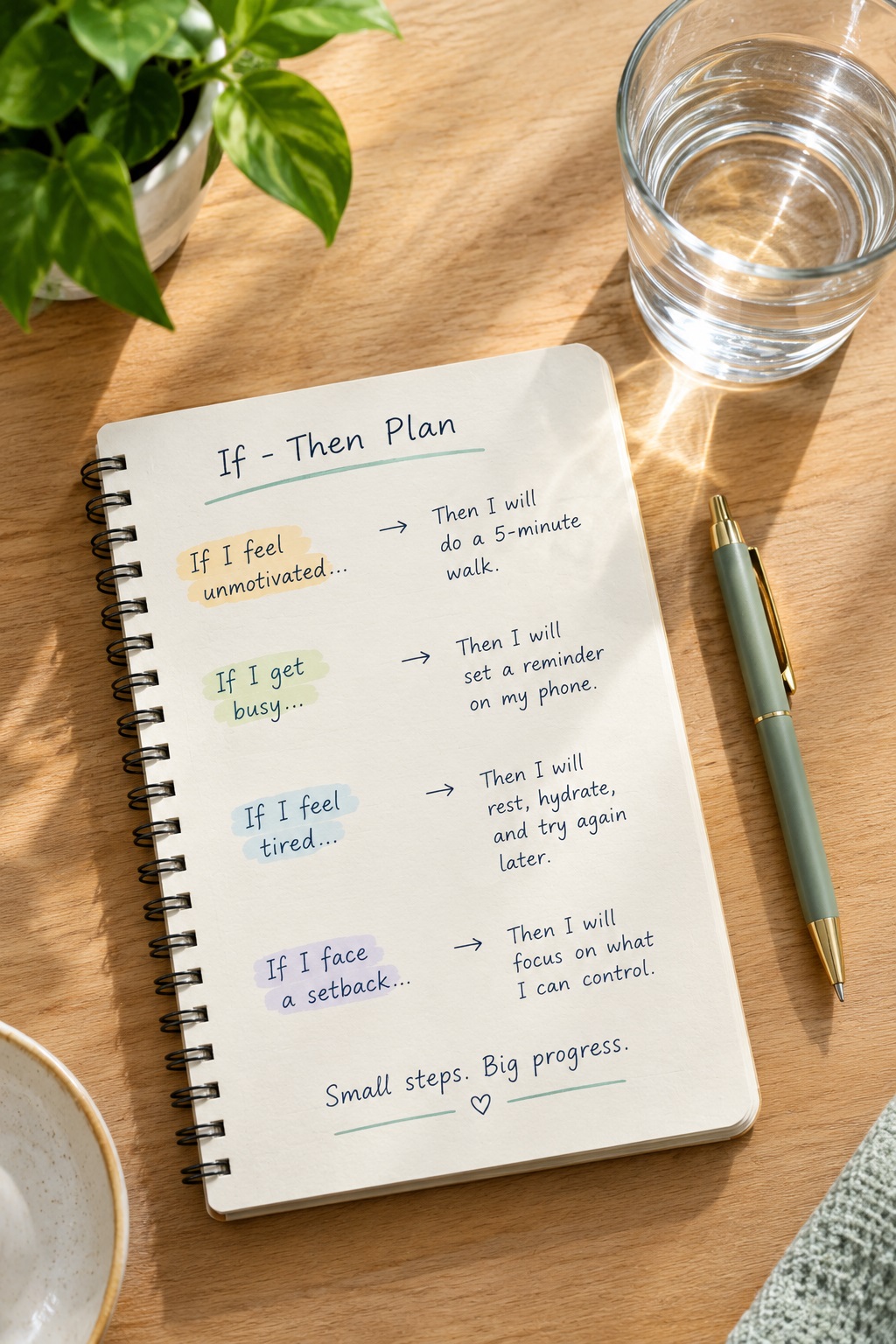
Pause, describe what happened without judgment, and treat your next meal or activity as the reset point rather than waiting for a “perfect” restart.
The same 2013 study found that how severe a slip feels may matter alongside how large it actually is. A 2012 experiment by Jeni Burnette (University of Richmond) and Eli Finkel (Northwestern) found that dieters who were encouraged to see their ability to manage weight as improvable with effort were buffered against weight gain after setbacks (Journal of Experimental Social Psychology).
Ideas many programs use, offered as general options:
- Name the trigger (stress, travel, social events, poor sleep) instead of blaming willpower.
- Write an if-then plan in advance, for example: “If I overeat at dinner, then tomorrow I’ll return to my usual breakfast and a short walk.”
- Drop all-or-nothing labels like “ruined” or “failed.”
Read more: [Handling Slip-Ups in Weight Loss → link to spoke 1]
How do you get back on track after a weight loss setback?

Start small and start soon. Return to one or two familiar habits, keep tracking, and ask for support rather than overhauling everything at once.
The Beck Institute, a cognitive behavioral therapy organization, says a common mistake after a setback is trying to change too many things at once (Beck Institute). The Mayo Clinic Diet team recommends staying curious about your choices, treating them as learning opportunities, and accepting support (Mayo Clinic Diet). A qualitative follow-up of 26 participants from the WRAP primary-care trial (University of Cambridge MRC Epidemiology Unit) concluded that future programs should emphasize self-monitoring, planning, and managing relationships (MRC Epidemiology Unit).
When to involve a professional: setbacks lasting weeks, binge eating, intense distress around food, or weight changes after starting or stopping a medication all warrant a conversation with a healthcare provider.
Read more: [Getting Back on Track After a Setback → link to spoke 2]
Does self-compassion help with weight loss setbacks?

Self-compassion is treating yourself with the care you would offer a friend. Studies associate it with better mood and self-control after a lapse, but it has not been shown to cause weight loss on its own.
In the Drexel study (Appetite, 2024), lead author Charlotte Hagerman noted that self-compassion and accountability can work together instead of excusing the lapse. A separate 2020 diary study in the British Journal of Health Psychology found self-compassion was linked to intentions to continue dieting and to less negative emotion after lapses, but did not predict weight loss; reduced guilt appeared to explain part of the link (PMC8451927).
| Harsh self-talk | Self-compassionate alternative |
|---|---|
| “I have no willpower.” | “I’m trying in an environment full of food cues.” |
| “I ruined everything.” | “One meal is one meal. What helps next?” |
| “Why bother now?” | “What is one small step I can take today?” |
Read more: [Self-Compassion in Weight Loss → link to spoke 3]
What helps people keep weight off in the long run?
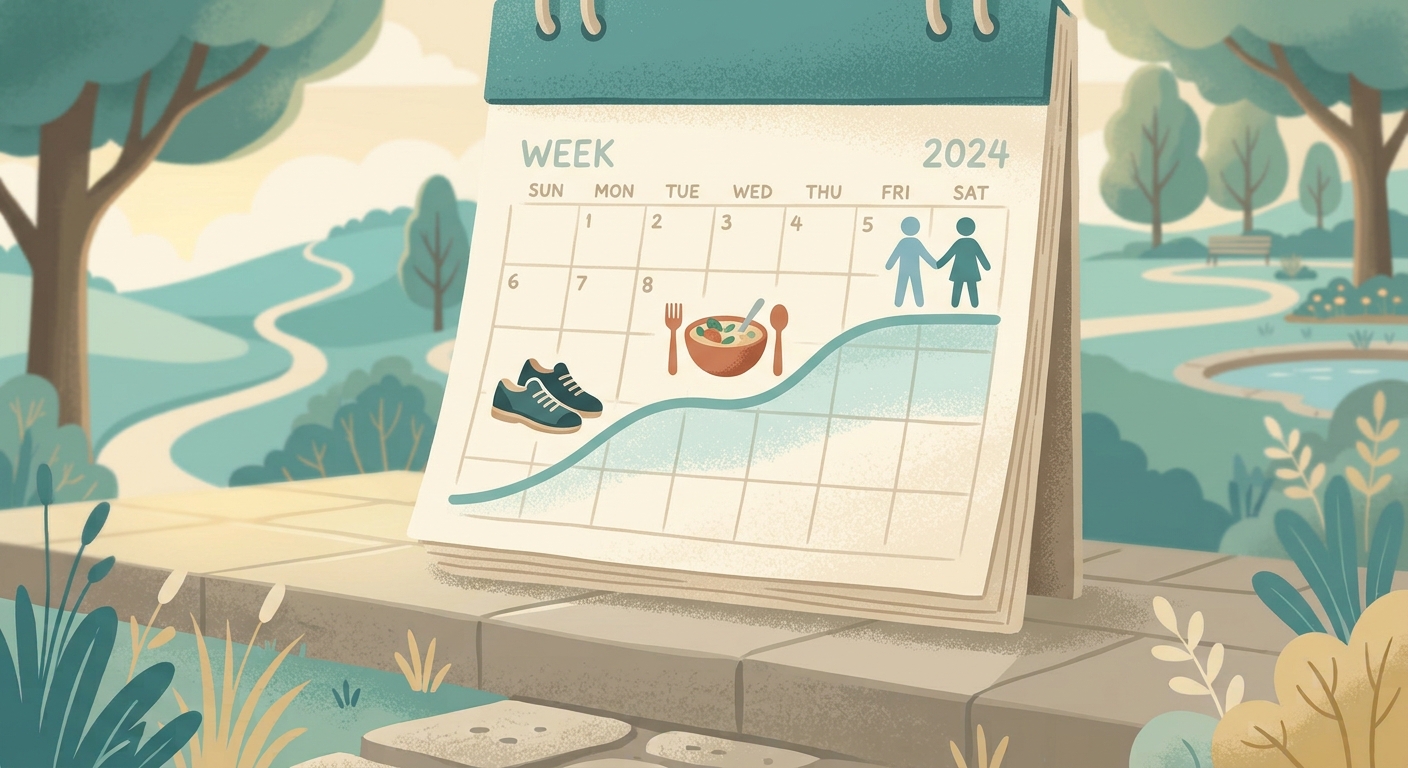
Long-term success is generally associated with realistic pacing, regular self-monitoring, physical activity, and ongoing support. Relying on short bursts of strict dieting is associated with more regain.
The CDC has long stated that people who lose weight gradually, about 1 to 2 pounds per week, tend to be more successful at keeping it off (CDC, archived page). Evidence on pace is not fully settled, though, and some reviewers note that fast loss alone does not clearly predict more regain, so pacing is best discussed with a provider.
| Evidence | What it found | Source |
|---|---|---|
| Behavioral programs | Often 5%+ weight loss in 4–6 months; one-third to one-half regained in the year after treatment | American Nurse |
| Behavioral programs | About 30–35% regained after one year | ScienceAlert summary |
| Very low-calorie diets | 26%–121% regained five years after treatment | Loughborough University |
| Successful maintainers | Physical activity reported as an important factor | ScienceAlert summary |
Because activity and diet needs vary by person, check with your healthcare provider before making changes.
Read more: [Long-Term Weight Loss Success → link to spoke 4]
Is it normal to slip up while trying to lose weight?
Yes. Clinicians describe setbacks as a normal, expected part of weight loss and maintenance. What tends to matter most is how quickly and kindly you respond, not whether a slip happens.
What is the difference between a lapse and a relapse in weight loss?
A lapse is a short, temporary slip, such as overeating at one meal. A relapse is a sustained return to habits that lead to weight gain. Catching a lapse early can help keep it from becoming a relapse.
How do I get back on track after overeating?
Many experts suggest returning to your usual routine at your next meal instead of waiting for a new week. Choose one or two familiar habits first and avoid drastic restriction. A registered dietitian or doctor can help if you are unsure how to adjust.
Can being kind to yourself help with weight loss?
Research associates self-compassion after a slip with better mood and greater self-control in the following hours. One study did not find it directly predicted weight loss, so it is best seen as a supportive skill, not a guarantee.
Why do people regain weight after losing it?
Reasons vary and may include changing routines, stress, biological adaptations, and less support after a program ends. Clinicians report that regaining some weight in the year after treatment is common, which is why maintenance planning matters.
When should I talk to a healthcare professional about weight regain?
Consider reaching out if regain continues, if you feel distressed or out of control around food, if you have a medical condition, or if you take medication that affects weight. A qualified provider can offer personalized guidance.
Sources
American Nurse; Burnette & Finkel (2012), J Exp Soc Psychol; Eating and Weight Disorders (2013); Hagerman et al. (2024), Appetite / Drexel University; Br J Health Psychol (2020), PMC8451927; Mayo Clinic Diet; Beck Institute; MRC Epidemiology Unit (Cambridge); EHPS abstract; Loughborough University (2023); ScienceAlert summary; CDC (archived).



Leave a Reply