



By Talha Yousaf, Founder & Editor, WorldlyInfo · Last updated: [19-10-2026] · Research reviewed through October 2026
Medical disclaimer: This article is for general education and is not medical advice. It does not diagnose, treat or prescribe. Talk with a doctor or registered dietitian before changing your eating or activity, especially if you have a medical condition, take medication, are pregnant, or have a history of disordered eating.
Quick answer: Habit formation for weight loss means repeating a behavior in a consistent context until it becomes automatic, which lowers the effort it takes. A University College London (UCL) study found that new daily behaviors took a median of 66 days to become automatic, with individual times ranging from 18 to 254 days (Lally et al., 2010). Habit-based approaches have been associated with weight loss and may support maintenance, though researchers say more studies are needed.
Key takeaways
- Small, specific, repeated behaviors are generally easier to sustain than broad resolutions.
- Planning for roughly three months is more realistic than the popular “21 days.”
- Linking a new behavior to an existing routine (“habit stacking”) is a practical form of if-then planning.
- The CDC has described steady weight loss of about 1 to 2 pounds per week as more likely to be maintained over time.
- Individual needs differ. A healthcare provider or registered dietitian can tailor goals to your situation.
What is habit formation for weight loss, and why does it matter for weight loss?

Habit formation is the process by which a behavior repeated in a stable context becomes automatic, meaning it takes less conscious effort and willpower. Habit-focused approaches have been associated with weight loss in research, and may help people maintain changes, though more studies are needed.
Psychologists call that growing ease automaticity. It matters because weight management involves hundreds of small daily choices, and relying on motivation alone for every one of them is tiring.
Key studies at a glance
| Study | Design | Finding | Source |
|---|---|---|---|
| UCL exploratory trial (Lally, Chipperfield & Wardle, 2008) | 104 overweight or obese adults randomized to a habit-based leaflet or a waiting-list control for 8 weeks; intervention group followed for 8 months | At 8 weeks, mean loss of 2.0 kg vs. 0.4 kg in controls; among those who remained at 32 weeks, 3.8 kg; an intention-to-treat analysis gave 2.6 kg | PubMed 18071344 |
| UCL pilot study (Lally, 2007) | 10 participants, 8 weeks, no control group | Average weight loss of about 3 kg (roughly 6.6 lb); some behaviors reached automaticity | UCL Discovery |
| Habit formation in the real world (Lally et al., 2010) | 96 volunteers tracking a self-chosen daily behavior | Median 66 days to automaticity; range 18–254 days | European Journal of Social Psychology |
| Narrative review on weight maintenance (2017) | Review of habit-based programs | Habit-based programs showed promising results; authors call for more research | PubMed 28150402 |
| Qualitative study (University of Surrey) | Interviews with 10 participants | New behaviors felt effortful at first, then easier; cues mattered; weekends and vacations disrupted routines | University of Surrey |
The 2008 trial was exploratory and the pilot had no control group, and the Surrey study is qualitative, so none of them settles cause and effect on its own.
What does the CDC say about the pace of weight loss?
The CDC has said that people who lose weight gradually and steadily, about 1 to 2 pounds per week, are more successful at keeping it off, and describes healthy weight loss as long-term changes in daily eating and activity habits (CDC, “What is healthy weight loss?”, archived version). The same page notes that even a 5–10% reduction in body weight is likely to improve blood pressure, cholesterol and blood sugar. For current CDC guidance, see the agency’s Healthy Weight and Growth pages. These are general public-health figures, so ask a healthcare provider what is appropriate for you.
How do you build healthy habits for weight loss?

To build a healthy habit, choose one small, specific behavior, attach it to a consistent time and place, and repeat it daily. Starting with one or two changes is generally easier to sustain than overhauling everything at once.
| Vague goal | Habit version | Cue |
|---|---|---|
| “Move more” | Walk for 10 minutes | After lunch |
| “Eat better” | Add a vegetable to dinner | When plating the meal |
| “Sleep more” | Phone on the charger | At a set evening time |
| “Drink less soda” | Refill a water bottle | At 10 a.m. |
What makes a new habit easier to stick with?
Habits tend to stick when they are small enough to do on a bad day, tied to a reliable cue, and made convenient. Practical levers include:
- Shrink it: a behavior you can do when tired is one you can repeat.
- Anchor it: a time, place or existing routine signals when to act.
- Reduce friction: lay out walking shoes, or pre-wash fruit.
- Limit the list: fewer simultaneous goals are easier to keep track of.
- Track lightly: a calendar tick can be enough. If tracking food or weight causes distress, skip it and speak with a professional.
Deep dive coming: Building Healthy Habits for Weight Loss →
What does behavior change science say about making habits stick?
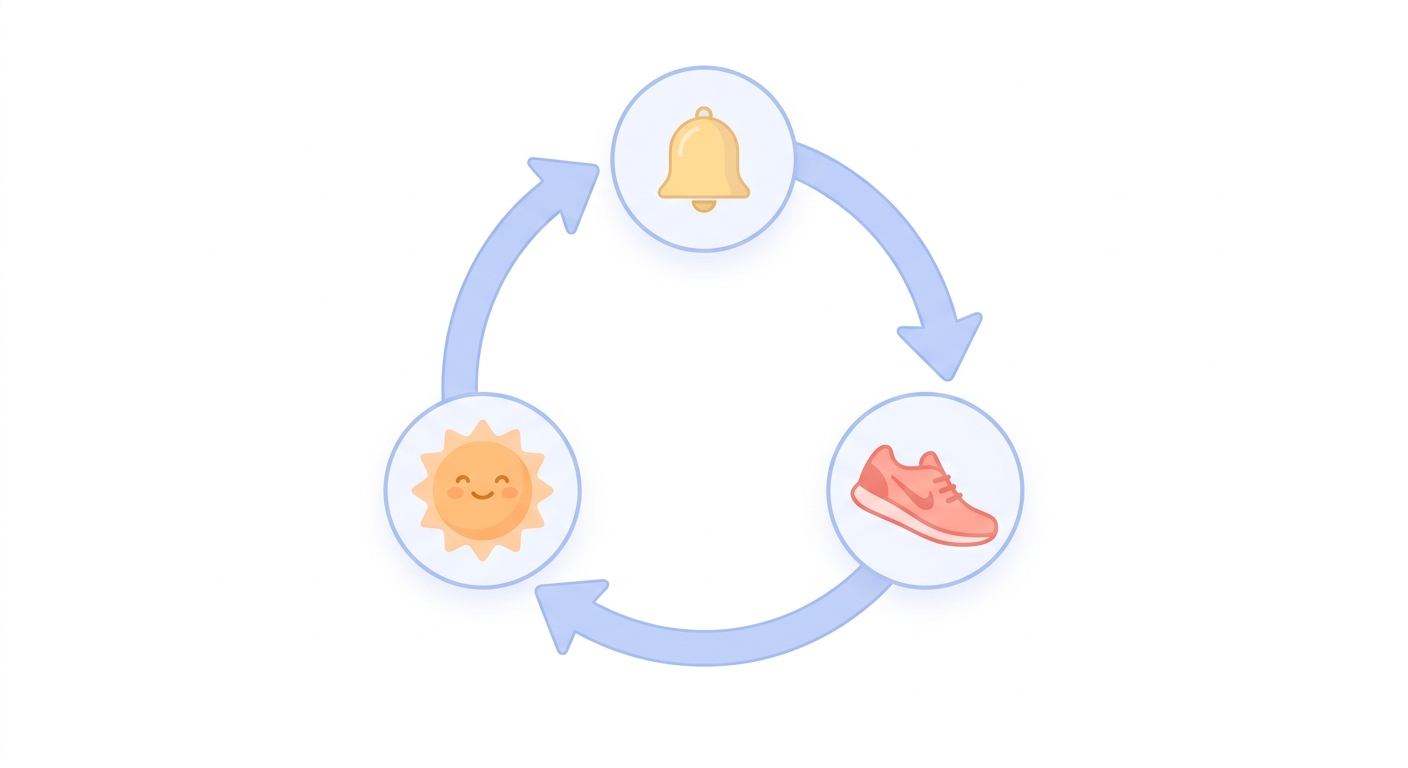
Behavior change science shows that habits form when a behavior is repeated in a consistent context until it becomes automatic. A cue, a routine and a reward shape how strongly the link forms, and context plays a large role.
What did researchers find about early effort and cues?
In the University of Surrey study, new behaviors felt effortful at first and got easier as automaticity increased. Participants relied on effective cues, and weekends and vacations temporarily disrupted habits because the usual cues were absent, with routines resuming on return to the usual context.
What this suggests in practice:
- Expect early effort. Difficulty in the first weeks is normal.
- Choose reliable cues. Cues tied to your regular routine tend to work best.
- Plan for disruptions. Decide in advance what your habit looks like on weekends, travel days and busy weeks.
- Use named techniques. Behavior scientists have catalogued dozens of techniques, such as goal setting, self-monitoring and action planning (Michie et al., 2013, Behaviour Change Technique Taxonomy v1).
Deep dive coming: The Science of Behavior Change for Weight Loss →
What is habit stacking, and does it work?
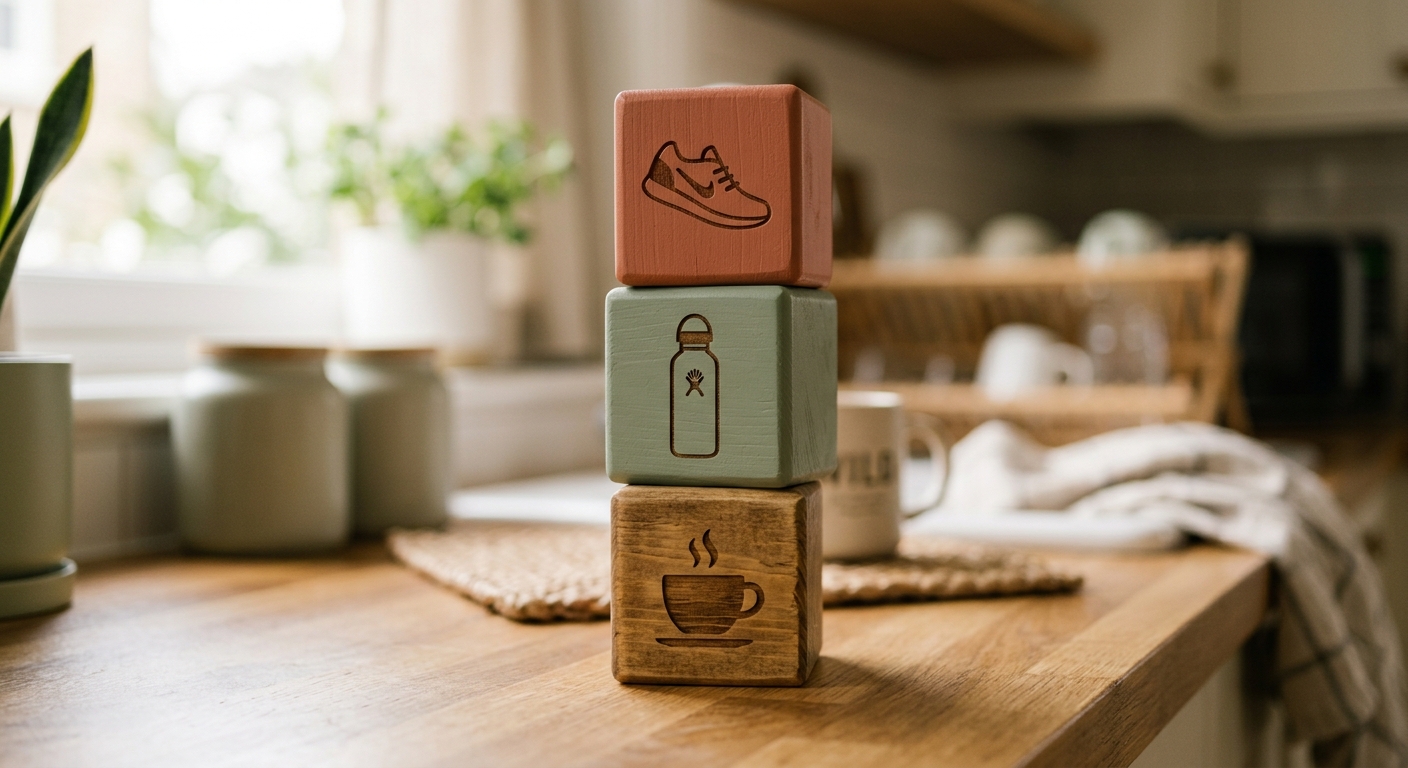
Habit stacking links a new behavior to something you already do, using the formula “After I [current habit], I will [new habit].” Behavior scientists generally treat it as a form of implementation intention, an if-then plan that specifies when and where you will act.
Author James Clear popularized the term in Atomic Habits, describing an existing habit as the cue for the new one.
Examples:
- After I pour my morning coffee, I will fill a water bottle.
- After I close my laptop at work, I will walk around the block.
- After I wash dinner dishes, I will pack tomorrow’s lunch.
Is there evidence that habit stacking helps with weight loss?
Research supports if-then planning for following through on goals, but studies testing the “stacking” format specifically in weight-loss trials are limited. The broader evidence base is a meta-analysis by Gollwitzer & Sheeran (2006). Treat stacking as a promising, low-cost tool rather than a guarantee. Choose anchors that happen daily, since an infrequent anchor makes a weak cue.
Deep dive coming: Habit Stacking for Weight Loss →
How long does it take to form a habit?

In a widely cited UCL study, the median time for a new daily behavior to become automatic was 66 days, and individuals ranged from 18 to 254 days (Lally et al., 2010). The popular “21 days” claim is not supported by that research.
| Claim | What the evidence says |
|---|---|
| “It takes 21 days” | Traces to plastic surgeon Maxwell Maltz’s 1960 book Psycho-Cybernetics, based on clinical observations rather than a habit-formation study (summary) |
| “It takes 66 days” | A median from Lally et al. (2010), not a fixed rule |
| “It takes about 2 months” | A 2024 systematic review is reported to show a similar timeframe with wide individual differences (as summarized by Healthline) |
Why is the 254-day figure only an estimate?
The UCL study ran about 12 weeks, so times beyond that were modeled estimates rather than observed outcomes. Harder behaviors, such as regular exercise, tend to take longer than simple ones, such as drinking water.
What if I miss a day?
A single missed day does not appear to derail habit formation. Lally has said that missing one opportunity won’t set progress back very much (Inverse interview). What matters most is returning to the routine.
What does a 30-60-90 day habit plan look like?

A 30-60-90 plan splits habit building into three stages: start small (days 1–30), stabilize and stack (days 31–60), and review and adapt (days 61–90). Treat 90 days as a planning window rather than a finish line.
| Phase | Focus | Example approach | Check-in question |
|---|---|---|---|
| Days 1–30 | Start tiny; find a reliable cue | One small behavior, such as a short daily walk after lunch | “Can I do this on a bad day?” |
| Days 31–60 | Stabilize and stack | Anchor a second behavior to an existing routine; plan for weekends and travel | “Which situations break my routine?” |
| Days 61–90 | Review, adapt, plan ahead | Keep what feels automatic; adjust what doesn’t; decide what’s next | “What feels easier now than a month ago?” |
Progress is not linear, and a missed week is information rather than failure. A registered dietitian or doctor can help tailor pacing and goals.
Deep dive coming: 30-60-90 Day Plans for Weight Loss Habits →
Which habit topic should you explore next?
| If you want to… | Read this |
|---|---|
| Choose your first small changes | Building healthy habits |
| Understand why habits stick or slip | Behavior change science |
| Tie new behaviors to existing routines | Habit stacking |
| Map the next three months | 30-60-90 day plans |
Can building habits help with weight loss?
Habit-based approaches may help some people lose weight and maintain changes, and research on this is promising but still developing. A UCL randomized trial found greater weight loss with habit-based advice than with no treatment, and a 2017 review suggested habit strategies may support maintenance. Ask a healthcare provider what’s appropriate for you.
How long does it take to form a healthy habit?
It varies. A widely cited UCL study found a median of about 66 days, with a range from 18 to 254 days. Simpler behaviors tend to become automatic sooner than complex ones, so planning for roughly three months is realistic.
What happens if I miss a day?
One missed day does not appear to derail habit formation. The researcher behind the 66-day study has said a single missed opportunity doesn’t set progress back much. What matters most is returning to the routine.
What is habit stacking?
Habit stacking means attaching a new behavior to an existing daily routine, for example “After I pour my coffee, I will fill my water bottle.” It is generally considered a form of implementation intention, or if-then planning.
What should my first habit be?
There’s no single best habit. A good first habit is small, specific, tied to a clear cue and realistic on your busiest day. A registered dietitian or doctor can help you choose changes that fit your health needs.
Should I talk to a doctor before changing my eating or activity?
Yes, especially if you have a medical condition, take medication, are pregnant, or have a history of disordered eating. A healthcare provider can tailor guidance to your situation.
Medical disclaimer: This content is for general informational purposes only and does not replace professional medical advice, diagnosis or treatment. Consult a qualified healthcare provider before making changes to your diet, activity or health routine.
Sources
- CDC. “What is healthy weight loss?” (archived page) · CDC Healthy Weight and Growth
- Lally P, van Jaarsveld CHM, Potts HWW, Wardle J. How are habits formed: modelling habit formation in the real world. Eur J Soc Psychol. 2010;40(6):998–1009.
- Lally P, Chipperfield A, Wardle J. Healthy habits: efficacy of simple advice on weight control based on a habit-formation model. Int J Obes. 2008;32(4):700–707.
- Lally P. Habitual behaviour and weight control. PhD thesis, UCL, 2007.
- Could habits hold the key to weight loss maintenance? A narrative review. J Hum Nutr Diet. 2017;30(5):655–664.
- Experiences of habit formation: a qualitative study. University of Surrey.
- Michie S, et al. The behavior change technique taxonomy (v1). Ann Behav Med. 2013.
- Gollwitzer PM, Sheeran P. Implementation intentions and goal achievement. Adv Exp Soc Psychol. 2006.
- Clear J. Habit stacking. jamesclear.com.
- Maltz M. Psycho-Cybernetics. 1960. See also: Spring, “How long to form a habit?”
- How long does it take to form a habit? Healthline (secondary summary of a 2024 systematic review).



Leave a Reply