



By Talha Yousaf, M.Phil. Physics, science educator and health-content researcher. Not a medical professional.
Medical disclaimer: This article is general education, not medical advice, diagnosis, or treatment. Consult a physician or registered dietitian before changing your diet, exercise, or medications, especially if you have a medical condition, are pregnant, or take prescription drugs.
What Is a Weight Loss Plateau?
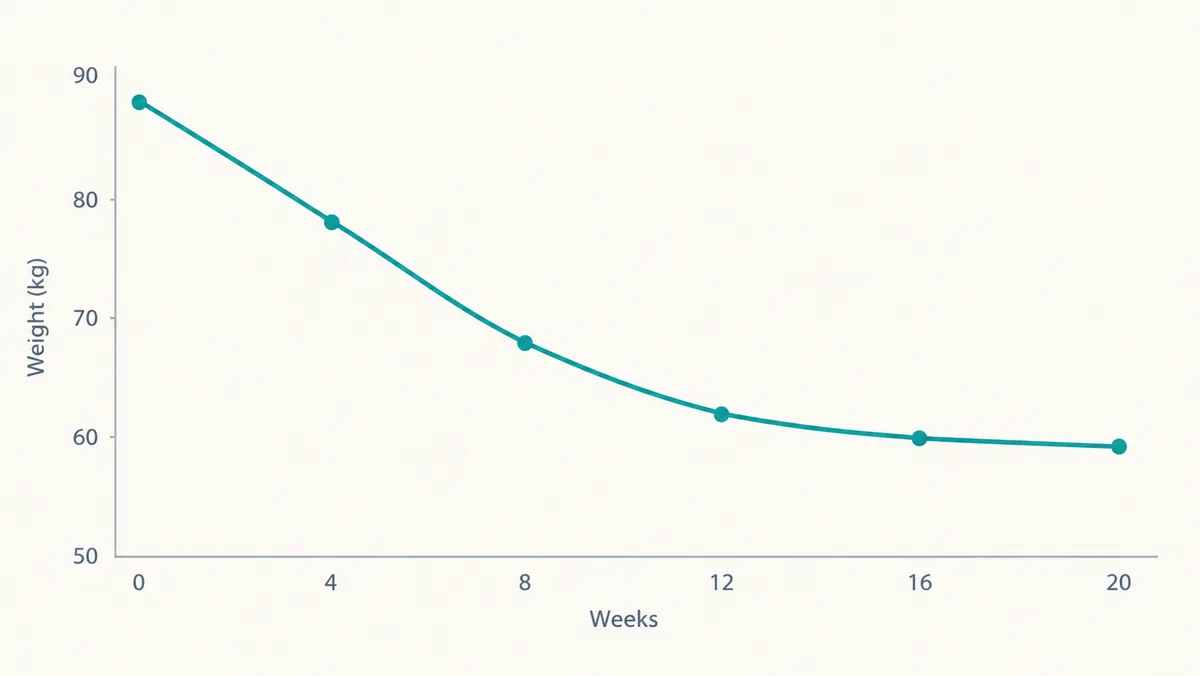
A weight loss plateau is a stretch of several weeks or more when your weight stops falling even though you are still following the same eating and exercise routine. It is a normal, expected part of losing weight, not a sign you are failing.
Mayo Clinic describes it as something that eventually happens to everyone who tries to lose weight. Mayo dietitian Katherine Zeratsky has said anyone losing weight should expect to reach one (U.S. News & World Report, via WTOP). WebMD reports that studies estimate plateaus affect about 85% of people trying to lose weight. A StatPearls review on the NCBI Bookshelf notes that most diets give similar results over 8 to 12 weeks, but only about 10–20% of people maintain weight loss beyond 24 weeks.
| Key figure | Number | Source |
|---|---|---|
| People who hit a plateau | ~85% | WebMD |
| Diets with similar results | 8–12 weeks | StatPearls |
| People keeping weight off past 24 weeks | ~10–20% | StatPearls |
Is It a Real Plateau or Just Normal Fluctuation?
Day-to-day weight can swing by a few pounds from water, salt, hormones, and food volume. A true plateau is commonly described as three to four weeks without change in weight or body measurements.
| Signal | Usually a fluctuation | Possibly a plateau |
|---|---|---|
| Time frame | A few days | 3–4+ weeks |
| Scale pattern | Zigzag around a steady line | Flat line |
| Body measurements | Changing | Unchanged |
| Common triggers | Salty meal, menstrual cycle, bloating | Lower energy needs, routine drift |
Why Do Weight Loss Plateaus Happen?
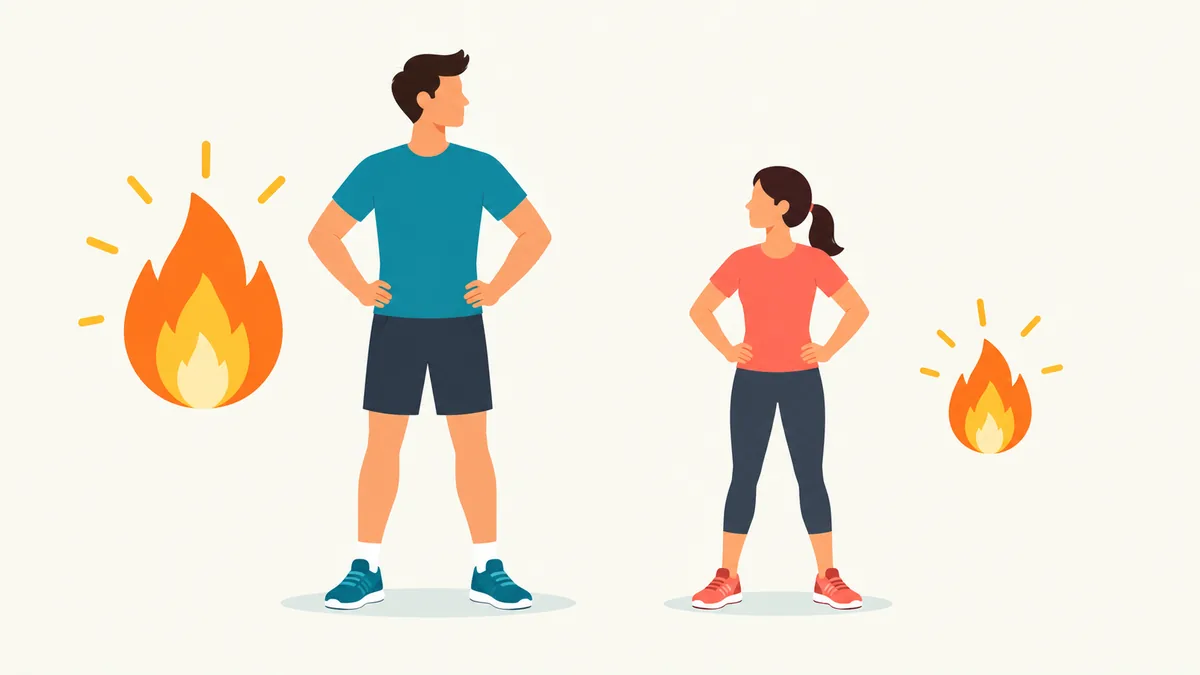
Plateaus mainly happen because a smaller body needs fewer calories, and because the body adapts to a prolonged calorie deficit by lowering its energy use. Habit drift, such as bigger portions or less daily movement, often adds to it.
Mayo Clinic explains that a slower metabolism slows weight loss even if you eat the same number of calories that helped you lose at first. The physics is simple: energy needs scale with body size, so the deficit that worked at the start gradually shrinks.
| Cause | What happens | Source |
|---|---|---|
| Lower body weight | Fewer calories burned at rest and in movement | Mayo Clinic |
| Adaptive thermogenesis | Energy use falls beyond what body size alone predicts | StatPearls; Müller et al., 2016 |
| Hormonal change | Appetite-related hormones such as leptin shift during weight loss | Müller et al., 2016 |
| Reduced daily movement | Non-exercise activity thermogenesis (NEAT) can fall | Müller et al., 2016 |
| Muscle loss | Rapid loss may reduce energy-burning lean mass | Expert panel, The National, 2025 |
| Short sleep | Under 7 hours is associated with obesity risk | CDC, 2016 |
| Calorie creep | Portions and tracking loosen over time | Add a source before publishing |
Deep dive: [Why Weight Loss Plateaus Happen] (spoke link).
What Is Metabolic Adaptation?

Metabolic adaptation, also called adaptive thermogenesis, is the body’s tendency to lower its energy expenditure in response to a sustained calorie deficit. StatPearls identifies it as the primary physiological adaptation behind plateaus.
A review in Current Obesity Reports (Müller, Enderle, Bosy-Westphal, 2016) defines it as energy-expenditure changes that are independent of changes in fat-free mass, directed toward energy sparing during negative energy balance (full text).
The most-cited extreme case is the NIH-led follow-up of 14 former The Biggest Loser contestants (Fothergill et al., Obesity, 2016):
| Measure | Result |
|---|---|
| Participants followed | 14, for six years |
| Resting metabolic rate vs. baseline at year 6 | About 704 kcal/day lower |
| Metabolic adaptation (vs. prediction for body composition) | About 499 kcal/day |
That group lost weight through severe restriction and heavy exercise, so treat it as an upper bound rather than a typical result.
Worked example (illustrative only, not a prediction): Suppose maintenance needs fall by 150 kcal/day from lower body weight and another 150 kcal/day from adaptation. A 500 kcal/day deficit at the start becomes about 200 kcal/day. Progress slows without any change in effort. Real numbers vary by person.
Deep dive: [Metabolic Adaptation Explained] (spoke link).
How Long Does a Weight Loss Plateau Last?
There is no fixed length. Mayo Clinic notes plateaus may last a few days to a few weeks and sometimes a few months, and a panel of experts commonly describes two to six weeks.
According to Zeratsky in The National, a plateau generally occurs around six months but can come after a year. Mayo’s own guidance appears in Tip the scales on a weight-loss plateau.
| Duration | Reasonable next step |
|---|---|
| Under 3 weeks | Likely normal fluctuation; keep habits steady |
| 3–6 weeks | Audit food tracking, activity, sleep, stress |
| 6+ weeks | Consider talking with a physician or registered dietitian |
How Do You Break Through a Weight Loss Plateau?
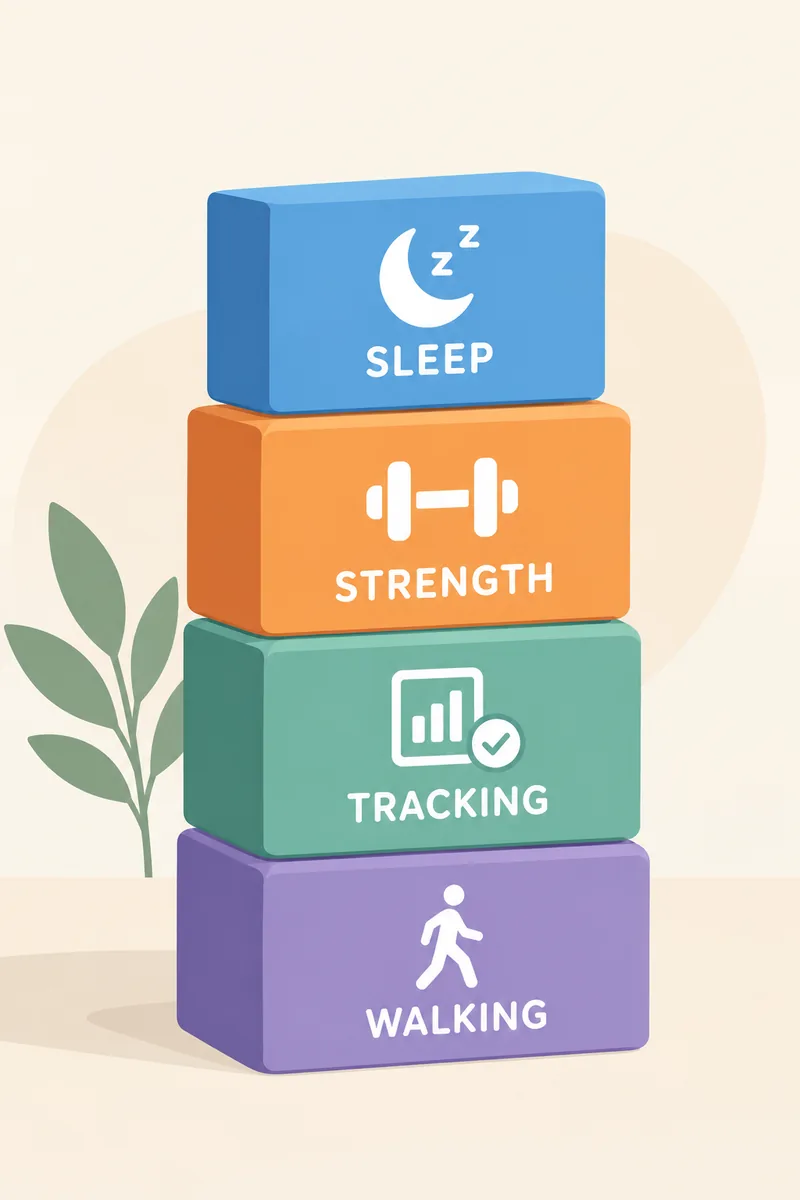
Change one or two variables at a time, such as tracking food accurately, adding resistance training, and improving sleep, rather than slashing calories. Mayo Clinic advises adjusting your program if you want to lose more, since the same approach that worked at first may only maintain your weight.
| Strategy | Why it may help | Practical starting point |
|---|---|---|
| Re-audit intake | People can underestimate intake | Track honestly for 1–2 weeks |
| Resistance training | May help preserve muscle in a deficit | CDC: muscle-strengthening on 2+ days weekly |
| Aerobic activity | Raises weekly energy use | CDC: at least 150 min moderate activity weekly; Mayo Clinic recommends at least 300 min for weight loss or maintenance |
| More daily movement | Counters unconscious drops in activity | Add short walks gradually |
| Protein and fiber | Associated with fullness | Add to existing meals |
| Sleep | Short sleep is associated with weight-related risks | CDC: 7+ hours for adults |
| Stress management | Stress can affect eating and recovery | One calming habit daily |
| Non-scale tracking | The scale hides body-composition change | Waist, fit of clothes, energy |
Deep dive: [Strategies to Overcome a Plateau] (spoke link).
Should You Cut Calories or Exercise More?

Usually neither dramatically. Small, gradual adjustments are generally safer than deep cuts, which may worsen fatigue, muscle loss, and metabolic adaptation. Appropriate targets depend on age, sex, health, and medications, so confirm changes with a dietitian or physician.
| Approach | Possible upside | Possible downside |
|---|---|---|
| Large calorie cut | Quick short-term drop | Fatigue, muscle loss, hard to sustain |
| Small, gradual adjustment | Easier to maintain | Slower visible change |
| Cardio only | Extra energy use | Appetite may rise |
| Strength plus daily activity | Supports muscle and fitness | Needs consistency and recovery |
Deep dive: [Adjusting Calories and Exercise] (spoke link).
Can You Plateau While on Weight-Loss Medication?
Yes. Weight loss can slow or level off during treatment, and any dose or plan change should be guided by the prescribing clinician, not self-adjusted.
When Should You See a Healthcare Provider?
Seek advice if weight is stalled for many weeks, you feel unusually fatigued, you take medications that may affect weight, or food and weight dominate your thoughts. Mayo Clinic suggests talking with a health care provider or registered dietitian if your efforts to get past a plateau aren’t working.
Key Takeaways
- Plateaus affect roughly 85% of people trying to lose weight (WebMD).
- A lighter body burns fewer calories, and adaptive thermogenesis can add to that. In the extreme Biggest Loser follow-up, it reached about 500 kcal/day.
- Gradual changes in tracking, strength training, sleep, and stress are generally better first steps than aggressive cuts.
- Stalls of 6+ weeks merit a conversation with a healthcare provider.
Q1. How long does a weight loss plateau last?
There is no fixed length, but many sources describe two to six weeks, and some last longer. If your weight has not changed for about a month despite consistent habits, review your routine and consider asking a healthcare provider.
Q2. Why have I stopped losing weight even though I’m eating less?
A lighter body burns fewer calories, and the body may also lower its energy use in response to a calorie deficit, known as metabolic adaptation. Portion creep and reduced daily movement can contribute as well.
Q3. Is a weight loss plateau normal?
Yes. WebMD reports that studies estimate it affects roughly 85% of people trying to lose weight, and Mayo Clinic experts describe it as expected.
Q4. Should I eat less to break a plateau?
Large cuts are generally not recommended without professional guidance, as they may increase fatigue and muscle loss. A registered dietitian can help set safe targets for your situation.
Q5. Can strength training help with a plateau?
It may help preserve muscle during weight loss, which supports energy use. Check with your healthcare provider before starting a new routine.
Q6. Can you plateau while on weight-loss medication?
Yes, it can happen. Discuss any changes with the prescribing clinician rather than adjusting treatment on your own.
References
- Fothergill E, et al. Persistent metabolic adaptation 6 years after “The Biggest Loser” competition. Obesity, 2016. DOI: 10.1002/oby.21538.
- Müller MJ, Enderle J, Bosy-Westphal A. Changes in energy expenditure with weight gain and weight loss in humans. Current Obesity Reports, 2016.
- Weight loss plateau (StatPearls). NCBI Bookshelf.
- Mayo Clinic. Getting past a weight-loss plateau.
- Mayo Clinic Care Network. Tip the scales on a weight-loss plateau.
- CDC. Physical Activity Guidelines for Adults.
- CDC. 1 in 3 adults don’t get enough sleep (MMWR press release, 2016).
- WebMD. Weight Loss Plateau.
- U.S. News & World Report via WTOP. Weight Loss Plateau: How to Break Through.
- The National. Weight loss plateau: experts explain (2025).



Leave a Reply