



Written by Talha Yousaf, science educator (M.Phil. Physics). Last updated: October 31, 2026. Not written or reviewed by a medical professional.
Medical disclaimer: This article is general education, not medical advice. Consult a healthcare provider before starting a weight loss plan, particularly if you have a medical condition, take medication, are pregnant, or have a history of disordered eating.
In short: Realistic weight loss goals are Specific, Measurable, Achievable, Relevant, and Time-bound, the five parts of the SMART method. The CDC reports that gradual loss of about 1–2 pounds (0.5–1 kg) per week is associated with keeping weight off. Systematic reviews generally link self-monitoring with better outcomes, and celebrating effort-based milestones helps keep goals sustainable.
What are realistic weight loss goals? (The SMART method)
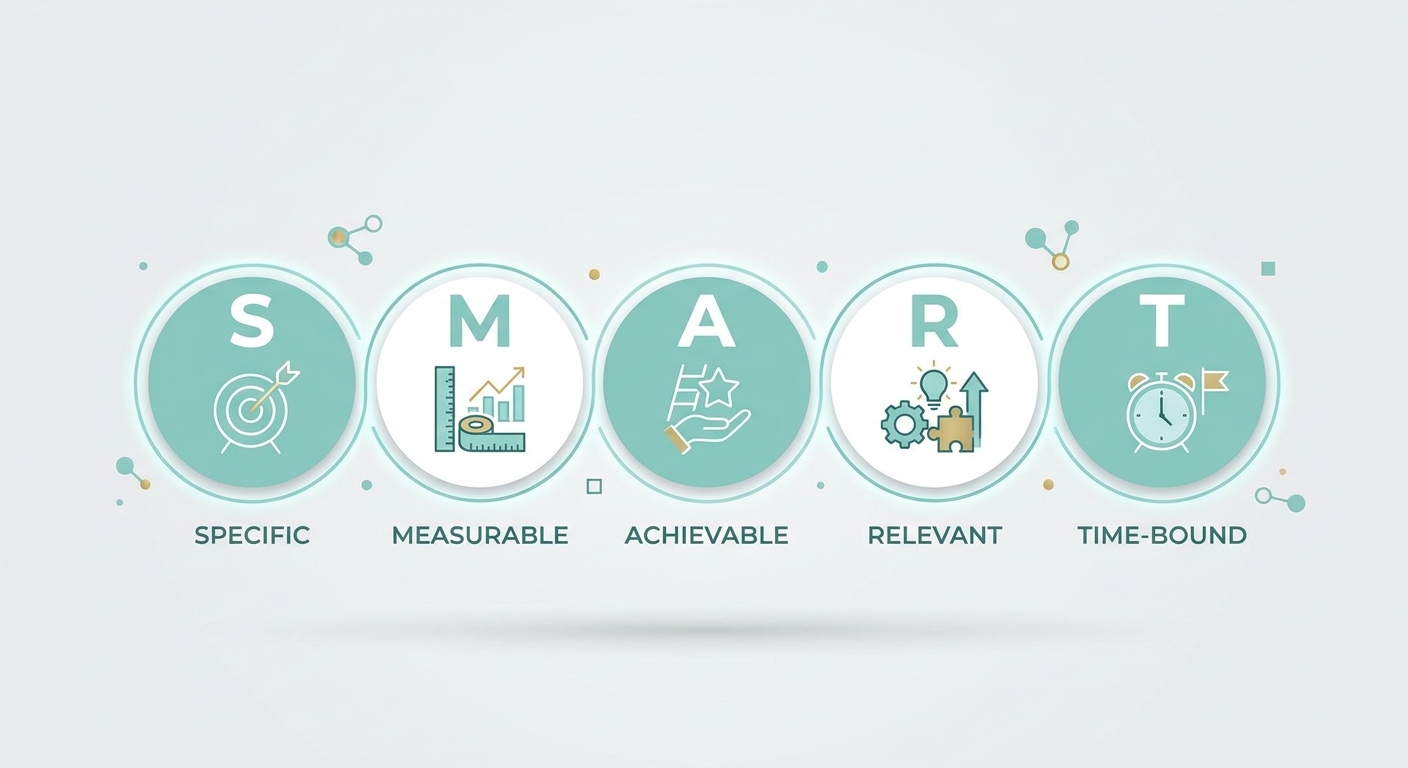
Realistic goals are objectives that are Specific, Measurable, Achievable, Relevant, and Time-bound, turning a vague intention into a plan with a clear check-in date. UPMC and Johns Hopkins Medicine’s Healthy Weight Toolkit both use this format in their weight management guidance. The Hopkins toolkit is written for children and families, but the SMART structure is the same.
What does each SMART letter mean in practice?
| Element | Question it answers | Weak goal | SMART version |
|---|---|---|---|
| Specific | What exactly will I do? | “Eat better” | “Add one vegetable serving to dinner” |
| Measurable | How will I know? | “Move more” | “Walk 15 minutes, 3 days this week” |
| Achievable | Can I realistically do it? | “No sweets ever” | “Dessert at most twice a week” |
| Relevant | Does it matter to my health and life? | “Copy a friend’s plan” | “Changes that fit my schedule and provider’s advice” |
| Time-bound | When do I review? | “Someday” | “Four weeks, then adjust” |
HealthDay’s report on CDC guidance uses the same kind of example: walking 15 minutes three days a week in the first week.
Should goals focus on the scale or on habits?
Habits are generally easier to control and measure than the number on the scale. UPMC suggests anchoring goals to behaviors such as diet, hydration, activity, sleep, and caffeine or alcohol use. Use the scale as feedback, not as the only goal.
How do you build a goal-setting framework for weight loss?
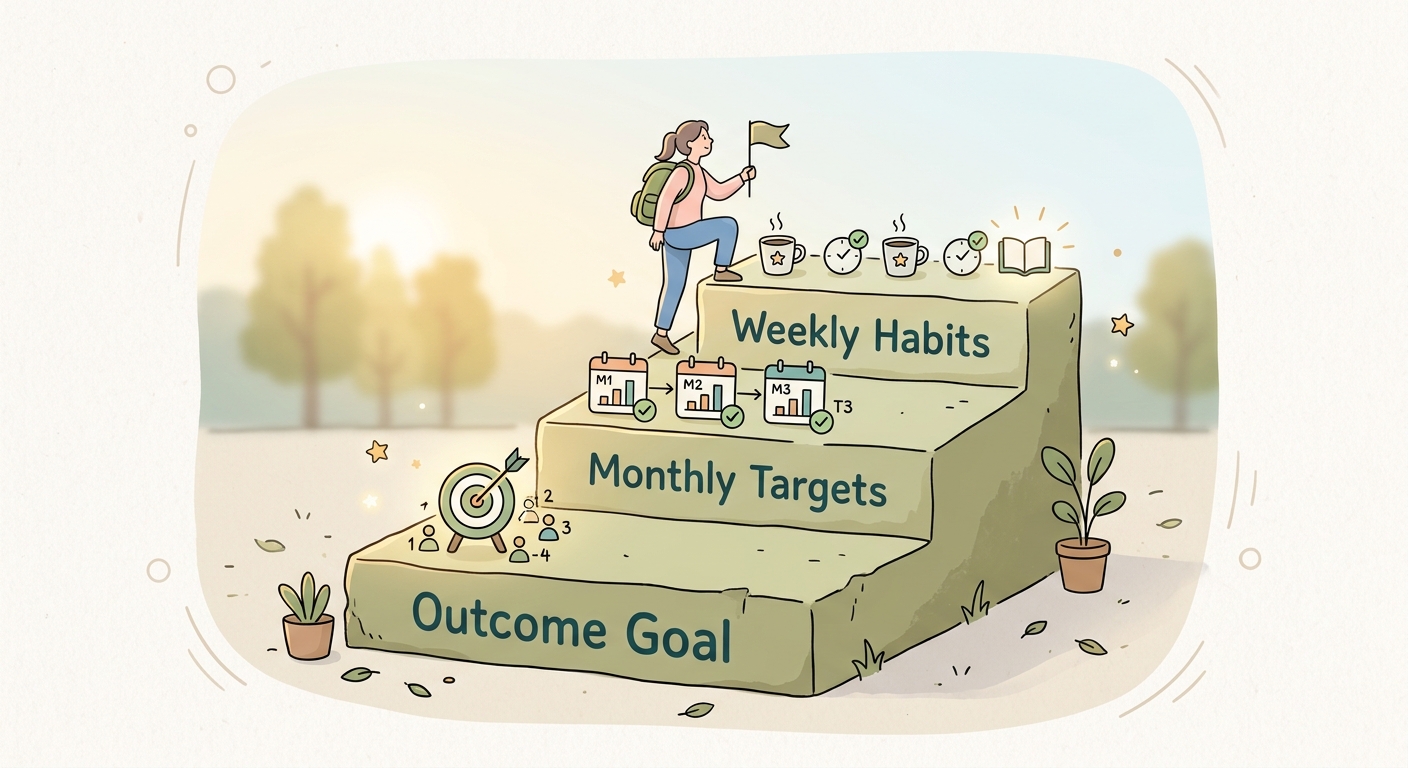
Use three layers: one long-term outcome, a few monthly targets, and weekly habits you fully control. Each layer gets its own review date.
What does a three-layer framework look like?
| Layer | Example | Review |
|---|---|---|
| Outcome (3–6 months) | Reach a modest percentage of current weight, agreed with a provider | Monthly |
| Process (monthly) | Cook at home 4 nights per week | Every 2 weeks |
| Habit (weekly) | 30-minute walk, 3 days | Weekly |
The American Diabetes Association also stresses realistic, achievable goals over aggressive ones.
What are examples of weight loss goals?
Good examples describe an action, an amount, and a timeframe. Here are sample goals sorted by focus area, for illustration only and not a prescription:
| Focus | Example goal |
|---|---|
| Nutrition | “Bring lunch from home three days a week for the next two months” |
| Activity | “Walk 15 minutes after dinner, three evenings a week, for four weeks” |
| Sleep | “Keep a consistent bedtime on weeknights for the next month” |
| Tracking | “Weigh in once a week and log it for 12 weeks” |
The lunch example follows the pattern used by Develop Good Habits. Adjust any example to your own health needs with your provider’s input.
How much weight loss is meaningful for health?
Even modest loss may matter. As HealthDay reports, the CDC notes that for a 200-pound person, losing 5% (10 pounds) may help improve blood pressure, cholesterol, and blood sugar.
Are ambitious goals a good idea?
Evidence is mixed. Healthline’s summary of research reports that people who set goals lost more over a year than those who did not (a 2016 analysis of 35,380 program participants, with 65% more weight lost on average). It also reports that a 2023 study of 36,794 participants found higher goals were linked with lower dropout at 24 weeks. Other sources, such as Lemonaid Health’s editorial team, caution that goals that feel unreachable may raise dropout risk. A dietitian can help you find the right level.
(Full guide: [Goal Setting Framework for Weight Loss — add spoke URL])
What is a realistic timeline for weight loss?

The CDC reports that people who lose weight gradually and steadily, about 1–2 pounds per week, are more likely to keep it off. That steady pace is what makes a sustainable plan. Individual pace varies with age, health, medications, and starting weight.
What do different weekly paces add up to?
| Weekly pace | Over 4 weeks | Over 12 weeks | Context |
|---|---|---|---|
| 0.5 lb (0.25 kg) | 2 lb (0.9 kg) | 6 lb (2.7 kg) | Common for beginners or later stages |
| 1 lb (0.5 kg) | 4 lb (1.8 kg) | 12 lb (5.4 kg) | Often called balanced |
| 2 lb (0.9 kg) | 8 lb (3.6 kg) | 24 lb (10.9 kg) | Upper end of the CDC-cited range |
Arithmetic only; not a prediction or a target.
Why does progress slow down?
Weekly changes naturally fluctuate, and pace often slows over time. Healthline notes that some people lose quickly at first and then find progress slows. A slower week is common, not a sign of failure.
Should I ask a professional before choosing a pace?
Yes, especially for the faster end of the range or with any medical condition. The CDC’s 1–2 pound guidance is general, not individualized.
(Full guide: [Realistic Weight Loss Timelines — add spoke URL])
How do you track weight loss progress?
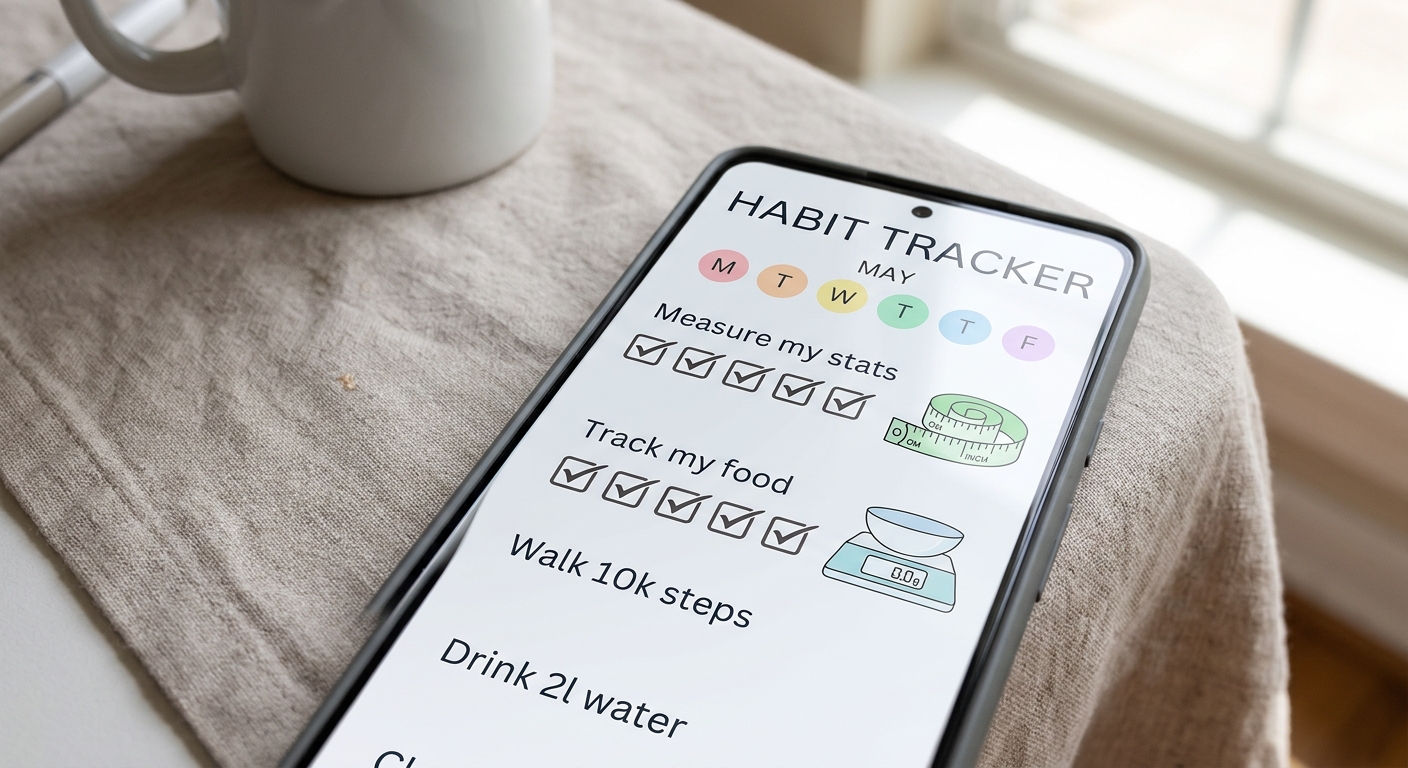
Tracking weight, food, or activity is generally associated with better weight outcomes, though study quality varies.
What does the research say about self-monitoring?
| Source | Design | Finding |
|---|---|---|
| Burke, Wang & Sevick, J Am Diet Assoc, 2011 | Systematic review, 22 studies | Consistent association between self-monitoring and weight loss; evidence level weak due to method limits |
| VanWormer et al., Int J Behav Nutr Phys Act, 2008 | Systematic review | 11 of 12 studies linked more frequent self-weighing with greater loss or prevention of regain |
| Obes Res Clin Pract, 2016 | Systematic review, 22 articles, 19 trials | 75% of self-weighing-only and 67% of combined interventions improved weight outcomes; no negative psychological effects found |
What should I track, and how often?
| Metric | Frequency | Benefit |
|---|---|---|
| Body weight | Weekly, or as your provider advises | Shows trends, not daily noise |
| Waist measurement | Every 2–4 weeks | Captures changes the scale misses |
| Habits (steps, meals, sleep) | Daily check-off | Tracks what you control |
| Energy and mood | Weekly note | Non-scale progress |
Can tracking ever be harmful?
It can be for some people. If tracking triggers anxiety or preoccupation with food or weight, pause and speak with a healthcare professional.
(Full guide: [Tracking Weight Loss Progress — add spoke URL])
How do you celebrate weight loss milestones?

Tie rewards to effort and choose non-food experiences, so the celebration reinforces the habit. Health sources commonly recommend breaking large goals into smaller milestones to sustain motivation, including UPMC and Healthline.
What counts as a milestone?
| Type | Example |
|---|---|
| Behavior | Four straight weeks of hitting a walking target |
| Non-scale | More energy, easier stairs, better sleep |
| Outcome | A first review-date check-in, whatever the number |
What are good non-food rewards?
New workout gear, a day trip, a book, or a planned rest day.
What if I miss a milestone?
Treat it as feedback. Review what got in the way, resize the goal or move the date, and continue.
(Full guide: [Celebrating Weight Loss Milestones — add spoke URL])
What are SMART goals for weight loss?
They are Specific, Measurable, Achievable, Relevant, and Time-bound goals, for example: “I will walk 15 minutes, three days a week, for the next four weeks.” They focus on actions you control and set a date to review progress.
What is a realistic weight loss goal?
The CDC reports that losing about 1–2 pounds per week is associated with keeping weight off long term. A healthcare provider can tailor a goal to your needs.
How often should I track my weight?
Reviews of self-weighing studies generally associate daily or weekly weighing with better outcomes, though results vary. Pick a frequency you can sustain without stress.
How do I set a weight loss goal without a scale?
Use behavior or body-based measures such as weekly walking minutes, waist measurement, how clothes fit, or energy levels.
What should I do if I miss my goal?
Treat it as information. Adjust the size or deadline and continue, and consider asking a dietitian for support.
How should I reward myself for a milestone?
Choose non-food rewards tied to effort, such as new gear, a day out, or a rest day.
References
- CDC: Steps for Losing Weight
- Burke LE, Wang J, Sevick MA. Self-monitoring in weight loss: a systematic review. J Am Diet Assoc. 2011;111(1):92–102 (PubMed)
- VanWormer JJ et al. The impact of regular self-weighing on weight management: a systematic literature review. Int J Behav Nutr Phys Act. 2008 (PubMed Central)
- Self-weighing in weight management interventions: a systematic review of literature. Obes Res Clin Pract. 2016;10(5):493–519 (PubMed)
- UPMC HealthBeat: Goals for Weight Loss
- Johns Hopkins Medicine: SMART Goals (Healthy Weight Toolkit)
- American Diabetes Association: Setting Realistic Goals
- HealthDay: How Many Daily Steps Do You Need to Lose Weight? (reporting CDC guidance)
- Healthline: Setting Weight Loss Goals (secondary source for the 2016 and 2023 study figures)
- Lemonaid Health: How to set realistic goals for long-term weight management
- Develop Good Habits: 13 SMART Goals Examples for Weight Loss


Comments (1)
Psychology of Weight Loss: Mindset & Habits That Lastsays:
October 31, 2026 at 2:43 pm[…] How Do You Set Realistic, SMART Weight Loss Goals? […]