


Introduction
What was once a niche hobby played in basements and arcades has exploded into a global phenomenon. Esports and competitive gaming have transformed the entertainment landscape, creating a billion-dollar industry with professional athletes, massive stadiums, and millions of dedicated fans. This digital sport is not just about playing video games; it’s a world of high-stakes competition, strategic depth, and incredible skill.
This comprehensive guide will explore the multifaceted world of esports and competitive gaming. We will examine the industry’s significant growth in 2025, detailing the numbers behind its success. You will learn the rigorous path gamers take to become professional players, the top games dominating the scene right now, and how this new form of competition stacks up against traditional sports.
Esports Industry Growth in 2025: A Maturing Market
The esports industry continued its impressive expansion in 2025, cementing its status as a major force in global entertainment. While the explosive growth rates of previous years have tempered, the industry now shows signs of a healthy, maturing market. The key indicators—viewership, prize pools, and revenue—all point toward sustained and stable growth.
Global Viewership and Fanbase Demographics
Esports viewership remains a cornerstone of the industry’s success. In 2025, the global audience continued to grow, though the distribution of this audience is far from even. The Asia Pacific region stands as the undisputed epicenter of esports fandom, home to a staggering 80% of all global followers.
Countries like China and the Philippines each account for 20% of the worldwide audience, with Indonesia, Vietnam, and Taiwan also showing immense engagement. This concentration highlights Asia’s central role in driving global viewership trends. In contrast, the Americas represent 8% of the global fanbase, the Middle East and Africa 7%, and Europe 5%.
Looking at demographics, the interest among young adults remains strong and steady. For the 18-29 age group, interest in esports has climbed from 27% in 2021 to a stable 31% by mid-2024, indicating a consistent and engaged core audience. Regular viewership among this demographic hovers around 10-12%, a testament to the lasting appeal of competitive gaming.
The Money: Prize Pools and Team Earnings
Prize money is a direct reflection of a game’s competitive health and the investment flowing into its ecosystem. The total prize pools for 2025 were substantial, with a mix of PC and mobile titles leading the charge.
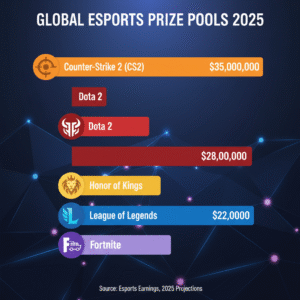
Here’s a breakdown of the top games by prize money awarded in 2025:
- Counter-Strike: $28.5 million
- Dota 2: $20.2 million
- Honor of Kings: $20.2 million
- League of Legends: $14.4 million
- Fortnite: $10.7 million
- PUBG Mobile: $9.7 million
These figures demonstrate the financial viability of a career in professional gaming. The top esports organizations reaped the rewards of this competitive landscape. In 2025, leading teams earned millions in prize money, showcasing their dominance across multiple titles.
Top earning teams in 2025 included:
- Team Vitality: $3.2 million
- Team Spirit: $3.1 million
- Team Falcons: $3.0 million
These earnings, which do not include salaries or sponsorship deals, highlight the lucrative potential at the highest tier of competition.
Sponsorship and Revenue: A Slowing but Steady Climb
Sponsorship and advertising remain critical revenue streams for the esports industry. While the growth in this area has slowed compared to the boom years, it continues on an upward trajectory. In 2025, sponsorship revenue grew by 7%. While this is a more modest figure than the 18-20% growth seen between 2018 and 2020, it signifies a market that is stabilizing and maturing rather than declining. This steady, albeit slower, growth reflects a more established industry that continues to attract major brands looking to connect with a young, tech-savvy audience.
The Path to Pro: How Gamers Become Professional Players
The dream of getting paid to play video games is a powerful one, but the reality is a demanding and highly competitive journey. Becoming a professional esports player requires more than just natural talent. It demands immense dedication, structured practice, strategic thinking, and mental fortitude. The path from a high-ranked amateur to a salaried professional is a multi-year grind.
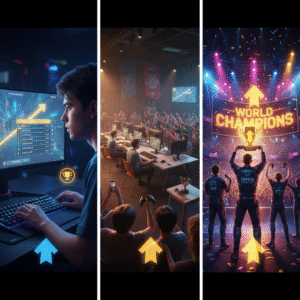
Mastering the Craft: Skill Development and Practice
At the core of every pro player’s journey are thousands of hours of deliberate practice. This is not casual gameplay. Professionals spend 8-12 hours a day engaged in structured training designed to hone specific skills.
Key Skill Areas:
- Mechanical Execution: This is the foundation of pro play. It involves near-perfect control, lightning-fast reaction times (often under 200 milliseconds), and precise aim. Whether it’s executing frame-perfect combos in a fighting game or landing critical skill shots in a MOBA, mechanical skill is non-negotiable. It typically takes 2-4 years of intense practice to build this level of muscle memory.
- Strategic Thinking and Game Sense: This is what separates the great from the good. Game sense is an intuitive understanding of the game’s flow, an ability to predict enemy movements, and the knowledge to make optimal decisions in complex situations. Pros spend countless hours studying game mechanics, analyzing patch notes, and deconstructing the current meta to gain a strategic edge.
- Communication and Teamwork: In team-based games like League of Legends or Valorant, clear and efficient communication is vital. Pros must deliver precise callouts, coordinate complex strategies, and maintain a positive team dynamic, all while under extreme pressure. Effective communicators often evolve into team leaders and in-game strategists.
Climbing the Ladder: From Ranked Play to Tournaments
The journey to a professional career follows a general progression.
- Climb the Ranked Ladders: The first step is to prove your skill in your chosen game’s competitive mode. Reaching the top ranks—typically the top 0.1% to 1% of the player base—is essential. This demonstrates consistency and the ability to perform against other highly skilled players. Many semi-pro teams scout directly from the top of these leaderboards.
- Enter Amateur Competitions: Once a player has proven their individual skill, they must gain experience in a tournament setting. Amateur online leagues and local LAN tournaments provide invaluable experience with competitive formats, team dynamics, and the unique pressure of a tournament environment.
- Network and Build Connections: The esports world is surprisingly small. Building a positive reputation within gaming communities is crucial. Joining Discord servers, participating in forums, and connecting with other aspiring players can open doors to tryouts and team opportunities. Most players find their first teams through these connections, not formal applications.
- Create Highlight Content: To get noticed by scouts and organizations, players need to showcase their skills. Creating highlight reels that display mechanical prowess, smart decision-making, and clutch moments can attract attention. Sharing this content on platforms like Twitter and YouTube increases a player’s visibility.
The Mental Game: Why Toughness Trumps Talent
Raw mechanical skill can only take a player so far. Long-term success in esports is often determined by mental toughness.
- Managing Pressure: Competing for thousands or even millions of dollars in front of a live audience creates immense pressure. Professionals must manage their nerves, stay composed after making a mistake, and perform consistently when the stakes are highest.
- Consistency Over Highlights: Teams value players who are reliable and consistent over those who make flashy but risky plays. Maintaining a high level of performance across long tournament days requires discipline and mental endurance.
- Learning from Loss: Every professional player faces setbacks. The ability to analyze losses without becoming discouraged or “tilting” is a key trait of a successful pro. Failure is treated as a learning opportunity to identify weaknesses and improve.
Top Esports Games Right Now: The Titans of 2025
The esports ecosystem is diverse, but a handful of games consistently dominate viewership charts and prize pools. These titles, a mix of PC and mobile giants, have cultivated massive, dedicated communities and highly structured professional scenes.
By the Numbers: Viewership and Popularity
Peak viewership—the highest number of concurrent viewers during a single broadcast—is a key metric for a game’s popularity. In 2025, the most popular games drew millions of fans to their major tournaments.
Top Esports Games by Peak Viewership in 2025:
- League of Legends: With the World Championship (Worlds) 2025 hitting an astounding 6.7 million peak viewers, League of Legends remains the undisputed king of esports viewership. Its combination of strategic depth, iconic players, and polished production has kept it at the top for over a decade.
- Mobile Legends: Bang Bang (MLBB): Proving the power of mobile esports, MLBB’s MPL Indonesia S15 tournament reached 4 million peak viewers. The game is a dominant force in Southeast Asia, with a passionate and highly engaged fanbase.
- Dota 2: A classic title with a legendary history, Dota 2‘s premier event, The International 2025, attracted 1.7 million peak viewers. The game is known for its incredibly high skill ceiling and the largest prize pools in esports history.
- Counter-Strike: Sharing the 1.7 million peak viewer mark, the Austin Major 2025 demonstrated Counter-Strike’s enduring appeal. As one of the original esports, its tactical gameplay and dedicated community have kept it relevant for over two decades.
- Valorant: A relative newcomer, Valorant has quickly established itself as a top-tier FPS esport. Its Champions 2025 tournament peaked at 1.4 million viewers. The game blends precise gunplay with tactical abilities, creating a fresh and exciting viewing experience.
- PUBG Mobile: Another mobile giant, PUBG Mobile‘s World Cup 2025 drew 1.3 million peak viewers. Its battle royale format delivers unpredictable action and thrilling final-circle showdowns.
Choosing Your Game: Aligning Strengths with a Viable Scene
For an aspiring pro, choosing the right game is a critical decision. This choice depends on personal strengths, the game’s mechanics, and the financial viability of its professional scene.
- For Beginners: Games like Rocket League and Valorant are often considered to have more accessible entry points into competitive play. Their mechanics are straightforward to learn but offer immense depth for mastery.
- Aligning Skills: Players with exceptional reaction times and aim may gravitate toward FPS titles like Counter-Strike or Valorant. Those who excel at long-term strategy and teamwork might prefer MOBAs like League of Legends or Dota 2. For players who want a solo career path, fighting games like Street Fighter offer a direct route where individual performance is all that matters.
- Market Size: The largest esports titles offer more stability, higher salaries, and bigger prize pools. However, the competition is also fiercer. Smaller scenes may provide an easier path to entry but with more limited earning potential.
Esports vs. Traditional Sports: A New Era of Competition
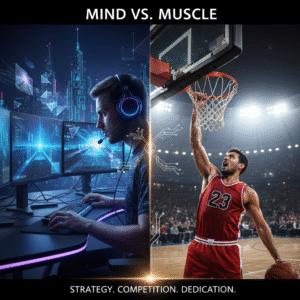
The debate over whether esports should be considered “real sports” is common, but it often misses the point. While the physical demands differ, the core elements of high-level competition—skill, strategy, teamwork, and dedication—are present in both worlds. Comparing the two reveals fascinating similarities and distinct differences.
Similarities in the Competitive Framework
- Professionalism and Infrastructure: Both esports and traditional sports have professional leagues, salaried players, team organizations, coaches, and support staff. Esports organizations like Team Vitality and Team Liquid function much like traditional sports clubs, managing rosters, securing sponsorships, and building a brand.
- The Athlete’s Lifestyle: The life of a professional gamer mirrors that of a traditional athlete in many ways. It involves structured training schedules, VOD (video on demand) review to analyze performance, strategy sessions with coaches, and a focus on maintaining peak physical and mental health to perform under pressure.
- The Fan Experience: Esports has successfully replicated the tribalism and passion of traditional sports fandom. Fans buy merchandise, attend live events in sold-out arenas, and follow their favorite players and teams with unwavering loyalty. The thrill of watching a last-second victory is just as potent in a League of Legends match as it is in a basketball game.
- Teamwork and Strategy: The intricate strategies and coordinated teamwork seen in top-level esports are comparable to any traditional team sport. A team executing a flawless map rotation in Counter-Strike requires the same level of communication and trust as an NFL team running a complex offensive play.
Key Differences and Unique Challenges
- Physicality vs. Dexterity: The most obvious difference is the nature of the physical exertion. Traditional sports require full-body athleticism, while esports demands elite hand-eye coordination, fine motor skills, and incredible reaction times. The physical strain is different but no less real; career-ending repetitive strain injuries like carpal tunnel syndrome are a serious risk for pro gamers.
- The Ever-Changing Field of Play: Unlike a basketball court or a soccer field, the “field of play” in esports is constantly changing. Game developers release patches and updates that can fundamentally alter strategies, character viability, and the entire meta. Pro players must be incredibly adaptable, constantly learning and evolving their playstyle to stay competitive. A basketball hoop has been 10 feet high for over a century; a top-tier character in an esport could become useless overnight.
- Accessibility and Career Longevity: Esports offers a more accessible entry point in some ways. A player needs a PC and an internet connection, not necessarily access to expensive facilities. However, career longevity in esports is often shorter. The intense reflexes required for top-level play tend to decline earlier than general physical athleticism, with many pros retiring in their mid-to-late twenties.
The Future of Competition
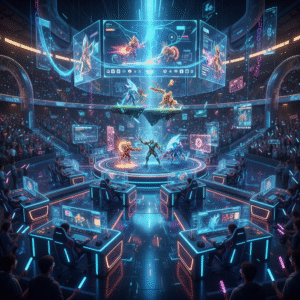
Esports and traditional sports are not mutually exclusive. They represent two different, but equally valid, forms of human competition. As the digital world becomes more integrated with our daily lives, the distinction will likely become less important. Both test the limits of human potential, just in different arenas. Esports has earned its place on the global stage, not as a replacement for traditional sports, but as a powerful and exciting new chapter in the story of competition.


Leave a Reply