



Introduction
Do you remember when we thought 4K resolution was the peak of digital fidelity? Looking back from 2026, those days seem almost quaint. The speed at which Gaming Technology & Innovation moves is not just fast; it is exponential. We are no longer just playing games; we are inhabiting living, breathing simulations that challenge our perception of reality.
The industry has moved beyond simple graphical updates. We are witnessing a fundamental restructuring of how games are built, delivered, and experienced. The conversations dominating forums and tech conventions this year aren’t just about frame rates. They are about the soul of the machine—artificial intelligence, the democratization of development tools, and the infrastructure that beams these worlds to our screens.
This deep dive explores the four pillars currently holding up the massive temple of modern interactive entertainment. We will dissect the reality of cloud gaming, demystify the AI revolution, look at the photons behind next-gen graphics, and referee the ongoing heavyweight bout between the industry’s biggest engines.
If you want to understand where your hobby—or your career—is heading, you need to understand the current state of Gaming Technology & Innovation.
1. Cloud Gaming: Future or Failure?
For the better part of a decade, tech giants have promised us a “Netflix for games.” The dream was simple: play any game, on any screen, instantly. No downloads, no expensive hardware, just pure gameplay streamed over the internet. By 2026, has this dream become reality, or is it still buffering?
The answer lies somewhere in the nuanced middle ground, though the scales are tipping heavily toward success.

The Latency Barrier Crumbles
In the early 2020s, the biggest enemy of cloud gaming was latency. That split-second delay between pressing a button and seeing the character jump was a dealbreaker for competitive gamers. However, the widespread adoption of 6G networks and the massive expansion of edge computing centers have changed the math.
Gaming Technology & Innovation in networking has allowed servers to be physically closer to players than ever before. With edge nodes in almost every major city, the signal travel time has been cut drastically. For the average player enjoying a single-player RPG or a strategy game, the difference between local hardware and a cloud stream is now imperceptible.
The Shift in Ownership Models
The technological hurdle was high, but the psychological hurdle was higher. Gamers like to own their stuff. The failure of early platforms like Stadia taught the industry a valuable lesson: subscription fatigue is real, and the fear of losing a library is potent.
In 2026, the model has shifted. Cloud gaming is no longer sold as a replacement for your console, but as an extension of it. The most successful services now allow you to stream games you already own digitally. This hybrid approach has saved the technology from irrelevance. You play on your high-end rig at home, and you pick up exactly where you left off on your tablet during your commute. The cloud is not the platform; the cloud is the bridge.
The Hardware Cost Factor
We cannot discuss cloud gaming without addressing the skyrocketing cost of silicon. As GPU prices remain volatile due to AI demand, the entry price for high-end PC gaming has become prohibitive for many.
This economic pressure drives Gaming Technology & Innovation toward the cloud. For a monthly fee, a teenager can access the equivalent of a $2,000 gaming rig. This democratization of access is the strongest argument for the cloud’s long-term survival. It opens the door to high-fidelity gaming for billions of people in developing markets who will never buy a dedicated console.
The Verdict: Cloud gaming in 2026 is not a failure, but it isn’t the total replacement some predicted. It is a robust alternative, a vital feature of the ecosystem, and for many, the only way to experience the cutting edge of graphics.
2. AI in Video Games Explained
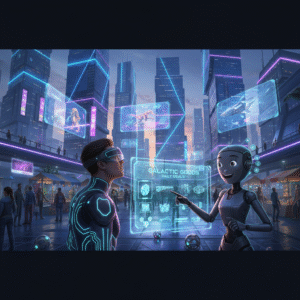
If cloud gaming changes how we access games, Artificial Intelligence changes what we play. The integration of generative AI into game development and gameplay loops is arguably the most significant leap in Gaming Technology & Innovation we have ever seen.
The Death of the Scripted NPC
For forty years, non-player characters (NPCs) were glorified mannequins with pull-string voice boxes. You approached a villager, pressed a button, and they recited one of three pre-written lines.
That era is over.
In 2026, large language models (LLMs) run locally on gaming hardware or stream via the cloud to power NPCs. These characters now possess distinct personalities, memories, and motivations. You can speak to them via microphone, and they respond in real-time, in character, with synthesized voices that sound frighteningly human.
If you insult a merchant in a modern RPG, he doesn’t just give a canned “I’m annoyed” animation. He might remember the insult, refuse to sell to you three towns later, or spread rumors about you to other NPCs. This “Emergent Narrative” means that no two walkthroughs are ever the same. The game is no longer a static story you walk through; it is a collaborative improvisation between the player and the software.
Procedural Generation on Steroids
Procedural generation isn’t new—games like No Man’s Sky used it a decade ago. But AI-driven procedural generation is a different beast. Developers are now using AI to build massive, dense cities where every building has an interior, and every room tells a story.
Instead of hand-placing every chair and texture, artists define a “style” and a “mood,” and the AI populates the world. This allows development teams to build worlds of a scale that was previously impossible. It also means that smaller indie teams can compete with AAA studios in terms of scope, leveling the playing field through Gaming Technology & Innovation.
The Developer’s Assistant (and Rival)
Behind the scenes, AI is rewriting the code of the industry. It assists with bug testing, instantly playing through levels thousands of times to find collision errors. It helps write boilerplate code, generates texture variations, and even suggests level layouts.
However, this innovation brings tension. There is a palpable anxiety regarding job security in the creative arts. While AI creates efficiency, the industry is currently navigating the ethical boundaries of using AI-generated assets versus human-created art. The best games of 2026 are proving to be those that use AI as a tool to amplify human creativity, rather than replace it.
3. Ray Tracing & Next-Gen Graphics
Visuals are the most immediate indicator of progress. When we look at Gaming Technology & Innovation, we look for the “wow” factor. In 2026, that factor is defined by the maturation of ray tracing and the rise of neural rendering.

From Gimmick to Standard: Path Tracing
A few years ago, ray tracing was a luxury feature that tanked your frame rate for shiny puddles. Today, “Path Tracing” (or full ray tracing) is the standard for high-fidelity titles. This technique doesn’t just simulate light; it simulates the physics of photons bouncing around a scene.
The impact on immersion is subconscious but profound. Shadows aren’t just dark spots; they are soft, diffuse areas where light is occluded. Reflections show what is actually happening behind you, not a pre-baked image. In horror games, this lighting technology creates an atmosphere of dread that baked lighting simply cannot match. When you turn off a flashlight in a 2026 horror title, the darkness feels heavy and real.
Neural Rendering: The AI Graphics Card
The brute force required to calculate billions of light bounces is immense. Even modern hardware struggles with it natively. This is where AI saves the day again through “Neural Rendering.”

Technologies like DLSS (Deep Learning Super Sampling) and FSR have evolved into full frame-generation suites. In many modern titles, only one out of every four pixels is actually rendered by the traditional geometry pipeline. The AI predicts and generates the rest.
This is a massive pivot in Gaming Technology & Innovation. We are moving away from “rasterization” (drawing triangles) toward a hybrid model where the GPU hallucinates the image based on data. This allows for photorealistic visuals on mid-range hardware. The AI fills in the gaps, upscales the resolution, and inserts intermediate frames to ensure smoothness.
Crossing the Uncanny Valley
We are dangerously close to crossing the Uncanny Valley—that eerie feeling when a digital face looks almost human but “wrong” enough to be repulsive.
Next-gen graphics engines now simulate subsurface scattering (how light moves through skin), the moisture in eyes, and the micro-movements of facial muscles. Combined with AI-driven animation blending, characters in 2026 cutscenes are often indistinguishable from filmed actors. The challenge now isn’t technology; it’s artistry. It takes immense skill to wield this power without creating a jarring experience.
4. Game Engines: Unreal Engine vs. Unity
None of these innovations matter if developers don’t have the tools to implement them. The war for the heart of Gaming Technology & Innovation is fought in the trenches of game engines. In 2026, the duopoly of Unreal Engine and Unity remains, but the battle lines have shifted.

Unreal Engine 5.X: The High-Fidelity Titan
Epic Games’ Unreal Engine has cemented itself as the go-to tool for AAA blockbusters and, increasingly, Hollywood film production. Its dominance is built on two proprietary technologies that have matured beautifully by 2026: Nanite and Lumen.
- Nanite allows developers to import movie-quality 3D assets directly into the game without optimizing them. Millions of polygons? No problem. The engine handles the scaling automatically.
- Lumen provides the dynamic global illumination we discussed in the ray tracing section, but it does so in real-time without needing hours to “bake” the lighting.
For developers aiming for photorealism, Unreal is the default choice. Its visual scripting language, Blueprints, has also lowered the barrier to entry, allowing designers to build complex game logic without writing a single line of C++ code. Unreal is driving the “bigger is better” side of Gaming Technology & Innovation.
Unity 6: The King of Flexibility
Unity faced significant headwinds in the early 2020s regarding pricing controversies, but by 2026, they have steadied the ship. Unity remains the engine of choice for the mobile market—which, we must remember, accounts for more revenue than PC and consoles combined.

Unity’s strength lies in its lightweight architecture and incredible versatility. While Unreal focuses on graphical muscle, Unity focuses on “run anywhere” capability. It is the backbone of the VR/AR revolution (Spatial Computing) and remains the favorite for 2D games and stylistically unique indie titles.
Unity has also aggressively integrated generative AI tools directly into the editor. “Unity Muse” and its successors allow developers to type prompts to generate code, animations, and textures instantly within the workspace. For small teams, Unity offers a speed of development that Unreal struggles to match.
The Rise of Open Source: Godot
While the instruction focuses on the big two, a comprehensive look at Gaming Technology & Innovation must acknowledge the disruptor: Godot. Following the corporate turbulence of the past, many indie developers migrated to open-source engines. By 2026, Godot has become a viable third option, pushing Unity and Unreal to innovate faster and keep their pricing competitive. This competition is healthy and ensures that the tools available to creators remain accessible.

Conclusion: The Horizon of Play
As we survey the landscape of Gaming Technology & Innovation in 2026, one thing is clear: the barriers between the player and the digital world are dissolving.
Cloud gaming is removing the barrier of hardware access. AI is removing the barrier of static, lifeless worlds. Ray tracing is removing the barrier of visual disbelief. And powerful game engines are removing the barrier of entry for creators.
We are entering a golden age of interactive entertainment. The games of today are not just distractions; they are complex social spaces, artistic triumphs, and technological marvels. Whether you are a casual player streaming a puzzle game on your phone or a hardcore enthusiast optimizing your path-tracing settings, you are participating in a technological revolution.
The future isn’t just about better graphics; it’s about smarter, deeper, and more accessible experiences. And the best part? We are just getting started.


Leave a Reply