


Written by Talha Yousaf, WorldlyInfo editorial team. Last updated: November 26, 2026.
Medical disclaimer: This article is for general education only and is not medical advice, diagnosis, or treatment. Weight, body composition, and metabolic measurements mean different things for different people. Talk with a doctor or registered dietitian before starting a weight-loss plan or acting on any test result.
Quick answer: The most useful weight loss metrics work together, because no single number captures progress. A good picture usually combines a trend in scale weight, waist circumference, a consistent body composition estimate, and health markers reviewed with a healthcare provider.
What are the best weight loss metrics for tracking progress?
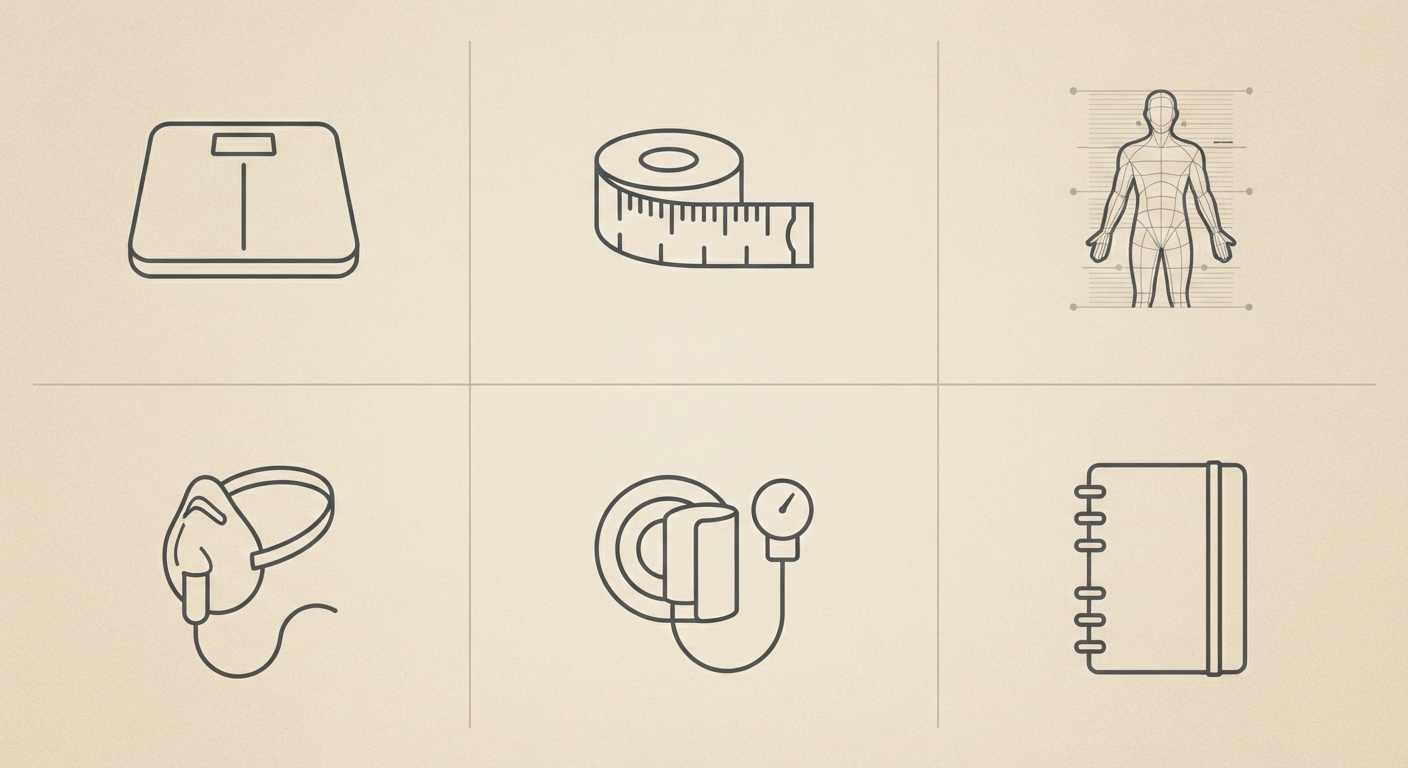
There is no single best method. Each metric answers a different question, and each has blind spots, so pairing two or three that you can repeat consistently tends to be more informative than relying on one.
| Metric | What it can show | Common tools | Main limitation |
|---|---|---|---|
| Scale weight (trend) | Overall direction of change | Bathroom scale | Can’t separate fat, muscle, and water [4] [5] |
| BMI | Population-level weight category | Height and weight | Not a direct measure of body fat; can’t separate fat from muscle [2] [3] |
| Waist circumference | Abdominal fat screening | Tape measure | Screening tool, not diagnostic [1] |
| Body composition | Estimated fat vs. lean mass | BIA scales, DXA, air displacement | Accuracy varies by device and hydration [7] [8] [9] |
| Resting metabolic rate | Energy burned at rest | Breath analysis (indirect calorimetry), equations | Measurement is costly; equations often miss [11] [12] [13] [14] |
| Health markers | Blood pressure, cholesterol, blood sugar | Provider-ordered tests | Needs clinical interpretation [18] |
| Function and lifestyle | Strength, energy, sleep, clothing fit | Self-tracking | Subjective, but meaningful [5] |
Why isn’t the scale enough to track weight loss?

A scale reports total body weight: fat, muscle, bone, organs, and water combined. It can’t tell you which of those changed, which is why the number alone can mislead in either direction.
Why can the scale stay the same while my body changes?
Because muscle is denser than fat, someone losing fat while building muscle may see little movement on the scale [4]. Body composition can also shift without a change in weight as people age. The National Academies’ 2024 workshop proceedings note that adults lose lean mass and gain fat mass over time, and can hold the same weight and BMI while their body fat percentage differs [3]. Very fast scale drops can also reflect lost water and muscle rather than fat [23].
Is BMI a reliable way to track weight loss progress?
BMI is a screening tool, not a diagnosis. The CDC describes it as a quick, low-cost screening measure, but notes that it can’t distinguish fat from muscle and bone or show where fat is carried [2]. National Academies experts add that the link between BMI and body fat or health outcomes varies by ethnic group, and that adults can hold the same weight and BMI while their body fat percentage shifts with age [3]. That makes BMI more useful for population trends than for tracking your personal progress week to week.
What does waist circumference measure, and how do I measure it?
Waist circumference is a screening estimate of abdominal fat. The CDC says to place a tape measure just above the hipbones, keep it level and snug without compressing the skin, and measure after exhaling [1]. The CDC flags higher risk of obesity-related conditions above about 40 inches for men and 35 inches for non-pregnant women, but stresses that the number is a screening tool and not diagnostic of any individual’s health [1].
What non-scale signs of progress are worth tracking?
Useful non-scale signals include energy, sleep, strength, how clothes fit, and provider-checked numbers such as blood pressure and blood glucose [5]. These matter because even modest weight loss is generally associated with improvements in blood pressure, cholesterol, and blood sugar [18]. The U.S. Office of Disease Prevention and Health Promotion notes that benefits may begin with a 5–10% loss of body weight, which is 10–20 pounds for a 200-pound adult [19].
Go deeper: [LINK TO SPOKE: Beyond the Scale: Signs of Progress the Number Misses]
What is body composition analysis, and how accurate is it?
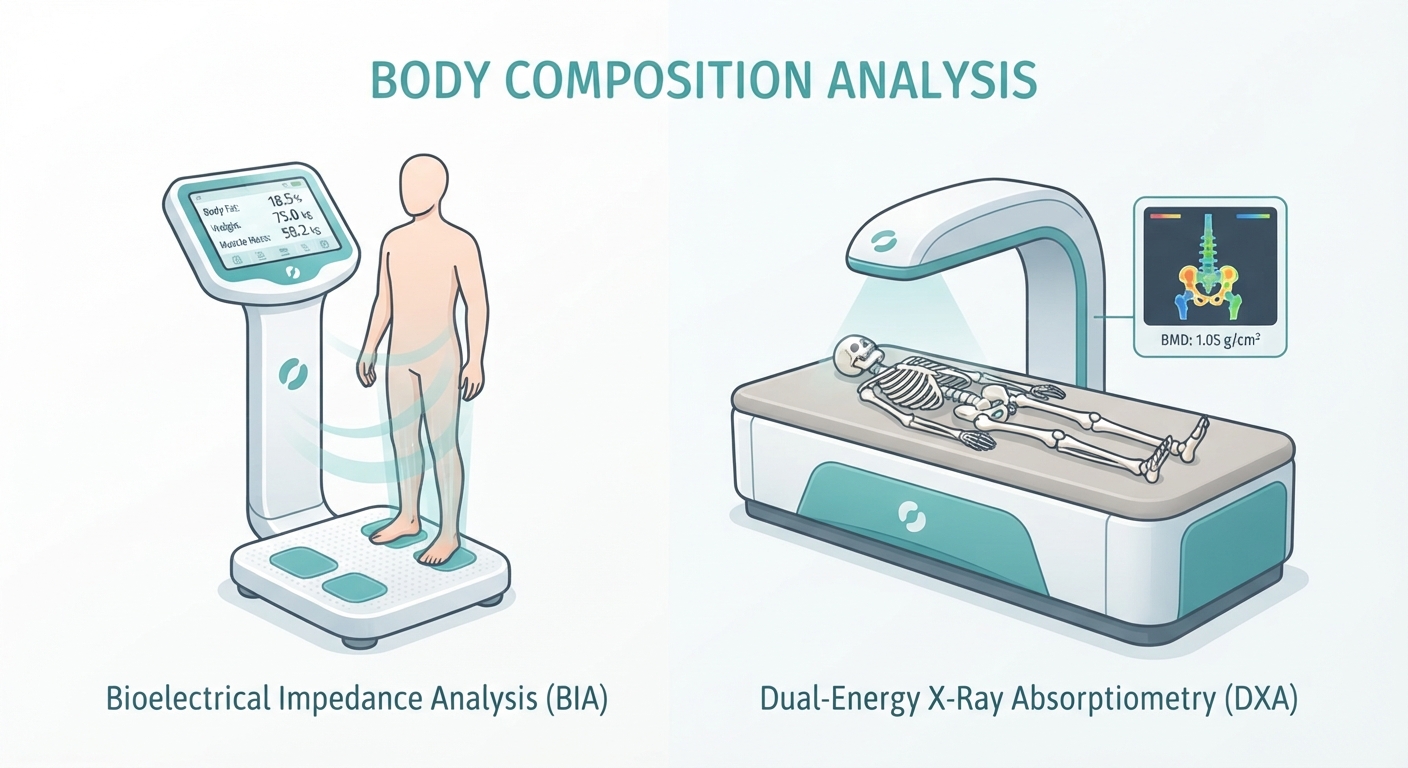
Body composition analysis estimates how much of your weight is fat versus lean tissue (muscle, bone, water). Methods range from home scales to clinical scans, and accuracy depends heavily on the method and the conditions of the test.
| Method | How it works | Strengths | Limitations |
|---|---|---|---|
| Bioelectrical impedance (BIA) | Sends a small current and estimates body water, then converts to lean mass [7] [8] | Quick, inexpensive, tracks change over time [8] | Assumes normal hydration, which doesn’t always hold for individuals [7] |
| DXA scan | Low-dose X-rays measure total and regional fat, lean mass, and bone density [8] | High reproducibility; widely used as a research reference [8] [10] | Costly, not portable, small radiation exposure [10] |
| Air displacement (Bod Pod) | Measures body volume to estimate fat [8] | High reliability for body fat percentage [8] | Expensive equipment [8] |
How does a BIA scale compare with a DXA scan?
Multi-frequency BIA can be a reasonable tracking tool, but individual readings may differ noticeably from DXA. A 2025 European Journal of Clinical Nutrition analysis found that multi-frequency BIA gives reliable and moderately accurate estimates only under tightly controlled conditions, meaning consistent eating, hydration, recent exercise, and time of day [7]. In one comparison of 97 women, a multi-frequency device read body fat about 3 percentage points lower than DXA on average (31.5% vs. 34.6%), and individual differences ranged from roughly 8.6 points lower to 2.3 points higher [9].
How can I get more consistent body composition readings?
Consistency matters more than any single reading. Test at the same time of day, in a similar hydration and eating state, on the same device, and avoid testing right after exercise [7]. One caution is that even DXA can be less dependable for tracking change when glycogen or hydration shifts substantially between scans [8]. Treat results as a trend over weeks, not a verdict from one measurement.
Go deeper: [LINK TO SPOKE: Body Composition Analysis: BIA, DXA, and Smart Scales Compared]
What is metabolic testing, and is it worth it for weight loss?

Metabolic testing most often means measuring resting metabolic rate (RMR), the energy your body uses at rest, by analyzing the oxygen you breathe in and the carbon dioxide you breathe out. This method, called indirect calorimetry, is considered the reference standard, but it’s used mainly in clinical and research settings [24] [15]. RMR accounts for roughly 60–75% of total daily energy expenditure, which is why people want an accurate number [16].
What is the difference between BMR and RMR?
BMR (basal metabolic rate) is the minimum energy needed to sustain basic functions under very strict conditions. RMR is a close, more practical proxy. The two terms are often confused, though they differ by approximately 10% [17].
How accurate are calorie-needs calculators compared with a metabolic test?
Predictive equations are convenient, but studies suggest they can miss the mark for individuals, particularly at higher body weights:
| Study | Who was studied | What it found |
|---|---|---|
| J Am Diet Assoc, 2003 | Obese and non-obese adults | Mifflin estimates fell more than 10% from measured RMR in 22% of people (Harris-Benedict 33%, Owen 35%) |
| Clin Nutr, 2013 | Non-obese and obese adults | Mifflin St Jeor was accurate for 82% overall: 87% in non-obese vs. 75% in obese adults |
| Older adults with obesity | Adults 65+ with BMI ≥30 | Only 43.1% within 10% of measured RMR using Mifflin; all equations under 60% |
| Obese outpatients | Large clinic sample | Roughly 55% prediction accuracy, lower at higher BMI |
Which health markers are tracked besides metabolic rate?
In a medical context, “metabolic” markers usually mean blood pressure, cholesterol, and blood sugar. These are ordered and interpreted by healthcare providers, and the CDC links modest weight loss with improvements in all three [18]. Ask your provider which tests are appropriate for you and how often.
Is metabolic testing worth the cost?
It depends on your situation. Measured RMR requires trained staff and special conditions, such as testing in the morning before eating and after avoiding exercise, caffeine, alcohol, and smoking [15]. Because equations can be off for individuals, a registered dietitian or physician may find a measured value useful for personalized planning. For many people, tracking real-world trends (weight, waist, energy, health markers) is a reasonable alternative. A dietitian can help you decide.
Go deeper: [LINK TO SPOKE: Metabolic Testing for Weight Loss: What RMR Tests Can and Can’t Tell You]
How do you track weight loss progress over time?
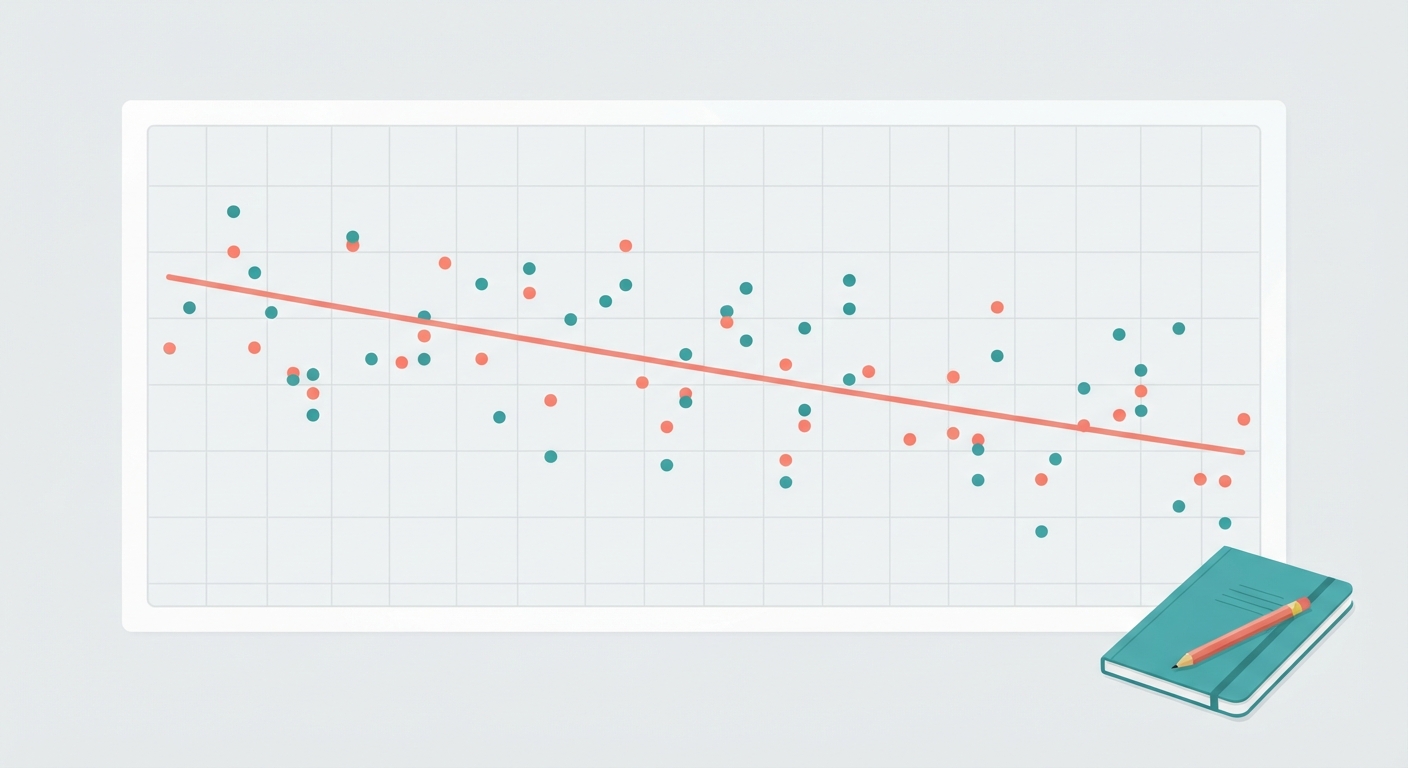
Effective tracking means picking a few measures, taking them consistently, and judging trends across weeks rather than reacting to single readings.
How often should I weigh myself?
Research generally links regular weighing with better outcomes, though the best frequency isn’t settled and individuals differ.
- In a six-month study of 47 adults, daily weighers lost about 6.1 kg more than those weighing less than daily [20].
- Among 3,003 National Weight Control Registry members, those who weighed themselves less often over a year regained about 4.0 kg, versus 1.1 kg for those who weighed more often [21].
- In an American Heart Association-reported study of 1,042 adults, people weighing six or seven times a week averaged a 1.7% loss over a year, while those weighing once a week or less did not lose weight [22].
Experts quoted by the American Heart Association caution that daily weighing may increase distress for some people, and that if it causes more anxiety than motivation, it may not be the right approach for you [5].
Why does my weight change from day to day?
Day-to-day weight shifts are normal. Fluid intake, hormone levels, and activity can all move the number even on the same scale [5]. For the cleanest comparisons, the Cleveland Clinic suggests weighing first thing in the morning after using the bathroom and before eating or drinking, in similar clothing and on the same scale [6].
What should a simple progress log include?
- Weekly average weight, not single readings
- Waist measurement, using the same technique each time [1]
- Body composition estimate at consistent intervals, on the same device [7]
- Strength and energy notes, plus sleep and clothing fit [5]
- Provider-checked markers (blood pressure, cholesterol, blood sugar) at appointments [18]
What is a realistic pace to expect?
The CDC states that people who lose weight gradually, about 1 to 2 pounds a week, are more likely to keep it off than those who lose it faster [18]. Progress is rarely linear, and plateaus are common.
When should I talk to a healthcare provider about my numbers?
Speak with a doctor or dietitian before changing your plan if you have a health condition or take medication, if measurements change rapidly or unexpectedly, or if tracking begins to cause distress or unhealthy habits. They can interpret results in the context of your health.
Go deeper: [LINK TO SPOKE: Weight Loss Progress Tracking: A Simple System That Works]
Key takeaways
- The scale shows total weight, not what the weight is made of [4].
- BMI and waist circumference are screening tools, not diagnoses [1] [2].
- Body composition devices are best for trends; readings can differ from DXA by several percentage points [7] [9].
- Measured RMR is the reference method, but equations often miss for individuals [11] [12] [13] [14].
- Weigh consistently, review trends, and step back if tracking causes stress [5] [20].
- Modest loss (5–10% of body weight) is generally associated with improved blood pressure, cholesterol, and blood sugar [18] [19].
What is the most accurate way to measure weight loss progress?
No single method is best. DXA is often used as a reference method for body composition, but it’s costly and not widely accessible. A practical approach combines a consistent scale trend, waist measurement, and provider-checked health markers.
Can I lose fat even if the scale doesn’t move?
It’s possible. Muscle is denser than fat, so body composition can improve while total weight changes little. Tracking waist circumference, strength, and body composition trends alongside weight may give a fuller picture.
Are body fat scales and smart scales accurate?
They estimate body fat from electrical impedance. In one comparison, a multi-frequency device read about 3 percentage points lower than DXA on average, and hydration can affect results. They’re generally better for tracking trends than for exact numbers.
Is BMI still a useful measure?
BMI is a screening tool, not a diagnosis. The CDC notes it can’t distinguish fat from muscle and bone or show where fat is stored. That makes it better for population trends than for tracking personal progress.
How often should I weigh myself?
Studies link regular weighing, including daily weighing, with better weight-loss and maintenance outcomes, but experts note daily weighing can cause distress for some people. Choose a consistent schedule that doesn’t increase anxiety, and talk with your provider.
Is metabolic testing worth it?
Metabolic testing measures resting metabolic rate through breath analysis, the reference method. Standard equations can miss measured values for many individuals. It may help a dietitian personalize a plan, but it isn’t required for everyone, so ask a provider.
Medical disclaimer: This content is informational and does not replace professional medical advice. Consult a qualified healthcare provider about your individual health and weight-management plan.
References
- CDC. Assessing Your Weight.
- CDC. About Body Mass Index (BMI).
- National Academies of Sciences, Engineering, and Medicine (2024). Exploring the Science on Measures of Body Composition, Body Fat Distribution, and Obesity.
- UCLA Health. A healthy road to weight loss: Measuring progress.
- American Heart Association News (2019). The pros and cons of weighing yourself every day.
- Cleveland Clinic. The best time to weigh yourself.
- European Journal of Clinical Nutrition (2025). Reliability and accuracy of multi-frequency bioelectrical impedance analysis.
- Journal of the International Society of Sports Nutrition (2017;14:16). Body composition methods overview.
- Nutrition Research (2022;103:40–46). Multi-frequency BIA vs. DXA body composition comparison.
- DXA vs. multi-frequency BIA (InBody 770) after a 4-week hypoenergetic diet.
- Journal of the American Dietetic Association (2003;103:1152–9). Validation of several established equations for resting metabolic rate in obese and nonobese people.
- Clinical Nutrition (2013;32:976–82). Bias and accuracy of resting metabolic rate equations in non-obese and obese adults.
- Resting metabolic rate prediction equations in adults aged 65+ with obesity.
- Prediction and evaluation of resting energy expenditure in a large group of obese outpatients.
- Metabolites (2023;13:189). Revised Harris-Benedict equation: new human resting metabolic rate equation.
- Xue J, et al. International Journal of Environmental Research and Public Health (2019). Accuracy of predictive resting-metabolic-rate equations in Chinese mainland adults.
- Nutrition & Metabolism (2018). Agreement between predicted metabolic rate and portable indirect calorimetry.
- CDC. Steps for Losing Weight.
- U.S. Office of Disease Prevention and Health Promotion. Aim for a healthy weight (MyHealthfinder).
- Journal of the Academy of Nutrition and Dietetics (2015;115:511–8). Weighing every day matters.
- Obesity (2007;15:3091–6). Consistent self-monitoring of weight: a key component of successful weight loss maintenance.
- American Heart Association-reported study of 1,042 adults, via CBS News.
- Life Time (Experience Life). Limitations of tracking scale weight alone.
- Nutrients (2018;10:1635). Accuracy and validity of resting energy expenditure predictive equations in middle-aged adults.


Comments (1)
Safe Weight Loss: Medical Considerations & Safetysays:
November 27, 2026 at 11:53 am[…] tests and numbers matter when tracking weight […]