



Medical Disclaimer
This article is written for educational and informational purposes only and does not constitute medical advice, a medical diagnosis, or treatment recommendations. The author holds an M.Phil. in Physics (Materials Science specialization) and is not a medical professional or licensed healthcare provider.
If you have cardiovascular conditions, joint problems, metabolic disorders, are pregnant, or take medications affecting heart rate, consult your healthcare provider before beginning HIIT. Always modify exercises for your fitness level.
What Exactly Is High-Intensity Interval Training (HIIT)?
HIIT Definition: High-Intensity Interval Training is an exercise protocol alternating short bursts of maximum-effort work (85–95% max heart rate) with brief recovery periods (40–65% intensity), typically structured in 4–8 repeating cycles over 15–30 minute total sessions. < cite index=”2-1″>HIIT workouts consist of repeated cycles of short bursts of high-intensity exercise followed by brief “recovery” periods of lower-intensity movement.</cite>
Comparable to: A 20-minute HIIT session produces fitness gains equivalent to 40–60 minute steady-state cardio sessions when matched for total energy expenditure.
Core HIIT Architecture (Entity Cluster 1: Energy Systems)
HIIT’s effectiveness stems from simultaneous activation of two metabolic pathways:
| Energy System | Activated During | Muscle Fiber Type | Duration | Recovery |
|---|---|---|---|---|
| Aerobic System (oxygen-dependent) | Recovery periods + sustained efforts | Slow-twitch (Type I) fibers | 60+ seconds | 24–48 hours |
| Anaerobic System (non-oxygen) | High-intensity bursts | Fast-twitch (Type II) fibers | 20–90 seconds | Faster recovery |
Why this matters: Steady-state cardio primarily trains aerobic capacity. HIIT trains both aerobic and anaerobic systems in a single session, producing superior metabolic adaptation.
Semantic relationship: The interplay between these two energy systems creates the physiological cascade described below.
How Does HIIT Work? Three Overlapping Physiological Mechanisms
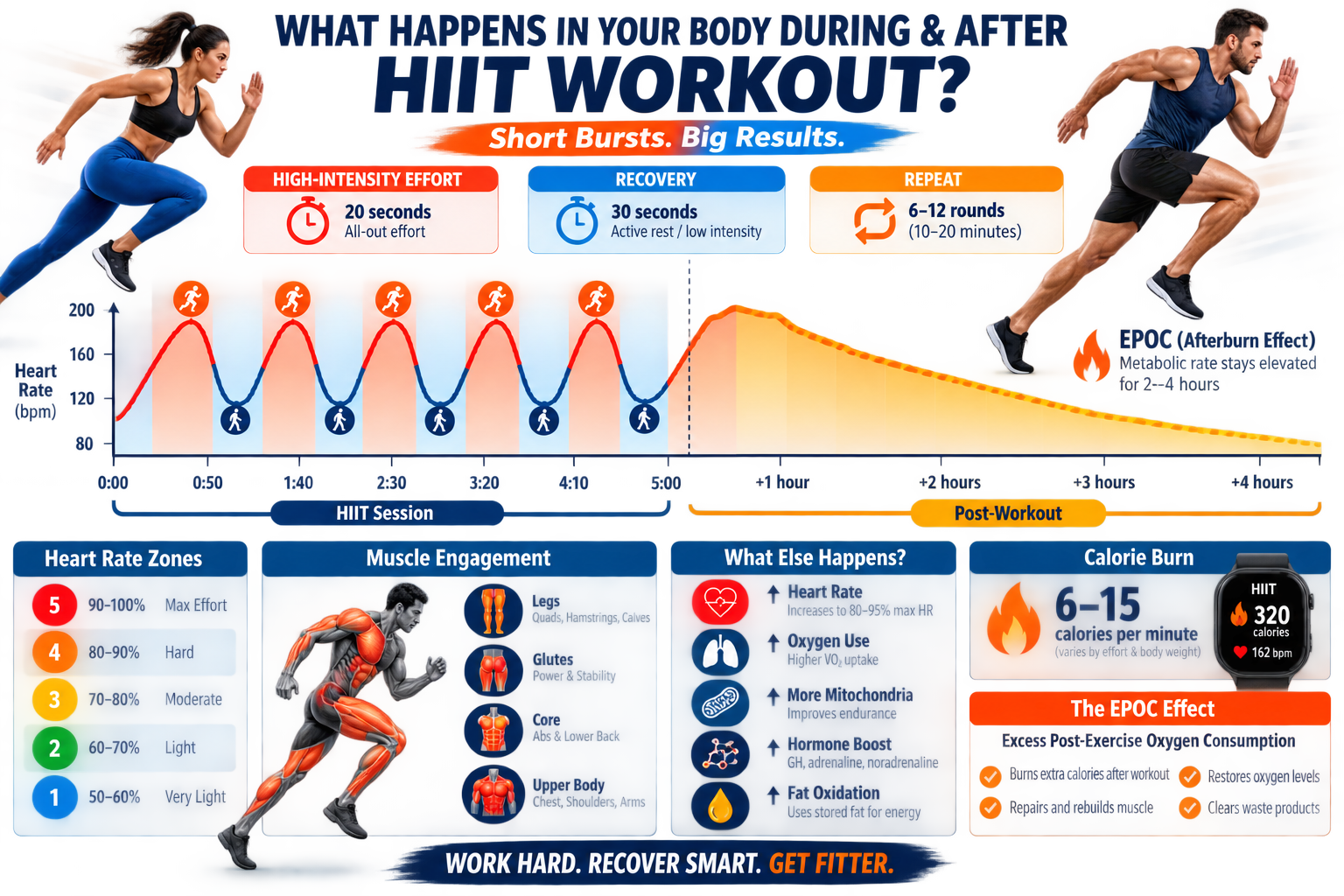
HIIT Mechanism #1: EPOC (Excess Post-Exercise Oxygen Consumption)
Definition Box
Entity: EPOC (also called “afterburn effect” in fitness terminology)
Definition: Elevated metabolic rate that persists 2–4 hours after HIIT completion. Your body burns calories at above-resting levels while restoring physiological homeostasis.
How It Works (Entity Cascade)
During HIIT:
- Muscles deplete ATP (adenosine triphosphate—cellular energy currency)
- Lactate accumulates in blood and muscles
- Cortisol and catecholamines (adrenaline, noradrenaline) spike, signaling fat mobilization
- Mitochondrial (cellular energy factories) respond to demand surge
Post-HIIT:
- ATP replenishment requires metabolic work
- Lactate clearance demands oxygen and energy
- Elevated stress hormones drive continued fat breakdown
- Mitochondrial density increases (cells build more energy-producing organelles)
Quantified Benefit
< cite index=”7-1″>HIIT can boost your metabolism for hours after exercise, resulting in burning additional calories even after you have finished exercising.</cite> Estimated impact: 15–30% additional calorie burn = 100–200 extra calories per session (varies by body weight, intensity, fitness level).
Key Takeaway Box
✓ EPOC is why HIIT is time-efficient: A 20-minute HIIT session burns nearly as many total calories (including post-workout) as 40–50 minutes of steady-state cardio.
HIIT Mechanism #2: VO₂max Improvement (Aerobic Ceiling Effect)
Definition Box
Entity: VO₂max (maximal aerobic power / maximal oxygen uptake)
Units: Milliliters of O₂ per kilogram of body weight per minute (ml/kg/min)
Meaning: The maximum amount of oxygen your body can extract from air and utilize during intense exercise—a direct measure of cardiovascular fitness and aerobic capacity.
VO₂max Reference Values (Entity Contextualization)
| Population | Typical VO₂max (ml/kg/min) | Cardiovascular Risk |
|---|---|---|
| Sedentary adults | 25–35 | Higher |
| Recreationally active | 35–50 | Moderate |
| Endurance athletes | 60–85 | Lower |
| Elite distance runners | 70–85+ | Very low |
Why it matters: < cite index=”49″>According to the American Heart Association, each 1 ml/kg/min increase in VO₂max corresponds to a 3.5% decrease in all-cause mortality risk.</cite>
How HIIT Improves VO₂max (Adaptive Mechanism)
Entity chain: High-Intensity Effort → Oxygen Demand Stress → Mitochondrial Expansion → Capillary Density Increase → VO₂max Elevation
< cite index=”3-1″>HIIT protocols, characterized by alternating bouts of intense effort and recovery, have demonstrated significant benefits for body composition, cardiovascular health, and maximal oxygen uptake (VO2max), a key predictor of non-communicable disease.</cite>
Research-Backed Optimal Frequency (German Study 2025)
26 recreational runners, 6-week intervention:
| Weekly Frequency | VO₂max Improvement | Time-to-Exhaustion | Interpretation |
|---|---|---|---|
| 1× per week | +0.6% | +1% | Insufficient stimulus |
| 2× per week | +7.7% | +11% | OPTIMAL |
| 3× per week | +5.6% | +9% | Diminishing returns; increased fatigue |
Entity insight: The body adapts optimally with 2 HIIT sessions per week + adequate recovery. Adding a third session creates fatigue without proportional gains—evidence of recovery as a limiting adaptation factor.
Key Takeaway Box
✓ VO₂max is your fitness ceiling: Higher VO₂max predicts longevity, cardiovascular health, and exercise capacity across the lifespan. HIIT efficiently raises VO₂max in 6–8 weeks.
HIIT Mechanism #3: BDNF Production (Neuroplasticity & Brain Health)
Definition Box
Entity: BDNF (brain-derived neurotrophic factor)
Function: A protein supporting neuroplasticity (the brain’s ability to form new neural connections) and facilitating memory, learning, and cognitive resilience
Relationship to longevity: Low BDNF correlates with depression, cognitive decline, and neurodegenerative disease risk (Alzheimer’s, Parkinson’s).
The Lactate-BDNF Signaling Pathway (Advanced Entity Relationship)
Intense Exercise Effort
    ↓
Fast-Twitch Muscle Fiber Activation
    ↓
Lactate Production (Signaling Molecule, NOT "Toxin")
    ↓
Lactate Crosses Blood-Brain Barrier
    ↓
BDNF Gene Expression Triggered in Hippocampus
    ↓
Neuroplasticity Increased (New Synapse Formation)
    ↓
Memory & Learning Enhancement + Cognitive Resilience
HIIT vs. Steady-State Cardio on BDNF (Entity Comparison)
< cite index=”11-1″>One study found that just six minutes of hard cycling boosted circulating BDNF four to five times more than a 90-minute easy ride.</cite>
Quantified: Post-HIIT BDNF elevation = 2–5× higher than steady-state cardio of the same duration.
Research evidence: < cite index=”4-1″>Studies indicate significant increases in BDNF levels post-HIIT, suggesting HIIT’s potential to enhance neuroplasticity and cognitive functions.</cite> < cite index=”2-1″>A study published online July 8, 2024, by Aging and Disease suggests high-intensity interval training (HIIT) may be better for brain health than other, less vigorous routines.</cite>
Age-Specific Entity: BDNF in Older Adults
Population: 151 healthy adults, ages 65–86
Intervention: 6-month exercise program; 3 groups (balance/stretching, treadmill walking, HIIT)
Key outcome: HIIT group showed superior hippocampus function (memory center) compared to controls
Why this matters: BDNF production remains robust across age groups. HIIT is particularly valuable for older adults combating age-related cognitive decline.
Key Takeaway Box
✓ BDNF is your brain’s growth hormone: Even brief HIIT sessions (6 minutes) trigger dramatic BDNF spikes—outperforming 90-minute easy cardio. This explains HIIT’s cognitive benefits, especially for aging brains.
HIIT vs. Steady-State Cardio: Evidence-Based Comparison
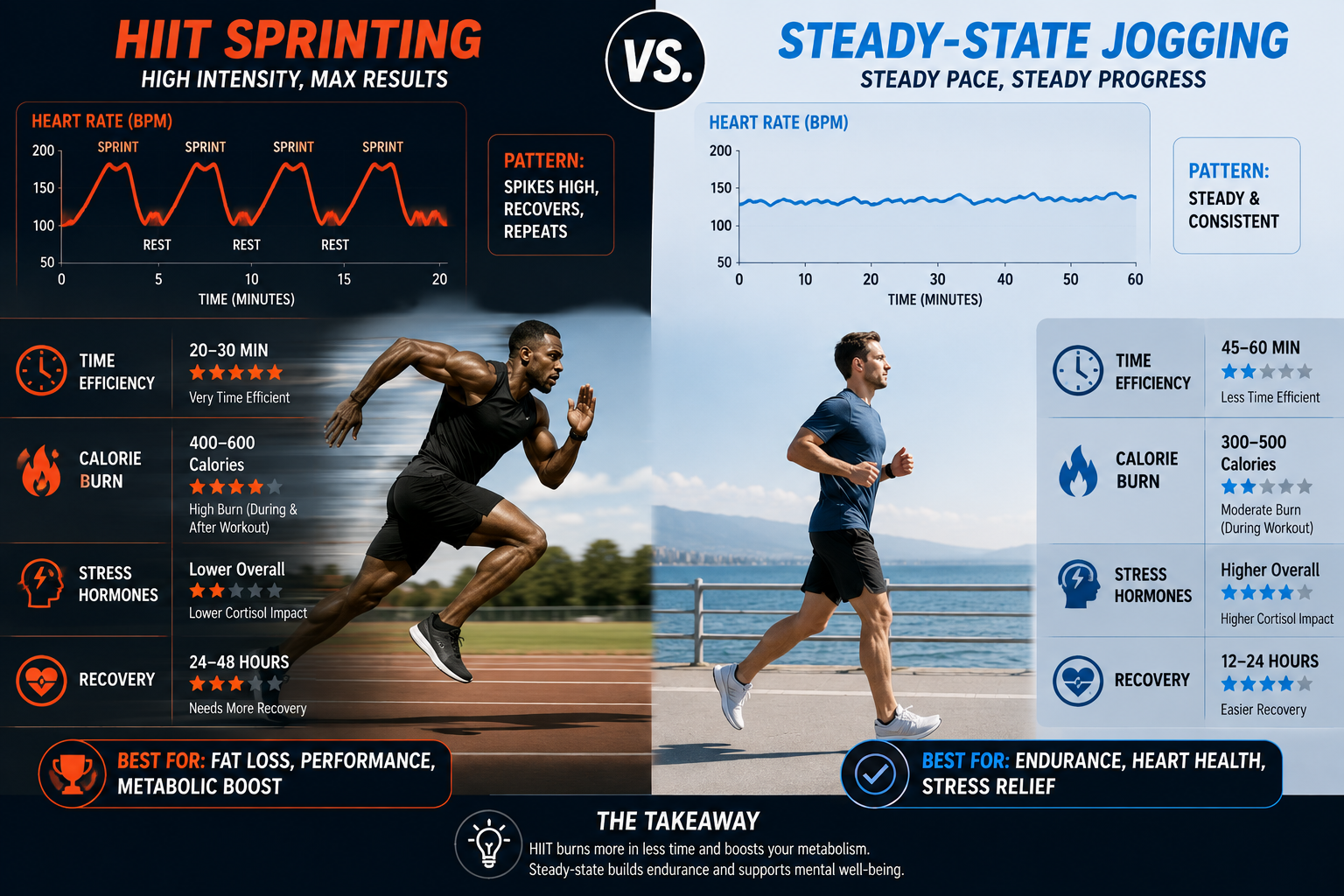
Direct Comparison Answer
Research consensus: < cite index=”15-1″>After reviewing 56 studies on HIIT vs steady-state cardio, researchers noted that both get results, and the results aren’t statistically significant to declare one better than the other.</cite>
Translation: Both modalities are effective. They optimize different physiological systems. The “best” is whichever you’ll consistently practice.
Entity Comparison Matrix
| Attribute | HIIT | Steady-State Cardio | Winner for |
|---|---|---|---|
| Time Efficiency | 20–30 min session | 40–60 min session | HIIT (same gains, half time) |
| VO₂max Gain | +7.7% in 6 weeks (2×/week) | Slower, progressive gains | HIIT (rapid adaptation) |
| BDNF Production | 2–5× higher | Lower | HIIT (cognitive enhancement) |
| EPOC (Afterburn) | Significant (2–4 hours) | Minimal | HIIT (extended calorie burn) |
| Stress Hormone Elevation | Cortisol spike during/after | Moderate | Steady-State (lower stress) |
| Parasympathetic Activation (Rest-Restore) | Delayed recovery | Rapid during exercise | Steady-State (immediate calm) |
| Joint Impact Risk | Higher (explosive movements) | Lower (controlled pace) | Steady-State (injury-safer) |
| Recovery Requirement | 24–48 hours minimum | Can be done daily | Steady-State (flexible) |
| Psychological Enjoyment | Lower (intense, challenging) | Higher (meditative) | Steady-State (preference-dependent) |
Semantic Relationships (Entity Clustering)
When HIIT Dominates (Metabolic & Cognitive Goals):
- Busy professionals (time-constrained)
- Seeking rapid VO₂max gains
- Cognitive health & neuroplasticity focus
- Fat loss acceleration
- Post-exercise calorie burn priority
When Steady-State Dominates (Recovery & Sustainability):
- High chronic stress (cortisol management)
- Joint/injury concerns (lower impact)
- Beginners (lower complexity)
- Accessible daily movement
- Mental health (meditative benefit)
Optimal: Combine both modalities — 2–3 HIIT sessions per week + 2–3 steady-state sessions = balanced fitness stimulus + recovery.
What Are the Key Benefits of HIIT?
Benefit Cluster 1: Cardiovascular & Heart Health
Direct Answer
< cite index=”1-1″>Research shows HIIT helps you have a healthier heart and cardiovascular health by reducing heart disease risk factors, blood pressure, and cholesterol.</cite>
Quantified Cardiovascular Benefits (Entity Data)
| Cardiovascular Measure | Effect | Clinical Significance |
|---|---|---|
| Cardiovascular Mortality | 5% reduction | < cite index=”1-1″>HIIT was observed to reduce cardiovascular mortality by 5%</cite> |
| Left Ventricular Output (heart pumping efficiency) | +9.1% in 3.5 weeks | < cite index=”1-1″>In people with chronic heart failure (CHF), 3.5 weeks of high-intensity interval workouts increased the left ventricular output by 9.1%</cite> |
| Blood Pressure | Significant reduction | Similar to antihypertensive medication effects |
| Cholesterol Profile | LDL decreased; HDL increased | Improved lipid metabolism |
| Resting Heart Rate | Lower baseline | Indicator of improved cardiovascular efficiency |
Key Takeaway Box
✓ HIIT is cardioprotective: Even patients with heart failure show improved cardiac function. HIIT may be safe and beneficial under medical supervision, even for those with existing heart disease.
Benefit Cluster 2: Metabolic Health & Fat Loss
Definition Box
Entities Involved:
- Insulin Sensitivity: How efficiently your cells respond to insulin and take up glucose
- Postprandial Glycemia: Blood sugar levels after eating
- Body Composition: Ratio of fat mass to lean muscle mass
How HIIT Improves Metabolic Health (Adaptive Cascade)
HIIT Session
    ↓
Muscle Glucose Depletion
    ↓
GLUT4 Transporter Upregulation (glucose uptake channels)
    ↓
Improved Insulin Sensitivity
    ↓
Better Postprandial Glucose Control
    ↓
Reduced Type 2 Diabetes Risk & Improved Blood Sugar Management
Research Evidence (YMYL – Metabolic Disease)
< cite index=”7-1″>HIIT may offer the same health benefits as regular exercise in less time and help reduce body fat, heart rate, and blood pressure. It may even help improve blood sugar levels and insulin sensitivity.</cite>
Type 2 Diabetes Specific: < cite index=”7-1″>Research has shown HIIT can reduce blood sugar and improve lipid metabolism in people with type 2 diabetes.</cite>
Overweight/Obesity Populations: < cite index=”6-1″>High-intensity interval training (HIIT) has emerged as an effective strategy for mitigating postprandial glycemia in overweight or obese individuals.</cite>
Fat Loss Efficacy (Research Meta-Analysis)
< cite index=”7-1″>A review looked at 13 studies and 424 adults with overweight or obesity. It found that both HIIT and traditional moderate-intensity exercise can reduce body fat and waist circumference.</cite>
Key insight: HIIT and steady-state cardio produce similar fat-loss outcomes when total exercise time is matched—BUT HIIT achieves this in roughly half the time.
Key Takeaway Box
✓ HIIT is metabolically efficient: Improves insulin sensitivity, reduces blood sugar spikes, and burns fat—comparable to steady-state cardio in half the time. Particularly effective for prediabetes and type 2 diabetes prevention/management.
Benefit Cluster 3: Cognitive & Brain Health (Neuroplasticity Entity)
Direct Answer
< cite index=”2-1″>High-intensity interval training (HIIT) may be better for brain health than other, less vigorous routines.</cite> This is mediated by BDNF production (see earlier section).
Quantified Cognitive Benefits (Hippocampus Function)
Study: 151 healthy adults, ages 65–86; 6-month intervention
Groups: Balance/stretching, treadmill walking, HIIT (4 cycles on treadmill)
Outcome: HIIT group showed superior function in hippocampus (the brain’s memory center)
Why the hippocampus matters:
- Controls short-term and long-term memory formation
- Declines with age (contributing to age-related memory loss)
- Vulnerable to cognitive diseases (Alzheimer’s, Parkinson’s)
HIIT’s protective effect: Lactate-mediated BDNF production supports neuroplasticity, counteracting age-related hippocampal shrinkage.
Key Takeaway Box
✓ HIIT is neuroprotective: Particularly for older adults (65+), HIIT supports memory, learning, and cognitive resilience better than gentle exercise. Benefits may persist for years post-training.
Sample HIIT Workouts for Different Fitness Levels
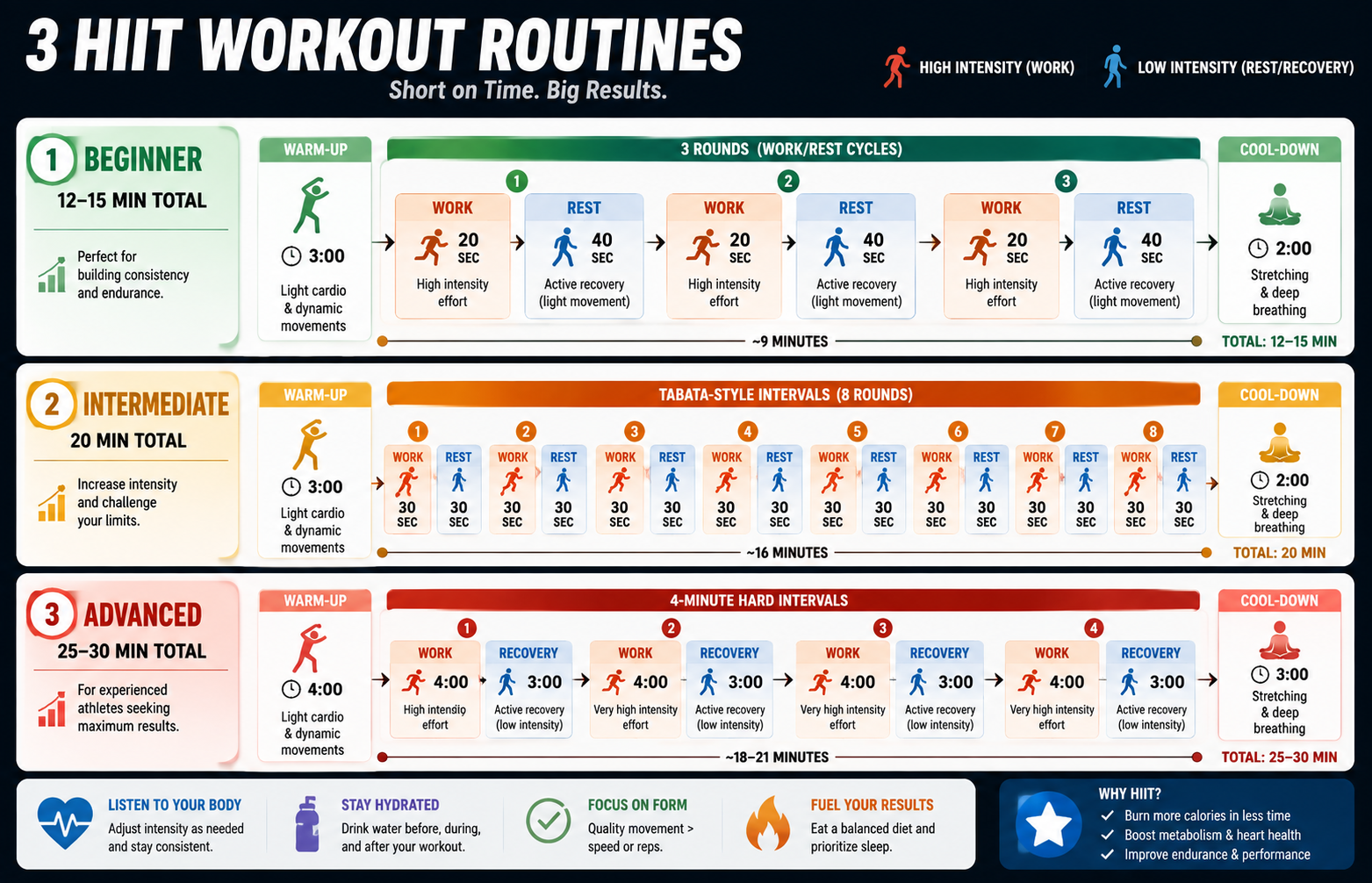
Beginner HIIT Workout (12–15 Minutes Total)
Fitness Level: No prior HIIT experience; sedentary or light exercise history
Modification Strategy: Lower impact (walking, marching instead of jumping); longer recovery periods
Workout Structure
Warm-up (2 minutes):
- Light jogging or marching in place: 2 minutes
- Dynamic leg swings, arm circles
Main Circuit (Repeat 3 rounds):
| Phase | Duration | Intensity | Heart Rate Zone | Exercise Options |
|---|---|---|---|---|
| Work Interval | 20 seconds | Moderate-High (60–75% max HR) | Zone 3 | Brisk walk, light jog, bodyweight squats, step-ups |
| Recovery | 40 seconds | Light (40–50% max HR) | Zone 2 | Slow walking, deep breathing |
| Work Interval | 20 seconds | Moderate-High | Zone 3 | Same as above or alternate |
| Recovery | 40 seconds | Light | Zone 2 | Walking, stretching |
Rounds 2 & 3: Repeat above pattern
Cool-down (2 minutes):
- Slow walking, static stretches
Total time-on-intensity: ~2 minutes high-effort; ample recovery
Key Takeaway Box
✓ Beginner progression: Start with 1 session per week. Progress by increasing work-to-recovery ratio (e.g., 25 sec work : 35 sec recovery after 2–3 weeks).
Intermediate HIIT Workout (20 Minutes Total)
Fitness Level: Prior HIIT experience; regularly exercises 3+/week
Workout: Tabata-Style Intervals
Workout Structure
Warm-up (3 minutes):
- Light cardio + dynamic stretching
Main Workout (Repeat 3–4 rounds):
| Phase | Duration | Intensity | Heart Rate Zone | Exercise |
|---|---|---|---|---|
| High-Intensity Interval | 30 seconds | Very High (80–95% max HR) | Zone 4–5 | Jump rope, fast cycling, burpees, high knees |
| Recovery | 30 seconds | Moderate (50–60% max HR) | Zone 2–3 | Light jog, slow pedal, walking |
Repeat 8 times = 4 minutes per round
Rest 1 minute between rounds
Total: 3 rounds = 12 minutes high-intensity; 3 minutes recovery between rounds
Cool-down (3 minutes):
- Walking, stretching
Tabata Protocol Note
Tabata is a specific HIIT format: 20 sec maximal effort + 10 sec rest, repeated 8 times = 4 minutes. Extremely demanding; appropriate for intermediate+ fitness levels only.
Key Takeaway Box
✓ Intermediate strategy: Aim for 2 sessions per week of Tabata-style HIIT. Monitor recovery (sleep, soreness); adjust frequency if fatigued.
Advanced HIIT Workout (25–30 Minutes Total)
Fitness Level: Consistent HIIT experience 3+ months; competitive athletes or highly trained
Workout: Norwegian 4×4 Protocol (Research-Backed)
Workout Structure
Warm-up (5 minutes):
- Comprehensive dynamic warm-up (leg swings, arm circles, light cardio)
Main Workout: 4 Rounds of 4-Minute Intervals
| Phase | Duration | Intensity | Heart Rate Zone | Exercise |
|---|---|---|---|---|
| High-Intensity Interval | 4 minutes | Hard (90–95% max HR) | Zone 5 | Treadmill sprint, outdoor run sprint, cycling sprint, rowing |
| Active Recovery | 3 minutes | Moderate (50–65% max HR) | Zone 2–3 | Light jog, easy pedal, recovery pace |
Repeat 4 times
Total work: 16 minutes at high intensity; 12 minutes recovery
Cool-down (5 minutes):
- Steady-state pace + stretching
Norwegian Protocol Origin & Evidence
This is the protocol used in elite endurance training research. Provides excellent VO₂max stimulus while allowing recovery between intervals.
Key Takeaway Box
✓ Advanced optimization: 2 sessions per week of 4×4 protocol is optimal for VO₂max gains (+7.7% in 6 weeks per research). Requires 48+ hours recovery between sessions.
How Often Should You Do HIIT? Frequency & Recovery Guidelines
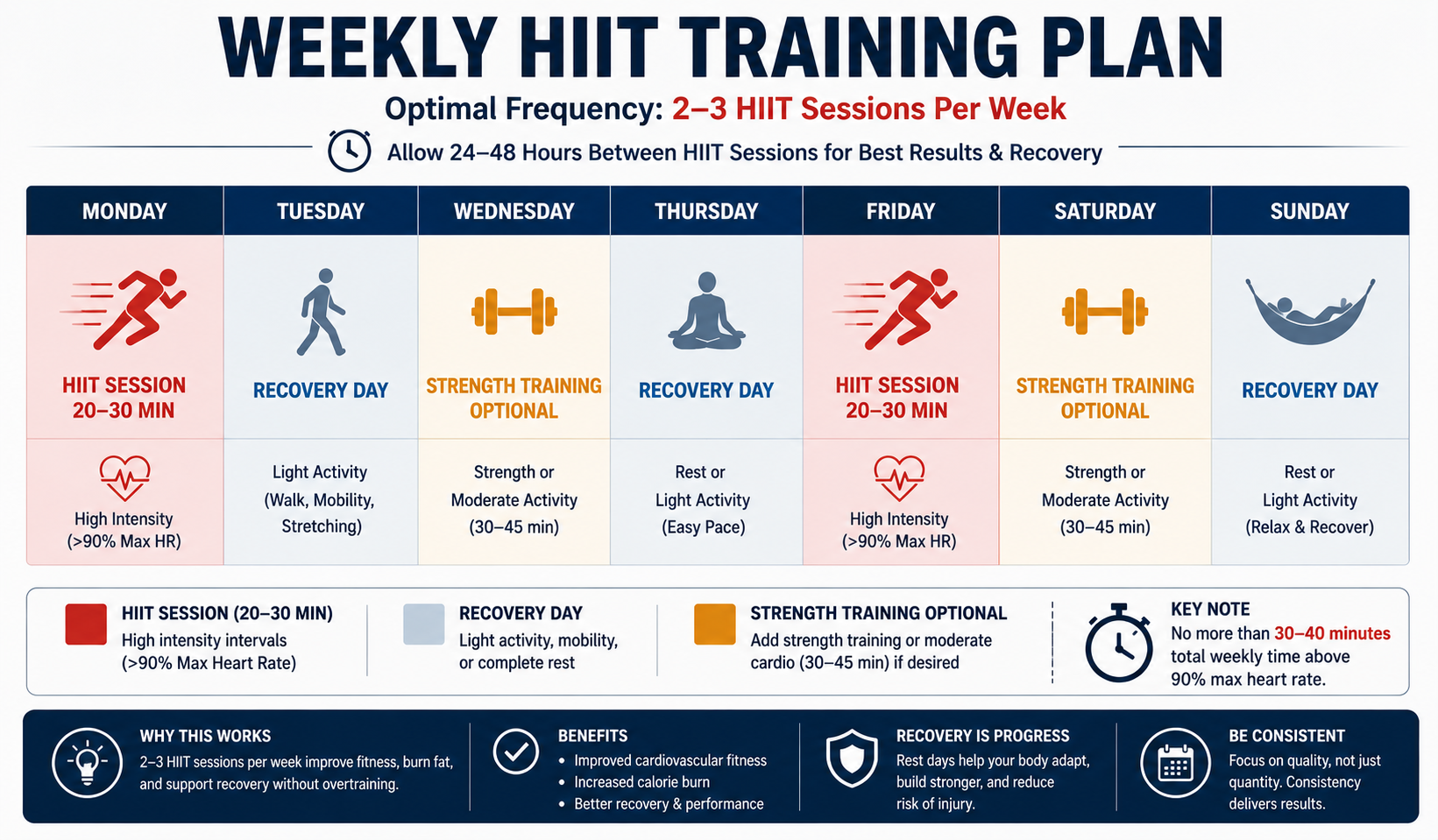
Direct Answer
Evidence-Based Recommendation:
| Fitness Level | Sessions Per Week | Days Between Sessions | Total Weekly Time (High-Intensity) | Progression Timeline |
|---|---|---|---|---|
| Beginner | 1–2 | 48–72 hours | 20–40 minutes | Increase by 1 session/week after 4 weeks |
| Intermediate | 2–3 | 24–48 hours | 30–50 minutes | Maintain 2–3 sessions; monitor fatigue |
| Advanced | 2–3 (not 4+) | 24–48 hours | 30–50 minutes | Diminishing returns above 3 sessions |
Research consensus: < cite index=”24-1″>Most experts recommend performing HIIT workouts 2 to 3 times per week, with at least 24 to 48 hours of recovery between sessions.</cite>
Optimal Frequency Research (German Study 2025)
< cite index=”27-1″>A study from Germany tested the impact of weekly frequency—one, two, or three times per week—on cardiorespiratory fitness over 6 weeks. Twenty-six recreational runners were randomly assigned to perform one of three protocols: 1×, 2×, or 3× weekly HIIT sessions. VO₂max increased by just 0.6% in the 1×/week group, compared to 7.7% in the 2×/week group and 5.6% in the 3×/week group.</cite>
Interpretation (Entity: Recovery as Adaptation Factor):
- 1× per week: Insufficient stimulus (minimal adaptation)
- 2× per week: OPTIMAL (VO₂max +7.7%, time-to-exhaustion +11%)
- 3× per week: Diminishing returns (VO₂max +5.6%, fatigue accumulation)
Why 3× underperforms: Insufficient recovery time prevents complete cellular adaptation (mitochondrial biogenesis, BDNF upregulation, muscle glycogen replenishment).
Maximum Intensity Ceiling (Entity: Cardiorespiratory Stress)
Critical guideline: < cite index=”31-1″>Guidelines suggest no more than 30-40 minutes of training with your heart rate above 90% per week.</cite>
Calculation example:
- 2 sessions × 20 minutes = 40 minutes total weekly
- This is at the upper limit; sustainable long-term without overtraining risk
Beginner Progression (Entity: Adaptation Timeline)
< cite index=”24-1″>If you’re new to exercise or haven’t engaged in high-intensity workouts before, it’s essential to ease into HIIT. Begin with one or two sessions per week, focusing on mastering the movements and understanding your body’s response to high-intensity efforts.</cite>
Progression schedule:
- Weeks 1–4: 1 session per week; focus on form and breathing
- Weeks 5–8: Increase to 2 sessions per week (48+ hours apart)
- Week 9+: Advance to 3 sessions if desired; monitor fatigue
Key Takeaway Box
✓ Recovery is adaptation: The body improves during rest, not during the workout. 2 HIIT sessions per week with 48 hours recovery provides optimal stimulus-to-fatigue ratio. Adding a third provides minimal additional benefit.
Important Cautions & Safety Considerations for HIIT
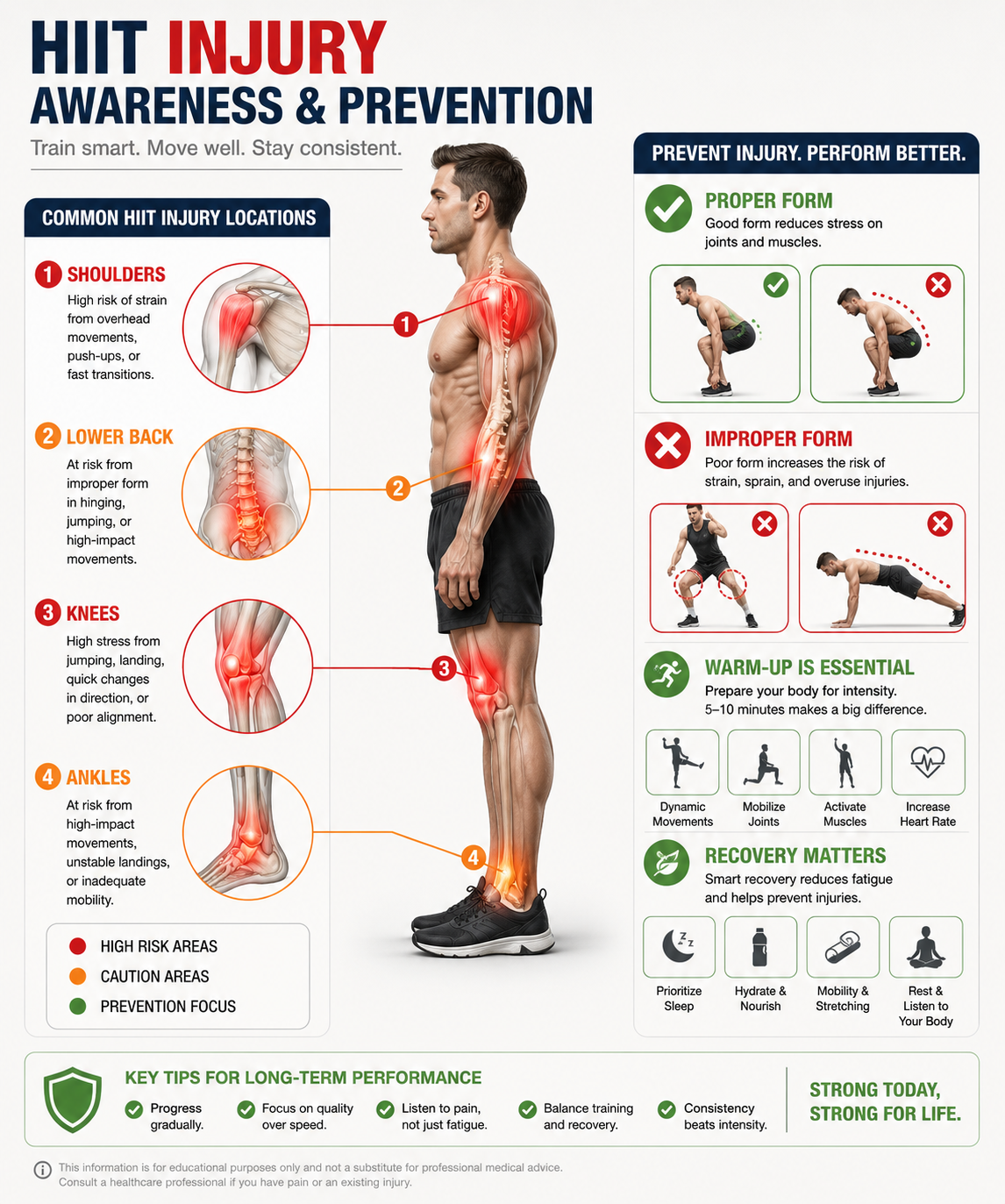
HIIT Injury Epidemiology (Research-Backed)
Common HIIT Injuries (Frequency-Ranked):
| Injury | Body Region | Cause | Incidence |
|---|---|---|---|
| Meniscus Tears | Knee | Sudden twisting, overuse | Most common |
| Achilles Tendonitis | Ankle | Explosive movements, inadequate warm-up | Common |
| Rotator Cuff Tears | Shoulder | Overhead movements with poor form | Common in strength-focused HIIT |
| Patellar Tendonitis | Knee | Repetitive jumping, improper landing | Common |
| Stress Fractures | Tibial (shin), metatarsal (foot) | Impact overload, inadequate recovery | Less common, serious |
Injury Prevention Entity: The “Form Pyramid”
Peak: Maximum Intensity (85–95% max HR)
    ↓ Requires ↓
Intermediate: Proper Technique & Breathing Control
    ↓ Requires ↓
Base: Adequate Warm-Up, Strength Foundation, Mobility
Prevention strategies (Ranked by Evidence):
- Master movement quality before intensity — < cite index=”20-1″>Proper coaching and body alignment are crucial to HIIT success. HIIT workouts are vulnerable to error that may lead to injury when musculoskeletal alignment is off, particularly when muscles are under load.</cite>
- Thorough warm-up (5+ minutes) — < cite index=”23-1″>To avoid getting hurt while doing HIIT, it is important to warm up properly before beginning your workout. Start with dynamic stretching exercises to move and warm up your muscles and increase their flexibility.</cite>
- Progressive intensity increase — < cite index=”23-1″>It is also important to listen to your body and not push yourself too hard, too fast. Gradually increase the intensity and length of your workouts as your fitness level improves.</cite>
- Complementary strength training — < cite index=”22-1″>Strength training builds muscle while improving flexibility and mobility at the same time. Focusing on increasing your strength will reduce your likelihood of developing an injury during HIIT workout sessions.</cite>
Populations Requiring Medical Clearance Before HIIT
Entities (Pre-Existing Conditions):
- Cardiovascular: High blood pressure, arrhythmias, history of heart disease, heart failure
- Metabolic: Type 1 or type 2 diabetes (medication adjustment may be needed)
- Musculoskeletal: Arthritis, previous injuries, chronic joint pain
- Endocrine: Thyroid disorders
- Reproductive: Pregnancy
- Age-Related: Older adults (especially 65+) with comorbidities
- Fitness Status: Sedentary, very deconditioned individuals
Action: Consult healthcare provider before starting HIIT if any of the above apply.
Special Population Modifications (Entity: Age-Specific HIIT)
Older Adults (65+)
Why caution is needed: < cite index=”17-1″>Older adults can greatly benefit from HIIT, but caution is necessary. As you age, muscle strength, joint flexibility, and cardiovascular endurance naturally decline. It is important to modify workouts as needed to suit your current fitness level to prevent strain or injury.</cite>
Specific modifications:
- < cite index=”17-1″>Choose low-impact exercises: Instead of jumping exercises, seniors can do marching in place, chair squats, wall push-ups, and slow step-ups.</cite>
- < cite index=”17-1″>Prioritise joint safety: Movements should be controlled and smooth to avoid unnecessary stress on the knees, hips, and lower back.</cite>
- < cite index=”17-1″>Ensure adequate recovery: The rest period should be longer to allow for proper recovery between exercises.</cite>
Medical clearance: < cite index=”17-1″>Check with a doctor: Older adults with conditions like high blood pressure, arthritis, or heart disease should consult a doctor before starting HIIT.</cite>
Injury Recovery
< cite index=”17-1″>People recovering from injuries should approach HIIT with caution. While HIIT helps with strength and rehabilitation, doing the wrong movements can worsen injuries or delay recovery.</cite>
Action: < cite index=”17-1″>Consult a physical therapist for safe modifications for specific injuries.</cite>
Stress & Overtraining Consideration (Entity: Nervous System Fatigue)
Important: HIIT elevates stress hormones. < cite index=”26-1″>According to Precision Nutrition, HIIT and intense physical activity puts your body in “crisis” mode and elevates stress hormones.</cite>
For high-stress individuals: < cite index=”26-1″>HIIT may not be the best option for you if you already have a lot of stress in your life.</cite>
Alternative: Combine 1 HIIT session per week with moderate-intensity cardio and restorative practices (yoga, walking, meditation) for nervous system balance.
Key Takeaway Box
✓ Safety is progression: Master form → warm up thoroughly → progress gradually → prioritize recovery → modify for age/injuries. HIIT is safe when properly programmed; injury risk rises with poor form and inadequate recovery.
Q1: How long does it take to see results from HIIT?
A: Results vary by baseline fitness and consistency.
Cardiovascular improvements (VO₂max, blood pressure): 3–4 weeks of regular HIIT
Fat loss & body composition changes: 4–8 weeks with consistent training + proper nutrition
Cognitive benefits (BDNF, memory): 2–3 weeks per research
Peak adaptations: 12 weeks for significant VO₂max gains (+5–8%)
Q2: Can I do HIIT if I have high blood pressure or heart disease?
A: HIIT may be beneficial for cardiovascular health, including high blood pressure management. < cite index=”1-1″>Research shows HIIT helps you have a healthier heart and cardiovascular health by reducing heart disease risk factors, blood pressure, and cholesterol.</cite>
However, if you have diagnosed heart disease, existing hypertension, or cardiac history, consult your cardiologist or primary care physician before beginning HIIT. Medical supervision and modified programming are often recommended.
Q3: Is HIIT safe for older adults?
A: Yes. HIIT can be safe and beneficial for older adults, but modifications are important.
Required steps:
Focus on low-impact exercises (no jumping)
Use controlled, smooth movements
Include adequate warm-up (5+ minutes)
Use longer recovery periods between intervals
Ensure sufficient rest days (1–2 per week)
Obtain medical clearance first, especially if you have existing conditions
Research support: < cite index=”2-1″>A study enrolled 151 healthy adults, ages 65–86, in a six-month exercise program. Participants underwent tests to assess hippocampus function (memory center). HIIT participants showed superior memory function compared to walking or stretching controls.</cite>
Q4: Why do I feel sore after HIIT but not after steady-state cardio?
A: Muscle soreness (DOMS—Delayed Onset Muscle Soreness) is more common after HIIT because:
Fast-twitch fiber engagement: HIIT intensively activates fast-twitch (Type II) muscle fibers, which create greater mechanical stress than steady-state’s slow-twitch engagement
Eccentric loading: Explosive movements (jumping, sprinting) involve eccentric muscle actions (lengthening under tension)—a primary driver of DOMS
Metabolite accumulation: Lactate and hydrogen ion accumulation create localized muscle disruption
Normal progression: DOMS diminishes as your body adapts (typically after 2–3 HIIT sessions). It’s an adaptation signal, not injury.
Q5: How much rest do I need between HIIT sessions?
A: Most experts recommend at least 24–48 hours between HIIT sessions.
Recovery days: During these rest days, engage in:
Light activity (walking, gentle yoga, easy cycling)
Complete rest (if highly fatigued)
Why this matters: Insufficient recovery increases:
Injury risk (fatigue impairs movement quality)
Overtraining syndrome (persistent fatigue, mood disturbance, elevated resting heart rate)
Diminished training adaptations (the body adapts during rest, not during the workout)
Key Takeaway Summary (Entity Synthesis)
The Three-Pillar HIIT Effect
| Pillar | Mechanism | Timeframe | Benefit |
|---|---|---|---|
| EPOC (Metabolic) | Elevated post-exercise metabolism | 2–4 hours post-HIIT | Accelerated fat loss; time-efficient calorie burn |
| VO₂max (Cardiovascular) | Mitochondrial adaptation + capillary density | 3–6 weeks | Improved cardiovascular fitness; longevity signal |
| BDNF (Neurological) | Lactate-mediated brain growth factor | 2–3 weeks | Cognitive protection; neuroplasticity; memory enhancement |
HIIT Is Best For:
✓ Time-constrained individuals
✓ Rapid VO₂max gains
✓ Fat loss acceleration
✓ Cognitive health (especially ages 65+)
✓ Metabolic disease prevention/management
HIIT Requires:
✓ Proper form and technique (often best learned with coaching)
✓ Adequate recovery (24–48 hours minimum)
✓ Progressive progression (master movement quality first)
✓ Medical clearance (if pre-existing conditions exist)
Optimal Implementation:
✓ 2–3 HIIT sessions per week
✓ Combined with 2–3 steady-state cardio sessions
✓ Plus 2–3 strength training sessions
✓ Plus 1–2 complete rest days
✓ Plus 7–9 hours sleep nightly
References & Source Attribution
Peer-Reviewed Research & Authoritative Sources:
- Harvard Health Publishing – Cognitive HIIT benefits; aging & neuroplasticity
- Nature Scientific Reports – Body composition; VO₂max improvements in recreationally active populations
- NIH/NCBI PubMed – BDNF production; cardiac function in heart failure; postprandial glycemia management
- American College of Sports Medicine (ACSM) – Exercise frequency & intensity guidelines for general populations
- Mayo Clinic – Safety recommendations; frequency guidelines for older adults
- Journal of Physiology (Gillen & Gibala, 2014) – Time-efficiency comparisons between HIIT and steady-state cardio
- Journal of Obesity (Boutcher, 2011) – Metabolic and fat-loss outcomes



Comments (1)
Exercise for Weight Loss: Complete Fitness Guidesays:
August 26, 2026 at 6:24 pm[…] (high-intensity interval training) alternates between short bursts of maximum-effort exercise and low-intensity recovery periods. […]