



Medical disclaimer: This article is for general education only and is not medical, nutritional, or psychological advice. It does not diagnose or treat any condition. Consult a qualified healthcare provider before changing your eating habits, particularly if you have a medical condition or a history of disordered eating.
Written by Talha Yousaf, science educator (M.Phil. Physics), who is not a medical professional. Every health claim below is attributed to a named source. Last updated: October 2026.
Key takeaways
- Emotional eating and weight loss means eating to manage feelings rather than physical hunger.
- Research generally associates it with slower weight loss and a higher risk of regain.
- Interventions that address it show modest average weight benefits, with cognitive behavioral therapy (CBT) showing the most promise.
- It is not a diagnosis by itself, but it can overlap with binge eating disorder, so persistent loss of control deserves professional evaluation.
What Is Emotional Eating and weight loss?
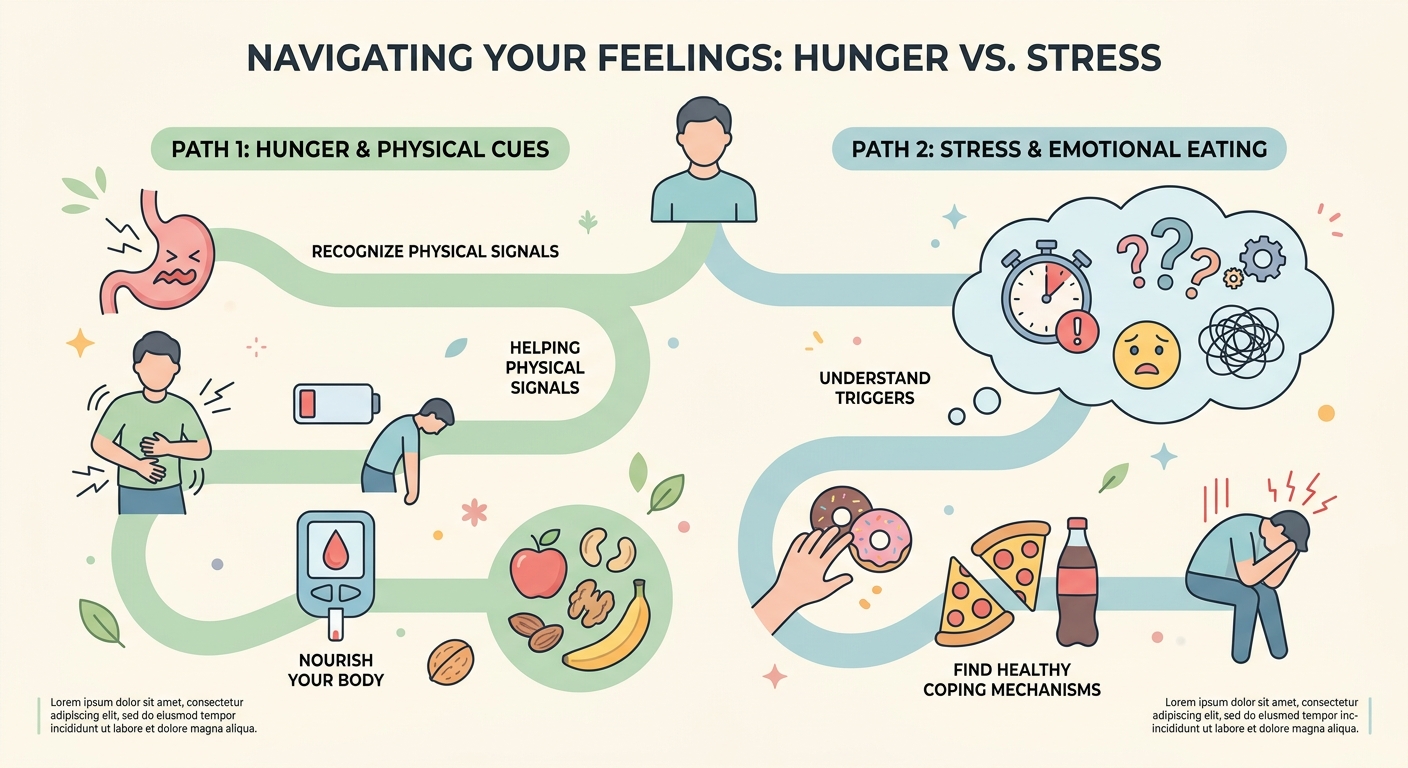
Emotional eating is the habit of eating to soothe or suppress feelings such as stress, sadness, anger, boredom, or loneliness instead of responding to physical hunger. Mayo Clinic patient guidance notes that the relief is short-lived, and guilt about setbacks can feed a cycle of more emotional eating. [Link to the original mayoclinic.org page.]
How can I tell emotional hunger from physical hunger?
Physical hunger builds gradually and fades when you’re full; emotional hunger tends to hit suddenly, crave specific foods, and continue past fullness. HelpGuide’s comparison also notes that emotional eating is often followed by guilt, while eating for physical hunger usually isn’t.
| Signal | Physical hunger | Emotional hunger |
|---|---|---|
| Onset | Gradual | Sudden |
| Food choice | Flexible | Specific comfort foods |
| Awareness | Usually mindful | Often automatic |
| Fullness | Stops when satisfied | May continue past fullness |
| Afterward | Neutral | Guilt or shame is common |
Does Emotional Eating Make Weight Loss Harder?
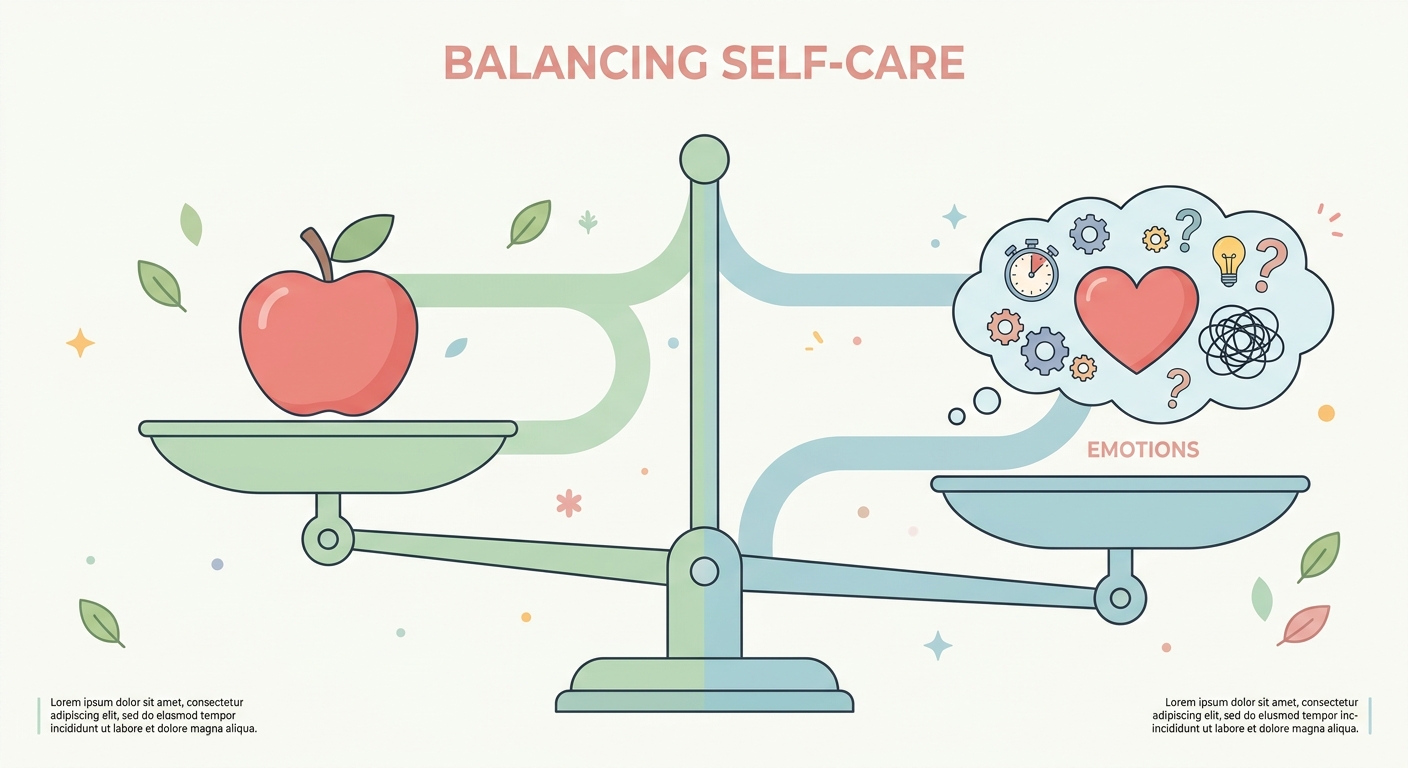
Research generally associates emotional eating with slower weight loss and a higher chance of regain, though effects vary and most findings show association, not proof of cause.
| Source | Who was studied | Finding | Caution |
|---|---|---|---|
| Braden et al. (University of Minnesota-affiliated researchers) | Adults in a weight loss program | Reduced emotional eating was linked to 1.70 times the odds of weight loss success at 12 months versus increased emotional eating. | Participants were adults with diabetes, so results may not generalize. |
| Frayn & Knäuper, Current Psychology | Literature review | Emotional eaters were about half as likely to reach the 10% weight loss goal of standard behavioral programs. | Review of earlier studies, not a new trial |
| Smith et al. 2023, IJERPH | 34 studies, adults with overweight or obesity | Interventions targeting emotional eating produced a small average weight change of about 1.08% (95% CI -1.66 to -0.49), with CBT showing the most promise. | Modest effect, and results varied between studies |
In plain terms, emotional eating can matter for weight loss, and addressing it may help, though the average benefit shown so far is small.
What Are the Most Common Emotional Eating Triggers?
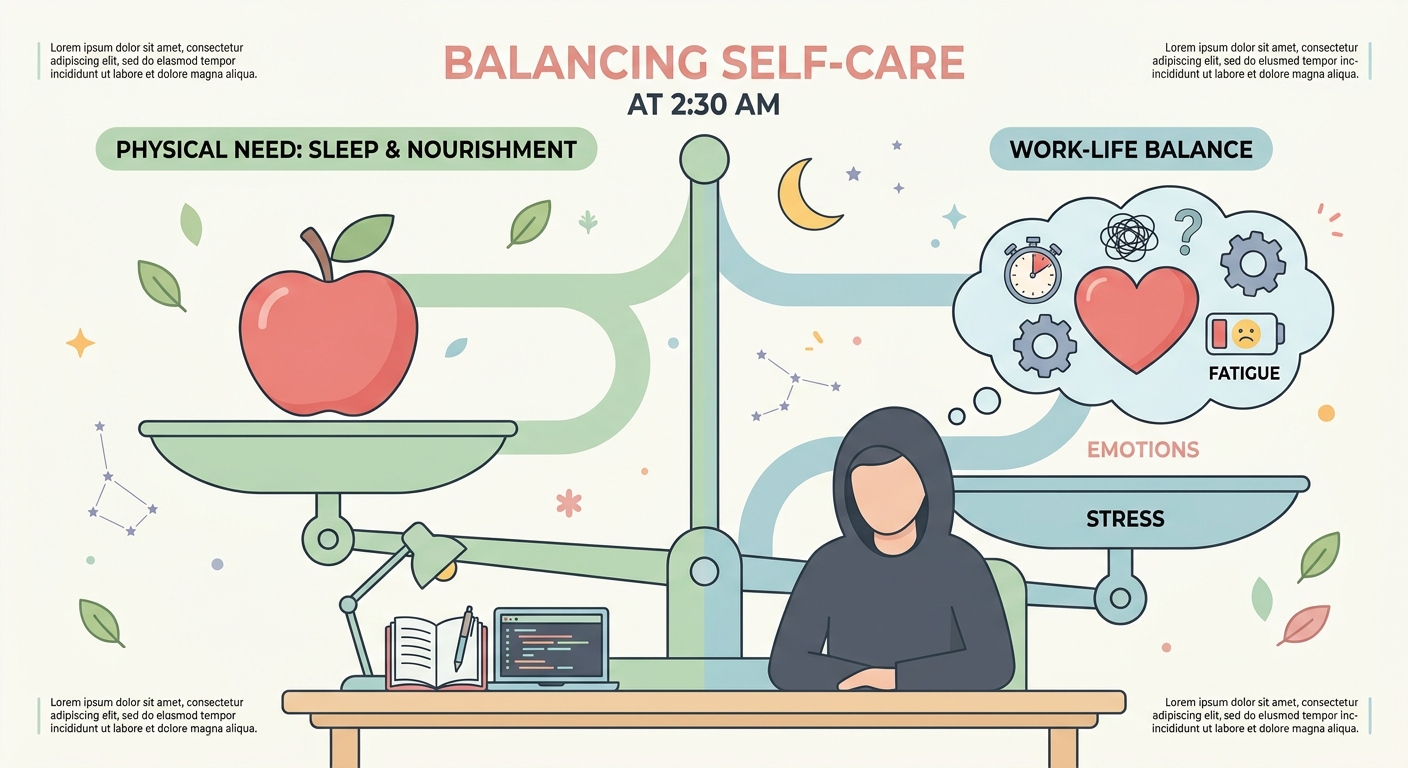
Common triggers include work stress, relationship conflict, fatigue, financial pressure, and health problems, plus boredom, loneliness, and habits learned in childhood. Mayo Clinic patient guidance lists relationship conflicts, work stress, fatigue, financial pressures, and health problems as typical examples. Nemours KidsHealth adds that patterns can be learned early, for example when sweets are used as a reward or as comfort.
| Trigger type | Examples | A question that may help |
|---|---|---|
| Emotional | Stress, sadness, boredom, loneliness | “What was I feeling right before I wanted food?” |
| Situational | Deadlines, conflict, social events | “Where was I, and who was I with?” |
| Physical | Poor sleep, long gaps between meals | “When did I last rest or eat properly?” |
| Learned | Food as reward or comfort | “What did food mean in my family?” |
Nuffield Health suggests asking questions like how you feel and whether you’re actively choosing to eat. A simple mood-and-food journal is a commonly suggested way to spot your own pattern [add citation from NHS or Mayo Clinic].
How Can I Stop Emotional Eating Without Using Food?
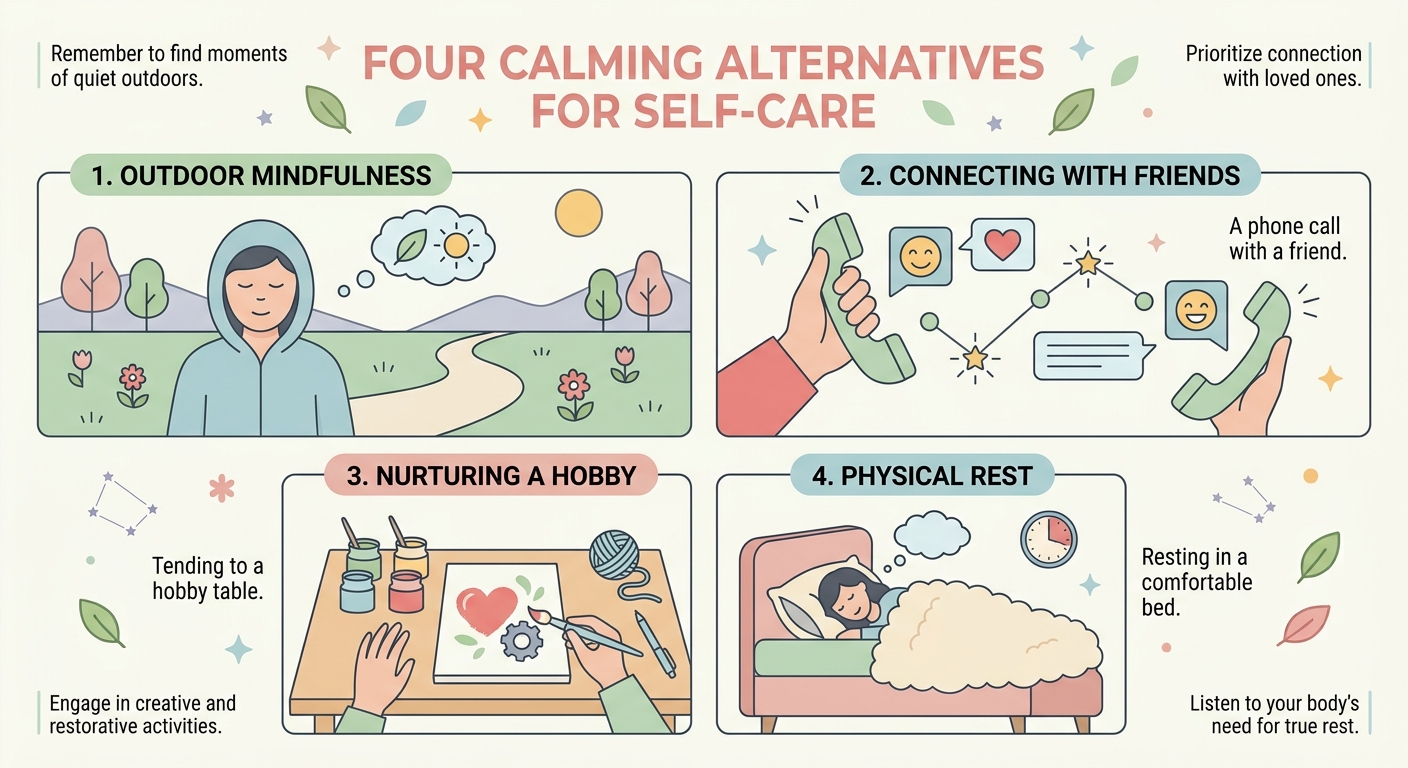
Pausing to name the feeling, then choosing a non-food response that matches the need, may help interrupt the cycle. No single method works for everyone, so these are options to try, not a treatment plan.
| If the urge comes from… | Options some people find helpful |
|---|---|
| Stress | Slow breathing, a short walk, stretching [add citation] |
| Boredom | A new hobby or interest that fills the time food might otherwise fill |
| Loneliness | Calling a friend or joining a support group of people with similar struggles |
| Tiredness | A rest break or earlier bedtime [add citation] |
| Habit | A 10-minute pause, then re-checking whether you’re hungry |
For persistent patterns, therapy is the best-studied route. In the Smith et al. review, CBT showed the most promise for reducing both emotional eating and weight.
Is Emotional Eating the Same as Binge Eating?
No. Emotional eating is eating in response to feelings and doesn’t necessarily involve a loss of control, whereas binge eating disorder (BED) involves recurrent episodes of eating large amounts with a sense of being unable to stop. Emotional eating is considered a risk factor for, or a possible symptom of, BED, but it is not classified as an eating disorder on its own. Only a qualified professional can assess this.
| Emotional eating | Binge eating disorder | |
|---|---|---|
| Core feature | Eating in response to feelings | Recurrent binges with loss of control |
| Official diagnosis? | No | Yes (added to the DSM-5 in 2013) |
| Amount eaten | Varies | Unusually large in a short time |
| Typical next step | Self-help and coping skills | Professional evaluation |
How common is BED? NIMH reports a past-year prevalence of 1.2% among U.S. adults (1.6% in females, 0.8% in males) and a lifetime prevalence of 2.8%. Other surveys report lower figures, for example 0.85% lifetime in a 2012-2013 national study (PubMed-indexed), because estimates depend on the survey and criteria used.
When Should I Seek Professional Help for Emotional Eating?
Consider professional support if food is your main way of coping, if eating feels out of control, or if guilt and distress are affecting daily life. A registered dietitian at Penn Medicine’s Princeton House advises seeking help when food becomes the only coping tool for stress, anxiety, loneliness, or similar feelings.
| Professional | How they may help |
|---|---|
| Doctor / GP | Checks for medical factors and provides referrals |
| Registered dietitian | Nutrition guidance, meal structure, eating behaviors |
| Psychologist / therapist | Therapies such as CBT or interpersonal therapy |
| Psychiatrist | Evaluation and, where appropriate, medical treatment |
Support resources: your doctor, local mental health services, or the National Alliance for Eating Disorders helpline. If you feel unsafe or in crisis, contact your local emergency number.
Which Guides Cover Each Part of Emotional Eating?
| If you want to… | Read |
|---|---|
| Understand the “why” in depth | Understanding Emotional Eating |
| Find your personal patterns | Identifying Your Emotional Eating Triggers |
| Build non-food coping skills | Alternative Coping Strategies |
| Find the right support | Professional Help Resources |
| See the bigger picture | Psychology of Weight Loss |
Is emotional eating a mental disorder?
No. Emotional eating on its own is not classified as an eating disorder, but it can overlap with binge eating disorder. If you often feel out of control when eating, a healthcare provider can help assess what is going on.
How do I know if I’m hungry or eating emotionally?
Physical hunger usually builds gradually and stops when you’re full, while emotional hunger tends to come on suddenly with specific cravings. Pausing to ask what you’re feeling before you eat may help you tell them apart.
Can I lose weight if I’m an emotional eater?
Many people do, but research generally associates emotional eating with slower progress and a higher chance of regain. Addressing the emotional side alongside food habits may help, ideally with guidance from a healthcare provider.
What’s the difference between emotional eating and binge eating?
Emotional eating is eating in response to feelings and doesn’t necessarily involve a sense of lost control. Binge eating involves eating large amounts in a short time with a feeling of being unable to stop, and only a professional can assess whether it is a disorder.
When should I see a professional about emotional eating?
Consider it if food is your main coping tool, if eating feels out of control, or if guilt and distress are affecting daily life. A doctor, registered dietitian, or therapist can offer next steps tailored to you.
How common is binge eating disorder?
The National Institute of Mental Health (NIMH) reports a past-year prevalence of 1.2% and a lifetime prevalence of 2.8% among U.S. adults, though estimates vary by survey and criteria.
References
- Braden A, Flatt SW, Boutelle KN, Strong D, Sherwood NE, Rock CL. Emotional eating is associated with weight loss success among adults enrolled in a weight loss program. Journal of Behavioral Medicine. 2016;39(4):727-732.
- Smith J, Ang XQ, Giles EL, Traviss-Turner G. Emotional eating interventions for adults living with overweight or obesity: a systematic review and meta-analysis. International Journal of Environmental Research and Public Health. 2023;20(3):2722.
- Frayn M, Knäuper B. Emotional eating and weight in adults: a review. Current Psychology. 2018.
- National Institute of Mental Health. Eating Disorders: Statistics. Accessed October 11, 2026.
- Udo T, Grilo CM. Prevalence and correlates of DSM-5-defined eating disorders in a nationally representative sample of U.S. adults. Biological Psychiatry. 2018.
- Mayo Clinic. Weight loss: Gain control of emotional eating. Accessed October 11, 2026.
- HelpGuide. Emotional Eating and How to Stop It. Accessed October 11, 2026.
- Nemours KidsHealth. Emotional Eating. Accessed October 11, 2026.
- Nuffield Health. How to manage emotional eating. Accessed October 11, 2026.
- Penn Medicine Princeton House Behavioral Health. Recognizing and Treating Emotional Eating. Accessed October 11, 2026.
- American Psychiatric Association. Diagnostic and Statistical Manual of Mental Disorders, 5th ed. 2013.
This article is for general education only and does not replace advice from a qualified healthcare provider.



Leave a Reply