



Last updated: October 2026 · Written by Talha Yousaf, science educator
Medical disclaimer: This article is for general education and is not medical advice. The author is a science educator, not a medical professional. Talk with a doctor or registered dietitian before changing your eating or exercise habits, especially if you have a health condition, take medication, or have a history of disordered eating.
Key facts at a glance
- Weight loss motivation often fades after the first few weeks, but research suggests that realistic goals, simple tracking, and good support may help you keep going.
- The CDC reports that people who lose weight gradually, about 1 to 2 pounds a week, are more likely to keep it off than people who lose weight quickly (CDC, “Steps for Losing Weight”).
- In a 10-year follow-up of 2,886 National Weight Control Registry members, more than 87% were estimated to still be maintaining a loss of at least 10% (Thomas et al., 2014).
- In a 1999 randomized study of 166 adults, 66% of participants recruited with friends and given social support kept their weight loss in full from month 4 to month 10, versus 24% of those who joined alone (Wing & Jeffery, 1999).
What is weight loss motivation, and why does it fade?

Weight loss motivation is the combination of reasons and habits that keep a person acting on their health goals over time, and it tends to fade when goals are too aggressive, when progress is judged only by the scale, or when the reasons feel imposed from outside.
Self-determination theory separates two kinds of motivation. Autonomous motivation comes from a person’s own values, and a 2012 review in the International Journal of Behavioral Nutrition and Physical Activity found it to be among the key predictors of successful weight outcomes (Teixeira et al., 2012).
| Motivation type | Example | Typical risk |
|---|---|---|
| Controlled (external) | “My family says I should.” | May fade when the pressure or deadline ends |
| Autonomous (internal) | “I want more energy to play with my kids.” | Tends to be more durable |
In a three-year study of women, those with higher autonomous motivation for exercise were about three times as likely to have lost 10% or more of their body weight (Silva et al., 2011, Medicine & Science in Sports & Exercise) [verify figure against the paper before publishing].
How do you set realistic weight loss goals?

A realistic weight loss goal is a gradual one, typically about 1 to 2 pounds (0.5 to 1 kg) per week according to the CDC, built around behaviors you control rather than a single number on the scale. The CDC also notes that even modest weight loss may help improve blood pressure, cholesterol, and blood sugar.
A percentage goal feels more reachable than a large target. This is simple arithmetic, not a prediction:
| Starting weight | 5% goal | 10% goal |
|---|---|---|
| 150 lb (68 kg) | 7.5 lb (3.4 kg) | 15 lb (6.8 kg) |
| 200 lb (91 kg) | 10 lb (4.5 kg) | 20 lb (9.1 kg) |
| 250 lb (113 kg) | 12.5 lb (5.7 kg) | 25 lb (11.3 kg) |
NIH’s News in Health (2022) recommends specific goals, such as walking 30 minutes, five days a week, because activity goals are within your control while the scale is not.
→ Deep dive: Setting Realistic Weight Loss Goals
What are the most effective strategies for staying motivated?
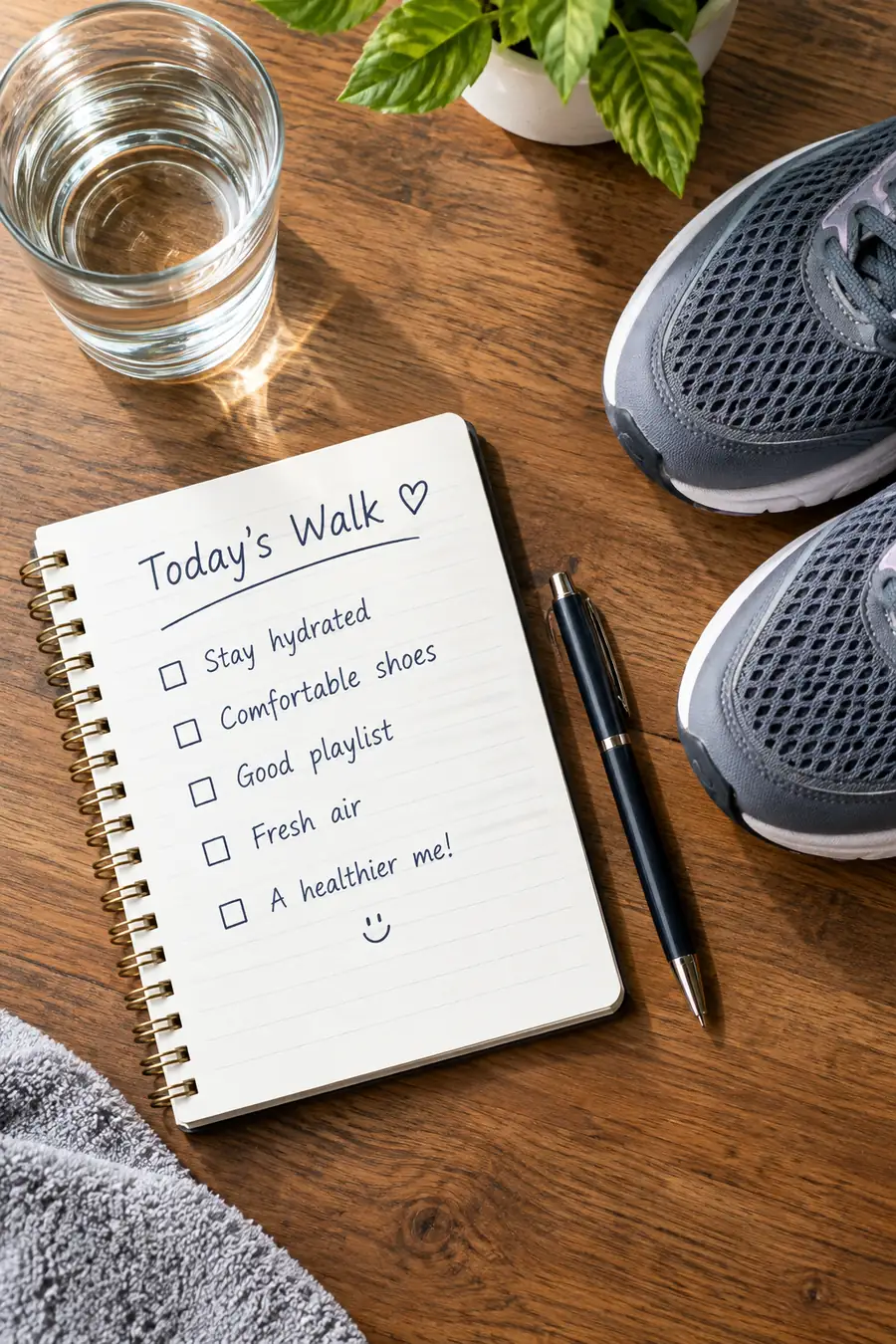
The best-supported motivation strategies are tracking your own habits, setting behavior-based goals, and building social support.
| Strategy | What it may help with | Source |
|---|---|---|
| Keep a diary of food, activity, sleep, and stress | Shows patterns you can adjust | CDC, “Steps for Losing Weight” |
| Set specific behavior goals | Gives you wins you control | NIH, 2022 |
| Weigh in on a regular schedule (weekly is common) | Catches small gains early | NIH, 2022; NWCR |
| Enlist friends or family | Improves completion and maintenance | Wing & Jeffery, 1999 |
On tracking, 92.8% of National Weight Control Registry (NWCR) members tracked weight, diet, or exercise, versus 71.3% of a demographically similar national sample (PubMed 28702210). On support, 95% of participants recruited with friends and given support strategies completed treatment, compared with 76% of those who joined alone (Wing & Jeffery, 1999, Journal of Consulting and Clinical Psychology).
How can you build a simple motivation routine? One approach that fits the evidence above:
- Write down your own reasons for changing, in your words.
- Choose one or two behavior goals, such as a weekly walking target.
- Pick a tracking method you can sustain and check it on a set day.
- Invite one friend or family member to share the effort.
Talk with a healthcare professional before starting if you have a medical condition.
→ Deep dive: Weight Loss Motivation Strategies That Work
How do you overcome obstacles that drain motivation?

The most common motivation obstacles, such as plateaus, stress, and missed days, are predictable, so the most reliable approach is to plan a response in advance and treat a slip as information rather than failure.
| Obstacle | Option that may help |
|---|---|
| Scale stalls for weeks | Check non-scale signs (energy, sleep, fit of clothes); review habits with a dietitian |
| Stress or emotional eating | Short walks, better sleep, or support from a counselor |
| A missed workout or off week | Restart at the next meal or next day |
| Tracking feels stressful | Simplify or pause it and talk with a professional |
Tracking is not harmless for everyone. A survey of NWCR participants found that those who regained weight reported more negative feelings associated with self-monitoring (PubMed 40950752).
→ Deep dive: Overcoming Weight Loss Obstacles
How do you keep weight loss motivation going long-term?

Long-term success is associated with sustained habits, and research suggests maintenance is achievable for a meaningful share of people. A 2005 review by Wing and Phelan in the American Journal of Clinical Nutrition estimated that about 20% of overweight individuals succeed at long-term loss, defined as keeping off at least 10% of body weight for a year or more.
The NWCR follows adults who lost at least 30 lb and kept it off for at least a year. In its 10-year analysis, average loss was 31.3 kg at entry and 23.1 kg at year 10, and decreases in physical activity and in self-weighing frequency were associated with greater regain (Thomas et al., 2014, PubMed 24355667).
| NWCR 10-year finding | Result |
|---|---|
| Participants analyzed | 2,886 |
| Average loss at entry | 31.3 kg |
| Average loss at year 10 | 23.1 kg |
| Share still maintaining ≥10% loss | More than 87% |
Limitation: Registry data are self-reported and come from people who succeeded, so they show what is possible, not what is typical.
Enjoyable activity makes habits easier to keep. See our guides to walking, cycling, and swimming for weight loss.
→ Deep dive: Long-Term Weight Loss Motivation · Part of the series: Psychology of Weight Loss
How do I stay motivated to lose weight when progress is slow?
Focus on behaviors you control, such as walks or meals prepared, and track non-scale signs like energy and sleep. The CDC notes that gradual loss is more likely to last, so slower progress may be normal.
Is it normal to lose motivation while trying to lose weight?
Yes, fluctuating motivation is common. Research suggests that goals tied to your own values tend to hold up better than external pressure.
How much weight is realistic to lose in a month?
The CDC’s guidance of 1 to 2 pounds a week works out to about 4 to 8 pounds a month. Individual results vary, and early losses are often uneven.
Should I weigh myself every day to stay motivated?
Practices vary. NIH suggests weighing daily or at least weekly, and many NWCR members weigh weekly. If weighing causes anxiety, ask a healthcare professional about alternatives.
When should I ask a professional for help with motivation?
Consider a doctor, registered dietitian, or mental health professional if low mood, disordered eating thoughts, or repeated cycles of regain are affecting you.
References
- CDC, Steps for Losing Weight: https://www.cdc.gov/healthy-weight-growth/losing-weight/index.html
- NIH News in Health (2022), Healthy Weight Control: https://newsinhealth.nih.gov/2022/12/healthy-weight-control
- Teixeira et al. (2012), Motivation, self-determination, and long-term weight control: https://link.springer.com/article/10.1186/1479-5868-9-22
- Silva et al. (2011), Exercise autonomous motivation predicts 3-yr weight loss in women: https://pubmed.ncbi.nlm.nih.gov/20689448/
- Wing & Jeffery (1999), Benefits of recruiting participants with friends: https://doi.org/10.1037/0022-006X.67.1.132
- Wing & Phelan (2005), Long-term weight loss maintenance: https://www.sciencedirect.com/science/article/pii/S0002916523295362
- Thomas et al. (2014), Weight-loss maintenance for 10 years in the NWCR: https://pubmed.ncbi.nlm.nih.gov/24355667/
- Successful weight loss maintainers use health-tracking smartphone apps (PubMed 28702210): https://pubmed.ncbi.nlm.nih.gov/28702210/
- Self-monitoring technology use in NWCR maintainers vs. regainers (PubMed 40950752): https://pubmed.ncbi.nlm.nih.gov/40950752/



Leave a Reply