


Introduction
When it comes to achieving healthy, radiant skin, the world of dermatological skincare can feel overwhelming. With countless products, treatments, and conflicting advice, understanding the science behind your skincare routine is essential. This comprehensive guide to dermatological skincare, retinoids, and facial therapies will help you navigate the complex landscape of professional skincare and evidence-based treatments that truly deliver results.
The global skincare market continues to boom, valued at over $215 billion in 2026 and projected to reach $467.8 billion by 2036. This explosive growth reflects a fundamental shift in how people view skincare—no longer as a luxury but as an essential investment in skin health. Within this thriving market, retinoids stand out as a cornerstone ingredient, commanding 23.5% of the pharmaceutical-grade skincare segment. Combined with innovative facial therapies, dermatological skincare has evolved into a science-backed approach to maintaining youthful, resilient skin.
Whether you’re dealing with acne, photoaging, fine lines, or simply want to optimize your skin health, understanding dermatological skincare fundamentals, retinoid options, and professional facial therapies is crucial. This guide explores everything you need to know.
WHAT IS DERMATOLOGICAL SKINCARE?
Dermatological skincare represents a science-backed approach to skin health that goes far beyond conventional cosmetic products. Unlike over-the-counter beauty products, dermatological skincare focuses on addressing specific skin concerns through pharmaceutical-grade formulations and clinical methodologies proven to improve skin barrier function, texture, and appearance.
Dermatological skincare encompasses several key principles:
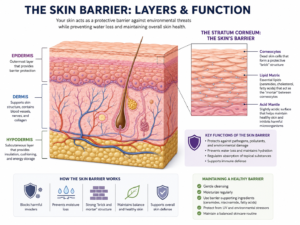
Barrier Function and Protection: The skin barrier—the outermost layer called the stratum corneum—is your skin’s first line of defense. Dermatological skincare prioritizes maintaining and strengthening this barrier through appropriate moisture management and protective ingredients.
Evidence-Based Formulations: Products in the dermatological skincare category contain active ingredients supported by clinical research and dermatologist approval. These aren’t marketing gimmicks; they’re pharmaceutically active compounds that produce measurable improvements in skin health.
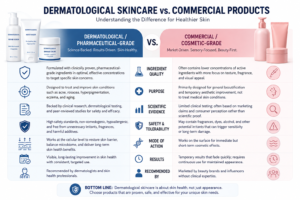
Customization for Skin Concerns: Dermatological skincare recognizes that every skin type has unique needs. Whether you have dry, sensitive, oily, or combination skin, medical-grade formulations are designed to address specific concerns without compromising skin integrity.
Long-Term Results Over Quick Fixes: While commercial skincare promises overnight miracles, dermatological skincare emphasizes consistent, cumulative results. Effective dermatological skincare requires commitment but delivers transformative changes over weeks and months.
The foundation of any dermatological skincare routine includes gentle cleansing, appropriate moisturization with barrier-supporting ingredients like ceramides and peptides, and sun protection. However, the real power of dermatological skincare emerges when you incorporate active ingredients like retinoids, vitamin C, niacinamide, and hyaluronic acid.
UNDERSTANDING RETINOIDS: THE GOLD STANDARD IN ANTI-AGING
Retinoids represent one of the most studied and proven anti-aging ingredients in dermatological skincare. These vitamin A derivatives have been extensively researched for over three decades, and the scientific consensus is clear: retinoids work.
What Are Retinoids?
Retinoids are a class of compounds derived from vitamin A that profoundly influence skin cell behavior. They work by binding to retinoic acid receptors (RAR) in skin cells, triggering a cascade of beneficial cellular changes that improve skin appearance and function.
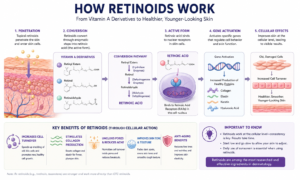
For retinoids to be effective, they must ultimately be converted to retinoic acid—the active form your skin cells can utilize. Different retinoid types require different numbers of conversion steps, which determines their potency and speed of action.
The Retinoid Hierarchy: From Weakest to Strongest
Understanding the potency hierarchy of retinoids is essential for developing an effective dermatological skincare routine. Here’s the progression:
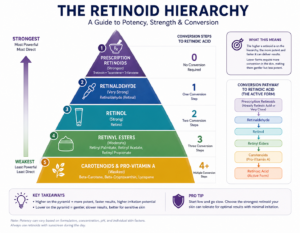
Retinyl Esters (Retinol Palmitate, Retinol Acetate): These require the most conversion steps (typically 3-4) before becoming retinoic acid. They’re the mildest option and best for beginners with sensitive skin. Results appear slowly, but tolerance is excellent. Over-the-counter retinyl ester products are accessible but require patience and consistency.
Retinol: One of the most popular over-the-counter retinoid options, retinol requires 2-3 conversion steps to become retinoic acid. It’s moderately potent, offers visible results within 8-12 weeks, and is relatively well-tolerated by most people.
Retinal (Retinaldehyde): This intermediate option requires only one conversion step, making it significantly more potent than retinol yet considerably less irritating than prescription retinoids. Retinal delivers faster results than retinol while maintaining reasonable tolerability. It’s ideal for those who’ve adapted to retinol but seek more dramatic improvements.
Prescription Retinoids (Tretinoin, Adapalene, Tazarotene): These are pre-converted to retinoic acid or extremely close to it, making them the most potent option. Prescription retinoids are absorbed and utilized immediately, delivering rapid, noticeable results. However, they typically require dermatologist oversight and involve an adjustment period with potential irritation, dryness, and sensitivity—often called “retinization.”
Fourth-Generation Retinoids (Trifarotene): The newest frontier in dermatological skincare innovation includes fourth-generation RAR-γ agonists like trifarotene. These advanced retinoids offer improved receptor specificity, enhanced efficacy, and superior tolerability compared to earlier generations. They represent the cutting edge of retinoid therapy, particularly for challenging conditions like severe acne.
How Retinoids Transform Your Skin
Retinoids influence skin at the cellular level through multiple mechanisms:
Accelerated Cell Turnover: Retinoids increase the rate at which skin cells shed and regenerate. This addresses texture issues, reduces clogged pores, and reveals fresher skin beneath.
Collagen Stimulation: Perhaps most importantly, retinoids trigger fibroblasts (collagen-producing cells) to increase collagen synthesis. This addresses wrinkles, fine lines, and skin elasticity—the hallmarks of aging skin.
Reduced Sebum Production: For acne-prone individuals, retinoids decrease sebum production, addressing one of acne’s root causes.
Anti-Inflammatory Effects: Retinoids possess anti-inflammatory properties, making them effective for acne, rosacea, and other inflammatory skin conditions.
Improved Skin Barrier: Despite their strength, properly used retinoids actually strengthen the skin barrier over time, improving hydration and resilience.
Incorporating Retinoids Into Your Dermatological Skincare Routine
Success with retinoids requires a strategic approach. Here’s how dermatologists recommend integrating them:
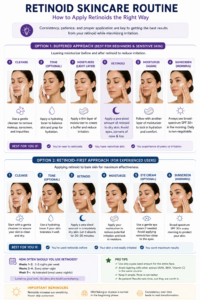
Start Low and Go Slow: Begin with the lowest concentration and frequency (perhaps 2-3 times weekly). Gradually increase as your skin adapts, potentially reaching nightly application after 4-6 weeks.
Support Your Skin Barrier: Use a robust moisturizer containing ceramides, peptides, and hyaluronic acid. Apply moisturizer to damp skin after cleansing but before retinoid application (if using lower-strength retinoids) or after (if using prescription retinoids).
Avoid Combination Irritants: Don’t simultaneously use multiple active ingredients like glycolic acid, vitamin C, and retinoids in the same routine. This overwhelms your skin barrier and causes more problems than benefits.
Use Sunscreen Daily: Retinoids increase skin sensitivity to UV exposure. Non-negotiable sunscreen use (SPF 30+) is mandatory.
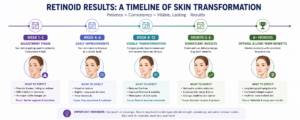
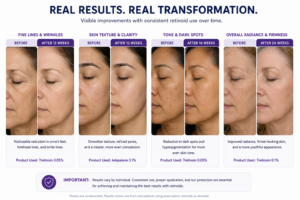
Be Patient: Visible improvements typically appear within 6-8 weeks, but optimal results emerge after 3-4 months of consistent use.
PROFESSIONAL FACIAL THERAPIES: SCIENCE-BACKED TREATMENTS FOR SKIN TRANSFORMATION
While consistent at-home dermatological skincare forms the foundation, professional facial therapies offer targeted treatments that amplify results and address specific concerns. Modern professional facials have evolved far beyond relaxation-focused spa experiences; they’re now considered foundational components of comprehensive skin maintenance.
Medical-Grade Facials vs. Traditional Spa Facials
The distinction between medical-grade facials and traditional spa facials is crucial. Medical-grade facials utilize pharmaceutical-grade ingredients, advanced equipment, and techniques performed by trained professionals trained in dermatology-adjacent fields. These treatments focus on cleansing, exfoliation, hydration, and targeted correction using evidence-based formulations and technology.
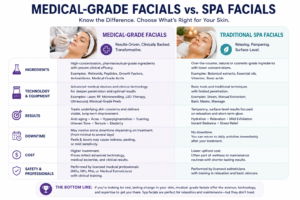
Traditional spa facials prioritize relaxation and basic cleansing but lack the clinical depth and specialized ingredients that drive transformative results. For serious skincare goals, medical-grade facials deliver superior outcomes.
Leading Professional Facial Therapies in 2025
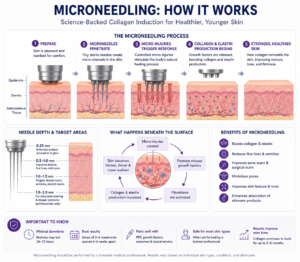
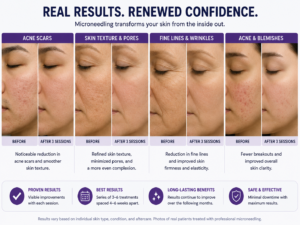
Microneedling and Collagen Induction Therapy: Microneedling uses controlled, fine needles to create micro-injuries in the skin, triggering the body’s natural healing response. This stimulates collagen and elastin production, dramatically improving skin texture, tone, and overall quality. Results appear gradually as collagen rebuilds, with optimal improvements visible after 3-4 treatments spaced 4-6 weeks apart.
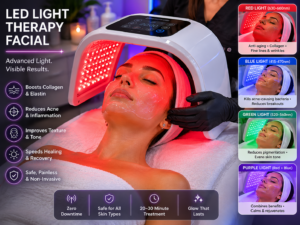
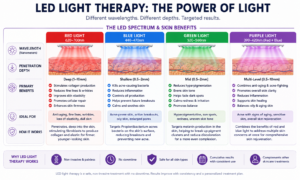
LED Light Therapy Facials: Multi-spectrum LED light therapy represents one of 2025’s most popular professional facial options. Different wavelengths address different concerns: red light stimulates collagen and addresses aging, blue light targets acne-causing bacteria, green light reduces hyperpigmentation, and purple light combines benefits. These non-invasive, pain-free treatments require no downtime and deliver consistent improvements with regular sessions.
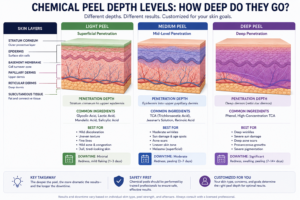
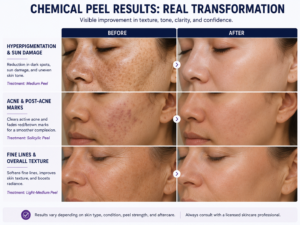
Chemical Peel Facials: Professional chemical peels utilize pharmaceutically formulated acids (glycolic, salicylic, lactic, or mandelic acid) to exfoliate the skin at various depths. Light peels remove the outermost layer, medium peels penetrate deeper, and deep peels affect the dermis. Results include improved texture, reduced hyperpigmentation, diminished acne, and overall skin rejuvenation. Recovery time varies from minimal (light peels) to several days (deep peels).
Hydration and Barrier-Support Facials: These treatment protocols use specialized equipment (like HydraFacial technology) to deeply hydrate and infuse beneficial serums into the skin. Perfect for dehydrated, sensitized, or compromised skin barriers, these facials provide immediate visible results—plumper, more radiant skin—with cumulative benefits from consistent treatments.
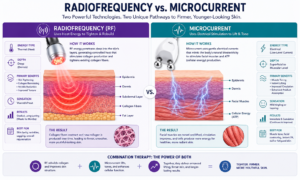
Radiofrequency and Microcurrent Facials: Radiofrequency therapy uses controlled heat energy to stimulate collagen production and tighten skin, offering non-invasive facial rejuvenation. Microcurrent facials use low-voltage electric currents to tone and lift facial muscles, offering a non-invasive “facial workout.” Both technologies deliver lifting, tightening, and rejuvenation effects without downtime.
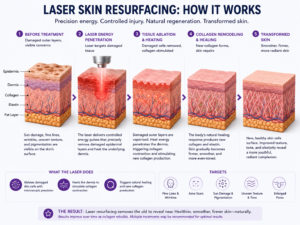
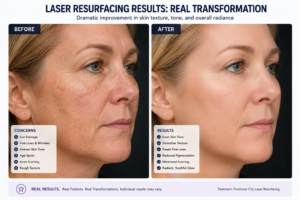
Laser Resurfacing Facials: Advanced fractional laser technology removes damaged skin layer by layer, stimulating collagen remodeling and dramatically improving texture, tone, and appearance. While requiring some downtime, laser resurfacing produces dramatic transformations for sun damage, wrinkles, scars, and pigmentation issues.
AI-Guided Customized Facials: 2025 facial trends include AI-driven skin analysis that uses high-resolution imaging to detect specific concerns—dehydration, hyperpigmentation, fine lines—before they’re visible. Clinics using this technology customize treatments to your unique skin’s needs, delivering precise, results-oriented care.
The Power of Combination Therapy
The most effective approach to skin transformation combines professional facial therapies with comprehensive at-home dermatological skincare. This synergistic strategy addresses multiple concerns simultaneously: professional treatments provide intensive correction and collagen stimulation, while consistent at-home care maintains results and prevents future damage.
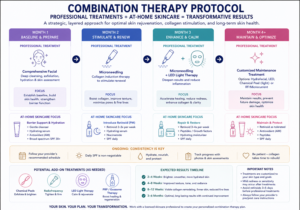
For example, combining monthly microneedling with professional retinoid-infused serums and at-home retinoid therapy creates a powerful anti-aging protocol that addresses photoaging, texture, and collagen loss from multiple angles. The cumulative effect exceeds any single treatment.
ADVANCED DERMATOLOGICAL SKINCARE STRATEGIES
Beyond retinoids and professional treatments, comprehensive dermatological skincare incorporates additional evidence-based ingredients and techniques.
Barrier-Supporting Ingredients
A healthy skin barrier is the foundation of all effective skincare. Dermatological skincare prioritizes ingredients that repair and maintain barrier function:
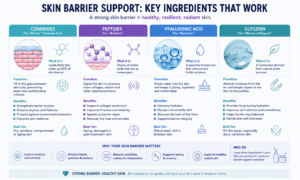
- Ceramides: These lipids are naturally present in the skin barrier. Topical ceramides restore barrier integrity and reduce transepidermal water loss.
- Peptides: These amino acid chains signal skin cells to produce collagen and maintain barrier structure.
- Hyaluronic Acid: This humectant attracts moisture into the skin, plumping fine lines and supporting hydration.
- Glycerin: Another powerful humectant that works synergistically with hyaluronic acid.
Growth Factors and Advanced Therapeutics
Medical-grade serums featuring growth factors, peptides, and stem cell-derived compounds provide bioactive proteins that support skin’s natural repair mechanisms. These advanced formulations work alongside retinoids to stimulate collagen, improve skin quality, and address multiple aging signs.
Sun Protection: Non-Negotiable Skincare
No discussion of dermatological skincare is complete without emphasizing sun protection. UV damage is the primary cause of photoaging, hyperpigmentation, and skin cancer risk. Daily sunscreen use (SPF 30+), protective clothing, and avoidance of peak sun represent essential dermatological skincare principles.
COMMON MISTAKES IN DERMATOLOGICAL SKINCARE
Understanding what derails skincare success helps you achieve optimal results:
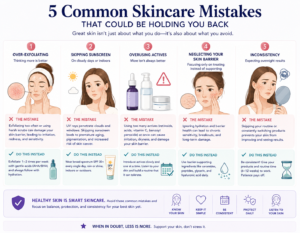
Over-Exfoliation: Using multiple exfoliants simultaneously (retinoids plus AHAs/BHAs) damages the skin barrier, causing sensitivity, irritation, and paradoxical dryness.
Inadequate Moisturization: Many people, especially those with oily skin, skip moisturizer. This is counterproductive; even oily skin needs appropriate hydration to maintain barrier function.
Inconsistent Application: Dermatological skincare requires consistency. Sporadic use won’t produce results; commitment to a routine is essential.
Skipping Sunscreen: This completely negates anti-aging benefits and increases photoaging and skin cancer risk.
Seeking Quick Results: Transformative skincare takes time. Expecting dramatic changes within weeks is unrealistic.
DEVELOPING YOUR PERSONALIZED DERMATOLOGICAL SKINCARE PROTOCOL
The ideal dermatological skincare routine depends on your specific concerns, skin type, and goals. However, a basic framework applies to most people:
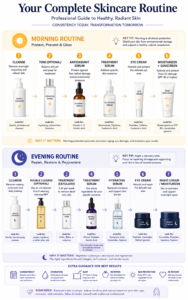
Morning Routine:
- Gentle cleanser appropriate for your skin type
- Optional toner or essence
- Targeted serum (vitamin C or antioxidant-rich)
- Moisturizer with barrier-supporting ingredients
- Broad-spectrum sunscreen (SPF 30+)
Evening Routine:
- Gentle cleanser
- Optional treatment essence
- Retinoid (frequency depends on potency and tolerance)
- Barrier-supporting moisturizer
Professional Treatments: Schedule professional facials every 4-6 weeks based on your skin’s needs and professional recommendations. Consider combination approaches addressing multiple concerns simultaneously.
THE FUTURE OF DERMATOLOGICAL SKINCARE
Innovation in dermatological skincare continues accelerating. Fourth-generation retinoids like trifarotene represent increased efficacy and tolerability. AI-driven skin analysis is becoming standard in clinics, enabling hyper-personalized treatment protocols. Regenerative therapies and novel delivery systems promise even better ingredient penetration and results.
The future of skincare is undeniably moving toward precision, personalization, and combination approaches. Rather than seeking one miracle product, the most effective strategies integrate multiple evidence-based ingredients and treatments optimized for individual needs.
CONCLUSION: YOUR PATH TO HEALTHY, RADIANT SKIN
The ultimate guide to dermatological skincare, retinoids, and facial therapies reveals a clear truth: achieving transformative skin results is possible through combining evidence-based at-home dermatological skincare with professional treatments and consistent commitment.
Retinoids represent the most proven anti-aging ingredient available, worthy of a central role in any dermatological skincare routine. Professional facial therapies amplify results through targeted treatments addressing specific concerns. Together, this comprehensive approach delivers visible, lasting improvements in skin texture, tone, clarity, and youthfulness.
Start by establishing a foundational routine with appropriate cleansing, moisturization, sun protection, and either over-the-counter retinoids (retinol or retinal) or prescription retinoids under dermatological guidance. Integrate professional facials every 4-6 weeks. Be patient, remain consistent, and adjust your protocol based on results and skin response.
Your skin reflects your commitment to its health. By embracing dermatological skincare principles, retinoid therapy, and professional treatments, you invest in not just appearance but in long-term skin health, resilience, and vitality. The results—radiant, youthful, healthy skin—are absolutely worth the commitment.
FREQUENTLY ASKED QUESTIONS (FAQs)
Q1: What’s the difference between retinol and retinoid?
A: Retinol is a type of retinoid—a specific, less potent form of vitamin A derivative. All retinoids are vitamin A derivatives, but not all retinoids are retinol. Prescription retinoids like tretinoin are significantly more potent than over-the-counter retinol.
Q2: How long does it take to see results from retinoids?
A: Initial improvements in skin texture typically appear within 4-6 weeks. More dramatic anti-aging results (reduced wrinkles, improved firmness) emerge after 8-12 weeks. Optimal results develop after 3-6 months of consistent use.
Q3: Can I use retinoids if I have sensitive skin?
A: Yes, but start with the gentlest option (retinyl esters or retinol at low concentration) and introduce slowly. Allow your skin barrier to strengthen gradually. Alternatively, consult a dermatologist about prescription-strength retinoids specifically formulated for sensitive skin.
Q4: What’s the best age to start using retinoids?
A: Retinoids benefit people of various ages. For anti-aging purposes, most dermatologists recommend starting in your mid-to-late 20s. For acne, retinoids are beneficial at any age (even as young as 12-13 under professional guidance).
Q5: Can I use retinoids during pregnancy?
A: Prescription retinoids (tretinoin, adapalene, tazarotene) should be avoided during pregnancy and breastfeeding due to potential fetal risks. Consult your OB-GYN or dermatologist before using any retinoid products while pregnant or nursing.
Q6: How often should I get professional facials?
A: For optimal skin maintenance and cumulative benefits, professional facials every 4-6 weeks are ideal. This aligns with your skin’s natural cell turnover cycle. Frequency can adjust based on specific treatments and individual skin needs.
Q7: What’s the difference between a medical-grade facial and a spa facial?
A: Medical-grade facials use pharmaceutical-grade ingredients, advanced equipment, and clinical techniques performed by trained professionals. They address specific skin concerns with evidence-based protocols. Spa facials prioritize relaxation with basic skincare benefits.
Q8: Can I combine retinoids with other active ingredients?
A: Avoid simultaneously using retinoids with vitamin C, AHAs, BHAs, or niacinamide in the same routine. This overwhelms the skin barrier. Instead, alternate: use retinoids at night, vitamin C in the morning.
Q9: What sunscreen should I use while using retinoids?
A: Use broad-spectrum sunscreen (SPF 30 minimum) daily. Look for formulas with stabilized UV filters suitable for daily use. Mineral sunscreens (zinc oxide, titanium dioxide) are excellent options for retinoid users.
Q10: Are retinoids effective for acne?
A: Yes, retinoids are highly effective for acne treatment. They reduce sebum production, normalize cell turnover, decrease inflammation, and prevent clogged pores. Both over-the-counter retinoids and prescription retinoids treat acne effectively.
Q11: What’s the best retinoid for anti-aging?
A: Prescription retinoids (tretinoin 0.025-0.1%) deliver the fastest anti-aging results. If prescription retinoids aren’t suitable, retinal or high-strength retinol products offer significant benefits. The “best” option depends on your skin’s tolerance.
Q12: How much does dermatological skincare cost?
A: This varies widely. Quality dermatological skincare products typically cost $30-150+ per product. Professional facials range from $100-500+ depending on treatment type and location. Many people find that investing in quality skincare prevents future costly dermatological treatments.



Leave a Reply