



By Talha Yousaf | M.Phil. Physics, science educator and health-research writer | Last updated: October 2026
Medical disclaimer: This article is for general educational purposes and is not medical advice. The author is a science educator, not a physician, dietitian, or licensed mental health professional. Weight, eating, and mood concerns are personal and can involve medical conditions. Please consult a qualified healthcare provider before changing your diet, activity level, or medications.
Quick Answer: What Does Research Say About the Psychology of Weight Loss?
The psychology of weight loss is the study of how thoughts, emotions, habits, and surroundings shape whether eating and activity changes last. Behavioral and cognitive-behavioral approaches are generally associated with better weight outcomes, especially when combined with changes to eating and activity. (PMC8408071, narrative review of self-help strategies in obesity treatment).
The eight pieces at a glance
| Psychological factor | What research generally suggests | Go deeper |
|---|---|---|
| Motivation | Motivation rises and falls; internal reasons and a growth mindset are associated with better engagement | Staying motivated |
| Emotional eating | Food is often used to cope with feelings; spotting triggers is the first step | Emotional eating |
| Stress | Ongoing stress may raise appetite via cortisol | Stress and weight |
| Plateaus | Common and expected as the body adapts | Breaking a plateau |
| Habits | A median of about 66 days to become automatic, with wide variation | Habit formation |
| Setbacks | A slip is not a relapse unless the response turns it into one | Relapse prevention |
| Goals | Specific, realistic goals beat vague or extreme ones | SMART goals |
| Support | Social support and self-monitoring are among the best-supported strategies | Accountability |
Key numbers behind these findings
| Finding | Figure | Source |
|---|---|---|
| Time for a new daily behavior to feel automatic | Median 66 days (range 18-254) | Lally et al., UCL, 2010 |
| Pace linked to keeping weight off | About 1-2 pounds per week | CDC |
| Modest loss that may improve blood pressure, cholesterol, and blood sugar | About 5% of body weight | CDC |
| People who weigh themselves weekly among long-term maintainers | Nearly 75% | National Weight Control Registry (Wing and Hill) |
| Average loss and duration among registry members | About 66 lb kept off for about 5.5 years | National Weight Control Registry |
| Participants in a digital program linking growth mindset to greater weight loss | 1,600+ | Psychology Today research summary, 2024 |
| Studies in the main self-monitoring review | 22 | Burke et al., 2011 |
| Participants in the classic friends-and-support trial | 166 | Wing and Jeffery, 1999 |
Why Is Weight Loss as Much a Mental Challenge as a Physical One?

Weight loss asks people to change daily behavior for months or years, and behavior is shaped by emotions, stress, habits, and beliefs as much as by knowledge. Knowing what to eat is rarely the hard part; doing it consistently under real-life pressure is.
The U.S. Centers for Disease Control and Prevention (CDC) describes healthy weight management as a lifestyle that combines healthy eating, regular physical activity, and stress management, and notes that sleep, medicines, medical conditions, and age can also play a role (CDC, Steps for Losing Weight). The same page notes that even modest weight loss, such as 5% of body weight, may improve blood pressure, cholesterol, and blood sugar. For a person weighing 200 pounds, that is 10 pounds.
Insight into long-term success comes partly from the National Weight Control Registry (NWCR), founded by Rena Wing (Brown) and James Hill (University of Colorado), which follows thousands of adults who have lost significant weight and kept it off for at least a year. Harvard Health reports that people with higher self-efficacy, meaning belief in their ability to carry out key behaviors, tend to sustain weight loss better, and that large groups of successful maintainers commonly advise perseverance after setbacks and consistent food tracking (Harvard Health). Harvard also cautions that studies of “successes” can miss people facing real environmental barriers, so these findings are patterns, not promises.
| What the NWCR reports | Detail |
|---|---|
| Entry criteria | Adults who lost at least 30 lb and kept it off for at least one year |
| Average loss and duration | About 66 lb, kept off for about 5.5 years |
| How they lost weight | Roughly 45% on their own, 55% with some type of program |
| Self-weighing | Nearly 75% weigh themselves at least once a week |
Source: Wing and Hill’s description of the registry (Human Kinetics excerpt); TIME summary. Limitation: the registry is observational and relies on self-reported data from volunteers, so it shows what successful maintainers do, not what causes success.
How Do You Stay Motivated to Lose Weight?
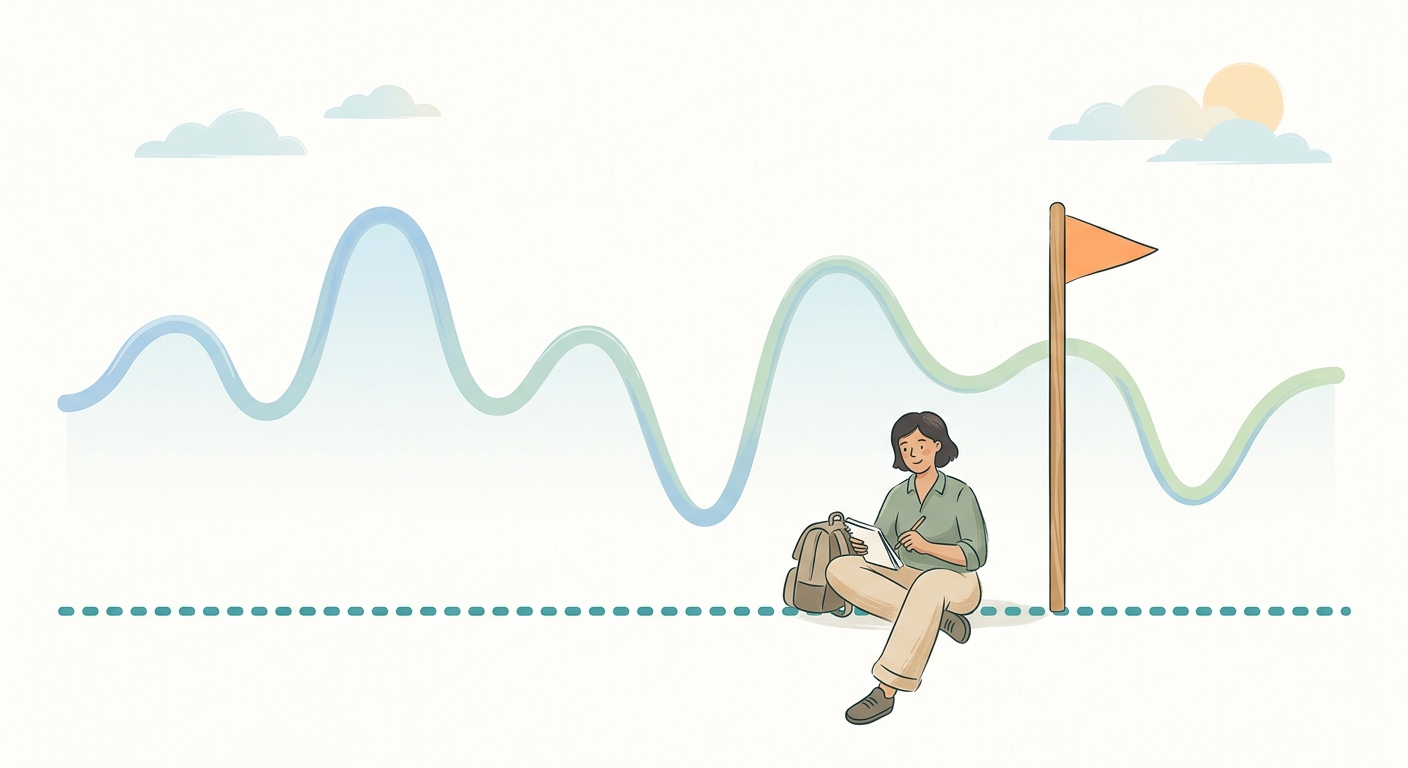
Motivation naturally fluctuates, so the most reliable approach is to anchor goals in personal values and build systems that work on low-motivation days. Treating motivation as a feeling to wait for, rather than a resource to plan around, is a common reason people stall.
Researchers studying a digital weight management program with more than 1,600 participants reported that people with a stronger growth mindset engaged more with the program and experienced greater weight loss (Psychology Today, summarizing the research team’s findings). Growth mindset here means believing that effort and learning can change outcomes. A practical tactic from the same authors is adding the word “yet”: “I haven’t found the right strategy for me… yet.”
Self-determination theory adds another angle. A systematic review of 66 studies by Teixeira and colleagues found consistent support for a link between more autonomous motivation (doing something because it matches your own values) and exercise, with intrinsic motivation the better predictor of long-term adherence (Teixeira et al., 2012, Int J Behav Nutr Phys Act). Note that this review focused on exercise. The same group argued in a companion paper that weight-related efforts are more likely to last when people fully endorse their goals and feel autonomous about reaching them (Teixeira et al., 2012, “Motivation, self-determination, and long-term weight control”). In practice: “I want more energy for my kids” tends to carry further than “I should look different.”
Practical ways to protect motivation
- Write down two or three personal reasons beyond appearance or the scale.
- Track behaviors you control (walks completed, meals prepared), not only weight.
- Plan a “minimum version” of your routine for tough days.
Mindset shifts commonly recommended in behavioral approaches
| Unhelpful pattern | More helpful reframe | Why it may matter |
|---|---|---|
| Fixed mindset: “I’m just not a disciplined person.” | Growth mindset: “I haven’t found the right strategy yet.” | Linked to greater program engagement in the 1,600-participant study above |
| All-or-nothing: “One cookie ruined it.” | Flexible: “One meal doesn’t define my week.” | Reduces the chance a slip becomes a relapse (see setbacks section) |
| Outcome-only: “I must hit a number.” | Process-focused: “I’ll complete my planned walks.” | Behaviors are within your control; scale changes are only partly so |
| Appearance-driven reasons | Values-driven reasons (energy, mobility, family) | Autonomous motivation is linked to better long-term adherence (Teixeira et al., 2012) |
| Willpower reliance | Environment and routine design | Habits become automatic with repetition (Lally et al., 2010) |
Full guide: Weight Loss Motivation: How to Stay Motivated
Is Emotional Eating Sabotaging Weight Loss?

Emotional eating, using food to manage feelings rather than physical hunger, can work against weight goals, but it is common and addressable. Registered dietitian Viviane Fornasaro-Donahue of Massachusetts General Hospital notes that emotional eating has biological underpinnings and can be reinforced by long-held patterns (Harvard Health, “How to curb your stress eating”).
| Physical hunger | Emotional hunger | |
|---|---|---|
| Onset | Gradual | Sudden, urgent |
| Food choice | Open to many foods | Specific cravings, often comfort foods |
| Stops when | Comfortably full | Often continues past fullness |
| Afterward | Neutral or satisfied | Guilt or feeling out of control is common |
Signs highlighted by Harvard-affiliated clinicians include feeling guilty or out of control after eating. A simple first step is a pause-and-label habit: before eating outside a planned meal, take a few breaths and name the feeling (bored, tired, anxious, lonely). Mindfulness-based approaches are discussed in the research literature as complementary tools, with cognitive-behavioral therapy considered a cornerstone of psychological treatment for weight management (PMC8408071).
If eating feels frequently out of control or distressing, a doctor, therapist, or registered dietitian can help assess what is going on. This article cannot diagnose eating disorders.
Full guide: Emotional Eating & Weight Loss
How Does Stress Affect Weight Loss?

Short-term stress can suppress appetite, but ongoing stress may increase it through the hormone cortisol, which can make eating less intentionally harder. Harvard Health explains that the brain releases corticotropin-releasing hormone during stress, which suppresses appetite at first. If stress persists, the adrenal glands release cortisol, which increases appetite and may raise motivation to eat (Harvard Health, “How stress can make us overeat”).
Other points from the same Harvard coverage:
- Workplace and life stress correlated with weight gain in Harvard researchers’ observations, but only among people who were already overweight at the start.
- A British study found that people who produced more cortisol under experimental stress were more likely to snack in response to everyday hassles.
- Regular exercise can blunt some of the negative effects of stress.
Stress-management options commonly suggested by health organizations include regular physical activity, adequate sleep, relaxation practices, and social connection. CBT has been studied as a way to change unhelpful thought patterns and coping behaviors (PMC8408071). Persistent stress, anxiety, or low mood is worth discussing with a healthcare provider.
Full guide: Stress & Weight Loss
Why Did Weight Loss Stall, and How Do You Break Through a Plateau?

A plateau is common and generally expected: as you lose weight, your body needs fewer calories, so the routine that worked early on may stop producing results. Mayo Clinic describes a plateau as a normal part of losing weight and notes that metabolism tends to slow after fat and some muscle are lost (Mayo Clinic News Network).
Mayo Clinic Health System also explains that rapid loss in the first two to three weeks is largely water from used-up glycogen stores, so early drops often slow once the body turns to fat (Mayo Clinic Health System).
| Possible factor | Why it can matter | Reasonable first step |
|---|---|---|
| Lower body weight | Smaller bodies burn fewer calories | Reassess intake and activity with a professional |
| “Portion creep” | Tracking habits loosen over time | Resume tracking for one to two weeks |
| Water retention | Sodium, sore muscles, menstrual cycle, and some medications can temporarily raise scale weight (per Mayo Clinic Health System) | Compare weekly averages, not daily readings |
| Reduced activity | Routines drift | Refresh or vary workouts |
| Sleep and stress | Both are associated with weight management challenges (CDC) | Review sleep and stress habits |
Because medications and medical conditions can affect weight, a plateau that lasts for months deserves a conversation with a healthcare provider or dietitian.
Full guide: Weight Loss Plateau: How to Break Through
How Long Does It Take to Build Habits That Support Weight Loss?
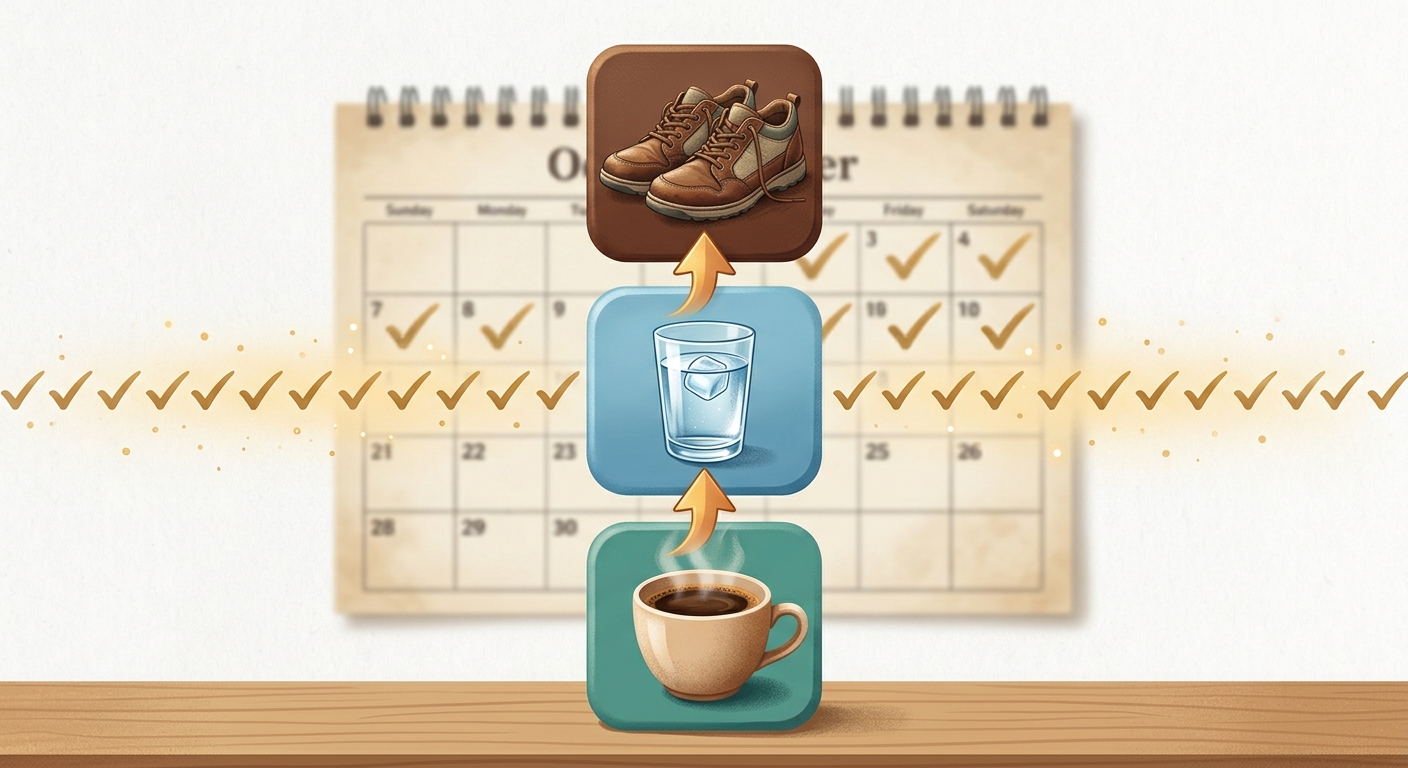
A widely cited University College London study found it took a median of 66 days for a new daily behavior to feel automatic, with individual times ranging from 18 to 254 days. The study, led by Phillippa Lally and published in the European Journal of Social Psychology (2010, 40(6), 998-1009), followed 96 people over 12 weeks. Simple behaviors tended to become automatic faster than effortful ones, so 66 days is a midpoint, not a deadline (Lally et al., 2010).
Habits form when a behavior is repeated in a consistent context. Linking a new behavior to an existing cue, sometimes called habit stacking, is a common way to build that context.
| Existing cue | New behavior | Why it may help |
|---|---|---|
| Pouring morning coffee | Drink a glass of water | Attaches to a fixed routine |
| Finishing dinner | Ten-minute walk | Creates a consistent trigger |
| Sitting down at work | Place a fruit or protein snack within reach | Shapes the environment |
| Brushing teeth at night | Pack tomorrow’s lunch | Reduces decisions the next day |
The Lally study also reported that missing a single day did not appear to derail habit formation, which supports a “never miss twice” mindset ([citation needed: confirm exact wording in Lally et al. before publishing]).
Full guide: Habit Formation for Weight Loss
What Should You Do After a Setback So a Slip Doesn’t Become a Relapse?

A setback is a temporary lapse; it only becomes a relapse when a person abandons their plan afterward. Relapse prevention was developed by G. Alan Marlatt and Judith Gordon (1985) in addiction research. Their model treats relapse as a process, not a single event, and holds that how a person reacts to the first slip, including feelings of guilt and failure known as the “abstinence violation effect,” helps determine whether it escalates (Marlatt and Gordon, Relapse Prevention, 1985; overview in the NIAAA-funded review “Relapse Prevention: An Overview of Marlatt’s Cognitive-Behavioral Model”). The framework has since been applied to weight management, though researchers note that more weight-specific studies are needed to confirm which predictors directly lead to regain.
| Response | Example thought | Likely path |
|---|---|---|
| All-or-nothing | “I blew it, so the week is ruined.” | Dropping the plan |
| Learning-focused | “That event was hard. What would I do differently?” | Quick return to routine |
A simple recovery plan
- Pause the self-criticism. Treat the slip as information.
- Identify the trigger. Time, place, emotion, people?
- Return at the next meal. There is no need to “make up” with extreme restriction.
- Adjust the plan. Add one small safeguard, such as keeping tempting foods out of sight.
The growth-mindset framing noted above, where setbacks are temporary and part of learning, fits this approach. Harvard Health likewise notes that long-term maintainers commonly advise perseverance after setbacks.
Full guide: Weight Loss Setbacks & Relapse Prevention
How Do You Set Realistic, SMART Weight Loss Goals?

SMART goals are Specific, Measurable, Achievable, Relevant, and Time-bound, and the CDC advises making goals realistic and specific rather than vague or extreme. The CDC contrasts “exercise more” (not specific) with “I will walk 15 minutes, 3 days a week for the first week” (specific and realistic), and warns that unrealistic goals, such as losing 20 pounds in two weeks, can leave people feeling defeated (CDC, Steps for Losing Weight).
The CDC also reports that people who lose weight gradually, about 1 to 2 pounds per week, are more likely to keep it off than those who lose quickly.
| Vague goal | SMART version |
|---|---|
| “Eat healthier” | “I will add one serving of vegetables to dinner on five days this week.” |
| “Lose weight” | “I will aim for a 5% reduction over about six months, reviewed monthly with my doctor.” |
| “Be more active” | “I will walk 15 minutes after lunch on weekdays for the next four weeks.” |
| “Stress less” | “I will do a 10-minute breathing or stretching routine three evenings a week.” |
Mixing outcome goals (what you want) with behavior goals (what you will do) is often easier to act on, because behaviors are within your control while scale changes are not entirely.
Full guide: Weight Loss Goals: Setting SMART Goals
Does Accountability and Support Help With Weight Loss?

Yes, research generally associates social support and self-monitoring with better weight outcomes. Behavioral researchers writing in The Conversation describe self-monitoring (tracking weight and food intake) as one of the most effective behavioral strategies for weight loss and note that people who attend weight loss programs with a friend or family member are more likely to stick with them (The Conversation). They also suggest a flexible approach: record food intake early on, then weigh in regularly, returning to food tracking if weight creeps up.
A randomized trial by Wing and Jeffery (1999, Journal of Consulting and Clinical Psychology, 67(1), 132-138) enrolled 166 participants, either alone or with three friends or family members, and then assigned them to standard behavioral treatment with or without added social-support strategies. Both recruiting with friends and the added support strategies affected treatment completion and weight-loss maintenance (APA PsycNet abstract). A later review summarizes that those recruited with others lost more at four months, maintained the loss at ten months, and dropped out less often (Springer review on peer support groups).
The evidence for tracking comes with a caveat. A systematic review of 22 studies (Burke, Wang, and Sevick, Journal of the American Dietetic Association, 2011) consistently found a significant association between self-monitoring (diet, activity, or weighing) and weight loss, yet its authors rated the level of evidence as weak because of methodological limitations (PubMed). In other words: tracking is among the best-supported tools available, and it is also not a guarantee.
Support options
- A walking partner, family member, or friend with similar goals
- Online or local community groups
- A registered dietitian, doctor, or therapist for personalized, professional guidance
Full guide: Accountability & Support for Weight Loss
How Do All Eight Strategies Work Together?

They reinforce one another: clear goals shape habits, habits reduce reliance on motivation, stress and emotion management protect habits, and support helps you recover from setbacks and plateaus.
| If this is your main struggle… | Start with… | Then add… |
|---|---|---|
| Starting and staying consistent | SMART goals | Habit stacking |
| Eating in response to feelings | Pause-and-label | Stress management |
| Scale not moving | Plateau review | Support from a dietitian |
| Falling off track | Recovery plan | Accountability partner |
When Should You Seek Professional Help?
Consider speaking with a healthcare provider if you experience frequent loss of control over eating, persistent low mood or anxiety, extreme dieting, or unexplained weight changes. These can reflect medical or mental health conditions that need individualized care.
Why is it so hard to lose weight and keep it off?
Weight management involves biology, environment, emotions, and habits at once. Long-term success is generally associated with sustainable lifestyle changes rather than short-term extreme diets, and the body’s adaptation to weight loss can make progress slow down over time (Mayo Clinic; CDC).
How can I stay motivated to lose weight when progress is slow?
Anchor goals in personal reasons, track behaviors as well as weight, and keep a “minimum version” of your routine for hard days. A growth mindset, treating slow progress as “not yet,” has been associated with greater engagement in a digital weight program (Psychology Today).
Does stress make it harder to lose weight?
It may. Ongoing stress is associated with higher cortisol, which can increase appetite and cravings for comfort foods, and physical activity can blunt some of stress’s negative effects (Harvard Health).
How long does it take to form a healthy habit?
A University College London study found a median of 66 days, with a range from 18 to 254 days, depending on the behavior and the person (Lally et al., 2010).
Is a weight loss plateau normal?
Yes. Mayo Clinic describes plateaus as a normal part of weight loss because metabolism tends to slow as weight drops. A professional can help review calories, activity, sleep, and medications.
What should I do if I overeat or skip my plan for a few days?
Return to your routine at the next meal, identify the trigger, and add one small safeguard rather than punishing yourself. Treating a lapse as information, not failure, is a core idea in relapse prevention.
References and Further Reading
- Centers for Disease Control and Prevention. Steps for Losing Weight.
- Harvard Health Publishing. What is a successful mindset for weight loss maintenance? (2022)
- Harvard Health Publishing. How stress can make us overeat.
- Harvard Health Publishing. How to curb your stress eating.
- Mayo Clinic News Network. The weight-loss plateau: What it means and how you can get past it.
- Mayo Clinic Health System. Why has my weight plateaued when I have 50 more pounds to lose?
- Lally P, van Jaarsveld CHM, Potts HWW, Wardle J. How are habits formed: Modelling habit formation in the real world. European Journal of Social Psychology. 2010;40(6):998-1009.
- National Library of Medicine (PMC). The Use of Self-Help Strategies in Obesity Treatment: A Narrative Review Focused on Hypnosis and Mindfulness.
- The Conversation. Three ways behavioural psychology might help you lose weight (2021).
- Psychology Today. How Your Mindset Shapes Your Weight Loss Journey (2024).
- Teixeira PJ, Carraça EV, Markland D, Silva MN, Ryan RM. Exercise, physical activity, and self-determination theory: a systematic review. Int J Behav Nutr Phys Act. 2012;9:78.
- Teixeira PJ, Silva MN, Mata J, Palmeira AL, Markland D. Motivation, self-determination, and long-term weight control. Int J Behav Nutr Phys Act. 2012;9:22.
- Wing RR, Jeffery RW. Benefits of recruiting participants with friends and increasing social support for weight loss and maintenance. J Consult Clin Psychol. 1999;67(1):132-138.
- Burke LE, Wang J, Sevick MA. Self-monitoring in weight loss: a systematic review of the literature. J Am Diet Assoc. 2011;111(1):92-102.
- Marlatt GA, Gordon JR. Relapse Prevention (1985). Overview: Relapse Prevention: An Overview of Marlatt’s Cognitive-Behavioral Model.
- Wing R, Hill J. Learning from the National Weight Control Registry (Human Kinetics excerpt).
- TIME. 9 Myths About Weight Loss.
This article reflects research available as of October 2026 and will be reviewed periodically. It does not replace professional medical advice.



Leave a Reply